COVID-19 Tracking Poll: Most Californians Continue to Favor Staying Home Despite Economic Consequences

COVID-19 Tracking Poll: Most Californians Continue to Favor Staying Home Despite Economic Consequences

COVID-19 Tracking Poll: Most Californians Continue to Favor ...

To help Californians and state policymakers understand evolving demands on the state’s health care system during the COVID-19 pandemic, CHCF is working with survey firms on two fronts. CHCF and global survey firm Ipsos are assessing residents’ desire for COVID-19 testing and their access to health care services. CHCF and Truth on Call, a physician market-research firm, are surveying hospital-based critical care, emergency department, and infectious disease physicians about staffing and the availability of testing, personal protective equipment (PPE), intensive care unit beds, and ventilators. Download the charts and data for your own presentations and analyses.

Californians’ support for sheltering in place to curb the spread of coronavirus remains strong, according to a new tracking poll from CHCF and survey firm Ipsos.

For the second time in two weeks, Californians were asked which of the following statements came “closest to your opinion” of the state’s pandemic response:

  • Californians should continue to shelter in place for as long as is needed to curb the spread of coronavirus, even if it means continued damage to the economy.
  • Californians should stop sheltering in place to stimulate the economy even if it means increasing the spread of coronavirus.

This week, 71% of Californians want to continue the statewide order, compared to 75% two weeks ago. The change is within the statistical margin of error. This week, 17% say to stop sheltering in place, and 12% say they don’t know or have no opinion. Seventy-three percent of Californians with incomes at or below 138% of the federal poverty guidelines (PDF) support the stay-at-home orders.

Support for sheltering in place is strong among Californians no matter the setting in which they live. Seventy-three percent of urban residents support continuing to stay at home compared to 72% of rural Californians, and 68% of suburban residents.

As public officials plan greater use of “contact tracing” in future phases of COVID-19 containment efforts, Californians were asked which of the following came closest to their opinion about sharing personal information with public health officials:

  • I am willing to share personal information about my health, movements, and contacts with local and state public health officials in order to help them understand and combat the spread of coronavirus.
  • I am not willing to share personal information about my health, movements, and contacts with local and state public health officials under any circumstances.

Sixty percent of state residents are willing to share personal information to help stop the spread of the coronavirus, while 21% are unwilling to share information under any circumstances, and 18% don’t know or have no opinion. These results have changed little in two weeks. Forty-nine percent of Black Californians (not shown) and 50% of Californians with low incomes are willing to share information.

Public officials are discussing moving from broad shelter-in-place strategies to more targeted quarantine-and-isolate approaches to COVID-19 containment. In this week’s tracking survey, CHCF and Ipsos asked Californians who live with at least one other person about their capacity to physically separate themselves from others in their home. According to the most recent US Census data, 11% of Californians live alone.

Eighty-one percent of those who live with at least one other person say they have access to a separate bedroom at home, and 58% say they have access to both a separate bedroom and a separate bathroom. Among Californians with low incomes, 74% of those who live with at least one other person have access to a separate bedroom, and 38% have access to a separate bedroom and a separate bathroom. Sixteen percent of all Californians surveyed and 22% of Californians with low incomes do not have access to a separate bedroom.

Californians say they continue to engage in recommended behaviors to slow the spread of the new coronavirus. Eighty-four percent say they avoid unnecessary trips out of the home “all of the time” or “most of the time.” With regard to other public health behaviors:

  • 81% of Californians say they routinely wear a mask in public spaces all or most of the time.
  • 93% say they stay at least six feet away from others in public spaces all or most of the time.
  • 93% say they wash their hands frequently with soap and water all or most of the time.

Compared with previous editions of the tracking survey, the percentage of Californians who would like to get tested increased. This week, 17% of those surveyed say they haven’t sought a test but would like to get one, up from 11% in the first survey in March.

As in findings in previous rounds of the tracking survey, 2.7% of Californians report they were tested in the preceding seven days. More Californians with low incomes report trying and failing to get tested than those overall (5.8% vs. 2.4%).

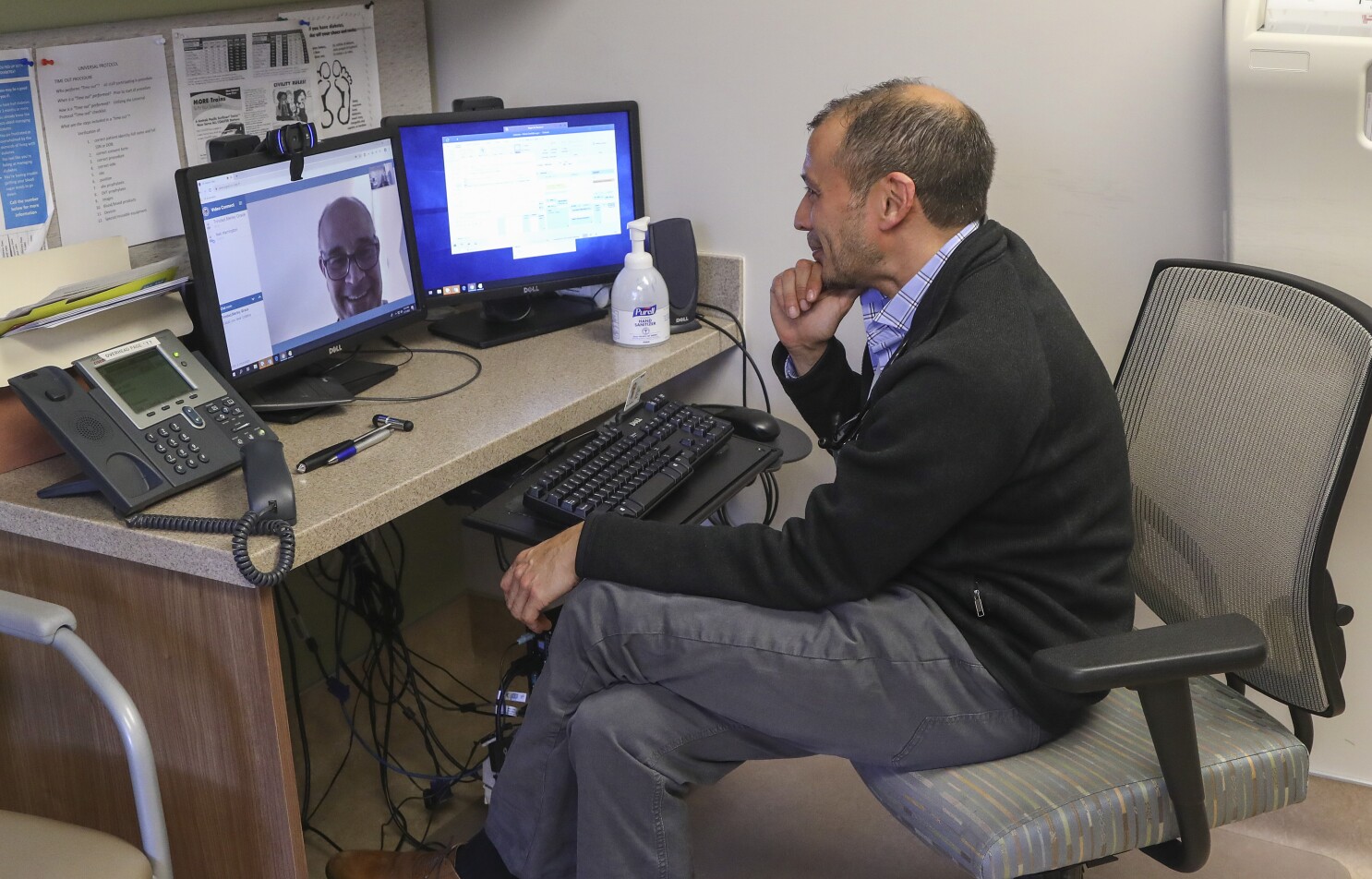
The share of Californians seeing health care providers by phone or video continues to rise. This week, 8% of Californians report seeing a provider by phone or video. The portion of Californians seeing a health care provider in person in the previous week has fallen by half, from 10% to 5% since this poll began in March.

The growth in telehealth appointments is more pronounced for Californians with low incomes, with 11% reporting that they saw a provider by phone or video in the previous seven days compared to 1.7% in late March.

Over the previous seven days, 70% of Californians say their mental health is “about the same” as before. This response is unchanged from two weeks ago. The percentage of respondents saying their mental health has gotten “a little” or “a lot” worse declined from 22% to 18%. This change is within the margin of error.

Less than 1% of Californians say they have lost health insurance coverage in the last month. Fifteen percent are “very” or “somewhat” worried about losing coverage, and among Californians with low incomes, 27% are worried about losing health insurance coverage.


What we’ve learned from the telemedicine explosion

https://mailchi.mp/aa7806a422dd/the-weekly-gist-may-8-2020?e=d1e747d2d8

Why telemedicine could be the next big thing in employee healthcare

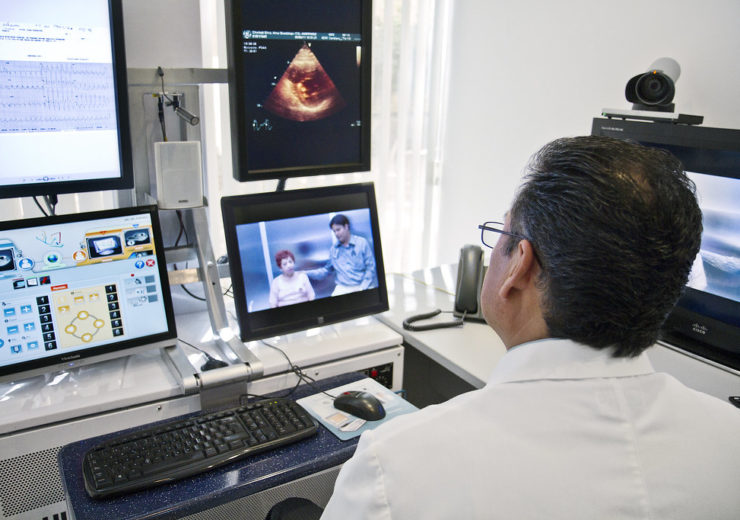
In our decades in healthcare, we’ve never seen a faster care transformation than the rapid growth in telemedicine sparked by COVID-19. Every system we’ve spoken with over the past two months reports its doctors are now performing thousands of “virtual visits” each week, often up from just a handful in February. As one chief digital officer told us, “We took our three-year digital strategic plan and implemented it in two weeks!

This week, we convened leaders from across our Gist Healthcare membership to share learnings and questions about their telemedicine experiences. COVID-19 brought down regulatory and payment hurdles, as well as internal cultural barriers to adoption—but leaders expressed a concern that current payment levels and physician enthusiasm could dissipate. Some insurers have hinted at pulling back on payment, although they will have a hard time doing so as long as Medicare maintains “parity” with in-person visits.

Switching to 100 percent telemedicine was easier than most doctors anticipated. But as practices now begin to ramp up office visits, new questions are emerging about how to integrate digital and physical visit workflow, requiring providers to rethink office layout and technology within the practice: is there a good physical space in the office to conduct televisits? Zoom and FaceTime have worked in a pinch, but what platform is best for long-term operational sustainability and consumer experience?

Telemedicine has also raised consumer expectations: patients expect providers to be on time for a virtual appointment—setting a bar for punctuality that will likely carry over to their next in-person office visit. Across the rest of this year, health systems and physician groups will continue to push the boundaries of virtual care, establishing how far it can be extended to provide quality care in a host of specialties.

But at the same time, systems must also prepare for growing complexity in 2021: what is the right balance of in-person versus virtual care? How should telemedicine integrate with urgent and emergency care offerings? How should physician compensation change? And as payers and disruptors expand their virtual care offerings, how can providers differentiate their own platforms in the eyes of consumers? We’ll continue to share learnings as our members work through the myriad challenges and opportunities of this new virtual care expansion.


Most consumers nervous about returning to care settings

https://mailchi.mp/aa7806a422dd/the-weekly-gist-may-8-2020?e=d1e747d2d8

As non-essential businesses begin to reopen, there’s no guarantee that merely opening the doors will make customers return. A recent Morning Consult poll provides an assessment of the impact of COVID-19 on consumer confidence: fewer than one in five US adults are currently comfortable doing (formerly) everyday activities like eating at a restaurant or going to a shopping mall.

The graphic below provides similar data for healthcare. Consumers’ willingness to visit healthcare providers in person for non-COVID care is only slightly better, at 21 percent. Which providers might see patients return most quickly?

Consumers say they are about twice as likely to visit their primary care doctor’s office than other healthcare facilities, including hospitals, specialists, and walk-in clinics. And when it comes to scheduling a routine in-office visit, nearly half say they will wait two to six months, with almost one in ten not comfortable going to a doctor’s office in person for a year or more.

Healthcare facilities face an uphill battle in bringing back patients—many of whom have ongoing chronic diseases that necessitate care now. Reaching patients through telemedicine and providing concrete messages about how they can safely see their doctor will be critical to staving off a tide of disease exacerbations that will mount as fear delays much-needed care.


CMS rolls back more Medicare, telehealth regs for providers working through pandemic

https://www.healthcaredive.com/news/CMS-second-round-COVID-rollbacks/577199/


How Telemedicine Is Changing Healthcare

Dive Brief:

  • CMS issued a another round of sweeping regulatory rollbacks Thursday that will temporarily change how some providers care for patients and get compensated during the ongoing pandemic.
  • Practitioners such as therapists previously restricted from providing telehealth services for reimbursement can now do so, and CMS is also upping payments for telephone-only telehealth visits. Accountable care organizations also scored a major win in the Thursday rule drop, with CMS pledging they wouldn’t be dinged financially for lower-than-expected health outcomes in their patient populations from COVID-19.​
  • Other major changes are related to COVID-19 testing for Medicare and Medicaid beneficiaries. A written practitioner’s order is no longer needed for diagnostic testing for Medicare payment purposes. The agency also said it will cover serology, or antibody testing, including certain FDA-authorized tests that patients self-collect at home.

Dive Insight:

The new rules come out of the recent public health emergency declaration, building on others announced in late March and early April. This round of changes, which take effect immediately, focuses on expanding testing capacity to help reopen the U.S. economy, according to CMS, along with delivering expanded care to seniors.

Major provider lobbies the American Hospital Association and American Medical Association praised the changes, noting that Medicare patients have been canceling needed medical appointments because of physical distancing and transportation challenges.

The Trump administration, which allowed traditional Medicare to temporarily cover telehealth in March, continues to expand virtual care access. CMS is expanding the types of specialists allowed to provide telehealth services for reimbursement to include physical therapists, occupational therapists, speech language pathologists and others. In the past, only doctors, nurse practitioners, physician assistants and certain others could do so.

Earlier changes included waiving the video requirement for telehealth patients without access to interactive audio-video technology – particularly those in rural areas. CMS is increasing payments for telephone visits from a range of about $14-$41 to about $46-$110, according to the release.

The rollbacks are a “major victory for medicine that will enable physicians to care for their patients, especially their elderly patients with chronic conditions who may not have access to audio-visual technology or high-speed Internet,” the AMA said.

Michael Abrams, managing partner of Numerof & Associates, a healthcare consulting firm, said the current, rapid adoption of telehealth is an experiment, and depending on the results, waivers could eventually become permanent.

“Once you increase pricing, you almost never roll it back,” Abrams said. “If this new pricing on telehealth visits makes it more attractive, attractive enough to substitute telehealth for in-office visits, that not only lowers the cost of care, but makes it very much more accessible, particularly for those whose ability to see a physician is limited.”

In a victory for ACOs, CMS said the value-based organizations wouldn’t incur any financial penalties because of COVID-19 testing and treatment for their patient populations. Roughly 60% of ACOs said previously they were likely to drop out of their risk-based model to avoid potential losses, according to the National Association of ACOs.

CMS is also allowing ACOs to remain at the same level of risk for another year, instead of bumping them up to the next risk level. NAACOs said it was “appreciative” of the changes in a statement, though they asked for additional relief for providers in two-sided risk arrangements.

Other loosened restrictions include those on who can administer COVID-19 diagnostic tests for payment to include any healthcare professional authorized to do so under state law, including pharmacists. Medicare and Medicaid recipients can now get tested at parking lot sites operated by pharmacies and other entities for reimbursement.

Outpatient hospital services such as wound care, drug administration, and behavioral health services can now be delivered in temporary expansion locations, including parking lot tents, converted hotels or patients’ homes for reimbursement, so long as they’re temporarily designated as part of a hospital.

Hospital outpatient departments that relocate off-campus are paid at lower rates under current law, but CMS is making a temporary exception to continue paying those physicians at their standard rates.

The agency will also pay for certain partial hospitalization services – that is, individual psychotherapy, patient education, and group psychotherapy – that are delivered in temporary expansion locations, including patient homes.

CMS is also now requiring nursing homes to inform residents, their families, and representatives of COVID-19 outbreaks in their facilities.


We Work on the Front Lines of COVID-19. Here’s What Hospitals Should Do

https://www.medpagetoday.com/infectiousdisease/covid19/86185?xid=fb_o&trw=no&fbclid=IwAR3iM5LMZj3BxWisk3puZ2T3bOCeBaDS_xCRoTrnVaZYfj4-DZPmUfr01cw

We Work on the Front Lines of COVID-19. Here's What Hospitals ...

A game plan from ground zero.

It’s only a matter of time before all of us are directly affected by COVID-19. Proper preparation is the only way to ensure high-quality patient care and staff well-being in this challenging time. Having collectively spent time caring for patients at two different tertiary care facilities in New York on the medical floors and intensive care units, common themes are emerging that represent opportunities for hospitals in other parts of the country to start taking action before COVID-19 patients start filling up beds en masse.

Staffing

It takes a LOT of people to care for a COVID-19 onslaught; mapping out different staffing scenarios in the event you have 40 or 400 COVID patients is imperative. Staffing needs for COVID patients are higher than normal because of the patients’ complex medical needs — many require ICU level nursing and respiratory therapists — and because both clinical and non-clinical staff will inevitably become sick and need to be taken out of work. Staff should be screened for symptoms and high-risk contacts; those who are symptomatic should be proactively encouraged to stay home instead of showing up to work not feeling well and putting other care team members and patients at risk. This requires back-up staffing plans to fill in when your people become sick. Shutting down non-urgent and elective departments provides staffing redundancy to pull from when needed. All employees should be given advance notice about staffing plans so that potential role changes are clear.

Testing

Robust testing processes for both patients and your healthcare workforce are critical for success. Hospitals should be taking this time to obtain in-house rapid testing kits to avoid unnecessary patient isolation and conserve personal protective equipment (PPE) while waiting for test results.

Healthcare workers are understandably scared about contracting COVID-19 themselves and giving it to their family members. We recommend all staff members be tested for active infection so that those who are infected can be proactively quarantined.

Forward-thinking institutions should be prioritizing antibody testing for healthcare workers. While this testing is still in its infancy, it is quite likely that those with strong antibodies to COVID-19 possess some degree of immunity. Therefore, if you can identify which doctors, nurses, respiratory therapists, physical therapists, and janitorial staff have already developed an immune response to COVID-19, these staff members can take priority staffing infected units with the goal of reducing the number of new infections in healthcare workers and limiting exposure to those who have yet to contract the virus.

Communication

Each institution’s COVID-19 protocols and policies change rapidly as we learn more about the virus. How you communicate these ever-changing procedures with staff is critical. Most hospitals rely on daily email updates that are text-heavy; however, overwhelmed inboxes and less time with devices while wearing PPE limits the success of email as a sole communication channel.

Communication through graphics takes on new importance — signage noting changes in hospital geography, large pictures of donning and doffing instructions, phone numbers to call with equipment shortages, and clear instructions to staff about testing protocols, isolation, and removing patients from isolation need to be conveniently placed where staff can access information in real time without consulting their electronic devices. High-yield locations for just-in-time visual communication include outside patient rooms, nursing stations, break rooms, and elevators, so that the target information reaches its busy, hard-working audience successfully and repeatedly, minimizing confusion and augmenting clarity.

Limiting the Need to Enter the Room

Given ongoing PPE shortages, particularly around single-use gowns and N95 masks, minimizing the number of instances that staff, particularly nurses, need to enter the room is critical. This requires an adjustment from normal patient care. We recommend extension tubing to bring IV poles and medications outside the room. Tablets such as iPads can permit video calls with patients to check on non-urgent items. Centralized monitoring of oxygen saturations for all admitted patients can minimize the frequency of supplemental oxygen adjustment.

Similarly, given the increased risk of COVID-19 in diabetic patients, continuous blood glucose monitoring can minimize the need for frequent manual fingerstick measurements for patients receiving supplemental insulin.

Discharge Planning

Discharging patients to home or rehabilitation facilities presents novel challenges. A home discharge requires education, equipment, and follow-up. Education on home monitoring of vitals signs like oxygen saturation and blood pressure with instructions on critical values that should prompt patients to return to the hospital can expedite discharge and open hospital beds for other sick patients. Both patients and family members must also be educated on quarantine procedures to limit household transmission.

Many patients will have temporary oxygen requirements and we have seen home oxygen shortages in our areas. Coordinating a strategy with your outpatient clinicians, home oxygen suppliers, and insurance companies can facilitate getting patients home sooner on home oxygen and freeing up beds for sicker patients. Further, many patients are eager to go home earlier since hospital visitation limitations mean they’re sitting in bed alone away from family and the more a hospital can do to safely discharge patients home with appropriate supplies and follow-up will be beneficial to both patients and the hospital.

Hospitals must also be prepared to integrate these patients into their existing telehealth infrastructure, which has become the mainstay of ambulatory medicine in lieu of traditional office visits. For many patients, this will be a new way of accessing care. Prior to discharge, hospital staff should ensure patients have downloaded the necessary apps with login information and feel comfortable they will be able to follow up with their physician using technology following discharge.

There is a huge opportunity for hospitals that have not been caring for large numbers of COVID-19 patients to prepare ahead of time in a manner that optimizes patient care and minimizes risks to staff. Those of us on the early front lines have learned many of these lessons the hard way. An ounce of prevention is worth a pound of cure — we encourage all healthcare systems to take action before the storm comes.


Healthcare CFOs weigh-in on the challenges ahead

https://www.pwc.com/us/en/library/covid-19/pwc-covid-19-cfo-pulse-survey.html

What CFOs think about the economic impact of COVID-19

How finance leaders see a return to work

Business perspectives on what it will take to shift from crisis mode are solidifying. US finance leaders are focused on shoring up financial positions, as US businesses head into a period of even more operational complexity while they orchestrate a safe return to the workplace. Back-to-work playbooks put workforce health first, as companies set course for a phased-in return to the workplace that will not be uniform across the US or internationally, findings from the survey show. Returning employees and customers are going to experience a work environment that will differ in marked ways as a result. Another change likely to endure post-crisis is the strong role corporate leaders have taken within their communities, placing a renewed emphasis on environmental, social and governance (ESG) efforts going forward.

The actions CFOs are taking show how US businesses continue to adjust to very difficult current conditions with an eye toward an evolving post-COVID world. The level of concern related to the crisis is holding steady. It is high but stabilizing, with 72% of respondents reporting that COVID-19 has the potential for “significant impact” to their business operations vs. 74% two weeks ago.

Key findings

Back-to-work playbooks reshape how jobs performed
49% say remote work is here to stay for some roles, as companies plan to alternate crews and reconfigure worksites.

Protecting people top of mind
77% plan to change safety measures like testing, while 50% expect higher demand for enhanced sick leave and other policy protections.

Substantive impacts expected in 2020 results
Half of all respondents (53%) are projecting a decline of at least 10% in company revenue and/or profit this year.

Cost pressures intensify
A third (32%) expect layoffs to occur, as CFOs continue to target costs, while 70% consider deferring or canceling planned investments.

Economic events shaping CFO response last week

This survey, our fourth since emergency lockdowns took effect in the US, reflects the views of 305 US finance leaders during the week of April 20. It was a week when oil futures traded below $0 as energy markets confronted downshifting global demand, Congress replenished emergency funding of $480 billion for small firms and healthcare systems, and everyone heard the call to get ready to go back to work as the US and Europe firmed up plans to ease quarantines.

Post-crisis world taking shape in plans to reboot the workplace

Health and safety are top priorities for leaders as they prepare to bring people back to on-site work. More than three-quarters (77%) are putting new safety measures in place, while others are taking steps to promote physical distancing, such as reconfiguring workspaces (65%). Findings also show where the virus may have longer-lasting impact on ways of working. Half (49%) of companies say they’re planning to make remote work a permanent option for roles that allow. That’s even higher (60%) among financial services organizations.

Takeaways

Among the small percentage of companies that are beginning to bring people back, returning to work will not mean a return to normal. Companies should consider how to help frontline managers lead with empathy, to communicate transparently and make decisions quickly so employees understand where they stand, have access to the resources available to them, and can share feedback to ensure they feel safe and get what they need. Tools such as workforce location tracking and contact tracing can help support employees with suspected or confirmed infections, while also helping to identify the level of risk exposure. Companies looking to make remote work a permanent option will need to enable leaders to manage a blended workforce of on-site and remote workers during the next 12 to 18 months.

Given that many people may be wary of returning to on-site work, there’s an opportunity for companies to create more targeted benefits to help make the transition easier. Paid sick leaves and worker protections, help with childcare, private transportation to and from work, or other benefits could help employees who may need extra flexibility or who want additional support as they prepare to come back.

Forecasting substantive impacts on 2020 performance

A majority of respondents (80%) continue to expect a decline in revenues and/or profits in 2020. Projections by sector vary, with consumer markets likely the hardest hit: one-third (32%) of CFOs expect a 25% or greater decline in revenues and/or profits this year, compared to 24% of respondents in all sectors.

Takeaways

Outlooks for financial results have held relatively steady in the survey over the last month, and are probably indicative of actual impact. Companies have had the time to evaluate the effects. CFO projections for declining revenue and profits coincide with a widening realization that the US economy is in recession. Since mid-March, jobless claims have soared past 26 million, and Congress passed relief packages of $2.5 trillion. CFOs are evaluating a wide range of scenarios that cover the health situation, the shape of the economic recovery, the spillover into the financial markets, and the resulting impacts on their business. This crisis is setting a new benchmark standard for “unknowable.”

Cost pressures intensifying

CFOs are considering additional ways to scale back on planned investment and/or other fixed costs amid volatility in demand. A third (32%) expect layoffs to occur in the next month, up from 26% two weeks ago. Protecting cash and liquidity positions is paramount. Financial impacts of COVID-19, including effects on liquidity and capital resources, remain the top concern of CFOs (71%). Over half (56%) say they are changing company financing plans, up from 46% two weeks ago.

Among other actions, 43% plan to adjust guidance, which is consistent with responses two weeks ago. This figure will likely increase as companies go through the earnings season over the next two to three weeks. Separately, 91% of respondents are planning to include a discussion of COVID-19 in external reporting. Depending on the type of company, this can mean inclusion in financial statements and/or in risk factors and MD&A results of operations, earnings release or MD&A liquidity sections.

Takeaways

Many CFOs have focused on how they can manage their cash pressures to ride out the crisis. Common approaches have included stop-gap measures, such as hiring freezes and tightening controls on discretionary costs to put an end to travel and events, or the use of contractors. Findings show that these types of cost actions are likely to continue, and they remain at the top of the CFO agenda.

Of those who say they’re considering deferring or canceling planned investments, 80% are considering facilities and general capital expenditures. At the same time, investment programs in areas that are considered important to future growth — including digital transformations, customer experience, or cybersecurity and privacy — are less likely to be targeted. CFOs will increasingly look for ways to prioritize costs in these areas, as businesses grow more confident in recovery prospects — even though current demand is subdued.

Priorities to de-risk supply chains

As companies continue to wade through mitigation efforts and start to think about recovery, many are planning changes to make their supply chains more resilient. Findings show CFOs prioritizing specific actions: 56% cite developing alternate options for sourcing, and 54% say better understanding the financial and operational health of their suppliers.

Takeaways

Findings confirm an emphasis on de-risking supply chains, as companies prioritize the health and reliability of their supplier base among changes they’re planning as a result of COVID-19. In particular, there is a focus on managing risk around supply elements, such as reducing structural vulnerability with other sourcing options.

Some companies are starting to invest in creating data-backed profiles of their supplier base so they know where and when to look for second sources. Others are increasing communication with suppliers to better understand financial health. For many, conducting deeper financial and health reviews of suppliers will become a regular part of their business reviews. Physical supply chain relocations will likely happen only as a last resort, given the costs involved. However, automation of certain elements of the supply chain — to eliminate time-consuming manual tracking efforts and check tariff structures, for example — will likely become more common as companies seek better data to make more informed decisions.

Strategies yet to change, but tech likely to drive M&A

The impact of the outbreak on mergers and acquisitions (M&A) strategies remains mixed. While 40% of respondents say their company’s M&A strategy is not being affected by COVID-19, compared with 34% two weeks ago, one in five say it’s too difficult to assess what changes, if any, will need to be made to strategy. CFOs within the technology, media and telecommunications industry stand out in particular. They are less likely to report decreasing appetite for M&A due to COVID-19, compared with peers in other sectors, and 55% say the crisis hasn’t changed their M&A strategy.

Takeaways

These findings highlight the fundamental strengths of the tech sector and suggest it will be among those driving M&A in the months ahead.  Tech giants, in particular, have large cash reserves. Moreover, demand for some tech products and services is strong as businesses return to work — 40% of CFOs say they will accelerate automation and new ways of working as they transition back. Additionally, technologies such as drones, artificial intelligence and robotics, will likely enjoy wider adoption in the post-COVID-19 environment. This leaves tech better-positioned to weather the pandemic’s economic fallout and to execute on inorganic growth strategies. M&A is likely to recover faster than the US economy, with tech among the cash and capital-rich sectors leading the charge. PwC studies show that a combination of factors has been driving a decoupling of deals from the broader economy.

Business recovery timeframes have extended

Organizations are realizing the business recovery from the impacts of the virus will take longer. The March measures of manufacturing and services activities show sharp drops. Demand is not only declining, it’s shifting. Moreover, even as some US states start to reopen, difficulties in setting up testing could keep some states in a holding pattern. As a result, for CFOs, the time required to return to “business as usual” the moment that COVID-19 ends continues to lengthen. Currently, 48% believe it will take at least three months to return to normal, up from 39% two weeks ago.

Takeaways

As reality sets in and companies understand the true impacts to their operations, CFO perceptions of the length of time to business recovery has extended. According to our analysis of how companies gauge their response to the crisis in PwC’s COVID-19 Navigator diagnostic tool, the expected impact of COVID-19 on businesses globally remains high, with consumer markets and manufacturing the most susceptible among industries. Put another way, businesses that are less reliant on a large, complex supply chain to deliver products, or are able to work relatively effectively while remote, are also likely to be among the least exposed.

Consumer-facing companies reconfigure physical sites as shutdowns start to lift

Companies in consumer-facing sectors continue to contend with both sides of the demand equation, as consumers sheltering in place focus single-mindedly on essential products to the exclusion of other offerings. Consumer markets (CM) CFOs are more likely to list a decrease in consumer confidence and spending as a top-three concern than they were two weeks ago (66% vs. 50%). For CM CFOs, consumer confidence trends translate almost directly to revenues, with 32% projecting an adverse impact on revenue and/or profit of at least 25% in 2020, compared with 24% of respondents across all industries.

In response, almost three-quarters of CM CFOs (73%) are considering deferring or canceling planned investments, targeting mostly general capital expenses, such as facilities. They also say technologies that can improve their understanding of changes in customer demand are a top-three priority as they plan changes to their supply chain strategies (41% vs. 30% for all sectors).

CM CFOs are planning workplace safety measures (86% vs. 77% for all sectors) and reconfiguring work sites to promote physical distancing as part of their transition back to on-site work (77% vs. 65% for all sectors). They recognize that consumers want the assurance of a safe physical environment above all else, especially because the majority of CM products and services require a physical component, despite the continuing shift to online.

Takeaways

Consumer-facing companies continue to be among the hardest hit, as the public health crisis keeps the majority of consumers confined to their homes for now. As they grapple with immediate challenges, CM companies are pulling back on capital investments. However, most are still planning to shore up their digital presence in response to accelerated online demand that could last well beyond the recovery period.

Health system pivots to new ways of working

What’s on the mind of financial leaders in the health industry? As they plan to bring more of their workforce back on-site, they are more likely than leaders in other industries to be leaning on technology to help them manage staffing uncertainties. Fifty-four percent of healthcare CFO respondents said they plan to accelerate automation and new ways of working, compared with an average of 40% across all industries.

Healthcare organizations are simultaneously solving two critical issues: uncertainty about demand and protecting their workforce. Health organization CFOs (70%) were more likely than executives from other industries (an average of 50%) to report that they expect higher demand for employee protections in the next month. Meanwhile, consumer anxiety over their own safety is driving up uncertainty about demand for healthcare and medical products. Forty-one percent of healthcare finance leaders listed tools to better understand customer demand as a top-three priority area when considering changes to their supply chain strategies, compared to 30% of financial leaders in all sectors. Fifty-one percent of healthcare finance leaders said they are making staffing changes as a result of slowed demand.

Takeaways

survey conducted by PwC’s Health Research Institute in early April found that some consumers are delaying care and medications amid the pandemic. In this latest PwC survey of CFOs, healthcare leaders report uncertainty about how much of their business will return as the threat of the pandemic ebbs, making staffing decisions difficult.

As the nation continues to grapple with the pandemic, getting back to work is top of mind for US financial leaders overall, but this is an especially pressing issue for health leaders. They must plan for their own workforces, while dealing with an unfolding financial calamity — 81% expect their company’s revenue and/or profits to decline this year as a result of COVID-19. On par with other industries, they expect this decline, even though their organizations play central roles in addressing the human toll of the pandemic. One strategy is to use telehealth technology to virtually care for patients, thereby protecting patients and caregivers during the pandemic.

Financial firms see fewer layoffs, but slower recovery

Financial services (FS) CFOs are bracing for a longer road back to normal. About a third (35%) now think it could take six months to get back to business as usual, up sharply from 15% just two weeks ago. They’re also more optimistic about the bottom line. More than a quarter (27%) of FS survey respondents expect revenue and/or profits to fall by 10% or less. Across all industries, only 18% felt as confident.

Takeaways

Banks are playing a critical role in helping stabilize the economy, as they work on the front lines to distribute CARES Act provisions. Along with insurers and asset managers, they also rely heavily on workers with specialized technical and institutional knowledge. This may explain why FS CFOs expect fewer layoffs (15% vs. 32% overall) or furloughs (17% vs. 44% overall) over the next month. Now, they’re trying to focus on keeping workers healthy and safe.

Conversations are starting to shift toward when and how to transition back to physical offices. For some employees, work may look very different: More FS CFOs are considering making remote work a permanent option for roles that allow it (60% vs. 49% overall). To better protect their employees, they’re also looking to evaluate new tools to support workforce tracking and contact tracing (32% vs. 22% overall) as part of the return-to-work process.

Deeper insight into health of suppliers is top priority for industrial products

The industrial products (IP) sector is in full-throttle cost-cutting mode. Nearly all IP CFOs (96%) report considering cost containment measures, compared with 87% two weeks ago. Some of this comes in the form of layoffs: 49% of IP CFOs expect layoffs to occur vs. 36% two weeks ago. The longer the crisis lasts, the longer the impact on recovery times for their business. When asked how long it would take for their business to return to business as usual if the COVID-19 crisis were to end today, 15% of IP CFOs said less than one month, down from 25% two weeks ago.

Meanwhile, they’re closely examining challenged supply chains. When asked to list their top-three priority areas when planning changes to supply-chain strategies, 66% of IP CFOs identified understanding the financial and operational health of their suppliers, compared to 54% of CFOs across all industries. A majority (56%) also cited developing additional and alternate sourcing options as a priority. And the extent of the financial damage is sinking in: 65% of IP CFOs estimate 2020 revenues and/or profits will drop at least 10%.

Takeaways

IP CFOs are signaling they’re in the thick of the crisis, as they absorb historical lows in production, with March US industrial output plunging to levels not seen since the end of WWII. Continued cost actions are still in the cards.

IP finance leaders are looking ahead to get back to business, with some already bringing workers back on-site. Some are expecting changes to the workplace. Thirty-nine percent of IP CFOs are considering making remote work a permanent option for roles that allow, and 31% are considering accelerating automation and new ways of working. While these are still early days for US producers in returning to work, bringing millions of workers back into the fold may well usher in more change management than the industry now expects.

Tech, media and telecom well-positioned to power the recovery

Technology, media and telecommunications (TMT) companies are well-positioned for recovery from the initial blow of COVID-19. As they stabilize operations in response to the crisis, the percentage of TMT CFOs anticipating revenue and/or profit declines is down 19 percentage points from two weeks ago to 65%. The data suggest that TMT companies are preparing for a future in which virtual work options gain greater acceptance over traditional office settings. TMT companies are more likely to reduce their real estate footprint as they transition back to on-site work (38% compared to 26% for all sectors), and 55% say they’re planning to make remote work permanent for positions that allow.

Of those who said they’re considering deferring or canceling planned investments, TMT companies are less likely to reduce digital transformation investments (13%) than all sectors (22%). Their increased optimism about digital investment as they strategize for the future is further borne out by the data: Two weeks ago, of those who said they were deferring or canceling planned investment, TMT was on track to reduce digital investments at the same rate as other sectors (25%).

Takeaways

The resilience of TMT companies is evident in their approach to this crisis. Bolstered by robust liquidity, the majority of companies in the sector are looking ahead to a recovery they will power by using both organic growth and M&A. In the wake of a crisis that has accelerated more widespread virtual connectivity, look for new emerging-tech-enabled business models to take shape.

Where to focus next

COVID-19 has put businesses under enormous strain to drive new ways of working. When the pandemic began, many companies put their people’s health and safety at the center of their decision-making, and they appear to be doing the same as they prepare to ramp up business. With most firms expecting to bring people back on-site in phases, leaders will need to help employees adjust to a changed environment while still managing the well-being, engagement and productivity of all workers. Purpose-led communication will continue to be critical to keep people informed, and leaders should demonstrate empathy while helping employees adjust to what will likely be an extended transition period. 


Robots are playing many roles in the coronavirus crisis – and offering lessons for future disasters

https://theconversation.com/robots-are-playing-many-roles-in-the-coronavirus-crisis-and-offering-lessons-for-future-disasters-135527

Robots are playing many roles in the coronavirus crisis – and ...

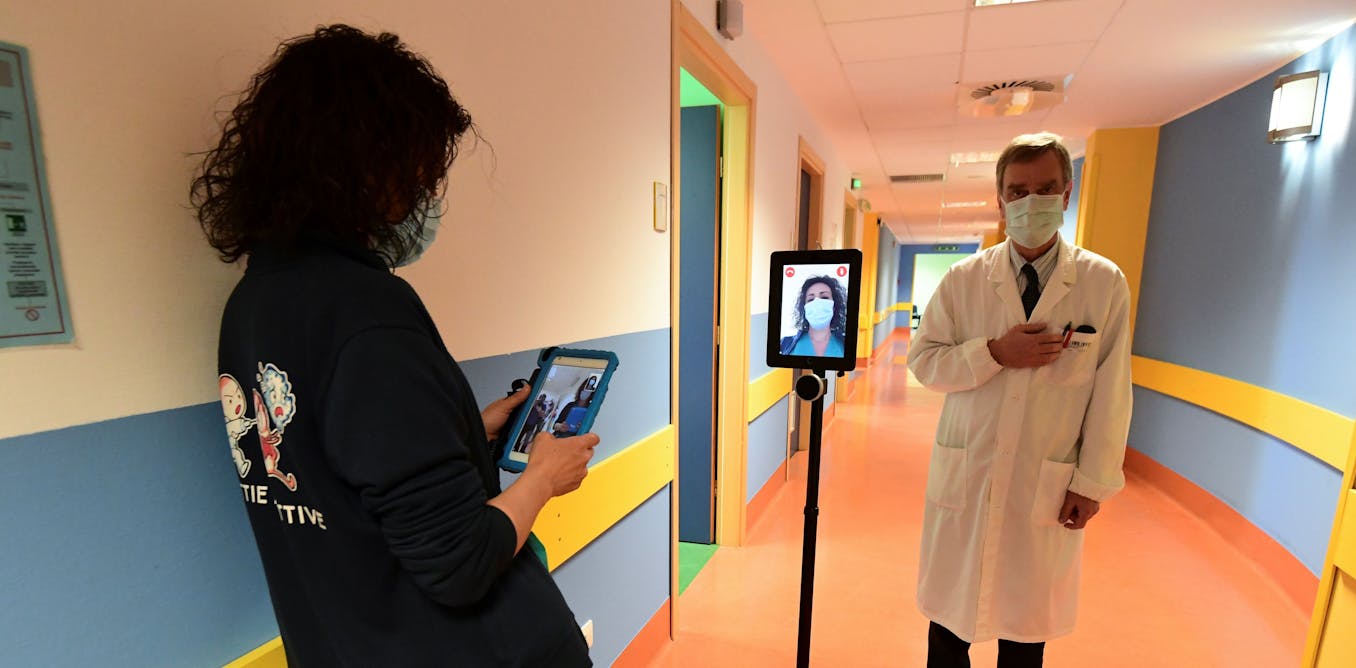
A cylindrical robot rolls into a treatment room to allow health care workers to remotely take temperatures and measure blood pressure and oxygen saturation from patients hooked up to a ventilator. Another robot that looks like a pair of large fluorescent lights rotated vertically travels throughout a hospital disinfecting with ultraviolet light. Meanwhile a cart-like robot brings food to people quarantined in a 16-story hotel. Outside, quadcopter drones ferry test samples to laboratories and watch for violations of stay-at-home restrictions.

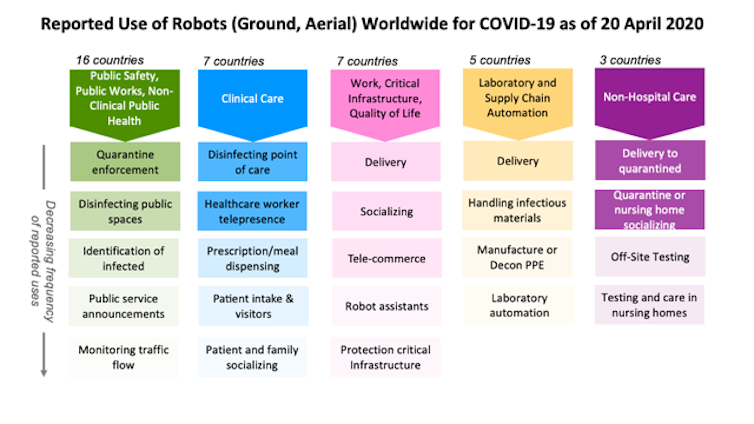
These are just a few of the two dozen ways robots have been used during the COVID-19 pandemic, from health care in and out of hospitals, automation of testing, supporting public safety and public works, to continuing daily work and life.

The lessons they’re teaching for the future are the same lessons learned at previous disasters but quickly forgotten as interest and funding faded. The best robots for a disaster are the robots, like those in these examples, that already exist in the health care and public safety sectors.

Research laboratories and startups are creating new robots, including one designed to allow health care workers to remotely take blood samples and perform mouth swabs. These prototypes are unlikely to make a difference now. However, the robots under development could make a difference in future disasters if momentum for robotics research continues.

Robots around the world

As roboticists at Texas A&M University and the Center for Robot-Assisted Search and Rescue, we examined over 120 press and social media reports from China, the U.S. and 19 other countries about how robots are being used during the COVID-19 pandemic. We found that ground and aerial robots are playing a notable role in almost every aspect of managing the crisis.

In hospitals, doctors and nursesfamily members and even receptionists are using robots to interact in real time with patients from a safe distance. Specialized robots are disinfecting rooms and delivering meals or prescriptions, handling the hidden extra work associated with a surge in patients. Delivery robots are transporting infectious samples to laboratories for testing.

Outside of hospitals, public works and public safety departments are using robots to spray disinfectant throughout public spaces. Drones are providing thermal imagery to help identify infected citizens and enforce quarantines and social distancing restrictions. Robots are even rolling through crowds, broadcasting public service messages about the virus and social distancing.

At work and home, robots are assisting in surprising ways. Realtors are teleoperating robots to show properties from the safety of their own homes. Workers building a new hospital in China were able work through the night because drones carried lighting. In Japan, students used robots to walk the stage for graduation, and in Cyprus, a person used a drone to walk his dog without violating stay-at-home restrictions.

Helping workers, not replacing them

Every disaster is different, but the experience of using robots for the COVID-19 pandemic presents an opportunity to finally learn three lessons documented over the past 20 years. One important lesson is that during a disaster robots do not replace people. They either perform tasks that a person could not do or do safely, or take on tasks that free up responders to handle the increased workload.

The majority of robots being used in hospitals treating COVID-19 patients have not replaced health care professionals. These robots are teleoperated, enabling the health care workers to apply their expertise and compassion to sick and isolated patients remotely.

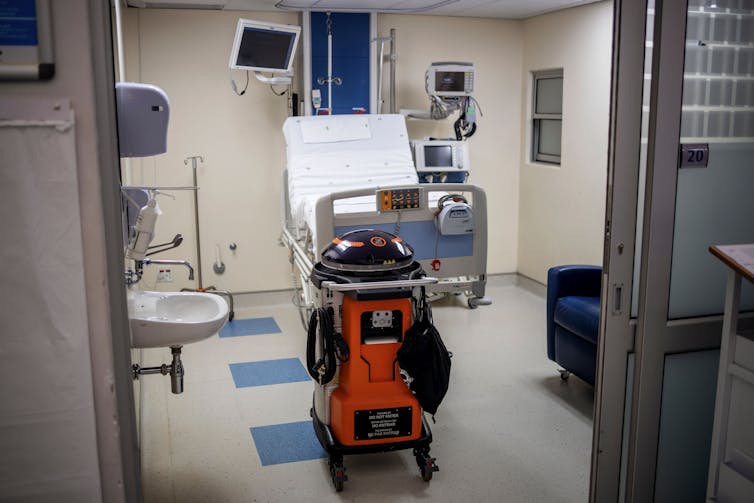
A robot uses pulses of ultraviolet light to disinfect a hospital room in Johannesburg, South Africa. MICHELE SPATARI/AFP via Getty Images

A small number of robots are autonomous, such as the popular UVD decontamination robots and meal and prescription carts. But the reports indicate that the robots are not displacing workers. Instead, the robots are helping the existing hospital staff cope with the surge in infectious patients. The decontamination robots disinfect better and faster than human cleaners, while the carts reduce the amount of time and personal protective equipment nurses and aides must spend on ancillary tasks.

Off-the-shelf over prototypes

The second lesson is the robots used during an emergency are usually already in common use before the disaster. Technologists often rush out well-intentioned prototypes, but during an emergency, responders – health care workers and search-and-rescue teams – are too busy and stressed to learn to use something new and unfamiliar. They typically can’t absorb the unanticipated tasks and procedures, like having to frequently reboot or change batteries, that usually accompany new technology.

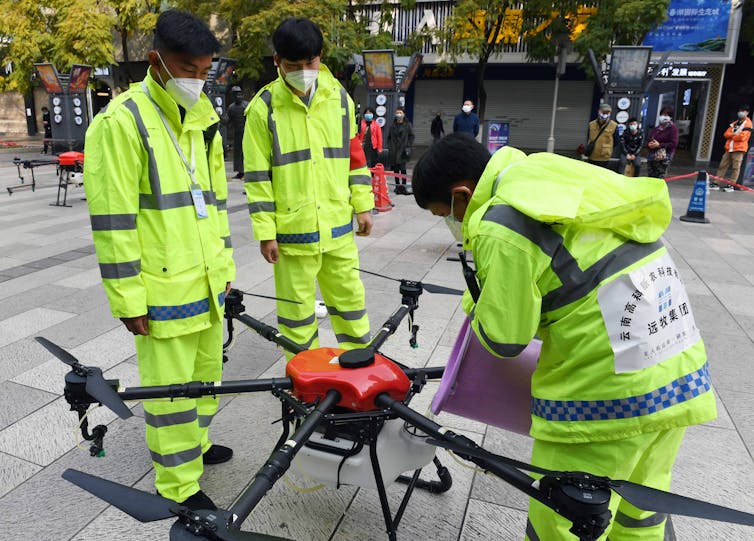
Fortunately, responders adopt technologies that their peers have used extensively and shown to work. For example, decontamination robots were already in daily use at many locations for preventing hospital-acquired infections. Sometimes responders also adapt existing robots. For example, agricultural drones designed for spraying pesticides in open fields are being adapted for spraying disinfectants in crowded urban cityscapes in China and India.

Workers in Kunming City, Yunnan Province, China refill a drone with disinfectant. The city is using drones to spray disinfectant in some public areas. Xinhua News Agency/Yang Zongyou via Getty Images

A third lesson follows from the second. Repurposing existing robots is generally more effective than building specialized prototypes. Building a new, specialized robot for a task takes years. Imagine trying to build a new kind of automobile from scratch. Even if such a car could be quickly designed and manufactured, only a few cars would be produced at first and they would likely lack the reliability, ease of use and safety that comes from months or years of feedback from continuous use.

Alternatively, a faster and more scalable approach is to modify existing cars or trucks. This is how robots are being configured for COVID-19 applications. For example, responders began using the thermal cameras already on bomb squad robots and drones – common in most large cities – to detect infected citizens running a high fever. While the jury is still out on whether thermal imaging is effective, the point is that existing public safety robots were rapidly repurposed for public health.

Don’t stockpile robots

The broad use of robots for COVID-19 is a strong indication that the health care system needed more robots, just like it needed more of everyday items such as personal protective equipment and ventilators. But while storing caches of hospital supplies makes sense, storing a cache of specialized robots for use in a future emergency does not.

This was the strategy of the nuclear power industry, and it failed during the Fukushima Daiichi nuclear accident. The robots stored by the Japanese Atomic Energy Agency for an emergency were outdated, and the operators were rusty or no longer employed. Instead, the Tokyo Electric Power Company lost valuable time acquiring and deploying commercial off-the-shelf bomb squad robots, which were in routine use throughout the world. While the commercial robots were not perfect for dealing with a radiological emergency, they were good enough and cheap enough for dozens of robots to be used throughout the facility.

Robots in future pandemics

Hopefully, COVID-19 will accelerate the adoption of existing robots and their adaptation to new niches, but it might also lead to new robots. Laboratory and supply chain automation is emerging as an overlooked opportunity. Automating the slow COVID-19 test processing that relies on a small set of labs and specially trained workers would eliminate some of the delays currently being experienced in many parts of the U.S.

Automation is not particularly exciting, but just like the unglamorous disinfecting robots in use now, it is a valuable application. If government and industry have finally learned the lessons from previous disasters, more mundane robots will be ready to work side by side with the health care workers on the front lines when the next pandemic arrives.


MUSC Health lays off 900 due to COVID-19 financial strain

https://www.beckershospitalreview.com/finance/musc-health-lays-off-900-due-to-covid-19-financial-strain.html?utm_medium=email

The Agenda: MUSC laying off 900 amid financial strain; McMaster's ...

MUSC Health, an eight-hospital system based in Charleston, S.C., is laying off about 900 employees and reducing pay for salaried workers to help offset financial damage caused by the COVID-19 pandemic.

Like many other health systems across the U.S., MUSC Health is facing financial pressure from canceling elective procedures and other nonemergent care. As a result, the health system has experienced a significant decline in surgical volumes, inpatient visits and ambulatory encounters.

MUSC Health announced April 6 that it has taken several steps to diminish continued financial damage caused by the pandemic. Those steps include delaying capital expenditures, reducing contractual services, transitioning 80 percent of outpatient visits to telehealth, reducing employee compensation and layoffs.

MUSC Health is laying off about 900 employees, roughly 5 percent of its more than 17,000-person workforce. The layoffs, which the health system described as “temporary,” were effective April 7, according to The Post and Courier. The layoffs will not affect frontline healthcare workers, MUSC Health CEO Patrick Cawley, MD, said during an April 6 press conference, according to the report.

The health system is also reducing pay for full-time salaried workers and its leadership team by 15 percent and 20 percent, respectively. Salary adjustments take effect next week.

“It is also important to emphasize that at this time, frontline health care team members, who have already seen fewer work hours due to COVID-19 response, will not see any additional pay cuts so that MUSC Health can continue to be prepared to face the public health crisis as it unfolds,” the health system said April 6.

MUSC Health said it is evaluating state and federal COVID-19 aid proposals, but not all of the proposed benefits apply to MUSC Health. “There are no guarantees on the timing or amount of these funds that MUSC Health may receive,” the system said.


California Hospitals Face Surge With Proven Fixes And Some Hail Marys

https://khn.org/news/california-hospitals-face-surge-with-proven-fixes-and-some-hail-marys/

California Hospitals Face Surge With Proven Fixes And Some Hail ...

California’s hospitals thought they were ready for the next big disaster.

They’ve retrofitted their buildings to withstand a major earthquake and  whisked patients out of danger during deadly wildfires. They’ve kept patients alive with backup generators amid sweeping power shutoffs and trained their staff to thwart would-be shooters.

But nothing has prepared them for a crisis of the magnitude facing hospitals today.

“We’re in a battle with an unseen enemy, and we have to be fully mobilized in a way that’s never been seen in our careers,” said Dr. Stephen Parodi, an infectious disease expert for Kaiser Permanente in California. (Kaiser Health News, which produces California Healthline, is not affiliated with Kaiser Permanente.)

As California enters the most critical period in the state’s battle against COVID-19, the state’s 416 hospitals — big and small, public and private — are scrambling to build the capacity needed for an onslaught of critically ill patients.

Hospitals from Los Angeles to San Jose are already seeing a steady increase in patients infected by the virus, and so far, hospital officials say they have enough space to treat them. But they also issued a dire warning: What happens over the next four to six weeks will determine whether the experience of California overall looks more like that of New York, which has seen an explosion of hospitalizations and deaths, or like that of the San Francisco Bay Area, which has so far managed to prevent a major spike in new infections, hospitalizations and death.

Some of their preparations share common themes: Postpone elective surgeries. Make greater use of telemedicine to limit face-to-face contact. Erect tents outside to care for less critical patients. Add beds — hospital by hospital, a few dozen at a time — to spaces like cafeterias, operating rooms and decommissioned wings.

But by necessity — because of shortages of testing, ventilators, personal protective equipment and even doctors and nurses — they’re also trying creative and sometimes untried strategies to bolster their readiness and increase their capacity.

In San Diego, hospitals may use college dormitories as alternative care sites. A large public hospital in Los Angeles is turning to 3D printing to manufacture ventilator parts. And in hard-hit Santa Clara County, with a population of nearly 2 million, public and private hospitals have joined forces to alleviate pressure on local hospitals by caring for patients at the Santa Clara Convention Center.

Yet some hospitals acknowledge that, despite their efforts, they may end up having to park patients in hallways.

“The need in this pandemic is so different and so extraordinary and so big that a hospital’s typical surge plan will be insufficient for what we’re dealing with in this state and across the nation,” said Carmela Coyle, president and CEO of the California Hospital Association.

Across the U.S., more than 213,000 cases of COVID-19 have been confirmed, and at least 4,750 people have died. California accounts for more than 9,400 cases and at least 199 deaths.

Health officials and hospital administrators are singling out April as the most consequential month in California’s effort to combat a steep increase in new infections. State Health and Human Services Secretary Mark Ghaly said Wednesday that the number of hospitalizations is expected to peak in mid-May.

Gov. Gavin Newsom said there were 1,855 COVID-19 cases in hospitals Wednesday, a number that had tripled in six days, and 774 patients in critical care. By mid-May, the number of critical care patients is expected to climb to 27,000, he said.

Newsom said the state needs nearly 70,000 more hospital beds, bringing its overall capacity to more than 140,000 — both inside hospitals and also at alternative care sites like convention centers. The state also needs 10,000 more ventilators than it normally has to aid the crush of patients needing help to breathe, he said, and so far has acquired fewer than half.

Newsom and state health officials worked with the Trump administration to bring a naval hospital ship to the Port of Los Angeles, where it is already treating patients not infected with the novel coronavirus. The state is working with the Army Corps of Engineers to deploy eight mobile field hospitals, including one in Santa Clara County. And it is bringing hospitals back online that were shuttered or slated to close, including one each in Daly City, Los Angeles, Long Beach and Costa Mesa.

The governor is also drafting a plan to make greater use of hotels and motels and nursing homes to house patients, if needed.

But the size of the surge that hits hospitals depends on how well the public follows social distancing and stay-at-home orders, said Newsom and hospital administrators. “This is not just about health care providers caring for the sick,” said Dr. Steve Lockhart, the chief medical officer of Sutter Health, which has 22 hospitals across Northern California.

While hospitals welcomed the state assistance, they’re also undertaking dramatic measures to prepare on their own.

“I’m genuinely very worried, and it scares me that so many people are still out there doing business as usual,” said Chris Van Gorder, CEO of Scripps Health, a system with five major hospitals in San Diego County. “It wouldn’t take a lot to overwhelm us.”

Internal projections show the hospital system could need 8,000 beds by June, he said. It has 1,200.

In addition to taking precautions to protect its health care workers — such as using baby monitors to observe patients without risking infection — it is working with area colleges to use dorm rooms as hospital rooms for patients with mild cases of COVID-19, among other efforts, he said.

“Honestly, I think we should have been better prepared than we are,” Van Gorder said. “But hospitals cannot take on this burden themselves.”

Van Gorder and other hospital administrators say a continued shortage of COVID-19 tests has hampered their response — because they still don’t know exactly which patients have the virus — as has the chronic underfunding of public health infrastructure.

Kaiser Permanente wants to double the capacity of its 36 California hospitals, Parodi said. It is also working with the garment industry to manufacture face masks, and eyeing hotel rooms for less critical patients.

Harbor-UCLA Medical Center, a 425-bed safety-net hospital in Los Angeles, is working to increase its capacity by 200%, said Dr. Anish Mahajan, the hospital’s chief medical officer.

Harbor-UCLA is using 3D printers to produce ventilator piping equipped to serve two patients per machine. And in March it transformed a new emergency wing into an intensive care unit for COVID-19 patients.

“This was a shocking thing to do,” Mahajan said of the unprecedented move to create extra space.

He said some measures are untested, but hospitals across the state are facing extreme pressure to do whatever they can to meet their greatest needs.

In March, Stanford Hospital in the San Francisco Bay Area launched a massive telemedicine overhaul of its emergency department to reduce the number of employees who interact with patients in person. This is the first time the hospital has used telemedicine like this, said Dr. Ryan Ribeira, an emergency physician who spearheaded the project.

Stanford also did some soul-searching, thinking about which of its staff might be at highest risk if they catch COVID-19, and has assigned them to parts of the hospital with no coronavirus patients or areas dedicated to telemedicine. “These are people that we might have otherwise had to drop off the schedule,” Ribeira said.

Nearby, several San Francisco hospitals that were previously competitors have joined forces to create a dedicated COVID-19 floor at Saint Francis Memorial Hospital with four dozen critical care beds.

The city currently has 1,300 beds, including 200 ICU beds. If the number of patients surges as it has in New York, officials anticipate needing 5,000 additional beds.

But the San Francisco Bay Area hasn’t yet seen the expected surge. UCSF Health had 15 inpatients with COVID-19 Tuesday. Zuckerberg San Francisco General Hospital and Trauma Center had 18 inpatients with the disease Wednesday.

While hospital officials are cautiously optimistic that local and state stay-at-home orders have worked to slow the spread of the virus, they are still preparing for what could be a major increase in admissions.

“The next two weeks is when we’re really going to see the surge,” said San Francisco General CEO Susan Ehrlich. “We’re preparing for the worst but hoping for the best.”


Op-Ed: As a doctor, I use telemedicine. With the coronavirus threat, it could revolutionize healthcare

https://www.latimes.com/opinion/story/2020-03-17/op-ed-as-a-doctor-i-use-telemedicine-with-the-coronavirus-threat-it-could-revolutionize-healthcare?fbclid=IwAR1D6sHWYhvei0Hda4dRuqRaydyxO7AVRjWQj-2UTFqwf3gdKaWuVfxa2Hs

Image result for Op-Ed: As a doctor, I use telemedicine. With the coronavirus threat, it could revolutionize healthcare

As a physician, waiting for the worst of coronavirus to hit, I see a lot to fear. It seems increasingly likely that this will be one of the most significant pandemics in modern human history, and that it will change our approach to healthcare going forward. But not all of its legacy will be negative. Here’s one thing I hope will come out of the crisis: an increased reliance on telemedicine, something that should have happened long ago.

A few months ago, when I was between jobs, I took a part-time job in a rural hospital serving a county of more than 150,000 people. On the verge of bankruptcy, the hospital was unable to attract many specialists to join its ranks, and in desperation, had turned to telemedicine to cover many services. So, for example, if a patient was rushed to the emergency room after a stroke, there was unlikely to be a neurologist in the room. Instead, a neurologist would assess the patient on a mobile screen from far away, with local nursing staff and doctors aiding him or her.

I had been skeptical of telemedicine going in. Physical exams are the bedrock of how doctors and nurses assess patients. We look patients and their loved ones in the eye, palpate sore spots with our fingers and offer comfort with a hand on a shoulder. Physical contact, I’d always thought, was at the heart of how doctors and patients communicate.

It was with this skepticism that I found myself next to a young man who been brought to the emergency room after attempting to take his own life. Again. This time, instead of seeing a psychiatrist in person, he saw one on a screen with wheels. The psychiatrist was in some distant location, but she had been in touch with the local doctors and had access to his medical records. Despite her physical remoteness, she connected with him, and he opened up. She knew of all the local resources to refer him to, and at the end of her conversation, she had developed a real rapport with him. After the visit ended and the nurse wheeled the monitor out of the room, I asked the young man what he thought, and to my surprise, he told me he was more comfortable with this than an in-person visit. He wasn’t the only one — many patients say they prefer a virtual doc to one sitting across from them.

Over the past few decades, medical care has been transformed by technology. Whenever a new drug becomes available, or a medical procedure is approved by the FDA, the medical community is quick to deploy it. Yet, when it comes to how we see patients, our current practices haven’t changed much since the time of Hippocrates. If a patient is sick they either have to come see us in clinic, urgent care, the emergency room or the hospital. Despite the internet transforming every aspect of our lives, from how we find love to how we order groceries, the way we deliver medical care has stagnated.

In the United States, not only are doctors often inaccessible for those living in rural areas, hospitals everywhere have huge economic challenges. One healthcare executive jokingly told me his hospital made more money from its parking lots than its clinics.

The response to COVID-19 might help change that.

One of the main reasons China has been able to slow coronavirus transmission has been because of a dramatic increase in virtual visits. In fact, China has moved half of all medical care online, allowing patients to consult with their doctors and get prescriptions from the comfort of their homes. Hospitals have been notorious petri dishes for deadly bugs since long before COVID-19, and this pandemic has brought that risk into crystal-clear focus. On Tuesday, Medicare announced that it will greatly expand coverage for telemedicine visits, previously sharply restricted. And at a White House briefing, the government announced it was urging states to similarly expand Medicaid coverage to include telemedicine visits by Skype, Facetime or other platforms. Some insurers have also said they will cover telehealth visits at parity with in-person visits.

These measures are commendable, but policies need to be put in place to ensure that the expansion of telemedicine is not temporary. Of course, in-person visits will still be necessary in many cases. But supporting telemedicine on a par with such visits has the potential to protect patients and healthcare personnel and allow for much more efficiency in the system. That said, physicians and nurses will need high-quality training to provide compassionate and thorough care to a patient from across a computer screen. Technology that allows patients to be “examined” remotely needs to be better studied and made more accessible. And since the backbone of telemedicine is reliable high-speed internet, Congress should consider Elizabeth Warren’s plan to bring broadband internet to the remotest parts of this country, to ensure broad access to these services.

This week my team converted most of our clinic visits from face to face to virtual visits. Some were over the phone, others were over video, often with a family member present as well. While there were some patients that still needed to be seen in person, we were able to minimize the risk of viral transmission not only for patients, but also for valuable members of our clinical team. Even before this crisis, as part of my job at the Veterans Affairs Health System in Boston, I often consulted with patients I had never seen as part of an “E Consult” system. While I was initially nervous when I first started doing this, it allowed me to expand my footprint far beyond what I could manage if I were seeing every patient in person.

At some point, I fervently hope the coronavirus will be a thing of the past. But I hope it leaves behind a legacy. I hope it changes how well we wash our hands, how well we fund public health and how well we protect the healthcare workers caring for our sickest patients. And, most of all, I hope it pushes us to embrace telemedicine.