Beyond the initiatives directly tied to COVID relief, President Biden’s healthcare agenda includes a broader bolstering of the protections and coverage mechanisms in the Affordable Care Act (ACA), as well as the rollback of several of the previous administration’s regulatory changes. We’ve outlined that agenda in the graphic below, as well as highlighting key members of the Biden healthcare team.
While much will depend on how the COVID pandemic continues to unfold, and how successful Biden is at striking bipartisan compromises with a closely divided Congress, we’re watching closely for the answers to several key questions:
(1) how aggressive can and will the new administration be in unwinding Trump-era reforms, particularly regarding Medicaid work requirements;
(2) what will be the thrust of Biden’s antitrust policyin the healthcare space;
(3) how hard will Biden be willing to push for expanded subsidies for individuals purchasing insurance on the ACA exchanges;
(4) how will the Biden team build on the transparency measures implemented by the Trump administration; and
(5) how will the new administration use payment reforms and other regulations to address racial and other disparities in healthcare?
All of that preceded by one burning question that has us holding our breath: who will Biden pick to run the all-important Centers for Medicare and Medicaid Services?
The annual J.P. Morgan Healthcare Conference is one of the best ways to diagnose the financial condition of the healthcare industry. Every January, every key stakeholder — providers, payers, pharmaceutical companies, tech companies, medical device and supply companies as well as bankers, venture capital and private equity firms — comes together in one exam room, even when it is virtual, for their annual check-up. But as we all know, this January is unlike any other as this past year has been unlike any other year.
You would have to go back to the banking crisis of 2008 to find a similar moment from an economic perspective. At the time, we were asking, “Are banks too big to fail?” The concern behind the question was that if they did fail, the economic chaos that would follow would lead to a collapse with the consumer ultimately picking up the tab. The rest is history.
Healthcare is “Too Vital to Fail”
2020 was historic in too many ways to count. But in a year when healthcare providers faced the worst financial crisis in the history of healthcare, the headline is that they are still standing. And what they proved is that in contrast to banks in 2008 that were seen by many as “too big to fail,” healthcare providers in 2020 proved that they were “too vital to fail.”
One of the many unique things about the COVID-19 pandemic is we are simultaneously experiencing a health crisis, where healthcare providers are the front line in the battle, and an economic crisis, felt in a big way in healthcare given the unique role hospitals play as the largest employer in most communities. Hospitals and health systems have done the vast majority of testing, treating, monitoring, counseling, educating and vaccinating all while searching for PPE and ventilators, and conducting clinical trials. And that’s just the beginning of the list.
Stop and think about that for a minute. What would we have done without them? Thinking through that question will give you some appreciation for the critical, challenging and central role that healthcare providers have had to play over the past year.
Simply stated, healthcare providers are the heart of healthcare, both clinically (essentially 100 percent of the care) and financially (over 50 percent of the $4 trillion annual spend on U.S. healthcare). Over the last year they stepped up and they stepped in at the moment where we needed them the most. This was despite the fact that, like most businesses, they were experiencing calamitous losses with no assurances of any assistance.
Healthcare is “Pandemic-Proof”
This was absolutely the worst-case scenario and the biggest test possible for our nation’s healthcare delivery system. Patient volume and therefore revenue dropped by over 50 percent when the panic of the pandemic was at its peak, driving over $60 billion in losses per month across hospitals and healthcare providers. At the same time, they were dramatically increasing their expenses with PPE, ventilators and additional staff. This was not heading in a good direction. While failure may not have been seen as an option, it was clearly a possibility.
The CARES Act clearly provided a temporary lifeline, providing funding for our nation’s hospitals to weather the storm. While there are more challenging times ahead, it is now clear that most are going to make it to the other side. The system of care in our country is often criticized, but when faced with perhaps the most challenging moment in the history of healthcare, our nation’s hospitals and health systems stepped up heroically and performed miraculously. The work of our healthcare providers on the front line and those who supported them was and is one thing that we all should be exceptionally proud of and thankful for.In 2020, they proved that not only is our nation’s healthcare system too vital to fail, but also that it is “pandemic proof.”
Listening to Front Line at the 2021 J.P. Morgan Healthcare Conference
There has never been a more important year to listen to the lessons from healthcare providers. They are and were the front line of our fight against COVID-19. If there was a class given about how to deal with a pandemic at an institutional level, this conference is where those lessons were being taught.
This year at the J.P. Morgan Healthcare Conference, CEOs, and CFOs from many of the most prestigious and most well-respected health systems in the world presented including AdventHealth, Advocate Aurora Health, Ascension, Baylor Scott & White Health, CommonSpirit Health, Henry Ford Health System, Intermountain Healthcare, Jefferson Health, Mass General Brigham, Northwell Health, OhioHealth, Prisma Health, ProMedica Health System, Providence, Spectrum Health and SSM Health.
I’ve been in healthcare for 30 years and this is my fifth year of writing up the summary of the non-profit provider track of the conference for Becker’s Healthcare to help share the wisdom of the crowd of provider organizations that share their stories. Clearly, this year was different and not because the presentations were virtual, but because they were inspirational.
What did we learn? The good news is that they have made many changes that have the potential to move healthcare in a much better direction and to get to a better place much faster. So, this year instead of providing you a nugget from each presentation, I am going to take a shot at summarizing what they collectively have in motion to stay vital after COVID.
10 Moves Healthcare Providers are Making to Stay Vital After-COVID
As a leader in healthcare, you will never have a bigger opportunity to drive change than right now. Smart leaders are framing this as essentially “before-COVID (BC)” and “after-COVID (AC)” and using this moment as their burning platform to drive change. Credit to the team at Providence for the acronym, but every CEO talked about this concept. As the saying goes, “never let a good crisis go to waste.” Well, we’ve certainly had a crisis, so here is a list of what the top health systems are doing to ensure that they don’t waste it and that they stay vital after-COVID:
1. Take Care of Your Team and They’ll Take Care of You: In a crisis, you can either come together as a team or fall apart. Clearly there has been a significant and stunning amount of pressure on healthcare providers. Many are fearing that mental health might be our nation’s next pandemic in the near future because they are seeing it right now with their own team. Perhaps one of their biggest lessons from this crisis has been the need to address the mental, physical and spiritual health of both team members as well as providers. They have put programs in place to help and have also built a tremendous amount of trust with their team by, in many cases, not laying off and/or furloughing employees. While they have made cuts in other areas such as benefits, this collective approach proved incredibly beneficial. And the last point here that relates to thinking differently about their team is that similar to other businesses, many health systems are making remote arrangements permanent for certain administrative roles and moving to a flexible approach regarding their team and their space in the future.
2. Focus on Health Equity, Not Just Health Care: This was perhaps the most notable and encouraging change from presentations in past years at J.P. Morgan. I have been going to the conference for over a decade, and I’ve never heard someone mention this term or outline their efforts on “health equity” — this year, nearly everyone did. In the past, they have outlined many wonderful programs on “social determinants of health,” but this year they have seen the disproportionate impact of COVID on low-income communities bringing the ongoing issue of racial disparities in access to care and outcomes to light. As the bedrock of employment in their community, this provides an opportunity to not just provide health care, but also health equity, taking an active role to help make progress on issues like hunger, homelessness, and housing. Many are making significant investments in a number of these and other areas.
3. Take the Lead in Public Health — the Message is the Medicine:One of the greatest failings of COVID, perhaps the greatest lesson learned, is the need for clear and consistent messaging from a public health perspective. That is a role that healthcare providers can and should play. In the pandemic, it represented the greatest opportunity to save lives as the essence of public health is communication — the message is the medicine. A number of health systems stepped into this opportunity to build trust and to build their brand, which are essentially one in the same. Some organizations have created a new role — a Chief Community Health Officer — which is a good way to capture the work that is in motion relative to social determinants of health as well as health equity. Many understand the opportunity here and will take the lead relative to vaccine distribution as clear messaging to build confidence is clearly needed.
4. Make the Home and Everywhere a Venue of Care:A number of presenters stated that “COVID didn’t change our strategy, it accelerated it.” For the most part, they were referring to virtual visits, which increased dramatically now representing around 10 percent of their visits vs. 1 percent before-COVID. One presenter said, “Digital has been tested and perfected during COVID,” but that is only considering the role we see digital playing in this moment. It is clear some organizations have a very narrow tactical lens while others are looking at the opportunity much more strategically. For many, they are looking at a “care anywhere and everywhere” strategy. From a full “hospital in the home” approach to remote monitoring devices, it is clear that your home will be seen as a venue of care and an access point moving forward. The pandemic of 2020 may have sparked a new era of “post-hospital healthcare” — stay tuned.
5. Bury Your Budget and Pivot to Planning:The budget process has been a source of incredible distrust, dissatisfaction and distraction for every health system for decades. The chaos and uncertainty of the pandemic forced every organization to bury their budget last year. With that said, many of the organizations that presented are now making a permanent shift away from a “budget-based culture” where the focus is on hitting a now irrelevant target set that was set six to nine months ago to a “performance-based culture” where the focus is on making progress every day, week, month and quarter. Given that the traditional annual operating budget process has been the core of how health systems have operated, this shift to a rolling forecast and a more dynamic planning process is likely the single most substantial and permanent change in how hospitals and health systems operate due to COVID. In other words, it is arguably a much bigger headline than what’s happened with virtual visits.
6. Get Your M&A Machine in Motion: It was clear from the presentations that activity around acquisitions is going to return, perhaps significantly. These organizations have strong balance sheets and while the strong have gotten stronger during COVID, the weak have in many cases gotten weaker. Many are going to be opportunistic to acquire hospitals, but at the same time they have concluded that they can’t just be a system of care delivery. They are also focused on acquiring and investing in other types of entities as well as forming more robust partnerships to create new revenue streams. Organizations that already had diversified revenue streams in place came through this pandemic the best. Most hospitals are overly reliant on the ED and surgical volume. Trying to drive that volume in a value-based world, with the end of site of service differentials and the inpatient only list, will be an even bigger challenge in the future as new niche players enter the market. As I wrote in the headline of my summary two years ago, “It’s the platform, stupid.” There are better ways to create a financial path forward that involve leveraging their assets — their platform — in new and creative ways.
7. Hey, You, Get into the Cloud:With apologies for wrapping a Rolling Stones song into a conference summary, one of the main things touted during presentations was “the cloud” and their ability to pull clinical, operational and financial dashboards together to monitor the impact of COVID on their organization and organize their actions. Focus over the last decade has been on the clinical (implementing EHRs), but it is now shifting to “digitizing operations” with a focus on finance and operations (planning, cost accounting, ERPs, etc.) as well as advanced analytics and data science capabilities to automate, gather insight, manage and predict. It is clear that the cloud has moved from a curiosity to a necessity for health systems, making this one of the biggest areas of investment for every health system over the next decade.
8. Make Price Transparency a Key Differentiator: One of the great lessons from Amazon (and others) is that you can make a lot of money when you make something easy to buy. While many health systems are skeptical of the value of the price transparency requirements, those that have a deep understanding of both their true cost of care and margins are using this as an opportunity to prove their value and accelerate their strategy to become consumer-centric. While there is certainly a level of risk, no business has ever been unsuccessful because they made their product easier to understand and access. Because healthcare is so opaque, there is an opening for healthcare providers to build trust, which is their main asset, and volume, which is their main source of revenue, by becoming stunningly easy to do business with. This may be tough sledding for some as this isn’t something healthcare providers are known for. To understand this, spend a few minutes on Tesla’s website vs. Ford’s. The concept of making something easy, or hard, to buy will become crystal clear as fast as a battery-driven car can go from zero to 60.
9. Make Care More Affordable:This represents the biggest challenge for hospitals and health systems as they ultimately need to be on the right side of this issue or the trust that they have will disappear and they will remain very vulnerable to outside players. All are investing in advanced cost accounting systems (time-driven costing, physician costing, supply, and drug costing) to truly understand their cost and use that as a basis to price more strategically in the market. Some are dropping prices for shoppable services and using loss leader strategies to build their brand. The incoming Secretary of Health and Human Services has a strong belief regarding the accountability of health systems to be consumer centric. The health systems that understand this are working to get ahead of this issue as it is likely one of their most significant threats (or opportunities) over the next decade. This means getting all care to the right site of care, evaluating every opportunity to improve, and getting serious about eliminating the need for expensive care through building healthy communities. If you’re worried about Wal-Mart or Amazon, this is your secret weapon to keep them on the sideline.
10. Scale = Survival: One of the big lessons here is that the strong got stronger, the weak got weaker. For the strong, many have been able to “snapback” in financial performance because they were resilient. They were able to designate COVID-only facilities, while keeping others running at a higher capacity. To be clear, while most health systems are going to get to the other side and are positioned better than ever, there are many others that will continue to struggle for years to come. According to our data at Strata, we see 25 percent operating at negative margins right now and another 50 percent just above breakeven. They key to survival moving forward, for those that don’t have a captive market, will be scale. If this pandemic proved one thing relative to the future of health systems it is this — scale equals survival.
When Will We Return to Normal?
Based on what the projections that these health systems shared, the “new normal” for health systems for the first half of 2021 will be roughly 95 percent of prior year inpatient volume with a 20 percent year-over-year drop in ED volume and a drop of 10-15 percent in observation visits. So, the pain will continue, but given the adjustments that were already made in 2020, it looks like they will be able to manage through COVID effectively. While there will be a pickup in the second half of 2021, the safe bet is that a “return to normal” pre-COVID volumes likely won’t occur until 2022. And there are some who believe that some of the volume should have never been there to begin with and we might see a permanent shift downward in ED volume as well as in some other areas.
With that said, I’ll steal a quote from Bert Zimmerli, the CFO of Intermountain Healthcare, who said, “Normal wasn’t ever nearly good enough in healthcare.”In that spirit, the goal should be to not return to normal, but rather to use this moment as an opportunity to take the positive changes driven by COVID — from technology to processes to areas of focus to a sense of responsibility — and make them permanent.
Thanking Our “Healthcare Heroes”
We’ll never see another 2020 again, hopefully. With that said, one of the silver linings of the year is everything we learned in healthcare. The most important lesson was this — in healthcare there are literally heroes everywhere. To each of them, I just want to say “thank you” for being there for us when we needed you the most. We should all be writing love letters to those on the front line who risked their lives to save others. Our nation’s healthcare system has taken a lot of criticism through the years from those on the outside, often with a blind eye to how things work in practice vs. in concept. But this year we all got to see first-hand what’s happening inside of healthcare — the heroic work of our healthcare providers and those who support them.
They faced the worst crisis in the history of healthcare. They responded heroically and were there for our families and friends.
They proved that healthcare is too vital to fail. They proved that healthcare is pandemic-proof.
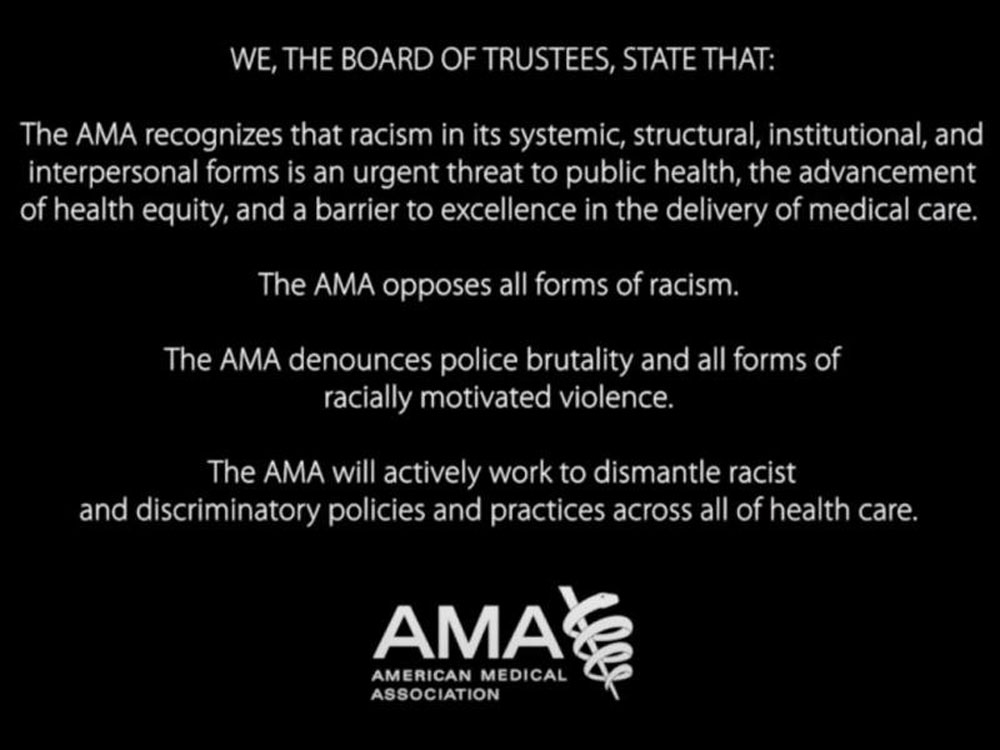
On Monday, the American Medical Association (AMA) voted to recognize racism as an “urgent threat to public health”. At its annual meeting, the organization’s House of Delegates voted to take actions to confront systemic, cultural and interpersonal racism, including acknowledging harm and bias in medical research and healthcare delivery, funding research to identify risks of racial bias to health, and encouraging medical schools to teach students about the causes and effects of racism, and strategies to prevent adverse health outcomes.
The resolution was one of several proposed items aimed at addressing racial diversity and equity in medical education and care delivery. Over the past two years, the AMA has been moving toward a more progressive stance on health and social policy; in June the AMA Board of Trustees also pledged action against racism and police brutality in response to the murder of George Floyd.
A generational divide between older and younger doctors was also apparent during last year’s debates on Medicare for All, when the organization narrowly voted to maintain its opposition to single-payer healthcare in a close vote that would have been unimaginable a decade ago.
At this week’s meeting, however, the group gave its stamp of approval to proposals for a more limited “public option” coverage expansion.As more young physicians enter the field of medicine, we’d expect the AMA to become a stronger voice on a range of social and policy issues.
The number of uninsured people has increased since 2016, rising from 29 million, following the reforms of the Affordable Care Act (ACA), to 35.7 million by the end of 2019. The economic recession has left an estimated 3 million more people uninsured this year.
Racial inequities in coverage narrowed after the ACA, but uninsured rates among people of color exceed those of white people.
Many insured people pay premiums that consume an increasingly large share of their income.
An estimated 40 million people with insurance are effectively underinsured because of deductibles and cost-sharing.
An estimated 133 million people under age 65 have preexisting health conditions; COVID-19 has already increased that number by an estimated 3.4 million nonelderly adults (20–59) as of October 7.
The Candidates’ Approaches
PRESIDENT DONALD TRUMP
Overall approach: Repeal the ACA and replace it with market-driven coverage options aimed at lowering premiums and increasing choice of plans tailored to individual preferences; give states more flexibility in designing coverage options; require more accountability for people with low incomes enrolled in public programs; protect preexisting conditions.
Medicaid: Repeal the ACA Medicaid expansion for adults; provide block grants to states to design their own programs; increase accountability through work requirements.
Individual market and marketplaces: Has promoted weaker regulations on plans that don’t comply with the ACA’s preexisting condition protections and other requirements; elimination of advertising and enrollment assistance during open enrollment; elimination of payments to insurers to offer lower-deductible plans.
Employer coverage:Has promoted weaker regulations on association health plans that don’t comply with the ACA and allowed employers to fund accounts for employees to buy health plans on their own, including products that don’t comply with the ACA.
VICE PRESIDENT JOE BIDEN
Overall approach: Protect insurance for people with preexisting conditions by supporting and building on the ACA; expand insurance coverage and reduce consumers’ health care costs by enhancing the ACA’s marketplace subsidies, covering people currently eligible for Medicaid in nonexpansion states, and giving more people in employer plans the option to enroll in marketplace plans with subsidies.
Medicaid:Expand enrollment by allowing eligible people in 12 states without Medicaid expansion to enroll in a public plan through the marketplaces with no premiums; make enrollment easier with autoenrollment.
Individual market and marketplaces:Expand enrollment through enhanced subsidies, greater advertising and enrollment assistance: no one pays more than 8.5 percent of income on marketplace coverage; change the benchmark plan from silver to gold to reduce deductibles and cost-sharing.
Employer coverage: Allows anyone with employer coverage to enroll in a public plan through the marketplaces and be eligible for subsidies.
Medicare:Would allow people ages 60 to 65 to enroll in a Medicare-like heath plan.
Implications of the Candidates’ Approaches
I DON’T HAVE HEALTH INSURANCE. WILL THE APPROACHES PROVIDE ME WITH NEW OPTIONS?
Trump:The number of people without health insurance has increased under the president’s watch in part because of policies that have eliminated the promotion and advertising of marketplace open-enrollment periods, enrollment restrictions in Medicaid, and immigration policies that have had a chilling effect on enrollment of legal immigrants and their children. Trump supports a lawsuit now before the Supreme Court that argues for repeal of the ACA, which would eliminate coverage for as many as 20 million people. Says he will come up with a replacement but has yet to do so.
Biden: Has introduced proposals to build on the ACA by covering people in the 12 states that haven’t expanded Medicaid and enhance subsidies for marketplace plans. This would provide new options for people who are currently uninsured and increase coverage over time.
I HAVE A PREEXISTING HEALTH CONDITION. WILL THE APPROACH GUARANTEE THAT I CAN ALWAYS GET COVERED?
Trump: The ACA currently provides this protection. Trump supports the lawsuit before the Supreme Court that argues for repeal of the ACA and its preexisting conditions provision. Trump issued an executive order that said preexisting conditions are protected, but without the ACA or new legislation the order has no effect and is purely symbolic.
Biden:The vice president pledges to support and build on the ACA, retaining its preexisting condition protections.
MY PREMIUMS AND DEDUCTIBLES ARE BECOMING LESS AFFORDABLE; WILL THE CANDIDATES’ APPROACHES LOWER THEM?
Trump: The president eliminated payments to insurers to reimburse them for offering lower-deductible plans in the ACA marketplaces to people with lower incomes, as required by the law. This had the effect of increasing premiums for people not eligible for subsidies. He has promoted the sale of non-ACA-compliant health plans, like short-term plans. These plans have lower premiums for healthy people but screen for preexisting conditions and often provide little cost protection if someone becomes sick. He has loosened regulations for association health plans, although that was turned back under legal challenge. The repeal of the ACA would mean the loss of marketplace subsidies and preexisting-condition protections, making coverage unavailable or unaffordable for people with low and moderate incomes and those with health problems.
Biden: The vice president’s proposal to enhance marketplace subsidies will cap the amount of premiums people pay at 8.5 percent of income, including people in employer plans who would have the option to enroll in the marketplaces. By linking subsidies to gold plans, deductibles would also fall for those who choose those plans.
I AM WORRIED ABOUT RACIAL INEQUITY IN HEALTH CARE. WILL THE APPROACH MAKE HEALTH COVERAGE MORE EQUITABLE?
Trump: Uninsured rates among Hispanic people have risen under the president’s watch. Repealing the ACA would further eliminate coverage gains made by Hispanics, as well as Black people and Asian Americans, widening racial disparities in coverage and access.
Biden:The vice president’s proposals to expand coverage under the ACA will particularly benefit people of color. This is because people living in the 12 states that have not yet expanded Medicaid are disproportionately Black and Hispanic.
Before each presidential election, the Commonwealth Fund analyzes the major health policy positions of the Democratic and Republican candidates to assist Americans in making informed choices. In 2020, with health care rising to the top of the electorate’s concerns for myriad reasons, this information has never been more important.
In the next week, we will be publishing a series of analyses that compare the positions of President Donald Trump and his challenger, former Vice President Joe Biden, on topics like:
prescription drug policy;
the affordability and availability of health care and insurance, including the issue of preexisting conditions;
questions concerning older adults, like Medicare; how best to control the costs of health care;
addressing mental and behavioral health concerns;
and strategies for advancing health care equity.
In most previous presidential election years, we have had the opportunity to compare fairly well-delineated party and candidate programs. In 2020, President Trump and the Republican party have chosen not to issue any party platform or formal policy positions. Therefore, we have derived our description of President Trump’s program from the policies he espoused, and decisions made during his first term. Vice President Biden’s information comes from his campaign platform.
We hope you find these summaries helpful as you weigh your choices for Election Day.
The coronavirus is spreading at dangerous levels across much of the United States, and public health experts are demanding a dramatic reset in the national response, one that recognizes that the crisis is intensifying and that current piecemeal strategies aren’t working.
This is a new phase of the pandemic, one no longer built around local or regional clusters and hot spots. It comes at an unnerving moment in which the economy suffered its worst collapse since the Great Depression, schools are rapidly canceling plans for in-person instruction and Congress has failed to pass a new emergency relief package. President Trump continues to promote fringe science, the daily death toll keeps climbing and the human cost of the virus in America has just passed 150,000 lives.
“Unlike many countries in the world, the United States is not currently on course to get control of this epidemic. It’s time to reset,” declared a report released this week by Johns Hopkins University.
Another report from the Association of American Medical Colleges offered a similarly blunt message: “If the nation does not change its course — and soon — deaths in the United States could be well into the multiple hundreds of thousands.”
The country is exhausted, but the virus is not. It has shown a consistent pattern: It spreads opportunistically wherever people let down their guard and return to more familiar patterns of mobility and socializing. When communities tighten up, by closing bars or requiring masks in public, transmission drops.
That has happened in some Sun Belt states, including Arizona, Florida and Texas, which are still dealing with a surge of hospitalizations and deaths but are finally turning around the rate of new infections.
There are signs, however, that the virus is spreading freely in much of the country. Experts are focused on upticks in the percentage of positive coronavirus tests in the upper South and Midwest. It is a sign that the virus could soon surge anew in the heartland. Infectious-disease experts also see warning signs in East Coast cities hammered in the spring.
“There are fewer and fewer places where anybody can assume the virus is not there,” Gov. Mike DeWine (R) of Ohio said Wednesday. “It’s in our most rural counties. It’s in our smallest communities. And we just have to assume the monster is everywhere. It’s everywhere.”
Dire data
An internal Trump administration briefing document prepared by the Federal Emergency Management Agency and obtained Friday by The Washington Post counted 453,659 new infections in the past week.
Alaska is in trouble. And Hawaii, Missouri, Montana and Oklahoma. Those are the five states, as of Friday, with the highest percentage increase in the seven-day average of new cases, according to a Post analysis of nationwide health data.
“The dominoes are falling now,” said David Rubin, director of the PolicyLab at Children’s Hospital of Philadelphia, which has produced a model showing where the virus is likely to spread over the next four weeks.
His team sees ominous trends in big cities, including Baltimore, Chicago, Detroit, Indianapolis, Kansas City, Louisville, Philadelphia, St. Louis and Washington, with Boston and New York not far behind. And Rubin warns that the expected influx of students into college towns at the end of this month will be another epidemiological shock.
“I suspect we’re going to see big outbreaks in college towns,” he said.
Young people are less likely to have a severe outcome from the coronavirus, but they are adept at propelling the virus through the broader population, including among people at elevated risk. Numbers of coronavirus-related hospitalizations in the United States went from 36,158 on July 1 to 52,767 on July 31, according to The Post’s data. FEMA reports a sharp increase in the number of patients on ventilators.
The crisis has highlighted the deep disparities in health outcomes among racial and ethnic groups, and data from the Centers for Disease Control and Prevention this week showed thathospitalization rates due to the coronavirus are roughly five times higher among Black, Hispanic and Native Americans than Whites.
Thirty-seven states and Puerto Rico will probably see rising daily death tolls during the next two weeks compared with the previous two weeks, according to the latest ensemble forecast from the University of Massachusetts at Amherst that combines more than 30 coronavirus models.
There are glimmers of progress. The FEMA report showed 237 U.S. counties with at least two weeks of steady declines in numbers of new coronavirus cases.
But there are more than 3,100 counties in America.
“This is not a natural disaster that happens to one or two or three communities and then you rebuild,” said Beth Cameron, vice president for global biological policy and programs at the Nuclear Threat Initiative and a former White House National Security Council staffer focused on pandemics. “This is a spreading disaster that moves from one place to another, and until it’s suppressed and until we ultimately have a safe and effective and distributed vaccine, every community is at risk.”
A national strategy, whether advanced by the federal government or by the states working in tandem, will more effectively control viral spread than the current patchwork of state and local policies, according to a study from researchers at the Massachusetts Institute of Technology published Thursday in the Proceedings of the National Academy of Sciences.
The coordination is necessary because one state’s policies affect other states. Sometimes, that influence is at a distance, because states that are geographically far apart can have cultural and social ties, as is the case with the “peer states” of New York and Florida, the report found.
“The cost of our uncoordinated national response to covid-19, it’s dramatic,” said MIT economist Sinan Aral, senior author of the paper.
Some experts argue for a full six-to-eight-week national shutdown, something even more sweeping than what was instituted in the spring. There appears to be no political support for such a move.
Neil Bradley, executive vice president of the U.S. Chamber of Commerce, said fresh federal intervention is necessary in this second wave of closures. Enhanced federal unemployment benefits expired at the end of July, with no agreement on a new stimulus package in sight.
“Congress, on a bipartisan basis, was trying to create a bridge to help individuals and businesses navigate the period of a shutdown,” Bradley said. “Absent an extension of that bridge, in light of a second shutdown, that bridge becomes a pier. And then that’s a real problem.”
With the economy in shambles, hospitals filling up and the public frustrated, anxious and angry, the challenge for national leadership is finding a plausible sea-to-sea strategy that can win widespread support and simultaneously limit sickness and death from the virus.
Many Americans may simply feel discouraged and overtaxed, unable to maintain precautions such as social distancing and mask-wearing. Others remain resistant, for cultural or ideological reasons, to public health guidance and buy into conspiracy theories and pseudoscience.
DeWine is struggling to get Ohio citizens to take seriously the need to wear masks. A sheriff in rural western Ohio told the governor Wednesday that people didn’t think the virus was a big problem. DeWine informed the sheriff that the numbers in his county were higher per capita than in Toledo.
“The way I’ve explained to people, if we want to have Friday night football in the fall, if we want our kids back in school, what we do in the next two weeks will determine if that happens,” DeWine said.
The crucial metric
The coronavirus has always been several steps ahead of the U.S. government, the scientific community, the news media and the general public. By the time a community notices a surge in patients to hospital emergency rooms, the virus has seeded itself widely.
The virus officially known as SARS-CoV-2 can be transmitted by people who are infectious but not symptomatic. The incubation period is typically about six days, according to the CDC. When symptoms flare, they can be ambiguous. A person may not seek a test right away. Then, the test results may not come back for days, a week, even longer.
That delay makes contact tracing nearly futile. It also means government data on virus transmission is invariably out of date to some degree — it’s a snapshot of what was happening a week or two weeks before. And different jurisdictions use different metrics to track the virus, further fogging the picture.
The top doctors on the White House coronavirus task force, Deborah Birx and Anthony S. Fauci, are newly focused on the early warning signs of a virus outbreak. This week, they warned that the kind of runaway outbreaks seen in the Sun Belt could potentially happen elsewhere. Among the states of greatest concern: Indiana, Kentucky, Ohio and Tennessee.
Fauci and Birx have pointed to a critical metric: the percentage of positive test results. When that figure starts to tick upward, it is a sign of increasing community spread of the virus.
“That is kind of the predictor that if you don’t do something — namely, do something different — if you’re opening up at a certain pace, slow down, maybe even backtrack a little,” Fauci said in an interview Wednesday.
Without a vaccine, the primary tools for combating the spread of the virus remain the common-sense “non-pharmaceutical interventions,” including mask-wearing, hand-washing, staying out of bars and other confined spaces, maintaining social distancing of at least six feet and avoiding crowds, Fauci said.
“Seemingly simple maneuvers have been very effective in preventing or even turning around the kind of surges we’ve seen,” he said.
Thirty-three U.S. states have positivity rates above 5 percent. The World Health Organization has cited that percentage as a crucial benchmark for governments deciding whether to reopen their economy. Above 5 percent, stay closed. Below, open with caution.
Of states with positivity rates below 5 percent, nine have seen those rates rise during the last two weeks.
“You may not fully realize that when you think things are okay, you actually are seeing a subtle, insidious increase that is usually reflected in the percent of your tests that are positive,” Fauci said.
The shutdown blues
Some governors immediately took the White House warnings to heart. On Monday, Kentucky Gov. Andy Beshear (D) said at a news conference that he had met with Birx the previous day and was told he was getting the same warning Texas and Florida received “weeks before the worst of the worst happened.”
To prevent that outcome in his state, Beshear said, he was closing bars for two weeks and cutting seating in restaurants.
But as Beshear pleaded that “we all need to be singing from the same sheet of music,” discord and confusion prevailed.
Iowa Gov. Kim Reynolds (R) said Thursday she wasn’t convinced a mask mandate is effective: “No one knows particularly the best strategy.”
Earlier in the week, Tennessee Gov. Bill Lee (R) demurred on masks and bar closures even as he stood next to Birx and spoke to reporters.
“That’s not a plan for us now,” he said. He added emphatically, “We are not going to close the economy back down.”
The virus is spreading throughout his state, and not just in the big cities. Vacationers took the virus home from the honky-tonks of Nashville and blues clubs of Memphis to where they live in more rural areas, said John Graves, a professor at Vanderbilt University studying the pandemic.
“The geographical footprint of the virus has reached all corners of the state at this point,” Graves said.
In Missouri, Gov. Michael L. Parson (R) was dismissive of New York’s imposition of a quarantine on residents from his state as a sign of a worsening pandemic. “I’m not going to put much stock in what New York says — they’re a disaster,” he said at a news conference Monday.
Missouri has no mask mandate, leaving it to local officials to act — often in the face of hostility and threats. In the town of Branson, angry opponents testified Tuesday that there was no reason for a mask order when deaths in the county have been few and far between.
“It hasn’t hit us here yet, that’s what I’m scared of,” Branson Alderman Bill Skains said before voting with a majority in favor of the mandate. “It is coming, and it’s coming like a freight train.”
Democratic mayors in Missouri’s two biggest cities, Kansas City and St. Louis, said that with so many people needing jobs, they are reluctant to follow Birx’s recommendation to close bars.
“The whole-blanket approach to shut everybody down feels a little harsh for the people who are doing it right,” said Jacob Long, spokesman for St. Louis Mayor Lyda Krewson. “We’re trying to take care of some bad actors first.”
Minneapolis Mayor Jacob Frey also got a warning from Birx. On Wednesday, he said all bar drinking must move outside.
“We don’t want to be heading in the direction of everybody else,” said Kristen Ehresmann, director of the infectious-disease epidemiology division at the Minnesota Department of Health. She acknowledged that some options “are really pretty draconian.”
The problem is that less-painful measures have proven insufficient.
“The disease transmission we’re seeing is more than what would have been expected if people were following the guidance as it is laid out. It’s a reflection of the fact that they’re not,” she said.
‘A tremendous disappointment’
Wisconsin Gov. Tony Evers (D) tried to implement broad statewide measures early in the pandemic, only to have his “Safer at Home” order struck down by the state’s Supreme Court.
With cases in his state rising anew, he tried again Thursday, declaring a public health emergency and issuing a statewide mask mandate.
“While our local health departments have been doing a heck of a job responding to this pandemic in our communities, the fact of the matter is, this virus doesn’t care about any town, city or county boundary, and we need a statewide approach to get Wisconsin back on track,” Evers said.
Ryan Westergaard, Wisconsin’s chief medical officer, said he is dismayed by the failures of the national pandemic response.
“I really thought we had a chance to keep this suppressed,” Westergaard said. “The model is a good one: testing, tracing, isolation, supportive quarantine. Those things work. We saw this coming. We knew we had to build robust, flexible systems to do this in all of our communities. It feels like a tremendous disappointment that we weren’t able to build a system in time that could handle this.”
There is one benefit to the way the virus has spread so broadly, he noted: “We no longer have to keep track of people traveling to a hot spot if hot spots are everywhere.”
Epidemiologist Sharrelle Barber discusses the racial inequalities that exist for COVID-19 and many other health conditions.
Throughout the COVID-19 pandemic, whether cases are flaring up, slowing to a simmer, or back on the rise in areas across the United States, the data makes one fact apparent: The viral disease has disproportionally sickened and killed marginalized communities. A New York Times analysis of data from almost 1,000 counties that reported racial breakdowns of COVID-19 cases and fatalities revealed that, compared to white Americans, African Americans and Hispanics were three times more likely to experience and two times more likely to die from the illness. The Navajo Nation has, per capita, more confirmed cases and deaths than any of the 50 states.
Many factors, like access to healthcare and testing, household size, or essential worker status, likely contribute to the pandemic’s outsized toll on communities of color, but experts see a common root: the far-reaching effects of systemic racism.
That racism would have such an insidious effect on health isn’t a revelation to social epidemiologists. For decades, public health experts have discussed “weathering,” or the toll that repeated stressors experienced by people of color take on their health. Studies have demonstrated the link between such chronic stress and high blood pressure, the increased maternal mortality rate among black and indigenous women, and the elevated prevalence of diabetes in black, Latino and especially Native American populations. The pandemic has laid bare these inequities. At the same time, outcry over systemic racism and police brutality against African Americans has roiled the nation, and the phrase, “Racism is a public health issue” has become an internet refrain.
What exactly is the nebulous concept of “public health”? According to Sharrelle Barber, a Drexel University assistant professor of epidemiology, the concept goes beyond the healthcare setting to take a more holistic look at health in different populations. “The charge of public health,” Barber told Smithsonian, “is really to prevent disease, prevent death, and you prevent those things by having a proper diagnosis of why certain groups might have higher rates of mortality, higher rates of morbidity, et cetera.”
Below is a lightly edited transcript of Smithsonian’s conversation with Barber, who studies how anti-black racism impacts health, about the many ways in which racism is a public health crisis:
When people say, “Racism is a public health problem,” what, in broad strokes, do they mean?
We’ve been observing racial inequities in health for decades in this country. W.E.B. DuBois, who was a sociologist, in The Philadelphia Negro showed mortality rates by race and where people lived in the city of Philadelphia at the turn of the 20th century and found striking inequalities based on race. Fast forward to 1985, 35 years ago, and we have the [Department of Health and Human Services-sponsored]Heckler Report, one of the most comprehensive studies the country had undertaken, which again found striking inequalities across a wide range of health outcomes: infant mortality, cancer, stroke, et cetera.
There are various explanations for why these racial inequalities exist, and a lot of those have erroneously focused on either biology or genetics or behavioral aspects, but it’s important to examine the root causes of those inequities, which is structural racism…Racism is a public health problem, meaning racism is at the root of the inequities in health that we see, particularly for blacks in this country. So whether it’s housing, criminal justice, education, wealth, economic opportunities, healthcare, all of these interlocking systems of racism really are the main fundamental drivers of the racial inequities that we see among black Americans.
What are some specific factors or policies that have set the foundations for these health inequities?
Any conversation about racial inequities has to start with a conversation about slavery. We have to go back 400-plus years and really recognize the ways in which the enslavement of African people and people of African descent is the initial insult that set up the system of racism within this country. One of the major drivers that I actually study is the link between racial residential segregation, particularly in our large urban areas, and health inequities. Racial residential segregation is rooted in racist policies that date back at least to the 1930s. Practices such as redlining, which devalued black communities and led to the disinvestment in black communities, were then propped up by practices and policies at the local, the state and federal level, for example, things like restrictive covenants, where blacks were not allowed to move into certain communities; racial terror, where blacks were literally intimidated and run out of white communities when they tried to or attempted to move into better communities; and so many other policies. Even when you get the 1968 Fair Housing Act, the system finds a way to reinvent itself to still perpetuate and maintain racism.
Within segregated communities, you have so many adverse exposures, like poor quality housing or lack of access to affordable, healthy foods, lack of access to quality healthcare, and the list goes on. The chronic stressors within these communities are compounded in segregated communities, which then can lead to a wide array of health outcomes that are detrimental. So for example, in the city of Philadelphia, there’s been work that has shown upwards of a 15-year life expectancy difference between racially and economically segregated communities, black communities and wealthier white communities.
I imagine that sometimes you might get pushback from people who ask about whether you can separate the effects of socioeconomic status and race in these differences in health outcomes.
Yeah, that’s a false dichotomy in some ways. Racism does lead to, in many aspects, lower income, education, wealth. So they’re inextricably linked. However, racism as a system goes beyond socioeconomic status. If we look at what we see in terms of racial inequities in maternal mortality for black women, they are three times times more likely to die compared to white women. This disparity or this inequity is actually seen for black women who have a college degree or more. The disparity is wide, even when you control for socioeconomic status.
Let’s talk about the COVID-19 pandemic. How does racism shape the current health crisis?
The COVID-19 pandemic has literally just exposed what me and so many of my colleagues have known for decades, but it just puts it in such sharp focus. When you see the disproportionate impact COVID-19 is having, particularly for blacks, but also we’re seeing emerging data on Indigenous folks, it is just laying bare the ways racism is operating in this moment to produce those inequities.
Essential workers who had to continue to work during periods of stay at home orders across the country were disproportionately black and Latino. These are also often low wage workers. They weren’t given personal protective equipment, paid sick leave, hazard pay, and really had to choose between being exposed and protecting themselves and having an income during this period. So that’s one way racism operates.
Then we know that those individuals aren’t isolated, that they return to homes that often are crowded because of the lack of affordable housing. Again, another system of racism that compounds the effect. Then you think about places like Flint, Michigan, or places that don’t have access to clean water. When we were telling people, “Wash your hands, social distance,” all of those things, there were people who literally could not adhere to those basic public health prevention measures and still can’t.
So many things were working in tandem together to then increase the risk, and what was frustrating for myself and colleagues was this kind of “blame the victim” narrative that emerged at the very onset, when we saw the racial disparities emerge and folks were saying, “Blacks aren’t washing their hands,” or, “Blacks need to eat better so they have better outcomes in terms of comorbidities and underlying chronic conditions,” when again, all of that’s structured by racism. To go back to your original question, that’s why racism is a public health issue and fundamental, because in the middle of a pandemic, the worst public health crisis in a century, we’re seeing racism operate and racism produce the inequities in this pandemic, and those inequities are striking…
If we had a structural racism lens going into this pandemic, perhaps we would have done things differently. For example, get testing to communities that we know are going to be more susceptible to the virus. We would have done that early on as opposed to waiting, or we would have said, “Well, folks need to have personal protective equipment and paid sick leave and hazard pay.” We would have made that a priority…
The framing [of systemic racism as a public health concern] also dictates the solutions you come up with in order to actually prevent death and suffering. But if your orientation is, “Oh, it’s a personal responsibility” or “It’s behavioral,” then you create messages to black communities to say, “Wash your hands; wear a mask,” and all of these other things that, again, do not address the fundamental structural drivers of the inequities. That’s why it’s a public health issue, because if public health is designed to prevent disease, prevent suffering, then you have to address racism to have the biggest impact.
Can you talk about how police brutality fits into the public health picture?
We have to deal with the literal deaths that happen at the hands of the police, because of a system that is rooted in slavery, but I also think we have to pay attention to the collective trauma that it causes to black communities. In the midst of a pandemic that’s already traumatic to watch the deaths due to COVID-19, [communities] then have to bear witness to literal lynchings and murders and that trauma. There’s really good scholarship on the kind of spillover effects of police brutality that impact the lives of whole communities because of the trauma of having to witness this kind of violence that then does not get met with any kind of justice.
It reinforces this idea that one, our lives are disposable, that black lives really don’t matter, because the whole system upholds this kind of violence and this kind of oppression, particularly for black folks. I’ve done studies on allostatic load [the wear and tear on the body as a result of chronic stress] and what it does, the dysregulation that happens. So just think about living in a society that’s a constant source of stress, chronic stress, and how that wreaks havoc on blacks and other marginalized racial groups as well.
Preparedness Of Community Health Centers For Telehealth
Despite the changes, many health centers may not be ready to implement high-quality telehealth. A study using 2016 data showed that only 38 percent of CHCs used any telehealth. In our review of 2018 Uniform Data System data—the most recent available—from a 100 percent sample of US CHCs, we found that our nation’s health centers are largely unprepared for this transformation.
Across the US, 56 percent of 1,330 CHCs did not have any telehealth use in 2018 (exhibit 1). Of those without telehealth use, only about one in five were in the process of actively implementing or exploring telehealth. Meanwhile, 47 percent of the centers using telehealth were doing so only with specialists such as those at referral centers, rather than with patients. Of those using telehealth, the majority (68 percent) used it to provide mental health services; fewer used it for primary care (30 percent) or management of chronic conditions (21 percent), suggesting that most CHCs with telehealth capabilities prior to COVID-19 were not using it for the most frequent types of services provided at CHCs.
CHCs not using telehealth reported several barriers to implementation (exhibit 2). Thirty-six percent cited lack of reimbursement, 23 percent lacked funding for equipment, and 21 percent lacked training for providing telehealth. Although most barriers were similar in both urban and rural regions, a greater proportion of rural clinics compared to urban clinics (18 percent versus 7 percent) reported inadequate broadband services as an issue.
The COVID-19 pandemic has laid bare the enormous disparities in telehealth capacity. Without adequate telehealth capacity and support, many CHCs will be left without means of providing the continuous preventive and chronic disease care that can keep communities healthy and out of the hospital. During the crisis, the Health Resources and Services Administration estimates that CHCs have seen 57 percent of the number of weekly visits compared to pre-COVID-19 visit rates, 51 percent of which have been conducted virtually, suggesting that many CHC patients have forgone care that they would have otherwise received. Given CHCs serve a disproportionate share of low-income, racial/ethnic minority, and immigrant populations—populations hardest hit by the COVID-19 pandemic—any disruption to CHC capacity may exacerbate the racial disparities that have rapidly emerged.
While an important first step, policy makers cannot simply infuse more funding to CHCs and expect them to withstand the challenges of the COVID-19 era. We recommend three targeted strategies to help CHCs adapt and perhaps even thrive beyond COVID-19: legislate permanent parity in telehealth reimbursement for all insurers; allocate sufficient funding and guidance for telehealth equipment, personnel, training, and protocols; and implement telehealth systems tailored to vulnerable populations.
Permanent All-Payer Parity For Telehealth Reimbursement
Payment parity—where telehealth is reimbursed at the same level as an in-person visit—is a crucial issue that must be addressed and instituted beyond the current public health emergency. Without commensurate reimbursement for telehealth, CHCs cannot maintain patient volume or make the long-term investments necessary to remain financially viable. A “global budget” of paying CHCs a fixed payment per patient per month would give practices flexibility in how and where to treat the patient, although this may be politically and practically challenging. Meanwhile, payment parity has already been implemented and could simply be permanently codified into existing reimbursement schemes, giving providers the option to select the best mode of treatment without making financial trade-offs.
In reviewing state telehealth policies during COVID-19, all states have implemented temporary executive orders or released guidance on telehealth access—although with significant variations. At least 22 states have explicitly implemented telehealth parity for Medicaid. For Medicare, the Centers for Medicare and Medicaid Services (CMS) expanded access to telehealth beyond designated rural areas, loosened HIPAA requirements around telehealth platforms, and instituted parity in reimbursement with in-person visits.
To build on these significant steps, states should mandate telehealth parity across all payers and cover all services provided at CHCs, not just COVID-19-related care. At least 12 states have mandated all-payer parity for telehealth. Meanwhile, private insurers have individually adjusted telehealth policies on a state-by-state basis if there was no statewide mandate. Nevertheless, all payers should reimburse at parity given the patchwork quilt of insurance plans that exists at CHCs.
Furthermore, state legislatures and CMS should look to extend parity beyond the current COVID-19 emergency so that CHCs can make sustainable investments that continue to benefit patients. Even as states reopen, in-person visits are unlikely to return to their previous volume as the threat of infection continues to loom. Temporary measures should be made permanent so that CHCs can make sustainable investments that continue to benefit patients.
Funding And Guidance For Equipment, Personnel, Training, And Protocols
However, merely having technology is not sufficient. Proper personnel with appropriate training are key to a high-functioning telehealth system along with support from information technology specialists. Additionally, CHCs need ancillary systems in place to allow for the effective use of phone and video visits. Empanelment systems to attribute patients to providers can allow for longitudinal follow-up even with telehealth. Daily huddles and team-based care can enhance the inherent complexities of coordinating care remotely. Protocols should be tailored for different specialties and services such as nutrition management and social work. Meanwhile, a robust e-consult referral network should allow primary care providers at CHCs to easily connect patients to specialty care when necessary. Adding robust protocols and systems will allow for the successful implementation and scaling of telehealth.
For example, groups of CHCs called the Health Center Controlled Networks (HCCNs), which have traditionally collaborated to leverage health information technology, are positioned to harness their economies of scale and group purchasing power to widely adopt new infrastructure while standardizing protocols. They could be a means to accelerate the adoption of telehealth technologies, trainings, and care models to optimize the use of telehealth across CHCs.
Telehealth Support For Vulnerable Patients
The patient population seen by CHCs presents unique challenges that not all ambulatory practices, particularly those in affluent neighborhoods, may face. Health centers care for many immigrant patients with limited English proficiency. Thus, clinics need financial support to contract with telehealth interpreter and translation services to provide equitable access and care. Better yet, all telehealth platforms contracting with CHCs should be required to provide multilingual support to deliver equitable access to telehealth services.
Moreover, many low-income patients lack health and digital literacy. Virtual telehealth platforms should design applications such that interfaces are intuitive and easy to navigate. They should provide specialized support to guide patients who are not familiar with telehealth systems. Additionally, insurers can reimburse CHCs that provide patient navigators, care coordinators, and shared decision-making support that bridge the health literacy divide.
Many around the US also do not have access to high-speed internet, consistent telephone services, and phones or computers with video conferencing capabilities. First, to allow for flexible access to telehealth for all patients, insurers should permanently waive geographic and originating site restrictions that limit the type and location of facilities from which patients can use telehealth. Second, insurers should waive audio-video requirements and consistently reimburse for phone-only visits to accommodate patients without video conferencing. Third, the type of services covered by telehealth should be expanded—ranging from primary care to physical therapy to nutrition counseling to behavioral health.
To address disparities in ownership of digital devices, taking a page out of the book of educators in low-income neighborhoods, local governments could loan laptops and smartphones or supply internet hotspots and phone-charging stations for these communities to enable access. Additionally, insurers could reimburse for the FCC Lifeline program to provide affordable communication services and cellular data to low-income populations to maintain their outpatient care.
Conclusions
As the COVID-19 pandemic sweeps through the US, health care delivery will never be the same. Health centers are struggling as many have been largely unprepared for the abrupt swing toward telehealth. COVID-19 may pose long-lasting damaging effects on CHCs and the patient populations that they serve. Nonspecific federal and state funding will allow CHCs to survive; however, deliberate action is needed to enhance telehealth capacities and ensure long-term resilience.
Similar to the Association of American Medical Colleges’ recent letter to CMS to make various telehealth changes permanent, both CMS and state governments should take immediate action by making permanent parity in reimbursement for telehealth services by all payers. State and federal policy should direct payers to lift onerous restrictions on the types of services covered via telehealth, audio/video requirements, and geographic and originating sites of telehealth services. States and payers should also explore innovative solutions to expand access to cellular data services and digital devices that allow low-income patients to digitally “get to their appointment,” similar to non-emergency medical transportation. Local governments should invest in digital infrastructure that expands broadband coverage and provides internet or cellular access points for people to engage in telehealth. Additionally, CHCs should come together under HCCNs to harness their group purchasing power to rapidly implement telehealth infrastructure that provides multilingual support and other tools that bridge gaps in digital literacy. Finally, best practices, trainings, and protocols should be standardized and disseminated across CHC networks to optimize the quality of telehealth.
By reorienting the goals for implementing telehealth, policy makers, payers, and providers can empower health centers to thrive into the future and meet the nation’s underserved patients where they are, even during the pandemic. In the long run, telehealth can increase access and equity—but only if the right investments are made now to fill the gaps laid bare by COVID-19.
After days of protests across the world against police brutality toward minorities sparked by the killing of George Floyd in Minneapolis, healthcare groups are speaking out against the impact of “systemic racism” on public health.
“These ongoing protests give voice to deep-seated frustration and hurt and the very real need for systemic change. The killings of George Floyd last week, and Ahmaud Arbery and Breonna Taylor earlier this year, among others, are tragic reminders to all Americans of the inequities in our nation,” Rick Pollack, president and CEO of the American Hospital Association (AHA), said in a statement.
“As places of healing, hospitals have an important role to play in the wellbeing of their communities. As we’ve seen in the pandemic, communities of color have been disproportionately affected, both in infection rates and economic impact,” Pollack said. “The AHA’s vision is of a society of healthy communities, where all individuals reach their highest potential for health … to achieve that vision, we must address racial, ethnic and cultural inequities, including those in health care, that are everyday realities for far too many individuals. While progress has been made, we have so much more work to do.”
The Society for Healthcare Epidemiology of America (SHEA) also decried the public health inequality highlighted by the dual crises.
“The violent interactions between law enforcement officers and the public, particularly people of color, combined with the disproportionate impact of COVID-19 on these same communities, puts in perspective the overall public health consequences of these actions and overall health inequity in the U.S.,” SHEA said in a statement. Association of American Medical Colleges (AAMC) executives called for health organizations to do more to address inequities.
“Over the past three months, the coronavirus pandemic has laid bare the racial health inequities harming our black communities, exposing the structures, systems, and policies that create social and economic conditions that lead to health disparities, poor health outcomes, and lower life expectancy,” said David Skorton, M.D., AAMC president and CEO, and David Acosta, M.D., AAMC chief diversity and inclusion officer, in a statement.
“Now, the brutal and shocking deaths of George Floyd, Breonna Taylor, and Ahmaud Arbery have shaken our nation to its core and once again tragically demonstrated the everyday danger of being black in America,” they said. “Police brutality is a striking demonstration of the legacy racism has had in our society over decades.”
They called on health system leaders, faculty researchers and other healthcare staff to take a stronger role in speaking out against forms of racism, discrimination and bias. They also called for health leaders to educate themselves, partner with local agencies to dismantle structural racism and employ anti-racist training.
The effects of racism are often inseparable from black Americans’ health and well-being, as “black communities bear the physical burdens of centuries of injustice, toxic exposures, racism, and white supremacist violence,” Rachel Hardeman, Eduardo Medina and Rhea Boyd write in theNew England Journal of Medicine:
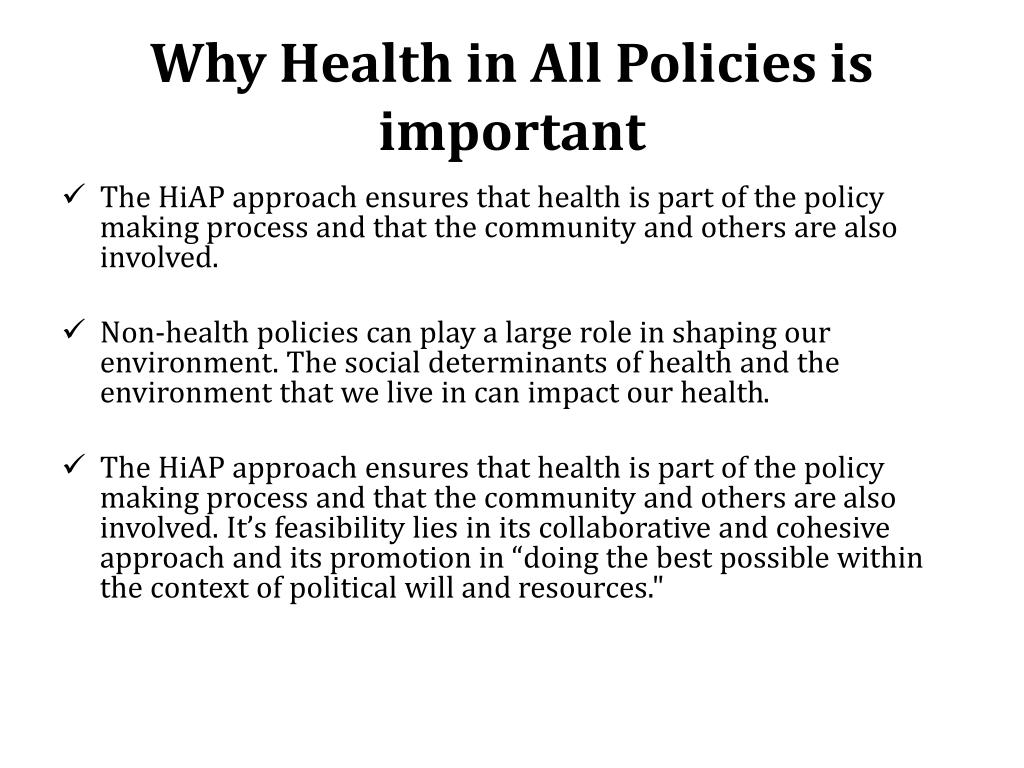
Any solution to racial health inequities must be rooted in the material conditions in which those inequities thrive. Therefore, we must insist that for the health of the black community and, in turn, the health of the nation, we address the social, economic, political, legal, educational, and health care systems that maintain structural racism. Because as the Covid-19 pandemic so expeditiously illustrated, all policy is health policy…
The response to the pandemic has made at least one thing clear: systemic change can in fact happen overnight.





/https://public-media.si-cdn.com/filer/1a/97/1a972587-8641-4a1f-a1c5-d27e7ec15f81/gettyimages-1210622665.jpg)


 HENRY KOTULA