CMS kills controversial Medicaid fiscal accountability rule

https://www.healthcaredive.com/news/cms-kills-controversial-medicaid-fiscal-accountability-rule/585206/?utm_source=Sailthru&utm_medium=email&utm_campaign=Issue:%202020-09-15%20Healthcare%20Dive%20%5Bissue:29671%5D&utm_term=Healthcare%20Dive

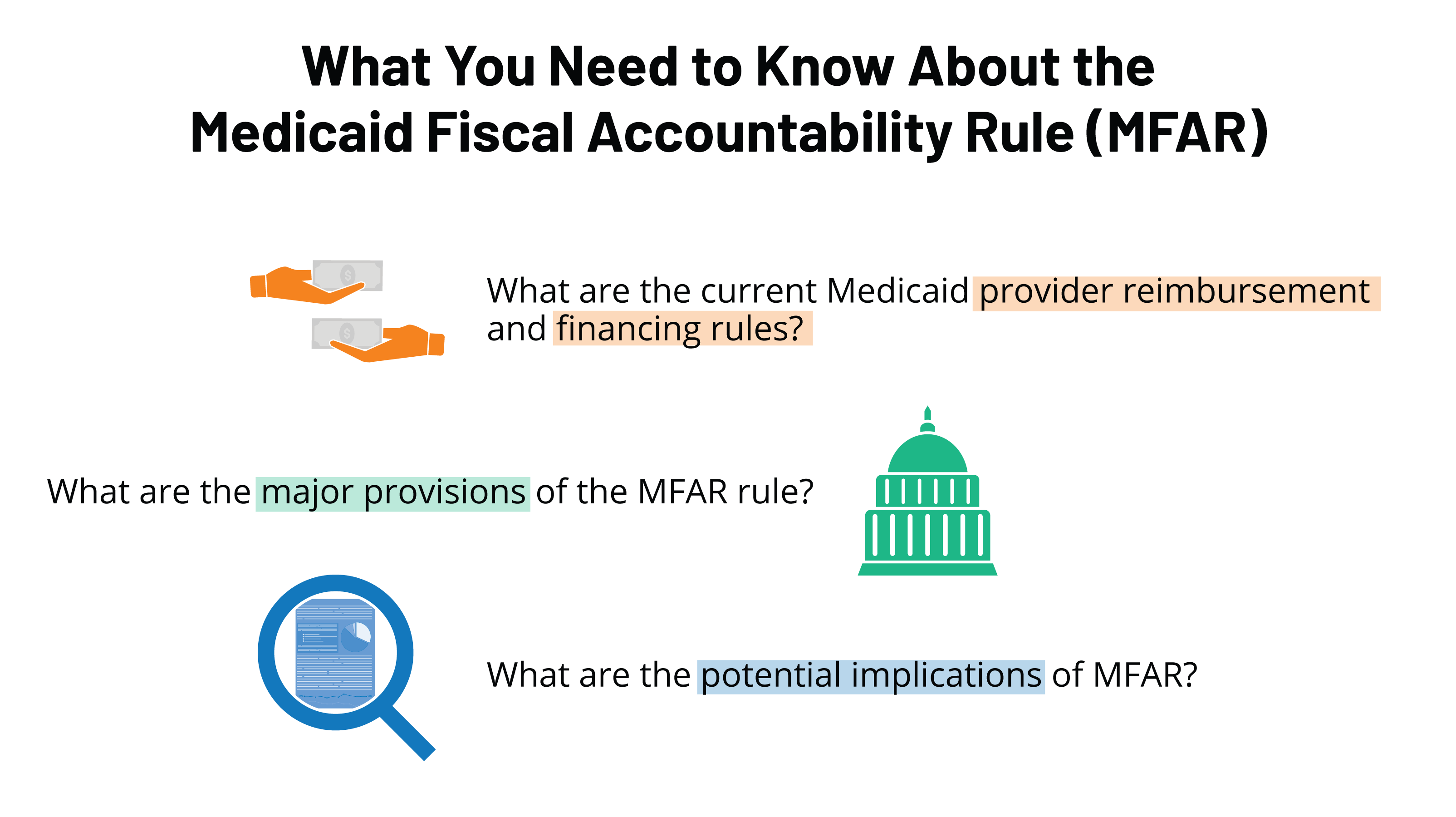
What You Need to Know About the Medicaid Fiscal Accountability Rule (MFAR)  | KFF

Dive Brief:

  • CMS is axing its proposed Medicaid Fiscal Accountability Rule, agency head Seema Verma announced via Twitter late Monday afternoon, in a move quickly cheered by provider organizations.
  • The rule proposed last year would have increased federal oversight of how states fund their Medicaid programs and potentially resulted in funding cuts for the cash-strapped safety net insurance. Myriad providers, patient advocacy groups and lawmakers in both states and the halls of Congress opposed the rule as a result.
  • “We’ve listened closely to concerns that have been raised by our state and provider partners about potential unintended consequences of the proposed rule, which require further study. Therefore, CMS is withdrawing the rule from the regulatory agenda,” Verma said.

Dive Insight:

MFAR was designed to increase fiscal transparency in the 55-year-old Medicaid program, but was quickly met with a firestorm of controversy, with even bipartisan House and Senate members raising concerns it could lead to states being forced to choose between program cuts or raising taxes to replace the lost funding.

One estimate, conducted by Manatt Health for the American Hospital Association, estimated the changes proposed in the rule would cut Medicaid funding by almost $50 billion annually, shrinking the program by 8%.

“Hospitals and health systems will be greatly relieved when the proposed rule is formally withdrawn,” AHA EVP Tom Nickels said in a statement.

Bruce Siegel, CEO of America’s Essential Hospitals, a lobby representing hospitals serving a disproportionate amount of vulnerable patients, called CMS’ decision “wise and welcome … especially as state budgets and providers strain under the heavy financial burden and economic fallout of COVID-19.”

Medicaid is jointly funded by the states and the federal government. Generally, CMS matches every dollar states spend at rates that vary depending on the state, its covered services and its population. There are no limits for how much federal funding a state can receive, and snowballing spending in Medicaid has resulted in concerns about cost control.

Medicaid spending swelled from $456 billion in 2013 to $576 billion in 2016, per CMS data, mostly due to an expanding federal share.

The most acute worries on the federal side stemmed from supplemental payments, or payments state Medicaid agencies give to providers for going above and beyond routine care, normally for high-need patients or those in underserved areas.

Supplemental payments to healthcare providers have increased from 9.4% of all other payments in 2010 to 17.5% in 2017, according to CMS, and are generally uneven across state lines, contributing to geographic funding disparities.

Oversight agencies, including the Government Accountability Office and the Office of the Inspector General, flagged the growth in payments and called for stronger Medicaid oversight in a series of reports from 2006 to 2015.

As a result, CMS proposed the MFAR rule in November 2019. If finalized, it would require states to report Medicaid payment and financing data at the individual provider level, instead of an aggregate, and establish definitions for “base” and “supplemental” payments. It would also have allowed CMS to sunset existing supplemental payment methodologies after up to three years, requiring states to get approval for a longer period, and close financing loopholes that might allow states to re-use federal Medicaid dollars to fund additional payments.

At the outset, CMS attempted to stamp out criticisms the rule could winnow Medicaid funding. “Alarmist estimates that this rule, if finalized, will suddenly remove billions of dollars from the program and threaten beneficiary access are overblown and without credibility,” Verma wrote in a blog post on the proposal in February.

But the rule received more than 4,000 public comments, most of them negative. The swirling concerns about unintended consequences, especially as COVID-19 exacerbates worries about care access, have now brought CMS back to the drawing board on Medicaid fiscal accountability.

As of late Monday, MFAR remained on the Federal Register.

Other actions from the Trump administration to overhaul Medicaid have faced similar backlash, including unpopular efforts to instill requirements linking coverage to work hours and an early 2020 push to cap federal funding for states in exchange for wider latitude in program administration.



Why Your Hand Sanitizer May Be Ineffective Or Tainted By Cancer-Causing Chemicals

https://www.forbes.com/sites/ericmack/2020/09/10/why-your-hand-sanitizer-may-be-ineffective-or-tainted-by-cancer-causing-chemicals/?utm_source=newsletter&utm_medium=email&utm_campaign=coronavirus&cdlcid=5d2c97df953109375e4d8b68#115d2e346241

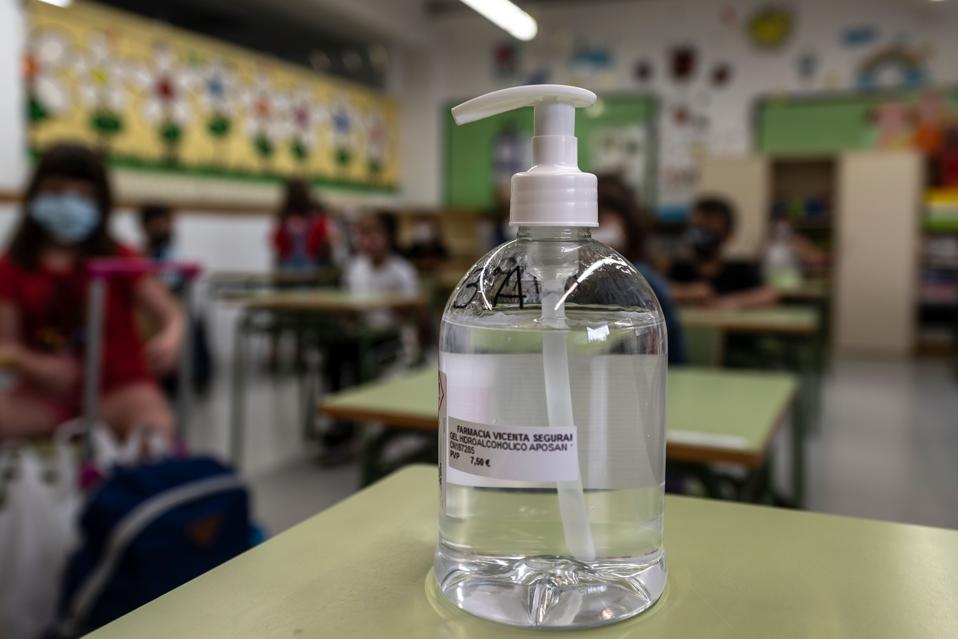
Since the start of the coronavirus pandemic, hand sanitizers have become a sought-after staple of life in a Covid-19-afflicted world. But supply chains have been turned upside down in our new normal, and some sketchy suppliers have at times stepped in to fill the vacuum. The result for consumers could be hand sanitizer that doesn’t work as advertised and might even be filled with impurities that can cause cancer.

When the pandemic set in during the spring, New Mexico’s Rolling Still Distillery began switching gears from making its trademark green chile vodka and other spirits to producing hand sanitizer for sale and free distribution during the early days of lockdown.

In the middle of May, Rolling Still founder Dan Irion (disclosure: Irion and I have lived in the same small town for years and occasionally hang out socially) began to receive a number of emails from bulk ethanol producers, offering up the alcohol for sanitizer production at prices as low as $1.60 a gallon, quite a deal over the $9 per gallon or more Rolling Still normally pays for its key ingredient.

To take advantage of the steep discount, Rolling Still would need to come up with $60,000 and take possession of a huge tank of the stuff.

Irion balked at the offer after he couldn’t get a straight answer about the quality of the ethanol. He asked one of the suppliers if organic alcohol was available and was told simply: “It’s all good. Don’t worry about it.”

He called Brian Coutu from Rolling Still’s regular alcohol supplier, Greenfield Global, who warned him away from what he says is fuel-grade ethanol potentially loaded with chemicals that are known to cause cancer.

Coutu knew this because Greenfield was getting the same cold calls Irion received, but as a large corporation, it could easily test samples.

“They send us a sample and it’s just God awful…it’s got acetaldehyde and benzene and all kind of nasty stuff in it; it’s not pure,” Coutu told me over the phone. “What (fuel producers) are trying to do is dump it off to these companies that run it through charcoal and try to do a million other things to make it USP grade (safe for food, drug or medicinal use), which it’s still not.”

Irion and Coutu both told me that the cold calls had largely stopped by the end of June. The price of ethanol cratered at the end of March as the pandemic took hold and fuel demand dropped. It stayed low through May before edging back near pre-pandemic levels at the end of June.

“Because of the fast and furious nature of the hand sanitizer industry at that time, we might have done it,” Irion says. “I’m sure there are others who saw this as a way to do something good and make money.”

And this is the big question for right now. How much of the sanitizer that made it to warehouses, store shelves and ultimately into our homes, cars and hands was produced from industrial fuel-grade ingredients rather than safe medical or food grade alcohol?

“You’re seeing less pure forms get into the market because there is a shortage of ethanol,” says Mike Sandoval, President and Chief Operating Officer of Santé Laboratories. “We see tert-butyl impurities, we see methanol, we see benzene in many of the hand sanitizers we test… We’ve seen some tequila grade ethanol that when you open the bottle it smells terrible, unless you like tequila… we’re seeing a lack of transparency in this space.”


Not just distilleries

Santé Labs works primarily in the hemp and CBD markets, providing quality testing and other services. CBD manufacturers can work with large amounts of ethanol and also turned to making hand sanitizers in the spring.

Sandoval says he began seeing CBD manufacturers and related companies using “untraditional sources” of ethanol from places like Mexico, Guatemala, South America and the fuel industry. The raw alcohol often came with a certificate of authenticity claiming 100 percent purity, but in reality it might actually contain chemical impurities and a significant amount of water.

“They come from a price sensitive market where no one wants to pay for high quality tests… They’re not used to operating in sophisticated manufacturing where you are required to test incoming raw material. For example the ethanol or isopropyl alcohol that goes in a hand sanitizer. You’re supposed to test (according to Food and Drug Administration rules) the purity of that ingredient before you formulate it, and that’s just not happening.”

For its part, the FDA has recently made public guidance on a testing method to detect impurities in hand sanitizers like those seen by Greenfield and Sante Labs.

“The agency’s investigation of contaminated hand sanitizers is ongoing,” the FDA said in an email. “Producing, importing and distributing toxic hand sanitizers poses a serious threat to the public and will not be tolerated.”

The takeaway from all this is that the ethanol market for manufacturers new to the production of hand sanitizer was flooded with sketchy raw alcohol that could be diluted or tainted with carcinogens. If that raw material isn’t tested on the front end, the resulting final product can come out with those impurities and an alcohol concentration that doesn’t meet the claims stated on the label.

The FDA maintains a list of hand sanitizers to avoid because they’ve been found to contain dangerous amounts of methanol, or an insufficient amount of its actual sanitizing ingredient, such as ethanol or isopropyl alcohol. However, the FDA’s enforcement powers are limited. A new waiver program created in response to the pandemic makes it easier for manufacturers to get around substantiating their label claims.

“Nine out of ten people are not meeting the label claim,” Sandoval says. “So most of the hand sanitizer you’re using from stores – and I even saw one from Wal-Mart that was a big brand… their hand sanitizers were crystallizing and turning green. I guarantee that they’re at 50 percent ethanol when they need to be at 70 percent.”

This brings up yet another concern, which is the shortage of proper plastic bottles and containers for sanitizer. Sandoval suspects that some manufacturers may have resorted to using the wrong type of containers, which then react with the alcohol, leaching chemicals into the sanitizer and turning its color.

“This entire supply chain is upside down because there’s a shortage of everything.”


Covering the stink of subpar sanitizer

Coutu at Greenfield Global says he’s aware of companies that have purchased their alcohol from unconventional sources, lured by prices as much as 90 percent lower than what Greenfield would charge.

The FDA relaxed the allowable limit of impurities like acetaldehyde and benzene that can make it into hand sanitizer, but Coutu says the limits still only allow a very small amount, whereas the samples Greenfield was testing had levels of contamination ten to 100 times higher than the new limits.

“And the odor on it is just not acceptable. It smells like burnt tequila… there’s some pretty nasty stuff out there and it’s dangerous.”

New services have even popped up this year, with fragrance manufacturers offering up products to help reduce the bad odor of some ethanol-based hand sanitizers.

Irion feels like he dodged a bullet by not jumping at the deeply discounted supply of ethanol others may not have been able to resist.

Rolling Still continued buying the organic alcohol it uses in both its spirits and sanitizer. It’s now ramping up production of sanitizer, which Irion says has no need for added fragrances to mask any ethanol odors, but some local osha and sage is infused to lighten the scent.

The alcohol used is also distilled five times just to make sure all impurities are removed.


Losing the edge on telemedicine?

https://mailchi.mp/365734463200/the-weekly-gist-september-11-2020?e=d1e747d2d8

What8217s Missing in the Health Care Tech Revolution

At the beginning of the pandemic, physicians and health systems implemented telemedicine solutions with unprecedented speed. In doing so, they went from mostly lagging behind payers and disruptors in digital medicine, to becoming the anchors who kept patients and doctors connected during the greatest health crisis in a century.

But over the past few weeks, we’ve detected a marked shift in the tone and focus of conversations around telemedicine with doctors and executives. Universally, systems have seen a drop in virtual visits as in-person care has returned—and most agree that today’s levels of telemedicine visits are lower than ideal.

“We peaked at 45 percent of outpatient visits delivered virtually in early May. Now telemedicine accounts for just five percent,” one physician leader told us. “I don’t know what ‘percent virtual’ is ideal, but I’m pretty sure it’s more than five percent.” Another leader described a shift from “rally to reality”.

At the height of the crisis, the entire system was singularly focused on keeping patients connected to care, bolstered by a loosening of regulatory and payment restrictions.

As systems now plan for a long-term virtual care strategy, we’re sensing a shift in focus to pre-COVID challengesoperations (centralization is needed to create a sustainable model, but each doctor wants to do virtual visits his own way), payment (should we really invest before we’re sure health plans will continue to pay at parity?), and turf battles (reemerging political discussions of who “owns” virtual care strategy).

Health plans, retailers and disruptors recognize the power of virtual care to build relationships and loyalty with consumers—and will invest heavily behind it. Providers have the advantage today. But to keep it, they’ll have to get out of their own way and continue to build, scale and refine their virtual care platforms.


13 health systems opening hospitals

https://www.beckershospitalreview.com/capital/13-health-systems-opening-hospitals.html?utm_medium=email

2019 Hospital Construction Survey | Health Facilities Management

The following health systems have opened hospitals, advanced proposals to build them or announced plans for them in the last two weeks:

1. UT Health San Antonio to build $400M+ hospital
University of Texas Health San Antonio plans to build a 144-bed specialty and research hospital.

2. Conway Medical Center plans new 50-bed hospital
Conway (S.C.) Medical Center plans to build a hospital in South Carolina’s Carolina Forest area, the organization announced Sept. 8.

3. Tidelands Health plans new hospital in South Carolina
Tidelands Health plans to build a hospital in South Carolina’s Horry County, the Georgetown, S.C.-based organization said Sept. 8.

4. Atrium Health fights to open hospital in North Carolina county
Charlotte, N.C.-based Atrium Health is still fighting to open a $147 million, 30-bed hospital in Mecklenburg County.

5. Abrazo Health to open Arizona hospital this fall
Phoenix-based Abrazo Health plans to open a hospital in Surprise, Ariz., this fall.

6. McLaren Healthcare boosts funding by $150M for Lansing health campus
After increasing its investment by $150 million, Grand Blanc, Mich.-based McLaren Health Care said it will spend $600 million on its new health campus in the state’s capital of Lansing. The new campus will include a new 262-bed McLaren Orthopedic Hospital.

7. Ballad Health plans 2021 reopening for hospital closed 7 years
Johnson City, Tenn.-based Ballad Health plans to reopen a hospital in Virginia that has been closed since October 2013.

8. Ascension reopens Florida hospital ravaged by hurricane in 2018
Ascension Sacred Heart has reopened its hospital in Panama City, Fla., about two years after Hurricane Michael damaged the facility.

9. MarinHealth opens $535M hospital
MarinHealth in Greenbrae, Calif., has opened a new $535 million hospital.

10. HonorHealth to open 70-bed hospital in September
HonorHealth plans to open a 70-bed Phoenix hospital in September.

11. St. Louis University Hospital opens $550M hospital
SSM Health St. Louis University Hospital opened its $550 million facility to patients. The new facility is called the Grand New SSM Health St. Louis University Hospital.

12. Ascension Saint Thomas can build hospital in Tennessee county, beating out Vanderbilt
Ascension Saint Thomas has won approval to build a hospital in Tennesee’s Murfreesboro County, beating out a proposal from Vanderbilt University Medical Center.

13. Trustees approve OSU’s $1.79B hospital
Ohio State University’s board of trustees unanimously approved this week its new $1.79 billion inpatient hospital.


An Unpleasant Surprise

An Unpleasant Surprise

An Unpleasant Surprise - Tradeoffs

Surprise medical bills have become a major issue for Americans, but federal legislation to protect consumers continues to stall. ICongress getting closer to halting this practice?

Listen to the full episode below, read the transcript or scroll down for more information.

https://podcasts.google.com/feed/aHR0cHM6Ly9yc3MuYWNhc3QuY29tL3RyYWRlb2Zmcw/episode/YTQzMDkzOGYtY2Q3MS00ZTU0LWI0ZTAtZGIyMGM3YWQ0ZTk4?sa=X&ved=2ahUKEwiRrfOb48zrAhXvmnIEHT-bBvgQkfYCegQIARAF&hl=en

The Basics: The Scope of the Problem

Surprise bills can occur when patients with insurance unknowingly receive care from an out-of-network provider while at an in-network facility (such as a bill from an anesthesiologist for a scheduled surgery).

That provider is not bound by a set rate negotiated with an insurer and may charge more for a service than the insurer is willing to pay, and patients can end up on the hook for the difference.

It is difficult to capture the full extent of the problem, but research shows that surprise bills, also called balance bills, occur often, and have only been increasing in frequency and size over the past few years. 

42% of hospital and ER visits may come with an unexpected charge
$2,000 average size of a surprise bill for a hospital visit
66% of Americans fear surprise bills
80% of Americans support surprise bill protections

The Source: Who’s To Blame?

Physicians

Hospitals employ some physicians directly, but many also contract with speciality physician groups of surgical assistants, anesthesiologists, radiologists, emergency medicine doctors and pathologists who may not be in the same insurance networks as the hospital. This is why most surprise bills occur. Research shows that private equity firms also play an important role, buying up speciality physician groups and using surprise billing as a core part of their business model.

Insurers

Insurers often take a lot of heat for the price of health care, but they play a more limited role in surprise billing. They can create narrow networks that leave hospitals or doctors out and open the door to balance billing. Insurers also do a poor job of maintaining accurate in-network provider directories, which means patients may think they’re choosing an in-network doctor when they are not.

Hospitals

While surprise bills from hospitals are less common than from physicians, they do occur when, for instance, a hospital is not in a patient’s network, but the patient is rushed there because of an emergency.

Ambulances

Air and ground ambulances rides are another source of surprise bills. One analysis showed that air ambulances resulted in median potential surprise bills of almost $21,700.

The Fixes: The Legislation Landscape

Federal Proposals

Over the past two years, Congress has considered at least four bipartisan bills to protect patients from surprise charges, but all four have stalled. The proposals offer different approaches to determine how much insurers will pay out-of-network providers. These bills typically address the problem by adopting a payment standard, arbitration process or a hybrid of the two.

Payment Standard

Insurers reimburse providers for out-of-network bills based on a set amount. Most bills propose using established in-network rates.

Arbitration

This process requires an insurer and provider to submit payment offers to a neutral party who makes the final call.

Hybrid

This approach combines the payment standard with arbitration to resolve disputes. An insurer pays a set amount, and if the provider disagrees, it can initiate arbitration.

State Laws

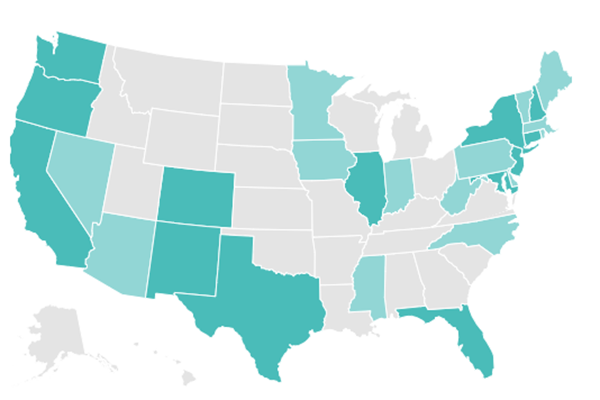
With federal solutions at a standstill, 30 states have passed varying levels of protections from surprise billing. As of July, 2020, 16 states have more comprehensive protections, which ensure that insured patients are only responsible for paying in-network costs, even when receiving care from out-of-network providers or emergency services at an out-of-network facility. Georgia was the latest state to pass such a law in July 2020. The other 14 states offer far more limited protections.

But even states with comprehensive protections cannot protect all patients from surprise medical bills. States are not able to regulate job-based coverage that falls under a federal law known as the Employee Retirement Income Security Act, which applies to most employer sponsored insurance. These patients remain vulnerable to surprise medical bills until Congress takes action to ban the practice.

Click on the map below for an interactive map from the Commonwealth Fund that details each state’s protections.

State Balance-Billing Protections | Commonwealth Fund

The Sticking Point: Will Congress Pass Protections?

Despite strong bipartisan support for protecting patients from surprise bills, disagreement comes over how much physician groups should charge and how much insurers should pay. Essentially, resolving this issue may mean Congress has to pick sides.

As a result, stakeholders such as hospitals and private equity-backed physician groups, in particular, have pushed back on federal legislation, arguing that banning surprise billing will cripple their bottom line. These equity-backed physician groups have powerful lobbying groups, and in 2019, spent at least $5 million to persuade lawmakers to halt the legislation.

The pandemic has increased the risk that patients will unknowingly receive care from an out-of-network provider or at an out-of-network facility. The Trump administration tried to limit surprise bills for those in need of COVID-19 treatment by banning hospitals and providers that receive money from its Provider Relief Fund from sending balance bills to patients. But this approach leaves significant gaps and has had mixed success.


Healthcare jobs grew by 75K in August as industry recovers from job losses due to COVID-19

https://www.fiercehealthcare.com/hospitals/healthcare-jobs-grew-by-75k-august-as-industry-recovers-from-job-losses-due-to-covid-19

The healthcare industry added 75,000 jobs last month, a decline compared with the 126,000 that were added in July, the latest federal jobs report shows.

But there are some bright spots for the industry that is still recovering from major unemployment earlier this year sparked by job losses due to the COVID-19 pandemic.

The Bureau of Labor Statistics’ jobs report released Friday showed that hospitals continue to add more jobs after several major subsystems furloughed and laid off workers at the onset of the pandemic in March.

Hospitals added 14,000 jobs in August, which was below the 27,000 jobs the industry added in July.

The industry shed 26,000 jobs in May as hospitals took massive revenue hits from the cancellation of elective procedures and lower patient volume due to COVID-19.

Job numbers continue to recover robustly for other sectors of the healthcare industry.

Physician offices added 27,000 jobs and dentists another 22,000 in August. Home healthcare agencies added 12,000 positions in August.

But things continue to get worse for nursing homes.

Nursing homes and residential care facilities lost 14,000 jobs. But it was the lowest number of job losses the industry has faced in months.

In July the sector lost 28,000 jobs. In June, 20,000 positions were shed.

While several parts of the healthcare industry are adding jobs, the overall picture has been bleak. The federal government reported last month that healthcare employment has been down by nearly 800,000 jobs since February.

Things could continue to get worse for both hospitals and physician offices. Experts predict that hospital volumes, which have rebounded since major drops in March and April, are still below pre-pandemic levels for some facilities.


For-profit systems fare better than nonprofits in weathering COVID-19 cash crisis, MedPAC says

https://www.fiercehealthcare.com/hospitals/medpac-for-profit-systems-do-better-job-than-nonprofits-weathering-covid-19-cash-crisis?mkt_tok=eyJpIjoiTlRJM05qVmhOVEptWm1ZNSIsInQiOiJaRHlaWHpyaHVZUHlvTFwvZmRaZDZKUVY2aEJka25ncStYSmcxZXo3bTR5TzV3NFE0YzdpYlpGMGRrbUxkcWVYT0Z4ZTVMa0VPN3BuSElkMldQRXBpTk1pbnN1T3VoalNXd0JzTU9aYngwazltVXRud0hISVppZnF2OHU0bFwvVzN6In0%3D&mrkid=959610

For-profit health systems have been better able to weather a financial crisis caused by COVID-19 than their nonprofit counterparts because they could reduce more expenses, a new analysis from the Medicare Payment Advisory Commission finds.

The analysis released Thursday during MedPAC’s monthly meeting comes as providers struggle to recover from low patient volumes stemming from the COVID-19 pandemic. The report also explored how physician offices have fared.

Hospitals faced a massive dip in patient volume in March and April at the onset of the pandemic, which forced facilities to cancel or delay elective procedures. Patient volumes have since recovered to near pre-pandemic levels, MedPAC found.

But the recovery has been mixed depending on the hospital system.

MedPAC looked at earnings for three large nonprofit systems in the U.S. and four large for-profit systems in the second quarter and found a variation in how they handled the decline in revenue.

Aggregate patient revenue for the nonprofit systems declined by $1.5 billion and this led to a $621 million loss for the systems in the second quarter compared to the same period in 2019. Overall the systems had operating profit margins ranging from negative 13% to positive 5%.

The four for-profit systems saw a $3.5 billion decline in patient revenue. However, the systems posted an increase of $634 million in operating income.

This led to a range of operating margin increases of 1 to 14% in the second quarter compared to 2019.

The for-profit systems got more relief funding ($1.9 billion compared with $782 million) from a $175 billion federal provider relief fund created by the CARES Act.

But the biggest difference between for-profit and nonprofit systems was how they handled expenses.

“For-profit systems substantially reduced expenses in the second quarter, in aggregate reduced by $2.3 billion and that made up for lost revenue,” said Jeff Stensland, a MedPAC staff member, during the meeting.

Nonprofit systems only saw a $13 million decline in expenses.

The analysis comes as some larger for-profit systems like HCA Healthcare generate profits in the second quarter, while nonprofit systems such as Providence posted losses.

MedPAC did not name the systems that it analyzed nor did it delve into what expenses were reduced and how.

Some systems have taken to furloughing employees but all systems have faced increased expenses for personal protective equipment and some staff.

The analysis also looked at the financial impact of the pandemic on physician offices. MedPAC found that federal grants, loans and payment increases offset a majority of the revenue lost in March and May due to patient volume declines.

MedPAC estimated physician offices lost between $45 to $55 billion. However, offices got $26 billion in loans from the Paycheck Protection Program, which don’t have to be repaid if the majority of the funds go to payroll.

Physician offices also received $5 billion out of the $175 billion provider relief fund passed as part of the CARES Act.

Physicians also got $1 billion in savings from the temporary suspension of a 2% decline in Medicare payments created under sequestration.


Einstein’s flagship hospital at risk without merger, Jefferson and Einstein say

https://www.beckershospitalreview.com/hospital-transactions-and-valuation/einstein-s-flagship-hospital-at-risk-without-merger-jefferson-and-einstein-say.html?utm_medium=email

FTC says merger of Jefferson and Einstein would raise hospital prices 6.9%

The merger of Einstein Healthcare Network and Jefferson Health is a matter of survival for Einstein’s flagship hospital, the two Philadelphia systems argued in a federal court filing this week, according to The Philadelphia Inquirer.

The health systems are attempting to overcome opposition to their merger from the Pennsylvania attorney general and the Federal Trade Commission.

A Sept. 14 hearing is slated on the FTC’s preliminary injunction request. 

A court filing from the two health systems argued that Einstein, which has only had annual operating profits twice since 2012, is on a path to financial failure and needs $500 million to invest in key capital projects and deferred maintenance.

Without the infusion, Jefferson and Einstein said Einstein will continue to weaken “as it is forced to cut services or close facilities,” the Inquirer reported.

“Einstein was unable to identify any alternative buyer to Jefferson that possessed the financial strength and scale necessary to address Einstein’s financial problems,” the filing read, according to the Inquirer. “No other potential strategic partners were willing and able to commit to keep EMCP [Einstein Medical Center Philadelphia] open with its current set of services.”

The FTC announced in February its intent to sue to block the merger, arguing that combining the two systems would reduce competition in Philadelphia and Montgomery County.

“Jefferson and Einstein have a history of competing against each other to improve quality and service,” the FTC said in the February announcement. “The proposed merger would eliminate the robust competition between Jefferson and Einstein for inclusion in health insurance companies’ hospital networks to the detriment of patients.”

The FTC said that with a combination, the two parties would own at least 60 percent of the inpatient general acute care service market around Philadelphia and at least 45 percent of that same market in Montgomery County.


Pandemic spurs national union activity among hospital workers

https://www.healthcaredive.com/trendline/labor/28/?utm_source=HD&utm_medium=Library&utm_campaign=Vituity&utm_term=Healthcare%20Dive#story-1

When COVID-19 cases swelled in New York and other northern states this spring, Erik Andrews, a rapid response nurse at Riverside Community Hospital in southern California, thought his hospital should have enough time to prepare for the worst.

Instead, he said his hospital faced staffing cuts and a lack of adequate personal protective equipment that led around 600 of its nurses to strike for 10 days starting in late June, just before negotiating a new contract with the hospital and its owner, Nashville-based HCA Healthcare.

“To feel like you were just put out there on the front lines with as minimal support necessary was incredibly disheartening,” Andrews said. Two employees at RCH have died from COVID-19, according to SEIU Local 121RN, the union representing them.

A spokesperson for HCA told Healthcare Dive the “strike has very little to do with the best interest of their members and everything to do with contract negotiations.”

Across the country, the pandemic is exacerbating labor tensions with nurses and other healthcare workers, leading to a string of disputes around what health systems are doing to keep front-line staff safe. The workers’ main concerns are adequate staffing and PPE. Ongoing or upcoming contract negotiations could boost their leverage.

But many of the systems that employ these workers are themselves stressed in a number of ways, above all financially, after months of delayed elective procedures and depleted volumes. Many have instituted furloughs and layoffs or other workforce reduction measures.

Striking a balance between doing union action at hospitals and continuing care for patients could be an ongoing challenge, Patricia Campos-Medina, co-director of New York State AFL-CIO/Cornell Union Leadership Institute.

“The nurses association has been very active since the beginning of the crisis, demanding PPE and doing internal activities in their hospitals demanding proper procedures,” Campos-Medina said. “They are front-line workers, so they have to be thoughtful in how they continue to provide care but also protect themselves and their patients.”

At Prime Healthcare’s Encino Hospital Medical Center, just outside Los Angeles, medical staff voted to unionize July 5, a week after the hospital laid off about half of its staff, including its entire clinical lab team, according to SEIU Local 121RN, which now represents those workers.

One of the first things the newly formed union will fight is “the unjust layoffs of their colleagues,” it said in a statement.

A Prime Healthcare spokesperson told Healthcare Dive 25 positions were cut. “These Encino positions were not part of front-line care and involved departments such as HR, food services, and lab services,” the system said.

Hospital service workers elsewhere who already have bargaining rights are also bringing attention to what they deem as staffing and safety issues.

In Chicago, workers at Loretto Hospital voted to authorize a strike Thursday. Those workers include patient care technicians, emergency room technicians, mental health staff and dietary and housekeeping staff, according to SEIU Healthcare Illinois, the union that represents them. They’ve been bargaining with hospital management for a new contract since December and plan to go on strike July 20.

Loretto Hospital is a safety-net facility, catering primarily to “Black and Brown West Side communities plagued with disproportionate numbers of COVID illnesses and deaths in recent months,” the union said.

The “Strike For Black Lives” is in response to “management’s failure to bargain in good faith on critical issues impacting the safety and well-being of both workers and patients — including poverty level wages and short staffing,” according to the union.

A Loretto spokesperson told Healthcare Dive the system is hopeful that continuing negotiations will bring an agreement, though it’s “planning as if a strike is eminent and considering the best options to continue to provide healthcare services to our community.”

Meanwhile in Joliet, Illinois, more than 700 nurses at Amita St. Joseph Medical Center went on strike July 4.

The Illinois Nurses Association which represents Amita nurses, cited ongoing concerns about staff and patient safety during the pandemic, namely adequate PPE, nurse-to-patient ratios and sick pay, they want addressed in the next contract. They are currently bargaining for a new one, and said negotiations stalled. The duration of the strike is still unclear.

However, a hospital spokesperson told Healthcare Dive, “Negotiations have been ongoing with proposals and counter proposals exchanged.”

The hospital’s most recent proposal “was not accepted, but negotiations will continue,” the system said.

INA is also upset with Amita’s recruitment of out-of-state nurses to replace striking ones during the COVID-19 pandemic.

It sent a letter to the Illinois Department of Financial and Professional Regulation, asserting the hospital used “emergency permits that are intended only for responding to the pandemic for purposes of aiding the hospital in a labor dispute.”