Providence posts $538M loss, lays out 3-part strategic plan

https://www.beckershospitalreview.com/finance/providence-posts-538m-loss-lays-out-3-part-strategic-plan.html?utm_medium=email

Providence St. Joseph Health Consolidates 14 Hospitals in SoCal ...

Providence, a 51-hospital system based in Renton Wash., received $651 million in federal grants in the first half of this year, but it wasn’t enough to offset the system’s losses tied to the COVID-19 pandemic. 

The health system reported revenues of $12.5 billion in the first six months of this year, down from $12.6 billion in the same period a year earlier, according to financial documents released Aug. 17. Though the health system reported a rebound in patient volumes after the suspension of non-emergency procedures in March and April, net patient service revenue was down 10 percent year over year.

Providence’s expenses also increased. For the first two quarters of this year, the health system reported operating expenses of $12.7 billion, up 3 percent year over year. The increase was attributed to higher labor costs and increased personal protective equipment and pharmaceutical spend.

Reduced patient volumes combined with increased costs drove an operating loss of $221 million in the first half of this year. In the first half of 2019, Providence reported operating income of $250 million.

After factoring in nonoperating items, Providence ended the first six months of 2020 with a net loss of $538 million, compared to net income of $985 million in the same period of 2019.

To help offset financial damage, Providence received $651 million in federal grants made available under the Coronavirus Aid, Relief and Economic Security Act. 

“We knew we were in for a marathon the moment we admitted our first patient with COVID-19 seven months ago,” Providence President and CEO Rod Hochman, MD, said in an earnings release. “Our caregivers have been on the front lines ever since, and we are incredibly proud and grateful for all they are doing to serve our communities during the greatest crisis of our lifetime.”

In its earnings release, Providence mapped out a three-part plan for the future. As part of that plan, the system said it is focused on improving testing capacity and turnaround times and advancing clinical research and best practices in the treatment of COVID-19. The system is also revising its operating model and cost structure. 


Beaumont physician survey reveals lack of confidence in leadership

https://www.beckershospitalreview.com/hospital-management-administration/beaumont-physician-survey-reveals-lack-of-confidence-in-leadership.html%20?utm_medium=email

Doctors' 'no confidence' petition drive targets Beaumont CEO ...

The results of a survey completed by 1,500 of Beaumont Health’s 5,000 physicians revealed a lack of confidence in the Southfield, Mich.-based system’s leadership and concern about its proposed merger with Advocate Aurora Health, according to Crain’s Detroit Business

Crain’s reported the results of the survey after the results were presented to Beaumont’s board. The system confirmed this week that it is postponing a vote on the planned merger with Advocate Aurora until physician grievances are addressed. 

The survey asked physicians to indicate whether they agreed or disagreed with several statements. Seventy-six percent of the physicians who answered the survey said they strongly or somewhat disagree with the statement “I have confidence in corporate leadership,” while 13 percent said they strongly or somewhat agree and 11 percent said they neither agree nor disagree, according to Crain’s. 

Physicians were also asked about the proposed merger with Advocate Aurora, which has dual headquarters in Milwaukee and Downers Grove, Ill. According to Crain’s, 70 percent of physicians said they strongly or somewhat disagree with the following statement: “The proposed merger with Advocate Aurora Health is likely to enhance our capacity to provide compassionate, extraordinary care.” Nine percent of physicians said they somewhat or strongly agree with the statement and 21 percent said they neither agree nor disagree, according to the report. 

In a statement to Becker’s Hospital Review, Beaumont said it is working to address the physicians’ concerns.

“Our physicians provided valuable input and feedback to us through the survey,” the health system said. “We take our physicians’ responses seriously and we have already started addressing many of their concerns. We know our talented and skilled physicians, nurses and staff have helped to make Beaumont the region’s leading health system and they are also key to our future. Our caregivers truly live our mission of providing compassionate, extraordinary care, every day. We recognize the importance of having an open dialogue. That’s why we continue to meet with numerous groups of physicians, nurses and staff to listen to them, address their concerns and work together with them to determine the best path forward for Beaumont.” 

Beaumont and Advocate Aurora signed a nonbinding letter of intent in June to create a health system spanning Michigan, Wisconsin and Illinois. The merger would create a $17 billion system with 36 hospitals. 


US Postal Service is Critical to American Healthcare.

https://www.linkedin.com/pulse/us-postal-service-critical-american-healthcare-julie-kliger/

The Role of The USPS In Health Delivery

When I worked in the emergency department, almost all patients had to get some sort of test—a blood test or an xray. And lots of times those test results took a few days to determine the results. Like, if a patient had an infection that required a specific type of antibiotic, that took a few days to figure out.  Of course, by then, most of emergency department patients had been discharged ‘to home.’

Even though the patient had been discharged, the medical staff still needed to reach the patient to let them know about the need to come back for treatment. Of course, the staff would try to reach the patient by phone, but often patients did not have phones, or, the call went to voice mail—and personal medical information cannot be left on voice mail…Nor can it be texted.

So, how did the medical staff communicate important medical findings to patients? Especially to those patients that needed to come back to the hospital for medical treatment? Why, through the US Postal Service—by sending the patient an actual, physical letter. Not email, not a phone call, not text, not twitter or Facebook—only through the US mail, can medical institutions prove that they’ve tried to reach the patient. This is the necessary ‘physical paper trail’ that hospitals and doctors offices need to protect themselves should the patient never come back for medical treatment.


USPS Is A Branch of HealthCare

Actually, lots of healthcare happens via the mail. Lots. Without this ‘pony express highway’ running efficiently, patient safety and patient wellness is compromised. Consider this:

·        At least 1 million prescriptions are sent through the USPS every single week.

·        80% of medications are sent to veterans by mail. These are important medications that control blood pressure, diabetes, heart disease, depression and many other critical medical conditions.

·        Medical notices for lab and x-ray results, and upcoming appointments are sent via mail.


USPS Is an Economic Engine for the USA

Additionally the USPS is a critical ‘super highway’ for getting

·        Upwards of 72 million social security checks are mailed every single month.

·        472 million letters, checks, legal notices, love letters (remember those?) are delivered each and every day, regardless of snow, sleet or snow (as the saying goes) gets delivered to every American household.

·        And still, today, some mail is delivered by mules (think bottom of the Grand Canyon).

·        And, the USPS is as American as it gets—every single Founding Father supported the creation of the postal system. It’s even in the Articles of Confederation

Also, loads of Americans work for the USPS—roughly 600,000 Americans! One of those Americans included my father, who got a job as a letter carrier (or, back in those days, ‘a mailman’), to help him afford college.


The USPS Is Santa’s Helper

And let’s not forget that the Postal Service also sends letters to Santa Claus—several hundred thousand letters (True statement). If the postal service is cut, compromised or decommissioned, who will deliver all those letters? And more importantly, who will respond? Because—and this is true—the postal service employees will respond to the letters with a hand written response signed by Santa and—this is also true—some employees will purchase gifts for the children!


The Cost of Knee-Capping the USPS

So, this discussion about dismantling or knee-capping the postal service is not only a very serious healthcare concern, it is also a workforce and American identity crisis—for what is America without our 6-days-a-week US mail service? 

If this non-partisan, non-profit organization goes away or is severely limited who or what will, in the absence of this Great American Institution, replace it? Goodness help us all if it becomes privatized.  We know what happens when institutions ‘get privatized…’ Private for-profit companies will close post offices to save money, which means households in rural areas might not get home delivery but only regional delivery. Services will probably be cutback from 6 days a week to 4 days a week. For all that ‘great service’ of fewer days and no home delivery, these private companies will charge you more to mail a letter so that the executives can raise their stock share price.


The Best Value Money Can Buy

What organization that you know of can deliver 212 billion pieces of mail each year, to anywhere in the USA for 55 cents? Anywhere, any letter, 6 days a week for 55 cents… (Honestly, what can you possibly buy for 55 cents that produces that much value?)


USPS is More American Than Baseball

No question about this—the USPS is not only ‘like’ Mom, Apple Pie and Baseball, it is Mom and Apple Pie and Baseball of our Great United States. Stand united for the USPS because in doing so, We The People, are standing up for ourselves.


Patient-provider encounter trends have stabilized, but remain significantly lower than before COVID-19

https://www.healthcaredive.com/news/patient-provider-encounter-trends-stabilized-below-normal/583599/?utm_source=Sailthru&utm_medium=email&utm_campaign=Issue:%202020-08-17%20Healthcare%20Dive%20%5Bissue:29123%5D&utm_term=Healthcare%20Dive

Measuring a patient's vital signs without any contact - ISRAEL21c

Dive Brief:

  • In-person doctor visits plummeted during the start of the COVID-19 crisis in the United States, but have rebounded to a rate somewhat below pre-pandemic levels, according to a new analysis issued by The Commonwealth Fund and conducted by researchers from Harvard Medical School, Harvard University and the life sciences firm Phreesia.
  • According to data compiled through Aug. 1, all physician visits were down 9% from pre-pandemic levels. That’s significantly improved compared to data from late March, when visits were down 58%. Although the rebound got major traction beginning in late April, it began plateauing in early June, when all visits were 13% lower than normal. As of early August, in-person visits were down 16% compared to pre-COVID levels. States that are currently coronavirus hot spots are seeing bigger declines than states where the case levels are lower.
  • Meanwhile, telemedicine encounters have settled in at rates much higher than pre-pandemic levels. However, they still make up just a fraction of patient-provider encounters for care. As of the start of this month, they comprised 7.8% of all such encounters. That’s compared to a peak of 13.8% in the latter part of April. Prior to COVID-19, they were only 0.1% of all visits.

Dive Insight:

COVID-19 has widely disrupted healthcare delivery in the United States. However, it is becoming clear that as the pandemic has become a part of everyday life for the time being, how patients visit their medical providers has also settled into a pattern.

According to Harvard researchers using data from Phreesia’s more than 50,000 provider clients, the plunge in patients seeing their physicians has rebounded from its nearly 60% dive in early spring. However, with all patient-physician encounters still consistently down from pre-COVID levels, the study’s authors warn that “the cumulative number of lost visits since mid-March remains substantial and continues to grow.”

Meanwhile, COVID-19 hotspots in the South and Southwest are depressing patient-provider encounters for the time being. Encounters were down as of late July by 15% in Arizona, Florida and Texas, compared to 12% in the Northeast and 8% in all other states.

Among medical specialties, only dermatology has seen a rebound beyond pre-COVID levels, with encounters up about 8% overall. But primary care visits are down 2%; surgery encounters, 9%; orthopedics, 18%; and pediatrics are in a 26% decline.

That the encounters between patients, doctors and other providers remains lower than normal has sparked some concerns about practices and other medical enterprises moving forward. HHS just earmarked $1.4 billion for nearly 80 children’s hospitals across the United States to try to shore them up financially.

The private sector has also undertaken an initiative to encourage patients to return to their providers. Insurer Humana, along with the Providence and Baylor Scott & White healthcare systems, launched an advertising campaign last month to encourage patients to seek out healthcare needs, even during the historic pandemic.


Prime adds 46th hospital

https://www.beckershospitalreview.com/hospital-transactions-and-valuation/prime-adds-46th-hospital-4-things-to-know-about-the-350m-deal.html?utm_medium=email

SEIU: Hospital Chain with Record of Bilking Taxpayers and Cutting ...

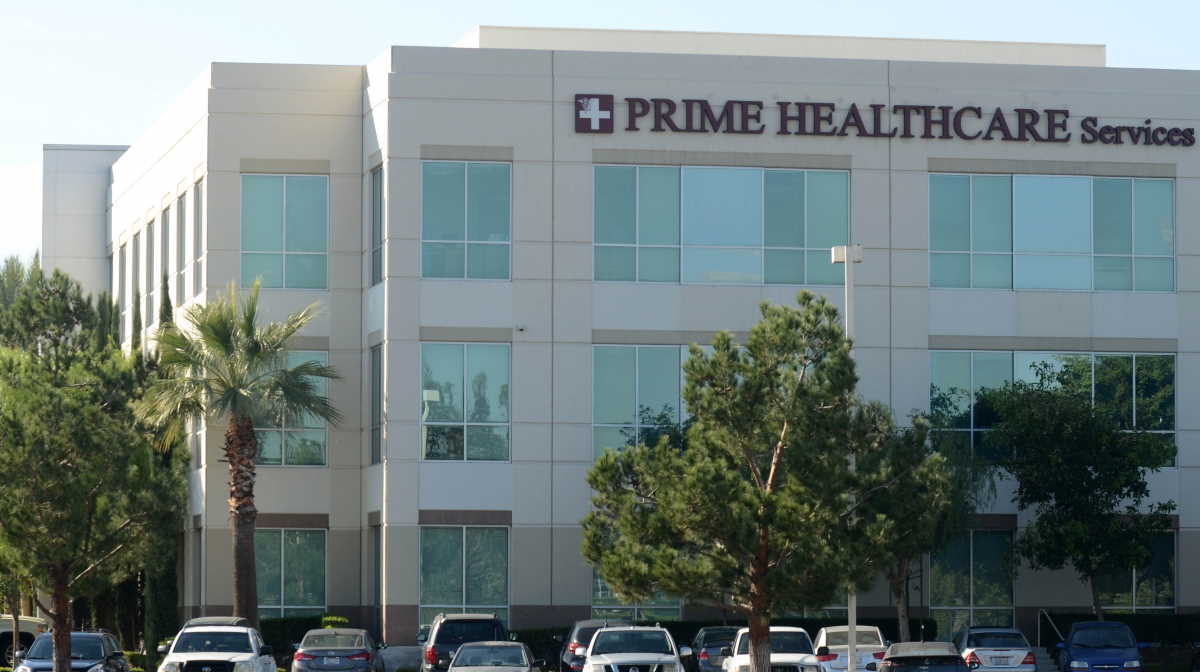
Ontario, Calif.-based Prime Healthcare announced Aug. 14 that it has completed the acquisition of St. Francis Medical Center, a 384-bed hospital in Lynwood, Calif. 

Here are four things to know about the deal: 

1. Prime purchased St. Francis Medical Center out of bankruptcy. The hospital entered bankruptcy in 2018 when its previous owner, El Segundo, Calif.-based Verity Health, filed for Chapter 11 protection.

2. Under the $350 million deal, which closed after a four-month review process, Prime committed to invest $47 million in capital improvements at the hospital. Those investments include installing Epic’s EHR and Omnicell systems for automated medication dispensing. Prime said it also plans to expand the hospital’s service lines.

3. A spokesperson told Becker’s Hospital Review that Prime extended offers to approximately 80 percent of the more than 2,000 employees at St. Francis Medical Center. “In the midst of this pandemic and economic challenges, Prime has remained deeply committed to St. Francis, the caregivers, patients and community, and we continue to evaluate staffing and will post additional positions based on future community needs,” the spokesperson said.

4. With the addition of St. Francis Medical Center, Prime owns and operates 46 hospitals in 14 states. The company has nearly 40,000 employees. 


Beware the office toilet

https://mailchi.mp/647832f9aa9e/the-weekly-gist-august-14-2020?e=d1e747d2d8

Coronavirus can be killed with disinfectant but beware high-touch ...

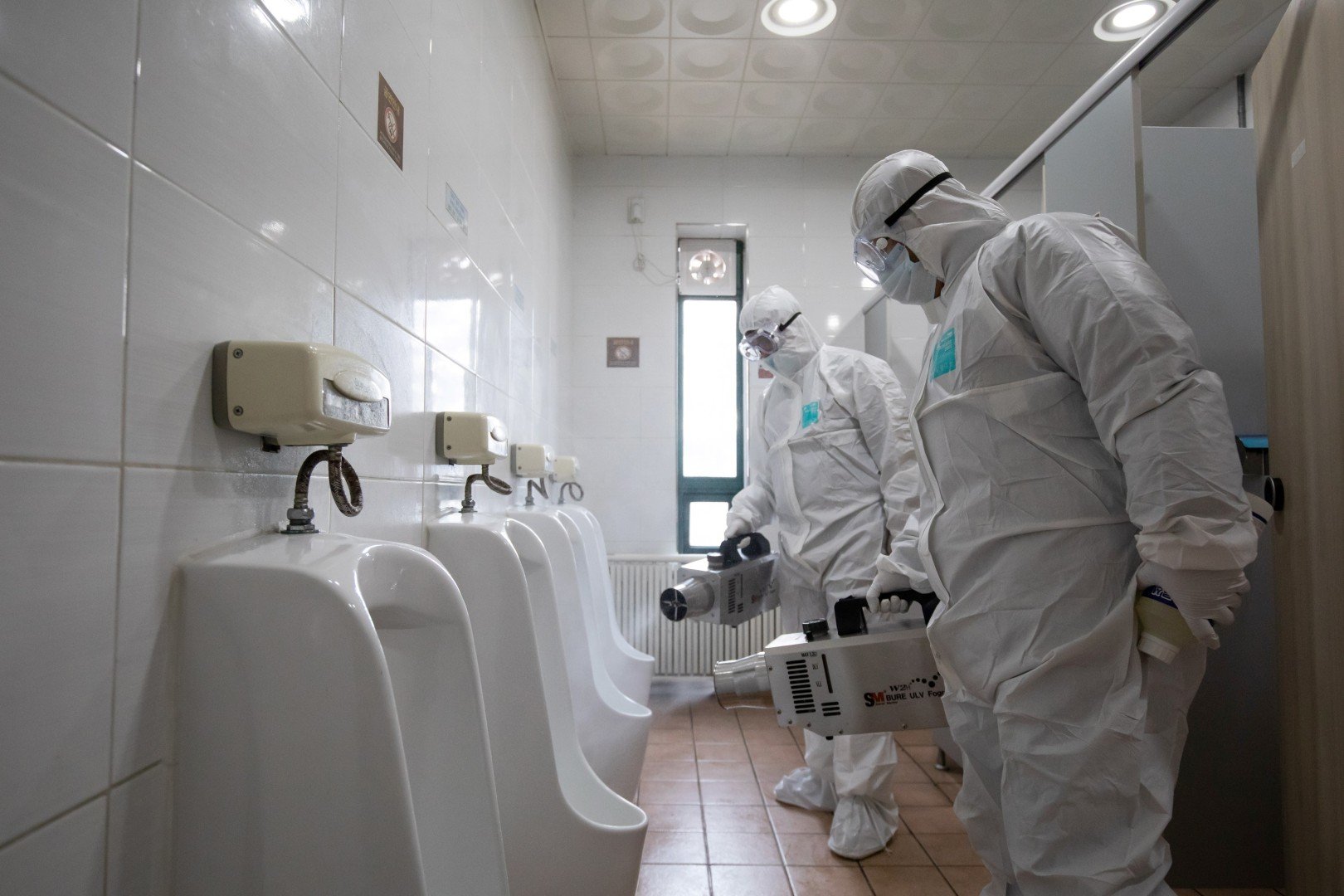
Returning to the office after months of lockdown may bring an unexpected risk for workers. According to the New York Times, the CDC recently closed some of its Atlanta offices after finding that its water sources contained Legionella, the bacteria that causes Legionnaire’s disease.

The bacteria can grow in stagnant water systems, including plumbing and air conditioning units. After a prolonged absence, inhaled vapors from flushing toilets, running taps or restarted air conditioners can carry Legionella into the lungs.

While older individuals with lung conditions are most vulnerable, Legionnaire’s pneumonia carries a 10 percent fatality rate—leading the CDC to publish reopening guidelines for building operators that include flushing long-dormant systems with heated water and additional disinfectant in advance of reopening, and the suggestion that at-risk individuals should wear an N95 respirator or facepiece when aerosol generation is likely. (Unsurprisingly, the guidelines have been criticized as overly vague and lacking prescriptive advice.)

As if we all didn’t have enough to worry about, don’t forget to bring a N95 mask for any bathroom breaks during your first day back at the office! (Or maybe just hold it.)


Home as the center of “care anywhere”

https://mailchi.mp/647832f9aa9e/the-weekly-gist-august-14-2020?e=d1e747d2d8

We’re increasingly convinced that virtual physician visits are just one part of a continuum of care that can be delivered in the convenience and safety of the patient’s home. Health systems that can deliver “care anywhere”—an integrated platform of virtual services consumers can access from home (or wherever they are) for both urgent needs and overall health management, coordinated with in-person resources—have an unprecedented opportunity to build loyalty at a time when consumers are seeking a trusted source of safe, available care solutions.

The graphic above outlines the key components of a comprehensive home-based care model,

which requires the integration of three main elements:

a technology backbone,

a supply chain to provide services like labs and diagnostics,

and a tiered, flexible workforce. 

Of course, these infrastructure needs will increase with care acuity level, ranging from a simple virtual visit to home-delivered vaccination, all the way to hospital-level care at home. Delivering safe, accessible care within the home can be the foundation for an access platform that creates ongoing consumer loyalty—especially for systems who can build a financial model less dependent on payers’ long-term support for telemedicine reimbursement “parity”.


Cash-Pinched Hospitals Press Congress to Break Virus Fund Logjam

https://news.bloomberglaw.com/health-law-and-business/cash-pinched-hospitals-press-congress-to-break-virus-fund-logjam

DIY Money Tree Gift Idea - So TIPical Me

Hospital groups are pressing Congress to put more money into a relief fund for hospitals and providers, even as labor data showed signs of a turnaround for the health-care industry last month.

Congressional leaders are at a standstill over the next coronavirus-relief package and it could be weeks until lawmakers vote on legislation. Hospital groups have said the $175 billion Congress already approved has been a crucial lifeline to keep hospitals from laying off more staff or potentially closing. Some are worried the money may start to run dry soon.

The coronavirus is prompting many Americans to delay health care, and further funding delays exacerbate the need for assistance, the hospitals warn. Some providers that shed jobs earlier in the pandemic have begun adding them back, but employment levels remain far below where they once were.

“The longer we are in the pandemic the more clear it becomes that this is not going to be a short-term issue,” Beth Feldpush, senior vice president of policy and advocacy at America’s Essential Hospitals, said.

Leaders of both parties back more federal funding to help hospitals and doctors’ offices stay in business. Democrats proposed $100 billion for the industry, as hospital groups such as AEH sought, in virus-relief legislation (H.R. 6800) the House passed earlier this year. Republicans included $25 billion in their counterproposal.

The Health and Human Services Department has promised about $115 billion of the $175 billion in relief Congress approved this year to help health-care providers offset their Covid-19-related losses, according to agency data. That leaves the industry with about $60 billion left.

The U.S. exceeded 5 million confirmed Covid-19 cases Aug. 9, according to data from Bloomberg News and Johns Hopkins University, more than any other country. Almost 165,000 people in the U.S. have died from the virus.

Industry Impact

The health-care industry added more than 126,000 jobs in July, according to data released last week by the Bureau of Labor Statistics. Dentist offices and hospitals, the section of the industry that was laying off tens of thousands of people in April and May, accounted for more than 70,000 of those new jobs.

Still, there were 797,000 fewer health-care jobs compared to before the pandemic, according to BLS.

The virus hit parts of the heath-care industry unevenly. Large health systems such as HCA Healthcare Inc. and Universal Health Services Inc. posted better-than-expected profits for the second quarter of 2020.

Some hospitals that didn’t have much cash-on-hand to start the year are struggling with lower profits and may need added relief if the virus continues to keep Americans from seeking care, industry watchers said.

“No hospital is going to come out of this year better than they were in prior years,” Suzie Desai, senior director for S&P Global Rating’s Not-for-Profit Health Care group, said.

The federal relief funds helped buoy hospitals this year, hospital groups argue. The American Hospital Association estimates that without relief funds, hospitals margins would have been down 15% and could be down 11% at the end of 2020 if the virus continues to spread at its current pace.

The AHA estimated losses for the nation’s hospitals and health systems will reach $323 billion this year.


Verity gets OK to sell 384-bed bankrupt hospital to Prime Healthcare, despite objections

https://www.beckershospitalreview.com/hospital-transactions-and-valuation/verity-gets-ok-to-sell-384-bed-bankrupt-hospital-to-prime-healthcare-despite-objections.html?utm_medium=email

St. Francis Medical Center | Verity Health

Despite objections for California attorney general and a last-minute attempt from an opposing bidder to block the sale, El Segundo, Calif.-based Verity Health System won bankruptcy court approval to sell a 384-bed hospital in Lynwood, Calif., to Prime Healthcare Services, according to The Wall Street Journal.  

California Attorney General Xavier Becerra conditionally approved the sale to Prime in July. Mr. Becerra set 21 conditions for the sale of St. Francis Medical Center to Prime Healthcare, a for-profit provider based in Ontario, Calif.

Verity challenged three of the conditions outlined by the attorney general, saying they were overly burdensome. The disputed conditions revolved around the amount of charity care and community-benefit services the hospital would need to provide.

As a result, the attorney general opposed authorizing the sale and approving Verity’s Chapter 11 liquidation plan, according to the Journal. 

U.S. Bankruptcy Judge Ernest Robles overruled the objections, which should allow the $350 million sale to finalize. The judge also said he would approve Verity’s Chapter 11 liquidation plan.

In addition, in late July, Los Angeles-based Prospect Medical Holdings made a last-minute attempt to block Prime from buying St. Francis Medical Center.

Prospect Medical, backed by a private equity firm, reportedly offered to pay $50 million more than Prime and offered to accept all of the attorney general’s conditions. 

However, the bankruptcy judge said Prospect lacked standing to oppose the Prime sale, and it didn’t submit its bid until after the deadline passed, according to the report.

Read the full article here


Many workers don’t get new paid sick leave, because of ‘broad’ exemption for providers, report finds

https://www.washingtonpost.com/business/2020/08/11/paid-sick-leave/?utm_source=Sailthru&utm_medium=email&utm_campaign=Issue:%202020-08-12%20Healthcare%20Dive%20%5Bissue:29035%5D

Many health-care workers don't get new paid sick leave, because of ...

The New York attorney general sued the Labor Department in April over the agency’s interpretation of ‘health care provider’.

A government watchdog said in a report out Tuesday that the Labor Department “significantly broadened” an exemption allowing millions of health-care workers to be denied paid sick leave as part of the law Congress passed in March to help workers during the coronavirus pandemic.

Congress passed the Families First Coronavirus Response Act in March to ensure workers at small- and medium-size companies were able to take paid leave if they or a family member became sick with the coronavirus. The law exempts health-care providers as well as companies with more than 500 employees.

But an Office of the Inspector General report noted that a move by the Labor Department to more broadly expand how they categorize health-care providers ended up leaving far more workers without a guarantee of paid sick leave than the agency’s estimate of 9 million.

While existing federal statutes define health-care workers as doctors, someone practicing medicine or providing health-care services, the Labor Department’s exemption from paid sick leave included anyone employed at a doctor’s office, clinic, testing facility or hospital, including temporary sites. The report also found the agency also exempted companies that contract with clinics and hospitals, such as those that produce medical equipment or tests related to the coronavirus, the OIG found.

The report also suggested the Labor Department is not doing enough to enforce the paid-sick-leave provisions, as well as its existing laws on pay and overtime issues.

In an effort to be socially distant, the federal agency acknowledged it has been forgoing fact-finding, on-site investigations, where an investigator examines all aspects of whether an employer is complying with federal labor laws. Instead, the agency has been using conciliations, which are telephone-only reviews limited to looking into a single issue affecting one or a few employees, with no fact-finding.

Critics of the Labor Department’s more hands-off approach to the pandemic have seized on the report as another indication of the ways in which the Trump administration has abandoned its commitments to worker safety.

“The Inspector General’s report makes clear that the Department of Labor went out of its way to limit the number of workers who could take emergency paid leave,” Rep. Robert C. “Bobby” Scott (D-Va.), the chairman of the House Education Committee, said in a statement. “This absence of meaningful enforcement of our nation’s basic workplace laws creates a major risk to workers who are already vulnerable to exploitation amid record unemployment.”

Before the pandemic, limited or full on-site investigations, a more robust way the agency looked into pay and overtime issues, made up about 53 percent of its inquiries. But since March 18, only 19 percent of those inquiries have been on-site investigations.

Actions taken to enforce the sick-leave provisions in the Families First Coronavirus Response Act have skewed even further away from investigations: 85 percent have been resolved through conciliations.

The agency’s Wage and Hour Division responded to the OIG’s findings, noting that they were “developing and sharing models for conducting virtual investigations,” and that they also pledged to maintain a backlog of delayed on-site investigations to be tackled when it was safer to conduct those reviews.

But critics suggest the pandemic alone is not a sufficient excuse for the drop-off in investigations, some aspects of which could be done remotely.

“These numbers just look so different than the numbers that I’m used to seeing in terms of conciliations versus investigations,” said Sharon Block, a senior Obama administration labor department official. “It really does jump out. That 85 percent is just a really big number.”

The issue about expanding who gets to opt out of offering paid sick leave has been the subject of complaints, according to the OIG report, as well as a federal lawsuit filed by New York Attorney General Letitia James. That lawsuit argued that the Labor Department overstepped its authority by defining health-care providers in such broad terms, saying it could be skewed to include workers such as teaching assistants or librarians at universities, employees who work in food services or tech support at medical schools, and cashiers at hospital gift shops and cafeterias.

Judge J. Paul Oetken, of New York’s Southern District, struck down the Labor Department’s definition, as well as three other provisions last week — but confusion remains about whether his ruling applies only to employers in New York.

In an internal response to the OIG report, which predates the New York ruling, the Labor Department said that it agreed with many of the OIG’s recommendations and that it would continue to use its definition of health-care providers until the resolution of the federal lawsuit.

The Labor Department did not reply to requests for comment about whether it planned to contest the judge’s ruling, or the other findings in the report.

The inspector general pointed to other ways the department is not doing enough to adjust to the challenges of the post-outbreak world.

The OIG report said that while the agency’s Wage and Hour Division referenced the coronavirus in an operating plan in late May, it pointed out that the division “focuses more on what the agency has already accomplished rather than thinking proactively and describing how it will continue to ensure FFCRA compliance while still maintaining enforcement coverage,” the report noted.

The department did not provide any goals about the enforcement or provide any requirements for tracking and reporting the new violations created by the FFCRA.

“With the predicted surge of covid-19 cases nationwide in upcoming months as more Americans return to work and as a consequence, an anticipated increase in complaint call volume to WHD, it would be expedient of the agency to devise a detailed plan as to how it intends to address this issue,” the OIG noted.

The report is the latest to spotlight the Trump administration’s employer-friendly approach to worker safety and protections.

The Occupational Safety and Health Administration, the part of the Labor Department that investigates and is charged with upholding worker safety, has been criticized by workers and advocates for failing to issue citations for worker safety issues during the pandemic in significant numbers. It had only issued four citations out of more than 7,900 coronavirus-related complaints, according to figures from July 21.