42 hospitals closed, filed for bankruptcy this year

https://www.beckershospitalreview.com/finance/42-hospitals-closed-filed-for-bankruptcy-this-year.html?utm_medium=email

The Local Hospital Closed. These Doctors Didn't Give Up.

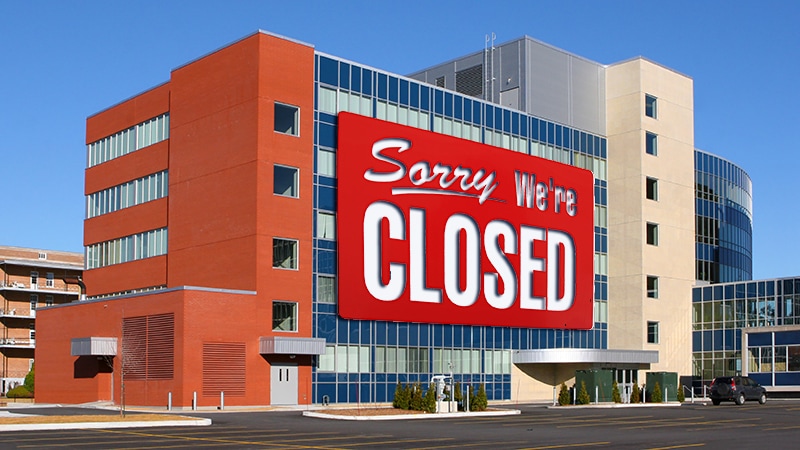
From reimbursement landscape challenges to dwindling patient volumes, many factors lead hospitals to shut down or file for bankruptcy. At least 42 hospitals across the U.S. have closed or entered bankruptcy this year, and the financial challenges caused by the COVID-19 pandemic may force more hospitals to do the same in coming months. 

COVID-19 has created a cash crunch for many hospitals across the nation. They’re estimated to lose $200 billion between March 1 and June 30, according to a report from the American Hospital Association. More than $161 billion of the expected revenue losses will come from canceled services, including nonelective surgeries and outpatient treatment. Moody’s Investors Service said the sharp declines in revenue and cash flow caused by the suspension of elective procedures could cause more hospitals to default on their credit agreements this year than in 2019. 

Below are the provider organizations that have filed for bankruptcy or closed since Jan. 1, beginning with the most recent. They own and operate a combined 42 hospitals.

Our Lady of Bellefonte Hospital (Ashland, Ky.)
Bon Secours Mercy Health closed Our Lady of Bellefonte Hospital in Ashland, Ky., on April 30. The 214-bed hospital was originally slated to shut down in September of this year, but the timeline was moved up after employees began accepting new jobs or tendering resignations. Bon Secours cited local competition as one reason for the hospital closure. Despite efforts to help sustain hospital operations, Bon Secours was unable to “effectively operate in an environment that has multiple acute care facilities competing for the same patients, providers and services,” the health system said.

Williamson (W.Va.) Hospital
Williamson Hospital filed for Chapter 11 bankruptcy in October and was operating on thin margins for months before shutting down on April 21. The 76-bed hospital said a drop in patient volume due to the COVID-19 pandemic forced it to close. CEO Gene Preston said the decline in patient volume was “too sudden and severe” for the hospital to sustain operations.

Decatur County General Hospital (Parsons, Tenn.)
Decatur County General Hospital closed April 15, a few weeks after the local hospital board voted to shut it down. Decatur County Mayor Mike Creasy said the closure was attributable to a few factors, including rising costs, Tennessee’s lack of Medicaid expansion and broader financial challenges facing the rural healthcare system in the U.S.

Quorum Health (Brentwood, Tenn.)
Quorum Health and its 23 hospitals filed for Chapter 11 bankruptcy April 7. The company, a spinoff of Franklin, Tenn.-based Community Health Systems, said the bankruptcy filing is part of a plan to recapitalize the business and reduce its debt load.

UPMC Susquehanna Sunbury (Pa.)
UPMC Susquehanna Sunbury closed March 31. Pittsburgh-based UPMC announced plans in December to close the rural hospital, citing dwindling patient volumes. Sunbury’s population was 9,905 at the 2010 census, down more than 6 percent from 10 years earlier. Though the hospital officially closed its doors in March, it shut down its emergency department and ended inpatient services Jan. 31.

Fairmont (W.Va.) Regional Medical Center
Irvine, Calif.-based Alecto Healthcare Services closed Fairmont Regional Medical Center on March 19. Alecto announced plans in February to close the 207-bed hospital, citing financial challenges. “Our plans to reorganize some administrative functions and develop other revenue sources were insufficient to stop the financial losses at FRMC,” Fairmont Regional CEO Bob Adcock said. “Our efforts to find a buyer or new source of financing were unsuccessful.” Morgantown-based West Virginia University Medicine will open a 10-bed hospital with an emergency department at the former Fairmont Regional Medical Center by the end of June.

Sumner Community Hospital (Wellington, Kan.)
Sumner Community Hospital closed March 12 without providing notice to employees or the local community. Kansas City, Mo.-based Rural Hospital Group, which acquired the hospital in 2018, cited financial difficulties and lack of support from local physicians as reasons for the closure. “Lack of support from the local medical community was the primary reason we are having to close the hospital,” RHG said. “We regret having to make this decision; however, despite operating the hospital in the most fiscally responsible manner possible, we simply could not overcome the divide that has existed from the time we purchased the hospital until today.”

Randolph Health
Randolph Health, a single-hospital system based in Asheboro, N.C., filed for Chapter 11 bankruptcy March 6. Randolph Health leaders have taken several steps in recent years to improve the health system’s financial picture, and they’ve made progress toward that goal. Entering Chapter 11 bankruptcy will allow Randolph Health to restructure its debt, which officials said is necessary to ensure the health system continues to provide care for many more years.

Pickens County Medical Center (Carrollton, Ala.)
Pickens County Medical Center closed March 6. Hospital leaders said the closure was attributable to the hospital’s unsustainable financial position. A news release announcing the closure specifically cited reduced federal funding, lower reimbursement from commercial payers and declining patient visits.

The Medical Center at Elizabeth Place (Dayton, Ohio)
The Medical Center at Elizabeth Place, a 12-bed hospital owned by physicians in Dayton, Ohio, closed March 5. The closure came after years of financial problems. In January 2019, the Medical Center at Elizabeth Place lost its certification as a hospital, meaning it couldn’t bill Medicare or Medicaid for services. Sixty to 65 percent of the hospital’s patients were covered through the federal programs.

Mayo Clinic Health System-Springfield (Minn.)
Mayo Clinic Health System closed its hospital in Springfield, Minn., on March 1. Mayo announced plans in December to close the hospital and its clinics in Springfield and Lamberton, Minn. At that time, James Hebl, MD, regional vice president of Mayo Clinic Health System, said the facilities faced staffing challenges, dwindling patient volumes and other issues. The hospital in Springfield is one of eight hospitals within a less than 40-mile radius, which has led to declining admissions and low use of the emergency department, Dr. Hebl said.

Faith Community Health System
Faith Community Health System, a single-hospital system based in Jacksboro, Texas and part of the Jack County (Texas) Hospital District, first entered Chapter 9 bankruptcy — a bankruptcy proceeding that offers distressed municipalities protection from creditors while a repayment plan is negotiated — in February. The bankruptcy court dismissed the case May 26 at the request of the health system. The health system asked the court to dismiss the bankruptcy case to allow it to apply for a Paycheck Protection Program loan through a Small Business Association lender. On June 11, Faith Community Health System reentered Chapter 9 bankruptcy.

Pinnacle Healthcare System
Overland Park, Kan.-based Pinnacle Healthcare System and its hospitals in Missouri and Kansas filed for Chapter 11 bankruptcy on Feb. 12. Pinnacle Regional Hospital in Boonville, Mo., formerly known as Cooper County Memorial Hospital, entered bankruptcy about a month after it abruptly shut down. Pinnacle Regional Hospital in Overland Park, formerly called Blue Valley Hospital, closed about two months after entering bankruptcy.

Central Hospital of Bowie (Texas)
Central Hospital of Bowie abruptly closed Feb. 4. Hospital officials said the facility was shut down to enable them to restructure the business. Hospital leaders voluntarily surrendered the license for Central Hospital of Bowie.

Ellwood City (Pa.) Medical Center
Ellwood City Medical Center officially closed Jan. 31. The hospital was operating under a provisional license in November when the Pennsylvania Department of Health ordered it to suspend inpatient and emergency services due to serious violations, including failure to pay employees and the inability to offer surgical services. The hospital’s owner, Americore Health, suspended all clinical services at Ellwood City Medical Center Dec. 10. At that time, hospital officials said they hoped to reopen the facility in January. Plans to reopen were halted Jan. 3 after the health department conducted an onsite inspection and determined the hospital “had not shown its suitability to resume providing any health care services.”

Thomas Health (South Charleston, W.Va.)
Thomas Health and its two hospitals filed for Chapter 11 bankruptcy on Jan. 10. In an affidavit filed in the bankruptcy case, Thomas Health President and CEO Daniel J. Lauffer cited several reasons the health system is facing financial challenges, including reduced reimbursement rates and patient outmigration. The health system announced June 18 that it reached an agreement in principle with a new capital partner that would allow it to emerge from bankruptcy.

St. Vincent Medical Center (Los Angeles)
St. Vincent Medical Center closed in January, roughly three weeks after El Segundo, Calif.-based Verity Health announced plans to shut down the 366-bed hospital. Verity, a nonprofit health system that entered Chapter 11 bankruptcy in 2018, shut down St. Vincent after a deal to sell four of its hospitals fell through. In April, Patrick Soon-Shiong, MD, the billionaire owner of the Los Angeles Times, purchased St. Vincent out of bankruptcy for $135 million.

Astria Regional Medical Center (Yakima, Wash.)
Astria Regional Medical Center filed for Chapter 11 bankruptcy in May 2019 and closed in January. When the hospital closed, 463 employees lost their jobs. Attorneys representing Astria Health said the closure of Astria Regional Medical Center, which has lost $40 million since 2017, puts Astria Health in a better financial position. “As a result of the closure … the rest of the system’s cash flows will be sufficient to safely operate patient care operations and facilities and maintain administrative solvency of the estate,” states a status report filed Jan. 20 with the bankruptcy court.


Health insurance marketplace GoHealth files to go public

https://www.fiercehealthcare.com/tech/health-insurance-marketplace-gohealth-files-to-go-public?utm_medium=nl&utm_source=internal&mrkid=959610&mkt_tok=eyJpIjoiWmpjeVlXVTRZV0l5T1RndyIsInQiOiJLWWxjamNKK2lkZmNjcXV4dm0rdjZNS2lOanZtYTFoenViQjMzWnF0RGNlY1pkcjVGcFwvZFY4VjFaUUlZaFRBT1NRMGE5eWhGK1ZmR01ZSWVZWGMxOHRzTkptZVZXZmc5UnNvM3pVM2VIWDh6VllldFc3OGNZTTMxTDJrXC8wbzN1In0%3D

GoHealth files for $100M IPO

GoHealth, an online health insurance marketplace, is looking to raise up to $100 million in an initial public offering, according to a filing with the U.S. Securities and Exchange Commission (SEC) Friday.

The Chicago company, launched in 2001, said its stock will trade on the Nasdaq Global Market under the symbol “GHTH,” according to an S-1 filing.

The company didn’t list specific share price or the number of shares it’s selling in the filing.

GoHealth operates a health insurance portal offering a variety of plans that allows customers to compare numerous insurance plans such as family health plans and self-employed insurance.

The company works with more than 300 health insurance carriers and has enrolled more than 5 million people into health plans.

Goldman Sachs, BofA Securities and Morgan Stanley are acting as the managing book runners for the proposed offering. Barclays, Credit Suisse, Evercore ISI, RBC Capital Markets and William Blair are acting as book runners for the proposed offering. Cantor and SunTrust Robinson Humphrey are acting as co-managers for the proposed offering, according to a GoHealth press release.

GoHealth will join a growing list of technology-enabled healthcare companies that are testing the public markets, including One Medical, Livongo, Phreesia, Health Catalyst, Change Healthcare and Progyny.

The company has shifted its focus toward Medicare products over the past four years, positioning itself to capitalize on strong demographic trends and an aging population.

Medicare enrollment is expected to grow from approximately 61 million individuals in 2019 to approximately 77 million individuals by 2028, the company said in its SEC filing.

At the same time, an increasing proportion of the Medicare-eligible population is choosing commercial insurance solutions, with 38% of Medicare beneficiaries, or approximately 23 million people, enrolled in Medicare Advantage plans in 2019, an increase of approximately 1.5 million people from 2018 to 2019, the company said.

The market is “ripe for disruption” by digitally enabled and technology-driven marketplaces like the GoHealth platform, according to the company.

GoHealth estimates a total addressable market of $28 billion for Medicare Advantage and Medicare Supplement products.

“We believe that these trends will drive a larger market in the coming years that, when taken together with our other product and plan offerings, will result in an even larger addressable market. We also believe that we are poised to benefit from market share gains in what has traditionally been a highly fragmented market,” the company said in the S-1 filing.

The company uses machine-learning algorithms and insurance behavioral data to match customers with the health insurance plan that meets their specific needs.

In 2019, the company generated over 42.2 million consumer interactions.

In September 2019, Centerbridge acquired a majority stake of GoHealth in a deal that reportedly valued the company at $1.5 billion, the Chicago Tribune reported.

Net revenues grew to $141 million for the first quarter of this year, compared to $69.1 million last year. The company reported 2019 pro forma net revenues of $540 million, up 139% from 2018’s revenue of $226 million, the company reported in its SEC filing.

The company reported a net loss of $937,000 for the first quarter of 2020 compared to a net income of $5 million for the same period in 2019, according to its IPO.

Demographic, consumer preference and regulatory factors are driving growth in the individual health insurance market, according to the company. Medicare enrollment is expected to grow significantly over the next 10 years as 10,000-plus individuals turn 65 each day and become Medicare-eligible.

At the same time, the growth in plan choices makes education and assistance with plan selection more important for consumers, GoHealth said.

“Marketplaces such as ours help educate consumers, and assist them in making informed plan choices,” the company said.

The company also faces significant risks that may impede its growth. Currently, a large portion of GoHealth’s revenue is derived from a limited number of carriers. Carriers owned by Humana and Anthem accounted for approximately 42% and 32%, respectively, of the company’s net revenues for the first three months of 2020, the company said in its IPO paperwork.

The COVID-19 pandemic also creates uncertainty in the healthcare market, and future developments in the outbreak could impact the company’s financial performance, GoHealth said.


Moody’s: Patient volume recovered a bit in May, but providers face long road to recovery

https://www.fiercehealthcare.com/hospitals/moody-s-patient-volume-recovering-may-but-providers-face-long-road-to-recovery?mkt_tok=eyJpIjoiWmpjeVlXVTRZV0l5T1RndyIsInQiOiJLWWxjamNKK2lkZmNjcXV4dm0rdjZNS2lOanZtYTFoenViQjMzWnF0RGNlY1pkcjVGcFwvZFY4VjFaUUlZaFRBT1NRMGE5eWhGK1ZmR01ZSWVZWGMxOHRzTkptZVZXZmc5UnNvM3pVM2VIWDh6VllldFc3OGNZTTMxTDJrXC8wbzN1In0%3D&mrkid=959610

Moody's: Patient volume recovered a bit in May, but providers face ...

Patient volumes at hospitals, doctors’ and dentists’ offices recovered slightly in May but lagged well behind pre-pandemic levels, according to a new analysis from Moody’s Investors Service.

In all, the ratings agency estimated total surgeries at rated for-profit hospitals declined by 55% to 70% in April compared with the same period in 2019. States required hospitals to cancel or delay elective procedures, which are vital to hospitals’ bottom lines.

“Patients that had been under the care of physicians before the pandemic will return first in order to address known health needs,” officials from the ratings agency said in a statement. “Physicians and surgeons will be motivated to extend office or surgical hours in order to accommodate these patients.”

Those declines narrowed to 20% to 40% in May when compared to 2019.

Emergency room and urgent care volumes were still down 35% to 50% in May.

“This could reflect the prevalence of working-from-home arrangements and people generally staying home, which is leading to a decrease in automobile and other accidents outside the home,” the analysis said. “Weak ER volumes also suggest that many people remain apprehensive to enter a hospital, particularly for lower acuity care.”

The good news:  The analysis estimated it is unlikely there will be a return to the nationwide decline of volume experienced in late March and April because healthcare facilities are more prepared for COVID-19.

For instance, hospitals have enough personal protective equipment for staff and have expanded testing, the analysis said.

For-profit hospitals also have “unusually strong liquidity to help them weather the effects of the revenue loss associated with canceled or postponed procedures,” Moody’s added. “That is largely due to the CARES Act and other government financial relief programs that have caused hospital cash balances to swell.”

However, the bill for one of those sources of relief is coming due soon.

Hospitals and other providers will have to start repaying Medicare for advance payments starting this summer. The Centers for Medicare & Medicaid Services doled out more than $100 billion in advance payments to providers before suspending the program in late April.

Hospital group Federation of American Hospitals asked Congress to change the repayment terms for such advance payments, including giving providers at least a year to start repaying the loans.

Another risk for providers is the change in payer mix as people lose jobs and commercial coverage, shifting them onto Medicaid or the Affordable Care Act’s (ACA’s) insurance exchanges.

“This will lead to rising bad debt expense and a higher percentage of revenue generated from Medicaid or [ACA] insurance exchange products, which typically pay considerably lower rates than commercial insurance,” Moody’s said.


Recovery of medical staffing firms will lag behind hospitals, analysts say

https://www.healthcaredive.com/news/recovery-of-medical-staffing-firms-will-lag-behind-hospitals-analysts-say/580171/

COVID-19 Triggers Cash Need, Lenders Tighten Reins | PYMNTS.com

Dive Brief:

  • Though U.S. hospital staffing companies are slowly beginning to recover from the COVID-19 shutdown and corresponding drop in revenues, that rebound will lag behind hospitals.
  • Recovery of giants like ER staffing firm Envision and AMN Healthcare, which has the largest network of qualified clinicians in the U.S., will be hindered as hospitals prefer to keep their own staff employed over external contractors amid a recession.
  • The “pace of recovery will not be linear,” and depends on the mix of service lines and geography, S&P Global analysts said in a Thursday note. Analysts also expect hospitals to aggressively renegotiate rates and terms with staffing companies later in the year, which could depress margins even more in the long-term.

Dive Insight:

The collapse in patient volume following stay-at-home guidelines implemented earlier this year has had a well-documented effect on provider finances. Hospitals and doctor’s offices prepared for an influx of COVID-19 patients as lucrative elective procedures declined and revenues imploded.

At the nadir in April, anesthesiology services were down 70%, radiology down 60% and ER visits down 40%, S&P said. Analysts expect tentative recovery in May and June, but no return to pre-pandemic volume until mid-2021.

The dramatic reduction slashed the revenues and cash flows of staffing companies, though the worst is likely over. At the beginning of the pandemic, staffing companies and hospitals alike took preventive measures like furloughing nonessential and back-office workers, extending vendor payment terms, aggressively collecting old receivables and onboarding doctors to telehealth. Many have kept up adequate frontline capacity too, despite uncertain demand.

The economy saw some small gains in May as furloughed employees began to trickle back to work. But the increase in health services employment that month came largely in dental health workers and physician offices. Hospitals shed another 27,000 jobs.

Hospitals will likely fill staffing needs internally, bringing back furloughed or laid off employees first as operations slowly improve, before turning once again to medical contractors.

“Given the extended disruption, a looming recession, and possible lasting changes to health care providers, credit metrics will be much weaker than what we had previously expected for nearly all staffing companies,” analysts wrote. “Some staffing companies, particularly those that are highly leveraged, may face very significant liquidity pressures for several months. It is possible not all will be able to withstand the sharp decline.”

S&P Global has taken a number of negative rating actions on staffing companies since late March.

Envision and anesthesiology firm ASP Napa, both rated ‘CCC’ with a negative outlook, have the greatest potential for a default. Envision, owned by private equity firm KKR and one of the largest U.S. physician staffing firms, is reportedly considering a bankruptcy filing as it struggles with $7 billion in debt.

Knoxville, Tenn.-based Team Health and clinical practice management firm SCP Health have enough liquidity to chug along for several more months of lower-than-normal volumes, while AMN and Utah-based CHG Healthcare Services are both in more solid positions to weather the pandemic, S&P said.

But professional outsourced staffing businesses, like anesthesiology and radiology, should recover more quickly, and many firms have gotten financial support from lenders and private equity backers. Team Health, for example, approved a senior secured term loan from its PE sponsor, Blackstone, which covers interest payments in April through mid-May.

Liquidity was also helped by the passage of the $2.2 trillion CARES relief legislation late March.

Several staffing companies have reportedly received grants from the $100 billion allocated by the legislation for providers, along with no-interest loans from accelerated Medicare payments, sparking questions over whether companies backed by cash-rich private equity firms need the funds.


Moody’s: US healthcare system rebounds from COVID-19 in May, but a bumpy road lies ahead

https://www.healthcaredive.com/news/moodys-us-healthcare-system-rebounds-from-covid-19-in-may-but-a-bumpy-ro/580152/

Banks rating downgrade: Moody's changes outlook on Indian banks to ...

Dive Brief:

  • A Moody’s Investors Service report on Thursday suggests that the U.S. healthcare industry is on the rebound from COVID-19, but recovery will likely to slow and uneven. Moreover, the report expressed concerns that regional flareups of coronavirus could majorly set back the return to normal volumes.
  • Investment firm Jefferies affirmed those worries in hospital traffic data shared Friday, noting “a sharp reversal” in hotspot state Arizona. Analysts tracked “record lows” in Arizona’s hospital traffic last week, down from what was thought to be the trough in April and sagging below May recovery amid a significant uptick in COVID-19 cases and protests.
  • “Whether states can continue their recovery even as cases increase, as we’ve seen in [Texas] and others, or if the recent reversals in [Arizona, Illinois,] etc. become more widespread is a trend to watch in coming weeks,” Jefferies analysts wrote.

Dive Insight:

Large sections of the healthcare sector all but shut down during the spring as the coronavirus led to nationwide shelter-in-place orders. However, as states and municipalities slowly reopen, so are the doors for hospitals, ambulatory surgical centers, clinics and other integral components of healthcare delivery.

As a result, Moody’s reported “considerable sequential improvement” during May. For example, while for-profit hospitals saw surgery volumes drop as much as 70% in April compared to the same period in 2019, May volumes were down about 20% to 40% compared to last year’s. Hospital-operated ambulatory surgical centers saw an 80% to 90% drop in April volumes, but only a 30% to 40% drop in May.

However, Moody’s noted that the “path to normalized volumes are not linear.” It also pointed out that emergency room care volumes, which dropped as much as 60% in April, have yet to really rebound, as they still appeared depressed as much as 50% in May.

“This could reflect the prevalence of working-from-home arrangements and people generally staying home, which is leading to a decrease in automobile and other accidents outside the home. Weak ER volumes also suggest that many people remain apprehensive to enter a hospital, particularly for lower acuity care,” the Moody’s report said.

The firm also noted that “the shape of recovery will vary by state, region and service line, reinforcing the importance of diversification for credit quality among healthcare service providers.”

However, Moody’s believes that the darkest days of March and April are behind much of the healthcare sector. It noted that most providers have stockpiled appropriate personal protective equipment and have reconfigured their offices, waiting rooms and other infrastructure to protect the health of both patients and employees.

Traffic data from 3,300 U.S. hospitals, tracked by Jefferies via mobile device pings, indicates that compared to January 2019 levels, national traffic lows of 43.7% in mid-April improved to 63.3% by early June.

But state-by-state analysis reveals some parts of the country are trending backwards. Arizona fell to a new low of 28.5% last week after hitting 51.5% on May 20. The analysts also reported Illinois hit its own new low on June 7.

While Moody’s did express some concern about regional outbreaks, it concluded that the precautions already taken “make it less likely that the U.S. would once again shut down all non-elective care across the nation if there is a second wave of coronavirus infections.”

Moody’s did express some concerns about hospital finances, but noted that for-profit hospitals “have unusually strong liquidity” due to payouts from the CARES Act and other government-sponsored financial relief programs.

Medical device firms should be prepared for a long and uneven recovery, according to Moody’s. The dental and orthopaedic sectors “will see a greater than average impact from consumers’ inability to pay for procedures or their unwillingness to engage with the healthcare system.” Moody’s forecast “a gradual, uneven pace of recovery,” with pre-tax earnings to decline as much as 30% in 2020 compared to 2019, while revenues will shrink around 10%. It expects that earnings will rebound in 2021 to 2019 levels.

Companies that operate in discretionary sectors will be hit harder as they rely on patients able to meet large deductibles or co-payments or to pay for related procedures entirely on their own. Moody’s noted that a large number of these procedures are performed in acute care hospitals with the assistance of robotics, but hospitals may be more conservative in their robotics investments given new budget constraints.


INSIGHT: Health-Care M&A Post-Pandemic—Opportunities, Not Opportunism

https://news.bloomberglaw.com/health-law-and-business/insight-health-care-m-a-post-pandemic-opportunities-not-opportunism

INSIGHT: Health-Care M&A Post-Pandemic—Opportunities, Not Opportunism

The Covid-19 pandemic has devastated the health-care industry. In addition to the tragedies that the pandemic has brought, health systems have universally experienced severe and rapid deterioration of their bottom lines due to plummeting patient volumes, pausing of high margin elective surgical procedures, and increased expenses.

By some estimates, health system losses will be around $200 billion by the end of June and revenues have dropped by around 50 percent. As a result of the financial uncertainty caused by the pandemic, many hospital and health systems terminated or delayed potential transactions as they focused on managing the crisis and protecting their workforces and communities.

But this may just be the calm before a big M&A storm.

Rise in M&A Activity

Through our work as legal and communications counselors, we have seen preliminary M&A activity rise in recent weeks, with providers exploring and negotiating transactions, including several that have not yet been publicly announced.

Some systems are looking to capitalize on the time between the end of the first wave of Covid-19 and a potential resurgence in the fall to get letters of intent finalized and announced. This coming M&A activity presents legal and communications challenges when the national spotlight is firmly on health systems.

Providers are starting to resurrect deals that were paused during the initial period of the Covid-19 crisis, including Community Health System’s sale of Abilene Regional Medical Center and Brownwood Regional Medical Center to Hendrick Health System.

Some systems are seeking new strategic partners, such as Lake Health in Ohio, and New Hanover Regional Medical Center in North Carolina, which resumed its recent RFP response process after a pause.

Still others are looking for new opportunities consistent with pre-Covid growth strategies, as adjusted for pandemic-related developments and challenges.

More Consolidation

Larger and more financially robust health systems are expected to weather the crisis, whereas smaller systems and hospitals with less cash and tighter operating margins, including rural and critical access hospitals, may be facing insolvency, closure, and bankruptcy. This creates a scenario where one party is financially distressed as a result of the pandemic and needs to partner with or join another system to survive. These circumstances will likely fuel increased consolidation in the health-care industry.

For a struggling provider, joining a larger system can offer much-needed financial commitments, access to capital, disciplined management structure, economies of scale for purchasing and improved IT infrastructure, among many other strategic benefits. A well-positioned system, even if financially weakened due to pandemic challenges, will be able to negotiate favorable deal terms if it has significant strategic value to its prospective partner.

Communications Strategy is Important

As providers explore and execute partnerships, they must implement a stakeholder and communications strategy that focuses on benefits for each side given the new financial reality. Doing so will minimize criticism of opportunism by the acquiring system—and best position a definitive agreement and successful deal.

An effective communications strategy will emphasize how the proposed transaction will maintain or improve quality or affordability, ensure access to care for communities and address financial challenges faced by health systems as a result of the pandemic.

Health systems should articulate how their M&A activity will stabilize affected health systems, allow them to manage the Covid-19 crisis and future pandemics, and continue to meet the overall care needs of the community. It can also highlight how these partnerships will facilitate continued care in a market, which otherwise might lose a valuable health-care resource, as well as the positive economic benefits the transaction will bring for local communities.

Communications that support the vision, rationale and benefits of a deal will also need to be relevant to the regulatory bodies whose approval may be required.

Public perception and support of health-care providers have been extremely positive during the pandemic to date, as evidenced by homemade banners, balcony tributes, and praise on social media. Health systems and their staffs have borne personal risk and financial pain by focusing on patients and public health at the expense of all else. This goodwill can be valuable as health systems seek stakeholder and community support for their transactions.

That goodwill can also quickly be forgotten.

As health systems race to the altar to beat out competitors for M&A targets and other strategic relationships, it is critical that they are thoughtful in structuring their deals and justifying the activity.

For example, acquisitions and partnerships involving substantial outlays of capital and lucrative executive compensation or severance packages will be viewed negatively if undertaken by a system that instituted large compensation reductions across the system or even furloughed or laid off employees during the pandemic.

As the dust begins to settle from the first wave of Covid-19, it is clear that there will be drastic changes to how health systems do business. The pandemic will also create financial winners and losers. Hospitals and health systems must think proactively about a strategy for growth as opportunities with willing transaction partners arise.

But being proactive must be balanced against appearing to be opportunistic or taking advantage of the worst health crisis in our lifetimes. To maintain their goodwill and reputations, health systems should continue to do deals for the right reasons and for the benefit of their communities.


Dow plunges more than 1,800 points as rising COVID-19 cases roil Wall Street

Dow plunges more than 1,800 points as rising COVID-19 cases roil Wall Street

Dow plunges 1,800 as investors turn jittery over new wave of ...

Stocks plummeted Thursday as the emergence of new coronavirus hotspots and a caution from the Federal Reserve chairman shook Wall Street after months of steady gains.

The Dow Jones Industrial Average closed with a loss of 1,861 points, plunging 6.9 percent for its worst day of losses since March. The S&P 500 index closed with a loss of 5.9 percent, and the Nasdaq composite sunk 5.3 percent on the day.

All three major U.S. stock indexes closed with their steepest single-day losses since crashing in March amid the beginning of lockdowns imposed to slow the spread of COVID-19. Thursday’s losses come after more than two months of steady recovery toward the record highs seen before the pandemic derailed the economy.

Despite the loss of more than 21 million jobs and the deaths of more than 110,000 Americans due to the coronavirus, investors had gradually upped their bets on a quick economic recovery through April and May as states began loosening business closures and travel restrictions.

The surprise addition of 2.5 million jobs in May, according to the Labor Department, also fueled hopes for a quicker than expected rebound from a recession of unprecedented scale and speed.

But Thursday’s abrupt reversal comes as states across the U.S. see spiking COVID-19 cases and diminishing hospital capacity to handle a new wave of infections.

Week-over-week case counts are rising in half of all U.S. states, and only 16 states plus the District of Columbia have seen their total case counts decline for two consecutive weeks.

North Carolina, California, Mississippi and Arkansas are all facing record levels of hospitalizations, and the virus appears to be quickly spreading in Houston, Phoenix, South Carolina and Missouri.

Some market experts also attribute Thursday’s losses to Fed Chairman Jerome Powell’s Wednesday prediction of a “long road” to recovery.

During a Wednesday press conference, Powell said that while the U.S. may see significant job growth in coming months as people return to their jobs,” the country is “still going to face, probably, an extended period where it will be difficult for many people to find work.”

“What we’re trying to do is create an environment in which they have the best chance either to go back to their old job or to get a new job,” he continued.

President Trump, who frequently lashes out at the Fed when markets turn south, blasted the Fed for underestimating how quickly the U.S. economy could recover and how soon a COVID-19 vaccine would be available.

“The Federal Reserve is wrong so often. I see the numbers also, and do MUCH better than they do. We will have a very good Third Quarter, a great Fourth Quarter, and one of our best ever years in 2021. We will also soon have a Vaccine & Therapeutics/Cure. That’s my opinion. WATCH!” Trump tweeted.

Trump’s top economic advisor Larry Kudlow also criticized Powell, urging the Fed chief to ease up on the dour forecasts

“I do think Mr. Powell could lighten up a little when he has these press offerings. You know, a smile now and then, a little bit of optimism,” Kudlow said on Fox Business Network.

“I’ll talk with him and we’ll have some media training at some point.


Dow Falls 250 Points After Federal Reserve’s Grim Economic Outlook

https://www.forbes.com/sites/sergeiklebnikov/2020/06/10/dow-falls-250-points-after-federal-reserves-grim-economic-outlook/?utm_source=newsletter&utm_medium=email&utm_campaign=news&utm_campaign=news&cdlcid=#50eb6c4f56be

Dow Falls 250 Points After Federal Reserve's Grim Economic Outlook

TOPLINE

The market finished slightly lower on Wednesday after the Federal Reserve indicated that it would leave interest rates unchanged until 2022, while also warning of a long economic recovery from the coronavirus recession.

KEY FACTS

The Dow Jones Industrial Average fell 0.9%, over 250 points, on Wednesday, while the S&P 500 was down 0.5% and the tech-heavy Nasdaq Composite gained 0.7%.

The Federal Reserve concluded its two-day meeting on Wednesday by leaving interest rates unchanged near zero and indicating that they will stay there until 2022.

It also gave a grim update on the economy: The Central Bank forecasts a long recovery, with unemployment likely to remain high for many years.

The Fed, which has injected nearly $3 trillion into financial markets since late February, pledged to continue its unprecedented stimulus plan until the economy has weathered the coronavirus recession.

The Nasdaq climbed to a new record high on Wednesday, however, closing above 10,000 for the first time ever thanks to continued strength in tech stocks. Investors continued to rotate back into names like Amazon and Apple, which both hit new record highs again.

“A large shift is occurring as investors cycle out of value/cyclical stocks for a second day and pour money into growth,” according to Vital Knowledge founder Adam Crisafulli.

Stocks that would benefit from a reopening—including airlines, retailers and cruise operators—have all been moving lower recently, after having led the market rally in the past few weeks.

Bank stocks were especially hard-hit on Wednesday, plunging on the news that the Fed will keep interest rates low for a long time.

CRUCIAL QUOTE

“We are not even thinking about thinking about raising rates,” Federal Reserve chairman Jerome Powell confirmed at his press conference. He added that while “there is great uncertainty about the future,” the central bank is strongly committed to doing “whatever we can, for as long as it takes” to help support the economy. 

BIG NUMBER: 10,000.

With tech stocks making a comeback in recent days, the Nasdaq hit a new record high on Wednesday, closing above 10,000 for the first time ever. Shares of Amazon, Apple, Netflix, Microsoft and Google-parent Alphabet have all been soaring recently, boosting the index higher.

KEY BACKGROUND

Stocks have continued to rally on optimism about reopening the economy and a faster than expected recovery from the coronavirus pandemic. The market has so far had a strong start to June, building on back-to-back monthly gains. The S&P 500 on Monday turned positive for 2020, fully recouping its losses from the coronavirus sell-off earlier this year. The index is now up more than 45% from its low point on March 23.


Sports bettors may be a driving force behind the stock market surge

https://www.axios.com/sports-betting-stock-market-surge-0e945773-d676-4f0a-a6a0-a0f92611b10b.html

Sports bettors may be a driving force behind the stock market ...

Professional investors have largely abandoned the stock market amid the coronavirus pandemic, but sports bettors and bored millennials have jumped into the retail stock trading market with both feet.

Why it matters: They may be a driving force pushing U.S. stocks to their recent highs — and potentially driving them further.

What’s happening: Online brokerages have seen a record number of new accounts opened this year, and the big four — E-Trade, TD Ameritrade, Charles Schwab and Interactive Brokers — executed as many trades in March and April as in the whole first half of last year, per public disclosures.

  • Equity strategists at Deutsche Bank note there is “plenty of evidence” that new retail investors have been buying since the stock market began to crash and that professional money managers are “now chasing” them.

Between the lines: Robinhood, whose easy-to-use app makes the transition between sports betting and trading seamless, boasts a similar customer base to most sportsbooks, notes Marc Rubinstein in his newsletter, Net Interest.

  • “43% of North American men aged 25-34 who watch sports also bet on sports at least once per week, and that’s the same group that has flocked to Robinhood,” Rubinstein writes.
  • “On the basis that their customers love sports betting, there’s something meta about DraftKings itself having worked its way into more Robinhood portfolios than practically any other stock over the past month.”

The big picture: Sports betting and stock trading aren’t all that different. In fact, most online betting platforms are modeled on stock exchanges, and Nasdaq itself provides sportsbooks with technology that was born in the financial markets.

  • The comparisons between the two have only increased with the rise of legal sports betting and the surge in mobile stock trading, two activities that cater to the thrill of short-term gains and losses.
  • “For a gambler, investing has a ton of similarities,” said Barstool Sports founder Dave Portnoy, who has begun streaming his day-trading sessions for an audience that normally consumes sports betting content.
  • Barstool also changed its daily gambling radio show from “Picks Central” to “Stocks Central” — further evidence of the crossover between the two.

Meanwhile, most professional investors were sitting on the sidelines.

  • Nearly $5 trillion now sits in money market funds, which are effectively savings accounts, the largest total on record and about $1 trillion more than the record high during the global financial crisis.
  • In its note to clients, Deutsche strategists add that for “large swathes of the equity market in the U.S. as well as globally … positioning is still extremely low.”

Professionals have also been buying bonds rather than stocks as U.S. equity indexes raced back from their lows over the last two months.

  • Data from the Investment Company Institute shows equity funds saw six straight weeks of outflows from the week ending April 22 to the week ending May 27, totaling $78.2 billion. Bond funds, on the other hand, have had seven straight weeks of inflows through May 27, totaling $91.7 billion.
  • Professional traders have finally started dipping their toes back into the stock market in June, according to Bank of America’s data, which showed $6.2 billion into stocks last week, compared with $32.5 billion into bonds.
  • BofA’s Bull & Bear indicator rose from its lowest possible level — 0.0 — where it had been since March 25 to move to 0.4 last week, still indicating a paucity of institutional investors buying stocks.

The bottom line: Day trading has replaced sports betting as a form of entertainment for many Americans during the shutdown, and this phenomenon could partly explain the current disconnect between the economy (down) and the stock market (up).