


Part one of our six-part series on vaccinations, supported by the National Institute for Health Care Management Foundation, dives into the history of variolation, exploring the beginning of the long road that led to vaccines as we know them today.
Part one of our six-part series on vaccinations, supported by the National Institute for Health Care Management Foundation, dives into the history of variolation, exploring the beginning of the long road that led to vaccines as we know them today.
“No!” The doctor snapped. “Look at me!”
I had been staring her in the eyes, as she had ordered, but when a doctor on my other side began jabbing me with a needle, I started to turn my head. “Don’t look at it,” the first doctor said. I obeyed.
This was in early August in New Orleans, where I had signed up to be a participant in the clinical trial for the Pfizer-BioNTech COVID-19 vaccine. It was a blind study, which meant I was not supposed to know whether I had gotten the placebo or the real vaccine. I asked the doctor if I would really been able to tell by looking at the syringe. “Probably not,” she answered, “but we want to be careful. This is very important to get right.”
I became a vaccine guinea pig because, in addition to wanting to be useful, I had a deep interest in the wondrous new roles now being played by RNA, the genetic material that is at the heart of new types of vaccines, cancer treatments and gene-editing tools. I was writing a book on the Berkeley biochemist Jennifer Doudna. She was a pioneer in determining the structure of RNA, which helped her and her doctoral adviser figure out how it could be the origin of all life on this planet. Then she and a colleague invented an RNA-guided gene-editing tool, which won them the 2020 Nobel Prize in Chemistry.
The tool is based on a system that bacteria use to fight viruses. Bacteria develop clustered repeated sequences in their DNA, known as CRISPRs, that can remember dangerous viruses and then deploy RNA-guided scissors to destroy them. In other words, it’s an immune system that can adapt itself to fight each new wave of viruses—just what we humans need. Now, with the recently approved Pfizer-BioNTech vaccine and a similar one from Moderna being slowly rolled out across the U.S. and Europe, RNA has been deployed to make a whole new type of vaccine that will, when it reaches enough people, change the course of the pandemic.
Up until last year, vaccines had not changed very much, at least in concept, for more than two centuries. Most have been modeled on the discovery made in 1796 by the English doctor Edward Jenner, who noticed that many milkmaids were immune to smallpox. They had all been infected by a form of pox that afflicts cows but is relatively harmless to humans, and Jenner surmised that the cowpox had given them immunity to smallpox. So he took some pus from a cowpox blister, rubbed it into scratches he made in the arm of his gardener’s 8-year-old son and then (this was in the days before bioethics panels) exposed the kid to smallpox. He didn’t become ill.
Before then, inoculations were done by giving patients a small dose of the actual smallpox virus, hoping that they would get a mild case and then be immune. Jenner’s great advance was to use a related but relatively harmless virus. Ever since, vaccinations have been based on the idea of exposing a patient to a safe facsimile of a dangerous virus or other germ. This is intended to kick the person’s adaptive immune system into gear. When it works, the body produces antibodies that will, sometimes for many years, fend off any infection if the real germ attacks.
One approach is to inject a safely weakened version of the virus. These can be good teachers, because they look very much like the real thing. The body responds by making antibodies for fighting them, and the immunity can last a lifetime. Albert Sabin used this approach for the oral polio vaccine in the 1950s, and that’s the way we now fend off measles, mumps, rubella and chicken pox.
At the same time Sabin was trying to develop a vaccine based on a weakened polio virus, Jonas Salk succeeded with a safer approach: using a killed or inactivated virus. This type of vaccine can still teach a person’s immune system how to fight off the live virus but is less likely to cause serious side effects. Two Chinese companies, Sinopharm and Sinovac, have used this approach to develop vaccines for COVID-19 that are now in limited use in China, the UAE and Indonesia.
Another traditional approach is to inject a subunit of the virus, such as one of the proteins that are on the virus’s coat. The immune system will then remember these, allowing the body to mount a quick and robust response when it encounters the actual virus. The vaccine against the hepatitis B virus, for example, works this way. Using only a fragment of the virus means that they are safer to inject into a patient and easier to produce, but they are often not as good at producing long-term immunity. The Maryland-based biotech Novavax is in late-stage clinical trials for a COVID-19 vaccine using this approach, and it is the basis for one of the two vaccines already being rolled out in Russia.
The plague year of 2020 will be remembered as the time when these traditional vaccines were supplanted by something fundamentally new: genetic vaccines, which deliver a gene or piece of genetic code into human cells. The genetic instructions then cause the cells to produce, on their own, safe components of the target virus in order to stimulate the patient’s immune system.
For SARS-CoV-2—the virus that causes COVID-19—the target component is its spike protein, which studs the outer envelope of the virus and enables it to infiltrate human cells. One method for doing this is by inserting the desired gene, using a technique known as recombinant DNA, into a harmless virus that can deliver the gene into human cells. To make a COVID vaccine, a gene that contains instructions for building part of a coronavirus spike protein is edited into the DNA of a weakened virus like an adenovirus, which can cause the common cold. The idea is that the re-engineered adenovirus will worm its way into human cells, where the new gene will cause the cells to make lots of these spike proteins. As a result, the person’s immune system will be primed to respond rapidly if the real coronavirus strikes.
This approach led to one of the earliest COVID vaccine candidates, developed at the aptly named Jenner Institute of the University of Oxford. Scientists there engineered the spike-protein gene into an adenovirus that causes the common cold in chimpanzees, but is relatively harmless in humans.
The lead researcher at Oxford is Sarah Gilbert. She worked on developing a vaccine for Middle East respiratory syndrome (MERS) using the same chimp adenovirus. That epidemic waned before her vaccine could be deployed, but it gave her a head start when COVID-19 struck. She already knew that the chimp adenovirus had successfully delivered into humans the gene for the spike protein of MERS. As soon as the Chinese published the genetic sequence of the new coronavirus in January 2020, she began engineering its spike-protein gene into the chimp virus, waking each day at 4 a.m.
Her 21-year-old triplets, all of whom were studying biochemistry, volunteered to be early testers, getting the vaccine and seeing if they developed the desired antibodies. (They did.) Trials in monkeys conducted at a Montana primate center in March also produced promising results.
Bill Gates, whose foundation provided much of the funding, pushed Oxford to team up with a major company that could test, manufacture and distribute the vaccine. So Oxford forged a partnership with AstraZeneca, the British-Swedish pharmaceutical company. Unfortunately, the clinical trials turned out to be sloppy, with the wrong doses given to some participants, which led to delays. Britain authorized it for emergency use at the end of December, and the U.S. is likely to do so in the next two months.
Johnson & Johnson is testing a similar vaccine that uses a human adenovirus, rather than a chimpanzee one, as the delivery mechanism to carry a gene that codes for making part of the spike protein. It’s a method that has shown promise in the past, but it could have the disadvantage that humans who have already been exposed to that adenovirus may have some immunity to it. Results from its clinical trial are expected later this month.
In addition, two other vaccines based on genetically engineered adenoviruses are now in limited distribution: one made by CanSino Biologics and being used on the military in China and another named Sputnik V from the Russian ministry of health.
There is another way to get genetic material into a human cell and cause it to produce the components of a dangerous virus, such as the spike proteins, that can stimulate the immune system. Instead of engineering the gene for the component into an adenovirus, you can simply inject the genetic code for the component into humans as DNA or RNA.
Let’s start with DNA vaccines. Researchers at Inovio Pharmaceuticals and a handful of other companies in 2020 created a little circle of DNA that coded for parts of the coronavirus spike protein. The idea was that if it could get inside the nucleus of a cell, the DNA could very efficiently churn out instructions for the production of the spike-protein parts, which serve to train the immune system to react to the real thing.
The big challenge facing a DNA vaccine is delivery. How can you get the little ring of DNA not only into a human cell but into the nucleus of the cell? Injecting a lot of the DNA vaccine into a patient’s arm will cause some of the DNA to get into cells, but it’s not very efficient.
Some of the developers of DNA vaccines, including Inovio, tried to facilitate the delivery into human cells through a method called electroporation, which delivers electrical shock pulses to the patient at the site of the injection. That opens pores in the cell membranes and allows the DNA to get in. The electric pulse guns have lots of tiny needles and are unnerving to behold. It’s not hard to see why this technique is unpopular, especially with those on the receiving end. So far, no easy and reliable delivery mechanism has been developed for getting DNA vaccines into the nucleus of human cells.
That leads us to the molecule that has proven victorious in the COVID vaccine race and deserves the title of TIME magazine’s Molecule of the Year: RNA. Its sibling DNA is more famous. But like many famous siblings, DNA doesn’t do much work. It mainly stays bunkered down in the nucleus of our cells, protecting the information it encodes. RNA, on the other hand, actually goes out and gets things done. The genes encoded by our DNA are transcribed into snippets of RNA that venture out from the nucleus of our cells into the protein-manufacturing region. There, this messenger RNA (mRNA) oversees the assembly of the specified protein. In other words, instead of just sitting at home curating information, it makes real products.
Scientists including Sydney Brenner at Cambridge and James Watson at Harvard first identified and isolated mRNA molecules in 1961. But it was hard to harness them to do our bidding, because the body’s immune system often destroyed the mRNA that researchers engineered and attempted to introduce into the body. Then in 2005, a pair of researchers at the University of Pennsylvania, Katalin Kariko and Drew Weissman, showed how to tweak a synthetic mRNA molecule so it could get into human cells without being attacked by the body’s immune system.
When the COVID-19 pandemic hit a year ago, two innovative young pharmaceutical companies decided to try to harness this role played by messenger RNA: the German company BioNTech, which formed a partnership with the U.S. company Pfizer; and Moderna, based in Cambridge, Mass. Their mission was to engineer messenger RNA carrying the code letters to make part of the coronavirus spike protein—a string that begins CCUCGGCGGGCA … —and to deploy it in human cells.
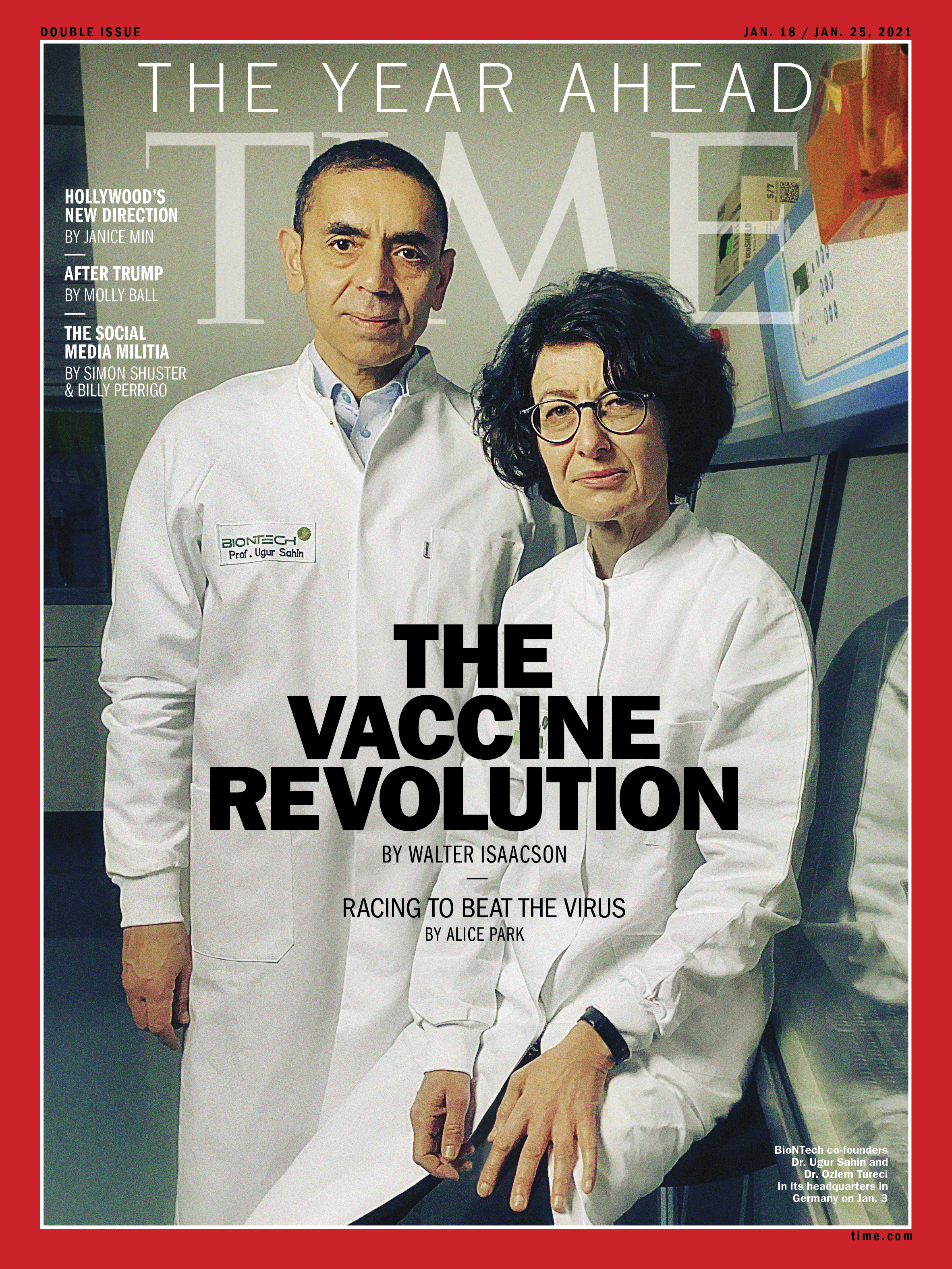
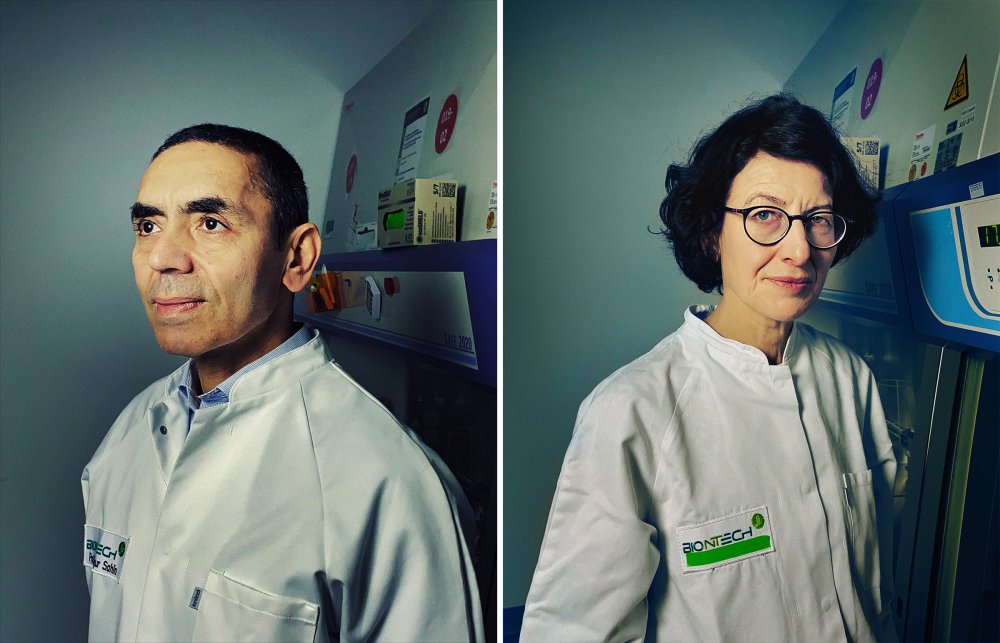
BioNTech was founded in 2008 by the husband-and-wife team of Ugur Sahin and Ozlem Tureci, who met when they were training to be doctors in Germany in the early 1990s. Both were from Turkish immigrant families, and they shared a passion for medical research, so much so that they spent part of their wedding day working in the lab. They founded BioNTech with the goal of creating therapies that stimulate the immune system to fight cancerous cells. It also soon became a leader in devising medicines that use mRNA in vaccines against viruses.
In January 2020, Sahin read an article in the medical journal Lancet about a new coronavirus in China. After discussing it with his wife over breakfast, he sent an email to the other members of the BioNTech board saying that it was wrong to believe that this virus would come and go as easily as MERS and SARS. “This time it is different,” he told them.
BioNTech launched a crash project to devise a vaccine based on RNA sequences, which Sahin was able to write within days, that would cause human cells to make versions of the coronavirus’s spike protein. Once it looked promising, Sahin called Kathrin Jansen, the head of vaccine research and development at Pfizer. The two companies had been working together since 2018 to develop flu vaccines using mRNA technology, and he asked her whether Pfizer would want to enter a similar partnership for a COVID vaccine. “I was just about to call you and propose the same thing,” Jansen replied. The deal was signed in March.
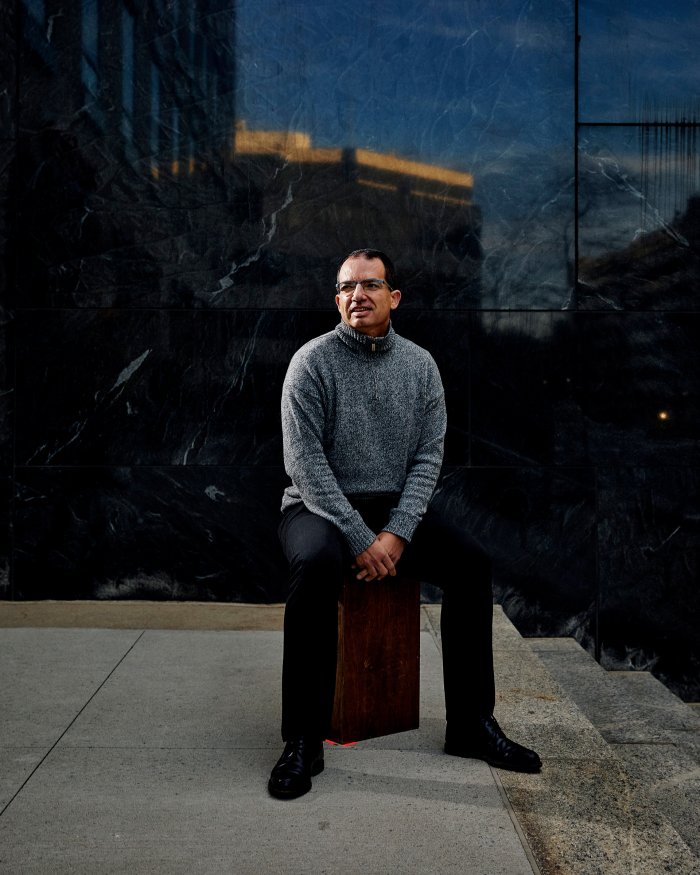
By then, a similar mRNA vaccine was being developed by Moderna, a much smaller company with only 800 employees. Its chair and co-founder, Noubar Afeyan, a Beirut-born Armenian who immigrated to the U.S., had become fascinated by mRNA in 2010, when he heard a pitch from a group of Harvard and MIT researchers. Together they formed Moderna, which initially focused on using mRNA to try to develop personalized cancer treatments, but soon began experimenting with using the technique to make vaccines against viruses.
In January 2020, Afeyan took one of his daughters to a restaurant near his office in Cambridge to celebrate her birthday. In the middle of the meal, he got an urgent text message from the CEO of his company, Stéphane Bancel, in Switzerland. So he rushed outside in the freezing temperature, forgetting to grab his coat, to call him back.
Bancel said that he wanted to launch a project to use mRNA to attempt a vaccine against the new coronavirus. At that point, Moderna had more than 20 drugs in development but none had even reached the final stage of clinical trials. Nevertheless, Afeyan instantly authorized him to start work. “Don’t worry about the board,” he said. “Just get moving.” Lacking Pfizer’s resources, Moderna had to depend on funding from the U.S. government. Anthony Fauci, head of the National Institute of Allergy and Infectious Diseases, was supportive. “Go for it,” he declared. “Whatever it costs, don’t worry about it.”
It took Bancel and his Moderna team only two days to create the RNA sequences that would produce the spike protein, and 41 days later, it shipped the first box of vials to the National Institutes of Health to begin early trials. Afeyan keeps a picture of that box on his cell phone.
An mRNA vaccine has certain advantages over a DNA vaccine, which has to use a re-engineered virus or other delivery mechanism to make it through the membrane that protects the nucleus of a cell. The RNA does not need to get into the nucleus. It simply needs to be delivered into the more-accessible outer region of cells, the cytoplasm, which is where proteins are constructed.
The Pfizer-BioNTech and Moderna vaccines do so by encapsulating the mRNA in tiny oily capsules, known as lipid nanoparticles. Moderna had been working for 10 years to improve its nanoparticles. This gave it one advantage over Pfizer-BioNTech: its particles were more stable and did not have to be stored at extremely low temperatures.

By November, the results of the Pfizer-BioNTech and Moderna late-stage trials came back with resounding findings: both vaccines were more than 90% effective. A few weeks later, with COVID-19 once again surging throughout much of the world, they received emergency authorization from the U.S. Food and Drug Administration and became the vanguard of the biotech effort to beat back the pandemic.
The ability to code messenger RNA to do our bidding will transform medicine. As with the COVID vaccines, we can instruct mRNA to cause our cells to make antigens—molecules that stimulate our immune system—that could protect us against many viruses, bacteria, or other pathogens that cause infectious disease. In addition, mRNA could in the future be used, as BioNTech and Moderna are pioneering, to fight cancer. Harnessing a process called immunotherapy, the mRNA can be coded to produce molecules that will cause the body’s immune system to identify and kill cancer cells.
RNA can also be engineered, as Jennifer Doudna and others discovered, to target genes for editing. Using the CRISPR system adapted from bacteria, RNA can guide scissors-like enzymes to specific sequences of DNA in order to eliminate or edit a gene. This technique has already been used in trials to cure sickle cell anemia. Now it is also being used in the war against COVID. Doudna and others have created RNA-guided enzymes that can directly detect SARS-CoV-2 and eventually could be used to destroy it.
More controversially, CRISPR could be used to create “designer babies” with inheritable genetic changes. In 2018, a young Chinese doctor used CRISPR to engineer twin girls so they did not have the receptor for the virus that causes AIDS. There was an immediate outburst of awe and then shock. The doctor was denounced, and there were calls for an international moratorium on inheritable gene edits. But in the wake of the pandemic, RNA-guided genetic editing to make our species less receptive to viruses may someday begin to seem more acceptable.
Throughout human history, we have been subjected to wave after wave of viral and bacterial plagues. One of the earliest known was the Babylon flu epidemic around 1200 B.C. The plague of Athens in 429 B.C. killed close to 100,000 people, the Antonine plague in the 2nd century killed 5 million, the plague of Justinian in the 6th century killed 50 million, and the Black Death of the 14th century took almost 200 million lives, close to half of Europe’s population.
The COVID-19 pandemic that killed more than 1.8 million people in 2020 will not be the final plague. However, thanks to the new RNA technology, our defenses against most future plagues are likely to be immensely faster and more effective. As new viruses come along, or as the current coronavirus mutates, researchers can quickly recode a vaccine’s mRNA to target the new threats. “It was a bad day for viruses,” Moderna’s chair Afeyan says about the Sunday when he got the first word of his company’s clinical trial results. “There was a sudden shift in the evolutionary balance between what human technology can do and what viruses can do. We may never have a pandemic again.”
The invention of easily reprogrammable RNA vaccines was a lightning-fast triumph of human ingenuity, but it was based on decades of curiosity-driven research into one of the most fundamental aspects of life on planet earth: how genes are transcribed into RNA that tell cells what proteins to assemble. Likewise, CRISPR gene-editing technology came from understanding the way that bacteria use snippets of RNA to guide enzymes to destroy viruses. Great inventions come from understanding basic science. Nature is beautiful that way.
https://mailchi.mp/0e13b5a09ec5/the-weekly-gist-august-21-2020?e=d1e747d2d8

Many children heading back to school—in whichever form that that may take this fall—have skipped their annual visit to the pediatrician. The graphic above highlights the sluggish rebound in pediatric ambulatory volume. While adult primary care visits have mostly bounced back, pediatric visits are still 26 percent below pre-COVID levels.
The drop in visits early in the pandemic also impacted immunizations, with 2.5M regular childhood vaccinations missed in the US during the first quarter of 2020—and early data suggests those seem to be rebounding at a similarly anemic rate.
This lack of pediatric routine care is particularly worrisome as COVID-19 cases in children are climbing, with a 90 percent increase from July to August. Though most of the nation’s largest public school districts have opted to begin the school year with online learning, some districts have already returned to in-person classes, and, unsurprisingly, new cases are already being reported.
While COVID-19 is normally neither severe nor fatal in children, infections among school-age kids put others at risk. According to the Kaiser Family Foundation, nearly a quarter of teachers (1.5M) are considered high-risk and almost six percent of seniors (3.3M) live with school-aged children.
Without the traditional back-to-school push for well-child visits, sports physicals, and immunization updates, healthcare providers must think creatively about how to give children with the care they need, whether through personalized communication from pediatricians that assuages parental concerns about office safety, or through more innovative means such as drive-thru vaccination services.
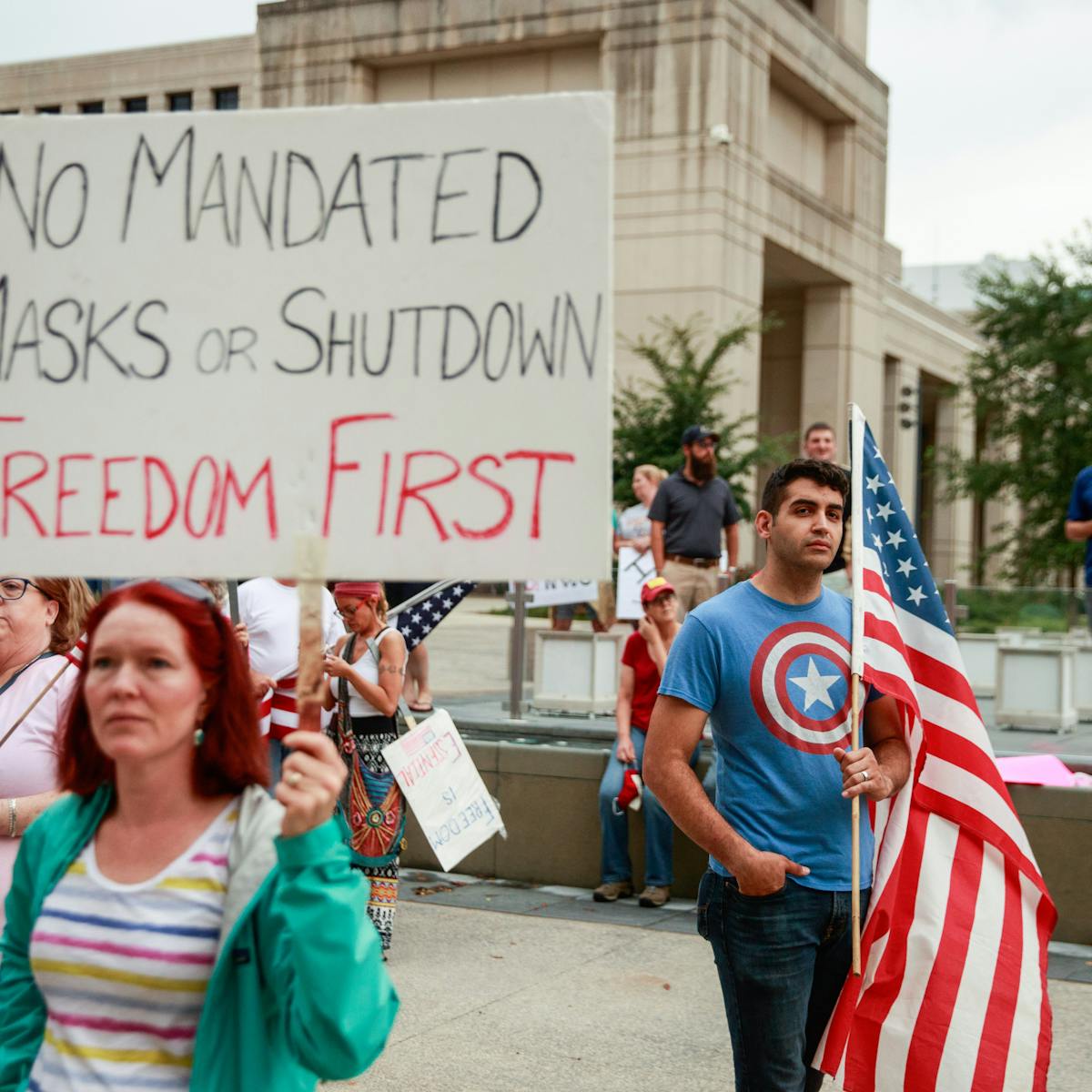
Many public health professionals and politicians are urging or requiring citizens to wear face masks to help slow the spread of the COVID-19 virus.
Some Americans have refused, wrongly claiming mask decrees violate the Constitution. An internet search turns up dozens of examples.
“Costco Karen,” for instance, staged a sit-in in a Costco entrance in Hillsboro, Oregon after she refused to wear a mask, yelling “I am an American … I have rights.”
A group called Health Freedom Idaho organized a protest against a Boise, Idaho, mask mandate. One protester said, “I’m afraid where this country is headed if we just all roll over and abide by control that goes against our constitutional rights.”
As one protester said, “The coronavirus doesn’t override the Constitution.”
Speaking as a constitutional law scholar, these objections are nonsense.
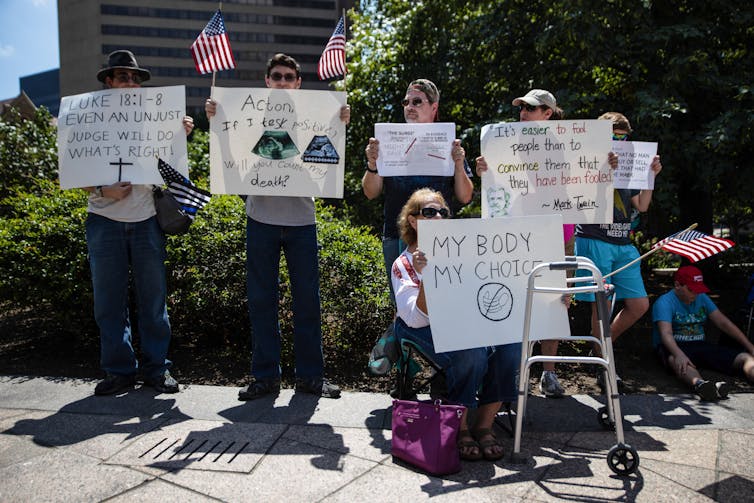
It is not always clear why anti-maskers think government orders requiring face coverings in public spaces or those put in place by private businesses violate their constitutional rights, much less what they think those rights are. But most of the mistaken objections fall into two categories:
Mandatory masks violate the First Amendment right to speech, assembly, and especially association and mandatory masks violate a person’s constitutional right to liberty and to make decisions about how to their own health and bodily integrity.
They’re not mutually exclusive claims: A lawsuit filed by four Florida residents against Palm Beach County, for example, argues that mask mandates “interfere with … personal liberty and constitutional rights,” such as freedom of speech, right to privacy, due process, and the “constitutionally protected right to enjoy and defend life and liberty.” The lawsuit asks the court to issue a permanent injunction against the county’s mask mandate.
Responding to a reporter who asked why President Donald Trump appeared unconcerned about the absence of masks and social distancing at a campaign rally in Tulsa, Vice President Mike Pence said: “I want to remind you again freedom of speech and the right to peaceably assemble is in the Constitution of the U.S. Even in a health crisis, the American people don’t forfeit our constitutional rights.”
The First Amendment protects freedom of speech, press, petition, assembly and religion.
There are two reasons why mask mandates don’t violate the First Amendment.
First, a mask doesn’t keep you from expressing yourself. At most, it limits where and how you can speak. Constitutional law scholars and judges call these “time, place, and manner” restrictions. If they do not discriminate on the basis of the content of the speech, such restrictions do not violate the First Amendment. An example of a valid time, place and manner restriction would be a law that limits political campaigning within a certain distance of a voting booth.
Additionally, the First Amendment, like all liberties ensured by the Constitution, is not absolute.
All constitutional rights are subject to the goverment’s authority to protect the health, safety and welfare of the community. This authority is called the “police power.” The Supreme Court has long held that protecting public health is sufficient reason to institute measures that might otherwise violate the First Amendment or other provisions in the Bill of Rights. In 1944, in the case of Prince v. Massachusetts, for example, the Supreme Court upheld a law that prohibited parents from using their children to distribute religious pamphlets on public streets.
Some anti-maskers object that masks violate the right to liberty.
The right to liberty, including the right to make choices about one’s health and body, is essentially a constitutional principle of individual autonomy, neatly summarized as “My body, my choice.”
The 1905 case of Jacobsen v. Massachusetts shows why mask mandates don’t violate any constitutional right to privacy or health or bodily integrity. In that case, the Supreme Court upheld a smallpox vaccination requirement in Cambridge, Massachusetts.
The court said that the vaccination requirement did not violate Jacobsen’s right to liberty or “the inherent right of every freeman to care for his own body and health in such way as to him seems best.”
As the court wrote, “There are manifold restraints to which every person is necessarily subject for the common good. On any other basis, organized society could not exist with safety to its members.” In a 1995 New York case, a state court held that an individual with active tuberculosis could be forcibly detained in a hospital for appropriate medical treatment.
Even if you assume that mask mandates infringe upon what the Supreme Court calls “fundamental rights,” or rights that the court has called the “very essence of a scheme of ordered liberty,” it has consistently ruled states can act if the restrictions advance a compelling state interest and do so in the least restrictive manner.
As the Jacobsen ruling and the doctrine of time, place and manner make clear, the protection of all constitutional liberties rides upon certain necessary – but rarely examined – assumptions about communal and public life.
One is that is constitutional rights – whether to liberty, speech, assembly, freedom of movement or autonomy – are held on several conditions. The most basic and important of these conditions is that our exercise of rights must not endanger others (and in so doing violate their rights) or the public welfare. This is simply another version of the police power doctrine.
Unfortunately, a global pandemic in which a serious and deadly communicable disease can be transmitted by asymptomatic carriers upsets that background and justifies a wide range of reasonable restrictions on our liberties. Believing otherwise makes the Constitution a suicide pact – and not just metaphorically.

Median financial ratios for nonprofit hospitals and health systems improved before the COVID-19 pandemic, which will provide some financial cushion to withstand financial pressures, according to a report from Fitch Ratings.
The medians for 2019, based on 2018 data, showed the nonprofit hospital and health system sector stabilized after a period of operational softness. The medians for 2020, based on 2019 audited data, are expected to show improvement in operating margins driven by higher revenues, cost reductions and increased cash flow, Fitch said.
“We expect the 2020 medians will represent peak performance levels until the sector is able to recover from the effects of the pandemic on operations,” Fitch said.
The credit rating agency said the nonprofit healthcare sector is unlikely to stabilize until a COVID-19 vaccine is widely available.
“The sector has shown considerable resiliency over the years, weathering significant events such as the Great Recession and legislative changes to funding,” Fitch said. “However, the coronavirus presents entirely new and fundamental challenges for the sector in the short term in the form of volume and revenue disruption, and over the medium to longer term with expected deterioration of individual provider payor mixes and possible changes in the behavior of healthcare consumers.”

States facing COVID-19 surges must hit “pause” on their reopenings and begin to truly follow the CDC guidelines for mitigating its spread, NIAID Director Anthony Fauci, MD, told The Hill during an online webinar hosted by the website on Thursday.
Cases in the U.S. peaked in April but instead of falling to near zero, as happened in many European countries, new daily diagnoses plateaued at about 20,000 per day.
That ended in late May, when new cases began rising again, driven by big increases in California, Texas, Florida, and Arizona. The national rate has been topping 50,000 per day; the widely cited Johns Hopkins University tracker’s count spiked by 113,000 in the 24 hours ending at 8:00 a.m. ET Friday.
“We need to get our arms around that … and we need to do something about it quickly,” Fauci said.
One major challenge is the nature of the virus itself, which is “spectacularly transmissible,” he noted.
But the other problem is that some states ignored public health experts’ advice.
“We went from shutting down to opening up in a way that essentially skipped over all the guideposts,” he said, referring to the benchmarks for each phase of the reopening process. “That’s not the way to go.”
Fauci said he hopes it won’t be necessary for sunbelt states to return to a total shutdown.
“We’ve got to get them to do very fundamental things: closing bars, avoiding congregations of large numbers of people, getting the citizenry in those states to wear masks, maintain six-foot distance, washing hands,” he said. “If we can do that consistently, I will tell you almost certainly you’re going to see a down curve of those infections.”
Fauci also offered his projections for vaccine development.
“We’re really cautiously optimistic that things are moving along quite well with more than one candidate.”
He said the Moderna vaccine, which the NIH helped to develop, “will very likely be going into advanced phase III clinical trials, by the end of this month, July.”
Other “equally promising” vaccine candidates will begin these trials “a little bit later.”
“[W]ith any vaccine development program you never can guarantee success … but the early signs are proving favorable,” he said.
Fauci said he hopes “by the end of this calendar year and the beginning of 2021, that we will have a vaccine that we will be able to begin to deploy to people who need it.”

While some hospitals in hotspots in Texas, Florida, California and Arizona have had to once again put off non-emergency procedures, providers in other areas of the country are trying to ramp up regular patient volumes as the number of positive cases eases.
Surveys show, however, that people are wary of returning to the doctor’s office, either because they worry about exposure to the novel coronavirus or have lost coverage to help pay for care.
The new ad campaign seeks to ease these concerns. No dollar figure was attached to the plan, which advertising agency MullenLowe U.S. took on pro bono. It follows an ad the American Hospital Association launched in May to ensure the public facilities are still available for non-COVID-19 care.
Since the pandemic’s onset in the United States, health officials have been concerned about the short- and long-term consequences of routine and preventive care being delayed or put off entirely. Chronic diseases that are caught early can be managed more easily and less expensively.
Also, research shows even some crucial services aren’t being sought even for issues such as strokes and heart attacks. In April, emergency room visits nationwide dropped more than 40%, according to the Centers for Disease Control and Prevention.
Public health experts are also beginning to fear vaccinations may be avoided, which could cause trouble with the upcoming flu season.
For providers the reduction in patient volumes has meant a major revenue loss. Some patient volume has been recaptured, but that rolled back again in recent weeks with hospitals in large states like Texas and Florida again reaching capacity with a COVID-19 surge.
At the end of June, hospital traffic in Arizona, New York and Texas was down week over week, according to an analysis from Jefferies.
Primary care has particularly suffered. Visits to medical offices were down nearly 60% in March and April, meaning losses to those practices could top $15 billion this year, according to a recent Health Affairs study.
The ad campaign stresses that providers have guidelines in place to keep patients safe, such as isolation of those suspected of having COVID-19 and increased virtual options.
“While we understand the fears that many people have around contracting the virus, our country’s medical facilities have adopted CDC guidelines and best practices and even telemedicine options to make your visit as safe as possible to prevent the spread of the virus,” Humana CMO William Shrank said in a statement. “The intent of the campaign is to let people know that protecting yourself against getting this virus does not need to come at the expense of your overall health.”

Over the past months, the country and the economy have radically shifted to unchartered territory. Now more than ever, we must reexamine how we spend health care dollars.
While the COVID-19 pandemic has exposed challenges with health care in America, we see two overarching opportunities for change:
1) the under-delivery of evidence-based care that materially improves the lives and well-being of Americans and
2) the over-delivery of unnecessary and, sometimes, harmful care.
The implications of reallocating our health care spending to high-value services are far-ranging, from improving health to economic recovery.
To prepare for coronavirus patients and preserve protective equipment, clinicians and hospitals across the country halted non-urgent visits and procedures. This has led to a substantial reduction in high-value care: emergency care for strokes or heart attacks, childhood vaccinations, and routine chronic disease management. However, one silver lining to this near shutdown is that a similarly dramatic reduction in the use of low-value services has also ensued.
As offices and hospitals re-open, we have a once in a century opportunity to align incentives for providers and consumers, so patients get more high-value services in high-value settings, while minimizing the resurgence of low-value care. For example, the use of pre-operative testing in low-risk patients should not accompany the return of elective procedures such as cataract removal. Conversely, benefit designs should permanently remove barriers to high-value settings and services, like patients receiving dialysis at home or phone calls with mental health providers.
People with low incomes and multiple chronic conditions are of particular concern as unemployment rises and more Americans lose their health care coverage. Suboptimal access and affordability to high-value chronic disease care prior to the COVID-19 pandemic was well documented As financially distressed providers re-open to a new normal, hopeful to regain their financial footing, highly profitable services are likely to be prioritized.
Unfortunately, clinical impact and profitability are frequently not linked. The post-COVID reopening should build on existing quality-driven payment models and increase reimbursement for high-value care to ensure that compensation better aligns with patient-centered outcomes.
At the same time, the dramatic fall in “non-essential care” included a significant reduction in services that we know to be harmful or useless. Billions are spent annually in the US on routinely delivered care that does not improve health; a recent study from 4 states reports that patients pay a substantial proportion (>10 percent) of this tab out-of-pocket. This type of low-value care can lead to direct harm to patients — physically or financially or both — as well as cascading iatrogenic harm, which can amplify the total cost of just one low-value service by up to 10 fold. Health care leaders, through the Smarter Health Care Coalition, have hence called on the Department of Health and Human Services Secretary Azar to halt Medicare payments for services deemed low-value or harmful by the USPSTF.
As offices and hospitals reopen with unprecedented clinical unmet needs, we have a unique opportunity to rebuild a flawed system. Payment policies should drive incentives to improve individual and population health, not the volume of services delivered. We emphasize that no given service is inherently high- or low-value, but that it depends heavily on the individual context. Thus, the implementation of new financial incentives for providers and patients needs to be nuanced and flexible to allow for patient-level variability. The added expenditures required for higher reimbursement rates for highly valuable services can be fully paid for by reducing the use of and reimbursement for low-value services.
The delivery of evidence-based care should be the foundation of the new normal. We all agree that there is more than enough money in U.S. health care; it’s time that we start spending it on services that will make us a healthier nation.

 HENRY KOTULA