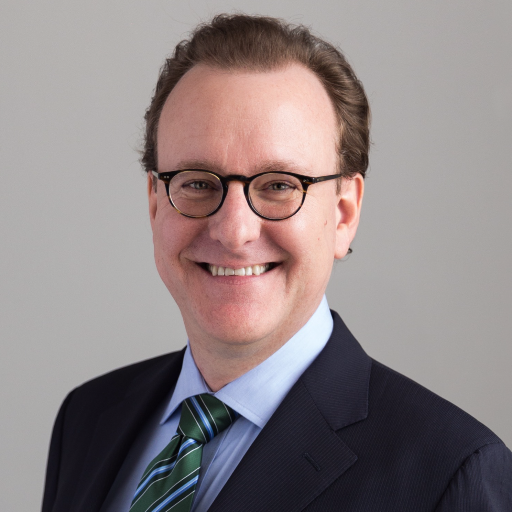
Navigating a Post-Covid Path to the New Normal with Gist Healthcare CEO, Chas Roades

https://www.lrvhealth.com/podcast/?single_podcast=2203

Covid-19, Regulatory Changes and Election Implications: An Inside ...Chas Roades (@ChasRoades) | Twitter

Healthcare is Hard: A Podcast for Insiders; June 11, 2020

Over the course of nearly 20 years as Chief Research Officer at The Advisory Board Company, Chas Roades became a trusted advisor for CEOs, leadership teams and boards of directors at health systems across the country. When The Advisory Board was acquired by Optum in 2017, Chas left the company with Chief Medical Officer, Lisa Bielamowicz. Together they founded Gist Healthcare, where they play a similar role, but take an even deeper and more focused look at the issues health systems are facing.

As Chas explains, Gist Healthcare has members from Allentown, Pennsylvania to Beverly Hills, California and everywhere in between. Most of the organizations Gist works with are regional health systems in the $2 to $5 billion range, where Chas and his colleagues become adjunct members of the executive team and board. In this role, Chas is typically hopscotching the country for in-person meetings and strategy sessions, but Covid-19 has brought many changes.

“Almost overnight, Chas went from in-depth sessions about long-term five-year strategy, to discussions about how health systems will make it through the next six weeks and after that, adapt to the new normal. He spoke to Keith Figlioli about many of the issues impacting these discussions including:

  • Corporate Governance. The decisions health systems will be forced to make over the next two to five years are staggeringly big, according to Chas. As a result, Gist is spending a lot of time thinking about governance right now and how to help health systems supercharge governance processes to lay a foundation for the making these difficult choices.
  • Health Systems Acting Like Systems. As health systems struggle to maintain revenue and margins, they’ll be forced to streamline operations in a way that finally takes advantage of system value. As providers consolidated in recent years, they successfully met the goal of gaining size and negotiating leverage, but paid much less attention to the harder part – controlling cost and creating value. That’s about to change. It will be a lasting impact of Covid-19, and an opportunity for innovators.
  • The Telehealth Land Grab. Providers have quickly ramped-up telehealth services as a necessity to survive during lockdowns. But as telehealth plays a larger role in the new standard of care, payers will not sit idly by and are preparing to double-down on their own virtual care capabilities. They’re looking to take over the virtual space and own the digital front door in an effort to gain coveted customer loyalty. Chas talks about how it would be foolish for providers to expect that payers will continue reimburse at high rates or at parity for physical visits.
  • The Battleground Over Physicians. This is the other area to watch as payers and providers clash over the hearts and minds of consumers. The years-long trend of physician practices being acquired and rolled-up into larger organizations will significantly accelerate due to Covid-19. The financial pain the pandemic has caused will force some practices out of business and many others looking for an exit. And as health systems deal with their own financial hardships, payers with deep pockets are the more likely suitor.”


Seeking standards, not standardization

https://mailchi.mp/325cd862d7a7/the-weekly-gist-march-13-2020?e=d1e747d2d8

Image result for standards vs standardization

We’ve been working with a number of our members on the topic of “systemness”: helping think through how health systems can (finally) make progress on creating value from consolidation, moving from being a holding company of assets to a true, functioning system of care.

One critical aspect of that work is standardization—making sure that, where appropriate, operational and clinical processes are uniform across different clinics, hospitals and markets. That’s one of the core sources of corporate value for any company—it would be crazy for GE to make refrigerators differently in Hyderabad, India than in Louisville, KY, for instance. Of course, delivering healthcare is more complex than making refrigerators, and (as we point out in our work on systemness) there needs to be a certain zone of allowable variability in many operational and clinical areas.

Along these lines, a phrase that one physician executive used in a meeting recently caught my attention: he said what he tries to achieve are “standards, not standardization”. In other words, setting clinical and operational standards (for example, how much a knee implant should cost) rather than fully standardizing elements of care (what knee implant must our surgeons use).

Of course, there are lots of things that should be completely standardized across the system—especially in “back office” areas like marketing, HR, revenue cycle, and legal. And some clinical work can be standardized as well: care protocols and agreed-upon pathways for treatment. But allowing variability in clinical practice requires a more flexible approach—one built on standards that clinicians can build consensus around—rather than on rigid standardization. We’ll have more to share about our systemness work in weeks to come—it’s a critical topic for executives as cost pressures mount, and questions about the value of health system scale abound.


NEW COVENANT HEALTH CFO AIMS TO LEAD ORGANIZATION’S FINANCIAL TURNAROUND

https://www.healthleadersmedia.com/finance/new-covenant-health-cfo-aims-lead-organizations-financial-turnaround

Image result for turnaround


The Tewksbury, Massachusetts–based health system strives to post its first positive balance sheet in more than five years.

Stephen Forney, MBA, CPA, FACHE, excels in fixing “broken” organizations and he has built a track record of achieving financial turnarounds at seven healthcare facilities, he tells HealthLeaders in a recent interview.

Forney has over three decades of experience as a healthcare executive, with a primary focus on problem-solving. He began his career fixing problems in areas such as information technology and supply chain, an approach and skill he has carried over into financial operations in the C-suite.

“In finance, it wound up being the same thing. Pretty much every organization I’ve gone to has been broken in some way, shape, or form,” Forney says. “I’ve developed a specialty doing turnarounds and this will be my eighth.”

Forney speaks about his new CFO role at the Tewksbury, Massachusetts–based Catholic nonprofit health system Covenant Health, which he joined in mid-September, and how driving revenue and reducing expenses must go hand-in-hand to achieve financial balance.

This transcript has been lightly edited for brevity and clarity.

HealthLeaders: Covenant is coming off its fifth straight year of operating losses. What is contributing to those losses and how do you plan to address those financial challenges?

Forney: The thing is, most turnarounds—to a greater or lesser extent—look a lot alike. With organizations that have [financial] issues, there are obviously always unique aspects to every situation, but virtually every healthcare organization that’s not doing well is because of the same relatively small handful of issues.

[For example,] revenue cycle is probably No. 1. Productivity has not been well attended to; expenses haven’t had a lot of discipline around them in a broad sense. That’s not to say that all decisions are bad, but in a systematic fashion, things haven’t been looked at. Frequently, driving volume and growing the business needs a better focus. 

In the case of Covenant … there has been a plan developed to address all those areas and we are addressing them already, even though we will be posting another operating loss in fiscal [year] 2019. But the trajectory is good and some of the things that we’re now looking at are what I would consider to be phase two–type initiatives. How do we accelerate and move them to the next level?

On October 1, we outsourced our revenue cycle. I’m pleased that we were able to get that accomplished. Obviously, it’s early but, at least anecdotally, initial trends look good.

HL: Where do you fall on the dynamic between focusing on expense control measures or revenue generation?

Forney: I always feel like you need to do both. Expense management and working towards expense strategies is easier, quicker, and more straightforward.

[Revenue growth strategies] take time, take effort, and tend to [have] a much higher degree of uncertainty around the volume projection. Those are necessary and they’re things that we need to invest in because, at some point, you can’t cut any more from your organization, you’ve got to grow the top line. To me, it’s sort of like step one is stabilize your revenue cycle and stabilize your expenses. Then while you’re doing that, work on growth that’s going to take place 12 to 18 months down the road.

HL: Are you optimistic about the federal government’s efforts to move the industry toward value-based care?

Forney: Going back about a decade, I thought the ACE program, which was [the federal government’s] bundled payment program, was a solid step in the right direction. It gave organizations a chance to collaborate in compliant fashion with physicians to bend the cost curve and have beneficiaries participate in the bending of the cost curve as well. I was with one of the pilot health systems that [participated], and it was a remarkable success.

Everybody got to win; CMS, patients, physicians, and systems won by creating value. Yes, I think that the government has a good role to play in [value-based care] because they have such a large group of patients that they’re willing to experiment like that. [The federal government] can come up with potentially novel ways to get people to buy into this.

HL: What is it like to be at the helm of a Catholic nonprofit system and how does it affect your leadership style?

Forney: From a philosophical standpoint, the principle of creating shareholder wealth and good stewardship are not significantly different. You’ve got an end goal in mind, which is, you’re taking care of the patients and a community. In one case, whatever excess is left goes to a private equity fund or shareholders. In the other case, [the excess] stays in your balance sheet and gets reinvested in the community.

HL: Given your three decades of healthcare experience, do you have advice for your fellow provider CFOs, especially some of the younger ones?

Forney: Focus on being that strategic right-hand person to the CEO. In my experience, that has been one of the things that marks a successful CFO from one that isn’t as successful.

CEOs are going to get ideas from everywhere. They’re outward and inward facing. They deal with the doctors and the community, and they’re going to get all sorts of great ideas.

The CFO needs to be that person [who is] grounded and says, ‘Well, what about this?’ That doesn’t mean saying no. The whole idea is how do you make it [sound] like a yes. To me, the CFO role just grounds all the discussions, from working with physicians to working with the community. 

CFOs over the last couple of decades have been operationally oriented. Now they need to start becoming clinically oriented.

There’s a real benefit in being able to sit down and talk with a physician and understand [what] they’re doing. … It winds up becoming a way to help ground the clinicians in the hospital operations because now you’re having a dialogue with them instead of them just saying, ‘You don’t understand. You’re not a clinician.’ That would be something that I would have a young CFO try to stay focused on, even though it’s dramatically outside the comfort zone for people that typically go into accounting.


Why is healthcare such an attractive target for private equity?

https://www.managedhealthcareexecutive.com/articles/why-healthcare-such-attractive-target-private-equity

Image result for private equity healthcare

Thanks to TV shows and movies, we tend to think of
private equity bidding wars as involving fast-growing
Silicon Valley companies. But when Oak Street Health,
a Chicago-based network of seven primary care clinics,
began looking for investors last year, more than a dozen
firms flew to Chicago to court the physicians and most of
them ended up bidding for the group of seven primary care clinics, according to a report in Modern Healthcare.

Oak Street is not alone — almost any independent
physician group of scale these days is likely to be an
attractive target for so-called “smart money,” investors
and their advisers.

Increased regulatory requirements and complexity has led
many independent small groups to “throw up their hands
and decide to sell to or join larger entities,” says Andrew
Kadar, a managing director in L.E.K. Consulting’s healthcare
services practice, which advises private equity groups.
While many such physicians sell to a health system and
become salaried employees, investor-backed practice management groups may have certain advantages, Kadar says. “Each private equity firm has its own approach, but in general they tend to give physicians a continued degree of independence and are willing to invest in new tools and technology.”

What is private equity up to? What attracts these
titans of capitalism to one of the most bureaucratic,
heavily regulated industries in the United States? And
what does the acquisition spree mean for physicians?

Here are five things to know about private equity and
healthcare in 2019.

1. The feeding frenzy is just ramping up

The driving force behind investors’ interest in healthcare
is the amount of “dry powder” in the industry — the term
market watchers use for funds sitting idle and ready to
invest, which McKinsey estimates at around $1.8 trillion

Investors are hungry for deals, and healthcare providers
are an attractive target for multiple reasons:

• The healthcare industry is growing faster than the
GDP. Healthcare is a relatively recession-proof industry
(demand remains constant even during downturns).

Many providers are currently not professionally
managed, and many specialties remain fragmented.

Investors see an opportunity to create value by
increasing efficiencies and consolidating market power.

Thus, with many independent providers still competing
on their own, there remains ample opportunity to
roll up practices into a single practice-management
organization owned by investors. “A lot of deals are
making the headlines, but when you look closely you’ll
see that most specialties aren’t highly penetrated yet by
investors,” says Bill Frack, a former managing director at
L.E.K. Consulting who is now leading a new healthcare
delivery venture. “We are still at the beginning.”

2. Investors have various strategies for creating value

Far from the leveraged-buyout days of the 1980s, which
relied primarily on financial engineering to generate
returns, almost all private equity deals today require
investors to find ways to add value to organizations over
the course of their holding period (typically around five
to seven years). By and large, in healthcare they follow
two strategies for doing so.

The most prevalent play is to buy high-volume, high margin specialist groups such as anesthesiologists,
dermatologists, and orthopedic surgeons. The PE
group then looks to maximize fee-for-service revenue
in the group by ensuring that the team is correctly
and exhaustively coding patient encounters (via ICD10) and encouraging physicians to see more patients.

Simultaneously, they work to improve revenue-cycle
management and drive efficiencies of scale into sales
and back-office administration.

Private equity firms may also look to vertically integrate
by acquiring providers of services for which their
specialists were previously referring out. For instance, oncologist groups might buy radiation treatment centers;
orthopedic surgeons might acquire rehab centers;
dermatologists might acquire pathology labs to process
biopsies, and so on.

Investors exit either through a sale to a larger PE group or,
for the largest groups, through an initial public offering.
Consolidating fee-for-service providers “is a very mature
strategy, and there’s not a single specialty you could
name where an investor wouldn’t have an incentive to
[form a roll-up],” says Brandon Hull, who serves on the
advisory council of New Mountain Capital, a private
equity firm that is investing in healthcare, and is a longtime board member at athenahealth.

Hull says investors are starting to take another approach
to creating value — which he argues “is more virtuous
and aligned with social goals.” In this strategy, investors buy up general medicine specialists — such as internal
medicine, pediatrics, or ob-gyns — and then negotiate
value-based contracts from payers.

To succeed under these contracts, investor-backed medical
groups identify the most cost-effective proceduralists
and diagnosticians in their network and instruct general
practitioners to refer only to them; and they work hard
to play a larger role in patients’ health and thus keep
healthcare utilization down. Groups that employ this
approach include Privia and Iora Health. In this strategy,
investors typically exit by selling the organization to a
larger PE group, a payer, or a health system.

Interestingly, groups that pursue the first strategy often
transition to the second – for instance, an efficiently run
orthopedic group might start with a focus on growing
revenue by maximizing fee-for-service opportunities,
but then consider pursuing bundled payments for hip
replacements. Or an investor-backed oncology group
confident in its treatment protocols and ability to keep
operational costs down might accept capitated payments
for treating patients recently diagnosed with cancer.

3. Private equity can be a great deal for physicians

How these deals are structured depends on whether a
specialty group is the first group acquired by investors —

what is known in private-equity lingo as “the platform”—
or whether it’s being added to an existing group, what is
known as a “tuck-in.”

Physicians in the platform practice are often offered
substantial equity and can benefit from the group’s
appreciation — while, of course, being exposed to the risk that
their share-value may decrease if the group fails to deliver on
its intended value proposition. Physicians in subsequent tuckin groups tend to have simpler contracts with a salary base
and added incentives tied to productivity and other measures.
L.E.K.’s Frack says both models can be attractive, but
that a more simple employment model is probably best
suited to most physicians. “I would tell docs that if they
have a strong group of doctors, they don’t have much to
lose. Even if the deal falls flat for investors, the doctors
will likely just be acquired by another investor, and they
won’t be left holding the bag.”

4. Technology underpins it all

A similar private-equity healthcare frenzy in the 1990s failed
spectacularly. One reason for the collapse was that the
technology did not exist for investors to realize back-office
efficiencies and handle the complexity of value-based contracts.

Today, cloud-based EHR and revenue-cycle management
systems harness the power of network effects to help
provider organizations handle complex and unique
payer contracts, improve back-office efficiency through
automation and machine-learning, implement best practices
for care, and quickly onboard the new practices they acquire.

Technology is particularly important for the general
medicine specialist groups looking to win under fee-for-value contracts. “The moment you start to care about
a patient’s entire episode of care, you need a massive
upgrade of your back-end systems, including full
visibility into what’s happening to your patient outside
your office. Now the technology exists to truly achieve
care coordination,” New Mountain Capital’s Hull says.

5. Public perception can be a problem

Even if physicians believe a private equity deal is their
best option, there’s a public relations risk in tying a medical practice to capitalists whose ultimate goal is to earn a return. Most coverage of private equity in mainstream media outlets questions whether investors’ profit motive is bad for patients. Physician associations and medical journals have also raised concerns in a very public way.

Such public skepticism should worry anyone who
remembers the crash of the first private-equity wave in
the 1990s, says New Mountain Capital’s Hull, who ties
that crash to the failure of managed care. “The American
consumer perceived that doctors were getting bonuses
for denying them care; this became the grim punchline
of late-night talk shows, and the whole thing fell apart.”
Frack advises investors and physicians to “monitor
quality data like a hawk, so that the group can counter
anecdotal accounts of bad care.”

Hull adds that savvy investors should take a page from
the many healthcare startups that are laser-focused on building trust with patients, particularly when it comes
to end-of-life decisions and hospice care. “They know
that success in healthcare depends on patients trusting
their doctors to help them make the best medical
decisions,” Hull says.

Positioned to accommodate uncertainty L.E.K.’s Kadar argues out that whatever direction Washington decides to take healthcare, an efficient, professionally managed group practice with advantages
of scale is well-positioned to succeed — and private
equity is one way for physician groups to reach that goal.

“These groups can adapt more quickly than smaller,
independent practices, whether progressives or
conservatives are in power,” he says. As an example,
Kadar imagines a scenario in which Medicare-for-all
comes to pass. “It turns out that most [PE-backed] groups
do very well on Medicare Advantage contracts. If your
group is focused on delivering more efficient, effective care, with strong operations, you’re in a good position no matter what happens.”