A Scalpel Instead Of A Sledgehammer: The Potential Of Value-Based Deductible Exemptions In High-Deductible Health Plans

https://www.healthaffairs.org/do/10.1377/hblog20200615.238552/full/?utm_campaign=HASU+6-21-20&utm_medium=email&utm_content=COVID-19%3A+Face+Mask+Mandates%2C+Immigration+Detention+Facilities%2C+Symptom+Monitoring%3B+Treatment+Of+Opioid+Use+Disorder%3B+Supreme+Court+LGBT+Decision%3A+Implications+For+The+ACA&utm_source=Newsletter

UM V-BID Center (@UM_VBID) | Twitter

High-deductible health plans (HDHPs) covered more than 30 percent of enrollees in employer-sponsored plans in the United States in 2019, up from 4 percent in 2006. In 2020, the Internal Revenue Service defines HDHP as any plan with a deductible of at least $1,400 for an individual or $2,800 for a family. An HDHP’s total yearly out-of-pocket expenses (including deductibles, copayments, and coinsurance) cannot be more than $6,900 for an individual or $13,800 for a family. However, this limit does not apply to out-of-network services.

The growth of HDHPs is driven by the pursuit of reduced health care spending and premiums for both employees and employers through channeling elements of consumerism and managed care. Often, HDHPs are offered along with a savings option (health savings account or health reimbursement arrangement) in a consumer-directed health plan.

Recently, however, there have been concerns about the out-of-pocket cost burdens imposed on patients by HDHPs and other plans. Reducing these costs has been the focus of major policy proposals, including prescription drug bills from both the House and the Senate; forthcoming plans for the Center for Medicare and Medicaid Innovation to test value-based insurance models following the president’s executive order 13890 on Protecting and Improving Medicare for Our Nation’s Seniors; and H.R. 2774, the Primary Care Patient Protection Act of 2019, which would create a primary care benefit for all HDHP holders, allowing for up to two deductible-free primary care office visits each year.

It is becoming increasingly clear that HDHPs’ indiscriminate reductions in care usage may not be the best way to contain health care costs. In this post, we suggest that combining the principles of HDHPs and value-based insurance design (VBID), by offering deductible exemptions for high-value services, could provide nuanced incentives with potential to preserve access to the most important services while reducing use of only more wasteful care.

Why Did HDHPs Fail To Deliver Their Intended Consequences?

The intended premise of HDHPs is that beneficiaries facing the full costs of health care services during the deductible phase will engage in price shopping and subsequently choose care commensurate with expected benefits of that care. The hope is that the combination of lower prices and a different mix of services could increase the value of health care used while also reducing costs. Unfortunately, evaluations of HDHPs suggest that consumers neither price shop nor can they discriminate between high- and low-value care when facing high deductibles; accordingly, they reduce use of both essential and inessential services. Not only is this behavior likely to lead to worse health for beneficiaries, but short-term savings for both the beneficiary and the insurer may be offset by increased long-term spending associated with preventable adverse health events. The lack of the hoped-for response to HDHPs (price shopping and reduction in unnecessary care only) may stem from a lack of price transparency, inability to pay for essential care during the deductible phase, or inadequate information about the value of alternate health care services and technologies.

The evidence on HDHPs should not be surprising. It matches older evidence from the RAND Health Insurance Experiment, where cost sharing caused people to reduce consumption of both appropriate and inappropriate care. The RAND experiment demonstrated that consumers may not have enough information available freely to them to address uncertainty and make rational choices about which services to purchase and which to forgo. For this reason, we suggest a variation on VBID, in which deductible exemptions for established high-value services would inform and incentivize beneficiaries to use the most valuable care, while disincentivizing low-value options. Such recommendations have been made in different forms in the literature but have not been widely adopted.

Tying-In Value Conversations Within HDHPs

VBIDs have developed over the past 15 years on the premise that when everyone is required to pay the same out-of-pocket amount for health care services whose benefits depend on patient characteristics, there is enormous potential for both underuse and overuse of care. It is also true that health services can be underused and overused when there are differential health-related returns across services, but patients are unaware of the differences. VBIDs have been used by insurers as a mechanism to address this information problem, by signaling the value of alternative health care technologies to consumers through variable cost sharing.

To date, most applications of VBID have focused on applying such designs to copays but not to deductibles. Moreover, most applications have applied reduced cost sharing for targeted high-value drugs, and only a few have also implemented concomitant increased cost sharing for low-value drugs. This means that the cost differences that the consumers faced between high- and low-value products continued to be small. Consequently, results of such applications show the promise of VBID, but to a limited scale, owing to the relative inelasticity of demand for care related to small copay variation. Tying value-based cost sharing within deductibles could generate a bigger “nudge” to align use with value.  

Only one study evaluated the application of VBID on cost sharing within an HDHP plan. This research analyzed Kaiser Permanente of Northern California, where patients were switched to HDHPs, but some of them were offered free chronic disease medications. Resulting improvements in adherence due to zero cost sharing for chronic disease medications were shown to offset the HDHP-associated adherence reduction, especially for patients with poor adherence at the start. Importantly, adherence improvements did not occur for more clinically complex patients, or patients living in poorer neighborhoods. The inclusion of active counseling in VBID plans has potential to address these limitations.

In another example of VBID, a not-for-profit health plan in the Pacific Northwest implemented a formulary that tied drug copays to cost-effectiveness. Researchers found larger shifts in demand within drug classes in which copays were simultaneously reduced for high-value treatments and increased for low-value treatments, compared to drug classes in which the copays only moved in one direction. The overall effect of the VBID implementation was welfare-increasing but small, perhaps because the price dispersion faced by the patient between high-value and low-value alternatives was still too low to alter demand.

Other applications of VBID, where cost sharing was removed for primary care visits, were found to reduce total spending, mainly due to reductions in use of emergency department (ED) and other outpatient services. A plan that bundled copays for back pain physical therapy found reductions in ED use, in addition to eventual reductions in primary care use, and better adherence to care guidelines.

Value-Based High-Deductible Plans

We suggest that value-based high-deductible plans (VHDP), which combine the principles of HDHPs and VBID, and have been suggested as “a natural evolution of health plans,” could provide a robust alternative in insurance markets and achieve the goals of both low costs and high value of health care delivery. Our enthusiasm for such designs stems from the dispersion of price-elasticities observed when a value-based system was implemented on copayments. We expect such dispersion can be expanded substantially when VBID is applied to develop VHDPs. Specifically, VHDPs would nudge consumers toward high-value technologies (for example, preventive medications) by exempting their costs from the deductibles, while also providing consumers with transparency on the full costs of low-value services (for example, MRI for back pain or headache), and disincentivizing their use. This would generate a more elastic demand for low-value services, which in turn could move the markets for insured health care services toward more efficient outcomes.

In health care, where we know that both quality and value are at least partially unobservable to the patient, efficient outcomes are typically not attainable, especially when cost sharing indiscriminately alters prices. A VHDP would provide nuanced cost sharing to influence behavior in a manner similar to prices in traditional markets, therefore resolving information asymmetries for low-value services, reducing distortions, and increasing social welfare. In addition, such a policy could improve equity by ensuring that all beneficiaries have access to the highest-value services, even in the deductible phase of a benefit package. Such plans are certainly in line with the spirit of the recent bipartisan legislation (signed by President Donald Trump under executive order 13877) that allows health savings account eligible high-deductible health plans the flexibility to cover essential medications and services used to treat chronic diseases prior to meeting the plan deductible.

Challenges To Adoption Of Value-Based HDHPs

While value-based pricing improves beneficiaries’ ability to observe value, and therefore reduces the information asymmetries inherent in health care markets, the definition of “value” is an open question. Current legislative options being considered by both political parties in Congress aim to regulate and reduce drug pricing. While these efforts are important, and reduced prices would likely factor into premiums and out-of-pocket costs for consumers, these policy proposals do not necessarily tie price reductions to the value of drugs. That is, they are not tied to any specifically desired outcome of care. As mentioned, earlier VBID applications have been designed to impact health outcomes by using cost-effectiveness in formulary design to signal value. However, many other attributes of care, in addition to cost-effectiveness, should be considered by payers (both public and private) in determination of deductible-exemption status in a VHDP. These attributes include if a service has positive externalities (such as vaccinations) and if a service is unlikely to have moral hazard consumption (such as trauma care or chemotherapy). These, and other elements of value, could be included in decisions about which services should be exempt from the deductible. The decision of which elements to consider in this decision will depend on the stakeholders and perspectives (for example, payer, health system, employer, societal).

A potential downside of VHDPs is plan complexity, but improved communication (perhaps through health plan stewards) could address this limitation; active counseling has already been effective for this purpose in VBID. It would be relatively straightforward to incorporate the cost-sharing design of VHDPs to a value-based tiering system, now widely used in cost sharing.

Qualitative studies of VBID have identified additional barriers to VBID implementation. For example, patients are skeptical of value-based tradeoffs, do not necessarily trust the information provided by their plan, and may resist changes in care delivery. Payers tend to be skeptical of the clinical significance of adherence improvements from VBID and have expressed concern over low return on investment and administrative and information technology hurdles. Finally, providers are concerned about changes to patient behavior that puts their practice at financial risk.

These concerns are important, but potentially addressable with education and carefully planned implementation, to allow VHDPs to strike a nuanced balance between reducing moral hazard consumption of care and adequate risk protection. Such a balance is critical to controlling health spending while maintaining access to the highest-value services and reducing financial uncertainty.


Why People Are Still Avoiding the Doctor (It’s Not the Virus)

Why People Are Still Avoiding the Doctor (It's Not the Virus ...

At first, people delayed medical care for fear of catching Covid. But as the pandemic caused staggering unemployment, medical care has become unaffordable for many.

At first, Kristina Hartman put off getting medical care out of concern about the coronavirus. But then she lost her job as an administrator at a truck manufacturer in McKinney, Texas.

While she still has health insurance, she worries about whether she will have coverage beyond July, when her unemployment is expected to run out.

“It started out as a total fear of going to the doctor,” she said.

“I definitely am avoiding appointments.”

Ms. Hartman, who is 58, skipped a regular visit with her kidney doctor, and has delayed going to the endocrinologist to follow up on some abnormal lab results.

While hospitals and doctors across the country say many patients are still shunning their services out of fear of contagion — especially with new cases spiking — Americans who lost their jobs or have a significant drop in income during the pandemic are now citing costs as the overriding reason they do not seek the health care they need.

“We are seeing the financial pressure hit,” said Dr. Bijoy Telivala, a cancer specialist in Jacksonville, Fla. “This is a real worry,” he added, explaining that people are weighing putting food on the table against their need for care. “You don’t want a 5-year-old going hungry.”

Among those delaying care, he said, was a patient with metastatic cancer who was laid off while undergoing chemotherapy. He plans to stop treatments while he sorts out what to do when his health insurance coverage ends in a month.

The twin risks in this crisis — potential infection and the cost of medical care — have become daunting realities for the millions of workers who were furloughed, laid off or caught in the economic downturn. It echoes the scenarios that played out after the 2008 recession, when millions of Americans were unemployed and unable to afford even routine visits to the doctor for themselves or their children.

Almon Castor’s hours were cut at the steel distribution warehouse in Houston where he works about a month ago. Worried that a dentist might not take all the precautions necessary, he had been avoiding a root canal.

But the expense has become more pressing. He also works as a musician. “It’s not feasible to be able to pay for procedures with the lack of hours,” he said.

Nearly half of all Americans say they or someone they live with has delayed care since the onslaught of coronavirus, according to a survey last month from the Kaiser Family Foundation. While most of those individuals expected to receive care within the next three months, about a third said they planned to wait longer or not seek it at all.

While the survey didn’t ask people why they were putting off care, there is ample evidence that medical bills can be a powerful deterrent. “We know historically we have always seen large shares of people who have put off care for cost reasons,” said Liz Hamel, the director of public opinion and survey research at Kaiser.

And, just as the Great Recession led people to seek less hospital care, the current downturn is likely to have a significant impact, said Sara Collins, an executive at the Commonwealth Fund, who studies access to care. “This is a major economic recession,” she said. “It’s going to have an effect on people’s demand for health care.”

The inability to afford care is “going to be a bigger and bigger issue moving forward,” said Chas Roades, the co-founder of Gist Healthcare, which advises hospitals and doctors. Hospital executives say their patient volumes will remain at about 20 percent lower than before the pandemic.

“It’s going to be a jerky start back,” said Dr. Gary LeRoy, a physician in Dayton, Ohio, who is the president of the American Academy of Family Physicians. While some of his patients have returned, others are staying away.

But the consequences of these delays can be troubling. In a recent analysis of the sharp decline in emergency room visits during the pandemic, officials from the Centers for Disease Control and Prevention said there were worrisome signs that people who had heart attacks waited until their conditions worsened before going to the hospital.

Without income, many people feel they have no choice. Thomas Chapman stopped getting paid in March and ultimately lost his job as a director of sales. Even though he has high blood pressure and diabetes, Mr. Chapman, 64, didn’t refill any prescriptions for two months. “I stopped taking everything when I just couldn’t pay anymore,” he said.

After his legs began to swell, and he felt “very, very lethargic,” he contacted his doctor at Catalyst Health Network, a Texas group of primary care doctors, to ask about less expensive alternatives. A pharmacist helped, but Mr. Chapman no longer has insurance, and is not sure what he will do until he is eligible for Medicare later this year.

“We’re all having those conversations on a daily basis,” said Dr. Christopher Crow, the president of Catalyst, who said it was particularly tough in states, like Texas, that did not expand Medicaid. While some of those who are unemployed qualify for coverage under the Affordable Care Act, they may fall in the coverage gap where they do not receive subsidies to help them afford coverage.

Even those who are not concerned about losing their insurance are fearful of large medical bills, given how aggressively hospitals and doctors pursue people through debt collections, said Elisabeth Benjamin, a vice president at Community Service Society of New York, which works with people to get care.

“Americans are really very aware that their health care coverage is not as comprehensive as it should be, and it’s gotten worse over the past decade,” Ms. Benjamin said. After the last recession, they learned to forgo care rather than incur bills they can’t pay.

Geralyn Cerveny, who runs a day care in Kansas City, Mo., said she had Covid-19 in early April and is recovering. But her income has dropped as some families withdrew their children. Although her daughter is urging her to get some follow-up testing because she has some lingering symptoms from the virus, she is holding off because she does not want to end up with more medical bills if her health plan will not cover all of the care she needs. She said she would dread “a fight with the insurance company if you don’t meet their guidelines.”

Others are weighing what illness or condition merits the expense of a doctor or tests and other services. Eli Fels, a swim instructor and personal trainer who is pregnant, has been careful to stay up-to-date with her prenatal appointments in Cambridge, Mass. She and her doctor have relied on telemedicine appointments to reduce the risk of infection.

But Ms. Fels, who also lost her jobs but remains insured, has chosen not to receive care for her injured wrist in spite of concern over lasting damage. “I’ve put off medical care that doesn’t involve the baby,” she said, noting that her out-of-pocket cost for an M.R.I. to find out what was wrong “is not insubstantial.”

At Maimonides Medical Center in Brooklyn, doctors have already seen the impact of delaying care. During the height of the pandemic, people who had heart attacks and serious fractures avoided the emergency room. “It was as if they disappeared, but they didn’t disappear,” said Dr. Jack Choueka, the chair of orthopedics. “People were dying in home; they just weren’t coming into the hospital.”

In recent weeks, people have begun to return, but with conditions worsened because of the time they had avoided care. A baby with a club foot will now need a more complicated treatment because it was not addressed immediately after birth.

Another child who did not have imaging promptly was found to have a tumor. “That tumor may have been growing for months unchecked,” Dr. Choueka said.


Coronavirus Layoffs Keep Coming as Jobless Claims Top 45 Million

http://www.thefiscaltimes.com

About 1.5 million people filed for state unemployment benefits last week, the Department of Labor announced Thursday, bringing the 13-week total for first-time claims to more than 45 million. Another 760,000 filed new claims for Pandemic Unemployment Assistance, a temporary program for workers such as independent contractors who ordinarily do not qualify for unemployment payments.

While new jobless claims continue to decline, falling for the 11th straight week, the numbers remain startlingly high relative to previous recessions, and some economists have expressed concerns that the labor market is not healing as rapidly as they had hoped.

“It’s not clear why claims are still so high,” said Ian Shepherdson, chief economist at Pantheon Macroeconomics, in a note to clients. “[I]s it the initial shock still working its way up through businesses away from the consumer-facing jobs lost in the first wave, or is it businesses which thought they could survive now throwing in the towel, or both? Either way, these are disappointing numbers and serve to emphasize that a full recovery is going to take a long time.”


Tower Health cutting 1,000 jobs as COVID-19 losses mount

https://www.inquirer.com/business/health/tower-health-hospital-layoffs-covid-19-20200616.html

Tower Health cutting 1,000 jobs as COVID-19 losses mount

Tower Health on Tuesday announced that it is cutting 1,000 jobs, or about 8 percent of its workforce, citing the loss of $212 million in revenue through May because of the coronavirus restrictions on nonurgent care.

Fast-growing Tower had already furloughed at least 1,000 employees in April. It’s not clear how much overlap there is between the furloughed employees, some of whom have returned to work, and the people who are now losing their jobs permanently. Tower employs 12,355, including part-timers.

“The government-mandated closure of many outpatient facilities and the suspension of elective procedures caused a 40 percent drop in system revenue,” Tower’s president and chief executive, Clint Matthews, wrote in an email to staff. “At the same time, our spending increased for personal protective equipment, staff support, and COVID-related equipment needs.”

Despite the receipt of $66 million in grants through the federal CARES Act, Tower reported an operating loss of $91.6 million in the three months ended March 31, according to its disclosure to bondholders.

Tower, which is anchored by Reading Hospital in Berks County, expanded most recently with the December acquisition of St. Christopher’s Hospital for Children in a partnership with Drexel University. Tower paid $50 million for the hospital’s business, but also signed a long-term lease with a company that paid another $65 million for the real estate.

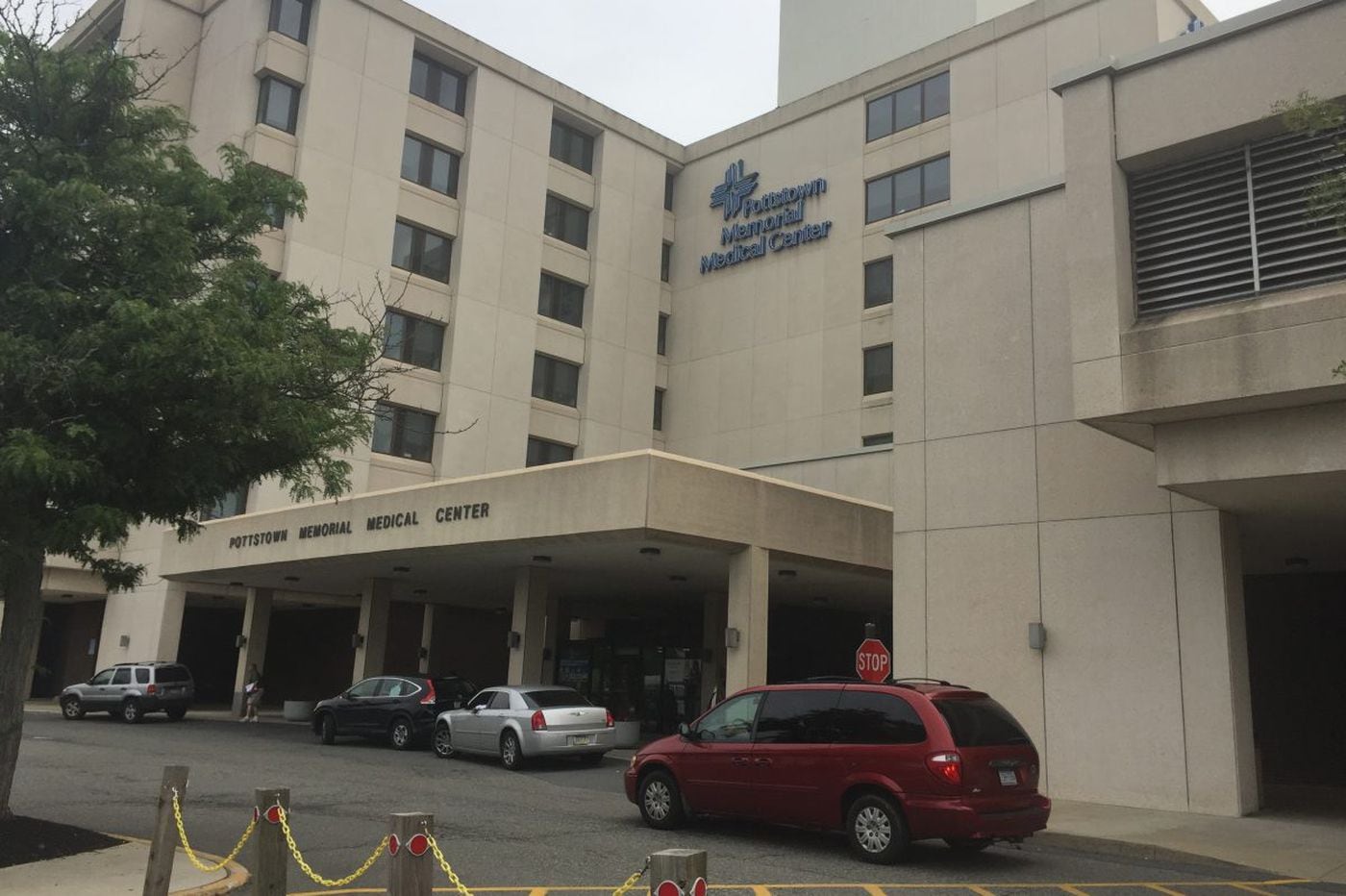
In 2017, Tower paid $418 million for five community hospitals in Southeastern Pennsylvania — Brandywine in Coatesville, Chestnut Hill in Philadelphia, Jennersville Regional in West Grove, Phoenixville in Phoenixville, and Pottstown Memorial Medical Center, now called Pottstown Hospital, in Pottstown.

Tower’s goal was to remain competitive as bigger systems — the University of Pennsylvania Health System and Jefferson Health from the Southeast, Lehigh Valley Health Network and St. Luke’s University Health Network from the east and northeast, and University of Pittsburgh Medical Center from the west — encroached on its Berk’s county base.

Tower had set itself a difficult task in the best of times, but COVID-19 has made it significantly harder for the nonprofit, which had an operating loss of $175 million on revenue of $1.75 billion in the year ended June 30, 2019.

Because health systems have high fixed costs for buildings and equipment needed no matter how many patients are coming through the door, it’s hard for them to limit the impact of the 30% to 50% collapse in demand caused by the coronavirus pandemic.

“Hospitals and all other health service providers were hit with this disruption with lightning speed, forcing the industry to learn in real time how to handle a situation for which there was no playbook,” Standard & Poor’s analysts David P. Peknay and Suzie R. Desai said in a research report last month.

Tower’s said positions will be eliminated in executive, management, clinical, and support areas.

The cuts include consolidations of clinical operations. Tower plans to close Pottstown Hospital’s maternity unit, which employs 32 nurses and where 359 babies were born in 2018, according to the most recent state data. Tower also has maternity units at Reading Hospital in West Reading and at Phoenixville Hospital.

Tower is aiming to trim expenses by $230 million over the next two years, Matthews told staff.

Like many other health systems, Tower has taken advantage of federal programs to ensure that it has ample cash in the bank to run its businesses. Tower has deferred payroll taxes, temporarily sparing $25 million. It received $166 million in advanced Medicare payments in April.

In the private sphere, Tower obtained a $40 million line of credit in April for St. Chris, which has lost $23.6 million on operations since Tower and Drexel bought it in December. Last month, Tower said it was in the final stages of negotiating a deal to sell and then lease back 24 medical office buildings. That was expected to generate $200 million in cash for Tower.


Cartoon – Working Remotely Today

Editorial Cartoons for Friday from Times Wire Services

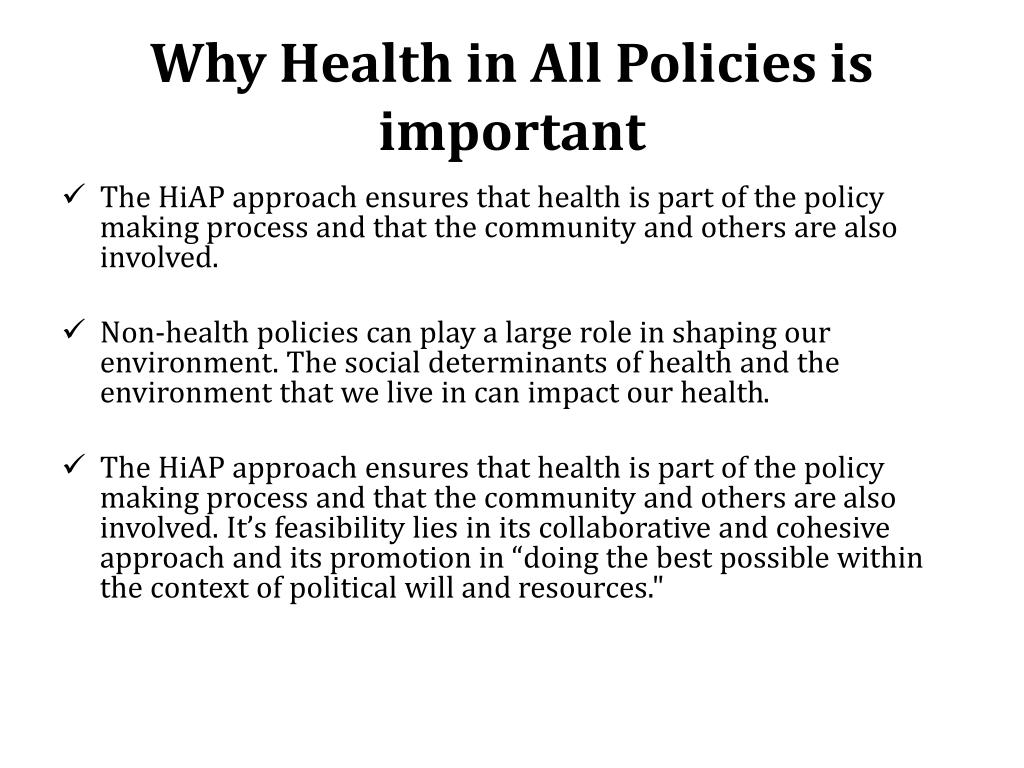
“All policy is health policy”

https://www.axios.com/newsletters/axios-vitals-8873028c-f37e-4712-a53a-ae324c56dbb6.html?utm_source=newsletter&utm_medium=email&utm_campaign=newsletter_axiosvitals&stream=top

PPT - Health in All Policies PowerPoint Presentation, free ...

The effects of racism are often inseparable from black Americans’ health and well-being, as “black communities bear the physical burdens of centuries of injustice, toxic exposures, racism, and white supremacist violence,” Rachel Hardeman, Eduardo Medina and Rhea Boyd write in the New England Journal of Medicine:

Any solution to racial health inequities must be rooted in the material conditions in which those inequities thrive. Therefore, we must insist that for the health of the black community and, in turn, the health of the nation, we address the social, economic, political, legal, educational, and health care systems that maintain structural racism. Because as the Covid-19 pandemic so expeditiously illustrated, all policy is health policy…

The response to the pandemic has made at least one thing clear: systemic change can in fact happen overnight.


Rich vs. poor hospitals

https://www.axios.com/hospitals-coronavirus-inequality-segregation-f10c49eb-5ccc-4739-b2a9-254fd9a3d40e.html

Rich vs. poor hospitals | News Break

The inequalities in American health care extend right into the hospital: Cash-strapped safety-net hospitals treat more people of color, while wealthier facilities treat more white patients.

Why it matters: Safety-net hospitals lack the money, equipment and other resources of their more affluent counterparts, which makes providing critical care more difficult and exacerbates disparities in health outcomes.

The big picture: A majority of patients who go to safety-net hospitals are black or Hispanic; 40% are either on Medicaid or uninsured.

The other side: Wealthy hospitals, including many prominent academic medical centers, are “far less likely to serve or treat black and low-income patients even though those patients may live in their backyards,” said Arrianna Planey, an incoming health policy professor at the University of North Carolina.

  • An investigation by the Boston Globe in 2017 found black people in Boston “are less likely to get care at several of the city’s elite hospitals than if you are white.”
  • The Cleveland Clinic has expanded into a global icon for health care, but rarely cares for those in the black neighborhoods that surround its campus, Dan Diamond of Politico reported in 2017.

Between the lines: The way the federal government is bailing out hospitals for the revenues they’ve lost during coronavirus is exacerbating this inequality. More money is flowing to richer hospitals.

  • For example, the main hospital within University of Colorado Health has gotten $79.3 million from the government’s main “provider relief” fund — about the same amount as Cook County Health, Chicago’s public hospital system, which predominantly treats low-income black and Hispanic people. It has gotten $77.6 million from that pot.
  • The Colorado system, however, is sitting on billions of dollars in cash and investments that Chicago’s safety-net hospitals don’t have. Chicago has also seen a worse coronavirus outbreak.

The bottom line: Poor hospitals that treat minorities have had to rely on GoFundMe pages and beg for ventilators during the pandemic, while richer systems move ahead with new hospital construction plans.


How Many More Will Die From Fear of the Coronavirus?

Fear of contracting the coronavirus has resulted in many people missing necessary screenings for serious illnesses, like cancer and heart disease.

Seriously ill people avoided hospitals and doctors’ offices. Patients need to return. It’s safe now.

More than 100,000 Americans have died from Covid-19. Beyond those deaths are other casualties of the pandemic — Americans seriously ill with other ailments who avoided care because they feared contracting the coronavirus at hospitals and clinics.

The toll from their deaths may be close to the toll from Covid-19. The trends are clear and concerning. Government orders to shelter in place and health care leaders’ decisions to defer nonessential care successfully prevented the spread of the virus. But these policies — complicated by the loss of employer-provided health insurance as people lost their jobs — have had the unintended effect of delaying care for some of our sickest patients.

To prevent further harm, people with serious, complex and acute illnesses must now return to the doctor for care.

Across the country, we have seen sizable decreases in new cancer diagnoses (45 percent) and reports of heart attacks (38 percent) and strokes (30 percent). Visits to hospital emergency departments are down by as much as 40 percent, but measures of how sick emergency department patients are have risen by 20 percent, according to a Mayo Clinic study, suggesting how harmful the delay can be. Meanwhile, non-Covid-19 out-of-hospital deaths have increased, while in-hospital mortality has declined.

These statistics demonstrate that people with cancer are missing necessary screenings, and those with heart attack or stroke symptoms are staying home during the precious window of time when the damage is reversible. In fact, a recent poll by the American College of Emergency Physicians and Morning Consult found that 80 percent of Americans say they are concerned about contracting the coronavirus from visiting the emergency room.

Unfortunately, we’ve witnessed grievous outcomes as a result of these delays. Recently, a middle-aged patient with abdominal pain waited five days to come to a Mayo Clinic emergency department for help, before dying of a bowel obstruction. Similarly, a young woman delayed care for weeks out of a fear of Covid-19 before she was transferred to a Cleveland Clinic intensive care unit with undiagnosed leukemia. She died within weeks of her symptoms appearing. Both deaths were preventable.

The true cost of this epidemic will not be measured in dollars; it will be measured in human lives and human suffering. In the case of cancer alone, our calculations show we can expect a quarter of a million additional preventable deaths annually if normal care does not resume. Outcomes will be similar for those who forgo treatment for heart attacks and strokes.

Over the past 12 weeks, hospitals deferred nonessential care to prevent viral spread, conserve much-needed personal protective equipment and create capacity for an expected surge of Covid-19 patients. During that time, we also have adopted methods to care for all patients safely, including standard daily screenings for the staff and masking protocols for patients and the staff in the hospital and clinic. At this point, we are gradually returning to normal activities while also mitigating risk for both patients and staff members.

The Covid-19 crisis has changed the practice of medicine in fundamental ways in just a matter of months. Telemedicine, for instance, allowed us to pivot quickly from in-person care to virtual care. We have continued to provide necessary care to our patients while promoting social distancing, reducing the risk of viral spread and recognizing patients’ fears.

Both Cleveland Clinic and Mayo Clinic have gone from providing thousands of virtual visits per month before the pandemic to hundreds of thousands now across a broad range of demographics and conditions. At Cleveland Clinic, 94 percent of diabetes patients were cared for virtually in April.

While virtual visits are here to stay, there are obvious limitations. There is no substitute for in-person care for those who are severely ill or require early interventions for life-threatening conditions. Those are the ones who — even in the midst of this pandemic — must seek the care they need.

Patients who need care at a clinic or hospital or doctor’s office should know they have reduced the risk of Covid-19 through proven infection-control precautions under guidelines from the Centers for Disease Control and Prevention. We’re taking unprecedented actions, such as restricting visiting hours, screening patient and caregiver temperatures at entrances, encouraging employees to work from home whenever possible, providing spaces that allow for social distancing, and requiring proper hand hygiene, cough etiquette and masking.

All of these strategies are intended to significantly reduce risk while allowing for vital, high-quality care for our patients.

The novel coronavirus will not go away soon, but its systemic side effects of fear and deferred care must.

We will continue to give vigilant attention to Covid-19 while urgently addressing the other deadly diseases that haven’t taken a pause during the pandemic. For patients with medical conditions that require in-person care, please allow us to safely care for you — do not delay. Lives depend on it.


Chart of the Day: The Dire State of State Tax Revenues

https://www.thefiscaltimes.com/2020/06/02/Chart-Day-Dire-State-State-Tax-Revenues

Chart of the Day: The Dire State of State Tax Revenues | The ...

Lucy Dadayan of the Urban-Brookings Tax Policy Center breaks down the good, the bad and the ugly of the fiscal crisis facing states as the coronavirus pandemic crushes revenues and raises costs.

“Prior to the onset of the COVID-19 pandemic, most states were generating solid revenue growth. And many built up robust rainy day funds. But the pandemic has largely wiped out earlier revenue gains and most states now anticipate substantial revenue shortfalls for the current fiscal year and for fiscal year 2021,” she writes.

The good: Preliminary April tax revenue data show a steep drop in estimated and final annual tax payments as the tax-filing deadline got pushed back from April 15 to July 15. But taxes withheld from paychecks grew in 17 states compared to April 2019. “Tax withholding is usually a better indicator of the current strength of the economy and of the path for personal income tax revenue because it comes largely from current wages,” Dadayen explains. On the other hand, 16 states reported declines of less than 10%, while five states posted double-digits drops, so the bright spots are limited.

The bad: “Declines in sales tax revenues have been fast, steep, and widespread across the states,” Dadayen writes. How steep? April sales tax revenues fell by 16% across 42 states for which the Tax Policy Center has complete data. Twenty-three states reported double-digit declines, while just five states reported year-over-year growth. And since the April data mostly reflect March sales, the May numbers are likely to be even worse.

The ugly: For the fiscal year so far, total state tax revenue has fallen sharply — and next year is expected to be worse. “With two months remaining in the fiscal year for 46 states, total state tax revenues are now down about $57 billion, compared to last year,” Dadayen writes.

After the sharp pandemic-related plunge in April, tax revenues have fallen in 34 states compared to 2019 and risen in 12. (New York, the state hit hardest by the virus, is surprisingly among those dozen, but Dadayen says that’s only because its fiscal year 2020 ended in March, so April’s devastation isn’t reflected in the data. The state reported that net taxes and fees collected in April, the first month of its new fiscal year, fell by 69% compared with April 2019.)

Chart of the Day: The Dire State of State Tax Revenues | The ...


A Third of Unemployment Benefits Haven’t Been Paid Out: Report

https://www.thefiscaltimes.com/2020/06/02/Third-Unemployment-Benefits-Haven-t-Been-Paid-Out-Report

A Third of Unemployment Benefits Haven't Been Paid Out: Report

The U.S. Treasury paid out $146 billion in jobless benefits in the three months ending in May as tens of millions of Americans lost their jobs due to the coronavirus pandemic. Although the number is massive – larger than all of the unemployment benefits provided during the depths of the Great Recession in 2009 – it’s smaller than it should have been, according to a new analysis by Bloomberg News. Crunching the numbers on weekly unemployment filings and average claim size, Bloomberg found that total jobless benefits should have come to roughly $214 billion during that time.

“The estimated gap of some $67 billion shows how emergency efforts to boost payments, and deliver them via creaking state-level systems, are lagging the needs of a jobs crisis that’s seen more than 40 million people file for unemployment as the economy shut down,” Bloomberg’s Shawn Donnan and Catarina Saraiva wrote Tuesday.

A tough calculation: Although it’s hard to put a precise number on the shortfall – the Labor Department pushed back against the method used by Bloomberg to develop its estimate – there is general agreement that there are many people who still haven’t received the unemployment assistance they are entitled to. “There’s a lot more money that should have gone out that has not gone out,” said Jay Shambaugh, an economist at the Brookings Institution who has been studying the issue.

And Bloomberg says its analysis likely provides a conservative estimate of the shortfall. Some states are still working through backlogs of unemployment claims – Texas alone is waiting to verify nearly 650,000 cases – and more than 7 million people are still owed retroactive benefits under the Pandemic Unemployment Assistance program for independent contractors.

Why it matters: In addition to the unnecessary suffering the delays are causing, the shortfall is reducing the positive economic effect that unemployment benefits are intended to provide. “On paper the U.S. strategy is very generous,” Ernie Tedeschi, a former U.S. Treasury economist now at Evercore ISI, told Bloomberg. “But that generosity on paper is meaningless if it doesn’t translate into actual money in people’s pockets when they need it.”

Diane Swonk, chief economist at the accounting firm Grant Thornton, said she is worried that lawmakers are experiencing “fiscal fatigue” as the crisis wears on, risking a falloff in aid that could prolong the recession. “We’re really talking about an economy that is going to be operating at a fraction of its capacity for a long period of time,” she told Bloomberg.