Virus testing in the US is dropping, even as deaths mount

https://apnews.com/aebdc0978de958f20ab3f398cdf6f769
Virus testing in the US is dropping, even as deaths mount

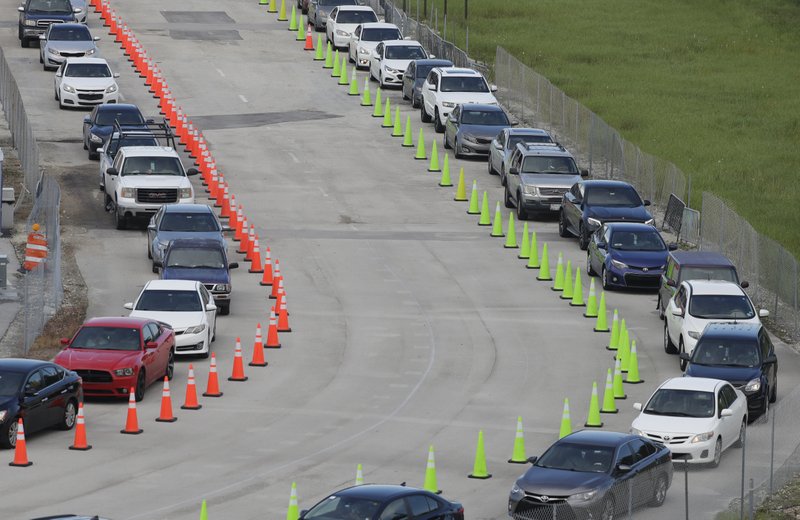
U.S. testing for the coronavirus is dropping even as infections remain high and the death toll rises by more than 1,000 a day, a worrisome trend that officials attribute largely to Americans getting discouraged over having to wait hours to get a test and days or weeks to learn the results.

An Associated Press analysis found that the number of tests per day slid 3.6% over the past two weeks to 750,000, with the count falling in 22 states. That includes places like Alabama, Mississippi, Missouri and Iowa where the percentage of positive tests is high and continuing to climb, an indicator that the virus is still spreading uncontrolled.

Amid the crisis, some health experts are calling for the introduction of a different type of test that would yield results in a matter of minutes and would be cheap and simple enough for millions of Americans to test themselves — but would also be less accurate.

“There’s a sense of desperation that we need to do something else,” said Dr. Ashish Jha, director of Harvard’s Global Health Institute.

Widespread testing is considered essential to managing the outbreak as the U.S. approaches a mammoth 5 million confirmed infections and more than 157,000 deaths out of over 700,000 worldwide.

Testing demand is expected to surge again this fall, when schools reopen and flu season hits, most likely outstripping supplies and leading to new delays and bottlenecks.

Some of the decline in testing over the past few weeks was expected after backlogged commercial labs urged doctors to concentrate on their highest-risk patients. But some health and government officials are seeing growing public frustration and waning demand.

In Iowa, state officials are reporting less interest in testing, despite ample supplies. The state’s daily testing rate peaked in mid-July but has declined 20% in the last two weeks.

“We have the capacity. Iowans just need to test,” Gov. Kim Reynolds said last week.

Jessica Moore of rural Newberry, South Carolina, said that after a private lab lost her COVID-19 test results in mid-July, she had to get re-tested at a pop-up site organized by the state.

Moore and her husband arrived early on a Saturday morning at the site, a community center, where they waited for two hours for her test. Moore watched in the rear-view mirror as people drove up, saw the long line of cars, and then turned around and left.

“If people have something to do on a Saturday and they want to get tested, they’re not going to wait for two hours in the South Carolina heat for a test, especially if they’re not symptomatic,” Moore said.

Before traveling from Florida to Delaware last month, Laura DuBose Schumacher signed up to go to a drive-up testing site in Orlando with her husband. They were given a one-hour window in which to arrive.

They got there at the start of the window, but after 50 minutes it looked as if the wait would be another hour. Others who had gone through the line told them that they wouldn’t get their results until five days later, a Monday, at the earliest. They were planning to travel the next day, so they gave up.

“Monday would have been pointless, so we left the line,” Schumacher said.

The number of confirmed infections in the U.S. has topped 4.7 million, with new cases running at nearly 60,000 a day on average, down from more than 70,000 in the second half of July.

U.S. testing is built primarily on highly sensitive molecular tests that detect the genetic code of the coronavirus. Although the test is considered the gold standard for accuracy, experts increasingly say the country’s overburdened lab system is incapable of keeping pace with the outbreak and producing results within two or three days, the time frame crucial to isolating patients and containing the virus.

“They’re doing as good a job as they possibly can do, but the current system will not allow them to keep up with the demand,” said Mara Aspinall of Arizona State University’s College of Health Solutions.

Testing delays have led researchers at Harvard and elsewhere to propose a new approach using so-called antigen tests — rapid technology already used to screen for flu, strep throat and other common infections. Instead of detecting the virus itself, such tests look for viral proteins, or antigens, which are generally considered a less accurate measure of infection.

A number of companies are studying COVID-19 antigen tests in which you spit on a specially coated strip of paper, and if you are infected, it changes color. Experts say the speed and widespread availability of such tests would more than make up for their lower precision.

While no such tests for the coronavirus are on the U.S. market, experts say the technology is simple and the hurdles are more regulatory than technical. The Harvard researchers say production could quickly be scaled into the millions.

A proposal from the Harvard researchers calls for the federal government to distribute $1 saliva-based antigen tests to all Americans so that they can test themselves regularly, perhaps even daily.

Even with accuracy as low as 50%, researchers estimate the paper strip tests would uncover five times more COVID-19 cases than the current laboratory-based approach, which federal officials estimate catches just 1 in 10 infections.

But the approach faces resistance in Washington, where federal regulators have required at least 80% accuracy for new COVID-19 tests.

To date, the Food and Drug Administration has allowed only two COVID-19 antigen tests to enter the market. Those tests require a nasal swab supervised by a health professional and can only be run on specialized machines found at hospitals, doctor’s offices, nursing homes and clinics.

Also, because of the risk of false negatives, doctors may need to confirm a negative result with a genetic test when patients have possible symptoms of COVID-19.

On Tuesday, the governors of Maryland, Virginia, Louisiana and three other states announced an agreement with the Rockefeller Foundation to purchase more than 3 million of the FDA-cleared antigen tests, underscoring the growing interest in the technology.

When asked about introducing cheaper, paper-based tests, the government’s “testing czar,” Adm. Brett Giroir, warned that their accuracy could fall as low as 20% to 30%.

“I don’t think that would do a service to the American public of having something that is wrong seven out of 10 times,” Giroir said last week. “I think that could be catastrophic.”

___

This story has been corrected to show that Iowa’s daily testing rate has declined 20%, not 40%.


The Misguided Rush to Throw the School Doors Open

https://www.governing.com/now/The-Misguided-Rush-to-Throw-the-School-Doors-Open.html?utm_term=READ%20MORE&utm_campaign=The%20Misguided%20Rush%20to%20Throw%20the%20School%20Doors%20Open&utm_content=email&utm_source=Act-On+Software&utm_medium=email

With the COVID-19 pandemic raging across much of America, a return to full-scale classroom instruction poses too grave a risk to students, teachers, school staff, parents and their communities.

Across the country, many of the public schools that are scheduled to open their doors within the next few weeks are still in limbo as to whether they should open on time and how they should operate — with full-scale in-person classroom instruction, with online learning only, or with some hybrid of the two. But the right call is becoming clearer by the day: It’s too soon to bring students and teachers back into the classroom.

Most communities are not ready to reopen their schools for traditional classes because neither government leaders nor the public have done nearly enough to curb the spread of the coronavirus or make the necessary preparations that would be required to operate schools safely.

Tens of thousands of new cases of COVID-19 are being reported every day and the death toll is averaging more than a thousand daily, with Sun Belt states seeing most of the biggest surges. It’s becoming ever clearer that this grim tally will continue until an effective vaccine is available. Until then, the possibility that students, their parents, teachers and school staff could become infected with the coronavirus and spread it widely to their communities should gravely concern every public official. The danger is hardly speculative: Schools that are among the earliest to reopen are already seeing positive cases.

The arguments that students learn better in a classroom setting, that they are suffering psychologically from social isolation, and that school closures have been particularly hard on working families are all legitimate. But are we really prepared to further risk the health of our children and of our communities by putting them in an environment where most of the practices to curb the virus will be difficult, if not impossible, to consistently follow?

And the danger to school staff members if they are forced to return to work should not be underestimated. According to the Kaiser Family Foundation, 25 percent of teachers are at risk of serious illness if they become infected with COVID-19, either because of their age — 65 or older — or their underlying health conditions.

The rush to reopen fully for in-person instruction has been driven in part by President Trump and Education Secretary Betsy DeVos, whose demands have been accompanied with threats of losing federal funds. Those demands appear to run afoul of guidelines issued by the Centers for Disease Control and Prevention a few weeks ago: Among other things, the CDC counseled going with small, socially distanced class sizes, emphasizing hand hygiene and respiratory etiquette, and requiring cloth face coverings — common-sense precautions the president said were too strict and many school officials say will be difficult to implement.

The political pressure has been so intense that the CDC issued a new set of “resources and tools” for school reopening, with CDC Director Robert Redfield saying that “the goal line is to get the majority of these students back to face-to-face learning,” a stance that was seen by many as a capitulation after the president criticized the earlier guidelines. Clearly this is not what most Americans expect of our top health officials. The public must feel confident that decisions to reopen schools are based on the best scientific evidence available and the professional advice of educators.

Despite the threats and pressure, many school officials are still doing the right thing by listening to local health experts and deciding for themselves when and how best to reopen. I see this in my own state of Georgia, where, according to a recent Atlanta Journal-Constitution article on how Georgia schools plan to start the school year, most school official are delaying opening and say that when they do open they plan to implement a hybrid approach to instruction. “Teachers will check in virtually — via some video conferencing software allowing them to see the dozens of children they would normally engage with through rows or groups of desks,” the newspaper reported.

The larger school districts in metropolitan Atlanta recently reversed themselves from offering parents an option to send their children to school traditionally or attend virtually, opting to go all-virtual because of the spikes in the virus. Other schools in the state plan to meet on campus a few days a week and do virtual learning on other days. Then there are superintendents who plan to prioritize on-campus learning but restrict it to students with special learning needs, such as those who have autism. Many of these options are complex and carry with them implications difficult to foresee, but they all prioritize the health of students.

The ultimate decider of when schools will fully reopen will undoubtedly be parents, at least those who have the freedom and budgets to stay home and monitor their children’s academic progress and assist with their homework. As a caring society, we must ensure that the option to telework is given to as many parents as possible, so that the decision to send one’s children to school and possibly expose them to the coronavirus is not based on family income and social status.

We are still in an existential fight with the coronavirus, and we do not know precisely how or when this battle will end. We do know the virus is apolitical and knows no local or state boundaries. There are no quick or easy solutions. One can only pray that public officials learned something from reopening our economy too soon. We do not want this to happen again by prematurely reopening schools.

Much of what our children lose in a semester or two of distance learning can be made up in time, but a lost life is forever.


Industry Voices—6 ways the pandemic will remake health systems

https://www.fiercehealthcare.com/hospitals/industry-voices-6-ways-pandemic-will-remake-health-systems?mkt_tok=eyJpIjoiTURoaU9HTTRZMkV3TlRReSIsInQiOiJwcCtIb3VSd1ppXC9XT21XZCtoVUd4ekVqSytvK1wvNXgyQk9tMVwvYXcyNkFHXC9BRko2c1NQRHdXK1Z5UXVGbVpsTG5TYml5Z1FlTVJuZERqSEtEcFhrd0hpV1Y2Y0sxZFNBMXJDRkVnU1hmbHpQT0pXckwzRVZ4SUVWMGZsQlpzVkcifQ%3D%3D&mrkid=959610

Industry Voices—6 ways the pandemic will remake health systems ...

Provider executives already know America’s hospitals and health systems are seeing rapidly deteriorating finances as a result of the coronavirus pandemic. They’re just not yet sure of the extent of the damage.

By the end of June, COVID-19 will have delivered an estimated $200 billion blow to these institutions with the bulk of losses stemming from cancelled elective and nonelective surgeries, according to the American Hospital Association

A recent Healthcare Financial Management Association (HFMA)/Guidehouse COVID-19 survey suggests these patient volumes will be slow to return, with half of provider executive respondents anticipating it will take through the end of the year or longer to return to pre-COVID levels. Moreover, one-in-three provider executives expect to close the year with revenues at 15 percent or more below pre-pandemic levels. One-in-five of them believe those decreases will soar to 30 percent or beyond. 

Available cash is also in short supply. A Guidehouse analysis of 350 hospitals nationwide found that cash on hand is projected to drop by 50 days on average by the end of the year — a 26% plunge — assuming that hospitals must repay accelerated and/or advanced Medicare payments.

While the government is providing much needed aid, just 11% of the COVID survey respondents expect emergency funding to cover their COVID-related costs.

The figures illustrate how the virus has hurled American medicine into unparalleled volatility. No one knows how long patients will continue to avoid getting elective care, or how state restrictions and climbing unemployment will affect their decision making once they have the option.

All of which leaves one thing for certain: Healthcare’s delivery, operations, and competitive dynamics are poised to undergo a fundamental and likely sustained transformation. 

Here are six changes coming sooner rather than later.


1. Payer-provider complexity on the rise; patients will struggle.

The pandemic has been a painful reminder that margins are driven by elective services. While insurers show strong earnings — with some offering rebates due to lower reimbursements — the same cannot be said for patients. As businesses struggle, insured patients will labor under higher deductibles, leaving them reluctant to embrace elective procedures. Such reluctance will be further exacerbated by the resurgence of case prevalence, government responses, reopening rollbacks, and inconsistencies in how the newly uninsured receive coverage.

Furthermore, the upholding of the hospital price transparency ruling will add additional scrutiny and significance for how services are priced and where providers are able to make positive margins. The end result: The payer-provider relationship is about to get even more complicated. 


2. Best-in-class technology will be a necessity, not a luxury. 

COVID has been a boon for telehealth and digital health usage and investments. Two-thirds of survey respondents anticipate using telehealth five times more than they did pre-pandemic. Yet, only one-third believe their organizations are fully equipped to handle the hike.

If healthcare is to meet the shift from in-person appointments to video, it will require rapid investment in things like speech recognition software, patient information pop-up screens, increased automation, and infrastructure to smooth workflows.

Historically, digital technology was viewed as a disruption that increased costs but didn’t always make life easier for providers. Now, caregiver technologies are focused on just that.

The new necessities of the digital world will require investments that are patient-centered and improve access and ease of use, all the while giving providers the platform to better engage, manage, and deliver quality care.

After all, the competition at the door already holds a distinct technological advantage.


3. The tech giants are coming.

Some of America’s biggest companies are indicating they believe they can offer more convenient, more affordable care than traditional payers and providers. 

Begin with Amazon, which has launched clinics for its Seattle employees, created the PillPack online pharmacy, and is entering the insurance market with Haven Healthcare, a partnership that includes Berkshire Hathaway and JPMorgan Chase. Walmart, which already operates pharmacies and retail clinics, is now opening Walmart Health Centers, and just recently announced it is getting into the Medicare Advantage business.

Meanwhile, Walgreens has announced it is partnering with VillageMD to provide primary care within its stores.

The intent of these organizations clear: Large employees see real business opportunities, which represents new competition to the traditional provider models.

It isn’t just the magnitude of these companies that poses a threat. They also have much more experience in providing integrated, digitally advanced services. 


4. Work locations changes mean construction cost reductions. 

If there’s one thing COVID has taught American industry – and healthcare in particular – it’s the importance of being nimble.

Many back-office corporate functions have moved to a virtual environment as a result of the pandemic, leaving executives wondering whether they need as much real estate. According to the survey, just one-in-five executives expect to return to the same onsite work arrangements they had before the pandemic. 

Not surprisingly, capital expenditures, including new and existing construction, leads the list of targets for cost reductions.

Such savings will be critical now that investment income can no longer be relied upon to sustain organizations — or even buy a little time. Though previous disruptions spawned only marginal change, the unprecedented nature of COVID will lead to some uncomfortable decisions, including the need for a quicker return on investments. 


5. Consolidation is coming.

Consolidation can be interpreted as a negative concept, particularly as healthcare is mostly delivered at a local level. But the pandemic has only magnified the differences between the “resilients” and the “non-resilients.” 

All will be focused on rebuilding patient volume, reducing expenses, and addressing new payment models within a tumultuous economy. Yet with near-term cash pressures and liquidity concerns varying by system, the winners and losers will quickly emerge. Those with at least a 6% to 8% operating margin to innovate with delivery and reimagine healthcare post-COVID will be the strongest. Those who face an eroding financial position and market share will struggle to stay independent..


6. Policy will get more thoughtful and data-driven.

The initial coronavirus outbreak and ensuing responses by both the private and public sectors created negative economic repercussions in an accelerated timeframe. A major component of that response was the mandated suspension of elective procedures.

While essential, the impact on states’ economies, people’s health, and the employment market have been severe. For example, many states are currently facing inverse financial pressures with the combination of reductions in tax revenue and the expansion of Medicaid due to increases in unemployment. What’s more, providers will be subject to the ongoing reckonings of outbreak volatility, underscoring the importance of agile policy that engages stakeholders at all levels.

As states have implemented reopening plans, public leaders agree that alternative responses must be developed. Policymakers are in search of more thoughtful, data-driven approaches, which will likely require coordination with health system leaders to develop flexible preparation plans that facilitate scalable responses. The coordination will be difficult, yet necessary to implement resource and operational responses that keeps healthcare open and functioning while managing various levels of COVID outbreaks, as well as future pandemics.

Healthcare has largely been insulated from previous economic disruptions, with capital spending more acutely affected than operations. But the COVID-19 pandemic will very likely be different. Through the pandemic, providers are facing a long-term decrease in commercial payment, coupled with a need to boost caregiver- and consumer-facing engagement, all during a significant economic downturn.

While situations may differ by market, it’s clear that the pre-pandemic status quo won’t work for most hospitals or health systems.


For 20th straight week, more than 1 million Americans filed jobless claims even as enhanced benefits expired

https://www.washingtonpost.com/business/2020/08/06/20th-straight-week-more-than-1-million-americans-filed-jobless-claims-even-enhanced-benefits-expired/?utm_campaign=wp_main&utm_medium=social&utm_source=facebook&fbclid=IwAR2i4HqZnx_L6zRMf81cWUKPOQYNCp7iqWWvw0eMcwVzw1Q_3yUy5j7F0Ok

Stocks fall as weekly unemployment claims show a 'slowing' pace of ...

1.2 million Americans sought the benefits last week, down slightly from the week before.

The number of newly filed unemployed insurance claims dropped last week after two straight weeks of rising, but it remains well above historic pre-pandemic levels, according to Labor Department data.

It marked the 20th straight week that more than 1 million Americans filed jobless claims.

A total of 1.19 million people filed new claims last week, down from 1.43 million the week previously. The numbers of new claimants have come down from their peak in March of more than six million, but they are still well above the pre-pandemic record of 695,000 from 1982.

Another 656,000 new claims were filed for Pandemic Unemployment Assistance, the benefits offered to gig and self-employed workers.

The number of people continuing traditional unemployment claims, from the week ending July 25, was 16.1 million, down about 844,000 from the week prior. (The statistic lags by a week.) When including the PUA, more than 32.1 million Americans are currently receiving some form of unemployment benefits.

“It is promising that the initial unemployment numbers have ticked down,” said AnnElizabeth Konkel, an economist at Indeed Hiring Lab. “But we aren’t out of the woods yet. The claims are still much higher than the pre-covid era, so it’s still pointing to a lot of economic pain.”

The numbers come during what many economists say is an inflection point for the country’s economy.

Congress continues to wrangle over an extension to the extra $600 a week in unemployment benefits that many laid off workers say have helped stabilize their finances — and stave off a deeper crisis from an economy hollowed by evictions, mortgage and credit card defaults, and plunging consumer demand. Those benefits expired last week.

Funds from the Paycheck Protection Program, the $660 billion federal aid program that was meant to help small businesses keep workers on the payroll, are in the process of running out, as well. And the coronavirus’ frightening march since mid-June has added to uncertainty about when — or even if — the country can expect a return in the near future to what was considered a normal way of life and doing business not that long ago.

There are many indications that workers are getting laid off for a second time in just a few short months. In California, for example, which has one of the highest rates of workers on unemployment insurance, an analysis by the University of California, Los Angeles, and the California Employment Development Department found that more than half — 57 percent — of initial unemployment claims filed during the week ending July 25th were from workers re-opening older claims, a large majority of which had been filed early in the crisis.

The unemployment rate for July, as well as the number of jobs added or lost, will be released Friday by the Bureau of Labor Statistics, from a survey taken early in the month. Many economists expect the country’s unemployment rate to drop from the 11.1 percent it was at in June; but due to the survey’s lag, many caution that the release will not register more recent economic developments that have emerged in recent weeks as the the pandemic has caught up with the country’s economic rebound.

Companies announcing layoffs in the last week include: NBCUniversalJohn DeereFujitsu Network Communications, and hotel and tourism based businesses like retailer DFS Group and Wyndham Vacation Ownership.


Fauci says family has faced threats, harassment amid pandemic

Fauci says family has faced threats, harassment amid pandemic

Fauci says family has faced threats, harassment amid pandemic ...

Dr. Anthony Fauci, the nation’s top infectious disease expert, said he and his family are getting death threats because people don’t like what he says about COVID-19.

“Getting death threats for me, and my family, and harassing my daughters, to the point where I have to get security is just — I mean, it’s amazing,” Fauci said during an interview with CNN’s Sanjay Gupta on Wednesday.

“I wouldn’t have imagined in my wildest dreams that people who object to things that are pure public health principles, are so set against it and don’t like what you and I say, namely in the world of science, that they actually threaten you.”

He noted that crises like COVID-19 has brought out the best of people but also the worst of people.

Fauci’s notoriety has been elevated by COVID-19, as he is often on TV offering a blunt portrayal of the state of the pandemic in the U.S.

Fauci, 79, is one of the world’s most respected infectious disease experts, having advised six presidents on HIV/AIDS, Ebola, Zika and other health crises. He has earned a reputation for being blunt and willing to correct the president.

Fauci has had a security detail since at least April.

Fauci also reflected on what he says is a degree of “anti-science” sentiment in the U.S. that is making it difficult to get people to do things to slow the spread of COVID-19 like wearing masks.

“There is a degree of anti-science feeling in this country, and I think it is not just related to science. It’s almost related to authority and a mistrust in authority that spills over,” he told Gupta.

“Because in some respects, scientists, because they’re trying to present data, may be looked upon as being an authoritative figure, and the pushing back on authority, the pushing back on government is the same as pushing back on science.”

He said the scientific community should be more transparent and reach out to people to underscore the importance of science and evidence-based policy.

“I know when I say that if we follow these five or six principles, we can open up we don’t have to stay shut…There are some people that just don’t believe me or don’t pay attention to that. And that’s unfortunate because that is the way out of this,” he said.

President Trump has repeatedly undermined Fauci, questioning the White House coronavirus task force member on Twitter and in interviews with the media.

Over the weekend, Trump tweeted out a video of a portion of Fauci’s testimony explaining why the U.S. has recorded more cases than European cases and called it “wrong.” Trump has falsely claimed several times that the U.S. has more cases because it is doing more testing.

Trump has also retweeted multiple messages that question Fauci’s expertise, including one last week that said he had “misled the American public.”


Survey finds nearly one-third of rehired workers laid off again

Survey finds nearly one-third of rehired workers laid off again

Survey finds nearly one-third of rehired workers laid off again

Nearly a third of the laid off workers who were able to go back to their previous jobs have been laid off again, according to a Cornell survey released Tuesday.

The survey was conducted by RIWI from July 23 to Aug. 1, as a slew of states experiencing major COVID-19 outbreaks slammed the breaks on their economic reopenings and reimposed social distancing restrictions.

Danielle Goldfarb, head of global research at RIWI, said it was a sign that a second wave of layoffs was well underway.

“Official and private sectors jobs data have not yet picked up the significant share of American workers that have already been re-laid off,” said Goldfarb.

“Since the impact is actually worse in states that have not seen COVID surges, these data indicate a systemic problem and a much deeper recession than the mainstream data suggest,” she said.

The survey found that about 37 percent of people who were not self-employed were laid off after the pandemic struck in March, but over half (57 percent) had been called back to work since then.

But of those, 31 percent had been laid off again and another 26 percent had been told there was a possibility they would lose their jobs.

A deeper dive into the data, however, suggested that the second round of layoffs may be less about the resurgence of the virus than the loss of aid. It found only small differences in “healthier” states, those not experiencing a surge, than in places with new outbreaks.

One possible reason for the additional layoffs are problems with businesses that had remained afloat with the help of forgivable loans from the federal Paycheck Protection Program (PPP).

The funds, which started rolling out the door in April, were supposed to be enough to cover eight weeks of salary and expenses.

“The RIWI dataset output clearly shows that a substantial portion of the job growth experienced in May and June resulted from anomalies associated with PPP requirements, as opposed to underlying economic strength,” said Daniel Alpert, a senior fellow and adjunct professor of macroeconomics at Cornell Law School.

Congress has made scant progress in negotiating a new COVID-19 response bill which is expected to include an extension of the PPP and may allow businesses to apply for a second loan.

The survey was completed by 6,383 respondents, though some questions had smaller samples because they were only applicable to some people.

The margins of error for the survey questions ran from plus or minus 1.5 percent to plus or minus 3.9 percent.


Pandemic reveals flaws of unemployment insurance programs

Pandemic reveals flaws of unemployment insurance programs

Pandemic reveals flaws of unemployment insurance programs

The lapse of enhanced jobless benefits amid a record-breaking crush of applications is exposing the flaws and shortcomings of how the U.S. provides unemployment insurance.

The economic toll of the coronavirus pandemic has torn holes in a federal safety net woven by individual systems for every state plus the District of Columbia, Puerto Rico and the Virgin Islands. More than 30.2 million Americans were on some form of unemployment insurance as of mid-July, with the Labor Department reporting a growing number of new applications in subsequent weeks.

Friday’s expiration of a $600 weekly add-on to state benefits plunged those vulnerable Americans into financial peril.

Congressional Democrats and Trump administration officials are now deadlocked over negotiations for a broader coronavirus relief package that’s expected to include some form of federal unemployment benefits.

But short-staffed unemployment offices across the U.S. grappling with outdated technology and unprecedented demand would face challenges from implementing a scaled-down or more complicated approach to the weekly payments.

Economists and labor market experts also warn that any solution that emerges from the negotiations would take weeks, if not months, to get up and running, risking a potentially catastrophic fiscal cliff for tens of millions of U.S. households.

“You ought to be able to deliver the program that’s on the books,” said Douglas Holtz-Eakin, former director of the Congressional Budget Office and a White House economist under former President George W. Bush.

“The states, collectively, seem to have not kept up the systems and we now have a big problem because of that,” he added.

The unprecedented size and speed of the pandemic-driven economic collapse has posed a brutal challenge for state unemployment agencies. After 10 years of steady economic expansion, the labor market quickly went from the lowest unemployment rate in 50 years to the highest level of joblessness since the Great Depression.

New claims for unemployment benefits were averaging roughly 200,000 nationwide a week before the pandemic — a manageable level for state agencies that had largely been neglected during the longest stretch of growth in modern U.S. history. But the coronavirus lockdowns spurred 3.3 million new claims between March 15 and March 22, a then-record that would be doubled the following week. Before the COVID-19 outbreak, the previous record was 695,000 from the first week of October 1982.

A little more than four months after the pandemic hit, state agencies are now processing roughly 2 million new claims a week for both unemployment insurance and Pandemic Unemployment Assistance (PUA), a program designed to cover those who don’t qualify for typical benefits.

“On some level, you can’t really blame states for not being prepared for that level of onslaught,” said Michele Evermore, senior policy analyst at the National Employment Law Project.

“Usually, you see the recession starting up and state agencies say ‘You know, this looks like a recession here, so let’s start to staff up.’ This came on all at once, so we’ve had these neglected, antiquated systems and then there’s all these other stressors.”

The U.S. economy has been in recession since February, according to the National Bureau of Economic Research.

Processing the massive surge of unemployment claims on shoddy technology would have been hard enough for states. Adding enhanced benefits and PUA claims to the mix strained state agencies even more.

“It took time to upgrade those systems. It took time to hire and train new staff who could deal with the volumes of the calls, and all in a pandemic, when face-to-face contact and training and being together in office were not possible,” said Julia Pollak, labor economist at job recruitment and posting company ZipRecuriter.

“So it’s easy to see in hindsight why it all fell apart.”

Enhanced unemployment benefits are among the biggest obstacles to reaching a deal on what’s likely to be the last coronavirus relief package before the election. While President Trump and Republicans are divided over how and whether to extend the federal boost, Democrats are largely united behind extending the benefits and reducing them gradually along a curve tied to the unemployment rate.

Speaker Nancy Pelosi (D-Calif.) has called for including such a mechanism, known as an automatic stabilizers, in the coronavirus package being negotiated.

Rep. Don Beyer (D-Va.), vice chair of the Joint Economic Committee, introduced a separate bill designed to tackle economic downturns beyond the coronavirus recession. His measure would establish a six-tier system for reducing the federal benefit in line with a state’s unemployment rate.

The approach was endorsed by former Federal Reserve Chairman Ben Bernanke, who oversaw the central bank’s response to the Great Recession, and his successor, Janet Yellen.

“Every time you get close to a cliff and there’s a political battle and political price to be paid, probably by both sides, rather than just saying ‘This is what’s needed,’ let’s kick it in,” Beyer said in an interview.

“We talked to economists all across the country and virtually everyone we talked to said this makes the most sense.”

But Republican lawmakers and right-leaning economists have pushed back on efforts to codify mandatory spending and make decisions now about what will be needed to mitigate future crises.

“It’s hard for me to understand why it’s appropriate now to anticipate the economic conditions in the future and tie the hands of future elected representatives of Congress,” Holtz-Eakin said.

“It forked out $2.3 trillion in [the CARES Act] across the board in ways that got to small businesses, to households, to the employed, the unemployed. If you’re going to have one in 100-year events, that’s how you deal with them,” he added.

Republicans have instead proposed replacing the flat $600 weekly boost with a percentage of the worker’s pre-pandemic earnings in addition to what is prescribed by each state. While the wage-replacement is more tailored, Evermore warned that making the necessary calculations for each claimant could overwhelm an already teetering system.

“If you told states that they had to do a percentage replacement — oh, my gosh, that’s a recipe for crashing everything,” she said.

“It’s just not how the system is set up to work.”


Admininstration believes Coronavirus is “under control”

https://www.axios.com/newsletters/axios-vitals-65b6b9b9-ee8e-4b89-9688-c43c0146c4d6.html?utm_source=newsletter&utm_medium=email&utm_campaign=newsletter_axiosvitals&stream=top

Daily confirmed COVID-19 cases, rolling 3-day average - Our World ...

President Trump said in an interview with “Axios on HBO” that he thinks the coronavirus is as well-controlled in the U.S. as it can be, despite dramatic surges in new infections over the course of the summer and more than 150,000 American deaths.

  • “They are dying, that’s true. And you have — it is what it is. But that doesn’t mean we aren’t doing everything we can. It’s under control as much as you can control it. This is a horrible plague,” he told Axios’ Jonathan Swan.

Reality check: The U.S. is averaging roughly 65,000 new cases and 1,000 deaths per day, Axios’ Sam Baker writes. The virus has already killed nearly 150,000 Americans, and it spread largely unchecked through almost the entire country throughout June and July.

The big picture: In the interview, which took place last Tuesday, Trump returned to familiar themes and areas where the U.S. really has made significant progress. He cited the dramatic increase in ventilator production, the ramp-up in testing and treatment that has reduced the overall fatality rate from the virus.

  • Yes, but: He painted a far rosier picture of the pandemic than most data would support.

On testing, Trump said, “You know there are those that say you can test too much” — a view that no experts have advocated.

  • The U.S. is experiencing long turnaround times for coronavirus testing, as Trump acknowledged, because of the high demand for testing. But that is largely a function of the country’s high caseload and the number of people at risk of infection.

He also returned to his mantra that “because we’ve done more tests, we have more cases.”

  • The cases the U.S. has, we would have had with or without testing. We know we have them because of testing, but the massive outbreak here would be a massive outbreak whether we chose to know about it (through testing) or ignore it by not testing.


The Mask Slackers of 1918

As the influenza pandemic swept across the United States in 1918 and 1919, masks took a role in political and cultural wars.

The masks were called muzzles, germ shields and dirt traps. They gave people a “pig-like snout.” Some people snipped holes in their masks to smoke cigars. Others fastened them to dogs in mockery. Bandits used them to rob banks.

More than a century ago, as the 1918 influenza pandemic raged in the United States, masks of gauze and cheesecloth became the facial front lines in the battle against the virus. But as they have now, the masks also stoked political division. Then, as now, medical authorities urged the wearing of masks to help slow the spread of disease. And then, as now, some people resisted.

In 1918 and 1919, as bars, saloons, restaurants, theaters and schools were closed, masks became a scapegoat, a symbol of government overreach, inspiring protests, petitions and defiant bare-face gatherings. All the while, thousands of Americans were dying in a deadly pandemic.

The first infections were identified in March, at an Army base in Kansas, where 100 soldiers were infected. Within a week, the number of flu cases grew fivefold, and soon the disease was taking hold across the country, prompting some cities to impose quarantines and mask orders to contain it.

By the fall of 1918, seven cities — San Francisco, Seattle, Oakland, Sacramento, Denver, Indianapolis and Pasadena, Calif. — had put in effect mandatory face mask laws, said Dr. Howard Markel, a historian of epidemics and the author of “Quarantine!

Organized resistance to mask wearing was not common, Dr. Markel said, but it was present. “There were flare-ups, there were scuffles and there were occasional groups, like the Anti-Mask League,” he said, “but that is the exception rather than the rule.”

At the forefront of the safety measures was San Francisco, where a man returning from a trip to Chicago apparently carried the virus home, according to archives about the pandemic at the University of Michigan.

By the end of October, there were more than 60,000 cases statewide, with 7,000 of them in San Francisco. It soon became known as the “masked city.”

“The Mask Ordinance,” signed by Mayor James Rolph on Oct. 22, made San Francisco the first American city to require face coverings, which had to be four layers thick.

Resisters complained about appearance, comfort and freedom, even after the flu killed an estimated 195,000 Americans in October alone.

Alma Whitaker, writing in The Los Angeles Times on Oct. 22, 1918, reviewed masks’ impact on society and celebrity, saying famous people shunned them because it was “so horrid” to go unrecognized.

“The big restaurants are the funniest sights, with all the waiters and diners masked, the latter just raising their screen to pop in a mouthful of food,” she wrote.

When Ms. Whitaker herself declined to wear one, she was “forcibly taken” to the Red Cross as a “slacker,” and ordered to make one and put it on.

The San Francisco Chronicle said the simplest type of mask was of folded gauze affixed with elastic or tape. The police went for gauze masks, which resembled an unflattering “nine ordinary slabs of ravioli arranged in a square.”

There was room for creativity. Some of the coverings were “fearsome looking machines” that lent a “pig-like aspect” to the wearer’s face.

The penalty for violators was $5 to $10, or 10 days’ imprisonment.

On Nov. 9, 1,000 people were arrested, The San Francisco Chronicle reported. City prisons swelled to standing room only; police shifts and court sessions were added to help manage.

“Where is your mask?” Judge Mathew Brady asked offenders at the Hall of Justice, where sessions dragged into night. Some gave fake names, said they just wanted to light a cigar or that they hated following laws.

Jail terms of 8 hours to 10 days were given out. Those who could not pay $5 were jailed for 48 hours.

On Oct. 28, a blacksmith named James Wisser stood on Powell and Market streets in front of a drugstore, urging a crowd to dispose of their masks, which he described as “bunk.”

A health inspector, Henry D. Miller, led him to the drugstore to buy a mask.

At the door, Mr. Wisser struck Mr. Miller with a sack of silver dollars and knocked him to the ground, The San Francisco Chronicle reported. While being “pummeled,” Mr. Miller, 62, fired four times with a revolver. Passers-by “scurried for cover,” The Associated Press said.

Mr. Wisser was injured, as were two bystanders. He was charged with disturbing the peace, resisting an officer and assault. The inspector was charged with assault with a deadly weapon.

That was the headline for a report published in The Los Angeles Times when city officials met in November to decide whether to require residents to wear “germ scarers” or “flu-scarers.”

Public feedback was invited. Some supported masks so theaters, churches and schools could operate. Opponents said masks were “mere dirt and dust traps and do more harm than good.”

“I have seen some persons wearing their masks for a while hanging about their necks, and then apply them to their faces, forgetting that they might have picked up germs while dangling about their clothes,” Dr. E.W. Fleming said in a Los Angeles Times report.

An ear, nose and throat specialist, Dr. John J. Kyle, said: “I saw a woman in a restaurant today with a mask on. She was in ordinary street clothes, and every now and then she raised her hand to her face and fussed with the mask.”

Suffragists fighting for the right to vote made a gesture that rejected covering their mouths at a time when their voices were crucial.

At the annual convention of the Illinois Equal Suffrage Association, in October 1918, they set chairs four feet apart, closed doors to the public and limited attendance to 100 delegates, the Chicago Daily Tribune reported.

But the women “showed their scorn” for masks, it said. It’s unclear why.

Allison K. Lange, an associate history professor at Wentworth Institute of Technology, said one reason could have been that they wanted to keep a highly visible profile.

“Suffragists wanted to make sure their leaders were familiar political figures,” Dr. Lange said.

San Francisco’s mask ordinance expired after four weeks at noon on Nov. 21. The city celebrated, and church bells tolled.

A “delinquent” bent on blowing his nose tore his mask off so quickly that it “nearly ruptured his ear,” The San Francisco Chronicle reported. He and others stomped on their masks in the street. As a police officer watched, it dawned on him that “his vigil over the masks was done.”

Waiters, barkeeps and others bared their faces. Drinks were on the house. Ice cream shops handed out treats. The sidewalks were strewn with gauze, the “relics of a torturous month,” The Chronicle said.

The spread had been halted. But a second wave was on the horizon.

By December, the San Francisco Board of Supervisors was again proposing a mask requirement, meeting with testy opposition.

Around the end of the year, a bomb was defused outside the office of San Francisco’s chief health officer, Dr. William C. Hassler. “Things were violent and aggressive, but it was because people were losing money,” said Brian Dolan, a medical historian at the University of California, San Francisco. “It wasn’t about a constitutional issue; it was a money issue.”

By the end of 1918, the death toll from influenza had reached at least 244,681, mostly in the last four months, according to government statistics.

In January, Pasadena’s city commission passed a mask ordinance. The police grudgingly enforced it, cracking down on cigar smokers and passengers in cars. Sixty people were arrested on the first day, The Los Angeles Times reported on Jan. 22, in an article titled “Pasadena Snorts Under Masks.”

“It is the most unpopular law ever placed on the Pasadena records,” W.S. McIntyre, the chief of police, told the paper. “We are cursed from all sides.”

Some mocked the rule by stretching gauze across car vents or dog snouts. Cigar vendors said they lost customers, though enterprising aficionados cut a hole in the cloth. (They were still arrested.) Barbers lost shaving business. Merchants complained traffic dropped as more people stayed home.

Petitions were circulated at cigar stands. Arrests rose, even of the powerful. Ernest May, the president of Security National Bank of Pasadena, and five “prominent” guests were rounded up at the Maryland Hotel one Sunday.

They had masks on, but not covering their faces.

As the contagion moved into its second year, so did the skepticism.

On Dec. 17, 1918, the San Francisco Board of Supervisors reinstituted the mask ordinance after deaths started to climb, a trend that spilled over into the new year with 1,800 flu cases and 101 deaths reported there in the first five days of January.

That board’s decision led to the creation of the Anti-Mask League, a sign that resistance to masks was resurfacing as cities tried to reimpose orders to wear them when infections returned.

The league was led by a woman, E.J. Harrington, a lawyer, social activist and political opponent of the mayor. About a half-dozen other women filled its top ranks. Eight men also joined, some of them representing unions, along with two members of the board of supervisors who had voted against masks.

“The masks turned into a political symbol,” Dr. Dolan said.

On Jan. 25, the league held its first organizational meeting, open to the public at the Dreamland Rink, where they united behind demands for the repeal of the mask ordinance and for the resignations of the mayor and health officials.

Their objections included lack of scientific evidence that masks worked and the idea that forcing people to wear the coverings was unconstitutional.

On Jan. 27, the league protested at a Board of Supervisors meeting, but the mayor held his ground. There were hisses and cries of “freedom and liberty,” Dr. Dolan wrote in his paper on the epidemic.

Repeal came a few days later on Feb. 1, when Mayor Rolph cited a downturn in infections.

But a third wave of flu rolled in late that year. The final death toll reached an estimated 675,000 nationwide, or 30 for every 1,000 people in San Francisco, making it one of the worst-hit cities in America.

Dr. Dolan said the story of the Anti-Mask League, which has drawn renewed interest now in 2020, demonstrates the disconnect between individual choice and universal compliance.

That sentiment echoes through the century from the voice of a San Francisco railway worker named Frank Cocciniglia.

Arrested on Kearny Street in January, Mr. Cocciniglia told the judge that he “was not disposed to do anything not in harmony with his feelings,” according to a Los Angeles Times report.

He was sentenced to five days in jail.

“That suits me,” Mr. Cocciniglia said as he left the stand. “I won’t have to wear a mask there.”


Graph of the Day: Daily Confirmed Covid-19 Cases (Rolling 3-day average)

Daily confirmed COVID-19 cases, rolling 3-day average - Our World ...