Detroit Medical Center is laying off employees, and its parent company, Dallas-based Tenet Healthcare, is planning to sell or close four urgent care centers in the Detroit area, according toCrain’s Detroit Business.
Detroit Medical Center officials told Crain’s layoffs have occurred, but they declined to disclose the number of employees affected. Sources told Crain’s several hundred DMC employees have been laid off with more expected this year. Clinical staff, administrative assistants and employees at the management level were reportedly affected by the layoffs.
“Like many health systems locally and nationally, we continually evaluate and review our staffing needs, which have decreased due to reduced patient demand during the pandemic,” DMC said in a statement to Becker’s Hospital Review. “Our goal is to ensure we are strongly positioned to provide the highest quality and safest care to our patients while making the best use of our resources.”
Tenet is also planning to sell or close its four remaining MedPost urgent care centers in the Detroit area. Tenet has reached agreements to sell three of the urgent care centers in Bloomfield, Livonia and Southfield, Mich., to First Choice Urgent Care, a company spokesperson told Becker’s Hospital Review.
“We expect all employees in good standing to be offered positions to remain at the facilities upon completion of the sale, which we anticipate occurring in December,” the spokesperson told Becker’s.
The MedPost urgent care center in Rochester Hills, Mich., will close in December, the spokesperson said. Tenet may convert it to a physician office or other type of healthcare facility.
“We are committed to providing our full support and assistance to employees through the close, and facilitating opportunities for open roles at local Tenet facilities,” the spokesperson told Becker’s.
Tenet, a 65-hospital system, operated nine MedPost urgent care centers in the Detroit area at the beginning of the year. It closed five of the centers in April due to challenges linked to the COVID-19 pandemic. The MedPost urgent care centers are not part of DMC.
Kennett Square, Pa.-based Genesis Healthcare, one of the largest post-acute care providers in the U.S., warned that bankruptcy is possible if its financial losses continue.
“The virus continues to have a significant adverse impact on the company’s revenues and expenses, particularly in hard-hit Mid Atlantic and Northeastern markets,” Genesis CEO George V. Hager Jr., said in a Nov. 9 earnings release.
Mr. Hager said government stimulus funds the company received in the third quarter of this year fell nearly $60 million short of the company’s COVID-19 costs and lost revenue.
Genesis said it has taken several steps to help offset the financial damage linked to the pandemic, including delaying payment of a portion of payroll taxes incurred through December.
But the company warned that bankruptcy is possible if its financial losses continue.
“Even if the company receives additional funding support from government sources and/or is able to execute successfully all of its these plans and initiatives, given the unpredictable nature of, and the operating challenges presented by, the COVID-19 virus, the company’s operating plans and resulting cash flows, along with its cash and cash equivalents and other sources of liquidity. may not be sufficient to fund operations for the 12-month period following the date the financial statements are issued,” Genesis said. “Such events or circumstances could force the company to seek reorganization under the U.S. Bankruptcy Code.”
Genesis ended the third quarter of this year with a net loss of $62.8 million, compared to net income of $46.1 million in the same period a year earlier.
The financial challenges caused by the COVID-19 pandemic have forced hundreds of hospitals across the nation to furlough, lay off or reduce pay for workers, and others have had to scale back services or close.
Lower patient volumes, canceled elective procedures and higher expenses tied to the pandemic have created a cash crunch for hospitals. U.S. hospitals are estimated to lose more than $323 billion this year, according to a report from the American Hospital Association. The total includes $120.5 billion in financial losses the AHA predicts hospitals will see from July to December.
Hospitals are taking a number of steps to offset financial damage. Executives, clinicians and other staff are taking pay cuts, capital projects are being put on hold, and some employees are losing their jobs. More than 260 hospitals and health systems furloughed workers this year and dozens of others have implemented layoffs.
Below are 11 hospitals and health systems that announced layoffs since Sept. 1, most of which were attributed to financial strain caused by the pandemic.
1. NorthBay Healthcare, a nonprofit health system based in Fairfield, Calif., is laying off 31 of its 2,863 employees as part of its pandemic recovery plan, the system announced Nov. 2.
2. Minneapolis-based Children’s Minnesota is laying off 150 employees, or about 3 percent of its workforce. Children’s Minnesota cited several reasons for the layoffs, including the financial hit from the COVID-19 pandemic. Affected employees will end their employment either Dec. 31 or March 31.
3. Brattleboro Retreat, a psychiatric and addiction treatment hospital in Vermont, notified 85 employees in late October that they would be laid off within 60 days.
4. Citing a need to offset financial losses, Minneapolis-basedM Health Fairview said it plans to downsize its hospital and clinic operations. As a result of the changes, 900 employees, about 3 percent of its 34,000-person workforce, will be laid off.
5. Lake Charles (La.) Memorial Health Systemlaid off 205 workers, or about 8 percent of its workforce, as a result of damage sustained from Hurricane Laura. The health system laid off employees at Moss Memorial Health Clinic and the Archer Institute, two facilities in Lake Charles that sustained damage from the hurricane.
6. Burlington, Mass.-based Wellforce laid off 232 employees as a result of operating losses linked to the COVID-19 pandemic. The health system, comprising Tufts Medical Center, Lowell General Hospital and MelroseWakefield Healthcare,experienced a drastic drop in patient volume earlier this year due to the suspension of outpatient visits and elective surgeries. In the nine months ended June 30, the health system reported a $32.2 million operating loss.
7. Baptist Health Floyd in New Albany, Ind., part of Louisville, Ky.-based Baptist Health, eliminated 36 positions. The hospital said the cuts, which primarily affected administrative and nonclinical roles, are due to restructuring that is “necessary to meet financial challenges compounded by COVID-19.”
8. Cincinnati-based UC Health laid off about 100 employees. The job cuts affected both clinical and non-clinical staff. A spokesperson for the health system said no physicians were laid off.
9. Mercy Iowa City(Iowa) announced in September that it will lay off 29 employees to address financial strain tied to the COVID-19 pandemic.
10. Springfield, Ill.-based Memorial Health Systemlaid off 143 employees, or about 1.5 percent of the five-hospital system’s workforce. The health system cited financial pressures tied to the pandemic as the reason for the layoffs.
11. Watertown, N.Y.-based Samaritan Healthannounced Sept. 8 that it laid off 51 employees and will make other cost-cutting moves to offset financial stress tied to the COVID-19 pandemic.
Since the Affordable Care Act (ACA) was signed into law a little more than a decade ago, it has fundamentally reshaped the American healthcare system. As the graphic below highlights, the far-reaching law expanded insurance coverage, increased consumer protections, led to new payment models, established minimum coverage standards, reformed the Indian Health Service—and even gave us calorie counts on menus, among myriad other things.
The fate of the ACA is once again in the Supreme Court’s hands—and the nine Justices, now including Amy Coney Barrett, are scheduled to hear arguments starting November 10th. Eighteen states with Republican leadership are asking the court to determine whether the individual mandate is constitutional without a financial penalty, and whether the mandate is severable from the rest of the law.
The process of unwinding a law that touches nearly every facet of the US healthcare system would mean a confusing and financially detrimental road ahead for many.Although we believe it’s unlikely that the entire law will be ruled unconstitutional, if it is—and no replacement legislation is passed—the effects could be devastating.
An estimated 21 million people would be at serious risk of losing their health insurance. This risk is magnified for Hispanic and Black Americans, who are also hardest hit by COVID-19. As many as 133M people with pre-existing conditions could face insurance disqualification or significantly higher premiums.
The lost coverage would result in a significant revenue hit for doctors and hospitals. While the impact would vary by state depending on Medicaid expansion terms, an Urban Institute report projects that total uncompensated care would grow an average of 78 percent for hospitals and 68 percent for physician services if the ACA is struck down. Although the Court is not expected to rule on the fate of the law until mid-2021, the direction and pace of future health reform legislation will be set by the ruling, under either a Trump or Biden administration.
A complete financial recovery for many organizations is still far away, findings from Kaufman Hall indicate.
For the past three years, Kaufman Hall has released annual healthcare performance reports illustrating how hospitals and health systems are managing, both financially and operationally.
This year, however, with the pandemic altering the industry so broadly, the report took a different approach: to see how COVID-19 impacted hospitals and health systems across the country. The report’s findings deal with finances, patient volumes and recovery.
The report includes survey answers from respondents almost entirely (96%) from hospitals or health systems. Most of the respondents were in executive leadership (55%) or financial roles (39%). Survey responses were collected in August 2020.
FINANCIAL IMPACT
Findings from the report indicate that a complete financial recovery for many organizations is still far away. Almost three-quarters of the respondents said they were either moderately or extremely concerned about their organization’s financial viability in 2021 without an effective vaccine or treatment.
Looking back on the operating margins for the second quarter of the year, 33% of respondents saw their operating margins decline by more than 100% compared to the same time last year.
Revenue cycles have taken a hit from COVID-19, according to the report. Survey respondents said they are seeing increases in bad debt and uncompensated care (48%), higher percentages of uninsured or self-pay patients (44%), more Medicaid patients (41%) and lower percentages of commercially insured patients (38%).
Organizations also noted that increases in expenses, especially for personal protective equipment and labor, have impacted their finances. For 22% of respondents, their expenses increased by more than 50%.
IMPACT ON PATIENT VOLUMES
Although volumes did increase over the summer, most of the improvement occurred in areas where it is difficult to delay care, such as oncology and cardiology. For example, oncology was the only field where more than half of respondents (60%) saw their volumes recover to more than 90% of pre-pandemic levels.
More than 40% of respondents said that cardiology volumes are operating at more than 90% of pre-pandemic levels. Only 37% of respondents can say the same for orthopedics, neurology and radiology, and 22% for pediatrics.
Emergency department usage is also down as a result of the pandemic, according to the report. The respondents expect that this trend will persist beyond COVID-19 and that systems may need to reshape their business model to account for a drop in emergency department utilization.
Most respondents also said they expect to see overall volumes remain low through the summer of 2021, with some planning for suppressed volumes for the next three years.
RECOVERY MEASURES
Hospitals and health systems have taken a number of approaches to reduce costs and mitigate future revenue declines. The most common practices implemented are supply reprocessing, furloughs and salary reductions, according to the report.
Executives are considering other tactics such as restructuring physician contracts, making permanent labor reductions, changing employee health plan benefits and retirement plan contributions, or merging with another health system as additional cost reduction measures.
THE LARGER TREND
Kaufman Hall has been documenting the impact of COVID-19 hospitals since the beginning of the pandemic. In its July report, hospital operating margins were down 96% since the start of the year.
As a result of these losses, hospitals, health systems and advocacy groups continue to push Congress to deliver another round of relief measures.
Earlier this month, the House passed a $2.2 trillion stimulus bill called the HEROES Act, 2.0. The bill has yet to pass the Senate, and the chances of that happening are slim, with Republicans in favor of a much smaller, $500 billion package. Nothing is expected to happen prior to the presidential election.
For the past three years, Kaufman Hall has surveyed hospitals and health systems on their performance improvement and cost transformation efforts. This year, these efforts met an historic challenge with the COVID-19 pandemic.
The pandemic’s impacts have been severe. Entire service lines were shut down as state governments required or strongly encouraged suspension of elective and non-emergency procedures, in part to conserve critical resources—including personal protective equipment—in the early days of the pandemic. Supply chains were disrupted, with organizations that had come to rely on “just in time” inventory practices scrambling to secure the resources needed to ensure the safety of patients and frontline clinical staff. The healthcare workforce came under incredible pressure, confronting a crisis that threatened to overwhelm the health system’s capacity to treat patients.
In a year unlike any other, our annual survey moved away from the questions of earlier years. We have focused on the impacts of COVID-19 on hospital and health system performance. Then, through interviews with survey respondents on the front line of the battle with COVID-19, we have sought to understand how health system leaders are seeking to find a path forward amid uncertainty that will likely stretch through 2021, if not beyond.
Key findings from this year’s report include the following:
Financial viability. Approximately three fourths of survey respondents are either extremely (22%) or moderately (52%) concerned about the financial viability of their organization in the absence of an effective vaccine or treatment.
Operating margins. One third of our respondents saw year-over-year operating margin declines in excess of 100% from Q2 2019 to Q2 2020.
Volumes. Volumes in most service areas are recovering slowly. In only one area—oncology—have a majority of our respondents seen volumes return to more than 90% of pre-pandemic levels.
Expenses. A majority of survey respondents have seen their greatest percentage expense increase in the costs of supplying personal protective equipment. Nursing staff labor is in second place, cited by 34% of respondents as their most significant area of expense increase.
Healthcare workforce. Three fourths of survey respondents have increased monitoring and resources to address staff burnout and mental health concerns.
Telehealth. More than half of our respondents have seen the number of telehealth visits at their organization increase by more than 100% since the pandemic began. Payment disparities between telehealth and in-person visits are seen as the greatest obstacle to more widespread adoption of telehealth.
Competition. Approximately one third of survey respondents believe the pandemic has affected competitive dynamics in their market by making consumers more likely to seek care at retail-based clinics.
In a court filing, Einstein Healthcare Network warned that a move by the Federal Trade Commission to block its merger with Jefferson Health could lead to a “death spiral” at its Philadelphia flagship safety-net hospital, according to the Philadelphia Business Journal.
In court documents opposing an FTC analysis of the merger, Einstein said that its financial condition has deteriorated since 2017, resulting in operating losses averaging about $30 million per year.
Einstein said it will incur even greater losses, largely because of the challenging payer mix and large underinsured or uninsured population of its flagship Philadelphia medical center.
Without a merger, “Einstein [would have to] dramatically cut its services at Einstein Medical Center Philadelphia, leading to job losses and even further reductions in maintenance and needed investment, precipitating a ‘death spiral’ that would jeopardize access to health care for many of Philadelphia’s underserved residents,” Einstein wrote in the documents, according to the Philadelphia Business Journal.
The FTC announced in February its intent to sue to block the proposed merger, arguing that combining the two systems would reduce competition in Philadelphia and Montgomery counties.
“Jefferson and Einstein have a history of competing against each other to improve quality and service,” the FTC said in February. “The proposed merger would eliminate the robust competition between Jefferson and Einstein for inclusion in health insurance companies’ hospital networks to the detriment of patients.”
Einstein and Jefferson Health countered that a combined system still would face competition from other hospitals and operate in a challenging market dominated by one healthcare insurer, according to the report.
The COVID-19 pandemic has increased pressures on an already-stressed public health care financing system. This is especially evident when it comes to the financial health of Medicare’s Hospital Insurance (HI) Trust Fund, which finances health care services related to hospital, skilled nursing facility, and hospice stays for Medicare beneficiaries.
In April, using pre-COVID-19 data, the Trustees of Social Security and Medicare projected that the HI Trust Fund would become insolvent in 2026 — meaning that Medicare Part A claims submitted by providers would not be fully reimbursed. The Congressional Budget Office (CBO) made a similar projection when it issued its March 2020 baseline projections. In a September 2020 report, the CBO projected that the date of insolvency had moved up to 2024.
The pandemic has disrupted economic activity in the United States in several ways: a large and rapid rise in unemployment substantially reduced payments to the Trust Fund from payroll taxes, and hospitals experienced unprecedented financial stress from lost revenues because of a dramatic drop in admissions and procedures, along with new costs arising from the pandemic. One way that Congress provided relief to address these economic shocks was to make advance payments. Between $65 billion and $92 billion in advance payments were made to Medicare Part A providers that draw upon the HI Trust Fund. This increased claims on the Trust Fund in 2020 and lowers them for 2021 — assuming they are paid back in 2021. Together these economic dynamics create a situation that requires quick action to prevent insolvency; the margin for error is small.
The duration of the pandemic and the timing and size of an economic recovery remain highly uncertain. While unemployment has declined notably, from 14.7 percent in April to 8.4 percent in August, new spikes in COVID-19 cases across the country continue to dampen economic activity. The recent jobs report also suggested a slowing of employment recovery. Further, there is great uncertainty about the timing, availability, and effectiveness of a potential vaccine. As a result, we are quite unsure when payroll tax revenues will recover or to what degree hospital finances will recover.
“The COVID-19 pandemic — like all pandemics — will come to an end. Of course, nobody knows when that will be. No one also knows whether there will be subsequent waves of the virus that trigger a nationwide resumption of strict social distancing protocols or whether a proven vaccine allows a swift return to pre-COVID norms. Thus, the trajectory of the recovery is the key unknown at this point.”
Together these forces create policy tensions. It is important to continue to support hospitals and nursing homes whose revenues have not yet recovered, and those that continue to incur unusual costs because they are still carrying heavy financial burdens stemming from COVID-19. At the same time state and federal health care financing programs are under extreme financial stress.
Recent legislation negotiated between Congress and the Trump administration would permit hospitals to request an extension for repaying advance payment loans and also reduce the interest rate. Together, these provisions recognize the continued financial stress and provide relief but also introduce new uncertainty. That is, by lengthening the repayment period and reducing the costs of carrying the loans it becomes less certain when they will be paid back in full and returned to the Trust Fund, making the solvency date of the Trust Fund less certain (as specified further in Centers for Medicare and Medicaid Services guidance). In addition, this assumes that the full amounts of the loan will be paid back.
The timing of the COVID-19 pandemic has been especially unfortunate in terms of maintaining the Medicare HI Trust Fund’s solvency. The Trustees issued a warning that action was needed when insolvency was estimated to occur in 2026; it has now been pushed up to 2024. One way to address the uncertainty would be to make a fund transfer from general revenues to the Trust Fund in the amount of the outstanding loans, thereby removing any additional uncertainty around timing of repayment. This could help mitigate risks in a world with highly uncertain economic and epidemiological forecasts but would risk further increasing federal spending during an economic downturn.
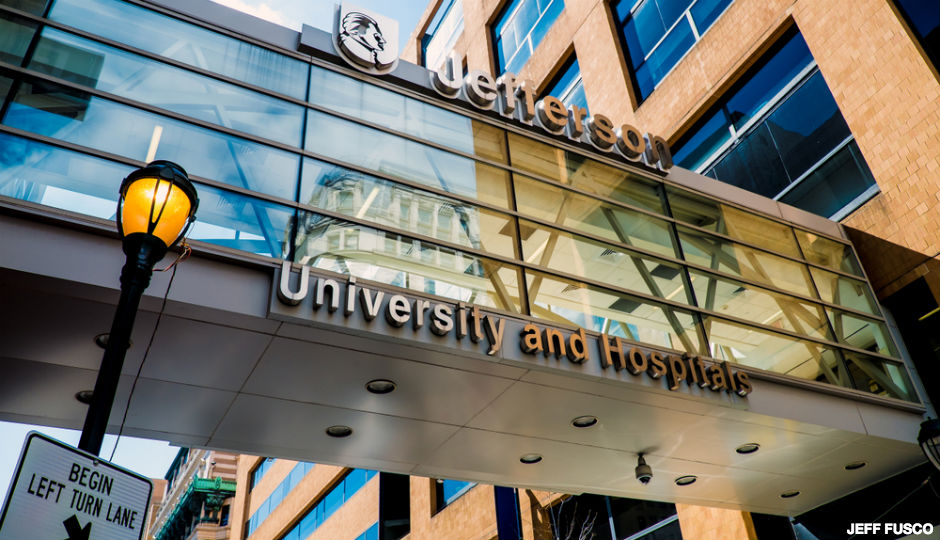
Philadelphia-based Jefferson Health is taking steps to reduce costs to help offset losses tied to the COVID-19 pandemic.
The 14-hospital system plans to eliminate between 500 and 600 positions through attrition and will cut pay for its “most senior executives,” according to the Philadelphia Business Journal.
Jefferson Health is making cuts after reporting a net loss of $298.7 million in the fiscal year ended June 30. The system posted a loss after receiving $320 million in grants made available under the Coronavirus Aid, Relief and Economic Security Act to help cover lost revenue and expenses linked to the pandemic, according to The Philadelphia Inquirer.
“As one of the health systems in the United States with the largest amount of Covid patients during the surge, and one of the lowest employee infectivity rates, we took a ‘no expense is too much to protect our employees’ approach with PPE and other measures that drove up short-term expenses,” Stephen Klasko, MD, president of Thomas Jefferson University and CEO of Jefferson Health, told the Philadelphia Business Journal.
Dr. Klasko said patient volumes are beginning to rebound, and the health system is ahead of budget for fiscal year 2021.
“We made a conscious decision, as the region’s second-largest employer, to do no furloughs and only very few pre-planned layoffs during the pandemic surge,” Dr. Klasko told the Philadelphia Business Journal. “Due to our financial stewardship and growth over the past five years, our balance sheet was very stable and remains very stable despite the pandemic tsunami.”
In addition to cutting unfilled positions and reducing executive pay, the health system is taking a few other steps to achieve savings, including a pay freeze and a one-year suspension of employer contributions to employee retirements plans beginning Jan. 1.
The last time margins sank so deeply into the red was after the Balanced Budget Act of 1997, though today’s margins are faring worse.
COVID-19 continues to have deep and lingering financial impacts on hospitals in New Jersey. A midyear analysis of financial data shows nearly 60% of the state’s hospitals in the red and an average statewide operating margin of negative 4%.
The effects have been profound, and serve as a potential microcosm of the continuing impact of the coronavirus on hospital operating margins nationwide.
The decline in the state is the result of a dual blow of declining revenues and rising expenses, according to the report from the Center for Health Analytics, Research and Transformation at the New Jersey Hospital Association. Officials said the state’s hospitals haven’t experienced this level of fiscal distress in more than 20 years.
In fact, the last time margins sunk so deeply into the red was in the late 1990s. At that time, the Balanced Budget Act of 1997 resulted in significant payment cuts to the state’s hospitals, with margins falling to -1.7% and -2.3% in 1998 and 1999, respectively. And those numbers are not as distressing as the ones being experienced during the public health crisis.
CHART’s data, comparing June 30, 2019, with June 30, 2020, shows that total patient revenues declined 6.6%. Emergency department cases plummeted 23%, while hospital admissions fell by 8% and outpatient visits dropped by 22%.
An additional aggravating factor is a 12% increase in total operating expenses, because COVID-19 required hospitals to redirect resources to increase staffing; boost supplies of personal protective equipment, pharmaceuticals and ventilators; and modify operations and facilities to expand capacity.
CHART’s analysis takes a closer look at the disruption of elective procedures in New Jersey hospitals and its lingering impact. Governor Phil Murphy’s Executive Order 109, in effect March 27 through May 26, required hospitals to suspend elective procedures during the state’s COVID-19 surge. CHART used claims data for some of the highest-volume elective procedures performed in New Jersey hospitals – bariatric surgery, pacemaker insertion, spinal fusion, knee replacement and hernia repair – to gauge the impact.
In April and May 2019, the state’s hospitals performed these procedures 4,336 times. That number plummeted to just 400 statewide in April and May 2020. The state’s executive order suspending procedures during this time allowed exemptions for cases in which a delay would result in “undue risk to the current or future health of the patient.”
The year-over-year decline persisted even when the suspension was lifted. In June and July of 2019, 4,194 procedures from the list of high-volume procedures were performed, compared with 3,191 in June and July of 2020.
But the greatest decline in volume by percentage was seen in hospital emergency departments, where cases nosedived 23.4% between June 30, 2019, and June 30, 2020. That has healthcare leaders concerned.
NJHA officials said a hospital turnaround is critical for the statewide recovery from the coronavirus.
“The state’s hospitals pump $25 billion annually into the New Jersey economy and employ 154,000 people,” said NJHA’s Roger Sarao, vice president of economic and financial information and lead author of the CHART report. “They are an essential part of the road to recovery from this public health and economic crisis.”
THE LARGER TREND
The effects of the pandemic on the nation’s hospitals will be long-lasting, especially among nonprofits. A recent Fitch Ratings analysis showed that the full effects have yet to be felt.
The agency predicted that capital spending will be greatly reduced in the initial years post-pandemic, though some of it will ultimately accelerate due to anticipated merger and acquisition activity.
Fitch expects hospitals to take on added expenses to perform the same level of service, and predicts revenue declines from a shift in payer mix.






 HENRY KOTULA