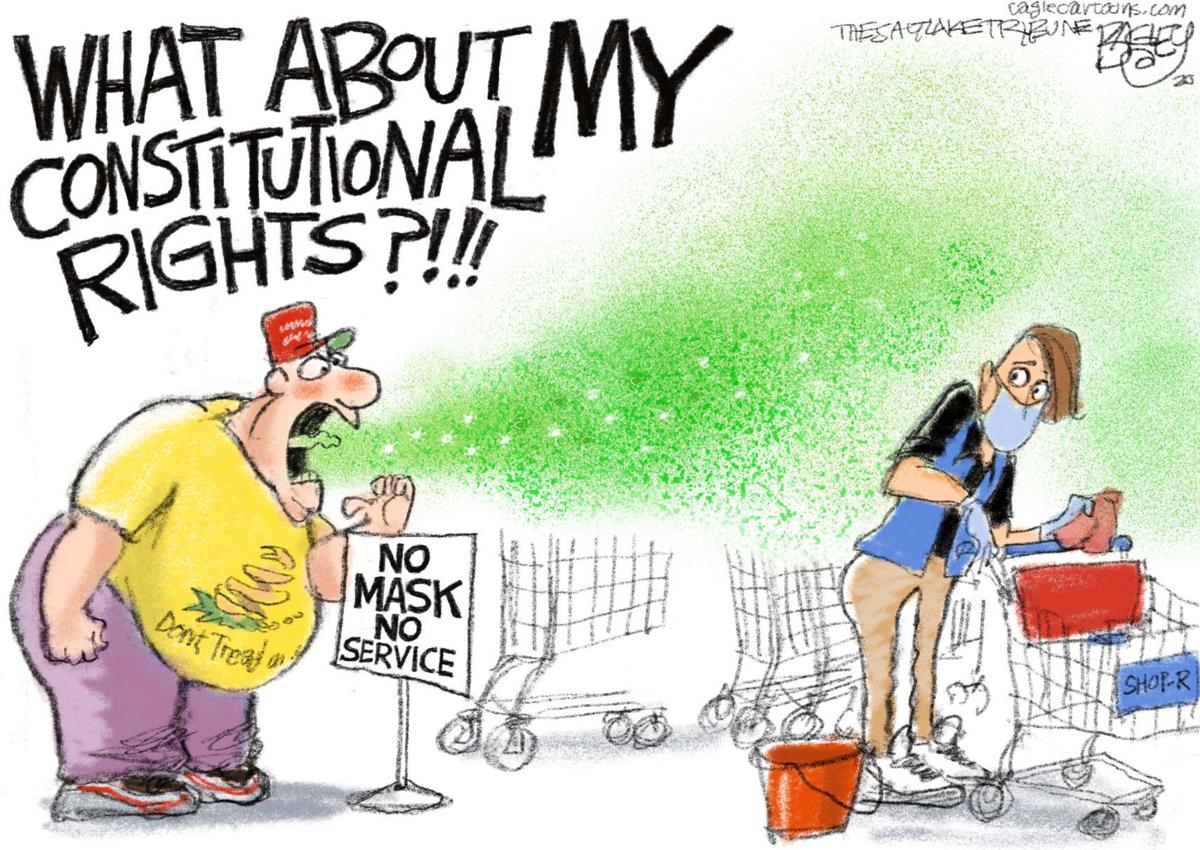
Cartoon – Constitutional Rights vs. Civility

Saturday cartoon

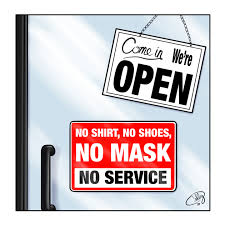
Cartoon – Come in We’re Open

No mask, no service | Opinion | dailyindependent.com

Election 2020: Trump and Biden’s starkly diverging views on healthcare

https://www.healthcaredive.com/news/presidential-election-2020-trump-biden-different-healthcare-policies-ACA-coronavirus/585184/?utm_source=Sailthru&utm_medium=email&utm_campaign=Issue:%202020-10-01%20Healthcare%20Dive%20%5Bissue:29992%5D&utm_term=Healthcare%20Dive

Spoiler: the 2 nominees differ on almost everything.

President Donald Trump and Democrat nominee Joe Biden’s starkly contrasting views on healthcare were laid bare during this week’s chaotic debate. But some major industry executives noted at a recent conference they’ve done relatively well under Trump and could likely weather a Biden presidency, given his moderate stance and rejection of liberal dreams of “Medicare for All.”

The former vice president stresses incremental measures to shore up President Barack Obama’s landmark Affordable Care Act. Trump’s campaign website has no list of healthcare priorities, making his record even more relevant to attempts to forecast his future policies.

“I think a lot of the president’s second term agenda will be extensions of things he’s done in his first term,” Lanhee Chen, domestic policy director at Stanford University’s Public Policy program, said at AHIP in September.

Either way, the impact of whoever lands in the White House next year still matters for the industry’s future.

And 33 seats in the Senate are also up for grabs in November, complicating the outlook. Two scenarios would likely lead to health policy gridlock, according to analysts and DC experts: Trump wins regardless of Senate outcome, or Biden wins and Republicans maintain control of the Senate. A third scenario, where Biden wins and Democrats retake the Senate, would be the most negative for healthcare stocks, Jefferies analysts say, while the other two outcomes would be a net positive or mostly neutral.

Here’s a look at where the candidates stand on the biggest healthcare issues: the coronavirus pandemic, the Affordable Care Act, changes to Medicare and Medicaid and lowering skyrocketing healthcare costs.

COVID-19 response

Trump

Of all wealthy nations, the U.S. has been particularly unsuccessful in mitigating the pandemic. The U.S. makes up 4% of the global population, but accounted for 23% of all COVID-19 cases and 21% of all deaths as of early September.

Public health experts assign the majority of the blame to an uncoordinated federal response, with the president electing to take a largely hands-off approach to the virus that’s killed nearly 207,000 people in the U.S. to date. That backseat stance is unlikely to change if Trump is elected to a second term.

In March, Trump said a final COVID-19 death toll in the range of 100,000 to 200,000 Americans would mean he’s “done a very good job.”

Critics blame shortages of supplies like test materials, personal protective equipment and ventilators, especially in the crucial early days of the pandemic, on Trump’s approach. States and healthcare companies have also reported challenges with shifting federal guidelines on topics from risk of infection to hospital requirements for reporting COVID-19 caseloads.

Trump has also pushed unproven treatments for COVID-19, giving rise to concerns about political influence on traditionally nonpartisan agencies like the Food and Drug Administration and the Centers for Disease Control and Prevention.

These concerns have colored Operation Warp Speed, the administration’s public-private partnership to fast-track viable vaccines. The operation received $10 billion in funds from Congress, but administration officials have also pulled $700 million from the CDC, even as top health officials face accusations of trying to manipulate CDC scientific research publications.

Fears that political motivations, not clinical rigor, are driving the historically speedy timeline could lower public trust in a vaccine once it’s eventually approved.

Trump has also repeatedly refused to endorse basic protections like widespread mask wearing, often eschewing the face covering himself in public appearances. He’s consistently downplayed the severity of the pandemic, saying it’ll go away on its own while suggesting falsely that rising COVID-19 cases were solely due to increased testing.

While Trump’s list of priorities for his second term include “eradicating COVID-19,” the plan is short on details. His most aggressive promise has been approval of a vaccine by the end of this year and creating all “critical medicines and supplies for healthcare workers” for a planned return to normal in 2021, along with refilling stockpiles to prepare for future pandemics.

Biden

Biden, for his part, would likely work to enact COVID-19 legislation and dramatically change the role of the federal government in pandemic response first thing if elected.

The Democratic candidate says he would re-assume primary responsibility for the pandemic. He plans to “dramatically scale up testing” and “giving states and local governments the resources they need to open schools and businesses safely,” per an August speech in Wilmington, Delaware.

Biden says he’d take a backseat to scientists and allow FDA to unilaterally make decisions on emergency authorizations and approvals.

The candidate supports reopening an ACA enrollment period for the uninsured, eliminating out-of-pocket costs for COVID-19 treatment, enacting additional pay and protective equipment for essential workers, increasing the federal match rate for Medicaid by at least 10%, covering COBRA with 100% premium subsidies during the emergency, expanding unemployment insurance and sick leave, reimbursing employers for sick leave and giving them tax credits for COVID-19 healthcare costs.

Trump opposes most of these measures, though he did sign COVID-19 relief legislation that upped the Medicaid match rate by 6.2% and extended the COBRA election period, though without subsidies.

Biden has said he’d be willing to use executive power for a national mask mandate, though ensuring compliance would be difficult. He’d also rejoin the World Health Organization, which Trump pulled the U.S. out of in May.

Affordable Care Act

Trump

On his first day in office, Trump issued an executive order saying: “It is the policy of my Administration to seek the prompt repeal of the Patient Protection and Affordable Care Act.” But after the Republican repeal-and-replace effort floundered in 2017, the administration began steadily chipping away at key tenets of the decade-old law through regulatory avenues.

Trump has maintained he’ll protect the 150 million people with preexisting conditions in the U.S. But despite publicly promising a comprehensive replacement plan on the 2015 campaign trail (and at least five times this year alone), Trump has yet to make one public. The president did in September sign a largely symbolic executive order that it’s the stance of his administration to protect patients with preexisting conditions.

The president doesn’t mention the ACA in his list of second term priorities. The omission could have been intentional, as Trump is backing a Republican state-led lawsuit seeking to overturn the sweeping law, now pending in front of the U.S. Supreme Court and scheduled for oral arguments one week after the election.

The death of liberal justice Ruth Bader Ginsburg puts the law in an even more precarious position.

And Trump’s health agencies have enacted myriad policies keeping the law from functioning as designed.

The president signed legislation zeroing out the individual mandate penalty requiring people to be insured in 2017. The same year, he ended cost-sharing reduction payments to insurers, suggesting that would cause the ACA to become “dead.” But the marketplace generally stabilized.

The administration has also increased access to skimpier but cheaper coverage that doesn’t have to comply with the 10 essential health benefits under the ACA. The short-term insurance plans widely discriminate against people with pre-existing health conditions, even as a growing number of Americans, facing rising healthcare costs, enrolled, according to a probe conducted by House Democrats this year.

Trump has also encouraged state waivers that promote non-ACA plans, cut funding for consumer enrollment assistance and outreach, shortened the open enrollment period and limited mid-year special enrollments.

​Despite his efforts, the ACA has grown in popularity among voters on both sides of the aisle, mostly due to provisions like shoring up pre-existing conditions and allowing young adults to stay on their parent’s insurance until age 26.

Biden

If elected, Biden would likely roll back Trump-era policies that allowed short-term insurance to proliferate, and restore funding for consumer outreach and assistance, political consultants say.

Building on the law is the linchpin of Biden’s healthcare plan. The nominee has pledged to increase marketplace subsidies to help more people afford ACA plans through a number of policy tweaks, including lowering the share of income subsidized households pay for their coverage; determining subsidies by setting the benchmark plan at the pricier “gold” level; and removing the current cap limiting subsidies to people making 400% of the federal poverty level or below.

Biden maintains as a result of these changes, no Americans would have to pay more than 8.5% of their annual income toward premiums. They could save millions of people hundreds of dollars a month, according to a Kaiser Family Foundation analysis. Commercial payers mostly support these efforts, hoping they’ll stabilize the exchanges.

But a second prong of Biden’s health strategy is deeply unpopular with private insurers: the public option. Biden’s called for a Medicare-like alternative to commercial coverage, available to anyone, including people who can’t afford private coverage or those living in a state that hasn’t expanded Medicaid.

The rationale of the public plan is that it can directly negotiate prices with hospitals and other providers, lowering costs across the board. However, market clout will depend on enrollment, which is still to-be-determined.

Critics see the plan, which by Biden’s estimate would cost $750 billion over 10 years, as a down payment on Medicare for All. And the private sector worries it could threaten the very profitable healthcare industry, which makes up about a fifth of the U.S. economy.

Medicare

Trump

Neither Trump nor Biden supports Medicare for All, dashing the hopes of supporters of the sweeping insurance scheme for at least another four years.

“It has a pulse — it’s not dead — I just don’t see it happening in any near term,” John Cipriani, vice president at public affairs firm Global Strategy Group, said at AHIP.

Trump has promised to protect Medicare if elected to a second term, and it’s unlikely he’d make any major changes to the program’s structure or eligibility requirements, experts say.

But Medicare is quickly running out of money, and neither Trump nor Biden has issued a complete plan to ensure it survives beyond 2024. Political consultants think it’ll teeter right up to the edge of insolvency before lawmakers feel compelled to act.

The president’s administration has allowed Medicare to pay for telehealth and expanding supplemental benefits in privately run Medicare Advantage programs, efforts that would likely bleed into his second term — or Biden’s first, given general bipartisan support on both, experts say.

Under Trump, HHS did pass a site-neutral payment policy, cutting Medicare payments for hospital outpatient visits in a bid to save money. But Democratic lawmakers have argued Trump’s calls to get rid of the federal payroll tax, which partially funds Medicare, could throw the future of the cash-strapped program in jeopardy.

The president has also signed legislation experts say accelerated insolvency, including the Tax Cuts and Jobs Act of 2017, the Bipartisan Budget Act of 2018 and the Further Consolidated Appropriations Act of 2020, which repealed the ACA’s Cadillac tax — a tax on job-based insurance premiums above a certain level.

Nixing that tax lowered payroll tax revenue, also dinging Medicare’s shrinking trust fund.

Trump’s proposed budget for the 2021 fiscal year floated culling about $450 billion in Medicare spending over a decade. And repealing the ACA would also nix provisions that closed the Medicare prescription drug “donut hole,” that added free coverage of preventive services and reduced spending to strengthen Medicare’s winnowing Hospital Insurance Trust Fund.

Biden

Biden has proposed lowering the Medicare age of eligibility to 60 years, with the option for people aged 60-64 to keep their coverage if they like it. The idea is popular politically, though providers oppose it, fearful of losing more lucrative commercial revenue.

It would make about 20 million more people eligible for the insurance, but could also add even more stress onto the program, experts say. Biden’s campaign says it would be financed separately from the current Medicare program, with dollars from regular tax revenues, and will reduce hospital costs.

Biden also says he’d add hearing, vision and dental benefits to Medicare.

Medicaid

Trump

Trump’s tenure has also been defined by repeated efforts to prune Medicaid. The president has consistently backed major cuts to the safety net insurance program, along with stricter rules for who can receive coverage. That’s likely to continue.

Republican lawmakers maintain the program costs too much and discourages low-income Americans from getting job-based coverage, and have enacted policies trying to privatize Medicaid. The Trump administration took a step toward a long-held conservative dream earlier this year, when CMS invited state waivers that would allow states to deviate from federal standards in program design and oversight, in exchange for capped funding.

So far, no states have enacted the block grants.

The administration also aggressively encouraged states to adopt work requirements, programs tying Medicaid coverage to work or volunteering hours. A handful of states followed suit, but all halted implementation or rolled back the idea following fierce public backlash and legal ramifications.

And repealing the ACA would ax Medicaid expansion, which saved some 20,000 lives between 2014 and 2017, according to the Center on Budget and Policy Priorities.

Biden

Biden, however, wants to preserve expansion, and would take a number of other steps to bolster the program, including increasing federal Medicaid funding for home- and community-based services. The roughly 4.8 million adults in states that elected not to expand Medicaid would be automatically enrolled into his public option, with no premium and full Medicaid benefits.

Additionally, states that have expanded Medicaid could elect to move their enrollees into the public option, with a maintenance-of-effort payment.

Lowering costs of drugs and services

Trump

Efforts to lower prescription drug costs have defined Trump’s healthcare agenda in his first term, and been a major talking point for the president. That’s more than likely to continue into a second term, experts say, despite a lack of results.

Trump did cap insulin costs for some Medicare enrollees, effective 2021. He also signed legislation in 2018 banning gag clauses preventing pharmacists from telling customers about cheaper options.

But despite fiery rhetoric and a litany of executive orders, Trump has made little if any concrete progress on actually lowering prices. One week into 2020, drugmakers had announced price hikes for almost 450 drugs, despite small price drops earlier in Trump’s tenure.

Trump has proposed several ideas either dropped later or challenged successfully by drugmakers in court, including allowing patients to import drugs from countries like Canada, banning rebates paid to pharmacy benefit manufacturers in Medicare and forcing drugmakers to disclose the list prices of drugs in TV ads.

The president has signed recent executive orders to lower costs largely viewed as pre-election gambits, including one tying drug prices in Medicare to other developed nations and another directing his agencies to end surprise billing. Implementation on both is months away. Trump has also promised to send Medicare beneficiaries $200 in drug discount cards before the election, an effort slammed as vote-buying that would cost Medicare at least $6.6 billion.

Both Trump and Biden support eliminating surprise bills but haven’t provided any details how. That “how” is important, as hospitals and payers support wildly different solutions.

Biden

Biden also has a long list​ of proposals to curb drug costs, including allowing the federal government to negotiate directly with drug manufacturers on behalf of Medicare and some other public and private purchasers, with prices capped at the level paid by other wealthy countries. Trump actually supported this proposal in his 2016 campaign, but quickly dropped it amid fierce opposition from drugmakers and free market Republican allies.

Biden would also cap out-of-pocket drug costs in Medicare Part D — but wouldn’t ban rebates, as of his current plan, allow consumers to import drugs (subject to safeguards) and eliminate tax breaks for drug advertising expenses.

He would also prohibit prices for all brand-name and some generic drugs from rising faster than inflation under Medicare and his novel public option. Biden would create a board to assess the value of new drugs and recommend a market-based price, in a model that’s shown some efficacy in other wealthy countries like Germany.

Both Biden and Trump say they support developing alternative payment models to lower costs. But they diverge on the role of competition versus transparency in making healthcare more affordable. In a rule currently being challenged in court, Trump’s HHS required hospitals to disclose private negotiated prices between hospitals and insurers, with the hope price transparency will allow consumers to shop between different care sites and shame companies into lowering their prices.

Biden, by comparison, says he would enforce antitrust laws to prevent anti-competitive healthcare consolidations, and other business practices that jack up spending. Trump has been mum on the role of M&A in driving healthcare costs, and inherited a complacent Federal Trade Commission that’s done little to reduce provider consolidation. Until a contentious hospital merger in February this year, the FTC hadn’t opposed a hospital merger since 2016.


The first presidential debate: 7 healthcare takeaways

https://www.beckershospitalreview.com/hospital-management-administration/the-first-presidential-debate-7-healthcare-takeaways.html?origin=CFOE&utm_source=CFOE&utm_medium=email&oly_enc_id=2893H2397267F7G

5 key takeaways from Joe Biden and Donald Trump's 1st presidential debate -  ABC News

President Donald Trump and former Vice President and Democratic presidential nominee Joe Biden sparred over the future of the ACA, the COVID-19 pandemic and health insurance during a 90-minute debate in Cleveland Sept. 29.

Seven takeaways for healthcare leaders:

The ACA

1. Moderator and Fox News host Chris Wallace opened the debate with the topic of President Trump’s nomination of Judge Amy Coney Barrett of the U.S. Court of Appeals for the 7th Circuit to the U.S. Supreme Court. In the first few minutes of the debate, the discussion turned to the future of the ACA should Ms. Coney Barrett join the Supreme Court. A week after the November presidential election, the Supreme Court is set to hear a lawsuit, supported by the Trump administration, that seeks to overturn the ACA. 

2. If the Supreme Court overturns the ACA, Mr. Biden said 22 million Americans would lose insurance and 100 million would lose protections for preexisting conditions. HHS said in 2017 as many as 133 million Americans have preexisting conditions, and a KFF analysis estimates 54 million Americans have conditions serious enough to lead to coverage denials if the ACA is overturned.

3. Mr. Wallace questioned the president about his promise to repeal and replace the ACA, adding that President Trump hadn’t released a comprehensive plan to replace the health law despite pledges to do so. The president disagreed with that, saying he had gotten rid of the individual mandate. Mr. Wallace said eliminating the mandate was not a comprehensive plan. Mr. Wallace called President Trump’s recent executive orders on preexisting conditions and surprise billing “largely symbolic.” President Trump disagreed, but did not tell how the executive orders would be implemented.

Drug prices 

4. The president said drug prices would be coming down “80 or 90 percent.” The president highlighted insulin, which he said he’s getting so inexpensively, “it’s like water.” Insulin continues to retail for about $300 per vial, according to STAT, but cheaper insulin prices could be coming for some seniors. CMS recently said it is expanding the number of Medicare Advantage plans that provide insulin for a $35 or less monthly copay.

Public option

5. In an exchange with Mr. Biden, President Trump accused the Democratic Party of wanting “socialist medicine,” and claimed Mr. Biden wants to end private insurance. Mr. Biden denied those claims and said his health plan, which includes expanded ACA subsidies and a public option, would allow employees to keep their private health insurance. He has not supported Medicare-for-All proposals.

COVID-19

6. On the topic of the pandemic, Mr. Wallace asked President Trump about differing timelines for a vaccine that have been presented by him versus federal scientists like CDC Director Robert Redfield, MD. The president said he has spoken with Pfizer, Moderna and Johnson & Johnson, who’ve said “they can go faster” on a vaccine, but “it’s a very political thing.” He added that the military is already set up to distribute vaccines. Mr. Biden questioned Americans’ trust in the process. A Sept. 29 poll from the Axios/Ipsos Coronavirus Index found 8 in 10 Americans wouldn’t likely get a first generation COVID-19 vaccine if the president said it was safe.

7. President Trump and Mr. Biden took different stances on masks. Mr. Biden cited Dr. Redfield’s renewed call to wear masks, and said masking up and social distancing would save 100,000 lives between now and January. President Trump responded by saying, “They’ve said the opposite.” He alluded to early in the pandemic when public health experts, including Anthony Fauci, MD, director of the National Institute of Allergy and Infectious Diseases, were slow to recommend widespread mask-wearing before scientists better understood how the virus spreads. The CDC currently recommends that every American wear a mask.


U.S. Still in First Wave of COVID-19, Fauci Says

https://www.webmd.com/lung/news/20200925/us-still-in-first-wave-of-covid-19-fauci-says

US still in first Covid-19 wave and should be prepared for 'challenge' of  fall and winter, Fauci says

Anthony Fauci, MD, says talk about a second wave of the coronavirus is premature because the United States is still dealing with the first one.

The idea of a second wave is based on the 1918 flu pandemic, when many cases were seen in the spring, he says. The spring cases “literally disappeared” and were followed by a spike in flu cases in the fall, he told CNN’s Sanjay Gupta, MD, on Thursday in an online conversation organized by Emory University.

“Rather than say, ‘A second wave,’ why don’t we say, ‘Are we prepared for the challenge of the fall and the winter?’” said Fauci, director of the National Institute of Allergy and Infectious Diseases and a member of the White House coronavirus task force.

Flu shots are an important measure to help the U.S. get through the winter, he said.

He and other health care professionals have observed that the Southern Hemisphere has had a very light flu season, probably because measures to curb the coronavirus, such as social distancing and mask-wearing, have limited the spread of the flu.

“If we listen to the public health measures, not only would we diminish the effect of COVID-19, we might get away with a very, very light flu season if we combine that with getting the flu vaccine,” Fauci said.

In a separate interview, he said the arrival of the coronavirus vaccine will not stop the need for tried-and-true measures such as mask-wearing, hand-washing, and social distancing.

In a Facebook Live conversation with New Jersey Gov. Phil Murphy, Fauci said the coronavirus vaccine will not be 100% effective and won’t be taken by the entire population. That means the virus could still spread.

“So when a vaccine comes, we look at it as an important tool to supplement the public health measures that we do,” he said. “It will allow us to more quickly and with less stringency get back to some degree of normal. But it is not going to eliminate the need to be prudent and careful with our public health measures.”

Fauci said that vaccinating 75% to 80% of the population “would be a really good accomplishment.” He expects 700 million doses to be produced by the end of this year or early 2021.


Moody’s: Hospital financial outlook worse as COVID-19 relief funds start to dwindle

https://www.fiercehealthcare.com/hospitals/moody-s-hospital-financial-outlook-worse-as-covid-19-relief-funds-start-to-dwindle?mkt_tok=eyJpIjoiWTJZek56Z3lNV1E0TW1NMyIsInQiOiJKdUtkZE5DVGphdkNFanpjMHlSMzR4dEE4M29tZ24zek5lM3k3amtUYSt3VTBoMmtMUnpIblRuS2lYUWozZk11UE5cL25sQ1RzbFpzdExcL3JvalBod3Z6U3BZK3FBNjZ1Rk1LQ2pvT3A5Witkc0FmVkJocnVRM0dPbFJHZTlnRGJUIn0%3D&mrkid=959610

For-profit hospitals are expected to see a financial decline over the next 12 to 18 months as federal relief funds that shored up revenue losses due to COVID-19 start to wane, a recent analysis from Moody’s said.

The analysis, released Monday, finds that cost management is going to be challenging for hospital systems as more surgical procedures are expected to migrate away from the hospital and people lose higher-paying commercial plans and go to lower-paying government programs such as Medicaid.

“The number of surgical procedures done outside of the hospital setting will continue to increase, which will weaken hospital earnings, particularly for companies that lack sizeable outpatient service lines (including ambulatory surgery centers),” the analysis said.

A $175 billion provider relief fund passed by Congress as part of the CARES Act helped keep hospital systems afloat in March and April as volumes plummeted due to the cancellation of elective procedures and reticence among patients to go to the hospitals.

Some for-profit systems such as HCA and Tenet pointed to relief funding to help generate profits in the second quarter of the year. The benefits are likely to dwindle as Congress has stalled over talks on replenishing the fund.

“Hospitals will continue to recognize grant aid as earnings in Q3 2020, but this tailwind will significantly moderate after that,” Moody’s said.

Cost cutting challenges

Compounding problems for hospitals is how to handle major costs.

Some hospital systems cut some costs such as staff thanks to furloughs and other measures.

“Some hospitals have said that for every lost dollar of revenue, they were able to cut about 50 cents in costs,” the analysis said. “However, we believe that these levels of cost cuts are not sustainable.”

Hospitals can’t cut costs indefinitely, but the costs for handling the pandemic (more money for personal protective equipment and safety measures) are going to continue for some time, Moody’s added.

“As a result, hospitals will operate less efficiently in the wake of the pandemic, although their early experiences in treating COVID-19 patients will enable them to provide care more efficiently than in the early days of the pandemic,” the analysis found. “This will help hospitals free up bed capacity more rapidly and avoid the need for widespread shutdowns of elective surgeries.”

But will that capacity be put to use?

The number of surgical procedures done outside of the hospital is likely to increase and will further weaken earnings, Moody’s said.

“Outpatient procedures typically result in lower costs for both consumers and payers and will likely be preferred by more patients who are reluctant to check-in to a hospital due to COVID-19,” the analysis said.

The payer mix will also shift, and not in hospitals’ favor. Mounting job losses due to the pandemic will force more patients with commercial plans toward programs such as Medicaid.

“This will hinder hospitals’ earnings growth over the next 12-18 months,” Moody’s said. “Employer-provided health insurance pays significantly higher reimbursement rates than government-based programs.”

Bright spots

There are some bright spots for hospitals, including that not all of the $175 billion has been dispersed yet. The CARES Act continues to provide hospitals with a 20% add-on payment for treating Medicare patients that have COVID-19, and it suspends a 2% payment cut for Medicare payments that was installed as part of sequestration.

The Centers for Medicare & Medicaid Services also proposed increasing outpatient payment rates for the 2021 fiscal year by 2.6% and in-patient rates by 2.9%. The fiscal year is set to start next month.

Patient volumes could also return to normal in 2021. Moody’s expects that patient volumes will return to about 90% of pre-pandemic levels on average in the fourth quarter of the year.

“The remaining 10% is likely to come back more slowly in 2021, but faster if a vaccine becomes widely available,” the analysis found.


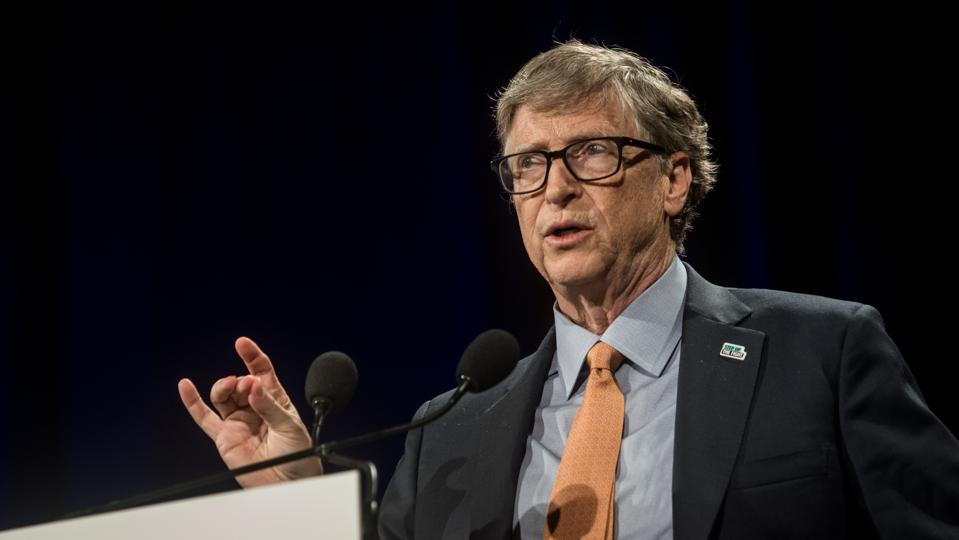
Bill Gates: U.S. Needs To ‘Own Up To The Fact That We Didn’t Do A Good Job’

https://www.forbes.com/sites/mattperez/2020/09/20/bill-gates-us-needs-to-own-up-to-the-fact-that-we-didnt-do-a-good-job/?utm_source=newsletter&utm_medium=email&utm_campaign=coronavirus&cdlcid=5d2c97df953109375e4d8b68#54d6544f3fb8

TOPLINE

The United States needs to “own up to the fact that we didn’t do a good job” up until this point of the Covid-19 pandemic, billionaire and philanthropist Bill Gates said during a Fox News Sunday interview, adding that the slow turnaround for testing results remains “outrageous.”

KEY FACTS

“Unfortunately we did a very poor job and you can just see that in the numbers,” Gates said.

Despite having around 4% of the world’s population, the U.S. has around 22% of all cases with 6,782,083 and about 21% of all reported deaths with 199,411.

The inability to create a testing structure as seen in countries like South Korea “led to us having not just a bad spring, we’ve had a pretty tough summer and sadly because of the seasonality, until we get these new tools, the fall is looking to shape up as pretty tough as well,” Gates said.

“Part of the reluctance I think to fix the testing system now is that nobody wants to admit that it’s still outrageous,” Gates said, adding, “The U.S. has more of these machines, more capacity than other countries by a huge amount, and so partly the reimbursement system is creating perverse incentive.”

After remaining fairly stagnant through the end of summer into September, the U.S. performed a record 1,061,106 Covid-19 tests on Saturday, according to Johns Hopkins University, but labs are still dealing with supply shortages and delays in results.

“We’ll have time to look at those mistakes, which in February and March were really super unfortunate, but we can’t pretend like we get a good grade even today,” Gates said.

CRUCIAL QUOTE

“Even today, people don’t get their results in 24 hours, which it’s outrageous that we still have that,” Gates said.

BIG NUMBER

4.7%. That’s the average positivity percentage in the past week, according to Johns Hopkins.

TANGENT

President Trump has excused the world-leading cases of the coronavirus as a result of the number of tests performed in the country, even saying that he instructed officials to slow testing down. The Centers for Disease Control and Prevention sparked outrage in August when it published new guidelines on testing, recommending people exposed to the virus but not showing symptoms should not get tested. Reports indicate that the guidance was dictated by the Health and Human Services and Trump administration as opposed to CDC scientists. The guidelines were changed again on Friday.


The N95 shortage America can’t seem to fix

https://www.washingtonpost.com/graphics/2020/local/news/n-95-shortage-covid/?utm_campaign=wp_post_most&utm_medium=email&utm_source=newsletter&wpisrc=nl_most

Nurses and doctors depend on respirator masks to protect them from covid-19. So why are we still running low on an item that once cost around $1?

The patient exhaled. She lifted her tongue for a thermometer. She raised her finger for a blood sugar test, and that’s when she started coughing. One cough can send 3,000 droplets into the air, one droplet can contain millions of coronavirus particles, and now some of those particles were heading for the face of emergency department nurse Kelly Williams.

The nurse inhaled. Strapped over her mouth and nose was an N95 respirator, the disposable filtering mask that has become the world’s most reliable and coveted defense against the virus.

N95s were designed to be thrown away after every patient. By this July afternoon, Williams had been wearing the same one for more than two months.

To get to her, the N95 had traveled from a British factory to a Baltimore warehouse, in a supply chain as tangled and layered as the web of microscopic fibers inside the mask’s filter.

It was purchased by Johns Hopkins Hospital, the famed medical institution that has tracked cases of the novel coronavirus around the world since the pandemic’s start. When its map of dots marking clusters of infections began to show pools of red across the United States, Hopkins was quietly unpacking a stock of personal protective equipment it had been building for over a year — a literal lifesaver when the onslaught of covid-19 cases led to a massive shortage of N95s.

Six months later, that shortage persists, leaving health-care workers exposed, patients at risk and public health experts flummoxed over a seemingly simple question: Why is the world’s richest country still struggling to meet the demand for an item that once cost around $1 a piece?

At Hopkins, nurses are asked to keep wearing their N95s until the masks are broken or visibly dirty. Williams, a 30-year-old from Georgia with a marathoner’s endurance and a nurse’s practicality, went into health care after working for three years in the corporate offices of retailers Abercrombie & Fitch and Under Armour. She understood supply chains. She believed that the makers of N95s, anticipating the pandemic’s eventual end, would invest only so much in expanding production. She believed it was her duty, on top of risking her life for her patients, to make her disposable respirator mask last through as many 12-hour shifts as she could.

When the country was short of ventilators, the companies that made them shared their trade secrets with other manufacturers. Through the powers of the Defense Production Act, President Trump ordered General Motors to make ventilators. Other companies followed, many supported by the government, until the terrifying problem of not enough ventilators wasn’t a problem at all.

But for N95s and other respirators, Trump has used this authority far less, allowing major manufacturers to scale up as they see fit and potential new manufacturers to go untapped and underfunded. The organizations that represent millions of nurses, doctors, hospitals and clinics are pleading for more federal intervention, while the administration maintains that the government has already done enough and that the PPE industry has stepped up on its own.

As the weather cools and the death toll climbs, America’s health-care workers fear that when winter comes, they still won’t have enough respirators. And the longer the shortage lasts, the longer N95s will remain largely out of reach for millions of others who could be protected by them — teachers and day-care workers, factory employees and flight attendants, restaurant servers and grocery store clerks.

While the pandemic that has killed almost 200,000 Americans drags on, Williams will keep trying to conserve her respirator, wearing it as she rushes in and out of virus-filled rooms, touches virus-shedding patients, and now, comforts a covid-positive woman who is having a coughing fit.

“How can I help you feel a little more comfortable?” Williams asked her patient, who was in her 80s. The woman was about to be admitted to the hospital. Her oxygen level was too low, so they had to run tubes of air into her nostrils. If her situation didn’t improve, a ventilator could come next.

This was the routine in the part of the emergency department Williams called “Covidland.” She’d just risked exposure to care for this woman, but she would never get to find out what happened to her.

She could only take a deep breath through her N95, roll her patients upstairs and hope that she would never become one of them.

‘The gauntlet’

Before the N95 was on her face, it was in a plastic wrapper, in a box, on a shelf inside an East Baltimore warehouse four miles from the hospital. The 165,000-square-foot building had concrete floors, rolling doors, overhead lighting — unremarkable, except to a man named Burton Fuller.

Fuller, a 38-year-old father of three, had once planned on becoming a doctor. Instead, he went into hospital supply chains. It was the kind of job that didn’t earn many follow-up questions at dinner parties. But six months after Fuller was hired at Hopkins, the pandemic made him the person that everyone relied on and no one envied. It was up to him to keep 40,000 employees in six hospitals safe.

Even before covid-19, masks were key to that equation. There are surgical masks, which protect a patient from a nurse’s germs, and respirator masks, which protect a nurse from the patient. Humans have recognized the need for protective masks since at least A.D. 77, when Pliny the Elder wrote about wearing animal bladders as face coverings to make breathing easier in lead-filled mines.

The evolution of early masks brought leather beaks stuffed with straw and herbs to ward off the bubonic plague, and long beards that firefighters would wet and clamp between their teeth. Once the far more effective gas mask became standard for coal miners breathing in silica and soldiers facing chemical weapons, engineers at the Minnesota Mining and Manufacturing Company, better known as 3M, started trying to make a protective respirator that wasn’t so bulky. They realized in the 1960s that the technology used to make pre-made gift bows could also make a mask that was a lightweight, molded cup. And so began the single-use respirator as it exists today.

Inside that cup, and more recently, inside the flat-fold versions, is the key component: fibers 1/50th the width of a human hair, blown together in an intricate web that creates an obstacle course for dangerous particles. An electrostatic charge works like a magnet to trap the floating menaces and attach them to the fibers. If an N95 is fitted properly — a metal nose piece folded snugly, no beard in the way — less than 5 percent of even the most difficult-to-catch particles will make it into the lungs.

At Hopkins, Fuller’s job was to get manufacturers to deliver N95s and other equipment directly to the warehouse, rather than through a distributor. In 2019, the shelves started to fill up, and on one of them was the N95 that would make its way to nurse Kelly Williams. The respirator had been made by 3M at a plant in Aycliffe, a town of 7,000 in northern England.

But this Hopkins stockpile was rare in the world of hospitals, where costs were cut by using medical supply companies to provide equipment when it was needed, rather than letting PPE pile up.

Hospital administrators knew that in cases of natural disaster, chemical warfare or what global health officials used to call “Disease X,” the federal government had its own warehouses in secret locations, filled with PPE.

Except that in 2009, while Fuller was in his first job out of college, the H1N1 flu epidemic depleted 85 million N95s from the national stockpile — and the supply was never replenished. In 2013, 2014, 2016 and 2017, public health officials published alarming reports warning of a “massive gap” in what remained. Even more concerning, they said, the vast majority of N95s and the materials needed to manufacture them were now being made in Asia.

The Department of Health and Human Services did fund the invention of a “one-of-a-kind, high-speed machine” that could make 1.5 million N95s per day. But when the design was completed in 2018, the Trump administration did not purchase it.

This year, as the virus spread from Wuhan to Washington state, HHS turned down a January offer from a manufacturer who could make millions of N95s. The agency didn’t start ordering N95s from multiple companies until March 21. Paul Mango, deputy chief of staff for policy at HHS, would later call that timeline “friggin’ light speed … the fastest this has ever been done.”

By then, the United States had 8,000 reported coronavirus cases and 85 deaths, and health-care workers were panicking over PPE shortages.

Fuller’s orders began being canceled. As the Hopkins emergency department was being readied for covid-19 patients, and Williams was being told she would need to start wearing an N95, the hospital’s administration decided not to reveal how many N95s were in the warehouse.

“Only a half a dozen people know,” Fuller said. “Behavioral economics say that if we communicate a number someone perceives as high, they will use the supply more gratuitously. If we communicate a number they perceive as low, they may hoard to ensure there is enough.”

As the boxes of N95s were loaded into trucks headed for Hopkins hospitals, Fuller and a dozen staff members entered what he would come to call “the gauntlet.” Every hospital and health department in the country was competing for N95s and other PPE, a mess of bidding wars, price gouging and worthless knockoff masks. Fuller uncovered one scam when a company CEO, claiming to be based in Indianapolis, didn’t recognize the name of the city’s most famous steakhouse.

“For every mask shipment we have been able to bring in,” Fuller said, “there are 10 or 15 transactions we have had to terminate.”

He worked so much that his wife, home with their children, received flowers from Hopkins executives. He joked about the other crucial stockpile in his life, his wine collection.

Fuller was desperate to make the stockpiled N95s last as long as possible. He wanted every employee wearing one to also wear a face shield, but those, too, were impossible to find.

So at the end of March, the warehouse filled with folding tables spaced six feet apart. Volunteers were given foam strips, elastic straps and sheets of plastic to make homemade shields. At one of the most prestigious medical institutions in the country, they were trying to fix the problem for themselves, with scissors, staplers and hot glue guns.

‘Bracing yourself’

A face shield was clipped to Williams’s belt in the middle of May, when for only the fourth time during the pandemic, she unwrapped a new N95.

After nine weeks in and out of Covidland, she had come to trust in her disposable respirator. It hurt her nose, gave her acne and made breathing hard. But the power of its protection was starting to give her back the feeling of safety she’d lost in March when she and the dozens of colleagues who worked alongside her each shift watched the areas where they’d cared for gunshot victims and heart attack patients turn into isolation rooms. They were tested to make sure the N95s fit their faces and taught to use other respirators that looked like gas masks or blew clean air into a hood.

And then, they were slammed. The first covid patient to go on a ventilator at Hopkins was a 40-year-old who worked out every day. The ambulance bay became a testing center. Williams’s co-workers were crying in the break room. Her patients couldn’t breathe, and then tubes were going down their throats, and then it felt like she couldn’t breathe, like everything she knew about nursing would never be enough.

“Our lives changed overnight,” she said. “You’re bracing yourself for people to die.”

She started silently saying a prayer she knew, every morning, every few hours, then sometimes 20 times a day in Covidland.

God, grant me the serenity to accept the things I cannot change, it began. She said it before her patient started violently shaking and flailing, seizing in his bed. She couldn’t run out the door to ask for help, because to leave the room without potentially taking the virus out, she had to sanitize her gloves, trash them, take her gown off, trash it, exit into an antechamber, take off her first layer of gloves, sanitize her hands and wipe down her face shield. So she ran to the window and banged on it, then ran back to her patient, trying to hold him down, her face inches from his.

Courage, to change the things I can, the prayer continued. Williams said it in the car that she drove to work and wouldn’t let any member of her family touch. Its speakers blared Lizzo-filled playlists she used to pump herself up for what she told her friends was an “awesome learning experience.” She had been a nurse for only two years. Her job in merchandising at Under Armour had brought her to Baltimore, where she met her husband, Sean, and his two children. They were the ones to make her realize that she wanted a job where she could actually see the impact of all those hours she worked. Now, every day might be the day she took the virus home to them.

Grant me the serenity to accept the things I cannot change, courage, to change the things I can, and wisdom to know the difference. Another day in Covidland, and Williams was wearing her new N95, pumping her palms into an unconscious man’s chest, not thinking of all the particles flying out of his airways. Another, and her face shield popped off and clattered to the floor. Another, and a young Latina mother told Williams she couldn’t self-quarantine because she could not afford to stay home from work.

Another, and Williams was watching the chest of a middle-aged man rise and fall by the force of a ventilator. Outside the walls of the hospital on this day in July, America seemed to have moved on from the conversation about the shortage of N95s. Instead, people were fighting over simple cloth masks.

Maybe this patient had worn one. Maybe he’d said he didn’t believe in them. Either way, it was her job to take care of him. Williams suctioned virus-filled fluid from his airways, and breathed in again.

‘Not profitable’

The radio advertisements could be heard across South Dakota, playing inside cars passing billboards plastered with the same message: 3M is hiring in Aberdeen. In a state that hosted 460,000 people at an August motorcycle rally and requires no one to wear a mask sits the largest respirator plant in the United States.

Its N95 manufacturing lines have been running 24 hours a day, 7 days a week since Jan. 21, the same day public health officials announced the arrival of the coronavirus in Washington state.

Plant manager Andy Rehder hired 200 new employees this year and was still looking for more this summer so he could staff another N95 line being built. Rehder, whose wife wears an N95 as a hospital social worker, had a Bloomberg Magazine article from March displayed in his office. The headline asked, “How do you make more masks yesterday?”

The question still hangs over the plant, and the entire country, nearly six months after that article was published.

Ask the Trump administration, and the N95 shortage is nearly solved. Rear Adm. John Polowczyk, whom Trump put in charge of securing PPE, said that by December, 160 million N95s will be made in the United States per month. By his calculations, that will be enough to handle a “peak surge” from hospitals, clinics, independent physicians, nursing homes, dentists and first responders. The Strategic National Stockpile has 60 million N95s on hand, and states are rebuilding their stockpiles.

“I’ve got production up to what we think is the limits of what we need,” Polowczyk said. “I believe now that hospital systems are making management decisions that might lead to an appearance that we still don’t have masks, which is the farthest from the truth.”

But ask the people inside hospitals, and the shortage is far from over. An August survey of 21,500 nurses showed 68 percent of them are required to reuse respirators, many for more than the five times recommended by the CDC, and some even more than Kelly Williams. One Texas nurse reported she’s still wearing the same five N95s she was given in March.

Many health-care facilities that ordered KN95s, Chinese-made masks meant to have a similar filtering efficiency, gave up on them after realizing that the looser fit left workers in danger. The N95 shortage is more acute for primary care physicians, home health aides and hospice workers. But even for many hospital systems, the situation remains “fragile and challenging,” the American Hospital Association said this month.

“Maddening, frustrating, mind-blowing, aggravating, that’s the polite language for it,” said American Medical Association President Susan Bailey, who still hears from doctors who do not have respirators. “There has been such an outpouring for support for ‘health-care heroes.’ Everybody knows now how important it is for our front-line health-care workers to be able to work in a safe environment. … And yet, that desire doesn’t seem to be turning into a reality.”

The AMA, AHA, American Nurses Association and the AFL-CIO all point to the same solution: broader use of the Defense Production Act, which gives the president power over funding for the production and distribution of critical supplies during crises.

In August, Trump stood before a group of socially distanced reporters, praising himself for using the DPA “more comprehensively than any president in history.”

“There was a time,” he said, “when the media would say, ‘Why aren’t you using it? Why aren’t you using it?’ Well, we have used it a lot, where necessary. Only where necessary.”

That’s not what it looks like to the man who used to run Trump’s DPA program within the Federal Emergency Management Agency. Larry Hall, who retired last year, said the authority has been executed in an “ad hoc, haphazard fashion.”

Along with ordering 3M to import 166.5 million masks from China, the administration has used the DPA to invest $296.9 million in bolstering the N95 and filter-making supply chains. The Department of Defense, which oversees that funding, spends more per year on instruments, uniforms and travel for military bands.

“By not having a national strategy,” Hall said, “we have fewer masks.”

Ask the PPE industry and the refrain is that without long-term guarantees that the government will keep buying respirators, N95 manufacturers are wary of investing too much, and other companies that could start making respirators or the filters for them are hesitant to do so.

Peter Tsai, the scientist who invented a method to charge the fibers inside the respirator filter, knows why: “It is not profitable to make respirators in the United States,” he said. It can take six months just to create one manufacturing line that makes the N95′s filter.

But there is a workaround, Tsai said. Companies that already make similar filters — for vehicle emissions, air pollution and water systems — can modify their equipment to make N95 filters.

While Tsai, 68, has been fielding hundreds of calls from hospitals and researchers trying to sanitize N95s with heat and ultraviolet light, he has been working with Oak Ridge National Laboratory in Tennessee to woo the 15 to 20 American companies that have the potential to produce respirator filters more quickly.

The government has funded just three of these companies through the DPA.

Others have gradually joined in on their own. But then those filters have to be made into respirators, and those respirators have to be approved by NIOSH, the National Institute for Occupational Safety and Health.

The entire process has moved at a glacial pace in comparison with the flurry of activity that rid the country of its ventilator shortage. Ventec, a company known for its efficient, toaster-size ventilators, handed its plans over to General Motors so that the auto company, under the DPA, could mass produce a product that was known to work. Other ventilator companies followed, handing over their trade secrets to Ford, Foxconn and other major manufacturers.

But when GM started making N95s, engineers with expertise in car interiors and air bags were charged with figuring out the process from scratch, the company said. Although they received advice from major mask makers, there were no groundbreaking corporate partnerships this time. The first N95s GM made were rejected by NIOSH. The second design didn’t correctly fit most people.

Other potential manufacturers went through the same challenges as GM, failing tests and making flat-fold N95s that experts worry do not offer a tight enough seal.

“If there was some kind of intellectual sharing, they wouldn’t be doing that,” said Christopher Coffey, who was the associate director for science in the NIOSH approvals program before retiring in January.

The DPA does have a provision that would allow manufacturers to work together without being subject to antitrust laws. But it has yet to be used for N95s.

Instead, established U.S. makers of N95s, whose products have been successfully protecting miners, construction workers and health-care professionals for decades, have continued to protect their processes as intellectual property.

Though 3M helped Ford make the far more expensive powered respirators, which blow clean air into a hood, the company has not entered into any major partnerships with outside manufacturers to make N95s. Asked why, 3M declined to explain, instead pointing to its other pandemic partnerships.

Ford gained its own approval to manufacture disposable respirators but has made just 16,000 of them while focusing instead on face shields and surgical masks. Other major U.S. manufacturers of N95s, including Honeywell and Moldex, have kept their manufacturing in-house, too.

“Folks aren’t likely to share that information outside of their own company,” said Jeff Peterson, who now oversees NIOSH approvals. NIOSH employees may know how 3M makes its respirators and the filters inside them. But by contract, they can’t tell other manufacturers how to do the same.

Meanwhile, 3M continues to dominate the American N95 market. While other parts of its business, such as office supplies and industrial adhesives, have struggled during the pandemic, 3M has invested $100 million to expand domestic production of respirators from 22 million to 50 million per month. Once the new production line is up and running in South Dakota in October, that number is expected to reach 95 million per month in the United States.

It still won’t be enough.

“Even though we are making more respirators than ever before and have dramatically increased production,” 3M spokeswoman Jennifer Ehrlich said, “the demand is more than we, and the entire industry, can supply for the foreseeable future.”

‘I just don’t get it’

Her N95 was already on, but Williams’s hands were slipping as she tried to force on a pair of gloves. She could hear the alarms going off. One of her patients was crashing, and she had to get into the room.

She should be able to just go, her runner’s legs carrying her to the bedside. But in Covidland, there were two closed doors standing in her way. She had started wearing her N95 all day so she could be ready for this moment. She pulled on her gown and another set of gloves and her face shield, reached for the door — and realized the patient inside was her 13-year-old stepson Kellen.

She jolted awake. She was in her bed. Her husband was asleep beside her. She slid out from her sheets and went downstairs to check on her stepchildren. Kellen and 19-year-old Alle were sleeping, too.

The nurse inhaled. She could still hear the alarms.

This is what it meant now, to be a health-care worker: across the country, nurses and doctors were reporting increased sleeplessness, anxiety, depression and post-traumatic stress.

Williams reminded herself that she’d always had an N95, and the heavier, more protective respirators she sometimes wore instead.

But she knew, too, that covid-19 had taken the lives of more than 1,000 health-care workers, including a New Jersey primary care doctor who, determined to keep his practice open, doubled up on surgical masks when his N95 orders didn’t come. And a California nurse who rushed into a covid patient’s room to perform chest compressions. She saved his life, then doused her hair in hand sanitizer. She hadn’t been given an N95 at the beginning of her shift.

And then there was the news that shook every health-care worker Williams knew: Less than two miles from Hopkins, the head of the ICU at Mercy Hospital died after contracting the virus in July.

Joseph Costa was one of the people who’d guided the hospital through its PPE shortage early in the pandemic. His husband, David Hart, remembered him coming home and saying, “This is my mask for the week.” Neighbors pushed N95s through their mailbox slot.

“This is the United States of America, and we can’t seem to get factories built to deliver this stuff? I just don’t get it,” Hart said.

He will never know exactly how his husband, who insisted on caring for covid patients alongside his staff, became infected. Costa died in the ICU, the gloved hands of his colleagues on him as he went. Minutes later, they returned to caring for other patients.

At Mercy, at Hopkins, at every hospital that had found a way to get N95s, health-care workers wore their PPE to try to save the lives of people who contracted the virus because they had none.

Williams and her colleagues didn’t need to see the statistics to know that the pandemic was disproportionately affecting Black and Brown people, especially those deemed essential workers. They saw it in their patients and heard it from their families and friends.

Williams worked side by side with Shanika Young, a nurse whose brother seemed to have every known covid-19 symptom before he started to recover.

Afraid of infecting anyone in her community, Young went weeks without seeing her parents and newborn niece. She adopted a hound-mix puppy to have a friend when she couldn’t see her own. In the weeks that followed the killing of George Floyd, she agonized over her decision to stay away from the protests. She knew there wouldn’t be N95s there.

On a sweltering August morning, she left her dog in her apartment and packed her respirator in her car. She, too, re-wore her mask, but usually for four or five 12-hours shifts.

Now Young was taking it across Baltimore, not toward the hospital, but to a predominantly Hispanic neighborhood with one of the worst infection rates in the city.

During the pandemic, Baltimore has seen outbreaks in its homeless shelters, its trash-collecting facility and its jail. Now every place Young drove by fell on one side or the other of a new dividing line in America: those who have PPE and those who don’t. Bodegas, restaurants, nail salons and funeral homes. Downtown, a nonprofit’s dental clinic remained shuttered. She passed a mental health counseling center where sessions were still conducted only by video, and a physical therapist who wore KN95s to see clients. She parked near a school that, without N95s, had no way of ensuring its teachers were protected. It serves primarily Latino children, all of whom would be forced to learn online.

In the parking lot of the church, a booth that used to sell $1 snow cones had been transformed into a coronavirus testing center run by a team of Hopkins doctors and nurses.

On her day off, Young volunteered to work with them, spending hours sweating in her scrubs, sending swabs deep into nose after nose. She wore a surgical mask on top of her N95.

“I don’t think there’s any science that says this is actually safer,” she said. “But it’s just a mental thing.”

The line of people sweating on the asphalt was so long, Young couldn’t see the people at the end: a man in painter’s clothes, a mother pushing a stroller and a woman who, like Young, was wearing scrubs. Stitched onto the chest was the name of a retirement home.

‘Hazard’

The coughing patient was starting to fall asleep when Williams left her in the covid unit. Her shift had been over for more than 30 minutes. She checked in to make sure there was no one else who needed her help and headed for the locker room. She washed her hands twice. She used alcohol wipes to sanitize her phone, glasses, ID badges and pens.

She took off her N95, and she inhaled.

For the first time in two months, she decided that this respirator was done. Its straps were starting to feel too stretched. The shape of it looked just a little too warped.

Instead of hanging the N95 from a hook in her locker to air dry, she stuffed it in a bag marked “hazard.”

A new mask, still in its plastic packaging, was waiting for her next shift. She would wear it as long as possible, especially after learning that the Hopkins stockpile had run out of the British-made mask she wore and couldn’t get any more. She needed to change to a different type of N95, one that felt unfamiliar once again. She told herself that she was grateful just to have it. She told herself that it would protect her just the same.


Cartoon – Something that would greatly Prevent Covid 19

U.S. sets record for new coronavirus cases, surpassing 53,000 - The  Washington Post

What it’s like to be a nurse after 6 months of COVID-19 response

https://www.healthcaredive.com/trendline/labor/28/?utm_source=HD&utm_medium=Library&utm_campaign=Vituity&utm_term=Healthcare%20Dive#story-2

Those on the front lines of the fight against the novel coronavirus worry about keeping themselves, their families and their patients safe.

This story is part of a series examining the state of healthcare six months into the public health emergency declared for COVID-19.

There’s no end in sight for the country as it grapples with another surge of COVID-19 cases.

That’s especially true for nurses seeking the reprieve of their hospitals returning to normal operations sometime this year. Many in the South and West are now treating ICUs full of COVID-19 patients they hoped would never arrive in their states, largely spared from spring’s first wave.

And like many other essential workers, those in healthcare are falling ill and dying from COVID-19. The total number of nurses stricken by the virus is still unclear, though the Centers for Disease Control and Prevention has reported 106,180 cases and 552 deaths among healthcare workers. That’s almost certainly an undercount.

National Nurses United, the country’s largest nurses union, told Healthcare Dive it has counted 165 nurse deaths from COVID-19 and an additional 1,060 healthcare worker deaths.

Safety concerns have ignited union activity among healthcare workers during the pandemic, and also given them an opportunity to punctuate labor issues that aren’t new, like nurse-patient ratios, adequate pay and racial equality.

At the same time, the hospitals they work for are facing some of their worst years yet financially, after months of delayed elective procedures and depleted volumes that analysts predict will continue through the year. Many have instituted furloughs and layoffs or other workforce reduction measures.

Healthcare Dive had in-depth conversations with three nurses to get a clearer picture of how they’re faring amid the once-in-a-century pandemic. Here’s what they said.


Elizabeth Lalasz, registered nurse, John H. Stroger Hospital in Chicago

Elizabeth Lalasz has worked at John H. Stroger Hospital in Chicago for the past 10 years. Her hospital is a safety net facility, catering to those who are “Black, Latinx, the homeless, inmates,” Lalasz told Healthcare Dive. “People who don’t actually receive the kind of healthcare they should in this country.”

Data from the CDC show racial and ethnic minority groups are at increased risk of getting COVID-19 or experiencing severe illness, regardless of age, due to long-standing systemic health and social inequities.

CDC data reveal that Black people are five times more likely to contract the virus than white people.

This spring Lalasz treated inmates from the Cook County Jail, an epicenter in the city and also the country. “That population gradually decreased, and then we just had COVID patients, many of them Latinx families,” she said.

Permission granted by Elizabeth Lalasz

Once Chicago’s curve began to flatten and the hospital could take non-COVID patients, those coming in for treatment were desperately sick. They’d been delaying care for non-COVID conditions, worried a trip to the hospital could risk infection.

A Kaiser Family Foundation poll conducted in May found that 48% of Americans said they or a family member had skipped or delayed medical care because of the pandemic. And 11% said the person’s condition worsened as a result of the delayed care.

When patients do come into Lalasz’s hospital, many have “chest pain, then they also have diabetes, asthma, hypertension and obesity, it just adds up,” she said.

“So now we’re also treating people who’ve been delaying care. But after the recent southern state surges, the hospital census started going down again,” she said.

Amy Arlund, registered nurse, Kaiser Permanente Medical Center in Fresno, California:

Amy Arlund works the night shift at Kaiser Fresno as an ICU nurse, which she’s done for the past two decades.

She’s also on the hospital’s infection control committee, where for years she’s fought to control the spread of clostridium difficile colitis, or C. diff., in her facility. The highly infectious disease can live on surfaces outside the body for months or sometimes years.

The measures Arlund developed to control C. diff served as her litmus test, as “the top, most stringent protocols we could adhere to,” when coronavirus patients arrived at her hospital, she told Healthcare Dive.

But when COVID-19 cases surged in northern states this spring, “it’s like all those really strict isolation protocols that prior to COVID showing up would be disciplinable offenses were gone,” Arlund said.

Widespread personal protective equipment shortages at the start of the pandemic led the CDC and the Occupational Safety and Health Administration to change their longstanding guidance on when to use N95 respirator masks, which have long been the industry standard when dealing with novel infectious diseases.

The CDC also issued guidance for N95 respirator reuse, an entirely new concept to nurses like Arlund who say those changes go against everything they learned in school.

“I think the biggest change is we always relied on science, and we have always relied heavily on infection control protocols to guide our practice,” Arlund said. “Now infection control is out of control, we can no longer rely on the information and resources we always have.”

Permission granted by Amy Arlund

The CDC says experts are still learning how the coronavirus spreads, though person-to-person transmission is most common, while the World Health Organization recently acknowledged that it wouldn’t rule out airborne transmission of the virus.

In Arlund’s ICU, she’s taken care of dozens of COVID positive patients and patients ruled out for coronavirus, she said. After a first wave in the beginning of April, cases dropped, but are now rising again.

Other changing guidance weighing heavily on nurses is how to effectively treat coronavirus patients.

“Are we doing remdesivir this week or are we going back to the hydroxychloroquine, or giving them convalescent plasma?”Arlund said. “Next week I’m going to be giving them some kind of lavender enema, who knows.”


Erik Andrews, registered nurse, Riverside Community Hospital in Riverside, California:

Erik Andrews, a rapid response nurse at Riverside Community Hospital in California, has treated coronavirus patients since the pandemic started earlier this year. He likens ventilating them to diffusing a bomb.

“These types of procedures generate a lot of aerosols, you have to do everything in perfectly stepwise fashion, otherwise you’re going to endanger yourself and endanger your colleagues,” Andrews, who’s been at Riverside for the past 13 years, told Healthcare Dive.

He and about 600 other nurses at the hospital went on strike for 10 days this summer after a staffing agreement between the hospital and its owner, HCA Healthcare, and SEIU Local 121RN, the union representing RCH nurses, ended without a renewal.

The nurses said it would lead to too few nurses treating too many patients during a pandemic. Insufficient PPE and recycling of single-use PPE were also putting nurses and patients at risk, the union said, and another reason for the strike.

But rapidly changing guidance around PPE use and generally inconsistent information from public officials are now making the nurses at his hospital feel apathetic.

“Unfortunately I feel like in the past few weeks it’s gotten to the point where you have to remind people about putting on their respirator instead of face mask, so people haven’t gotten lax, but definitely kind of become desensitized compared to when we first started,” Andrews said.

Permission granted by Erik Andrews

With two children at home, Andrews slept in a trailer in his driveway for 12 weeks when he first started treating coronavirus patients. The trailer is still there, just in case, but after testing negative twice he felt he couldn’t spend any more time away from his family.

He still worries though, especially about his coworkers’ families. Some coworkers he’s known for over a decade, including one staff member who died from COVID-19 related complications.

“It’s people you know and you know that their families worry about them every day,” he said. “So to know that they’ve had to deal with that loss is pretty horrifying, and to know that could happen to my family too.”