2020 Health Care Legislative Guide

https://unitedstatesofcare.org/resources/2020-health-care-legislative-guide/

Pennsylvania 2020 Health Care Legislative Guide - United States of Care

ABOUT THE UNITES STATES OF CARE

United States of Care is a nonpartisan nonprofit working to ensure every person in America has access to
quality, affordable health care regardless of health status, social need or income. USofCare works with elected
officials and other state partners across the country by connecting with our extensive health care expert
network and other state leaders; providing technical policy assistance; and providing strategic communications
and political support. Contact USofCare at help@usofcare.org

Health care remains one of the most important problems facing America.

Voters are concerned about access to and the cost for health care and insurance.

Health Care During the COVID Pandemic
The COVID-19 pandemic has illuminated the need for effective solutions that address both the immediate
challenges and the long-term gaps in our health care systems to ensure people can access quality health care
they can afford. Americans are feeling a mix of emotions related to the pandemic, and those emotions are
overwhelmingly negative.*

In addition, the pandemic has illuminated deficiencies of our health care system.

People feel that the U.S. was caught unprepared to handle the pandemic and our losses have
been greater than those of other countries.

People blame government for the inadequate pandemic response, not health care systems.

Health Care During the COVID Pandemic

The COVID-19 pandemic has illuminated the need for effective solutions that address both the immediate challenges and the long-term gaps in our health care systems to ensure people can access quality health care they can afford. In the wake of COVID, policymakers have a critical opportunity to enact solutions to meet their constituents’ short- and long-term health care needs. The 2020 Health Care Legislative Candidate Guide provides candidates with public opinion data, state-specific health care information, key messages and ideas for your health care platform.

Key Messages for Candidates:

  • Acknowledge the moment: “Our country is at a pivotal moment. The pandemic, economic recession, and national discussion on race have created a renewed call for action. They have also magnified the critical problems that exist in our health care system.”
  • Take an active stance: “It is long past time to examine our systems and address gaps that have existed for decades. We must find solutions and common ground to build a health care system that serves everyone.”
  • Commit to prioritizing people’s needs: “I will put people’s health care needs first and I’m already formalizing the ways I gather input and work with community and business leaders to put effective solutions in place.”
  • Commit to addressing disparities and finding common ground: “The health care system, as it’s currently structured, isn’t working for far too many. I will work to address the lack of fairness and shared needs to build a health care system that works for all of us.”

Click to access USC_Generic_CandidateEducationGuide.pdf


Promising State Policies to Respond to People’s Health Care Needs

In the wake of COVID, policymakers have a critical opportunity to enact solutions to meet their constituents’
short- and long-term health care needs. Shared needs and expectations are emerging in response to the
pandemic, including the desire for solutions that:

Ensure individuals are able to provide for themselves and their loved ones, especially those worried about
the financial impact of the pandemic.

• Protect against high out-of-pocket costs.
• Expand access to telehealth services for people who prefer it to improve access to care.
• Extend Medicaid coverage for new moms to remove financial barriers to care to support healthier moms
and babies.

Ensure a reliable health care system that is fully resourced to support essential workers and available when
it is needed, both now and after the pandemic.

• Ensure safe workplaces for front-line health care workers and essential workers and increase the capacity to
maintain a quality health care workforce.
• Support hospitals and other health care providers, particularly those in rural or distressed areas.
• Expand mental health services and community workforce to meet increased need.

Ensure a health care system that cares for everyone, including people who are vulnerable and those who
were already struggling before the pandemic hit.

• Adopt an integrated approach to people’s overall health by coordinating people’s physical health, behavioral health
and social service needs.
• Establish coordinated data collection to quickly address needs and gaps in care, especially in vulnerable
communities.

Provide accurate information and clear recommendations on the virus and how to stay healthy and safe.
• Build and maintain capacity for detailed and effective testing and surveillance of the virus.
• Resource and implement contact tracing by utilizing existing programs in state health departments, pursuing
public-private partnerships, or app-based solutions while also ensuring strong privacy protections.


BY THE NUMBERS

The pandemic is showing different impacts for people across the country
that point to larger challenges individuals and families are grappling.

A disproportionate number of those infected by COVID-19 are Black, Indigenous, and people of color. According to recent CDC data, 31.4% of cases and 17% of deaths are among Latino residents and 19.9% of cases and 22.4% of deaths were among Black residents.ix They make up 18.5% and 13.4% of the total population, respectively.

Seniors are at greatest risk. According to a CDC estimate on August 1, 2020, 80% of COVID-19 deaths were among patients ages 65 and older. In 2018, only 16% of Americans were in this age range.

Access to health care in rural areas has only become more challenging during the pandemic and will likely have lasting impacts on rural communities.

The economic fallout of the pandemic has caused nearly 27 million Americans to lose their employer-based health insurance. An estimated 12.7 million would be eligible for Medicaid; 8.4 million could qualify for subsidies on exchanges; leaving 5.7 million who would need to cover the cost of health insurance policies (COBRA policies averaged $7,188 for a single person to $20,576 for a family of four) or remain uninsured.


Trump Unveils Healthcare Agenda

https://www.medpagetoday.com/washington-watch/electioncoverage/88250?xid=nl_mpt_DHE_2020-08-26&eun=g885344d0r&utm_source=Sailthru&utm_medium=email&utm_campaign=Daily%20Headlines%20Top%20Cat%20HeC%20%202020-08-26&utm_term=NL_Daily_DHE_dual-gmail-definition

What's in, and out, of Biden's health care plan

List of bullet points prompts debate over lack of detail, potential for actual achievement.

Health policy scholars critiqued the Trump campaign’s broad strokes healthcare agenda for his potential second term. While some found it overly vague, even dishonest, one suggested it was precisely what voters want.

Released Sunday night as a list of bullet points, the “Fighting for You” agenda will apparently serve as the Republican platform for the 2020 election. The GOP’s platform committee voted over the weekend to dispense with the customary detailed policy document for this cycle, in favor of simply backing President Trump’s agenda.

That agenda, which the Trump campaign promised would be fleshed out in future speeches and statements, included the following points relevant to healthcare:

Eradicate COVID-19

  • Develop a vaccine by the end of 2020
  • Return to normal in 2021
  • Make all critical medicines and supplies for healthcare workers
  • Refill stockpiles and prepare for future pandemics

Healthcare

  • Cut prescription drug prices
  • Put patients and doctors back in charge of our healthcare system
  • Lower healthcare insurance premiums
  • End surprise billing
  • Cover all pre-existing conditions
  • Protect Social Security and Medicare
  • Protect our veterans and provide world-class healthcare and services

Reliance on China

  • Allow 100% expensing deductions for essential industries like pharmaceuticals and robotics who bring back their manufacturing to the U.S.
  • No federal contracts for companies who outsource to China
  • Hold China fully accountable for allowing the virus to spread around the world

Joseph Antos, PhD, a resident scholar in healthcare and retirement policy at the American Enterprise Institute, characterized Trump’s strategy as “Don’t explain it. Just say what your goals are.”

He applauded the brevity of the document, 6 pages in total, covering 10 different policy areas from jobs to healthcare to immigration, as a “smart strategy.”

Voters don’t want to read lengthy policy briefs and gave the “Biden-Sanders Unity Task Force Recommendations” which were over 100 pages long and “unbelievably complicated stuff” as an example of how not to reach voters.

“I think [Trump] got it right. He’s not running a think tank…. He’s running for office. He does have a keen eye for what the average voter could stand to listen to.”

Gail Wilensky, PhD, an economist and senior fellow at Project Hope in Bethesda, Maryland, and CMS administrator under President George H.W. Bush, agreed that a platform packed with policy details doesn’t sway many voters.

This election, she said, is about one thing only: “Trump or not Trump.”

Whither the ACA?

Nevertheless, the Trump campaign’s goals merit attention, often for what they don’t include as well as what they do.

As for the substance of the agenda, the key difference between the Trump administration’s proposed agenda and that of the Democratic nominee, former Vice President Joe Biden, is that the latter aims to expand access to health insurance using the Affordable Care Act’s (ACA) framework, said Wilensky.

While Trump’s 2016 healthcare agenda centered around repealing the ACA, his second-term agenda doesn’t mention the law by name.

Wilensky said she’s glad that Trump did not include ACA repeal among his goals, given that “there’s no historical precedence” for eliminating the core benefits of such far-reaching legislation, now on the books for 10 years and fully implemented for 6.

Kavita Patel, MD, a primary care physician and Brookings Institution scholar in Washington, D.C., who was an advisor on the Democrats’ platform, said, “This is all just posturing and politics and almost a continuation of things [Trump’s] been saying without any real details behind it.”

Many of these items — such as ending surprise billing, lowering health insurance premiums, and cutting prescription drug prices — would have Democrats’ support “but they would get there in a different way,” Patel said.

One thing she was surprised not to see in the agenda were references to abortion or other reproductive health issues, she noted.

Insurance Coverage Neglected

Rosemarie Day, founder and CEO of Day Health Strategies and author of Marching Toward Coverage: How Women can Lead the Fight for Universal Healthcare, was dumbfounded by the overall lack of substance in the agenda, and particularly by the absence of a plan to deal with rising rates of uninsurance related to the pandemic.

Day thought the Trump campaign could have at least included a plan for returning to the “baseline” on the number of uninsured. Another administration might have chosen to promote Medicaid coverage or encourage unemployed workers to enroll on the health insurance exchanges, but not this administration, she said.

“So, they’re really just leaving people out in the cold,” Day said.

Wilensky, too, suggested it would have been “useful” for the Trump campaign to have “talked about how they envision getting more people covered.”

Paul Ginsburg, PhD, director of the USC-Brookings Schaeffer Initiative for Health Policy, said much of the agenda is “just aspirations.”

“‘Put patients and doctors in charge of our healthcare system’? … I don’t know what the policy is, [but] who’s going to quarrel with that?”

Lowering healthcare premiums also sounds “nice” but how that would be achieved is unclear, he said.

One agenda item in the document that really really irked Day was the Trump administration’s pledge to protect people who have pre-existing conditions.

“I consider the ‘covering all pre-existing conditions’ an outright lie,” she said. “I find it incredibly upsetting that [Trump] continues to say that” because he spent his first term attacking the ACA, which does protect pre-existing condition coverage.

Day also noted that the administration has repeatedly promised an ACA replacement without ever delivering an actual proposal.

Responding to the Pandemic

The Trump campaign agenda lists “eradicate COVID-19” on its bullet list, but Patel said it’s “probably not an achievable goal.” A more realistic target is to control it better.

“We have deaths every year and hospitalizations from influenza, but we have a vaccine and we have … strategies to protect people like seniors and young children,” Patel said. “That’s exactly the kind of attitude we have to take” with regard to COVID-19.

For both Patel and Ginsburg, “return to normal” is another aspiration that’s beyond the government’s power to deliver.

“So much depends on a vaccine and its acceptance and how quickly it can be produced,” Ginsburg said.

As for making all critical medicines and supplies for healthcare workers in the United States, Ginsburg acknowledged that it’s theoretically doable, but still unrealistic because it would be “way too expensive.”

“Brand name drugs are routinely produced in other countries as well as the U.S.; I wouldn’t want to upset that supply chain, especially for drugs that are in shortage,” he said.


The future of the ACA takes center stage yet again

https://mailchi.mp/0e13b5a09ec5/the-weekly-gist-august-21-2020?e=d1e747d2d8

The 2020 ACA Reporting & Regulation Landscape for US Employers ...

Across four nights of a national convention that was anything but conventional, with the nominating process, acceptance speeches, and traditional pomp and circumstance forced into a virtual format due to the coronavirus pandemic, Democrats returned to the healthcare playbook widely viewed as successful in the 2018 midterm elections.

In addition to promising a more robust and concerted response to the COVID crisis gripping the nation, party leaders vowed to protect and expand the Affordable Care Act (ACA), rather than aiming to replace it with the more aggressive “Medicare for All” (M4A) approach that dominated much of the discussion during the primary campaign.

In his acceptance speech on Thursday, Democratic nominee Joseph R. Biden, Jr. promised “a healthcare system that lowers premiums, deductibles, and drug prices by building on the Affordable Care Act he’s trying to rip away,” referring to President Trump’s continued support for the full repeal of the 2010 healthcare reform law.

Earlier, progressive runner-up and vocal M4A advocate Sen. Bernie Sanders signaled a closing of the party’s ranks around Biden’s more moderate approach: “While Joe and I disagree on the best path to get to universal coverage, he has a plan that will greatly expand healthcare and cut the cost of prescription drugs. Further, he will lower the eligibility age of Medicare from 65 to 60.”

Several other speakers highlighted the need to protect the ACA’s guarantee of affordable insurance to those with preexisting conditions, most powerfully the prominent M4A crusader Ady Barkan, who suffers from amyotrophic lateral sclerosis (ALS).

“Even during this terrible crisis,” Barkan said, “Donald Trump and Republican politicians are trying to take away millions of people’s health insurance.”


Drug payment cuts to 340B hospitals spur debate on best path forward

https://www.healthcarefinancenews.com/news/drug-payment-cuts-340b-hospitals-spur-debate-best-path-forward

340B hospitals breathing easier under Dem-controlled House

Hospitals say revenue from the 340B program is essential, while others contend the original law is being abused.

On August 3, an federal appeals court ruled that 340B hospitals will now be subject to Medicare cuts in outpatient drug payments by nearly 30%, reversing an earlier ruling calling those cuts illegal. The 2-1 decision by the U.S Court of Appeals for the District of Columbia Circuit essentially gives the Trump Administration and the Department of Health and Human Services the legal authority to reduce payment for Medicare Part B drugs to 340B hospitals.

HHS Secretary Alex Azar said the action means patients – particularly those who live in vulnerable areas – will pay less out-of-pocket for drugs in the Medicare Part B program. But providers, including the American Hospital Association, the Association of American Medical Colleges and America’s Essential Hospitals, said the 340B decision will hurt hospitals and patients in these vulnerable areas.

Hospitals that serve large numbers of Medicaid, Medicare and uninsured patients were getting the drugs for a discounted price, but, getting reimbursed at the higher price, HHS pays all hospitals for Medicare Part B drugs. The hospitals, many of which are in the red or operating on thin margins, were using the pay gap in the price difference to cover operational expenses. HHS deemed it inappropriate that these facilities would use Medicare to subsidize other activities and initiatives, and the appeals court agreed.

As per the original 340B legislation, discounts on drugs can range from 13% to 32% off the average retail price for participating providers, but Medicare Part D sets reimbursement in an entirely different way, leading to the significant reimbursement discrepancies – until the ruling, which furthered HHS’ push to narrow the spread between acquisition price and reimbursement.

THE DEBATE

“The opportunity to exploit this buy/sell differential probably has something to do with the explosive growth there’s been in the number of participating institutions in 340B,” said Michael Abrams, cofounder and managing partner of Numerof and Associates. “According to the data I came across, discounted 340B purchases grew 23% from 2018 to 2019, and currently make up about 8% of the total of the U.S. drug market. So from my perspective this looks like a loophole that’s been used by a small number of large institutions, who in many cases don’t serve that many disadvantaged patients, but nonetheless serve enough to qualify for the 340B program and to purchase the drugs they buy at the discounted rate.”

Groups representing U.S. hospitals would disagree with that assessment, and, in fact, when the appeals court handed its ruling, the AHA, AAMC and America’s Essential Hospitals said 340B hospitals and their patients would “suffer lasting consequences.”

“The decision conflicts with Congress’ clear intent and defers to the government’s inaccurate interpretation of the law, a point that was articulated by the judge who dissented from the opinion,” the groups wrote in a statement. “For more than 25 years, the 340B program has helped hospitals stretch scarce federal resources to reach more patients and provide more comprehensive services. Hospitals that rely on the savings from the 340B drug pricing program are also on the front-lines of the COVID-19 pandemic, and today’s decision will result in the continued loss of resources at the worst possible time.”

President and CEO of 340B Health Maureen Testoni also lamented the appeals court’s decision, calling the cuts “discriminatory.”

“These cuts of nearly 30% have caused real and lasting pain to safety-net hospitals and the patients they serve,” she said earlier this month. “Keeping these cuts in place will only deepen the damage of forced cutbacks in patient services and cancellations of planned care expansions. These effects will be especially detrimental during a global pandemic.

Abrams contends that much of the confusion and legal wrangling can be attributed to the vagueness of the original 340B legislation, the stated goal of which was to “enable participating institutions to stretch scarce financial dollars.” With little else to go on in terms of the language, those on each side of the issue were able to interpret it in their own way, with participating institutions saying it’s within the bounds of the law to use that revenue stream to enhance their mission – another phrase that’s open to wide interpretation.

“There’s no question this is being put to uses that were never intended,” said Abrams, adding that the profits generated by the buy/sell differential often disappear into balance sheets with little to no accountability.

Hospitals, for their part, feel they’re under siege by HHS at a critical time for the healthcare system’s financial viability. Even before the COVID-19 pandemic, hospitals saw the migration of lucrative inpatient procedures, such as hip and knee replacements, to freestanding outpatient facilities, which in some cases are not owned by the hospital. That represents a significant loss of revenue. Factor in the lost revenue from cancelled or delayed elective procedures due to the coronavirus, as well as patients who are too cautious to enter the healthcare system, and hospitals are hurting. AHA President and CEO Rick Pollack said in July that half of all U.S. hospitals will likely be in the red by the end of the year.

A COMPLICATED PICTURE

Actions by the pharmaceutical industry are also adding to the complication. A recent statement from America’s Essential Hospitals alleges that recent actions by pharmaceutical manufacturers “hinder access to affordable medications for millions of people who face financial hardships and defy clear statutory requirements that they provide drugs to 340B Drug Pricing Program covered entities.”

The manufacturers have threatened punitive actions – including withholding 340B drugs to contract pharmacies – for failing to comply with reporting requirements that Essential Hospitals call “arbitrary.”

“These data requests have no clear link to program integrity,” the group said. “Rather, they seem to be little more than a fishing expedition.”

A concrete example can be found in AstraZeneca’s decision to refuse 340B pricing to hospitals with on-site pharmacies for any drugs that will be dispensed through contract pharmacies. In a statement this week, Testoni of 340B called this action an “attack” on the 340B program that will hurt healthcare institutions as well as low-income and rural Americans.

“We believe that refusing to offer discounts that the 340B statute requires is a violation of federal law,” said Testoni. “We are calling on Health and Human Services Secretary (Alex) Azar to exercise his authority to stop these overcharges before they cause permanent damage to the healthcare safety net.”

Abrams sides more with the appeals court decision, saying that requiring the pharmaceutical industry to sell drugs at a discount comes with significant regulation to ensure they do so – a stark contrast to the lack of regulation around the resulting revenue. Though another appeal certainly isn’t out of the question, Abrams expects participation in the program to shrink back to a level reflecting the size of the target populations.

“This is about helping disadvantaged patients get their drugs, and that should be the driving activity of the program,” he said. “I’m fine with HHS taking this problem on, because it was an abuse that was never intended in the original legislation. It just seems to me that HHS really wants the healthcare sector to deliver care that is more accountable both for efficient use of resources and outcomes.”

One person who disagrees is Circuit Judge Cornelia Pillard, who wrote the dissenting opinion in the appeals court decision.

“The challenged rules took a major bite out of 340B hospitals’ funding,” she said. “Often operating at substantial losses, 340B hospitals rely on the revenue that Medicare Part B provides in the form of standard drug-reimbursement payments that exceed those hospitals’ acquisition costs. 340B hospitals have used the additional resources to provide critical healthcare services to communities with underserved populations that could not otherwise afford these services.”


Survey: Health plans to cost $15,500 per employee next year

https://www.cfodive.com/news/health-plans-employee-cost/583816/?utm_source=Sailthru&utm_medium=email&utm_campaign=Issue:%202020-08-21%20CFO%20Dive%20%5Bissue:29224%5D&utm_term=CFO%20Dive

Is Trump's debate claim about health care costs rising true? | PBS ...

More plans are expected to cover virtual office visits and expanded mental health and well-being offerings.

Dive Brief:

  • Large employers are projecting their health care benefit costs to surpass $15,500 per employee in 2021, Business Group on Health’s annual survey finds.
  • That would represent a 5.3% increase in costs, estimated at $14,769 this year.
  • The health plans are also expected to expand virtual care, mental health and emotional well-being offerings to employees.

Dive Insight:

The 5.3% increase is slightly higher than the 5% increases employers projected in each of the last five years, according to the 2021 Large Employers’ Health Care Strategy and Plan Design Survey.

In line with recent years, employers will cover nearly 70% of costs while employees will bear about 30%, or nearly $4,500, in 2021. 

“Health care costs are a moving target and one that employers continue to keep a close eye on,” said Ellen Kelsay, president and CEO of Business Group on Health. “The pandemic has triggered delays in both preventive and elective care, which could mean the projected trend for this year may turn out to be too high. If care returns to normal levels in 2021, the projected trend for next year may prove to be too low. It’s difficult to know where cost increases will land.”

The growth in virtual care is one of the trends identified in the survey. Eight in 10 health plan executives said virtual health will play a significant role in how care is delivered, up from 64% last year and 52% in 2018. More than half (52%) will offer more virtual care options next year.

Nearly all employers will offer telehealth services for minor, acute services while 91% will offer telemental health, and that could grow to 96% by 2023.

Virtual care for musculoskeletal management shows the greatest potential for growth. While 29% will offer musculoskeletal management virtually next year, another 39% are considering adding it by 2023. Employers are also expanding other virtual services including the delivery of health coaching and emotional well-being support. These offerings are expected to increase in the next few years.

“Virtual care is here to stay,” said Kelsay. “The pandemic caused the pace to accelerate at an astronomical rate. And virtual care is now garnering growing interest and receptivity from both employees and providers who increasingly see its benefit.”

Another key trend for employer plans in 2021 is the expansion of access to virtual mental health and emotional well-being services. More than two-thirds (69%) said they provide access to online mental health support resources such as apps, videos, and articles. That number is expected to jump to 88% in 2021.

Other findings:

  • More employers are linking health care with workforce strategy: The number of employers who view their health care strategy as an integral part of their workforce strategy increased from 36% in 2019 to 45% this year.
  • On-site clinics continue to grow: Nearly three in four respondents (72%) either have a clinic in place or will by 2023. Some employers are expanding services — 34% offer primary care services at the worksite, and an additional 26% plan to have this service available by 2023.
  • Growing interest in advanced primary care strategies: Over half of respondents (51%) will have at least one advanced primary care strategy next year up from 46% in 2020. These primary care arrangements, which move toward patient-centered population health management emphasizing prevention, chronic disease management, mental health and whole person care are key focus areas for employers.
  • Employers remain concerned about high-cost drug therapies. Two-thirds of respondents (67%) cited the impact of new million-dollar treatments as their top pharmacy benefits management concern.


Millions of U.S. jobs to be lost for years, IRS projections show

https://www.accountingtoday.com/articles/millions-of-u-s-jobs-to-be-lost-for-years-irs-projections-show?utm_source=Sailthru&utm_medium=email&utm_campaign=Issue:%202020-08-21%20CFO%20Dive%20%5Bissue:29224%5D&utm_term=CFO%20Dive

Millions of US Jobs to Be Lost for Years After Covid, IRS ...

The Internal Revenue Service projects that lower levels of employment in the U.S. could persist for years, showcasing the economic fallout of the coronavirus pandemic.

The IRS forecasts there will be about 229.4 million employee-classified jobs in 2021 — about 37.2 million fewer than it had estimated last year, before the virus hit, according to updated data released Thursday. The statistics are an estimate of how many of the W-2 tax forms that are used to track employee wages and withholding the agency will receive.

Lower rates of W-2 filings are seen persisting through at least 2027, with about 15.9 million fewer forms filed that year compared with prior estimates. That’s the last year for which the agency has published figures comparing assumptions prior to the pandemic and incorporating the virus’s effects.

W-2s are an imperfect measure for employment, because they don’t track the actual number of people employed. A single worker with several jobs would be required to fill out a form for each position. Still, the data suggest that it could take years for the U.S. economy to make up for the contraction suffered because of COVID-19.

The revised projections also show fewer filings of 1099-INT forms through 2027. That’s the paperwork used to report interest income — and serves as a sign that low interest rates could persist.

There’s one category that is expected to rise: The IRS sees about 1.6 million more tax forms for gig workers next year compared with pre-pandemic estimates.

That boost “likely reflects assumptions with the shift to ‘work from home,’ which may be gig workers, or may just be that businesses are more willing to outsource work — or have the status of their workers be independent contractors — now that they work from home,” Mike Englund, the chief economist for Action Economics said.


Patient-provider encounter trends have stabilized, but remain significantly lower than before COVID-19

https://www.healthcaredive.com/news/patient-provider-encounter-trends-stabilized-below-normal/583599/?utm_source=Sailthru&utm_medium=email&utm_campaign=Issue:%202020-08-17%20Healthcare%20Dive%20%5Bissue:29123%5D&utm_term=Healthcare%20Dive

Measuring a patient's vital signs without any contact - ISRAEL21c

Dive Brief:

  • In-person doctor visits plummeted during the start of the COVID-19 crisis in the United States, but have rebounded to a rate somewhat below pre-pandemic levels, according to a new analysis issued by The Commonwealth Fund and conducted by researchers from Harvard Medical School, Harvard University and the life sciences firm Phreesia.
  • According to data compiled through Aug. 1, all physician visits were down 9% from pre-pandemic levels. That’s significantly improved compared to data from late March, when visits were down 58%. Although the rebound got major traction beginning in late April, it began plateauing in early June, when all visits were 13% lower than normal. As of early August, in-person visits were down 16% compared to pre-COVID levels. States that are currently coronavirus hot spots are seeing bigger declines than states where the case levels are lower.
  • Meanwhile, telemedicine encounters have settled in at rates much higher than pre-pandemic levels. However, they still make up just a fraction of patient-provider encounters for care. As of the start of this month, they comprised 7.8% of all such encounters. That’s compared to a peak of 13.8% in the latter part of April. Prior to COVID-19, they were only 0.1% of all visits.

Dive Insight:

COVID-19 has widely disrupted healthcare delivery in the United States. However, it is becoming clear that as the pandemic has become a part of everyday life for the time being, how patients visit their medical providers has also settled into a pattern.

According to Harvard researchers using data from Phreesia’s more than 50,000 provider clients, the plunge in patients seeing their physicians has rebounded from its nearly 60% dive in early spring. However, with all patient-physician encounters still consistently down from pre-COVID levels, the study’s authors warn that “the cumulative number of lost visits since mid-March remains substantial and continues to grow.”

Meanwhile, COVID-19 hotspots in the South and Southwest are depressing patient-provider encounters for the time being. Encounters were down as of late July by 15% in Arizona, Florida and Texas, compared to 12% in the Northeast and 8% in all other states.

Among medical specialties, only dermatology has seen a rebound beyond pre-COVID levels, with encounters up about 8% overall. But primary care visits are down 2%; surgery encounters, 9%; orthopedics, 18%; and pediatrics are in a 26% decline.

That the encounters between patients, doctors and other providers remains lower than normal has sparked some concerns about practices and other medical enterprises moving forward. HHS just earmarked $1.4 billion for nearly 80 children’s hospitals across the United States to try to shore them up financially.

The private sector has also undertaken an initiative to encourage patients to return to their providers. Insurer Humana, along with the Providence and Baylor Scott & White healthcare systems, launched an advertising campaign last month to encourage patients to seek out healthcare needs, even during the historic pandemic.


Cash-Pinched Hospitals Press Congress to Break Virus Fund Logjam

https://news.bloomberglaw.com/health-law-and-business/cash-pinched-hospitals-press-congress-to-break-virus-fund-logjam

DIY Money Tree Gift Idea - So TIPical Me

Hospital groups are pressing Congress to put more money into a relief fund for hospitals and providers, even as labor data showed signs of a turnaround for the health-care industry last month.

Congressional leaders are at a standstill over the next coronavirus-relief package and it could be weeks until lawmakers vote on legislation. Hospital groups have said the $175 billion Congress already approved has been a crucial lifeline to keep hospitals from laying off more staff or potentially closing. Some are worried the money may start to run dry soon.

The coronavirus is prompting many Americans to delay health care, and further funding delays exacerbate the need for assistance, the hospitals warn. Some providers that shed jobs earlier in the pandemic have begun adding them back, but employment levels remain far below where they once were.

“The longer we are in the pandemic the more clear it becomes that this is not going to be a short-term issue,” Beth Feldpush, senior vice president of policy and advocacy at America’s Essential Hospitals, said.

Leaders of both parties back more federal funding to help hospitals and doctors’ offices stay in business. Democrats proposed $100 billion for the industry, as hospital groups such as AEH sought, in virus-relief legislation (H.R. 6800) the House passed earlier this year. Republicans included $25 billion in their counterproposal.

The Health and Human Services Department has promised about $115 billion of the $175 billion in relief Congress approved this year to help health-care providers offset their Covid-19-related losses, according to agency data. That leaves the industry with about $60 billion left.

The U.S. exceeded 5 million confirmed Covid-19 cases Aug. 9, according to data from Bloomberg News and Johns Hopkins University, more than any other country. Almost 165,000 people in the U.S. have died from the virus.

Industry Impact

The health-care industry added more than 126,000 jobs in July, according to data released last week by the Bureau of Labor Statistics. Dentist offices and hospitals, the section of the industry that was laying off tens of thousands of people in April and May, accounted for more than 70,000 of those new jobs.

Still, there were 797,000 fewer health-care jobs compared to before the pandemic, according to BLS.

The virus hit parts of the heath-care industry unevenly. Large health systems such as HCA Healthcare Inc. and Universal Health Services Inc. posted better-than-expected profits for the second quarter of 2020.

Some hospitals that didn’t have much cash-on-hand to start the year are struggling with lower profits and may need added relief if the virus continues to keep Americans from seeking care, industry watchers said.

“No hospital is going to come out of this year better than they were in prior years,” Suzie Desai, senior director for S&P Global Rating’s Not-for-Profit Health Care group, said.

The federal relief funds helped buoy hospitals this year, hospital groups argue. The American Hospital Association estimates that without relief funds, hospitals margins would have been down 15% and could be down 11% at the end of 2020 if the virus continues to spread at its current pace.

The AHA estimated losses for the nation’s hospitals and health systems will reach $323 billion this year.


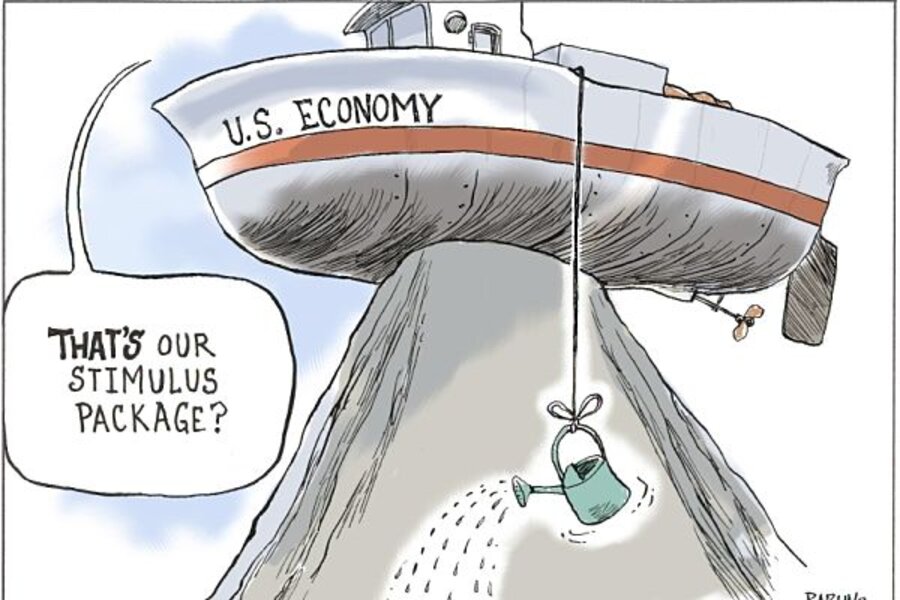
Cartoon – New Economic Stimulus Package

Obama's stimulus did NOT raise government spending - CSMonitor.com

Executive Order On Housing Doesn’t Guarantee An Eviction Moratorium

https://www.forbes.com/sites/advisor/2020/08/10/trumps-executive-order-on-housing-doesnt-guarantee-an-eviction-moratorium/?tid=newsletter-dailydozen&utm_source=newsletter&utm_medium=email&utm_campaign=dailydozen&cdlcid=5d2c97df953109375e4d8b68#3a33cbc3359a

After negotiations for another stimulus package hit a dead end in Washington last week, President Donald Trump signed executive orders to extend relief in the meantime. One order, according to the president, would extend the federal eviction moratorium. 

The original moratorium, included in the CARES Act, prohibited landlords or housing authorities from filing eviction actions, charging nonpayment fees or penalties or giving notice to vacate. It expired on July 24 and only applied to federally subsidized or federally backed housing.

But housing advocates are pushing back, saying Trump’s executive order to extend an eviction moratorium actually does nothing at all—and keeps struggling Americans at risk of losing their housing. 


Details on the Order

Trump’s order doesn’t actually extend the federal eviction moratorium. Instead, it calls on the Department of Health and Human Services and the Centers for Disease Control and Prevention to “consider” whether an additional eviction ban is needed.

“The Secretary of Health and Human Services and the Director of CDC shall consider whether any measures temporarily halting residential evictions of any tenants for failure to pay rent are reasonably necessary to prevent the further spread of COVID-19 from one State or possession into any other State or possession,” reads the order.

Additionally, the executive order does not provide any new money to help struggling renters during the pandemic. Instead, it says the secretary of Treasury and the secretary of Housing and Urban Development—Steven Mnuchin and Ben Carson, respectively—can identify “any and all available federal funds” to provide temporary rental assistance to renters and homeowners who are facing financial hardships caused by COVID-19.

During a White House press briefing on Monday, Kayleigh McEnany said the president did “did what he can within his executive capacity…to prevent resident evictions.”At the time of publishing, officials mentioned in Trump’s executive order have not released guidelines on extending the federal eviction moratorium.


Housing Advocates React to Trump’s Eviction Order

Housing advocates have not reacted positively to Trump’s executive order, suggesting officials extend an eviction moratorium.

“The executive order that he signed this weekend is really nothing more than an empty shell that creates chaos and confusion, and it offers nothing more than false hope to renters who are at risk of eviction because that executive order does literally nothing to prevent or stop evictions,” Diane Yentel, president and CEO of the National Low Income Housing Coalition, said on Sunday during an MSNBC interview.

The House of Representatives included a more thorough plan to prevent evictions in its HEROES Act proposal. The proposal included $175 billion in rent and mortgage assistance and would replace the original federal eviction moratorium with a 12-month moratorium from all rental housing, not just federally subsidized ones. There also would be funds available to provide homeowners with assistance to cover mortgage and utility payments, property taxes or other resources to help keep Americans housed.

Sen. Richard Shelby (R-AL) introduced the Coronavirus Response Additional Supplemental Appropriations Act as part of the GOP’s HEALS Act proposal. Shelby’s bill included significantly less money for housing assistance than the HEROES Act—$3.2 billion—and would be used for tenant-based rental assistance. Shelby’s proposal did not include any language about extending the CARES Act eviction moratorium. 

A recent report by a group of housing advocates finds there could be as much as 40 million renters at risk of eviction in the coming months. The U.S. unemployment rate currently sits at 10.2%. 

Individuals who are struggling to pay rent might have assistance options available. Some cities and states have implemented their own eviction moratoriums—you can learn more about them by visiting the Eviction Lab at Princeton University. There are also legal aid options, like Just Shelter, that will help tenants who are facing eviction for low-cost or free.