Fitch Q2 outlook for nonprofit hospitals: ‘worst on record’

https://www.healthcaredive.com/news/fitch-analysts-hospital-worries-FY-2020/577875/
Nicklaus Children's Health System Receives A+ Rating from Fitch ...

From the Mayo Clinic to Kaiser Permanente, nonprofit hospitals are posting massive losses as the coronavirus pandemic upends their traditional way of doing business.

Fitch Ratings analysts predict a grimmer second quarter: “the worst on record for most,” Kevin Holloran, senior director for Fitch, said during a Tuesday webinar.​

Over the past month, Fitch has revised its nonprofit hospital sector outlook from stable to negative. It has yet to change its ratings outlook to negative, though the possibility wasn’t ruled out.

Some have already seen the effects. Mayo estimates up to $3 billion in revenue losses from the onset of the pandemic until late April — given the system is operating “well below” normal capacity. It also announced employee furloughs and pay cuts, as several other hospitals have done.

Data released Tuesday from health cost nonprofit FAIR Health show how steep declines have been for larger hospitals in particular. The report looked at process claims for private insurance plans submitted by more than 60 payers for both nonprofit and for-profit hospitals.

Facilities with more than 250 beds saw average per-facility revenues based on estimated in-network amounts decline from $4.5 million in the first quarter of 2019 to $4.2 million in the first quarter of 2020. The gap was less pronounced in hospitals with 101 to 250 beds and not evident at all in those with 100 beds or fewer.

Funding from federal relief packages has helped offset losses at those larger hospitals to some degree.

Analysts from the ratings agency said those grants could help fill in around 30% to 50% of lost revenues, but won’t solve the issue on their own.

They also warned another surge of COVID-19 cases could happen as hospitals attempt to recover from the steep losses they felt during the first half of the year.

Anthony Fauci, the nation’s top infectious disease expert, warned lawmakers this week that the U.S. doesn’t have the necessary testing and surveillance infrastructure in place to prep for a fall resurgence of the coronavirus, a second wave that’s “entirely conceivable and possible.”

“If some areas, cities, states or what have you, jump over these various checkpoints and prematurely open up … we will start to see little spikes that may turn into outbreaks,” he told a Senate panel.

That could again overwhelm the healthcare system and financially devastate some on the way to recovery.

“Another extended time period without elective procedures would be very difficult for the sector to absorb,” Holloran said, suggesting if another wave occurs, such procedures should be evaluated on a case-by-case basis, not a state-by-state basis.

Hospitals in certain states and markets are better positioned to return to somewhat normal volumes later this year, analysts said, such as those with high growth and other wealth or income indicators. College towns and state capitols will fare best, they said.

Early reports of patients rescheduling postponed elective procedures provide some hope for returning to normal volumes.

“Initial expectations in reopened states have been a bit more positive than expected due to pent up demand,” Holloran said. But he cautioned there’s still a “real, honest fear about returning to a hospital.”

Moody’s Investors Service said this week nonprofit hospitals should expect the see the financial effects of the pandemic into next year and assistance from the federal government is unlikely to fully compensate them.

How quickly facilities are able to ramp up elective procedures will depend on geography, access to rapid testing, supply chains and patient fears about returning to a hospital, among other factors, the ratings agency said.

“There is considerable uncertainty regarding the willingness of patients — especially older patients and those considered high risk — to return to the health system for elective services,” according to the report. “Testing could also play an important role in establishing trust that it is safe to seek medical care, especially for nonemergency and elective services, before a vaccine is widely available.”

Hospitals have avoided major cash flow difficulties thanks to financial aid from the federal government, but will begin to face those issues as they repay Medicare advances. And the overall U.S. economy will be a key factor for hospitals as well, as job losses weaken the payer mix and drive down patient volumes and increase bad debt, Moody’s said.

Like other businesses, hospitals will have to adapt new safety protocols that will further strain resources and slow productivity, according to the report.​

Another trend brought by the pandemic is a drop in ER volumes. Patients are still going to emergency rooms, FAIR Health data show, but most often for respiratory illnesses. Admissions for pelvic pain and head injuries, among others declined in March.

“Hospitals may also be losing revenue from a widespread decrease in the number of patients visiting emergency rooms for non-COVID-19 care,” according to the report. “Many patients who would have otherwise gone to the ER have stayed away, presumably out of fear of catching COVID-19.”


Trump faces criticism over lack of national plan on coronavirus

Trump faces criticism over lack of national plan on coronavirus

COVID-19 National Health Plan – Primary Care – Central Patient ...

The Trump administration is facing intense criticism for the lack of a national plan to handle the coronavirus pandemic as some states begin to reopen.

Public health experts, business leaders and current administration officials say the scattershot approach puts states at risk and leaves the U.S. vulnerable to a potentially open-ended wave of infections this fall.

The White House has in recent days sought to cast itself as in control of the pandemic response, with President Trump touring a distribution center to tout the availability of personal protective equipment and press secretary Kayleigh McEnany detailing for the first time that the administration did have its own pandemic preparedness plan.

Still, the White House lacks a national testing strategy that experts say will be key to preventing future outbreaks and has largely left states to their own devices on how to loosen restrictions meant to slow the spread of the virus. Trump this week even suggested widespread testing may be “overrated” as he encouraged states to reopen businesses.

The Centers for Disease Control and Prevention (CDC) on Thursday night issued long-awaited guidance intended to aid restaurants, bars and workplaces as they allow employees and customers to return, but they appeared watered down compared to previously leaked versions.

Some experts said the lack of clear federal guidance on reopening could hamper the economic recovery. 

“A necessary condition for a healthy economy is a healthy population. This kind of piecemeal reopening with everyone using different criteria for opening, we’re taking a big risk,” said Mark Zandi, chief economist at Moody’s Analytics.

The lack of coherent direction from the White House was driven home this week by damaging testimony by a former top U.S. vaccine official who claims he was ousted from his post improperly.

“We don’t have a single point of leadership right now for this response, and we don’t have a master plan for this response. So those two things are absolutely critical,” said Rick Bright, who led the Biomedical Advanced Research and Development Authority until he was demoted in late April.

The U.S. faces the “darkest winter in modern history” if it does not develop a more coordinated national response, Bright said. “Our window of opportunity is closing.”

From the start, the White House has let states chart their own responses to the pandemic.

The administration did not issue a nationwide stay-at-home order, resulting in a hodgepodge of state orders at different times, with varying levels of restrictions.

Facing a widespread shortage, states were left to procure their own personal protective equipment, ventilators and testing supplies. Trump resisted using federal authority to force companies to manufacture and sell equipment to the U.S. government.

Without clear federal guidance, state officials were competing against each other and the federal government, turning the medical supply chain into a free-for-all as they sought scarce and expensive supplies from private vendors on the commercial market.

“The fact that we had questions about our ability to have enough mechanical ventilators, and you had states basically bidding against each other, trying to secure personal protective equipment …  it shouldn’t be happening during a pandemic,” said Amesh Adalja, a senior scholar at the Johns Hopkins University Center for Health Security.

Internally, the administration struggled to mount a unified front as various agencies jockeyed for control. Multiple agencies have been providing contradictory instructions.

At first, Department of Health and Human Services (HHS) Secretary Alex Azar led the White House coronavirus task force.

Roughly a month, later he was replaced by Vice President Pence. The Federal Emergency Management Agency (FEMA) was later tasked with leading the response to get supplies to states, while senior White House adviser Jared Kushner led what has been dubbed a “shadow task force” to engage the private sector. Now, FEMA is reportedly winding down its role, and turning its mission back over to HHS.

The CDC has been largely absent throughout the pandemic. Director Robert Redfield has drawn the ire of President Trump as well as outside experts, and he has been seen infrequently at White House briefings.

“I think seeing the nation’s public health agency hobbled at a time like this and looking over its shoulder at its political bosses is something I hoped I would never see, and I’ve been working with the CDC for over 30 years,” said Lawrence Gostin, a professor of public health at Georgetown University.

“I think that people will die because the public health agency has lost its visibility and its credibility and that it’s being politically interfered with,” he added.

The administration recently has taken some steps to improve on the initial response to the pandemic.

Ventilator production has increased, and the U.S. is no longer seeing a shortage of the devices. 

Testing has improved dramatically as well, though experts think the U.S. needs to be testing thousands of more people per day before the country can reopen.

The administration also unveiled plans to expand the Strategic National Stockpile’s supply of gowns, respirators, testing supplies and other equipment, after running out of supplies early in the pandemic.

Adalja said the administration’s positive steps are coming way too late. 

“It’s May 15, we should have been in this position January 15,” he said.

McEnany on Friday for the first time detailed the White House’s preparedness plan that replaced the Obama-era pandemic playbook, an acknowledgement that Trump’s predecessor did leave a road map, despite claims to the contrary from some of the president’s allies.

She did not give many specifics on the previously unknown plan. Instead, McEnany declared the Trump administration’s handling of the virus had been “one of the best responses we’ve seen in our country’s history.”

Yet as states look to reopen businesses and get people back to work, the White House is taking a back seat as governors set their own guidelines for easing stay-at-home orders and restrictions on social activities.

The White House in April issued a three-step plan for states to reopen their economies, but it has largely been ignored by states and by the president.

Dozens of governors have begun easing restrictions on businesses and social activities without meeting the White House guidelines. Trump has been urging them to move even faster, backing anti-lockdown protesters in Michigan, Virginia, Minnesota and Pennsylvania.

Even scaled-down guidance from federal agencies is critical for providing a road map for state and local leaders, and for businesses considering how best to resume operations, said Neil Bradley, chief policy officer with the U.S. Chamber of Commerce.

“We need guidance because it helps instill confidence about the right types of approaches to take, but when you begin to move away from guidance and into either regulations or very strict approach, then that’s increasingly going to be unworkable in lots of different locations,” Bradley said.


Seven weeks into coronavirus lockdowns, Fed has a new, darker message

https://www.yahoo.com/news/seven-weeks-coronavirus-lockdowns-fed-182614531.html

Seven weeks into coronavirus lockdowns, Fed has a new, darker ...

One Thursday morning seven weeks ago, Federal Reserve Chair Jerome Powell made a rare appearance on NBC’s “Today Show” to offer a reassuring message to Americans dealing with economic fallout from measures to contain the coronavirus outbreak.

There is “nothing fundamentally wrong with our economy,” Powell told viewers, while pointing out the U.S. central bank’s outsized ability to take on lending risk and provide a financial “bridge” over the temporary economic weakness the country was experiencing.

Speaking after the Fed cut interest rates to near zero and rolled out a plan to backstop credit for small- and mid-sized companies, Powell emphasized the first order of business was to get the virus under control.

“The sooner we get through this period and get the virus under control, the sooner the recovery can come,” said Powell, echoing remarks made the day before by Anthony Fauci, a top U.S. health official helping to coordinate the federal government’s response to the coronavirus crisis.

At the time, Powell said he expected economic activity would resume in the second half of the year, and maybe even enjoy a “good rebound.”

But on Wednesday, he offered a much more sober outlook.

In an interview webcast by the Peterson Institute for International Economics, Powell warned of an “extended period” of weak economic growth, tied to uncertainty about how well the virus could be controlled in the United States. “There is a sense, growing sense I think, that the recovery may come more slowly than we would like,” he said.

Fauci, the director of the National Institute of Allergy and Infectious Diseases, was similarly somber when he told lawmakers earlier this week that the country was by no means in “total control” of the outbreak.

“There is a real risk that you will trigger an outbreak that you may not be able to control and, in fact, paradoxically, will set you back, not only leading to some suffering and death that could be avoided, but could even set you back on the road to try to get economic recovery,” Fauci said.

The pandemic has killed more than 83,000 people in the United States so far, and many epidemiological models now point to a death toll that will surpass 100,000 in a matter of weeks.

Overall new cases of the virus continue to climb as well, as states end lockdowns and reopen local economies without the widespread, uniform testing and contact tracing policies that helped stamp out initial outbreaks in South Korea and Germany.

UNCERTAIN FUTURE

Powell’s remarks on Wednesday mirrored warnings this week from a clutch of regional Fed presidents who outlined the country’s uncertain future.

U.S. central bank officials, and especially the Fed chief, historically choose their words carefully, to avoid alarming or exciting investors or causing swings in financial markets, making their universally dour outlook more remarkable.

St. Louis Fed President James Bullard said the situation could lead to a new Great Depression, with millions of so-far temporary job losses becoming permanent, and businesses failing “on a grand scale.”

“We have to get better at this and get more risk-based with our health policy,” Bullard said.

The U.S. economy can return to growth in the second half of the year, Cleveland Fed President Loretta Mester said on Tuesday, with more testing and contact tracing. If that happens, she said, “as some of the stay-at-home restrictions are lifted, the economy will begin to grow again in the second half of this year and unemployment will begin to move down.”

However, a more pessimistic scenario, in which a surge in infections requires businesses to shut down again or the crisis leads to more bankruptcies or instability in the banking sector, is “almost as likely,” she said.


Administration’s Handling of Coronavirus Threatens a Long Unemployment Crisis

https://www.americanprogress.org/issues/economy/news/2020/05/07/484795/trump-administrations-handling-coronavirus-threatens-long-unemployment-crisis/

The Trump Administration's Handling of Coronavirus Threatens a ...

On Friday, the Bureau of Labor Statistics will release employment numbers for April that are expected to show a tragic and historic increase in unemployment. Consensus estimates anticipate more than 20 million jobs lost and an unemployment rate of 16 percent—a figure that may well be an underestimate given that millions of people may not be looking for jobs, effectively exiting the labor force and reducing the labor force participation rate. Moreover, state-level unemployment claims data show that this economic pain is being felt across the country, with sharp rises in joblessness in every state. And Thursday’s jobless claims release suggests that job losses have continued at high levels since the April unemployment survey was taken.

While the immediate cause of this spike in joblessness is, of course, the necessary stay-at-home orders and social distancing measures taken to respond to the crisis, the rise in unemployment—and how long it lasts—cannot be separated from choices made by the Trump administration. In understanding the state of the economy, as well as what comes next, the following three elements of this crisis must be understood:

  1. The economic crisis we are facing—and the economic pain we expect in the months ahead—is the result of a failed public health response. The Trump administration ignored early warnings, misled the public, and made the coronavirus crisis worse. The fact that the administration bungled the testing regime early on in the crisis meant that the United States could never contain the virus, as other countries such as South Korea, New Zealand, and Taiwan have done. As a consequence of that failure, the United States has had to engage in social distancing that has meant economic shock in order to avoid significantly greater levels of infections and deaths. The depth and scope of the economic pain being felt is a consequence of the administration’s delayed response and complete failure take leadership during this crisis.
  2. The administration’s inability to put in place appropriate public health measures going forward—combined with its insistence that efforts to contain the virus should be lifted in the absence of those measures—is likely to not only prolong the public health crisis but also extend the economic pain. Rather than provide workers, businesses, and families the confidence that they can return to activity safely, the administration is taking steps that try to ignore the risk of infection, such as absolving employers of responsibility for worker safety through a liability shield or forcing workers to return to work even when they have concerns about their health. In this environment, we are likely to see decreased demand for some time to come because people will have little confidence in individual state reopening strategies disconnected from science—as we are already seeing across the country.
  3. By rejecting efforts that would support families, workers, and communities during this crisis, the administration and its allies in Congress are putting us on a path for continued double-digit unemployment even after the pandemic finally ends. Indeed, the Congressional Budget Office (CBO) projects that the unemployment rate—absent additional action—will be near 10 percent at the end of 2021, several months after they project social distancing as a result of the health crisis abates. By opposing efforts to provide sufficient aid to states and localities; relief to families and unemployed workers; and assistance to those struggling the most, President Donald Trump, Majority Leader Mitch McConnell (R-KY), and their allies are insisting on making this extended period of double-digit unemployment a reality.

There is an alternative path, however: Taking the necessary steps to address the public health crisis and ensure that people can go back to work safely and doing what is needed to address the immediate economic pain and avoid prolonged unemployment. As Congress and the administration consider an additional stimulus package, they should put in place necessary public health protections while providing robust aid to families, workers, and communities for as long as the crisis lasts. This will allow us to avoid double-digit unemployment from being a devastating reality for American families for the next year and a half or more.

Public health failures has driven unemployment up

The rise in unemployment over the past two months is a direct consequence of the public health crisis—one that could have taken a far less severe toll under an administration that had been better prepared for it and that had approached it more wisely. The Trump administration has failed to develop an evidence-based plan to end the coronavirus crisis. Instead, its mismanagement has resulted in widespread fear and uncertainty as to when it might be appropriate to reopen parts of the economy. President Trump did not take the pandemic seriously when cases first emerged in the United States; his administration failed to use the month of April—when the nation was largely shut down—to ramp up the testing, contact tracing, and other pieces necessary for the public health response. And now, Trump is pushing states to reopen too soon. Before people feel comfortable enough to once again venture out of their homes and reengage in work and other economic activities, we need to ensure the country has developed the necessary health infrastructure to allow us to gradually reopen our economy without sparking a second wave of infections.

The economic crisis cannot end until public health crisis is solved

The Trump administration and its allies are arguing that the way to solve the economic crisis is to open up the country, ending stay-at-home orders and engaging in aggressive efforts to force business to return to normal. But in the absence of public health measures that actually allow activity to return safely, the administration’s strategy appears to be one of “ignore and press on,” with potentially devastating results for workers and communities. This strategy includes:

  • Pushing communities to lift stay-at-home orders and other public health measures before sufficient testing, tracing, isolation and ongoing surveillance is in place
  • Forcing workers back on the job, even without sufficient personal protective equipment or workplace safety protections—whether by removing unemployment insurance for those who are recalled to unsafe situations or through executive actions such as those taken for the meatpacking industry
  • Proposing to absolve employers of the responsibility to keep workers and communities safe through blanket immunity from liability—a measure that would do nothing to keep workers safe or build confidence in economic reopening

These steps reflect an acceptance of elevated risks of transmission, and ultimately, death. And despite the president’s rhetoric, it will make it less likely that the economy can return faster.

First, it is clear that the public isn’t going to feel safe to return to normal economic activity absent additional public health measures. A recent Washington Post-University of Maryland poll found that “67 percent say they would be uncomfortable shopping at a retail clothing store, and 78 percent would be uncomfortable eating at a sit-down restaurant.” These results were similar both in states that had loosened restrictions and those that had not and is consistent with other data. As long as people are anxious that returning to normal activities could put them at risk of contracting the virus, the economy will be unable to recover.

Second, a strategy that fails to put in place the necessary protections against spreading the virus will increase transmission among the public, and especially workers, in ways that may force additional shutdowns and prolong the period of public health crisis. In sum, prolonged public health crisis equals a prolonged state of economic distress—extending the number of months with a job market like April’s. The best approach—an approach adopted by other countries who are faring better both with their health outcomes and their economic impacts—is a national plan to fight the virus that is based on testing, tracing, and isolation.

After the pandemic ends, double-digit unemployment will persist under the current course

The CARES act provided large, necessary relief to most Americans, including assistance for workers, families, and small businesses. But this assistance will run out before the economic emergency is behind us, forcing the economy into unnecessarily prolonged hardship.

Indeed, the measures in the CARES Act both leave important gaps and will expire long before the economy is expected to return to normal. States and localities are facing extreme budget shortfalls. If action is not taken before state budget deadlines on July 1, states are likely to begin implementing layoffs of teachers and first responders and service cuts in the coming months that will cause additional job loss. Expanded unemployment insurance benefits expire at the end of July, removing an important lifeline for those out of work. While the direct payments in the CARES Act provided important assistance to families, the $1,200 per person payment will not be enough to sustain households through a prolonged crisis. The initial Paycheck Protection Program (PPP) support for small businesses has run out, and a second round of funding may soon run out too. And in important areas such as housingfood assistancechild care, and health coverage, among others, the CARES Act failed to do enough to address the hardship being felt today, let alone over a prolonged crisis—even as it provided generous aid to corporations.

As a result, under baseline projections—those that assume no further action on the part of the government—double-digit unemployment is expected to be a feature of the economy for at least the next year and a half. As noted above, the CBO estimates that the unemployment rate will remain near 10 percent at the end of 2021—many months after they predict that social distancing due to the pandemic itself ends.

Yet the Trump administration and congressional Republicans have indicated that they are prepared to accept this reality, or at best, offer solutions that do nothing to shift it. White House economic adviser Kevin Hassett said that another round of coronavirus relief legislation might not be necessary, and chief economic adviser Larry Kudlow said on Sunday that nothing has been decided yet and that “there’s kind of a pause period right now” and that “we will wait and see.” Senator McConnell has dismissed state and local aid as a “blue state bailout,” despite pain being felt in all states.

To the extent the administration or its allies have signaled a desire to act, they have focused on measures that would be woefully insufficient to address the economic challenges we face. Aside from the liability shield, Trump has signaled a push for poorly targeted corporate tax cuts or a payroll tax cut that would fail to benefit those who are out of work. An illustrative example of Trump’s approach is his call for removing limits on corporate deductions for meals and entertainment—effectively allowing companies to deduct expenses for sports tickets, golf trips, or visits to casinos—which would provide a benefit to corporations and their wealthiest executives but do little to help put money in the hands of those who need it.

A better path: a response that meets the public health and economic challenge

As it considers another package to address this crisis, Congress has the opportunity to take a path that rejects double-digit unemployment as a lasting feature of this crisis. The approach Congress should take would allow economic activity to restart safely and ensure that, as the economy restarts, we are actually getting people back to work rather than accepting a recession that keeps millions unemployed.

First, that requires a sufficient public health response. The purpose of stay-at-home orders in the first place was to suppress transmission to low levels and buy time to put in place extensive testing and contact tracing programs, but we have yet to meet those goals. Nationally, we still need to increase our testing capacity and reach at least 500,000 tests a day; scale up contact tracing—both manually and by apps that meet privacy standards—in order to isolate people who test positive as well as their contacts; and have in place a far more robust disease surveillance system.

And second, it requires an economic response that offers relief that both addresses immediate pain that families, small businesses, and communities are facing and is sufficient to build back to a stronger economy.

In particular, the package must be:

  1. At a scale necessary to address the crisis. We need to pursue a fiscal response that is proportional to both the public health and economic threat posed by COVID-19. The economic consequences of this crisis are staggering. Children are going hungry; households are piling massive debts; millions of homeowners are delaying their mortgage payments; small businesses in hard hit states received fewer loans than others; minority small business owners are struggling to stay open; and state and local governments are preparing for significant layoffs of teachers and first responders in the absence of federal aid. Action needs to be sufficiently large to both address the immediate hardship that families are facing and get the economy back to work. This big push for aid has to be coordinated at the national, state, and local levels. An important lesson form the Great Recession was that austerity at the level of states and localities was a key factor in delaying economic recovery for years, since states were in austerity mode from 2008 until 2012, contributing to lower GDP growth. And, in contrast to concerns raised by some congressional Republicans—concerns that were absent during the passage of nearly $2 trillion in tax cuts in 2017—we have the fiscal capacity to respond robustly, especially with interest rates near zero. Indeed, evidence suggests that increased fiscal stimulus may increase fiscal sustainability.
  2. Sustained for the duration of the crisis. Relief must be sustained, automatic, and available with certainty for as long as it is needed. We should learn from the Great Recession, when stimulus was insufficient and removed too soon. During that crisis, unemployment insurance expired for many workers long before the crisis had passed; fiscal aid ended long before state and fiscal budget cuts ceased being a drag on the recovery. Key measures to support the economy, such as unemployment insurance, state and local aid, and direct relief to families, should automatically extend for the duration of the economic crisis—ensuring that we are providing sufficient relief and necessary stimulus as long as is needed to support a robust recovery.
  3. Targeted to all the areas where Americans are feeling economic hardship. There is no silver bullet that will bring the economy back. We need a multilayered attack that addresses the root cause of the problem—the spread of the virus—and ameliorates its symptoms in the form of hardship for families, workers, small businesses, and communities. Building off the CARES Act, additional aid needs to make sure it is reaching those who have been excluded. That requires ensuring that aid is more completely available—for example, ensuring that immigrant families can access needed relief or closing loopholes that prevent workers from having access to paid leave. It also means providing much needed assistance in areas such as food assistance, child care, housing, and for people with disabilities—areas that would both address concentrated harm and support the economy going forward. Finally, the package should be designed so that—rather than exacerbating structural problems in our economy that benefited corporations over workers—it puts us on a path for a stronger economy once the crisis ends.

The administration and its allies appear content to accept a prolonged period of public health and economic harm that is a result of the mismanagement of the COVID-19 crisis to date—essentially condemning the nation to a greater toll from the virus itself and a much longer period of economic distress. It must be clear that the harsh reality of the April jobs report—and the much broader pain that has been felt over recent weeks—was the result of both failed policy decisions and mismanagement. By the same token, we have the choice going forward as to whether we accept further pain or take steps that would both keep people healthy and get Americans back to work.


The Health 202: Social distancing hasn’t been as effective in stemming U.S. coronavirus deaths as policymakers had hoped.

https://www.washingtonpost.com/news/powerpost/paloma/the-health-202/2020/05/05/the-health-202-social-distancing-hasn-t-been-as-effective-in-stemming-u-s-coronavirus-deaths-as-policymakers-had-hoped/5eb04b6d88e0fa594778ea5e/

Social distancing isn’t having the effects many had hoped for.

Despite encouraging signs on the nation’s East and West coasts, daily diagnosed cases of the novel coronavirus appear to still be on the rise in about 20 states. A number of rural counties have become unexpected hot spots in recent weeks, including in the Black Belt region of Mississippi and Alabama and in communities throughout Iowa and northern Texas around the Oklahoma panhandle. The country’s overall daily figures of diagnoses and deaths have plateaued, worrying health policymakers as many states move to reopen parts of their economy.

That steep curve of covid-19 cases in March and April isn’t receding the way it rose.

Hot spots are shifting geographically from New York City to areas around the country. For the past month, the figures have hovered around 30,000 diagnosed cases and around 2,000 deaths every day, former Food and Drug Administration commissioner Scott Gottlieb noted in a Wall Street Journal op-ed.

“Everyone thought we’d be in a better place after weeks of sheltering in place and bringing the economy to a near standstill,” he wrote. “Mitigation hasn’t failed; social distancing and other measures have slowed the spread. But the halt hasn’t brought the number of new cases and deaths down as much as expected or stopped the epidemic from expanding.”

President Trump, who last week suggested the novel coronavirus would disappear even without a vaccine, has now upgraded his prediction of fatalities to as many as 100,000 people. Nonetheless, he said in a New York Post interview yesterday that Americans are “starting to to feel good now. The country’s opening again. We saved millions of lives, I think.”

A leaked government report, still in draft version, predicts a spike in cases and deaths beginning on May 14.

The report, which the Centers for Disease Control quickly disavowed as an unfinished projection, suggests new cases could surge to 200,000 per day and daily American deaths could number more than 3,000 by June 1. That’s far more than what other models predict, but the Johns Hopkins epidemiologist who prepared it told my colleagues William Wan, Lenny Bernstein, Laurie McGinley and Josh Dawsey that 100,000 new cases per day by the end of the month isn’t out of the realm of possibility.

Former FDA commissioner Scott Gottlieb:

University of Michigan professor Justin Wolfers:

That’s not the only model showing discouraging figures for the month of May. A model out of the University of Washington, relied upon heavily by the administration, yesterday upgraded its U.S. fatality predictions for the virus’s first wave from 72,433 deaths to 134,475 deaths by Aug. 4.

These aren’t the trends many policymakers had hoped to see, after most Americans spent seven weeks at home under an unprecedented lockdown that has torched the once-booming economy and thrust millions into economic uncertainty. Protests against extended lockdowns are starting to mount around the country, and many governors have assembled and even embarked upon gradual plans to reopen businesses, schools and other public areas.

Nonetheless, a new Washington Post-University of Maryland poll out this morning shows sizable majority of Americans oppose the reopening of restaurants, retail stores and businesses.

Executive producer of 7News WHDH in Boston:

Social distancing did accomplish some important objectives. It undoubtedly saved the health-care system from being crushed by an overwhelming caseload of sick patients all at once.

And the United States is still outranked by half a dozen European countries when it comes to deaths per capita. The U.S. death rate is about 206 deaths per million people. That figure is 538 in Spain, 372 in France, 481 in Italy, 432 in the United Kingdom and 207 in Switzerland, according to a tally by Mother Jones.

But distancing clearly hasn’t been enough — at least the way it’s been carried out — to halt the spread of the highly contagious virus in some places.

New cases and deaths across the whole U.S. are about where they were 20 days ago, my colleague Philip Bump reports. He created a graphic where you can view the three-day averages of cases, deaths and tests performed by state (check it out here).

“The back of the mountain doesn’t look the way the front did,” Philip writes. “We saw a steady, exponential rise in confirmed cases and deaths each day for several weeks. But particularly with daily case totals, the period after the peak nationally has looked more like a plateau than a downward slide.”

Daily cases appear to be rising significantly in Delaware, Illinois, Indiana, Minnesota and Virginia. They’re also trending upward in Arizona, Colorado, D.C., Iowa, Kansas, Maryland, Mississippi, Nebraska, New Hampshire, New Mexico, North Carolina, Tennessee, Texas, Utah and Wisconsin.

Andy Slavitt, former head of the Centers for Medicare and Medicaid Services:

“There are so many emerging areas still throughout the country that our group has been trying to wave our hands about,” Marynia Kolak, a health and spatial data science researcher at the University of Chicago, told me.

Kolak and her colleagues are tracking covid-19 cases and deaths at the county level. They’ve been increasingly spotting clusters of the disease in rural areas. Kaiser Family Foundation researchers have also found that rural areas are experiencing a faster growth in cases, even as their total numbers remain far below those seen in urban settings.

One example: Five counties in Minnesota with significant meat-processing plants. State officials said about a quarter of cases reported over the weekend came from those counties.

One is Nobles County, home to a JBS USA pork processing plant in Worthington, with a population of around 22,000. It is scheduled to partially reopen this week, under an order by Trump to keep meat plants open.

The outbreaks in counties with meat-processing plants “illustrates how powerfully situations can change at the community level,” said Jan Malcolm, commissioner of Minnesota’s Department of Health.

Malcolm stressed how hard it is to stem the spread of the virus in these types of facilities.

“These are particularly challenging investigations,” Malcolm said. “Many of the workers involved don’t have phones, don’t provide phone numbers, aren’t answering calls. It’s been a very labor-intensive, shoe-leather kind of an approach.”


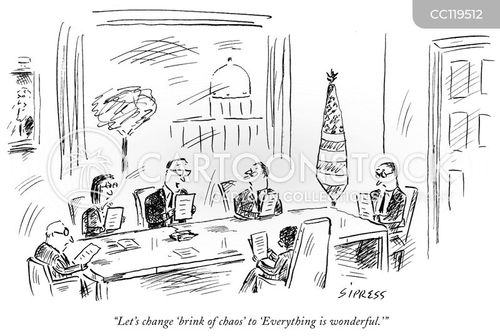
Cartoon – Let’s Change “Brink of Chaos” to “Everything is Wonderful”

Cartoon – Status Update | HENRY KOTULA

Healthcare CFOs weigh-in on the challenges ahead

https://www.pwc.com/us/en/library/covid-19/pwc-covid-19-cfo-pulse-survey.html

What CFOs think about the economic impact of COVID-19

How finance leaders see a return to work

Business perspectives on what it will take to shift from crisis mode are solidifying. US finance leaders are focused on shoring up financial positions, as US businesses head into a period of even more operational complexity while they orchestrate a safe return to the workplace. Back-to-work playbooks put workforce health first, as companies set course for a phased-in return to the workplace that will not be uniform across the US or internationally, findings from the survey show. Returning employees and customers are going to experience a work environment that will differ in marked ways as a result. Another change likely to endure post-crisis is the strong role corporate leaders have taken within their communities, placing a renewed emphasis on environmental, social and governance (ESG) efforts going forward.

The actions CFOs are taking show how US businesses continue to adjust to very difficult current conditions with an eye toward an evolving post-COVID world. The level of concern related to the crisis is holding steady. It is high but stabilizing, with 72% of respondents reporting that COVID-19 has the potential for “significant impact” to their business operations vs. 74% two weeks ago.

Key findings

Back-to-work playbooks reshape how jobs performed
49% say remote work is here to stay for some roles, as companies plan to alternate crews and reconfigure worksites.

Protecting people top of mind
77% plan to change safety measures like testing, while 50% expect higher demand for enhanced sick leave and other policy protections.

Substantive impacts expected in 2020 results
Half of all respondents (53%) are projecting a decline of at least 10% in company revenue and/or profit this year.

Cost pressures intensify
A third (32%) expect layoffs to occur, as CFOs continue to target costs, while 70% consider deferring or canceling planned investments.

Economic events shaping CFO response last week

This survey, our fourth since emergency lockdowns took effect in the US, reflects the views of 305 US finance leaders during the week of April 20. It was a week when oil futures traded below $0 as energy markets confronted downshifting global demand, Congress replenished emergency funding of $480 billion for small firms and healthcare systems, and everyone heard the call to get ready to go back to work as the US and Europe firmed up plans to ease quarantines.

Post-crisis world taking shape in plans to reboot the workplace

Health and safety are top priorities for leaders as they prepare to bring people back to on-site work. More than three-quarters (77%) are putting new safety measures in place, while others are taking steps to promote physical distancing, such as reconfiguring workspaces (65%). Findings also show where the virus may have longer-lasting impact on ways of working. Half (49%) of companies say they’re planning to make remote work a permanent option for roles that allow. That’s even higher (60%) among financial services organizations.

Takeaways

Among the small percentage of companies that are beginning to bring people back, returning to work will not mean a return to normal. Companies should consider how to help frontline managers lead with empathy, to communicate transparently and make decisions quickly so employees understand where they stand, have access to the resources available to them, and can share feedback to ensure they feel safe and get what they need. Tools such as workforce location tracking and contact tracing can help support employees with suspected or confirmed infections, while also helping to identify the level of risk exposure. Companies looking to make remote work a permanent option will need to enable leaders to manage a blended workforce of on-site and remote workers during the next 12 to 18 months.

Given that many people may be wary of returning to on-site work, there’s an opportunity for companies to create more targeted benefits to help make the transition easier. Paid sick leaves and worker protections, help with childcare, private transportation to and from work, or other benefits could help employees who may need extra flexibility or who want additional support as they prepare to come back.

Forecasting substantive impacts on 2020 performance

A majority of respondents (80%) continue to expect a decline in revenues and/or profits in 2020. Projections by sector vary, with consumer markets likely the hardest hit: one-third (32%) of CFOs expect a 25% or greater decline in revenues and/or profits this year, compared to 24% of respondents in all sectors.

Takeaways

Outlooks for financial results have held relatively steady in the survey over the last month, and are probably indicative of actual impact. Companies have had the time to evaluate the effects. CFO projections for declining revenue and profits coincide with a widening realization that the US economy is in recession. Since mid-March, jobless claims have soared past 26 million, and Congress passed relief packages of $2.5 trillion. CFOs are evaluating a wide range of scenarios that cover the health situation, the shape of the economic recovery, the spillover into the financial markets, and the resulting impacts on their business. This crisis is setting a new benchmark standard for “unknowable.”

Cost pressures intensifying

CFOs are considering additional ways to scale back on planned investment and/or other fixed costs amid volatility in demand. A third (32%) expect layoffs to occur in the next month, up from 26% two weeks ago. Protecting cash and liquidity positions is paramount. Financial impacts of COVID-19, including effects on liquidity and capital resources, remain the top concern of CFOs (71%). Over half (56%) say they are changing company financing plans, up from 46% two weeks ago.

Among other actions, 43% plan to adjust guidance, which is consistent with responses two weeks ago. This figure will likely increase as companies go through the earnings season over the next two to three weeks. Separately, 91% of respondents are planning to include a discussion of COVID-19 in external reporting. Depending on the type of company, this can mean inclusion in financial statements and/or in risk factors and MD&A results of operations, earnings release or MD&A liquidity sections.

Takeaways

Many CFOs have focused on how they can manage their cash pressures to ride out the crisis. Common approaches have included stop-gap measures, such as hiring freezes and tightening controls on discretionary costs to put an end to travel and events, or the use of contractors. Findings show that these types of cost actions are likely to continue, and they remain at the top of the CFO agenda.

Of those who say they’re considering deferring or canceling planned investments, 80% are considering facilities and general capital expenditures. At the same time, investment programs in areas that are considered important to future growth — including digital transformations, customer experience, or cybersecurity and privacy — are less likely to be targeted. CFOs will increasingly look for ways to prioritize costs in these areas, as businesses grow more confident in recovery prospects — even though current demand is subdued.

Priorities to de-risk supply chains

As companies continue to wade through mitigation efforts and start to think about recovery, many are planning changes to make their supply chains more resilient. Findings show CFOs prioritizing specific actions: 56% cite developing alternate options for sourcing, and 54% say better understanding the financial and operational health of their suppliers.

Takeaways

Findings confirm an emphasis on de-risking supply chains, as companies prioritize the health and reliability of their supplier base among changes they’re planning as a result of COVID-19. In particular, there is a focus on managing risk around supply elements, such as reducing structural vulnerability with other sourcing options.

Some companies are starting to invest in creating data-backed profiles of their supplier base so they know where and when to look for second sources. Others are increasing communication with suppliers to better understand financial health. For many, conducting deeper financial and health reviews of suppliers will become a regular part of their business reviews. Physical supply chain relocations will likely happen only as a last resort, given the costs involved. However, automation of certain elements of the supply chain — to eliminate time-consuming manual tracking efforts and check tariff structures, for example — will likely become more common as companies seek better data to make more informed decisions.

Strategies yet to change, but tech likely to drive M&A

The impact of the outbreak on mergers and acquisitions (M&A) strategies remains mixed. While 40% of respondents say their company’s M&A strategy is not being affected by COVID-19, compared with 34% two weeks ago, one in five say it’s too difficult to assess what changes, if any, will need to be made to strategy. CFOs within the technology, media and telecommunications industry stand out in particular. They are less likely to report decreasing appetite for M&A due to COVID-19, compared with peers in other sectors, and 55% say the crisis hasn’t changed their M&A strategy.

Takeaways

These findings highlight the fundamental strengths of the tech sector and suggest it will be among those driving M&A in the months ahead.  Tech giants, in particular, have large cash reserves. Moreover, demand for some tech products and services is strong as businesses return to work — 40% of CFOs say they will accelerate automation and new ways of working as they transition back. Additionally, technologies such as drones, artificial intelligence and robotics, will likely enjoy wider adoption in the post-COVID-19 environment. This leaves tech better-positioned to weather the pandemic’s economic fallout and to execute on inorganic growth strategies. M&A is likely to recover faster than the US economy, with tech among the cash and capital-rich sectors leading the charge. PwC studies show that a combination of factors has been driving a decoupling of deals from the broader economy.

Business recovery timeframes have extended

Organizations are realizing the business recovery from the impacts of the virus will take longer. The March measures of manufacturing and services activities show sharp drops. Demand is not only declining, it’s shifting. Moreover, even as some US states start to reopen, difficulties in setting up testing could keep some states in a holding pattern. As a result, for CFOs, the time required to return to “business as usual” the moment that COVID-19 ends continues to lengthen. Currently, 48% believe it will take at least three months to return to normal, up from 39% two weeks ago.

Takeaways

As reality sets in and companies understand the true impacts to their operations, CFO perceptions of the length of time to business recovery has extended. According to our analysis of how companies gauge their response to the crisis in PwC’s COVID-19 Navigator diagnostic tool, the expected impact of COVID-19 on businesses globally remains high, with consumer markets and manufacturing the most susceptible among industries. Put another way, businesses that are less reliant on a large, complex supply chain to deliver products, or are able to work relatively effectively while remote, are also likely to be among the least exposed.

Consumer-facing companies reconfigure physical sites as shutdowns start to lift

Companies in consumer-facing sectors continue to contend with both sides of the demand equation, as consumers sheltering in place focus single-mindedly on essential products to the exclusion of other offerings. Consumer markets (CM) CFOs are more likely to list a decrease in consumer confidence and spending as a top-three concern than they were two weeks ago (66% vs. 50%). For CM CFOs, consumer confidence trends translate almost directly to revenues, with 32% projecting an adverse impact on revenue and/or profit of at least 25% in 2020, compared with 24% of respondents across all industries.

In response, almost three-quarters of CM CFOs (73%) are considering deferring or canceling planned investments, targeting mostly general capital expenses, such as facilities. They also say technologies that can improve their understanding of changes in customer demand are a top-three priority as they plan changes to their supply chain strategies (41% vs. 30% for all sectors).

CM CFOs are planning workplace safety measures (86% vs. 77% for all sectors) and reconfiguring work sites to promote physical distancing as part of their transition back to on-site work (77% vs. 65% for all sectors). They recognize that consumers want the assurance of a safe physical environment above all else, especially because the majority of CM products and services require a physical component, despite the continuing shift to online.

Takeaways

Consumer-facing companies continue to be among the hardest hit, as the public health crisis keeps the majority of consumers confined to their homes for now. As they grapple with immediate challenges, CM companies are pulling back on capital investments. However, most are still planning to shore up their digital presence in response to accelerated online demand that could last well beyond the recovery period.

Health system pivots to new ways of working

What’s on the mind of financial leaders in the health industry? As they plan to bring more of their workforce back on-site, they are more likely than leaders in other industries to be leaning on technology to help them manage staffing uncertainties. Fifty-four percent of healthcare CFO respondents said they plan to accelerate automation and new ways of working, compared with an average of 40% across all industries.

Healthcare organizations are simultaneously solving two critical issues: uncertainty about demand and protecting their workforce. Health organization CFOs (70%) were more likely than executives from other industries (an average of 50%) to report that they expect higher demand for employee protections in the next month. Meanwhile, consumer anxiety over their own safety is driving up uncertainty about demand for healthcare and medical products. Forty-one percent of healthcare finance leaders listed tools to better understand customer demand as a top-three priority area when considering changes to their supply chain strategies, compared to 30% of financial leaders in all sectors. Fifty-one percent of healthcare finance leaders said they are making staffing changes as a result of slowed demand.

Takeaways

survey conducted by PwC’s Health Research Institute in early April found that some consumers are delaying care and medications amid the pandemic. In this latest PwC survey of CFOs, healthcare leaders report uncertainty about how much of their business will return as the threat of the pandemic ebbs, making staffing decisions difficult.

As the nation continues to grapple with the pandemic, getting back to work is top of mind for US financial leaders overall, but this is an especially pressing issue for health leaders. They must plan for their own workforces, while dealing with an unfolding financial calamity — 81% expect their company’s revenue and/or profits to decline this year as a result of COVID-19. On par with other industries, they expect this decline, even though their organizations play central roles in addressing the human toll of the pandemic. One strategy is to use telehealth technology to virtually care for patients, thereby protecting patients and caregivers during the pandemic.

Financial firms see fewer layoffs, but slower recovery

Financial services (FS) CFOs are bracing for a longer road back to normal. About a third (35%) now think it could take six months to get back to business as usual, up sharply from 15% just two weeks ago. They’re also more optimistic about the bottom line. More than a quarter (27%) of FS survey respondents expect revenue and/or profits to fall by 10% or less. Across all industries, only 18% felt as confident.

Takeaways

Banks are playing a critical role in helping stabilize the economy, as they work on the front lines to distribute CARES Act provisions. Along with insurers and asset managers, they also rely heavily on workers with specialized technical and institutional knowledge. This may explain why FS CFOs expect fewer layoffs (15% vs. 32% overall) or furloughs (17% vs. 44% overall) over the next month. Now, they’re trying to focus on keeping workers healthy and safe.

Conversations are starting to shift toward when and how to transition back to physical offices. For some employees, work may look very different: More FS CFOs are considering making remote work a permanent option for roles that allow it (60% vs. 49% overall). To better protect their employees, they’re also looking to evaluate new tools to support workforce tracking and contact tracing (32% vs. 22% overall) as part of the return-to-work process.

Deeper insight into health of suppliers is top priority for industrial products

The industrial products (IP) sector is in full-throttle cost-cutting mode. Nearly all IP CFOs (96%) report considering cost containment measures, compared with 87% two weeks ago. Some of this comes in the form of layoffs: 49% of IP CFOs expect layoffs to occur vs. 36% two weeks ago. The longer the crisis lasts, the longer the impact on recovery times for their business. When asked how long it would take for their business to return to business as usual if the COVID-19 crisis were to end today, 15% of IP CFOs said less than one month, down from 25% two weeks ago.

Meanwhile, they’re closely examining challenged supply chains. When asked to list their top-three priority areas when planning changes to supply-chain strategies, 66% of IP CFOs identified understanding the financial and operational health of their suppliers, compared to 54% of CFOs across all industries. A majority (56%) also cited developing additional and alternate sourcing options as a priority. And the extent of the financial damage is sinking in: 65% of IP CFOs estimate 2020 revenues and/or profits will drop at least 10%.

Takeaways

IP CFOs are signaling they’re in the thick of the crisis, as they absorb historical lows in production, with March US industrial output plunging to levels not seen since the end of WWII. Continued cost actions are still in the cards.

IP finance leaders are looking ahead to get back to business, with some already bringing workers back on-site. Some are expecting changes to the workplace. Thirty-nine percent of IP CFOs are considering making remote work a permanent option for roles that allow, and 31% are considering accelerating automation and new ways of working. While these are still early days for US producers in returning to work, bringing millions of workers back into the fold may well usher in more change management than the industry now expects.

Tech, media and telecom well-positioned to power the recovery

Technology, media and telecommunications (TMT) companies are well-positioned for recovery from the initial blow of COVID-19. As they stabilize operations in response to the crisis, the percentage of TMT CFOs anticipating revenue and/or profit declines is down 19 percentage points from two weeks ago to 65%. The data suggest that TMT companies are preparing for a future in which virtual work options gain greater acceptance over traditional office settings. TMT companies are more likely to reduce their real estate footprint as they transition back to on-site work (38% compared to 26% for all sectors), and 55% say they’re planning to make remote work permanent for positions that allow.

Of those who said they’re considering deferring or canceling planned investments, TMT companies are less likely to reduce digital transformation investments (13%) than all sectors (22%). Their increased optimism about digital investment as they strategize for the future is further borne out by the data: Two weeks ago, of those who said they were deferring or canceling planned investment, TMT was on track to reduce digital investments at the same rate as other sectors (25%).

Takeaways

The resilience of TMT companies is evident in their approach to this crisis. Bolstered by robust liquidity, the majority of companies in the sector are looking ahead to a recovery they will power by using both organic growth and M&A. In the wake of a crisis that has accelerated more widespread virtual connectivity, look for new emerging-tech-enabled business models to take shape.

Where to focus next

COVID-19 has put businesses under enormous strain to drive new ways of working. When the pandemic began, many companies put their people’s health and safety at the center of their decision-making, and they appear to be doing the same as they prepare to ramp up business. With most firms expecting to bring people back on-site in phases, leaders will need to help employees adjust to a changed environment while still managing the well-being, engagement and productivity of all workers. Purpose-led communication will continue to be critical to keep people informed, and leaders should demonstrate empathy while helping employees adjust to what will likely be an extended transition period. 


U.S. coronavirus updates

https://www.axios.com/coronavirus-west-virginia-first-case-ac32ce6d-5523-4310-a219-7d1d1dcb6b44.html

Coronavirus outbreak is level of public pain we haven't seen in ...


The pandemic is a long way from over, and its impact on our daily lives, information ecosystem, politics, cities and health care will last even longer.

The big picture: The novel coronavirus has infected more than 939,000 people and killed over 54,000 in the U.S., Johns Hopkins data shows. More than 105,000 Americans have recovered from the virus as of Sunday.

Lockdown measures: Demonstrators gathered in Florida, Texas and Louisiana Saturday to protest stay-at-home orders designed to protect against the spread of COVID-19, following a week of similar rallies across the U.S.

  • 16 states have released formal reopening plans, Vice President Mike Pence said at Thursday’s White House briefing. Several Southern states including South Carolina have already begun reopening their economies.
  • Alaska, Oklahoma and Georgia reopened some non-essential businesses Friday. President Trump said Wednesday he “strongly” disagrees with Georgia Gov. Brian Kemp on the move.
  • California’s stay-at-home orders and business restrictions will remain in place, Gov. Gavin Newsom made clear at a Wednesday news briefing. But some local authorities reopened beaches in Southern California Saturday.
  • New York recorded its third-straight day of fewer coronavirus deaths Friday. Still, Gov. Andrew Cuomo said he’s not willing to reopen the state, citing CDC guidance that states need two weeks of flat or declining numbers.

Catch up quick: Deborah Birx said Sunday that it “bothers” her that the news cycle is still focused on Trump’s comments about disinfectants possibly treating coronavirus, arguing that “we’re missing the bigger pieces” about how Americans can defeat the virus.

  • Anthony Fauci said Saturday the U.S. is testing roughly 1.5 million to 2 million people a week. “We probably should get up to twice that as we get into the next several weeks, and I think we will,” he said.
  • The number of sailors aboard the USS Kidd to test positive for the coronavirus has risen from 18 Friday to 33, the U.S. Navy said Saturday. It’s the second major COVID-19 outbreak on a U.S. naval vessel, after the USS Theodore Roosevelt, where a total of 833 crew members tested positive, per the Navy’s latest statement.
  • The first person known to have the coronavirus when they died was killed by a heart attack “due to COVID-19 infection” on Feb. 6, autopsy results obtained by the San Francisco Chronicle on Saturday show.
  • Some young coronavirus patients are having severe strokes.
  • Trump tweeted Saturday that White House press conferences are “not worth the time & effort.” As first reported by Axios, Trump plans to pare back his coronavirus briefings.
  • The South is at risk of being devastated by the coronavirus, as states tend to have at-risk populations and weak health care systems.
  • New York Gov. Andrew Cuomo said Friday Trump was right to criticize the World Health Organization’s handling of the global outbreak.
  • Trump signed legislation Friday for $484 billion in more aid to small businesses and hospitals.
  • The House voted along party lines on Thursday to establish a select committee to oversee the federal government’s response to the crisis.
  • Unemployment: Another 4.4 million Americans filed last week. More than 26 million jobless filings have been made in five weeks due to the pandemic.


A mysterious blood-clotting complication is killing coronavirus patients

https://www.washingtonpost.com/health/2020/04/22/coronavirus-blood-clots/?utm_campaign=wp_news_alert_revere_trending_now&utm_medium=email&utm_source=alert&wpisrc=al_trending_now__alert-hse–alert-national&wpmk=1

Blood-clotting complication is killing coronavirus patients ...

Once thought a relatively straightforward respiratory virus, covid-19 is proving to be much more frightening.

Craig Coopersmith was up early that morning as usual and typed his daily inquiry into his phone. “Good morning, Team Covid,” he wrote, asking for updates from the ICU team leaders working across 10 hospitals in the Emory University health system in Atlanta.

One doctor replied that one of his patients had a strange blood problem. Despite receiving anticoagulants, the patient was still developing clots in various parts of his body. A second said she’d seen something similar. And a third. Soon, every person on the text chat had reported the same thing.

“That’s when we knew we had a huge problem,” said Coopersmith, a critical-care surgeon. As he checked with his counterparts at other medical centers, he became increasingly alarmed: “It was in as many as 20, 30 or 40 percent of their patients.”

One month ago, as the country went into lockdown to prepare for the first wave of coronavirus cases, many doctors felt confident that they knew what they were dealing with. Based on early reports, covid-19 appeared to be a standard variety respiratory virus, albeit a very contagious and lethal one with no vaccine and no treatment. But they’ve since become increasingly convinced that covid-19 attacks not only the lungs, but also the kidneys, heart, intestines, liver and brain.

And many are also reporting bizarre, unsettling cases that don’t seem to follow the textbooks they’ve trained on. They describe patients with startlingly low oxygen levels — so low that they would normally be unconscious or near death — talking and swiping on their phones. Asymptomatic pregnant women suddenly in cardiac arrest. Patients who by all conventional measures seem to have mild disease deteriorating within minutes and dying at home.

With no clear patterns in terms of age or chronic conditions, some scientists now hypothesize that at least some of these abnormalities may be explained by severe changes in patients’ blood.

The concern is so acute that some doctors groups have raised the controversial possibility of giving preventive blood thinners to everyone with covid-19 — even those well enough to endure their illness at home.

Blood clots, in which the red liquid turns gel-like, appear to be the opposite of what occurs in Ebola, Dengue, Lassa and other hemorrhagic fevers that lead to uncontrolled bleeding. But they are actually part of the same phenomenon — and can have similarly devastating consequences.

Autopsies have shown that some people’s lungs are filled with hundreds of microclots. Errant blood clots of a larger size can break off and travel to the brain or heart, causing a stroke or a heart attack. On Saturday, Broadway actor Nick Cordero, 41, had his right leg amputated after being infected with the novel coronavirus and suffering from clots that blocked blood from getting to his toes.

Lewis Kaplan, a University of Pennsylvania physician and head of the American Society of Critical Care Medicine, said that every year, doctors treat a large variety of people with clotting complications, from those with cancer to victims of severe trauma, “and they don’t clot like this.”

“The problem we are having is that while we understand that there is a clot, we don’t yet understand why there is a clot,” Kaplan said. “We don’t know. And therefore, we are scared.”

‘It crept up on us’

The first sign that something was going haywire was in legs, which were turning blue and swelling. Even patients on blood thinners in the ICU were developing clots in them — which is not unusual in one or two patients in one unit, but is for so many at the same time. Next came the clogging of the dialysis machines, which filter impurities in blood when kidneys are failing, and were getting jammed up several times a day.

“There was a universal understanding that this was different,” Coopersmith said.

Then came the autopsies. When they opened up some deceased patients’ lungs, they expected to find evidence of pneumonia and damage to the tiny air sacs that exchange oxygen and carbon dioxide between the lungs and the bloodstream. Instead, they found tiny clots all over.

Zoom meetings were convened in some of the largest medical centers nationwide. Tufts. Yale-New Haven. The University of Pennsylvania. Brigham and Women’s. Columbia-Presbyterian. Theories were shared. Treatments debated.

And although there was no consensus on the biology of why this was happening and what could be done about it, many came to believe the clots might be responsible for a significant share of U.S. coronavirus deaths — possibly helping to explain why so many people are dying at home.

In hindsight, there were hints that blood problems had been an issue in China and Italy as well, but it was more of a footnote in studies and on information-sharing calls that focused on the disease’s effects on lungs.

“It crept up on us. We weren’t hearing a tremendous amount about this internationally,” said Greg Piazza, a cardiovascular specialist at Brigham and Women’s who has begun a study of bleeding complications of covid-19.

Helen W. Boucher, an infectious-disease specialist at Tufts Medical Center, said there’s no reason to think anything is different about the virus in the United States. More likely, she said, the problem was more obvious to American doctors because of the unique demographics of U.S. patients, including large percentages with heart disease and obesity that make them more vulnerable to the ravages of blood clots. She also noted small but important differences in the monitoring and treatment of patients in ICUs in this country that would make clots easier to detect.

“Part of this is by virtue of the fact that we have such incredible intensive care facilities,” she said.

A leading cause of death

The body’s circulatory or cardiovascular system is often described as a network of one-way streets that connect the heart to other organs. Blood is the transport system, responsible for moving nutrients to the cells and waste away from them. A common cold or a cut on the finger can lead to changes that help repair the damage, but when the body undergoes a more significant trauma, the blood can overreact, leading to an imbalance that can cause excessive clots or bleeding — and sometimes both.

Scientists call this “hemostatic derangement.” In math, a derangement is a permutation in which no element is in its original position.

Harlan Krumholz, a cardiac specialist at the Yale-New Haven Hospital Center, said no one knows whether blood complications are a result of a direct assault on blood vessels, or a hyperactive inflammatory response to the virus by the patient’s immune system.

“One of the theories is that once the body is so engaged in a fight against an invader, the body starts consuming the clotting factors, which can result in either blood clots or bleeding. In Ebola, the balance was more toward bleeding. In covid-19, it’s more blood clots,” he said.

A Dutch study published April 10 in the journal Thrombosis Research provided more evidence that the issue is widespread, finding that among 184 covid-19 patients in an intensive care unit, 38 percent had blood that clotted abnormally. The researchers called it “a conservative estimation” because many of the patients were still hospitalized and at risk of further complications.

Early data from China on a sample of 183 patients showed that more than 70 percent of patients who died of covid-19 had small clots develop throughout their bloodstream.

Although acute respiratory distress syndrome (ARDS) still appears to be the leading cause of death in covid-19 patients, blood complications are not far behind, said Behnood Bikdeli, a fourth-year fellow at Columbia University Irving Medical Center, who helped anchor a paper about the blood clots in the Journal of The American College of Cardiology.

“My guess is it’s one of the top three causes of demise and deterioration in covid-19 patients,” he said.

That recognition is prompting many hospitals to change the way they think about the disease and manage it. When the novel coronavirus first hit, the Centers for Disease Control and Prevention and others put people with asthma at the top of their lists of those who might be the most vulnerable. But recently, European researchers writing in the journal Lancet noted that it was “striking” how underrepresented asthma patients had been. Earlier this month, when New York state released data about the top chronic health problems of those who died of covid-19, asthma was not among them. Instead, they were almost all cardiovascular conditions.

Some medical centers recently have begun giving all hospitalized covid-19 patients small doses of blood thinners as preventive measures, and many are adjusting doses upward for the most seriously ill. The challenge is that the more you give, the greater the danger of upsetting the balance in the other direction and having the patient bleed out.

Another big mystery the doctors hope the blood issue will shed light on is why some maternity patients are collapsing during or after giving birth.

A paper published in the American Journal of Obstetrics & Gynecology MFM in late March detailed how two women with no prior symptoms of covid-19 ended up in intensive care. The first was a 38-year-old patient of New York-Presbyterian/Columbia University Irving Medical Center in Manhattan who spiked a fever of 101.3 while undergoing a C-section delivery and began bleeding profusely. The second woman, 33, also underwent a C-section. But the next day, she developed a cough that progressed to respiratory distress. Her heart started beating irregularly and her blood pressure jumped to as high as 200/90.

Several physician-researchers said that the relationship between covid-19, clotting and pregnant women is “an area of interest.” Women in childbirth have always experienced clotting and bleeding complications because of the involvement of the blood-rich placenta, but it’s possible that covid-19 may be triggering additional cases by making some women’s bodies “lose balance.”

“There’s lots of speculation,” Krumholz said. “That’s one of the frustrating things about this virus. We’re in a lot of darkness still.”


Trump, Head of Government, Leans Into Antigovernment Message

Trump, Head of Government, Leans Into Antigovernment Message

With his poll numbers fading after a rally-around-the-leader bump, the president is stoking protests against stay-at-home orders.

First he was the self-described “wartime president.” Then he trumpeted the “total” authority of the federal government. But in the past few days, President Trump has nurtured protests against state-issued stay-at-home orders aimed at curtailing the spread of the coronavirus.

Hurtling from one position to another is consistent with Mr. Trump’s approach to the presidency over the past three years. Even when external pressures and stresses appear to change the dynamics that the country is facing, Mr. Trump remains unbowed, altering his approach for a day or two, only to return to nursing grievances.

Not even the president’s re-election campaign can harness him: His team is often reactive to his moods and whims, trying but not always succeeding in steering him in a particular direction. Now, with Mr. Trump’s poll numbers falling after a rally-around-the-leader bump, he is road-testing a new turn on a familiar theme — veering into messages aimed at appealing to Americans whose lives have been disrupted by the legally enforceable stay-at-home orders.

Whether his latest theme will be effective for him is an open question: In an NBC/Wall Street Journal poll released on Sunday, just 36 percent of voters said they generally trusted what Mr. Trump says about the coronavirus.

But the president, who ran as an insurgent in 2016, is most comfortable raging against the machine of government, even when he is the one running the country. And while the coronavirus is in every state in the union, it is heavily affecting minority and low-income communities.

So when Mr. Trump on Friday tweeted “LIBERATE,” his all-capitalized exhortations against strict orders in specific states — including Michigan — were in keeping with how he ran in 2016: saying things that seem contradictory, like pledging to work with governors and then urging people to “liberate” their states, and leaving it to his audiences to hear what they want to hear in his words.

For instance, Mr. Trump did not take the opportunity to more forcefully encourage the protesters when he spoke with reporters on Friday.

“These are people expressing their views,” Mr. Trump said. “They seem to be very responsible people to me.” But he said he thought the protesters had been treated “rough.”

In a webcast with Students for Trump on Friday, a conservative activist and Trump ally, Charlie Kirk, echoed the message, encouraging a “peaceful rebellion against governors” in states like Michigan, according to ABC News.

On Fox News, where many of the opinion hosts are aligned with Mr. Trump and which he watches closely, there have also been discussions of such protests. And Mr. Trump has heard from conservative allies who have said they think he is straying from his base of supporters in recent weeks.

So far, the protests have been relatively small and scattershot, organized by conservative-leaning groups with some organic attendance. It remains to be seen if they will be durable.

But Mr. Trump’s show of affinity for such actions is in keeping with his fomenting of voter anger at the establishment in 2016, a key to his success then — and his fallback position during uncertain moments ever since.

In the case of the state-issued orders, Mr. Trump’s advisers say his criticism of certain places is appropriate.

Stephen Moore, a former adviser to Mr. Trump and an economist with FreedomWorks, an organization that promotes limited government, said he thought protesters ought to be wearing masks and protecting themselves. But, he added, “the people who are doing the protest, for the most part, these are the ‘deplorables,’ they’re largely Trump supporters, but not only Trump supporters.”

On Sunday, Mr. Trump again praised the protesters. “I have never seen so many American flags,” he said.

But Mr. Trump’s advisers are divided about the wisdom of encouraging the protests. At some of them, Gov. Gretchen Whitmer of Michigan, a Democrat, has been compared to Adolf Hitler. At least one protester had a sign featuring a swastika.

One adviser said privately that if someone were to be injured at the protests — or if anyone contracted the coronavirus at large events where people were not wearing masks — there would be potential political risk for the president.

But two other people close to the president, who asked for anonymity in order to speak candidly, said they thought the protests could be politically helpful to Mr. Trump, while acknowledging there might be public health risks.

One of those people said that in much of the country, where the numbers of coronavirus cases and deaths are not as high as in places like New York, New Jersey, California and Washington State, anger is growing over the economic losses that have come with the stringent social-distancing restrictions.

And some states are already preparing to restart their economies. Ohio, where Gov. Mike DeWine, a Republican, took early actions against the spread of the virus, is planning a staged reopening beginning on May 1.

Still, as Mr. Trump did throughout 2016, as when he said “torture works” and then walked back that statement a short time later, or when he advocated bombing the Middle East while denouncing lengthy foreign engagements, he has long taken various sides of the same issue.

Mobilizing anger and mistrust toward the government was a crucial factor for Mr. Trump in the last presidential election. And for many months he has been looking for ways to contrast himself with former Vice President Joseph R. Biden Jr., the presumptive Democratic presidential nominee and a Washington lifer.

The problem? Mr. Trump is now president, and disowning responsibility for his administration’s slow and problem-plagued response to the coronavirus could prove difficult. And protests can be an unpredictable factor, particularly at a moment of economic unrest.

Vice President Mike Pence, asked on NBC’s “Meet the Press” about the president’s tweets urging people to “liberate” states, demurred.

“The American people know that no one in America wants to reopen this country more than President Donald Trump,” Mr. Pence said, “and on Thursday the president directed us to lay out guidelines for when and how states could responsibly do that.”

“And in the president’s tweets and public statements, I can assure you, he’s going to continue to encourage governors to find ways to safely and responsibly let America go back to work,” he said.

With the political campaign halted, Mr. Trump’s advisers have seen an advantage in the frozen-in-time state of the race. Mr. Biden has struggled to fund-raise or even to get daily attention in the news cycle.

But Mr. Trump himself has seemed at sea, according to people close to him, uncertain of how to proceed. His approval numbers in his campaign polling have settled back to a level consistent with before the coronavirus, according to multiple people familiar with the data.

His campaign polling has shown that focusing on criticizing China, in contrast with Mr. Biden, moves voters toward Mr. Trump, according to a Republican who has seen it.

“Trump finally fired the first shot” with his more aggressive stance toward the Chinese government and its leader, Xi Jinping, said Stephen K. Bannon, Mr. Trump’s former chief strategist. “Xi is put on notice that the death, economic carnage and agony is his and his alone,” Mr. Bannon said. “Only question now: What is America’s president prepared to do about it?”

Mr. Trump’s campaign manager, Brad Parscale, has advocated messages that contrast Mr. Trump with Mr. Biden on a number of fronts, including China.

But inside and outside the White House, other advisers to Mr. Trump see an advantage in focusing attention on the presidency.

Kellyanne Conway, the White House counselor, has argued in West Wing discussions that there is a time to focus on China, but that for now, the president should embrace commander-in-chief moments amid the crisis.

Chris Christie, the former governor of New Jersey and a friend of Mr. Trump’s, said on ABC’s “This Week” that he did not think ads criticizing Mr. Biden on China were the right approach for now.

Ultimately, Mr. Trump’s advisers said, most of his team is aware that it can try to drive down Mr. Biden’s poll numbers, but that no matter what tactics it deploys now, the president’s future will most likely depend on whether the economy is improving in the fall and whether the virus’s spread has been mitigated. Those things will remain unknown for months.

“This is going to be a referendum,” Mr. Christie said, “on whether people think, when we get to October, whether or not he handled this crisis in a way that helped the American people, protected lives and moved us forward.”