Getting a flu shot this year is more important than ever because of COVID-19

https://theconversation.com/getting-a-flu-shot-this-year-is-more-important-than-ever-because-of-covid-19-144034?utm_medium=email&utm_campaign=Latest%20from%20The%20Conversation%20for%20August%2019%202020%20-%201707616486&utm_content=Latest%20from%20The%20Conversation%20for%20August%2019%202020%20-%201707616486+Version+A+CID_ee5f6e1a20d69ba14ac919d3b2025202&utm_source=campaign_monitor_us&utm_term=Getting%20a%20flu%20shot%20this%20year%20is%20more%20important%20than%20ever%20because%20of%20COVID-19

Flu shot more important than ever during COVID-19 pandemic, expert ...

With the coronavirus still spreading widely, it’s time to start thinking seriously about influenza, which typically spreads in fall and winter. A major flu outbreak would not only overwhelm hospitals this fall and winter, but also likely overwhelm a person who might contract both at once.

Doctors have no way of knowing yet what the effect of a dual diagnosis might be on a person’s body, but they do know the havoc that the flu alone can do to a person’s body. And, we know the U.S. death toll of COVID-19 as of Aug. 17, 2020 was 170,000, and doctors are learning more each day about the effects of the disease on the body. Public health officials in the U.S. are therefore urging people to get the flu vaccine, which is already being shipped in many areas to be ready for September vaccinations.

Flu cases are expected to start increasing early in October and could last late into May. This makes September and early October the ideal time to get your flu shot.

But there’s reason to be concerned that flu vaccination rates could be lower this year than in past years, even though the risk of getting seriously ill may be higher because of widespread circulation of the coronavirus.

In an effort to avoid getting sick, millions of Americans avoided seeing their health care provider the past few months. Social distancing and stay-at-home orders have resulted in a decreased use of routine medical preventive services such as vaccinations. Many employers that often provide the flu shot at no cost to employees are allowing employees to work from home, potentially limiting the number of people who will get the flu shot at their jobs.

As a health care professional, I urge everyone to get the flu vaccine in September. Please do not wait for flu cases to start to peak. The flu vaccine takes up to two weeks to reach peak effectiveness, so getting the vaccine in September will help provide the best protection as the flu increases in October and later in the season.

A lifesaver in previous years, but more so now

Both COVID-19 and the flu are contagious respiratory illness that present with similar symptoms. Both viruses can impact the elderly and those with certain chronic conditions, such as heart and lung disease, the hardest.

Data on flu vaccination rates from 2018-2019 show that only 49% of Americans six months of age and older received the flu vaccine. The vaccine’s effectiveness varies each season, with early data from the 2019-2020 flu season indicating a vaccine effectiveness rate of 50% overall, and 55% in youth.

While some may think this effectiveness rate is low, the flu vaccine remains the single best way to prevent the flu and related complications. For example, during the 2018-2019 flu season, flu vaccination was estimated to prevent 4.4 million flu illnesses, 58,000 flu hospitalizations and 3,500 deaths. Early data from the 2019-2020 flu season estimates there were 39-56 million flu illnesses, 18-26 million flu-related medical visits, 410-740,000 hospitalizations and up to 62,000 deaths. Much of this disease burden is preventable from higher flu vaccination rates.

It is now quite apparent that COVID-19 will still be circulating during flu season, which makes getting a flu vaccine more important than ever. As schools, our communities and our economy continue to reopen, it is vital to get the flu vaccine for personal, family and community protection.

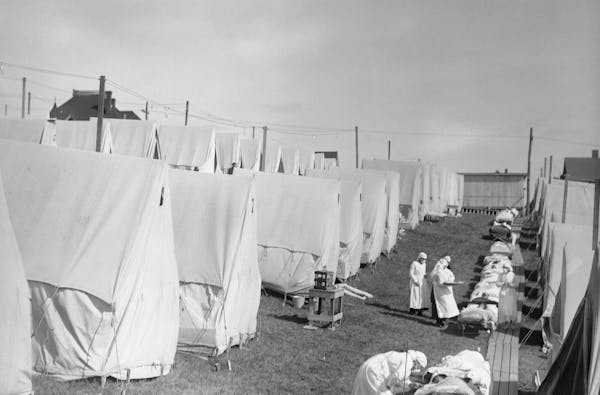
A flu camp in Lawrence, Maine during the 1918 influenza pandemic. Nurses and doctors tried desperate measures to stop the spread of the disease, which ultimately killed more than 675,000 people in the U.S. alone. Bettmann/Getty Images

Severe cases of both COVID-19 and the flu require the same lifesaving medical equipment. This highlights the importance of getting the flu vaccine for not only your own personal health but also the health of your community. Receiving the flu vaccine will help reduce the burden of respiratory illness on our already very overstretched health care system. By increasing flu vaccination rates, we can reduce the overall impact of respiratory illnesses on the population and hence lower the resulting burden on the health care system during the COVID-19 pandemic.

Because flu vaccination protects against one of these respiratory illnesses, the CDC recommends everyone (with few exceptions) six months of age and older get an annual flu vaccine. While the flu vaccine will not protect you against COVID-19, the flu vaccine will reduce your risk of developing the flu as well as reduce your risks of flu-related complications including hospitalization and even death.

While it may seem like there is so much out of our control during this pandemic, getting the flu vaccine, practicing proper hand washing, social distancing and wearing face coverings are within our control and will protect not only you but also your family and community.

If you are not getting the flu vaccine from your employer, think about alternative sources now. Vaccines should be available in most areas by Sept. 1.

  • Call you doctor’s office to ask how you can get a flu shot.
  • Call your local public health department.
  • Consider getting a vaccine while you are grocery shopping or picking up prescriptions.

Mainly, make sure you take advantage of this potentially lifesaving vaccine. Get it on your calendar for early September now. And remember, the flu shot cannot give you the flu.


COVID-19 long haulers on months of debilitating symptoms: ‘They don’t know how to make me better’

https://www.yahoo.com/lifestyle/covid-19-long-haulers-debilitating-symptoms-210633981.html

COVID-19 'long-haulers' complain of symptoms lasting weeks and ...

SARS-CoV-2, the virus that causes COVID-19, has prompted more questions than science can answer. But of the many puzzles that remain, few are more perplexing — or urgent — than this one: Why do some people get sick and never get better?

This group of individuals, nicknamed the “long haulers,” are people of all ages, races and genders. Survivors of the virus who, months later, find themselves battling a constellation of debilitating side effects that disrupt their ability to function. In a study released by Indiana University School of Medicine this August, in partnership with COVID-19 nonprofit Survivor Corps, long haulers describe nearly 100 side effects, from fatigue and body aches to night sweats and neuropathy.

The study casts doubt on the idea that the COVID-19 is a respiratory illness that lasts only a few weeks, suggesting instead that it may be a vascular disease capable of wreaking havoc on the eyes, skin, heart and brain, long after the sore throat goes away. While some hospitals, such as Mount Sinai in New York, have launched recovery centers for post-COVID care, the Centers for Disease Control and Prevention has released little data on the longterm prognosis for those who survive.

In the interim, it’s the long haulers themselves who are helping demystify their strange new world. Karyn Bishof, a firefighter paramedic in Florida, is one of them. After coming down with sore throat, nausea and fatigue in late March, she tested positive for COVID-19 and was told her case was mild. But as the weeks went on, the symptoms didn’t go away. Over four months later, the fatigue remains constant and along with it, a host of other exhausting side effects.

“I’m dealing with drastic changes in heart rate … My oxygen levels drop into the low 90, sometimes even the low eighties, I’m still dealing with headache, memory issues. I have a lot of trouble recalling things or sometimes finding my words,” Bishof tells Yahoo Life. “I’m still dealing with a runny and stuffy nose on and off. And then just a ton of other neurological issues, cardiac issues, chest pain, shortness of breath. I mean, the list goes on.”

Jessica Hulett, a writer in New York, has been battling similar effects. “The fatigue has been really persistent … All I want to do is go to sleep from like two o’clock on every day, and some days I have to,” says Hulett. “I’ve also started having a lot of like cognitive difficulties. Like I can’t remember things, I can’t focus on things.

Both Hulett and Bishof have struggled to find answers from doctors about what’s happening. “I’ve been talking a lot to my primary care doctor … she has kind of admitted, she’s like, ‘We don’t know, like we don’t know how long you’re going to be sick,’” says Hulett. “We don’t know what’s gonna make you better. We don’t know why you’re still sick.”

Luis Santos, a native-New Yorker who’s been experiencing “crushing fatigue,” cognitive issues and an unexplained spike in his cholesterol since getting COVID-19 in March, is too. “I have a team of about seven or eight doctors … and it’s a very scary thing that all these physicians are saying they don’t know. They don’t know how to make me better,” says Santos. “They’re hoping that with time they get better.”

Natalie Lambert, an associate research professor at IU School of Medicine and the lead author of the long haulers study, says this reaction is common. “I feel like this is a huge problem in health care around the world...We’re just kind of a society where you’re healthy until you can prove that you’re sick,” Lambert tells Yahoo Life. “If you’re experiencing something that’s outside of the standard of medical care, it can be really hard to get answers.”

Lambert, who began talking to patients after seeing a “wide range of COVID-19 symptoms” early on, says she doesn’t blame doctors for the gap in knowledge. “They can only treat you with the appropriate and approved standard treatments,” says Lambert. “They can’t experiment on people — so it’s understandable. But if there’s no answer to your question, what can you do?”

Survivor Corps, a grassroots movement connecting COVID-19 survivors, is trying to figure out just that — hosting webinars, sharing research and creating a Facebook group nearly 100,000 people strong. It’s from this group that Lambert pulled information about side effects, using an open-ended survey that allowed long haulers to add their symptoms.

She says the importance of these individuals, and their stories, can’t be overstated. “They are the world’s experts in the disease at this point in time,” Lambert tells Yahoo Life. “I mean, these patients know more about the disease than the medical community does.”

She hopes her research will serve as validation to long haulers — and proof that they’re not alone. “If you’re experiencing any of these symptoms, lots of people are experiencing these symptoms,” says Lambert. “And if your doctor won’t treat them, continue to advocate for yourself to try to get medical care because some of these can result in very serious health consequences.”

When it comes to the long haulers themselves, they’re urging others not to overlook the seriousness of this virus. “Right now the science for long haulers is showing that [COVID-19] doesn’t care about your age. It doesn’t care about your fitness level,” says Bishof. “It doesn’t care if you’re a firefighter-paramedic, or if you work on your computer from home … Do everything you can to protect yourself and others. This is not just a cold or a flu.”


Cash-Pinched Hospitals Press Congress to Break Virus Fund Logjam

https://news.bloomberglaw.com/health-law-and-business/cash-pinched-hospitals-press-congress-to-break-virus-fund-logjam

DIY Money Tree Gift Idea - So TIPical Me

Hospital groups are pressing Congress to put more money into a relief fund for hospitals and providers, even as labor data showed signs of a turnaround for the health-care industry last month.

Congressional leaders are at a standstill over the next coronavirus-relief package and it could be weeks until lawmakers vote on legislation. Hospital groups have said the $175 billion Congress already approved has been a crucial lifeline to keep hospitals from laying off more staff or potentially closing. Some are worried the money may start to run dry soon.

The coronavirus is prompting many Americans to delay health care, and further funding delays exacerbate the need for assistance, the hospitals warn. Some providers that shed jobs earlier in the pandemic have begun adding them back, but employment levels remain far below where they once were.

“The longer we are in the pandemic the more clear it becomes that this is not going to be a short-term issue,” Beth Feldpush, senior vice president of policy and advocacy at America’s Essential Hospitals, said.

Leaders of both parties back more federal funding to help hospitals and doctors’ offices stay in business. Democrats proposed $100 billion for the industry, as hospital groups such as AEH sought, in virus-relief legislation (H.R. 6800) the House passed earlier this year. Republicans included $25 billion in their counterproposal.

The Health and Human Services Department has promised about $115 billion of the $175 billion in relief Congress approved this year to help health-care providers offset their Covid-19-related losses, according to agency data. That leaves the industry with about $60 billion left.

The U.S. exceeded 5 million confirmed Covid-19 cases Aug. 9, according to data from Bloomberg News and Johns Hopkins University, more than any other country. Almost 165,000 people in the U.S. have died from the virus.

Industry Impact

The health-care industry added more than 126,000 jobs in July, according to data released last week by the Bureau of Labor Statistics. Dentist offices and hospitals, the section of the industry that was laying off tens of thousands of people in April and May, accounted for more than 70,000 of those new jobs.

Still, there were 797,000 fewer health-care jobs compared to before the pandemic, according to BLS.

The virus hit parts of the heath-care industry unevenly. Large health systems such as HCA Healthcare Inc. and Universal Health Services Inc. posted better-than-expected profits for the second quarter of 2020.

Some hospitals that didn’t have much cash-on-hand to start the year are struggling with lower profits and may need added relief if the virus continues to keep Americans from seeking care, industry watchers said.

“No hospital is going to come out of this year better than they were in prior years,” Suzie Desai, senior director for S&P Global Rating’s Not-for-Profit Health Care group, said.

The federal relief funds helped buoy hospitals this year, hospital groups argue. The American Hospital Association estimates that without relief funds, hospitals margins would have been down 15% and could be down 11% at the end of 2020 if the virus continues to spread at its current pace.

The AHA estimated losses for the nation’s hospitals and health systems will reach $323 billion this year.


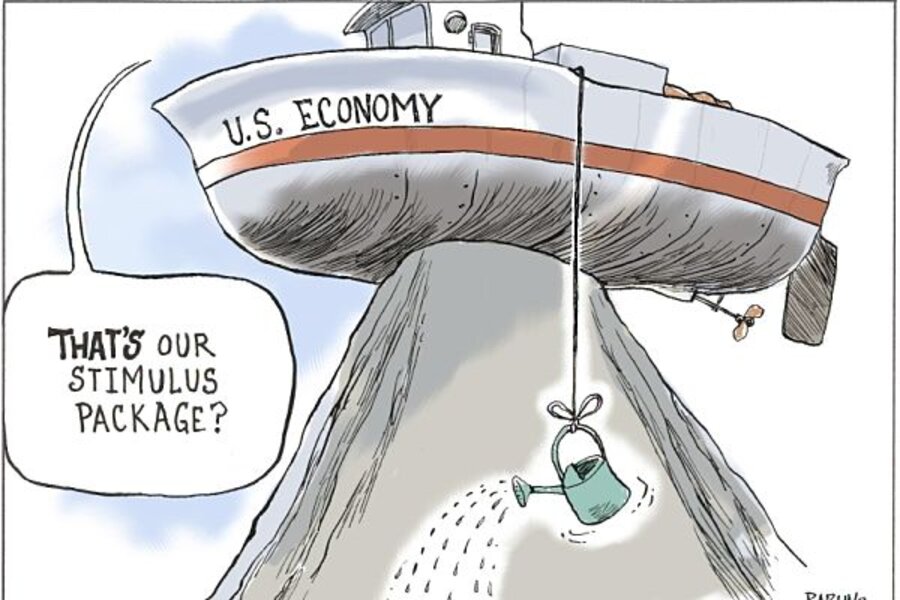
Cartoon – New Economic Stimulus Package

Obama's stimulus did NOT raise government spending - CSMonitor.com

Cartoon – Unemployment Insurance vs. Raising the Minimum Wage

If you make less than $600 week, you’re underpaid. Period.

No photo description available.

How COVID-19 might increase risk of memory loss and cognitive decline

https://theconversation.com/how-covid-19-might-increase-risk-of-memory-loss-and-cognitive-decline-141940?utm_medium=email&utm_campaign=Latest%20from%20The%20Conversation%20for%20August%207%202020%20-%201698416388&utm_content=Latest%20from%20The%20Conversation%20for%20August%207%202020%20-%201698416388+Version+A+CID_8af0fc3134205f68bf387b5096319fb1&utm_source=campaign_monitor_us&utm_term=How%20COVID-19%20might%20increase%20risk%20of%20memory%20loss%20and%20cognitive%20decline

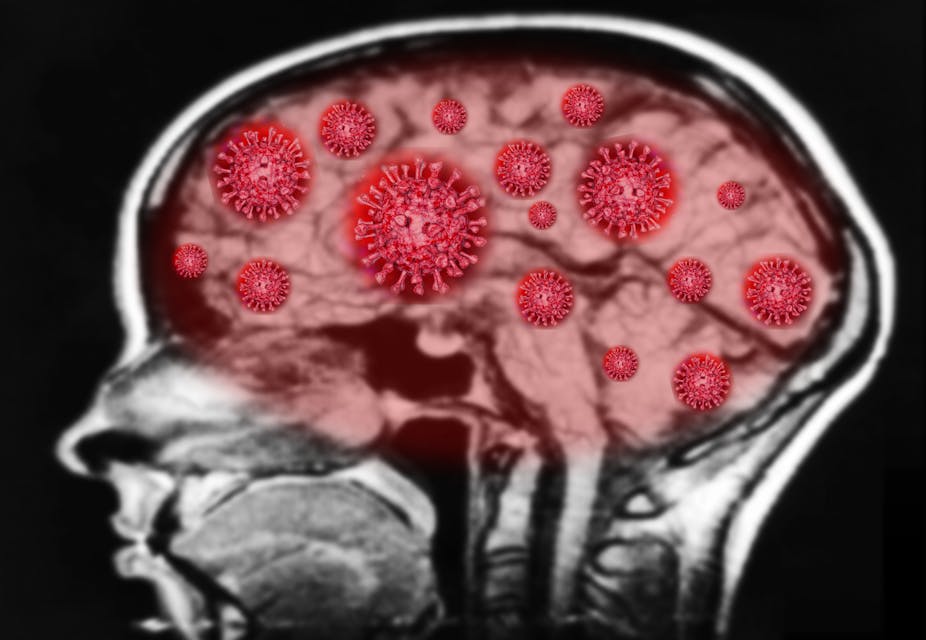
Of all frightening ways that the SARS-COV-2 virus affects the body, one of the more insidious is the effect of COVID-19 on the brain.

It is now clear that many patients suffering from COVID-19 exhibit neurological symptoms, from loss of smell, to delirium, to an increased risk of stroke. There are also longer-lasting consequences for the brain, including myalgic encephalomyelitis /chronic fatigue syndrome and Guillain-Barre syndrome.

These effects may be caused by direct viral infection of brain tissue. But growing evidence suggests additional indirect actions triggered via the virus’s infection of epithelial cells and the cardiovascular system, or through the immune system and inflammation, contribute to lasting neurological changes after COVID-19.

I am a neuroscientist specializing in how memories are formed, the role of immune cells in the brain and how memory is persistently disrupted after illness and immune activation. As I survey the emerging scientific literature, my question is: Will there be a COVID-19-related wave of memory deficits, cognitive decline and dementia cases in the future?

The immune system and the brain

Many of the symptoms we attribute to an infection are really due to the protective responses of the immune system. A runny nose during a cold is not a direct effect of the virus, but a result of the immune system’s response to the cold virus. This is also true when it comes to feeling sick. The general malaise, tiredness, fever and social withdrawal are caused by activation of specialized immune cells in the brain, called neuroimmune cells, and signals in the brain.

These changes in brain and behavior, although annoying for our everyday lives, are highly adaptive and immensely beneficial. By resting, you allow the energy-demanding immune response to do its thing. A fever makes the body less hospitable to viruses and increases the efficiency of the immune system. Social withdrawal may help decrease spread of the virus.

In addition to changing behavior and regulating physiological responses during illness, the specialized immune system in the brain also plays a number of other roles. It has recently become clear that the neuroimmune cells that sit at the connections between brain cells (synapses), which provide energy and minute quantities of inflammatory signals, are essential for normal memory formation.

Unfortunately, this also provides a way in which illnesses like COVID-19 can cause both acute neurological symptoms and long-lasting issues in the brain.

Microglia are specialized immune cells in the brain. In healthy states, they use their arms to test the environment. During an immune response, microglia change shape to engulf pathogens. But they can also damage neurons and their connections that store memory.

During illness and inflammation, the specialized immune cells in the brain become activated, spewing vast quantities of inflammatory signals, and modifying how they communicate with neurons. For one type of cell, microglia, this means changing shape, withdrawing the spindly arms and becoming blobby, mobile cells that envelop potential pathogens or cell debris in their path. But, in doing so, they also destroy and eat the neuronal connections that are so important for memory storage.

Another type of neuroimmune cell called an astrocyte, typically wraps around the connection between neurons during illness-evoked activation and dumps inflammatory signals on these junctions, effectively preventing the changes in connections between neurons that store memories.

Because COVID-19 involves a massive release of inflammatory signals, the impact of this disease on memory is particularly interesting to me. That is because there are both short-term effects on cognition (delirium), and the potential for long-lasting changes in memory, attention and cognition. There is also an increased risk for cognitive decline and dementia, including Alzheimer’s disease, during aging.


How does inflammation exert long-lasting effects on memory?

If activation of neuroimmune cells is limited to the duration of the illness, then how can inflammation cause long-lasting memory deficits or increase the risk of cognitive decline?

Both the brain and the immune system have specifically evolved to change as a consequence of experience, in order to neutralize danger and maximize survival. In the brain, changes in connections between neurons allows us to store memories and rapidly change behavior to escape threat, or seek food or social opportunities. The immune system has evolved to fine-tune the inflammatory response and antibody production against previously encountered pathogens.

Yet long-lasting changes in the brain after illness are also closely linked to increased risk for age-related cognitive decline and Alzheimer’s disease. The disruptive and destructive actions of neuroimmune cells and inflammatory signaling can permanently impair memory. This can occur through permanent damage to the neuronal connections or neurons themselves and also via more subtle changes in how neurons function.

The potential connection between COVID-19 and persistent effects on memory are based on observations of other illnesses. For example, many patients who recover from heart attack or bypass surgery report lasting cognitive deficits that become exaggerated during aging.

Another major illness with a similar cognitive complications is sepsis – multi-organ dysfunction triggered by inflammation. In animal models of these diseases, we also see impairments of memory, and changes in neuroimmune and neuronal function that persist weeks and months after illness.

Even mild inflammationincluding chronic stress, are now recognized as risk factors for dementias and cognitive decline during aging.

In my own laboratory, I and my colleagues have also observed that even without bacterial or viral infection, triggering inflammatory signaling over a short-term period results in long-lasting changes in neuronal function in memory-related brain regions and memory impairments.


Does COVID-19 increase risk for cognitive decline?

It will be many years before we know whether the COVID-19 infection causes an increased risk for cognitive decline or Alzheimer’s disease. But this risk may be decreased or mitigated through prevention and treatment of COVID-19.

Prevention and treatment both rely on the ability to decrease the severity and duration of illness and inflammation. Intriguingly, very new research suggests that common vaccines, including the flu shot and pneumonia vaccines, may reduce risk for Alzheimer’s.

Additionally, several emerging treatments for COVID-19 are drugs that suppress excessive immune activation and inflammatory state. Potentially, these treatments will also reduce the impact of inflammation on the brain, and decrease the impact on long-term brain health.

COVID-19 will continue to impact health and well-being long after the pandemic is over. As such, it will be critical to continue to assess the effects of COVID-19 illness in vulnerability to later cognitive decline and dementias.

In doing so, researchers will likely gain critical new insight into the role of inflammation across the life-span in age-related cognitive decline. This will aid in the development of more effective strategies for prevention and treatment of these debilitating illnesses.


Cartoon – Wheel of Misfortune

SitNews - Newsmaker Interviews: Good Luck on Sweeping Health Care ...

COVID-19 long-term toll signals billions in healthcare costs ahead

https://www.reuters.com/article/us-health-coronavirus-fallout-insight/long-term-complications-of-covid-19-signals-billions-in-healthcare-costs-ahead-idUSKBN24Z1CM?fbclid=IwAR2f9fSnhgGBVvIe1fKX2EO5kKSG7TwUesAMUGrG0jBSfoBrBYltR1e9Nik

COVID-19 long-term toll signals billions in healthcare costs ahead ...

Late in March, Laura Gross, 72, was recovering from gall bladder surgery in her Fort Lee, New Jersey, home when she became sick again.

Her throat, head and eyes hurt, her muscles and joints ached and she felt like she was in a fog. Her diagnosis was COVID-19. Four months later, these symptoms remain.

Gross sees a primary care doctor and specialists including a cardiologist, pulmonologist, endocrinologist, neurologist, and gastroenterologist.

“I’ve had a headache since April. I’ve never stopped running a low-grade temperature,” she said.

Studies of COVID-19 patients keep uncovering new complications associated with the disease.

With mounting evidence that some COVID-19 survivors face months, or possibly years, of debilitating complications, healthcare experts are beginning to study possible long-term costs.

Bruce Lee of the City University of New York (CUNY) Public School of Health estimated that if 20% of the U.S. population contracts the virus, the one-year post-hospitalization costs would be at least $50 billion, before factoring in longer-term care for lingering health problems. Without a vaccine, if 80% of the population became infected, that cost would balloon to $204 billion.

Some countries hit hard by the new coronavirus – including the United States, Britain and Italy – are considering whether these long-term effects can be considered a “post-COVID syndrome,” according to Reuters interviews with about a dozen doctors and health economists.

Some U.S. and Italian hospitals have created centers devoted to the care of these patients and are standardizing follow-up measures.

Britain’s Department of Health and the U.S. Centers for Disease Control and Prevention are each leading national studies of COVID-19’s long-term impacts. An international panel of doctors will suggest standards for mid- and long-term care of recovered patients to the World Health Organization (WHO) in August.

YEARS BEFORE THE COST IS KNOWN

More than 17 million people have been infected by the new coronavirus worldwide, about a quarter of them in the United States.

Healthcare experts say it will be years before the costs for those who have recovered can be fully calculated, not unlike the slow recognition of HIV, or the health impacts to first responders of the Sept. 11, 2001 attacks on the World Trade Center in New York.

They stem from COVID-19’s toll on multiple organs, including heart, lung and kidney damage that will likely require costly care, such as regular scans and ultrasounds, as well as neurological deficits that are not yet fully understood.

A JAMA Cardiology study found that in one group of COVID-19 patients in Germany aged 45 to 53, more than 75% suffered from heart inflammation, raising the possibility of future heart failure.

A Kidney International study found that over a third of COVID-19 patients in a New York medical system developed acute kidney injury, and nearly 15% required dialysis.

Dr. Marco Rizzi in Bergamo, Italy, an early epicenter of the pandemic, said the Giovanni XXIII Hospital has seen close to 600 COVID-19 patients for follow-up. About 30% have lung issues, 10% have neurological problems, 10% have heart issues and about 9% have lingering motor skill problems. He co-chairs the WHO panel that will recommend long-term follow-up for patients.

“On a global level, nobody knows how many will still need checks and treatment in three months, six months, a year,” Rizzi said, adding that even those with mild COVID-19 “may have consequences in the future.”

Milan’s San Raffaele Hospital has seen more than 1,000 COVID-19 patients for follow-up. While major cardiology problems there were few, about 30% to 40% of patients have neurological problems and at least half suffer from respiratory conditions, according to Dr. Moreno Tresoldi.

Some of these long-term effects have only recently emerged, too soon for health economists to study medical claims and make accurate estimates of costs.

In Britain and Italy, those costs would be borne by their respective governments, which have committed to funding COVID-19 treatments but have offered few details on how much may be needed.

In the United States, more than half of the population is covered by private health insurers, an industry that is just beginning to estimate the cost of COVID-19.

CUNY’s Lee estimated the average one-year cost of a U.S. COVID-19 patient after they have been discharged from the hospital at $4,000, largely due to the lingering issues from acute respiratory distress syndrome (ARDS), which affects some 40% of patients, and sepsis.

The estimate spans patients who had been hospitalized with moderate illness to the most severe cases, but does not include other potential complications, such as heart and kidney damage.

Even those who do not require hospitalization have average one-year costs after their initial illness of $1,000, Lee estimated.

‘HARD JUST TO GET UP’

Extra costs from lingering effects of COVID-19 could mean higher health insurance premiums in the United States. Some health plans have already raised 2021 premiums on comprehensive coverage by up to 8% due to COVID-19, according to the Kaiser Family Foundation.

Anne McKee, 61, a retired psychologist who lives in Knoxville, Tennessee and Atlanta, had multiple sclerosis and asthma when she became infected nearly five months ago. She is still struggling to catch her breath.

“On good days, I can do a couple loads of laundry, but the last several days, it’s been hard just to get up and get a drink from the kitchen,” she said.

She has spent more than $5,000 on appointments, tests and prescription drugs during that time. Her insurance has paid more than $15,000 including $240 for a telehealth appointment and $455 for a lung scan.

“Many of the issues that arise from having a severe contraction of a disease could be 3, 5, 20 years down the road,” said Dale Hall, Managing Director of Research with the Society of Actuaries.

To understand the costs, U.S. actuaries compare insurance records of coronavirus patients against people with a similar health profile but no COVID-19, and follow them for years.

The United Kingdom aims to track the health of 10,000 hospitalized COVID-19 patients over the first 12 months after being discharged and potentially as long as 25 years. Scientists running the study see the potential for defining a long-term COVID-19 syndrome, as they found with Ebola survivors in Africa.

“Many people, we believe will have scarring in the lungs and fatigue … and perhaps vascular damage to the brain, perhaps, psychological distress as well,” said Professor Calum Semple from the University of Liverpool.

Margaret O’Hara, 50, who works at a Birmingham hospital is one of many COVID-19 patients who will not be included in the study because she had mild symptoms and was not hospitalized. But recurring health issues, including extreme shortness of breath, has kept her out of work.

O’Hara worries patients like her are not going to be included in the country’s long-term cost planning.

“We’re going to need … expensive follow-up for quite a long time,” she said.


The Future of Hospitals in Post-COVID America (Part 1): The Market Response

Click to access CBC_72_08052020_Final.pdf


[Readers’ Note: This is the first of two articles on the Future of Hospitals in Post-COVID America. This article
examines how market forces are consolidating, rationalizing and redistributing acute care assets within the
broader industry movement to value-based care delivery. The second article, which will publish next month,
examines gaps in care delivery and the related public policy challenges of providing appropriate, accessible
and affordable healthcare services in medically-underserved communities.]

In her insightful 2016 book, The Gray Rhino: How to Recognize and Act on the Obvious Dangers We Ignore,
Michelle Wucker coins the term “Gray Rhinos” and contrasts them with “Black Swans.” That distinction is
highly relevant to the future of American hospitals.

Black Swans are high impact events that are highly improbable and difficult to predict. By contrast, Gray
Rhinos are foreseeable, high-impact events that we choose to ignore because they’re complex, inconvenient
and/or fortified by perverse incentives that encourage the status quo. Climate change is a powerful example
of a charging Gray Rhino.

In U.S. healthcare, we are now seeing what happens when a Gray Rhino and a Black Swan collide.
Arguably, the nation’s public health defenses should anticipate global pandemics and apply resources
systematically to limit disease spread. This did not happen with the coronavirus pandemic.

Instead, COVID-19 hit the public healthcare infrastructure suddenly and hard. This forced hospitals and health systems to dramatically reduce elective surgeries, lay off thousands and significantly change care delivery with the adoption of new practices and services like telemedicine.

In comparison, many see the current American hospital business model as a Gray Rhino that has been charging toward
unsustainability for years with ever-building momentum.

Even with massive and increasing revenue flows, hospitals have long struggled with razor-thin margins, stagnant payment rates and costly technology adoptions. Changing utilization patterns, new and disruptive competitors, pro-market regulatory rules and consumerism make their traditional business models increasingly vulnerable and, perhaps, unsustainable.

Despite this intensifying pressure, many hospitals and health systems maintain business-as-usual practices because transformation is so difficult and costly. COVID-19 has made the imperative of change harder to ignore or delay addressing.

For a decade, the transition to value-based care has dominated debate within U.S. healthcare and absorbed massive strategic,
operational and financial resources with little progress toward improved care outcomes, lower costs and better customer service. The hospital-based delivery system remains largely oriented around Fee-for-Service reimbursement.

Hospitals’ collective response to COVID-19, driven by practical necessity and financial survival, may accelerate the shift to value-based care delivery. Time will tell.

This series explores the repositioning of hospitals during the next five years as the industry rationalizes an excess supply of acute care capacity and adapts to greater societal demands for more appropriate, accessible and affordable healthcare services.

It starts by exploring the role of the marketplace in driving hospital consolidation and the compelling need to transition to value-based care delivery and payment models.

COVID’s DUAL SHOCKS TO PATIENT VOLUME

Many American hospitals faced severe financial and operational challenges before COVID-19. The sector has struggled to manage ballooning costs, declining margins and waves of policy changes. A record 18 rural hospitals closed in 2019. Overall, hospitals saw a 21% decline in operating margins in 2018-2019.

COVID intensified those challenges by administering two shocks to the system that decreased the volume of hospital-based activities and decimated operating margins.

The first shock was immediate. To prepare for potential surges in COVID care, hospitals emptied beds and cancelled most clinic visits, outpatient treatments and elective surgeries. Simultaneously, they incurred heavy costs for COVID-related equipment (e.g. ventilators,PPE) and staffing. Overall, the sector experienced over $200 billion in financial losses between March and June 20204.

The second, extended shock has been a decrease in needed but not necessary care. Initially, many patients delayed seeking necessary care because of perceived infection risk. For example, Emergency Department visits declined 42% during the early phase of the pandemic.

Increasingly, patients are also delaying care because of affordability concerns and/or the loss of health insurance. Already, 5.4 million people have lost their employer-sponsored health insurance. This will reduce incremental revenues associated with higher-paying commercial insurance claims across the industry. Additionally, avoided care reduces patient volumes and hospital revenues today even as it increases the risk and cost of future acute illness.

The infusion of emergency funding through the CARES Act helped offset some operating losses but it’s unclear when and even whether utilization patterns and revenues will return to normal pre-COVID levels. Shifts in consumer behavior, reductions in insurance coverage, and the emergence of new competitors ranging from Walmart to enhanced primary care providers will likely challenge the sector for years to come.

The disruption of COVID-19 will serve as a forcing function, driving meaningful changes to traditional hospital business models and the competitive landscape. Frankly, this is long past due. Since 1965, Fee-for-Service (FFS) payment has dominated U.S. healthcare and created pervasive economic incentives that can serve to discourage provider responsiveness in transitioning to value-based care delivery, even when aligned to market demand.

Telemedicine typifies this phenomenon. Before COVID, CMS and most health insurers paid very low rates for virtual care visits or did not cover them at all. This discouraged adoption of an efficient, high-value care modality until COVID.

Unable to conduct in-person clinical visits, providers embraced virtual care visits and accelerated its mass adoption. CMS and
commercial health insurers did their part by paying for virtual care visits at rates equivalent to in-person clinic visits. Accelerated innovation in care delivery resulted.


THE COMPLICATED TRANSITION TO VALUE

Broadly speaking, health systems and physician groups that rely almost exclusively on activity-based payment revenues have struggled the most during this pandemic. Vertically integrated providers that offer health insurance and those receiving capitated payments in risk-based contracts have better withstood volume losses.

Modern Healthcare notes that while provider data is not yet available, organizations such as Virginia Care Partners, an integrated network and commercial ACO; Optum Health (with two-thirds of its revenue risk-based); and MediSys Health Network, a New Yorkbased NFP system with 148,000 capitated and 15,000 shared risk patients, are among those navigating the turbulence successfully. As the article observes,

providers paid for value have had an easier time weathering the storm…. helped by a steady source of
income amid the chaos. Investments they made previously in care management, technology and social
determinants programs equipped them to pivot to new ways of providing care.

They were able to flip the switch on telehealth, use data and analytics to pinpoint patients at risk for
COVID-19 infection, and deploy care managers to meet the medical and nonclinical needs of patients even
when access to an office visit was limited.

Supporting this post-COVID push for value-based care delivery, six former leaders from CMS wrote to Congress in
June 2020 calling for providers, commercial insurers and states to expand their use of value-based payment models to
encourage stability and flexibility in care delivery.

If value-based payment models are the answer, however, adoption to date has been slow, limited and difficult. Ten
years after the Affordable Care Act, Fee-for-Service payment still dominates the payer landscape. The percentage of
overall provider revenue in risk-based capitated contracts has not exceeded 20%

Despite improvements in care quality and reductions in utilization rates, cost savings have been modest or negligible.
Accountable Care Organizations have only managed at best to save a “few percent of Medicare spending, [but] the
amount varies by program design.”

While most health systems accept some forms of risk-based payments, only 5% of providers expect to have a majority
(over 80%) of their patients in risk-based arrangements within 5 years.

The shift to value is challenging for numerous reasons. Commercial payers often have limited appetite or capacity for
risk-based contracting with providers. Concurrently, providers often have difficulty accessing the claims data they need
from payers to manage the care for targeted populations.

The current allocation of cost-savings between buyers (including government, employers and consumers), payers
(health insurance companies) and providers discourages the shift to value-based care delivery. Providers would
advance value-based models if they could capture a larger percentage of the savings generated from more effective
care management and delivery. Those financial benefits today flow disproportionately to buyers and payers.

This disconnection of payment from value creation slows industry transformation. Ultimately, U.S. healthcare will not
change the way it delivers care until it changes the way it pays for care. Fortunately, payment models are evolving to
incentivize value-based care delivery.

As payment reform unfolds, however, operational challenges pose significant challenges to hospitals and health
systems. They must adopt value-oriented new business models even as they continue to receive FFS payments. New
and old models of care delivery clash.

COVID makes this transition even more formidable as many health systems now lack the operating stamina and
balance sheet strength to make the financial, operational and cultural investments necessary to deliver better
outcomes, lower costs and enhanced customer service.


MARKET-DRIVEN CONSOLIDATION AND TRANSFORMATION

Full-risk payment models, such as bundled payments for episodic care and capitation for population health, are the
catalyst to value-based care delivery. Transition to value-based care occurs more easily in competitive markets with
many attributable lives, numerous provider options and the right mix of willing payers.

As increasing numbers of hospitals struggle financially, the larger and more profitable health systems are expanding
their networks, capabilities and service lines through acquisitions. This will increase their leverage with commercial
payers and give them more time to adapt to risk-based contracting and value-based care delivery.

COVID also will accelerate acquisition of physician practices. According to an April 2020 MGMA report, 97% of
physician practices have experienced a 55% decrease in revenue, forcing furloughs and layoffs15. It’s estimated the
sector could collectively lose as much as $15.1 billion in income by the end of September 2020.

Struggling health systems and physician groups that read the writing on the wall will pro-actively seek capital or
strategic partners that offer greater scale and operating stability. Aggregators can be selective in their acquisitions,
seeking providers that fuel growth, expand contiguous market positions and don’t dilute balance sheets.

Adding to the sector’s operating pressure, private equity, venture investors and payers are pouring record levels of
funding into asset-light and virtual delivery companies that are eager to take on risk, lower prices by routing procedures
and capture volume from traditional providers. With the right incentives, market-driven reforms will reallocate resources
to efficient companies that generate compelling value.

As this disruption continues to unfold, rural and marginal urban communities that lack robust market forces will
experience more facility and practice closures. Without government support to mitigate this trend, access and care gaps
that already riddle American healthcare will unfortunately increase.


WINNING AT VALUE

The average hospital generates around $11,000 per patient discharge. With ancillary services that can often add up to
more than $15,000 per average discharge. Success in a value-based system is predicated on reducing those
discharges and associated costs by managing acute care utilization more effectively for distinct populations (i.e.
attributed lives).

This changes the orientation of healthcare delivery toward appropriate and lower cost settings. It also places greater
emphasis on preventive, chronic and outpatient care as well as better patient engagement and care coordination.
Such a realignment of care delivery requires the following:

 A tight primary care network (either owned or affiliated) to feed referrals and reduce overall costs through
better preventive care.

 A gatekeeper or navigator function (increasingly technology-based) to manage / direct patients to the most
appropriate care settings and improve coordination, adherence and engagement.

 A carefully designed post-acute care network (including nursing homes, rehab centers, home care
services and behavioral health services, either owned or sufficiently controlled) to manage the 70% of
total episode-of-care costs that can occur outside the hospital setting.

 An IT infrastructure that can facilitate care coordination across all providers and settings.

Quality data and digital tools that enhance care, performance, payment and engagement.

Experience with managing risk-based contracts.

 A flexible approach to care delivery that includes digital and telemedicine platforms as well as nontraditional sites of care.

Aligned or incentivized physicians.

Payer partners willing to share data and offload risk through upside and downside risk contracts.

Engaged consumers who act on their preferences and best interests.


While none of these strategies is new or controversial, assembling them into cohesive and scalable business models is
something few health systems have accomplished. It requires appropriate market conditions, deep financial resources,
sophisticated business acumen, operational agility, broad stakeholder alignment, compelling vision, and robust
branding.

Providers that fail to embrace value-based care for their “attributed lives” risk losing market relevance. In their relentless pursuit of increasing treatment volumes and associated revenues, they will lose market share to organizations that
deliver consistent and high-value care outcomes.

CONCLUSION: THE CHARGING GRAY RHINO

America needs its hospitals to operate optimally in normal times, flex to manage surge capacity, sustain themselves
when demand falls, create adequate access and enhance overall quality while lowering total costs. That is a tall order
requiring realignment, evolution, and a balance between market and policy reform measures.

The status quo likely wasn’t sustainable before COVID. The nation has invested heavily for many decades in acute and
specialty care services while underinvesting, on a relative basis, in primary and chronic care services. It has excess
capacity in some markets, and insufficient access in others.

COVID has exposed deep flaws in the activity-based payment as well as the nation’s underinvestment in public health.
Disadvantaged communities have suffered disproportionately. Meanwhile, the costs for delivering healthcare services
consume an ever-larger share of national GDP.

Transformational change is hard for incumbent organizations. Every industry, from computer and auto manufacturing to
retailing and airline transportation, confronts gray rhino challenges. Many companies fail to adapt despite clear signals
that long-term viability is under threat. Often, new, nimble competitors emerge and thrive because they avoid the
inherent contradictions and service gaps embedded within legacy business models.

The healthcare industry has been actively engaged in value-driven care transformation for over ten years with little to
show for the reform effort. It is becoming clear that many hospitals and health systems lack the capacity to operate
profitably in competitive, risk-based market environments.

This dismal reality is driving hospital market valuations and closures. In contrast, customers and capital are flowing to
new, alternative care providers, such as OneMedical, Oak Street Health and Village MD. Each of these upstart
companies now have valuations in the $ billions. The market rewards innovation that delivers value.

Unfortunately, pure market-driven reforms often neglect a significant and growing portion of America’s people. This gap has been more apparent as COVID exacts a disproportionate toll on communities challenged by higher population
density, higher unemployment, and fewer medical care options (including inferior primary and preventive care infrastructure).

Absent fundamental change in our hospitals and health systems, and investment in more efficient care delivery and
payment models, the nation’s post-COVID healthcare infrastructure is likely to deteriorate in many American
communities, making them more vulnerable to chronic disease, pandemics and the vicissitudes of life.

Article 2 in our “Future of Hospitals” series will explore the public policy challenges of providing appropriate, affordable and accessible healthcare to all American communities.


40% of Americans still putting off care

https://www.axios.com/newsletters/axios-vitals-65b6b9b9-ee8e-4b89-9688-c43c0146c4d6.html?utm_source=newsletter&utm_medium=email&utm_campaign=newsletter_axiosvitals&stream=top

40% of Americans continue to put off medical care - Axios

Roughly 40% of Americans have postponed getting medical care due to the coronavirus outbreak. That number has stayed around 40% in all 12 weeks of the Census Bureau’s Household Pulse Survey.

Why it matters: Hospitals and doctors started rescheduling surgeries and other appointments as early as mid-May, and many patient volumes are mostly back to pre-pandemic numbers, Axios’ Bob Herman writes.

  • But this data suggests there is still a major backlog of Americans who need care — a phenomenon that existed well before the pandemic.