12 hospitals laying off workers in response to COVID-19

https://www.beckershospitalreview.com/finance/12-hospitals-laying-off-workers-in-response-to-covid-19.html?utm_medium=email

Facing a financial squeeze, hospitals nationwide are cutting jobs

To address the financial fallout from the COVID-19 pandemic, hospitals across the nation are looking to cut costs by implementing furloughs, layoffs or pay cuts. 

U.S. hospitals are expected to lose $323.1 billion this year due to the pandemic, according to a recent report from the American Hospital Association. The total includes $120.5 billion in financial losses that hospitals are projected to see from July through December, as well as $202.6 billion in losses that were projected between March and June. The losses were largely due to a lower patient volume after canceling elective procedures. 

Although Congress allocated $175 billion to help hospitals offset some of the revenue losses and expense increases to prepare for the pandemic, hospitals have said it is not enough.

Nearly 270 hospitals and health systems have furloughed workers in response to the pandemic and several others have implemented layoffs. 

Below are 12 hospitals and health systems that have announced layoffs since June 1:

1. Trinity Health furloughs, lays off another 1,000 workers
Trinity Health, a 92-hospital system based in Livonia, Mich., will lay off and reduce work schedules of 1,000 employees.

2. Ohio children’s hospital cuts jobs
Dayton (Ohio) Children’s Hospital said it has cut jobs to help offset financial losses due to the COVID-19 pandemic.

3. Munson Healthcare to cut 25 leadership positions
Traverse City, Mich.-based Munson Healthcare cut 25 leadership positions to help offset financial losses amid the COVID-19 pandemic.

4. Erlanger lays off 93 nonclinical employees
Chattanooga, Tenn.-based Erlanger Health System has cut 93 nonclinical positions to help offset financial damage from the COVID-19 pandemic. The layoffs come after the health system cut 11 leadership positions June 12, including the CEO of Erlanger Western Carolina Hospital in Murphy, N.C., and made staff and pay cuts in March.

5. Michigan Medicine to lay off 738 employees by end of June
Ann Arbor-based Michigan Medicine planned to eliminate 738 positions by the end of June amid financial challenges from the COVID-19 pandemic.

6. Pennsylvania health system cuts 10% of workforce amid pandemic losses
As part of a restructuring effort to cut pandemic-related losses, State College, Pa.-based Mount Nittany Health System plans to lay off 10 percent of its workforce, or about 250 employees.

7. TriHealth eliminates 440 positions to cut costs
Cincinnati-based TriHealth cut 440 positions as part of a plan to trim at least $140 million in expenditures this year.

8. Layoffs hit U of Kansas Health System
The University of Kansas Health System St. Francis Campus in Topeka laid off employees after previously implementing furloughs.

9. Tower Health to cut 1,000 jobs
Citing a $212 million loss in revenue through May due to the COVID-19 pandemic, West Reading, Pa.-based Tower Health plans to cut 1,000 jobs.

10. Colorado hospital cuts 22 positions
Parkview Medical Center in Pueblo, Colo., eliminated 22 positions in response to the COVID-19 pandemic.

11. Arkansas Children’s cuts 42 positions
Little Rock-based Arkansas Children’s Hospital said it is eliminating 42 jobs as part of cost-savings measures in response to the COVID-19 pandemic.

12. North Carolina health system cuts 10% of workforce, closes clinics
Citing a financial hit from the COVID-19 pandemic, Lumberton, N.C.-based Southeastern Health will permanently close several clinics, cut 10 percent of its workforce and reduce executive pay.


Trinity Health expects $2B revenue plunge as it cuts, furloughs more staff

https://www.healthcaredive.com/news/trinity-health-cutting-cost-cutting-2-billion-revenue-shortfall/580738/

The Dumbest Things You Can Do With Your Money | Work + Money

Dive Brief:

  • Trinity Health, one of the nation’s largest nonprofit health systems, said Monday it will take more measures to cut costs due to the downturn spurred by the novel coronavirus. The restructuring plan includes eliminating positions, extending furloughs, severances and reductions in schedules. The decisions are being “customized” across the system based on factors that include volume projections and the cost and revenue challenges in each market.
  • The Livonia, Michigan-based hospital operator said it continues to treat COVID-19 patients, however, it has “for now seen declining numbers of very sick patients with COVID-19.”
  • The system said it expects revenue to be depressed or “below historical levels” for the remainder of this fiscal year and much of the next. It projects revenue to drop by $2 billion to $17.3 billion for fiscal year 2021, which starts after its June 30 year end.

Dive Insight:

In May, Trinity said it planned to furlough nearly 12% of its workforce — or 15,000 employees out of the 125,000 nationally.  

Trinity, one of the nation’s largest hospital operators with 92 facilities and operations across 22 states, is now broadening that restructuring, extending and adding new furloughs.

In a Monday bond filing, Trinity said its operations were “significantly” impacted by the effects of the pandemic as many operators saw depressed volumes due to shelter-in-place orders, which started in most of Trinity’s markets during the last two weeks of March.

“The effect of COVID-19 on the operating margins and financial results of Trinity Health is adverse and significant and, at this point, the duration of the pandemic and the length of time until Trinity Health returns to normal operations is unknown,” according to Monday’s bond filing.

The system said relief funds provided by the federal government have not been enough to cover its operating losses. Trinity has received $600 million in relief funds that do not have to be repaid and more in loans through the advanced Medicare payment program, according to a previous analysis by Healthcare Dive.

Still, the system said it has drawn on credit facilities totaling $1 billion to provide adequate liquidity during the pandemic. Trinity reported having 178 days cash on hand as of March 30.

Some nonprofits are faring better than Trinity and pulling back on earlier staffing cuts.

Mayo Clinic said last week it will call back its furloughed workers by the end of August and restore pay that had been cut due to the pandemic.

Mayo has some of the most cash on hand in terms of days when comparing other major nonprofit systems. Mayo had 252 days of cash on hand as of March 30, more than the other 20 largest nonprofits except Cleveland Clinic and New York-Presbyterian.


5 health systems cutting physician salaries

https://www.beckershospitalreview.com/compensation-issues/5-health-systems-cutting-physician-salaries.html?utm_medium=email

Pay Cuts, Furloughs, Redeployment for Doctors and Hospital Staff ...

To help offset revenue losses attributed to the COVID-19 pandemic, many hospitals have implemented pay cuts for staff, including physicians.

Below are five hospitals or health systems that have announced pay cuts for clinicians, reported by Becker’s Hospital Review in the last month.

1. ThedaCare physicians, advanced practice clinicians take pay cuts
ThedaCare physicians and advanced practice clinicians will take a 10 percent pay cut to help reduce the Appleton, Wis.-based health system’s financial hit due to the COVID-19 pandemic.

2. Providence to cut salaries of 1,200 providers
Renton, Wash.-based Providence plans to reduce the salaries of 1,200 high-paid medical providers in its Oregon division to help offset losses from the COVID-19 pandemic. Providence told Becker’s Hospital Review that the decision to cut salaries was made by local leadership and is limited to Oregon-based providers.

3. Cleveland’s University Hospitals to cut all physician, clinical leader pay
University Hospitals, based in Cleveland, said it will temporarily cut pay for all physicians and clinical leaders in the organization to help offset losses driven by the pandemic.

4. Sentara executives, physicians take pay cuts
Senior leaders, executives and physicians at Norfolk, Va.-based Sentara Healthcare are taking pay cuts to help address an anticipated $778 million shortfall against projected revenue due to COVID-19, the organization confirmed to Becker’s Hospital Review.

5. Loyola Medicine CEO, physicians take pay cuts amid pandemic
Leadership and faculty physicians at Maywood, Ill.-based Loyola Medicine will take three-month pay cuts in response to the COVID-19 pandemic, CEO Shawn Vincent said in an interview with Becker’s Hospital Review.


Why People Are Still Avoiding the Doctor (It’s Not the Virus)

Why People Are Still Avoiding the Doctor (It's Not the Virus ...

At first, people delayed medical care for fear of catching Covid. But as the pandemic caused staggering unemployment, medical care has become unaffordable for many.

At first, Kristina Hartman put off getting medical care out of concern about the coronavirus. But then she lost her job as an administrator at a truck manufacturer in McKinney, Texas.

While she still has health insurance, she worries about whether she will have coverage beyond July, when her unemployment is expected to run out.

“It started out as a total fear of going to the doctor,” she said.

“I definitely am avoiding appointments.”

Ms. Hartman, who is 58, skipped a regular visit with her kidney doctor, and has delayed going to the endocrinologist to follow up on some abnormal lab results.

While hospitals and doctors across the country say many patients are still shunning their services out of fear of contagion — especially with new cases spiking — Americans who lost their jobs or have a significant drop in income during the pandemic are now citing costs as the overriding reason they do not seek the health care they need.

“We are seeing the financial pressure hit,” said Dr. Bijoy Telivala, a cancer specialist in Jacksonville, Fla. “This is a real worry,” he added, explaining that people are weighing putting food on the table against their need for care. “You don’t want a 5-year-old going hungry.”

Among those delaying care, he said, was a patient with metastatic cancer who was laid off while undergoing chemotherapy. He plans to stop treatments while he sorts out what to do when his health insurance coverage ends in a month.

The twin risks in this crisis — potential infection and the cost of medical care — have become daunting realities for the millions of workers who were furloughed, laid off or caught in the economic downturn. It echoes the scenarios that played out after the 2008 recession, when millions of Americans were unemployed and unable to afford even routine visits to the doctor for themselves or their children.

Almon Castor’s hours were cut at the steel distribution warehouse in Houston where he works about a month ago. Worried that a dentist might not take all the precautions necessary, he had been avoiding a root canal.

But the expense has become more pressing. He also works as a musician. “It’s not feasible to be able to pay for procedures with the lack of hours,” he said.

Nearly half of all Americans say they or someone they live with has delayed care since the onslaught of coronavirus, according to a survey last month from the Kaiser Family Foundation. While most of those individuals expected to receive care within the next three months, about a third said they planned to wait longer or not seek it at all.

While the survey didn’t ask people why they were putting off care, there is ample evidence that medical bills can be a powerful deterrent. “We know historically we have always seen large shares of people who have put off care for cost reasons,” said Liz Hamel, the director of public opinion and survey research at Kaiser.

And, just as the Great Recession led people to seek less hospital care, the current downturn is likely to have a significant impact, said Sara Collins, an executive at the Commonwealth Fund, who studies access to care. “This is a major economic recession,” she said. “It’s going to have an effect on people’s demand for health care.”

The inability to afford care is “going to be a bigger and bigger issue moving forward,” said Chas Roades, the co-founder of Gist Healthcare, which advises hospitals and doctors. Hospital executives say their patient volumes will remain at about 20 percent lower than before the pandemic.

“It’s going to be a jerky start back,” said Dr. Gary LeRoy, a physician in Dayton, Ohio, who is the president of the American Academy of Family Physicians. While some of his patients have returned, others are staying away.

But the consequences of these delays can be troubling. In a recent analysis of the sharp decline in emergency room visits during the pandemic, officials from the Centers for Disease Control and Prevention said there were worrisome signs that people who had heart attacks waited until their conditions worsened before going to the hospital.

Without income, many people feel they have no choice. Thomas Chapman stopped getting paid in March and ultimately lost his job as a director of sales. Even though he has high blood pressure and diabetes, Mr. Chapman, 64, didn’t refill any prescriptions for two months. “I stopped taking everything when I just couldn’t pay anymore,” he said.

After his legs began to swell, and he felt “very, very lethargic,” he contacted his doctor at Catalyst Health Network, a Texas group of primary care doctors, to ask about less expensive alternatives. A pharmacist helped, but Mr. Chapman no longer has insurance, and is not sure what he will do until he is eligible for Medicare later this year.

“We’re all having those conversations on a daily basis,” said Dr. Christopher Crow, the president of Catalyst, who said it was particularly tough in states, like Texas, that did not expand Medicaid. While some of those who are unemployed qualify for coverage under the Affordable Care Act, they may fall in the coverage gap where they do not receive subsidies to help them afford coverage.

Even those who are not concerned about losing their insurance are fearful of large medical bills, given how aggressively hospitals and doctors pursue people through debt collections, said Elisabeth Benjamin, a vice president at Community Service Society of New York, which works with people to get care.

“Americans are really very aware that their health care coverage is not as comprehensive as it should be, and it’s gotten worse over the past decade,” Ms. Benjamin said. After the last recession, they learned to forgo care rather than incur bills they can’t pay.

Geralyn Cerveny, who runs a day care in Kansas City, Mo., said she had Covid-19 in early April and is recovering. But her income has dropped as some families withdrew their children. Although her daughter is urging her to get some follow-up testing because she has some lingering symptoms from the virus, she is holding off because she does not want to end up with more medical bills if her health plan will not cover all of the care she needs. She said she would dread “a fight with the insurance company if you don’t meet their guidelines.”

Others are weighing what illness or condition merits the expense of a doctor or tests and other services. Eli Fels, a swim instructor and personal trainer who is pregnant, has been careful to stay up-to-date with her prenatal appointments in Cambridge, Mass. She and her doctor have relied on telemedicine appointments to reduce the risk of infection.

But Ms. Fels, who also lost her jobs but remains insured, has chosen not to receive care for her injured wrist in spite of concern over lasting damage. “I’ve put off medical care that doesn’t involve the baby,” she said, noting that her out-of-pocket cost for an M.R.I. to find out what was wrong “is not insubstantial.”

At Maimonides Medical Center in Brooklyn, doctors have already seen the impact of delaying care. During the height of the pandemic, people who had heart attacks and serious fractures avoided the emergency room. “It was as if they disappeared, but they didn’t disappear,” said Dr. Jack Choueka, the chair of orthopedics. “People were dying in home; they just weren’t coming into the hospital.”

In recent weeks, people have begun to return, but with conditions worsened because of the time they had avoided care. A baby with a club foot will now need a more complicated treatment because it was not addressed immediately after birth.

Another child who did not have imaging promptly was found to have a tumor. “That tumor may have been growing for months unchecked,” Dr. Choueka said.


Coronavirus Layoffs Keep Coming as Jobless Claims Top 45 Million

http://www.thefiscaltimes.com

About 1.5 million people filed for state unemployment benefits last week, the Department of Labor announced Thursday, bringing the 13-week total for first-time claims to more than 45 million. Another 760,000 filed new claims for Pandemic Unemployment Assistance, a temporary program for workers such as independent contractors who ordinarily do not qualify for unemployment payments.

While new jobless claims continue to decline, falling for the 11th straight week, the numbers remain startlingly high relative to previous recessions, and some economists have expressed concerns that the labor market is not healing as rapidly as they had hoped.

“It’s not clear why claims are still so high,” said Ian Shepherdson, chief economist at Pantheon Macroeconomics, in a note to clients. “[I]s it the initial shock still working its way up through businesses away from the consumer-facing jobs lost in the first wave, or is it businesses which thought they could survive now throwing in the towel, or both? Either way, these are disappointing numbers and serve to emphasize that a full recovery is going to take a long time.”


Tower Health cutting 1,000 jobs as COVID-19 losses mount

https://www.inquirer.com/business/health/tower-health-hospital-layoffs-covid-19-20200616.html

Tower Health cutting 1,000 jobs as COVID-19 losses mount

Tower Health on Tuesday announced that it is cutting 1,000 jobs, or about 8 percent of its workforce, citing the loss of $212 million in revenue through May because of the coronavirus restrictions on nonurgent care.

Fast-growing Tower had already furloughed at least 1,000 employees in April. It’s not clear how much overlap there is between the furloughed employees, some of whom have returned to work, and the people who are now losing their jobs permanently. Tower employs 12,355, including part-timers.

“The government-mandated closure of many outpatient facilities and the suspension of elective procedures caused a 40 percent drop in system revenue,” Tower’s president and chief executive, Clint Matthews, wrote in an email to staff. “At the same time, our spending increased for personal protective equipment, staff support, and COVID-related equipment needs.”

Despite the receipt of $66 million in grants through the federal CARES Act, Tower reported an operating loss of $91.6 million in the three months ended March 31, according to its disclosure to bondholders.

Tower, which is anchored by Reading Hospital in Berks County, expanded most recently with the December acquisition of St. Christopher’s Hospital for Children in a partnership with Drexel University. Tower paid $50 million for the hospital’s business, but also signed a long-term lease with a company that paid another $65 million for the real estate.

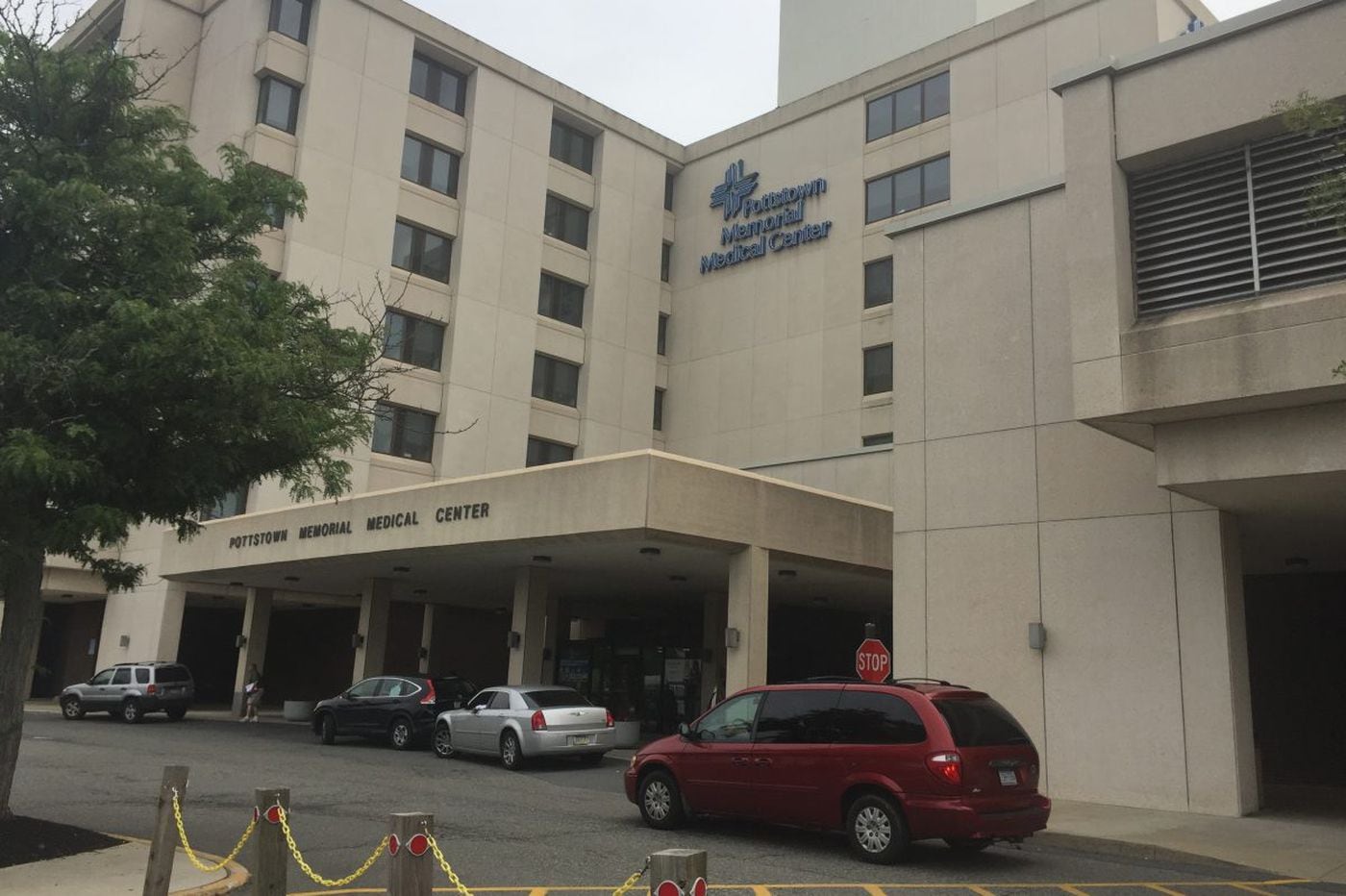
In 2017, Tower paid $418 million for five community hospitals in Southeastern Pennsylvania — Brandywine in Coatesville, Chestnut Hill in Philadelphia, Jennersville Regional in West Grove, Phoenixville in Phoenixville, and Pottstown Memorial Medical Center, now called Pottstown Hospital, in Pottstown.

Tower’s goal was to remain competitive as bigger systems — the University of Pennsylvania Health System and Jefferson Health from the Southeast, Lehigh Valley Health Network and St. Luke’s University Health Network from the east and northeast, and University of Pittsburgh Medical Center from the west — encroached on its Berk’s county base.

Tower had set itself a difficult task in the best of times, but COVID-19 has made it significantly harder for the nonprofit, which had an operating loss of $175 million on revenue of $1.75 billion in the year ended June 30, 2019.

Because health systems have high fixed costs for buildings and equipment needed no matter how many patients are coming through the door, it’s hard for them to limit the impact of the 30% to 50% collapse in demand caused by the coronavirus pandemic.

“Hospitals and all other health service providers were hit with this disruption with lightning speed, forcing the industry to learn in real time how to handle a situation for which there was no playbook,” Standard & Poor’s analysts David P. Peknay and Suzie R. Desai said in a research report last month.

Tower’s said positions will be eliminated in executive, management, clinical, and support areas.

The cuts include consolidations of clinical operations. Tower plans to close Pottstown Hospital’s maternity unit, which employs 32 nurses and where 359 babies were born in 2018, according to the most recent state data. Tower also has maternity units at Reading Hospital in West Reading and at Phoenixville Hospital.

Tower is aiming to trim expenses by $230 million over the next two years, Matthews told staff.

Like many other health systems, Tower has taken advantage of federal programs to ensure that it has ample cash in the bank to run its businesses. Tower has deferred payroll taxes, temporarily sparing $25 million. It received $166 million in advanced Medicare payments in April.

In the private sphere, Tower obtained a $40 million line of credit in April for St. Chris, which has lost $23.6 million on operations since Tower and Drexel bought it in December. Last month, Tower said it was in the final stages of negotiating a deal to sell and then lease back 24 medical office buildings. That was expected to generate $200 million in cash for Tower.


Predicting COVID-19’s Long-Term Impact on the Home Health Care Market

Predicting COVID-19’s Long-Term Impact on the Home Health Care Market

Predicting COVID-19's Long-Term Impact on the Home Health Care ...

The Patient-Driven Groupings Model (PDGM) and its unintended ripple effects were supposed to be the dominant story this year for the nation’s 12,000 or so Medicare-certified home health care providers. But the coronavirus has rewritten the script for 2020, throwing most of the industry’s previous projections out the window.

While PDGM — implemented on Jan. 1 — will still shape home health care’s immediate future, several other long-term trends have emerged as a result of the coronavirus and its impact on the U.S. health care system.

These trends include unexpected consolidation drivers and the sudden embrace of telehealth technology, the latter of which is a development that will affect home health providers in ways both profoundly positive and negative. Unforeseen, long-term trends will also likely include drastic overhauls to the Medicare Home Health Benefit, a revival of SNF-to-home diversion and more.

Now that providers have had roughly three full months to adapt to the coronavirus and transition out of crisis mode, Home Health Care News is looking ahead to what the industry can expect for the rest of 2020 and beyond.

‘Historic’ consolidation will still happen, with some unexpected drivers

Although the precise extent was often up for debate, most industry insiders predicted some level of consolidation in 2020, driven by PDGM, the phasing out of Requests for Anticipated Payment (RAPs) and other factors.

That certainly appeared to be true early on in the year, with Amedisys Inc. (Nasdaq: AMED), LHC Group Inc. (Nasdaq: LHCG) and other home health giants reporting more inbound calls related to acquisition opportunities or takeovers of financially distressed agencies.

In fact, during a fourth-quarter earnings call, LHC Group CEO and Chairman Keith Myers suggested that 2020 would kick off a “historic” consolidation wave that would last several years.

“As a result of this transition in Q4 and the first few months of 2020, we have seen an increase in the number of inbound calls from smaller agencies looking to exit the business,” Myers said on the call. “Some of these opportunities could be good acquisition candidates, and others we can naturally roll into our organic growth through market-share gains.”

Most of those calls stopped with the coronavirus, however.

Although the vast majority of home health agencies have experienced a decline in overall revenues during the current public health emergency, many have been able to compensate for losses thanks to the federal government’s multi-faceted response.

For some, that has meant taking advantage of the approximately $1.7 billion the U.S. Centers for Medicare & Medicaid Services (CMS) has distributed through its advanced and accelerated payment programs. For others, it has meant accepting the somewhat murky financial relief sent their way under the Provider Relief Fund.

In addition to those two possible sources of financial assistance, all Medicare-certified home health agencies have benefitted from Congress’s move to suspend the 2% Medicare sequestration until Dec. 31.

Eventually, those coronavirus lifelines and others will be pulled back, kickstarting M&A activity once again.

“We believe that a lot of the support has stopped or postponed the shakeout that’s occurring in home health — or that we anticipated would be occurring around this time,” Amedisys CEO and President Paul Kusserow said in March. “We don’t believe it’s over, though.”

Not only will consolidation happen, but some of it will be fueled by unexpected players.

With the suspension of elective surgeries and procedures, hospitals and health systems have lost billions of dollars. Rick Pollack, president and CEO of the American Hospital Association (AHA), estimated that hospitals are losing as much as $50 billion a month during the coronavirus.

“I think it’s fair to say that hospitals are facing perhaps the greatest challenge that they have ever faced in their history,” Pollack, whose organization represents the interests of nearly 5,000 hospitals, told NPR.

To cut costs, some hospitals may look to get rid of their in-house home health divisions. It’s a trend that may already be happening, too.

The Home Health Benefit will look drastically different

With a mix of temporary and permanent regulatory changes, including a redefinition of the term “homebound,” the Medicare Home Health Benefit already looks very different now than it did three months ago. But the benefit will likely go through further retooling in the not-too-distant future.

Broadly, the Medicare Part A Trust Fund finances key services for beneficiaries.

While vital to the national health care infrastructure, the fund is going broke — and fast. In the most recent CMS Office of the Actuary report released in April, the Trust Fund was projected to be entirely depleted by 2026.

The COVID-19 virus has only accelerated the drain on the fund, with some predicting it to run out of money two years earlier than anticipated. A group of health care economics experts from Harvard and MIT wrote about the very topic on a joint Health Affairs op-ed published Wednesday.

“COVID-19 is causing the Medicare Part A program and the Hospital Insurance (HI) Trust Fund to contend with large reductions in revenues due to increased unemployment, reductions in salaries, shifts to part-time employment from full time and a reduction in labor force participation,” the group wrote. “In addition to revenue declines, there was a 20% increase in payments to hospitals for COVID-related care and elimination of cost sharing associated with treatment of COVID.”

Besides those and other cost pressures, Medicare is simultaneously expanding by about 10,000 new people every day. The worst-case scenario: the Medicare Part A Trust Fund goes broke closer to 2024.

There are numerous policy actions that can be taken to reduce the financial strain on the trust fund. In their op-ed, for example, the team of Harvard and MIT researchers suggested shifting all of home health care under Part B.

In 2018, Medicare spent about $17.9 billion on home health benefits, with roughly 66% of that falling under Part B, which typically includes community-based care that isn’t linked to hospital or nursing home discharge. Consolidating all of home health care into Part B would move billions of dollars away from Part A, in turn expanding the Trust Fund’s lifecycle.

“Such a policy change would move nearly $6 billion in spending away from the Part A HI Trust Fund but would put upward pressure on the Part B premium,” the researchers noted.

Of course, all post-acute care services may still undergo a transformation into a unified payment model one day. However, the coronavirus has devastated skilled nursing facility (SNF) operators, who were already dealing with the Patient-Driven Payment Model (PDPM), a payment overhaul of their own.

Regulators may shy away from introducing further disruption until SNFs have a chance to recover, a process likely to take years — if not decades.

Previously, the Trump administration had estimated that a unified payment system based on patients’ clinical needs rather than site of care would save a projected $101.5 billion from 2021 to 2030.

Telehealth will be a double-edged sword

The move toward telehealth was a long-term trend that home health providers were cognizant of before COVID-19, even if some clinicians were personally skeptical of virtual visits. But because the virus has demanded social distancing, telehealth has forced its way into health care in a manner that would have been almost unimaginable in 2019.

In late April, during a White House Coronavirus Task Force briefing, President Donald Trump indicated that the number of patients using telehealth had increased from about 11,000 per week to more than 650,000 people per week.

Meanwhile, MedStar Health went from delivering just 10 telehealth visits per week to nearly 4,000 per day.

Backed by policymakers, technology companies and consumers, telehealth is likely here to stay.

“I think the genie’s out of the bottle on this one,” CMS Administrator Seema Verma said in April. “I think it’s fair to say that the advent of telehealth has been just completely accelerated, that it’s taken this crisis to push us to a new frontier, but there’s absolutely no going back.”

The telehealth boom could mean improved patient outcomes and new lines of business for home health providers. But it could also mean more competition moving forward.

For telehealth to be a true game-changer for home health providers, Congress and CMS would need to pave the way for direct reimbursement. Currently, a home health provider cannot get paid for delivering virtual visits in fee-for-service (FFS) Medicare.

Sen. Susan Collins (R-Maine) has floated the idea of introducing legislation that would allow for direct telehealth reimbursement in the home health space, but, so far, no concrete steps have been taken — at least in public. With a hyper-polarized Congress and a long list of other national priorities taking up the spotlight, it’s impossible to guess whether home health telehealth reimbursement will actually happen.

While home health providers can’t directly bill for in-home telehealth visits, hospitals and certain health care practitioners can. That regulatory imbalance could lead to providers being used less frequently as “the eyes and ears in the home,” some believe.

A new SNF-to-home diversion wave will emerge

Over the past two decades, many home health providers have been able to expand their patient census by poaching patients from SNFs. Often referred to as SNF-to-home diversion, the approach didn’t just benefit home health providers, though. It helped cut national health care spending by shifting care into lower-cost settings.

At first, the stream of SNF residents being shifted into home health care was like water being shot from a firehose: In 2009, there were 1,808 SNF days per 1,000 FFS Medicare beneficiaries, a March 2018 analysis from consulting firm Avalere Health found. By 2016, that number plummeted to 1,539 days per 1,000 beneficiaries — a 15% drop.

In recent years, that steady stream has turned into a slow trickle, with more patients being sent to home health care right off the bat. In the first quarter of 2019, 23.3% of in-patient hospital discharges were coded for home health care, while 21.1% were coded for SNFs, according to data from analytics and metrics firm Trella Health.

Genesis HealthCare (NYSE: KEN) CEO George Hager suggested the initial SNF-to-home diversion wave was over in March 2019. Kennett Square, Pennsylvania-based Genesis is a holding company with subsidiaries that operate hundreds of skilled nursing centers across the country.

“To anyone [who] would want [to] or has toured a skilled nursing asset, I would challenge you to look at the patients in our building and find patients that could be cared for in a home-based or community-based setting,” Hager said during a presentation at the Barclays Global Healthcare Conference. “The acuity levels of an average patient in a skilled nursing center have increased dramatically.”

Yet that was all before the coronavirus.

Over the last three months, more than 40,600 long-term care residents and workers have died as a result of COVID-19, according to an analysis of state data gathered by USA Today. That’s about 40% of the U.S.’s overall death toll.

CMS statistics place that number closer to 26,000.

In light of those figures and infection-control issues in congregate settings, home health providers will see a new wave of SNF-to-home diversion as robust as the first. As the new diversion wave happens, providers will need to be prepared to care for patients with higher acuity levels and more co-morbidities.

“[That’s going to change] the psyche of the way people are going to view SNFs and long-term care facilities for the rest of our generation,” Bruce Greenstein, LHC Group’s chief strategy and innovation officer, said during a June presentation at the Jefferies Virtual Healthcare Conference. “You would never want to put your parent in a facility if you don’t have to. You want options now.”

One stat to back up this idea: Over 50% of family members are now more likely to choose in-home care for their loved ones than they were prior to the coronavirus, according to a survey from health care research and consulting firm Transcend Strategy Group.

Separate from SNF-to-home diversion, hospital-to-home models will also likely continue to gain momentum after the coronavirus.

There will be a land grab for palliative care

Over the past two years, home health providers have aggressively looked to expand into hospice care, partly due to the space’s relatively stable reimbursement landscape. Amedisys — now one of the largest hospice providers in the U.S. — is the prime example of that.

During the COVID-19 crisis, palliative care has gained greater awareness. Generally, palliative care is specialized care for people living with advanced, serious illnesses.

“Right now, we are seeing from our hospital partners and our community colleagues the importance of palliative care, including advanced care as well as appropriate pain and symptom management,” Capital Caring Chief Medical Officer Dr. Matthew Kestenbaum previously told HHCN. “The number of palliative care consults we’re being asked to perform in the hospitals and in the community has actually increased. The importance of palliative care is absolutely being shown during this pandemic.”

As community-based palliative care programs continue to prove their mettle amid the coronavirus, home health providers will increasingly consider expanding into the market to further diversify their services.

Currently, just 10% of community-based palliative care programs are operated by home health agencies.

Demand will reach an all-time high

The home health industry may ultimately shrink in terms of raw number of agencies, but the overall size of the market is very likely to expand at a faster-than-anticipated pace.

In years to come, home health providers will still ride the macro-level tailwinds of an aging U.S. population with a proven preference to age in place — that hasn’t changed. But because of SNF-to-home diversion and calls to decentralize the health care system with home- and community-based care, providers will see an increase in referrals from a variety of sources.

In turn, home health agencies will need to ramp up their recruitment and retention strategies.

There’s already early evidence of this happening.

Last week, in St. Louis, Missouri, four home-based care agencies announced that they were hiring a combined 1,000 new employees to meet the surge in demand, according to the St. Louis Dispatch.

Meanwhile, Brookdale Senior Living Inc. (NYSE: BKD) similarly announced plans to hire 4,500 health care workers, with 10% of those hires coming from the senior living operator’s health care services segment.

Bayada Home Health Care likewise announced plans to ramp up hiring.

“We are absolutely hiring more people now than ever,” Bayada CEO David Baiada previously told HHCN. “The need for services — both because of societal and demographic evolution, but also because of what we anticipate as a rebound and an increase in the demand for home- and community-based care delivery as a result of the pandemic — is requiring us to continue to accelerate our recruitment efforts.”

The bottom line: The coronavirus may have presented immediate obstacles for home health providers, but the long-term outlook is brighter than ever.


Dow plunges more than 1,800 points as rising COVID-19 cases roil Wall Street

Dow plunges more than 1,800 points as rising COVID-19 cases roil Wall Street

Dow plunges 1,800 as investors turn jittery over new wave of ...

Stocks plummeted Thursday as the emergence of new coronavirus hotspots and a caution from the Federal Reserve chairman shook Wall Street after months of steady gains.

The Dow Jones Industrial Average closed with a loss of 1,861 points, plunging 6.9 percent for its worst day of losses since March. The S&P 500 index closed with a loss of 5.9 percent, and the Nasdaq composite sunk 5.3 percent on the day.

All three major U.S. stock indexes closed with their steepest single-day losses since crashing in March amid the beginning of lockdowns imposed to slow the spread of COVID-19. Thursday’s losses come after more than two months of steady recovery toward the record highs seen before the pandemic derailed the economy.

Despite the loss of more than 21 million jobs and the deaths of more than 110,000 Americans due to the coronavirus, investors had gradually upped their bets on a quick economic recovery through April and May as states began loosening business closures and travel restrictions.

The surprise addition of 2.5 million jobs in May, according to the Labor Department, also fueled hopes for a quicker than expected rebound from a recession of unprecedented scale and speed.

But Thursday’s abrupt reversal comes as states across the U.S. see spiking COVID-19 cases and diminishing hospital capacity to handle a new wave of infections.

Week-over-week case counts are rising in half of all U.S. states, and only 16 states plus the District of Columbia have seen their total case counts decline for two consecutive weeks.

North Carolina, California, Mississippi and Arkansas are all facing record levels of hospitalizations, and the virus appears to be quickly spreading in Houston, Phoenix, South Carolina and Missouri.

Some market experts also attribute Thursday’s losses to Fed Chairman Jerome Powell’s Wednesday prediction of a “long road” to recovery.

During a Wednesday press conference, Powell said that while the U.S. may see significant job growth in coming months as people return to their jobs,” the country is “still going to face, probably, an extended period where it will be difficult for many people to find work.”

“What we’re trying to do is create an environment in which they have the best chance either to go back to their old job or to get a new job,” he continued.

President Trump, who frequently lashes out at the Fed when markets turn south, blasted the Fed for underestimating how quickly the U.S. economy could recover and how soon a COVID-19 vaccine would be available.

“The Federal Reserve is wrong so often. I see the numbers also, and do MUCH better than they do. We will have a very good Third Quarter, a great Fourth Quarter, and one of our best ever years in 2021. We will also soon have a Vaccine & Therapeutics/Cure. That’s my opinion. WATCH!” Trump tweeted.

Trump’s top economic advisor Larry Kudlow also criticized Powell, urging the Fed chief to ease up on the dour forecasts

“I do think Mr. Powell could lighten up a little when he has these press offerings. You know, a smile now and then, a little bit of optimism,” Kudlow said on Fox Business Network.

“I’ll talk with him and we’ll have some media training at some point.


White House goes quiet on coronavirus as outbreak spikes again across the U.S.

https://www.politico.com/news/2020/06/10/white-house-stops-talking-about-coronavirus-309993?utm_source=ActiveCampaign&utm_medium=email&utm_content=Mnuchin%3A+More+Stimulus++Definitely++Needed&utm_campaign=TFT+Newsletter+06102020

White House goes quiet on coronavirus as outbreak spikes again ...

The coronavirus is still killing as many as 1,000 Americans per day — but the Trump administration isn’t saying much about it.

It’s been more than a month since the White House halted its daily coronavirus task force briefings. Top officials like infectious disease expert Anthony Fauci have largely disappeared from national television — with Fauci making just four cable TV appearances in May after being a near fixture on Sunday shows across March and April — and are frequently restricted from testifying before Congress. Meanwhile, President Donald Trump is preparing to resume his campaign rallies after a three-month hiatus, an attempted signal to voters that normalcy is returning ahead of November’s election, and that he’s all but put the pandemic behind him.

“We’ve made every decision correctly,” Trump claimed in remarks in the Rose Garden Friday morning. “We may have some embers or some ashes or we may have some flames coming, but we’ll put them out. We’ll stomp them out.”

Inside the White House, top advisers like Jared Kushner privately assured colleagues last month that the outbreak was well in hand — citing data on declines in community spread — and that the long-feared “second wave” may have even been averted, according to three current and former officials.

However, new data from states like Florida and mass protests across the country are renewing concerns about the virus’s spread. Texas, for instance, has reported two straight days of record-breaking coronavirus hospitalizations — highs that come shortly after the state kicked off the third stage of its reopening plan.

Those officials also acknowledge that the Covid-19 task force has scaled back its once-daily internal meetings — the task force now meets twice per week — but insist that the pandemic response remains a priority. One official with direct knowledge of the administration’s strategy cited efforts to scale up testing, accelerate the development of treatments and vaccines and perform other behind-the-scenes work to get ready for a potential fall surge.

“We’re delivering the supplies and resources that states asked for,” said the official. “This doesn’t need to be the public ‘coronavirus show’ every day anymore.”

“You can’t win,” said a senior administration official. “Some people complained for weeks that ‘we don’t want so much White House involvement,’ and that ‘the President should stop doing daily briefings,’ and then they turn around and complain that there aren’t enough or as many briefings.”

But the White House’s apparent eagerness to change the subject comes as new coronavirus clusters — centered around meatpacking plants, prisons and other facilities — drive spikes in disparate states like Utah and Arkansas. Meanwhile, states and major cities are lifting lockdowns and reopening their economies, prompting public health experts to fret that additional outbreaks are imminent. And several Democratic governors also have defied their own states’ social distancing restrictions to join mass protests over police brutality, where hundreds of thousands of Americans have spilled into the streets, further raising public health risks.

The fear is that all the mixed signals will only confuse people, stoke public skepticism over the health threat and promote the belief the worst is over just as the outbreak enters a dangerous new phase.

“Cases are rising, including from cases in congregate settings,” said Luciana Borio, who led pandemic preparedness for the National Security Council between 2017 and 2019. “We still have a pandemic.”

Nine current and former administration officials, as well as outside experts, further detailed how the White House is steadily ramping down the urgency to fight a threat that continues to sicken more than 100,000 Americans per week and is spiking in more than 20 states.

For instance, the administration in recent days told state health officials that it planned to reorganize its pandemic response, with HHS and its agencies taking over the bulk of the day-to-day responsibilities from the Federal Emergency Management Agency.

“The acuity of the response is not what it was, so they’re trying to go back to a little more of a normal ongoing presence,” said Marcus Plescia, the chief medical officer of the Association of State and Territorial Health Officials.

The coronavirus task force, which used to send daily updates to state officials, has done so with less regularity over the last several weeks, Plescia said. And the CDC has restructured its daily conference calls with states, moving away from the practice of giving top-down briefings to encouraging state officials to offer updates on what they’re seeing in their parts of the country.

One current and one former FEMA official also said they’re keen to have HHS resume its leadership role in containing the coronavirus so FEMA can make contingencies for a summer of hurricanes, floods and other natural disasters.

“Given the likelihood that we will soon see both hurricanes and coronavirus, HHS should manage the ongoing pandemic response so FEMA can prepare for coming ‘coronacanes,’” Daniel Kaniewski, who served as the top deputy at FEMA through January, wrote last week. “But they need to act soon. Coronacanes are in the forecast.”

Meanwhile, officials in at least 19 states have recorded two-week trends of increasing coronavirus cases, including spikes of more than 200 percent in Arizona and more than 180 percent in Kentucky. Two months after the White House issued so-called gating criteria that it recommended states hit before resuming business and social activities, only a handful of states — like Connecticut, New Jersey, New York and South Dakota — currently meet all of those benchmarks, according to CovidExitStrategy.org.

Officials within Trump’s health department are strategizing over how to convey the current level of risk, given data that Americans have put off emergency care and other potential medical needs, fearful of contracting Covid-19. “Our message now is that people should start returning to their health care providers to get the screenings, vaccines, care, or emergency services that they need,” Laura Trueman, the HHS official in charge of external affairs, wrote in an office-wide email to colleagues and shared with external groups on June 3, which was obtained by POLITICO.

Dan Abel, a longtime Coast Guard vice admiral, also has been installed at HHS with a small team, where he’s coordinating daily Covid-19 calls with HHS Secretary Alex Azar and the department’s division leaders, according to four officials with knowledge of the calls — an arrangement that’s raised some questions.

“Why is a Coast Guard admiral leading meetings between the HHS secretary and his senior staff?” asked one senior official, suggesting it created an unnecessary layer of management.

Meanwhile, the department is steadily turning back to its many pre-Covid-19 priorities. At the Food and Drug Administration, officials are returning to hot-button issues like tobacco and CBD regulations. Some staff in the health department’s emergency response arm are pivoting away from Covid-19 and back toward natural disasters as hurricane season begins.

At the same time, the Centers for Disease Control — traditionally the beating heart of the nation’s infectious disease response — remains largely demoralized and often sidelined in fighting what CDC director Robert Redfield last week acknowledged as the nation’s biggest health challenge in more than a century, and one he said is “moving through our social consciousness, our outward expression, and our grief.” That grim message has conflicted with Trump’s frequent vows of victory over the coronavirus.

“We were able to close our country, save millions of lives, open,” Trump said in Friday’s Rose Garden remarks. “And now the trajectory is great.”

“I fully recognize the anguish our Nation is experiencing & am deeply saddened by the many lives lost to COVID19,” Redfield tweeted just minutes later. “I call upon the American people to remain vigilant in protecting the vulnerable – protect your community, grandparents and loved ones from COVID-19.”

Redfield and other top officials also have spent the past week reckoning with the implications of widespread protests over police brutality, from meeting with staff to discuss longstanding concerns about systemic racism in health care to acknowledging the probability that those protests will spark new outbreaks.

HHS also on Monday sent members of Congress a fact sheet on its response to racial disparities in Covid-19 care — a much scrutinized issue in public health, with African Americans contracting and dying from the virus at much higher rates.

But on Capitol Hill, watchdogs say that fact sheets don’t cut it, and they’re frustrated by the lack of access to experts and insight into how the administration is handling a historic pandemic.

“Some are acting like the battle has been won when in reality it’s just beginning,” said a senior Democratic staffer. “The White House still won’t let task force members testify at hearings in June even though they have disappeared from TV and it’s not clear how often they are meeting.”

Fauci, meanwhile, has continued to issue a string of dire warnings in his lower-profile media appearances and at an industry conference on Tuesday.

We have something that turned out to be my worst nightmare,” Fauci said in virtual remarks aired at a conference of the biotech industry’s Washington trade group, recounting how quickly the virus spread around the globe, outpacing Ebola and HIV. “And it isn’t over yet.”

The White House has maintained that chief of staff Mark Meadows has needed to clear officials like Fauci to testify, so they can stay focused on other priorities, and a spokesperson insisted that Trump has still prioritized the coronavirus fight even as the White House shifts toward focusing on revitalizing the economy.

Several officials have suggested that the task force’s lower profile has been helpful for the response, especially because the daily Covid-19 press briefings were often hijacked by Trump’s meandering remarks or the day’s other political news.

“In some ways, it actually has been easier to get Covid-related work done,” said one HHS staffer who’s helped support the Covid-19 response. “The task force briefings and the prep sessions for them took up a lot of principals’ time, and staff would sometimes have to crash on putting together materials for them.”

But the white-hot spotlight on the coronavirus also brought urgency and intensity, and the increasingly scattered nature of the current response could present new challenges if there’s an uptick in cases.

“This is when a one-government approach is needed more now than ever,” said Howard Koh, who served as President Barack Obama’s HHS assistant secretary for health. “Get all those people together in one room every day at the highest level and track outcomes and address all the questions and try to maximize coordination as much as possible.”


Dow Falls 250 Points After Federal Reserve’s Grim Economic Outlook

https://www.forbes.com/sites/sergeiklebnikov/2020/06/10/dow-falls-250-points-after-federal-reserves-grim-economic-outlook/?utm_source=newsletter&utm_medium=email&utm_campaign=news&utm_campaign=news&cdlcid=#50eb6c4f56be

Dow Falls 250 Points After Federal Reserve's Grim Economic Outlook

TOPLINE

The market finished slightly lower on Wednesday after the Federal Reserve indicated that it would leave interest rates unchanged until 2022, while also warning of a long economic recovery from the coronavirus recession.

KEY FACTS

The Dow Jones Industrial Average fell 0.9%, over 250 points, on Wednesday, while the S&P 500 was down 0.5% and the tech-heavy Nasdaq Composite gained 0.7%.

The Federal Reserve concluded its two-day meeting on Wednesday by leaving interest rates unchanged near zero and indicating that they will stay there until 2022.

It also gave a grim update on the economy: The Central Bank forecasts a long recovery, with unemployment likely to remain high for many years.

The Fed, which has injected nearly $3 trillion into financial markets since late February, pledged to continue its unprecedented stimulus plan until the economy has weathered the coronavirus recession.

The Nasdaq climbed to a new record high on Wednesday, however, closing above 10,000 for the first time ever thanks to continued strength in tech stocks. Investors continued to rotate back into names like Amazon and Apple, which both hit new record highs again.

“A large shift is occurring as investors cycle out of value/cyclical stocks for a second day and pour money into growth,” according to Vital Knowledge founder Adam Crisafulli.

Stocks that would benefit from a reopening—including airlines, retailers and cruise operators—have all been moving lower recently, after having led the market rally in the past few weeks.

Bank stocks were especially hard-hit on Wednesday, plunging on the news that the Fed will keep interest rates low for a long time.

CRUCIAL QUOTE

“We are not even thinking about thinking about raising rates,” Federal Reserve chairman Jerome Powell confirmed at his press conference. He added that while “there is great uncertainty about the future,” the central bank is strongly committed to doing “whatever we can, for as long as it takes” to help support the economy. 

BIG NUMBER: 10,000.

With tech stocks making a comeback in recent days, the Nasdaq hit a new record high on Wednesday, closing above 10,000 for the first time ever. Shares of Amazon, Apple, Netflix, Microsoft and Google-parent Alphabet have all been soaring recently, boosting the index higher.

KEY BACKGROUND

Stocks have continued to rally on optimism about reopening the economy and a faster than expected recovery from the coronavirus pandemic. The market has so far had a strong start to June, building on back-to-back monthly gains. The S&P 500 on Monday turned positive for 2020, fully recouping its losses from the coronavirus sell-off earlier this year. The index is now up more than 45% from its low point on March 23.