


Cartoon – Versions of the Truth

https://www.healthtechs3.com/outsourcing-a-hospital-turnaround-and-the-team-involved/

Hospitals are constantly faced with challenges that require them to reassess how they deliver care to their communities. Continuous improvement is necessary as expense inflation consistently outpaces reimbursement gains. However, more fundamental issues threaten hospital fiscal viability such as payor mix deterioration, population or market share declines, and utilization changes. Amplify this environment with a difficult EMR installation and a “perfect storm” creates a fiscal crisis that necessitates a turnaround.
If covenants are breached, bond agreements often require an external and independent consulting firm that is engaged to help create and oversee the implementation of a turnaround plan. Otherwise, a CEO must make a value judgment on whether to outsource the turnaround balancing cost considerations with an honest assessment of (1) their management team’s bandwidth, and (2) ability to prepare and execute a turnaround.
There are multiple models for outsourcing a turnaround. In a complete outsourcing, an engagement letter with the “performance improvement” consulting firm would include an assessment phase and the preparation of a comprehensive plan that covers all areas of operations followed by implementation support services. The firm may require an on-site presence of one year or more to assess, validate, and assist in the implementation of recommended interventions. This can be effective, but the fees can easily reach seven figures even for modest community hospitals. In addition, even in a complete outsourcing there is still a major demand on the time of senior leadership. As a result, management sometimes chooses to limit the scope of a performance improvement engagement, which results in a partial outsource. The limitation may be to only outsource the plan development in the form of a report. This would detail the operational interventions and the implementation steps, but it would leave the heavy lifting of implementation to existing leadership. Alternatively, the scope may be limited by excluding certain areas of review. While there may be valid reasons for the latter approach, limiting the areas of review can be counterproductive to a turnaround plan because many issues are systemic such as patient throughput or revenue cycle. Further, restricting certain areas for review may create the appearance of “untouchables” or “sacred cows,” which should be avoided in a turnaround.
While the CEO should always be the ultimate leader of the turnaround, the CFO is indispensable in the process whether it is fully or partially outsourced or done completely in-house. These abilities are not always in the CFO’s skill set; some executives are most effective in a steady-state as opposed to a turnaround environment. The CEO will be relying on the CFO to demonstrate the following traits, which require a large degree of emotional intelligence:
Human nature dictates that self-interest may compromise the CFO’s objectivity. There will be times when the best interest of the organization and the individual are in conflict. If the incumbent CFO is not up to the task, replacing them with an interim CFO with turnaround experience is a better option.
An experienced interim CFO in a turnaround situation has several advantages. First, it can afford the CEO the opportunity to underscore the urgency of the situation by making an example. The experienced interim CFO understands their primary role is to be a key asset in the execution of the turnaround. They are not there to make friends but to influence people (although the best ones do both). Because they are not angling for promotions or favor for future consideration from the board, they are apolitical, and their intentions are more transparent. Having been through turnarounds before, they possess the tools to assist the CEO and the board navigates the ups and downs. Perhaps most importantly, the interim CFO is in the best position to tell the CEO and the board things they may not want to hear such as the need to give up independence or consult bankruptcy counsel if the situation warrants.
Obviously, it is necessary that the hospital must continue to operate safely, securely, and legally during a turnaround. This can be a difficult balancing act, not just for the CFO but for all senior management. The CFO must continue to safeguard the assets of the organization. Likewise, other members of senior management must push back if a turnaround plan may imperil patients, visitors or staff, or violate the law. Consequently, it may be beneficial to bring in other interim C-Suite leaders who are able to effectively manage the multiple critical priorities during a turnaround in addition to, or instead of, an interim CFO. However, this must be carefully weighed against continuity of management and the organization’s ability to attract and retain talent. Senior management turnover creates stress on the organization and is ultimately a reflection on the CEO.
There is not a one-size-fits-all approach to creating and executing a turnaround plan. Outsourcing to consulting firms can infuse new ideas and analytical talent, but it is expensive and still often leaves management with the bulk of the responsibilities. Experienced interim management can add independence and objectivity to create a glidepath for execution.

Anthony Fauci, the administration’s top infectious disease doctor, told a House panel on Tuesday that the country’s response to the COVID-19 pandemic has been a “mixed bag,” adding that a new increase in cases is “disturbing.”
“In some respects, we’ve done very well,” Fauci said during an Energy and Commerce Committee hearing, specifically praising the way New York has been containing the worst outbreak in the country to date.
“However, in other areas of the country, we are now seeing a disturbing surge of infections that looks like it’s a combination, but one of the things is an increase in community spread. And that’s something I’m really quite concerned about,” Fauci said.
There are now about 30,000 new cases per day in the United States. The number of new cases had leveled off at about 20,000, and stayed there for weeks before rising this past weekend.
The rise in the U.S. comes as the Trump administration has sought to paint a rosier picture of the U.S. outlook. Both President Trump and Vice President Pence have inaccurately tried to attribute the increase in cases to more tests being performed.
The new spike in the U.S. is being driven in part by worsening outbreaks across the South and Southwest, including in Arizona, Texas, Florida and the Carolinas, even as the situation has greatly improved in once hard-hit states in the Northeast like New York and Massachusetts.
Many of the states now being hit hard were on the more aggressive side in reopening their economies.
“Right now, the next couple of weeks are going to be critical in our ability to address those surgings in Florida, in Texas, in Arizona, and in other states,” Fauci said on Tuesday.
High-deductible health plans (HDHPs) covered more than 30 percent of enrollees in employer-sponsored plans in the United States in 2019, up from 4 percent in 2006. In 2020, the Internal Revenue Service defines HDHP as any plan with a deductible of at least $1,400 for an individual or $2,800 for a family. An HDHP’s total yearly out-of-pocket expenses (including deductibles, copayments, and coinsurance) cannot be more than $6,900 for an individual or $13,800 for a family. However, this limit does not apply to out-of-network services.
The growth of HDHPs is driven by the pursuit of reduced health care spending and premiums for both employees and employers through channeling elements of consumerism and managed care. Often, HDHPs are offered along with a savings option (health savings account or health reimbursement arrangement) in a consumer-directed health plan.
Recently, however, there have been concerns about the out-of-pocket cost burdens imposed on patients by HDHPs and other plans. Reducing these costs has been the focus of major policy proposals, including prescription drug bills from both the House and the Senate; forthcoming plans for the Center for Medicare and Medicaid Innovation to test value-based insurance models following the president’s executive order 13890 on Protecting and Improving Medicare for Our Nation’s Seniors; and H.R. 2774, the Primary Care Patient Protection Act of 2019, which would create a primary care benefit for all HDHP holders, allowing for up to two deductible-free primary care office visits each year.
It is becoming increasingly clear that HDHPs’ indiscriminate reductions in care usage may not be the best way to contain health care costs. In this post, we suggest that combining the principles of HDHPs and value-based insurance design (VBID), by offering deductible exemptions for high-value services, could provide nuanced incentives with potential to preserve access to the most important services while reducing use of only more wasteful care.
The intended premise of HDHPs is that beneficiaries facing the full costs of health care services during the deductible phase will engage in price shopping and subsequently choose care commensurate with expected benefits of that care. The hope is that the combination of lower prices and a different mix of services could increase the value of health care used while also reducing costs. Unfortunately, evaluations of HDHPs suggest that consumers neither price shop nor can they discriminate between high- and low-value care when facing high deductibles; accordingly, they reduce use of both essential and inessential services. Not only is this behavior likely to lead to worse health for beneficiaries, but short-term savings for both the beneficiary and the insurer may be offset by increased long-term spending associated with preventable adverse health events. The lack of the hoped-for response to HDHPs (price shopping and reduction in unnecessary care only) may stem from a lack of price transparency, inability to pay for essential care during the deductible phase, or inadequate information about the value of alternate health care services and technologies.
The evidence on HDHPs should not be surprising. It matches older evidence from the RAND Health Insurance Experiment, where cost sharing caused people to reduce consumption of both appropriate and inappropriate care. The RAND experiment demonstrated that consumers may not have enough information available freely to them to address uncertainty and make rational choices about which services to purchase and which to forgo. For this reason, we suggest a variation on VBID, in which deductible exemptions for established high-value services would inform and incentivize beneficiaries to use the most valuable care, while disincentivizing low-value options. Such recommendations have been made in different forms in the literature but have not been widely adopted.
VBIDs have developed over the past 15 years on the premise that when everyone is required to pay the same out-of-pocket amount for health care services whose benefits depend on patient characteristics, there is enormous potential for both underuse and overuse of care. It is also true that health services can be underused and overused when there are differential health-related returns across services, but patients are unaware of the differences. VBIDs have been used by insurers as a mechanism to address this information problem, by signaling the value of alternative health care technologies to consumers through variable cost sharing.
To date, most applications of VBID have focused on applying such designs to copays but not to deductibles. Moreover, most applications have applied reduced cost sharing for targeted high-value drugs, and only a few have also implemented concomitant increased cost sharing for low-value drugs. This means that the cost differences that the consumers faced between high- and low-value products continued to be small. Consequently, results of such applications show the promise of VBID, but to a limited scale, owing to the relative inelasticity of demand for care related to small copay variation. Tying value-based cost sharing within deductibles could generate a bigger “nudge” to align use with value.
Only one study evaluated the application of VBID on cost sharing within an HDHP plan. This research analyzed Kaiser Permanente of Northern California, where patients were switched to HDHPs, but some of them were offered free chronic disease medications. Resulting improvements in adherence due to zero cost sharing for chronic disease medications were shown to offset the HDHP-associated adherence reduction, especially for patients with poor adherence at the start. Importantly, adherence improvements did not occur for more clinically complex patients, or patients living in poorer neighborhoods. The inclusion of active counseling in VBID plans has potential to address these limitations.
In another example of VBID, a not-for-profit health plan in the Pacific Northwest implemented a formulary that tied drug copays to cost-effectiveness. Researchers found larger shifts in demand within drug classes in which copays were simultaneously reduced for high-value treatments and increased for low-value treatments, compared to drug classes in which the copays only moved in one direction. The overall effect of the VBID implementation was welfare-increasing but small, perhaps because the price dispersion faced by the patient between high-value and low-value alternatives was still too low to alter demand.
Other applications of VBID, where cost sharing was removed for primary care visits, were found to reduce total spending, mainly due to reductions in use of emergency department (ED) and other outpatient services. A plan that bundled copays for back pain physical therapy found reductions in ED use, in addition to eventual reductions in primary care use, and better adherence to care guidelines.
We suggest that value-based high-deductible plans (VHDP), which combine the principles of HDHPs and VBID, and have been suggested as “a natural evolution of health plans,” could provide a robust alternative in insurance markets and achieve the goals of both low costs and high value of health care delivery. Our enthusiasm for such designs stems from the dispersion of price-elasticities observed when a value-based system was implemented on copayments. We expect such dispersion can be expanded substantially when VBID is applied to develop VHDPs. Specifically, VHDPs would nudge consumers toward high-value technologies (for example, preventive medications) by exempting their costs from the deductibles, while also providing consumers with transparency on the full costs of low-value services (for example, MRI for back pain or headache), and disincentivizing their use. This would generate a more elastic demand for low-value services, which in turn could move the markets for insured health care services toward more efficient outcomes.
In health care, where we know that both quality and value are at least partially unobservable to the patient, efficient outcomes are typically not attainable, especially when cost sharing indiscriminately alters prices. A VHDP would provide nuanced cost sharing to influence behavior in a manner similar to prices in traditional markets, therefore resolving information asymmetries for low-value services, reducing distortions, and increasing social welfare. In addition, such a policy could improve equity by ensuring that all beneficiaries have access to the highest-value services, even in the deductible phase of a benefit package. Such plans are certainly in line with the spirit of the recent bipartisan legislation (signed by President Donald Trump under executive order 13877) that allows health savings account eligible high-deductible health plans the flexibility to cover essential medications and services used to treat chronic diseases prior to meeting the plan deductible.
While value-based pricing improves beneficiaries’ ability to observe value, and therefore reduces the information asymmetries inherent in health care markets, the definition of “value” is an open question. Current legislative options being considered by both political parties in Congress aim to regulate and reduce drug pricing. While these efforts are important, and reduced prices would likely factor into premiums and out-of-pocket costs for consumers, these policy proposals do not necessarily tie price reductions to the value of drugs. That is, they are not tied to any specifically desired outcome of care. As mentioned, earlier VBID applications have been designed to impact health outcomes by using cost-effectiveness in formulary design to signal value. However, many other attributes of care, in addition to cost-effectiveness, should be considered by payers (both public and private) in determination of deductible-exemption status in a VHDP. These attributes include if a service has positive externalities (such as vaccinations) and if a service is unlikely to have moral hazard consumption (such as trauma care or chemotherapy). These, and other elements of value, could be included in decisions about which services should be exempt from the deductible. The decision of which elements to consider in this decision will depend on the stakeholders and perspectives (for example, payer, health system, employer, societal).
A potential downside of VHDPs is plan complexity, but improved communication (perhaps through health plan stewards) could address this limitation; active counseling has already been effective for this purpose in VBID. It would be relatively straightforward to incorporate the cost-sharing design of VHDPs to a value-based tiering system, now widely used in cost sharing.
Qualitative studies of VBID have identified additional barriers to VBID implementation. For example, patients are skeptical of value-based tradeoffs, do not necessarily trust the information provided by their plan, and may resist changes in care delivery. Payers tend to be skeptical of the clinical significance of adherence improvements from VBID and have expressed concern over low return on investment and administrative and information technology hurdles. Finally, providers are concerned about changes to patient behavior that puts their practice at financial risk.
These concerns are important, but potentially addressable with education and carefully planned implementation, to allow VHDPs to strike a nuanced balance between reducing moral hazard consumption of care and adequate risk protection. Such a balance is critical to controlling health spending while maintaining access to the highest-value services and reducing financial uncertainty.
https://www.lrvhealth.com/podcast/?single_podcast=2203


Healthcare is Hard: A Podcast for Insiders; June 11, 2020
Over the course of nearly 20 years as Chief Research Officer at The Advisory Board Company, Chas Roades became a trusted advisor for CEOs, leadership teams and boards of directors at health systems across the country. When The Advisory Board was acquired by Optum in 2017, Chas left the company with Chief Medical Officer, Lisa Bielamowicz. Together they founded Gist Healthcare, where they play a similar role, but take an even deeper and more focused look at the issues health systems are facing.
As Chas explains, Gist Healthcare has members from Allentown, Pennsylvania to Beverly Hills, California and everywhere in between. Most of the organizations Gist works with are regional health systems in the $2 to $5 billion range, where Chas and his colleagues become adjunct members of the executive team and board. In this role, Chas is typically hopscotching the country for in-person meetings and strategy sessions, but Covid-19 has brought many changes.
“Almost overnight, Chas went from in-depth sessions about long-term five-year strategy, to discussions about how health systems will make it through the next six weeks and after that, adapt to the new normal. He spoke to Keith Figlioli about many of the issues impacting these discussions including:
“It really does feel like the U.S. has given up,” said Siouxsie Wiles, an infectious-diseases specialist at the University of Auckland in New Zealand — a country that has confirmed only three new cases over the last three weeks and where citizens have now largely returned to their pre-coronavirus routines.
“I can’t imagine what it must be like having to go to work knowing it’s unsafe,” Wiles said of the U.S.-wide economic reopening. “It’s hard to see how this ends. There are just going to be more and more people infected, and more and more deaths. It’s heartbreaking.”
China’s actions over the past week stand in stark contrast to those of the United States. In the wake of a new cluster of more than 150 new cases that emerged in Beijing, authorities sealed off neighborhoods, launched a mass testing campaign and imposed travel restrictions.
Meanwhile, President Trump maintains that the United States will not shut down a second time, although a surge in cases has convinced governors in some states, including Arizona, to walk back their opposition to mandatory face coverings in public.
Commentators and experts in Europe, where cases have continued to decline, voiced concerns over the state of the U.S. response. A headline on the website of Germany’s public broadcaster read: “Has the U.S. given up its fight against coronavirus?” Switzerland’s conservative Neue Zürcher Zeitung newspaper concluded, “U.S. increasingly accepts rising covid-19 numbers.”

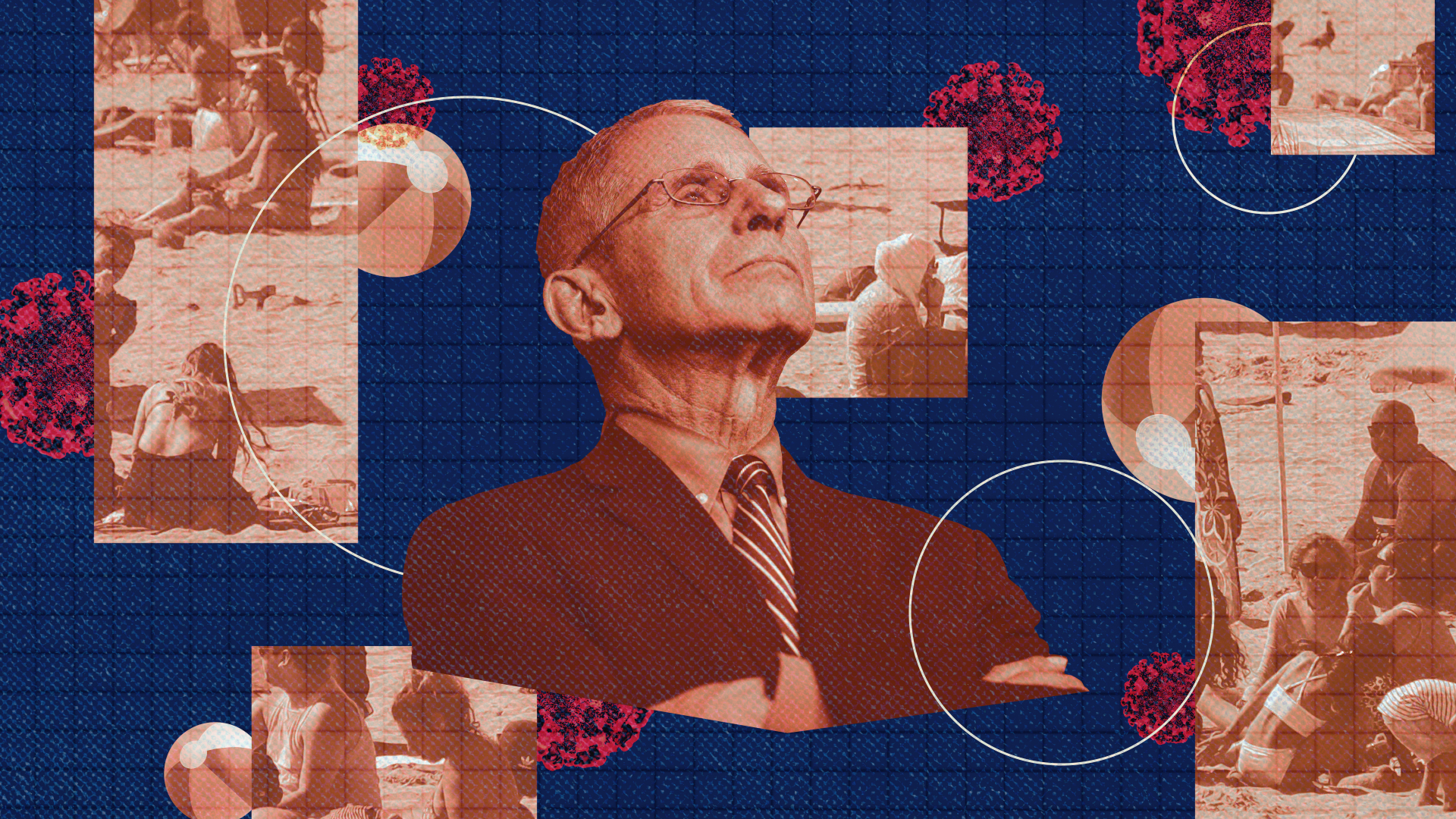
“The only thing one can say with certainty: There’s nothing surprising about this development,” a journalist wrote in the paper, referring to crowded U.S. beaches and pools during Memorial Day weekend in May.
Some European health experts fear that the rising U.S. caseloads are rooted in a White House response that has at times deviated from the conclusions of leading scientists.
“Many scientists appeared to have reached an adequate assessment of the situation early on [in the United States], but this didn’t translate into a political action plan,” said Thomas Gerlinger, a professor of health sciences at the University of Bielefeld in Germany. For instance, it took a long time for the United States to ramp up testing capacity.
Whereas the U.S. response to the crisis has at times appeared disconnected from American scientists’ publicly available findings, U.S. researchers’ conclusions informed the actions of foreign governments.
“A large portion of [Germany’s] measures that proved effective was based on studies by leading U.S. research institutes,” said Karl Lauterbach, a Harvard-educated epidemiologist who is a member of the German parliament for the Social Democrats, who are part of the coalition government. Lauterbach advised the German parliament and the government during the pandemic.
Despite its far older population, Germany has confirmed fewer than 9,000 coronavirus-linked deaths, compared to almost 120,000 in the United States. (Germany has about one-fourth of the United States’ population.)
Lauterbach cited in particular the work of Marc Lipsitch, a professor of epidemiology at Harvard University, whose research with colleagues recently suggested that forms of social distancing may have to remain in place into 2022. Lipsitch’s work, Lauterbach said, helped him to convince German Vice Chancellor Olaf Scholz that the pandemic will be “the new normal” for the time being, and it impacted German officials’ thinking on how long their strategy should be in place.
Regarding the effectiveness of face masks, Lauterbach added, “we almost entirely relied on U.S. studies.” Germany was among the first major European countries to make face masks mandatory on public transport and in supermarkets.
Lipsitch said Thursday that he was not previously aware of the impact of his research on German decision-making, but added that he has spoken to representatives of several other foreign governments in recent weeks, including Israeli Prime Minister Benjamin Netanyahu and officials or advisers from Canada, New Zealand and South Korea.
Even though Lipsitch cautioned it was impossible for him to say how or if his conversations influenced foreign governments’ thinking, he credited the overall European response as “science-based and a sincere effort to find out what experts in the field believe is a range of possible scenarios and consequences of decisions.”
Lipsitch said he presented some of his research to a White House group in the early stages of the U.S. outbreak but said the Trump administration’s response to the pandemic did not reflect his conclusions. “I think they have cherry-picked models that at each point looked the most rosy, and fundamentally not engaged with the magnitude of the problem,” he said.
The White House has defended its approach as science-based. After a study by Imperial College London predicted 510,000 deaths in Britain and 2.2 million in the United States if the pandemic remained fully uncontrolled, for instance, the Trump administration indicated that it was taking the research into account.
“If we didn’t act quickly and smartly, we would have had, in my opinion and in the opinion of others, anywhere from 10 to 20 and maybe even 25 times the number of deaths,” Trump said two months later,
But European researchers dispute that the U.S. government’s reliance on scientists to inform decision-making comes anywhere near the degree to which many European policymakers have relied on researchers.
After consulting U.S. research and German studies, for instance, German leaders agreed to make reopening dependent on case numbers, meaning restrictions snap back or reopening gets put on hold if the case numbers in a given region exceed a certain threshold.
Meanwhile, several U.S. states have reopened despite rising case numbers.
“I don’t understand that logic,” said Reinhard Busse, a health management professor a the Technical University of Berlin.
Lauterbach said that while most Germans disapproved of Trump before the pandemic, even his staunchest critics in Germany were surprised by how even respected U.S. institutions including the Centers for Disease Control and Prevention (CDC) struggled to respond to the crisis.
The CDC, for instance, initially botched the rollout of test kits in the early stages of the outbreak.
“Like many other aspects of our country, the CDC’s ability to function well is being severely handicapped by the interference coming from the White House,” said Harvard epidemiologist Lipsitch. “All of us in public health very much hope that this is not a permanent condition of the CDC.”
Some observers fear the damage will be difficult to reverse. “I’ve always thought of the CDC as a reliable and trusted source of information,” said Wiles, the New Zealand specialist. “Not anymore.”


 HENRY KOTULA