Humana partners with DispatchHealth for hospital at home

https://mailchi.mp/85f08f5211a4/the-weekly-gist-february-5-2021?e=d1e747d2d8

Image result for Humana partners with DispatchHealth for hospital at home

Humana, the nation’s second-largest Medicare Advantage (MA) insurer, is pushing further into home-based care, partnering with Denver-based startup DispatchHealth to offer its members—especially those with conditions like heart failure, chronic obstructive pulmonary disease, and chronic cellulitis—access to hospital-level care at home.

The service will initially be available in the Denver and Tacoma, WA markets, with plans to expand to Arizona, Nevada, and Texas across 2021. Humana members who meet hospital admission criteria will receive daily home visits from an on-call, dedicated DispatchHealth medical team, as well as 24/7 physician coverage enabled by remote monitoring and an emergency call button.

DispatchHealth will also coordinate other patient care and wraparound services in the home as needed, including pharmacy, imaging, physical therapy, durable medical equipment, and meal delivery. Dispatch’s earlier offerings centered around home-based, on-demand urgent and emergency care services, now available in at least 29 cities nationwide. 

Humana’s partnership with DispatchHealth could deliver a full care continuum of home-based services to its Medicare Advantage enrollees and has the potential to displace hospitals from at least a portion of acute care services

Post-COVID, it’s becoming increasingly clear that the nexus of care delivery has shifted even more rapidly to consumers’ homes—and traditional providers will need to rethink service strategies accordingly.

No more snow days in the clinic

https://mailchi.mp/e38b070b8787/the-weekly-gist-december-18-2020?e=d1e747d2d8

Snow Days and Health Care…No Such Thing. | The CureTalks Blog

It turns out it’s not just the kids who aren’t getting snow days this year. This week, we spoke with an executive at a health system hit hard by Wednesday’s Nor’easter, and asked how the system was faring with the expected 18 inches of snowfall. He replied that the medical group was as busy as usual.

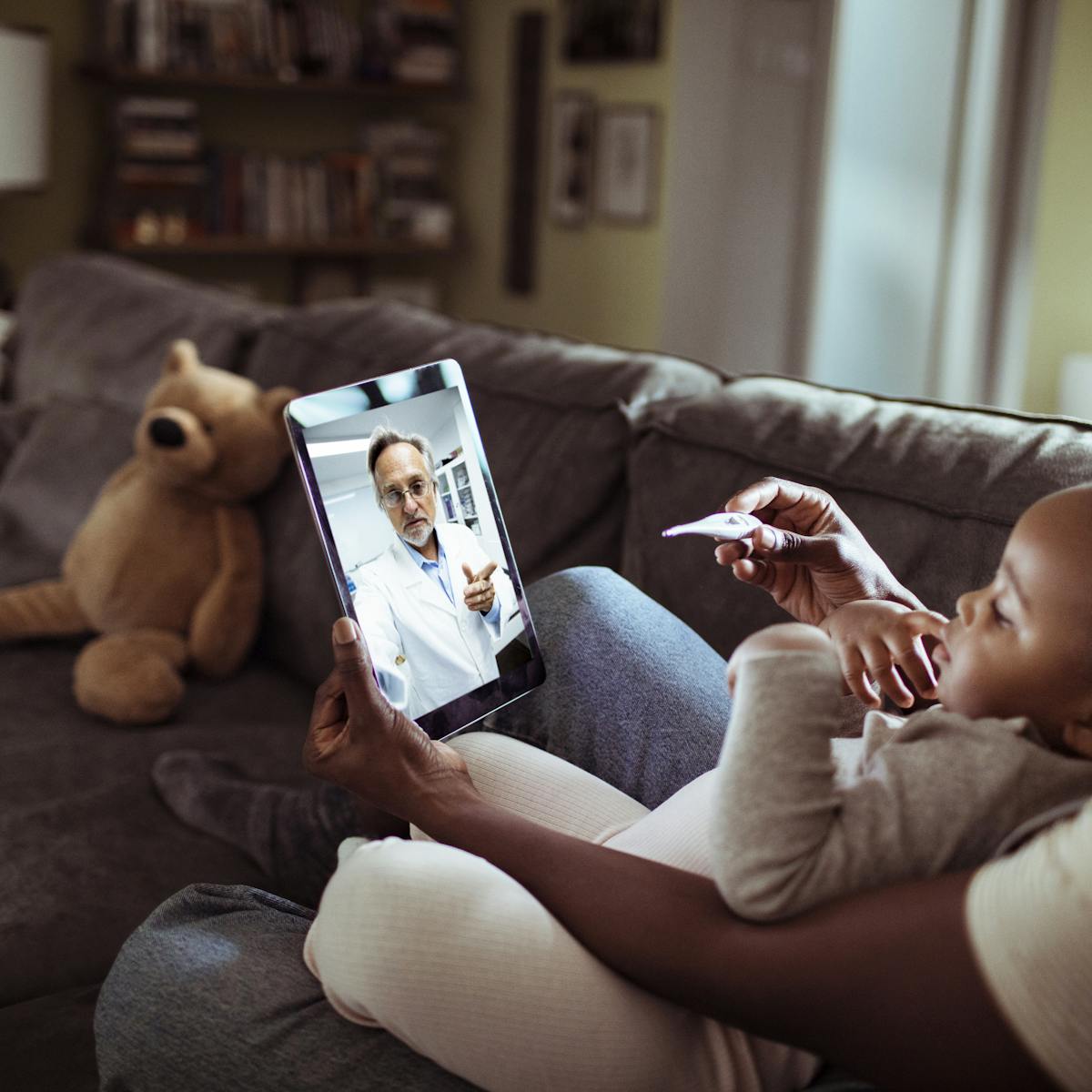
With all the work this spring to expand telemedicine capabilitiesclinic staff were able to reach out to patients the day before the storm, and proactively convert a majority of scheduled in-person clinic visits to telemedicine. “Normally we would’ve been closed, and most appointments rescheduled for weeks down the road,” he told us. Instead, they were able to keep most of those visits in their scheduled time slot.

Now that we have a systemwide process for telemedicine, I don’t think we’ll have a reason for the clinic to take a snow day again.” It’s a clear win-win for the system and patients: patient care seamlessly goes on. It’s easy to see the many use cases for the ability to toggle between in-person and virtual visits. A parent is stuck at home with a sick kid, and can’t make her endocrinologist appointment? Moved to virtual! A patient has an unexpected business trip taking him out of town? Don’t cancel, let’s do that follow-up visit via telemedicine.

We’ve been worried about the slowdown in progress made on telemedicine as patients switched back to in-person visits across the summer and fall. The ability to continue patient care during a record-breaking snowstorm is a perfect illustration of why it’s critical not to “backslide” with virtual care: meeting patients where they are, regardless of circumstances, is an essential part of building long-term loyalty and care continuity.

Cartoon – The Customer is Often Wrong

My son's kindergarten is doing remote learning. It's the worst. | cartoon

Virtual visits have declined, but the emails haven’t

https://mailchi.mp/45f15de483b9/the-weekly-gist-october-9-2020?e=d1e747d2d8

Why Are Doctors Now Billing Patients For Some Phone Chats That Used To Be  Free? : Shots - Health News : NPR

While telemedicine visits have decreased sharply since their early pandemic peak, we’re hearing from providers across the country that patient demand for email communication has persisted. 

Many patients have missed meaningful in-person interactions with their doctors. But once they sign up for the portal and realize they can email, they don’t want to go back to spending time on hold or scheduling a visit to get a prescription refill or the answer to a simple question.

Email and messaging saves patients a lot of time, but the sheer amount has quickly become unmanageable for many doctors. “Last year I got half a dozen emails per week from patients,” one primary care physician told us. “Now I’m spending two hours a day answering MyChart messages, and I’m still not keeping up.”

And as many are quick to point out, there is little to no compensation for time spent emailing. Health systems and physician practices can’t “roll back” this service—removing this satisfier would expose them to losing patients altogether. 

In the near term, systems must invest in the staff and infrastructure to create a centralized process to triage messages. And longer-term, they must align physician compensation and payment models away from visit-based economics and toward comprehensive patient communication and management.

Cartoon – Importance of Consumerism

Eric-‐Jan Kaak

Cartoon – Flashy Ad Campaigns

Being Yourself: The Importance Of Authenticity In Online Marketing ...

Industry Voices—6 ways the pandemic will remake health systems

https://www.fiercehealthcare.com/hospitals/industry-voices-6-ways-pandemic-will-remake-health-systems?mkt_tok=eyJpIjoiTURoaU9HTTRZMkV3TlRReSIsInQiOiJwcCtIb3VSd1ppXC9XT21XZCtoVUd4ekVqSytvK1wvNXgyQk9tMVwvYXcyNkFHXC9BRko2c1NQRHdXK1Z5UXVGbVpsTG5TYml5Z1FlTVJuZERqSEtEcFhrd0hpV1Y2Y0sxZFNBMXJDRkVnU1hmbHpQT0pXckwzRVZ4SUVWMGZsQlpzVkcifQ%3D%3D&mrkid=959610

Industry Voices—6 ways the pandemic will remake health systems ...

Provider executives already know America’s hospitals and health systems are seeing rapidly deteriorating finances as a result of the coronavirus pandemic. They’re just not yet sure of the extent of the damage.

By the end of June, COVID-19 will have delivered an estimated $200 billion blow to these institutions with the bulk of losses stemming from cancelled elective and nonelective surgeries, according to the American Hospital Association

A recent Healthcare Financial Management Association (HFMA)/Guidehouse COVID-19 survey suggests these patient volumes will be slow to return, with half of provider executive respondents anticipating it will take through the end of the year or longer to return to pre-COVID levels. Moreover, one-in-three provider executives expect to close the year with revenues at 15 percent or more below pre-pandemic levels. One-in-five of them believe those decreases will soar to 30 percent or beyond. 

Available cash is also in short supply. A Guidehouse analysis of 350 hospitals nationwide found that cash on hand is projected to drop by 50 days on average by the end of the year — a 26% plunge — assuming that hospitals must repay accelerated and/or advanced Medicare payments.

While the government is providing much needed aid, just 11% of the COVID survey respondents expect emergency funding to cover their COVID-related costs.

The figures illustrate how the virus has hurled American medicine into unparalleled volatility. No one knows how long patients will continue to avoid getting elective care, or how state restrictions and climbing unemployment will affect their decision making once they have the option.

All of which leaves one thing for certain: Healthcare’s delivery, operations, and competitive dynamics are poised to undergo a fundamental and likely sustained transformation. 

Here are six changes coming sooner rather than later.


1. Payer-provider complexity on the rise; patients will struggle.

The pandemic has been a painful reminder that margins are driven by elective services. While insurers show strong earnings — with some offering rebates due to lower reimbursements — the same cannot be said for patients. As businesses struggle, insured patients will labor under higher deductibles, leaving them reluctant to embrace elective procedures. Such reluctance will be further exacerbated by the resurgence of case prevalence, government responses, reopening rollbacks, and inconsistencies in how the newly uninsured receive coverage.

Furthermore, the upholding of the hospital price transparency ruling will add additional scrutiny and significance for how services are priced and where providers are able to make positive margins. The end result: The payer-provider relationship is about to get even more complicated. 


2. Best-in-class technology will be a necessity, not a luxury. 

COVID has been a boon for telehealth and digital health usage and investments. Two-thirds of survey respondents anticipate using telehealth five times more than they did pre-pandemic. Yet, only one-third believe their organizations are fully equipped to handle the hike.

If healthcare is to meet the shift from in-person appointments to video, it will require rapid investment in things like speech recognition software, patient information pop-up screens, increased automation, and infrastructure to smooth workflows.

Historically, digital technology was viewed as a disruption that increased costs but didn’t always make life easier for providers. Now, caregiver technologies are focused on just that.

The new necessities of the digital world will require investments that are patient-centered and improve access and ease of use, all the while giving providers the platform to better engage, manage, and deliver quality care.

After all, the competition at the door already holds a distinct technological advantage.


3. The tech giants are coming.

Some of America’s biggest companies are indicating they believe they can offer more convenient, more affordable care than traditional payers and providers. 

Begin with Amazon, which has launched clinics for its Seattle employees, created the PillPack online pharmacy, and is entering the insurance market with Haven Healthcare, a partnership that includes Berkshire Hathaway and JPMorgan Chase. Walmart, which already operates pharmacies and retail clinics, is now opening Walmart Health Centers, and just recently announced it is getting into the Medicare Advantage business.

Meanwhile, Walgreens has announced it is partnering with VillageMD to provide primary care within its stores.

The intent of these organizations clear: Large employees see real business opportunities, which represents new competition to the traditional provider models.

It isn’t just the magnitude of these companies that poses a threat. They also have much more experience in providing integrated, digitally advanced services. 


4. Work locations changes mean construction cost reductions. 

If there’s one thing COVID has taught American industry – and healthcare in particular – it’s the importance of being nimble.

Many back-office corporate functions have moved to a virtual environment as a result of the pandemic, leaving executives wondering whether they need as much real estate. According to the survey, just one-in-five executives expect to return to the same onsite work arrangements they had before the pandemic. 

Not surprisingly, capital expenditures, including new and existing construction, leads the list of targets for cost reductions.

Such savings will be critical now that investment income can no longer be relied upon to sustain organizations — or even buy a little time. Though previous disruptions spawned only marginal change, the unprecedented nature of COVID will lead to some uncomfortable decisions, including the need for a quicker return on investments. 


5. Consolidation is coming.

Consolidation can be interpreted as a negative concept, particularly as healthcare is mostly delivered at a local level. But the pandemic has only magnified the differences between the “resilients” and the “non-resilients.” 

All will be focused on rebuilding patient volume, reducing expenses, and addressing new payment models within a tumultuous economy. Yet with near-term cash pressures and liquidity concerns varying by system, the winners and losers will quickly emerge. Those with at least a 6% to 8% operating margin to innovate with delivery and reimagine healthcare post-COVID will be the strongest. Those who face an eroding financial position and market share will struggle to stay independent..


6. Policy will get more thoughtful and data-driven.

The initial coronavirus outbreak and ensuing responses by both the private and public sectors created negative economic repercussions in an accelerated timeframe. A major component of that response was the mandated suspension of elective procedures.

While essential, the impact on states’ economies, people’s health, and the employment market have been severe. For example, many states are currently facing inverse financial pressures with the combination of reductions in tax revenue and the expansion of Medicaid due to increases in unemployment. What’s more, providers will be subject to the ongoing reckonings of outbreak volatility, underscoring the importance of agile policy that engages stakeholders at all levels.

As states have implemented reopening plans, public leaders agree that alternative responses must be developed. Policymakers are in search of more thoughtful, data-driven approaches, which will likely require coordination with health system leaders to develop flexible preparation plans that facilitate scalable responses. The coordination will be difficult, yet necessary to implement resource and operational responses that keeps healthcare open and functioning while managing various levels of COVID outbreaks, as well as future pandemics.

Healthcare has largely been insulated from previous economic disruptions, with capital spending more acutely affected than operations. But the COVID-19 pandemic will very likely be different. Through the pandemic, providers are facing a long-term decrease in commercial payment, coupled with a need to boost caregiver- and consumer-facing engagement, all during a significant economic downturn.

While situations may differ by market, it’s clear that the pre-pandemic status quo won’t work for most hospitals or health systems.


Is telehealth as good as in-person care?

https://theconversation.com/is-telehealth-as-good-as-in-person-care-a-telehealth-researcher-explains-how-to-get-the-most-out-of-remote-health-care-142230

Is telehealth as good as in-person care? A telehealth researcher ...

COVID-19 has led to a boom in telehealth, with some health care facilities seeing an increase in its use by as much as 8,000%.

This shift happened quickly and unexpectedly and has left many people asking whether telehealth is really as good as in-person care.

Over the last decade, I’ve studied telehealth as a Ph.D. researcher while using it as a registered nurse and advanced practice nurse. Telehealth is the use of phone, video, internet and technology to perform health care, and when done right, it can be just as effective as in-person health care. But as many patients and health care professionals switch to telehealth for the first time, there will inevitably be a learning curve as people adapt to this new system.

So how does a patient or a provider make sure they are using telehealth in the right way? That is a question of the technology available, the patient’s medical situation and the risks of going – or not going – to a health care office.

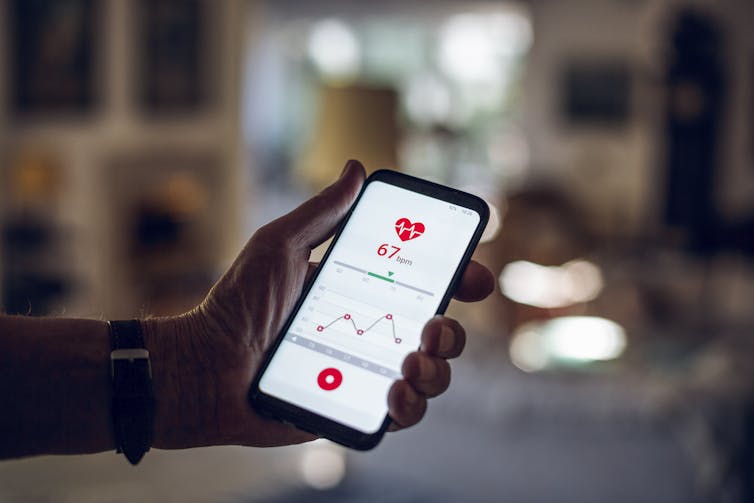
Man holding phone with health data.

Telehealth technologies

There are three main types of telehealth: synchronous, asynchronous and remote monitoring. Knowing when to use each one – and having the right technology on hand – is critical to using telehealth wisely.

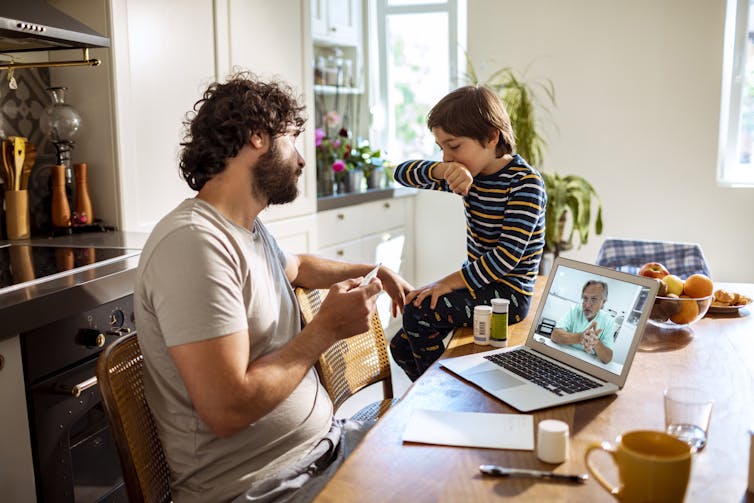
Synchronous telehealth is a live, two-way interaction, usually over video or phone. Health care providers generally prefer video conferencing over phone calls because aside from tasks that require physical touch, nearly anything that can be done in person can be done over video. But some things, like the taking of blood samples, for example, simply cannot be done over video.

Many of the limitations of video conferencing can be overcome with the second telehealth approach, remote patient monitoring. Patients can use devices at home to get objective data that is automatically uploaded to health care providers. Devices exist to measure blood pressure, temperature, heart rhythms and many other aspects of health. These devices are great for getting reliable data that can show trends over time. Researchers have shown that remote monitoring approaches are as effective as – and in some cases better than – in-person care for many chronic conditions.

Some remaining gaps can be filled with the third type, asynchronous telehealth. Patients and providers can use the internet to answer questions, describe symptoms, refill prescription refills, make appointments and for other general communication.

Unfortunately, not every provider or patient has the technology or the experience to use live video conferencing or remote monitoring equipment. But even having all the available telehealth technology does not mean that telehealth can solve every problem.

A father and son on a video call with a doctor.

Ongoing care and first evaluations

Generally, telehealth is right for patients who have ongoing conditions or who need an initial evaluation of a sudden illness.

Because telehealth makes it easier to have have frequent check-ins compared to in-person care, managing ongoing care for chronic illnesses like diabetesheart disease and lung disease can be as safe as or better than in-person care.

Research has shown that it can also be used effectively to diagnose and even treat new and short-term health issues as well. The tricky part is knowing which situations can be dealt with remotely.

Imagine you took a fall and want to get medical advice to make sure you didn’t break your arm. If you were to go to a hospital or clinic, almost always, the first health care professional you’d see is a primary care generalist, like me. That person will, if possible, diagnose the problem and give you basic medical advice: “You’ve got a large bruise, but nothing appears to be broken. Just rest, put some ice on it and take a pain reliever.” If I look at your arm and think you need more involved care, I would recommend the next steps you should take: “Your arm looks like it might be fractured. Let’s order you an X-ray.”

This first interaction can easily be done from home using telehealth. If a patient needs further care, they would simply leave home to get it after meeting with me via video. If they don’t need further care, then telehealth just saved a lot of time and hassle for the patient.

Research has shown that using telehealth for things like minor injuries, stomach pains and nausea provides the same level of care as in-person medicine and reduces unnecessary ambulance rides and hospital visits.

Some research has shown that telehealth is not as effective as in-person care at diagnosing the causes of sore throats and respiratory infections. Especially now during the coronavirus pandemic, in-person care might be necessary if you are having respiratory issues.

And finally, for obviously life-threatening situations like severe bleeding, chest pain or shortness of breath, patients should still go to hospitals and emergency rooms.

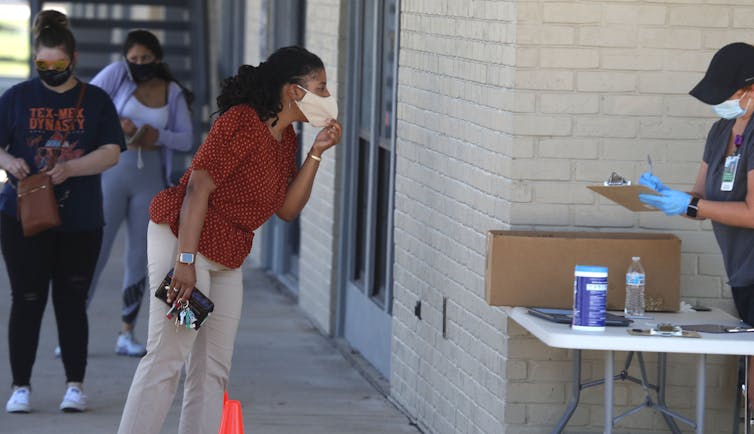
A woman asks a health care worker a question while staying socially distanced.

Balancing risk

With the right technology and in the right situations, telehealth is an incredibly effective tool. But the question of when to use telehealth must also take into account the risk and burden of getting care.

COVID-19 increases the risks of in-person care, so while you should obviously still go to a hospital if you think you may be having a heart attack, right now, it might be better to have a telehealth consultation about acne – even if you might prefer an in-person appointment.

Burden is another thing to consider. Time off work, travel, wait times and the many other inconveniences that go along with an in-person visit aren’t necessary simply to get refills for ongoing medication. But, if a provider needs to draw a patient’s blood to monitor the safety or effectiveness of a prescription medicine, the burden of an in-person visit to the lab is likely worth the increased risk.

Of course, not all health care can be done by telehealth, but a lot can, and research shows that in many cases, it’s just as good as in-person care. As the pandemic continues and other problems need addressing, think about the right telehealth fit for you, and talk to your health care team about the services offered, your risks and your preferences. You might find that that there are far fewer waiting rooms in your future.