The Unique U. S. Failure to Control the Coronavirus

The Unique U.S. Failure to Control the Virus - The New York Times

Nearly every country has struggled to contain the coronavirus and made mistakes along the way.

China committed the first major failure, silencing doctors who tried to raise alarms about the virus and allowing it to escape from Wuhan. Much of Europe went next, failing to avoid enormous outbreaks. Today, many countries — Japan, Canada, France, Australia and more — are coping with new increases in cases after reopening parts of society.

Yet even with all of these problems, one country stands alone, as the only affluent nation to have suffered a severe, sustained outbreak for more than four months: the United States.

Over the past month, about 1.9 million Americans have tested positive for the virus.

That’s more than five times as many as in all of Europe, Canada, Japan, South Korea and Australia, combined.

Even though some of these countries saw worrying new outbreaks over the past month, including 50,000 new cases in Spain …

the outbreaks still pale in comparison to those in the United States. Florida, with a population less than half of Spain, has reported nearly 300,000 cases in the same period.

When it comes to the virus, the United States has come to resemble not the wealthy and powerful countries to which it is often compared but instead far poorer countries, like Brazil, Peru and South Africa, or those with large migrant populations, like Bahrain and Oman.

As in several of those other countries, the toll of the virus in the United States has fallen disproportionately on poorer people and groups that have long suffered discrimination. Black and Latino residents of the United States have contracted the virus at roughly three times as high of a rate as white residents.

How did this happen? The New York Times set out to reconstruct the unique failure of the United States, through numerous interviews with scientists and public health experts around the world. The reporting points to two central themes.

First, the United States faced longstanding challenges in confronting a major pandemic. It is a large country at the nexus of the global economy, with a tradition of prioritizing individualism over government restrictions. That tradition is one reason the United States suffers from an unequal health care system that has long produced worse medical outcomes — including higher infant mortality and diabetes rates and lower life expectancy — than in most other rich countries.

“As an American, I think there is a lot of good to be said about our libertarian tradition,” Dr. Jared Baeten, an epidemiologist and vice dean at the University of Washington School of Public Health, said. “But this is the consequence — we don’t succeed as well as a collective.”

The second major theme is one that public health experts often find uncomfortable to discuss because many try to steer clear of partisan politics. But many agree that the poor results in the United States stem in substantial measure from the performance of the Trump administration.

In no other high-income country — and in only a few countries, period — have political leaders departed from expert advice as frequently and significantly as the Trump administration. President Trump has said the virus was not serious; predicted it would disappear; spent weeks questioning the need for masks; encouraged states to reopen even with large and growing caseloads; and promoted medical disinformation.

In recent days, Mr. Trump has continued the theme, offering a torrent of misleading statistics in his public appearances that make the situation sound less dire than it is.

Some Republican governors have followed his lead and also played down the virus, while others have largely followed the science. Democratic governors have more reliably heeded scientific advice, but their performance in containing the virus has been uneven.

“In many of the countries that have been very successful they had a much crisper strategic direction and really had a vision,” said Caitlin Rivers, an epidemiologist at the Johns Hopkins Center for Health Security, who wrote a guide to reopening safely for the American Enterprise Institute, a conservative research group. “I’m not sure we ever really had a plan or a strategy — or at least it wasn’t public.”

Together, the national skepticism toward collective action and the Trump administration’s scattered response to the virus have contributed to several specific failures and missed opportunities, Times reporting shows:

  • a lack of effective travel restrictions;

  • repeated breakdowns in testing;

  • confusing advice about masks;

  • a misunderstanding of the relationship between the virus and the economy;

  • and inconsistent messages from public officials.

Already, the American death toll is of a different order of magnitude than in most other countries. With only 4 percent of the world’s population, the United States has accounted for 22 percent of coronavirus deaths. Canada, a rich country that neighbors the United States, has a per capita death rate about half as large. And these gaps may worsen in coming weeks, given the lag between new cases and deaths.

For many Americans who survive the virus or do not contract it, the future will bring other problems. Many schools will struggle to open. And the normal activities of life — family visits, social gatherings, restaurant meals, sporting events — may be more difficult in the United States than in any other affluent country.


In retrospect, one of Mr. Trump’s first policy responses to the virus appears to have been one of his most promising.

On Jan. 31, his administration announced that it was restricting entry to the United States from China: Many foreign nationals — be they citizens of China or other countries — would not be allowed into the United States if they had been to China in the previous two weeks.

It was still early in the spread of the virus. The first cases in Wuhan, China, had been diagnosed about a month before, and the first announced case in the United States had come on Jan. 21. In announcing the new travel policy, Alex M. Azar II, the secretary of health and human services, declared that the virus posed “a public health emergency.” Mr. Trump described the policy as his “China ban.”

After the Trump administration acted, several other countries quickly announced their own restrictions on travel from China, including Japan, Vietnam and Australia.

But it quickly became clear that the United States’ policy was full of holes. It did not apply to immediate family members of American citizens and permanent residents returning from China, for example. In the two months after the policy went into place, almost 40,000 people arrived in the United States on direct flights from China.

Even more important, the policy failed to take into account that the virus had spread well beyond China by early February. Later data would show that many infected people arriving in the United States came from Europe. (The Trump administration did not restrict travel from Europe until March and exempted Britain from that ban despite a high infection rate there.)

The administration’s policy also did little to create quarantines for people who entered the United States and may have had the virus.

Authorities in some other places took a far more rigorous approach to travel restrictions.

South Korea, Hong Kong and Taiwan largely restricted entry to residents returning home. Those residents then had to quarantine for two weeks upon arrival, with the government keeping close tabs to ensure they did not leave their home or hotel. South Korea and Hong Kong also tested for the virus at the airport and transferred anyone who was positive to a government facility.

Australia offers a telling comparison. Like the United States, it is separated from China by an ocean and is run by a conservative leader — Scott Morrison, the prime minister. Unlike the United States, it put travel restrictions at the center of its virus response.

Australian officials noticed in March that the travel restrictions they had announced on Feb. 1 were not preventing the virus from spreading. So they went further.

On March 27, Mr. Morrison announced that Australia would no longer trust travelers to isolate themselves voluntarily. The country would instead mandate that everyone arriving from overseas, including Australian citizens, spend two weeks quarantined in a hotel.

The protocols were strict. As people arrived at an airport, the authorities transported them directly to hotels nearby. People were not even allowed to leave their hotel to exercise. The Australian military helped enforce the rules.

Around the same time, several Australian states with minor outbreaks shut their own borders to keep out Australians from regions with higher rates of infection. That hardening of internal boundaries had not happened since the 1918 flu pandemic, said Ian Mackay, a virologist in Queensland, one of the first states to block entry from other areas.

The United States, by comparison, imposed few travel restrictions, either for foreigners or American citizens. Individual states did little to enforce the rules they did impose.

“People need a bit more than a suggestion to look after their own health,” said Dr. Mackay, who has been working with Australian officials on their pandemic response. “They need guidelines, they need rules — and they need to be enforced.”

Travel restrictions and quarantines were central to the success in controlling the virus in South Korea, Hong Kong, Taiwan and Australia, as well as New Zealand, many epidemiologists believe. In Australia, the number of new cases per day fell more than 90 percent in April. It remained near zero through May and early June, even as the virus surged across much of the United States.

In the past six weeks, Australia has begun to have a resurgence — which itself points to the importance of travel rules. The latest outbreak stems in large part from problems with the quarantine in the city of Melbourne. Compared with other parts of Australia, Melbourne relied more on private security contractors who employed temporary workers — some of whom lacked training and failed to follow guidelines — to enforce quarantines at local hotels. Officials have responded by banning out-of-state travel again and imposing new lockdowns.

Still, the tolls in Australia and the United States remain vastly different. Fewer than 300 Australians have died of complications from Covid-19, the illness caused by the virus. If the United States had the same per capita death rate, about 3,300 Americans would have died, rather than 158,000.

Enacting tough travel restrictions in the United States would not have been easy. It is more integrated into the global economy than Australia is, has a tradition of local policy decisions and borders two other large countries. But there is a good chance that a different version of Mr. Trump’s restrictions — one with fewer holes and stronger quarantines — would have meaningfully slowed the virus’s spread.

Traditionally, public health experts had not seen travel restrictions as central to fighting a pandemic, given their economic costs and the availability of other options, like testing, quarantining and contact tracing, Dr. Baeten, the University of Washington epidemiologist, said. But he added that travel restrictions had been successful enough in fighting the coronavirus around the world that those views may need to be revisited.

“Travel,” he said, “is the hallmark of the spread of this virus around the world.”


On Jan. 16, nearly a week before the first announced case of the coronavirus in the United States, a German hospital made an announcement. Its researchers had developed a test for the virus, which they described as the world’s first.

The researchers posted the formula for the test online and said they expected that countries with strong public health systems would soon be able to produce their own tests. “We’re more concerned about labs in countries where it’s not that easy to transport samples, or staff aren’t trained that thoroughly, or if there is a large number of patients who have to be tested,” Dr. Christian Drosten, the director of the Institute for Virology at the hospital, known as Charité, in Berlin.

It turned out, however, that the testing problems would not be limited to less-developed countries.

In the United States, the Centers for Disease Control and Prevention developed their own test four days after the German lab did. C.D.C. officials claimed that the American test would be more accurate than the German one, by using three genetic sequences to detect the virus rather than two. The federal government quickly began distributing the American test to state officials.

But the test had a flaw. The third genetic sequence produced inconclusive results, so the C.D.C. told state labs to pause their work. In meetings of the White House’s coronavirus task force, Dr. Robert R. Redfield, the C.D.C. director, played down the problem and said it would soon be solved.

Instead, it took weeks to fix. During that time, the United States had to restrict testing to people who had clear reason to think they had the virus. All the while, the virus was quietly spreading.

By early March, with the testing delays still unresolved, the New York region became a global center of the virus — without people realizing it until weeks later. More widespread testing could have made a major difference, experts said, leading to earlier lockdowns and social distancing and ultimately less sickness and death.

“You can’t stop it if you can’t see it,” Dr. Bruce Aylward, a senior adviser to the director general at the World Health Organization, said.

While the C.D.C. was struggling to solve its testing flaws, Germany was rapidly building up its ability to test. Chancellor Angela Merkel, a chemist by training, and other political leaders were watching the virus sweep across northern Italy, not far from southern Germany, and pushed for a big expansion of testing.

By the time the virus became a problem in Germany, labs around the country had thousands of test kits ready to use. From the beginning, the government covered the cost of the tests. American laboratories often charge patients about $100 for a test.

Without free tests, Dr. Hendrik Streeck, director of the Institute of Virology at the University Hospital Bonn, said at the time, “a young person with no health insurance and an itchy throat is unlikely to go to the doctor and therefore risks infecting more people.”

Germany was soon far ahead of other countries in testing. It was able to diagnose asymptomatic cases, trace the contacts of new patients and isolate people before they could spread the virus. The country has still suffered a significant outbreak. But it has had many fewer cases per capita than Italy, Spain, France, Britain or Canada — and about one-fifth the rate of the United States.

The United States eventually made up ground on tests. In recent weeks, it has been conducting more per capita than any other country, according to Johns Hopkins researchers.

But now there is a new problem: The virus has grown even more rapidly than testing capacity. In recent weeks, Americans have often had to wait in long lines, sometimes in scorching heat, to be tested.

One measure of the continuing troubles with testing is the percentage of tests that come back positive. In a country that has the virus under control, fewer than 5 percent of tests come back positive, according to World Health Organization guidelines. Many countries have reached that benchmark. The United States, even with the large recent volume of tests, has not.

“We do have a lot of testing,” Ms. Rivers, the Johns Hopkins epidemiologist, said. “The problem is we also have a lot of cases.”

The huge demand for tests has overwhelmed medical laboratories, and many need days — or even up to two weeks — to produce results. “That really is not useful for public health and medical management,” Ms. Rivers added. While people are waiting for their results, many are also spreading the virus.

In Belgium recently, test results have typically come back in 48 to 72 hours. In Germany and Greece, it is two days. In France, the wait is often 24 hours.


For the first few months of the pandemic, public health experts could not agree on a consistent message about masks. Some said masks reduced the spread of the virus. Many experts, however, discouraged the use of masks, saying — somewhat contradictorily — that their benefits were modest and that they should be reserved for medical workers.

“We don’t generally recommend the wearing of masks in public by otherwise well individuals because it has not been up to now associated with any particular benefit,” Dr. Michael Ryan, a World Health Organization official, said at a March 30 news conference.

His colleague Dr. Maria Van Kerkhove explained that it was important to “prioritize the use of masks for those who need them most.”

The conflicting advice, echoed by the C.D.C. and others, led to relatively little mask wearing in many countries early in the pandemic. But several Asian countries were exceptions, partly because they had a tradition of mask wearing to avoid sickness or minimize the effects of pollution.

By January, mask wearing in Japan was widespread, as it often had been during a typical flu season. Masks also quickly became the norm in much of South KoreaThailandVietnamTaiwan and China.

In the following months, scientists around the world began to report two strands of evidence that both pointed to the importance of masks: Research showed that the virus could be transmitted through droplets that hang in the air, and several studies found that the virus spread less frequently in places where people were wearing masks.

On one cruise ship that gave passengers masks after somebody got sick, for example, many fewer people became ill than on a different cruise where people did not wear masks.

Consistent with that evidence was Asia’s success in holding down the number of cases (after China’s initial failure to do so). In South Korea, the per capita death rate is about one-eightieth as large as in the United States; Japan, despite being slow to enact social distancing, has a death rate about one-sixtieth as large.

“We should have told people to wear cloth masks right off the bat,” Dr. George Rutherford of the University of California, San Francisco, said.

In many countries, officials reacted to the emerging evidence with a clear message: Wear a mask.

Prime Minister Justin Trudeau of Canada began wearing one in May. During a visit to an elementary school, President Emmanuel Macron of France wore a French-made blue mask that complemented his suit and tie. Zuzana Caputova, the president of Slovakia, created a social media sensation by wearing a fuchsia-colored mask that matched her dress.

In the United States, however, masks did not become a fashion symbol. They became a political symbol.

Mr. Trump avoided wearing one in public for months. He poked fun at a reporter who wore one to a news conference, asking the reporter to take it off and saying that wearing one was “politically correct.” He described former Vice President Joseph R. Biden Jr.’s decision to wear one outdoors as “very unusual.”

Many other Republicans and conservative news outlets, like Fox News, echoed his position. Mask wearing, as a result, became yet another partisan divide in a highly polarized country.

Throughout much of the Northeast and the West Coast, more than 80 percent of people wore masks when within six feet of someone else. In more conservative areas, like the Southeast, the share was closer to 50 percent.

A March survey found that partisanship was the biggest predictor of whether Americans regularly wore masks — bigger than their age or whether they lived in a region with a high number of virus cases. In many of the places where people adopted a hostile view of masks, including Texas and the Southeast, the number of virus cases began to soar this spring.


Throughout March and April, Gov. Brian Kemp of Georgia and staff members held long meetings inside a conference room at the State Capitol in Atlanta. They ordered takeout lunches from local restaurants like the Varsity and held two daily conference calls with the public health department, the National Guard and other officials.

One of the main subjects of the meetings was when to end Georgia’s lockdown and reopen the state’s economy. By late April, Mr. Kemp decided that it was time.

Georgia had not met the reopening criteria laid out by the Trump administration (and many outside health experts considered those criteria too lax). The state was reporting about 700 new cases a day, more than when it shut down on April 3.

Nonetheless, Mr. Kemp went ahead. He said that Georgia’s economy could not wait any longer, and it became one of the first states to reopen.

“I don’t give a damn about politics right now,” he said at an April 20 news conference announcing the reopening. He went on to describe business owners with employees at home who were “going broke, worried about whether they can feed their children, make the mortgage payment.”

Four days later, across Georgia, barbers returned to their chairs, wearing face masks and latex gloves. Gyms and bowling alleys were allowed to reopen, followed by restaurants on April 27. The stay-at-home order expired at 11:59 p.m. on April 30.

Mr. Kemp’s decision was part of a pattern: Across the United States, caseloads were typically much higher when the economy reopened than in other countries.

As the United States endured weeks of closed stores and rising unemployment this spring, many politicians — particularly Republicans, like Mr. Kemp — argued that there was an unavoidable trade-off between public health and economic health. And if crushing the virus meant ruining the economy, maybe the side effects of the treatment were worse than the disease.

Dan Patrick, the Republican lieutenant governor of Texas, put the case most bluntly, and became an object of scorn, especially from the political left, for doing so. “There are more important things than living,” Mr. Patrick said in a television interview the same week that Mr. Kemp reopened Georgia.

It may have been an inartful line, but Mr. Patrick’s full argument was not wholly dismissive of human life. He was instead suggesting that the human costs of shutting down the economy — the losses of jobs and income and the associated damages to living standards and people’s health — were greater than the costs of a virus that kills only a small percentage of people who get it.

“We are crushing the economy,” he said, citing the damage to his own children and grandchildren. “We’ve got to take some risks and get back in the game and get this country back up and running.”

The trouble with the argument, epidemiologists and economists agree, was that public health and the economy’s health were not really in conflict.

Early in the pandemic, Austan Goolsbee, a University of Chicago economist and former Obama administration official, proposed what he called the first rule of virus economics: “The best way to fix the economy is to get control of the virus,” he said. Until the virus was under control, many people would be afraid to resume normal life and the economy would not function normally.

The events of the last few months have borne out Mr. Goolsbee’s prediction. Even before states announced shutdown orders in the spring, many families began sharply reducing their spending. They were responding to their own worries about the virus, not any official government policy.

And the end of lockdowns, like Georgia’s, did not fix the economy’s problems. It instead led to a brief increase in spending and hiring that soon faded.

In the weeks after states reopened, the virus began surging. Those that opened earliest tended to have worse outbreaks, according to a Times analysis. The Southeast fared especially badly.

In June and July, Georgia reported more than 125,000 new virus cases, turning it into one of the globe’s new hot spots. That was more new cases than Canada, France, Germany, Italy, Japan and Australia combined during that time frame.

Americans, frightened by the virus’s resurgence, responded by visiting restaurants and stores less often. The number of Americans filing new claims for unemployment benefits has stopped falling. The economy’s brief recovery in April and May seems to have petered out in June and July.

In large parts of the United States, officials chose to reopen before medical experts thought it wise, in an attempt to put people back to work and spark the economy. Instead, the United States sparked a huge new virus outbreak — and the economy did not seem to benefit.

“Politicians are not in control,” Mr. Goolsbee said. “They got all the illness and still didn’t fix their economies.”

The situation is different in the European Union and other regions that have had more success reducing new virus cases. Their economies have begun showing some promising signs, albeit tentative ones. In Germany, retail sales and industrial production have risen, and the most recent unemployment rate was 6.4 percent. In the United States, it was 11.1 percent.


The United States has not performed uniquely poorly on every measure of the virus response.

Mask wearing is more common than throughout much of Scandinavia and Australia, according to surveys by YouGov and Imperial College London. The total death rate is still higher in Spain, Italy and Britain.

But there is one way — in addition to the scale of the continuing outbreaks and deaths — that the United States stands apart: In no other high-income country have the messages from political leaders been nearly so mixed and confusing.

These messages, in turn, have been amplified by television stations and websites friendly to the Republican Party, especially Fox News and the Sinclair Broadcast Group, which operates almost 200 local stations. To anybody listening to the country’s politicians or watching these television stations, it would have been difficult to know how to respond to the virus.

Mr. Trump’s comments, in particular, have regularly contradicted the views of scientists and medical experts.

The day after the first American case was diagnosed, he said, “We have it totally under control.” In late February, he said: “It’s going to disappear. One day — it’s like a miracle — it will disappear.” Later, he incorrectly stated that any American who wanted a test could get one. On July 28, he falsely proclaimed that “large portions of our country” were “corona-free.”

He has also promoted medical misinformation about the virus. In March, Mr. Trump called it “very mild” and suggested it was less deadly than the common flu. He has encouraged Americans to treat it with the antimalarial drug hydroxychloroquine, despite a lack of evidence about its effectiveness and concerns about its safety. At one White House briefing, he mused aloud about injecting people with disinfectant to treat the virus.

These comments have helped create a large partisan divide in the country, with Republican-leaning voters less willing to wear masks or remain socially distant. Some Democratic-leaning voters and less political Americans, in turn, have decided that if everybody is not taking the virus seriously, they will not either. State leaders from both parties have sometimes created so many exceptions about which workplaces can continue operating normally that their stay-at-home orders have had only modest effects.

“It doesn’t seem we have had the same unity of purpose that I would have expected,” Ms. Rivers, the Johns Hopkins epidemiologist, said. “You need everyone to come together to accomplish something big.”

Across much of Europe and Asia, as well as in Canada, Australia and elsewhere, leaders have delivered a consistent message: The world is facing a deadly virus, and only careful, consistent action will protect people.

Many of those leaders have then pursued aggressive action. Mr. Trump and his top aides, by contrast, persuaded themselves in April that the virus was fading. They have also declined to design a national strategy for testing or other virus responses, leading to a chaotic mix of state policies.

“If you had to summarize our approach, it’s really poor federal leadership — disorganization and denial,” said Andy Slavitt, who ran Medicare and Medicaid from 2015 to 2017. “Watch Angela Merkel. Watch how she communicates with the public. Watch how Jacinda Ardern in New Zealand does it. They’re very clear. They’re very consistent about what the most important priorities are.”

New York — both the city and the state — offers a useful case study. Like much of Europe, New York responded too slowly to the first wave of the virus. As late as March 15, Mayor Bill de Blasio encouraged people to go to their neighborhood bar.

Soon, the city and state were overwhelmed. Ambulances wailed day and night. Hospitals filled to the breaking point. Gov. Andrew M. Cuomo — a Democrat, like Mr. de Blasio — was slow to protect nursing home residents, and thousands died. Earlier action in New York could have saved a significant number of lives, epidemiologists say.

By late March, however, New York’s leaders understood the threat, and they reversed course.

They insisted that people stay home. They repeated the message every day, often on television. When other states began reopening, New York did not. “You look at the states that opened fast without metrics, without guardrails, it’s a boomerang,” Mr. Cuomo said on June 4.

The lockdowns and the consistent messages had a big effect. By June, New York and surrounding states had some of the lowest rates of virus spread in the country. Across much of the Southeast, Southwest and West Coast, on the other hand, the pandemic was raging.

Many experts now say that the most disappointing part of the country’s failure is that the outcome was avoidable.

What may not have been avoidable was the initial surge of the virus: The world’s success in containing previous viruses, like SARS, had lulled many people into thinking a devastating pandemic was unlikely. That complacency helps explains China’s early mistakes, as well as the terrible death tolls in the New York region, Italy, Spain, Belgium, Britain and other parts of Europe.

But these countries and dozens more — as well as New York — have since shown that keeping the virus in check is feasible.

For all of the continuing uncertainty about how this new coronavirus is transmitted and how it affects the human body, much has become clear. It often spreads indoors, with close human contact. Talking, singing, sneezing and coughing play a major role in transmission. Masks reduce the risk. Restarting normal activity almost always leads to new cases that require quick action — testing, tracing of patients and quarantining — to keep the virus in check.

When countries and cities have heeded these lessons, they have rapidly reduced the spread of the virus and been able to move back, gingerly, toward normal life. In South Korea, fans have been able to attend baseball games in recent weeks. In Denmark, Italy and other parts of Europe, children have returned to school.

In the United States, the virus continues to overwhelm daily life.

“This isn’t actually rocket science,” said Dr. Thomas R. Frieden, who ran the New York City health department and the C.D.C. for a combined 15 years. “We know what to do, and we’re not doing it.”
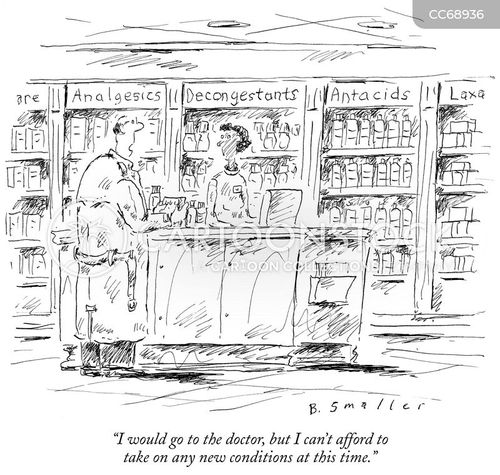


Cartoon – Deferred Healthcare

Public Health Coverage Cartoons and Comics - funny pictures from ...

Cartoon – Wheel of Misfortune

SitNews - Newsmaker Interviews: Good Luck on Sweeping Health Care ...

COVID-19 long-term toll signals billions in healthcare costs ahead

https://www.reuters.com/article/us-health-coronavirus-fallout-insight/long-term-complications-of-covid-19-signals-billions-in-healthcare-costs-ahead-idUSKBN24Z1CM?fbclid=IwAR2f9fSnhgGBVvIe1fKX2EO5kKSG7TwUesAMUGrG0jBSfoBrBYltR1e9Nik

COVID-19 long-term toll signals billions in healthcare costs ahead ...

Late in March, Laura Gross, 72, was recovering from gall bladder surgery in her Fort Lee, New Jersey, home when she became sick again.

Her throat, head and eyes hurt, her muscles and joints ached and she felt like she was in a fog. Her diagnosis was COVID-19. Four months later, these symptoms remain.

Gross sees a primary care doctor and specialists including a cardiologist, pulmonologist, endocrinologist, neurologist, and gastroenterologist.

“I’ve had a headache since April. I’ve never stopped running a low-grade temperature,” she said.

Studies of COVID-19 patients keep uncovering new complications associated with the disease.

With mounting evidence that some COVID-19 survivors face months, or possibly years, of debilitating complications, healthcare experts are beginning to study possible long-term costs.

Bruce Lee of the City University of New York (CUNY) Public School of Health estimated that if 20% of the U.S. population contracts the virus, the one-year post-hospitalization costs would be at least $50 billion, before factoring in longer-term care for lingering health problems. Without a vaccine, if 80% of the population became infected, that cost would balloon to $204 billion.

Some countries hit hard by the new coronavirus – including the United States, Britain and Italy – are considering whether these long-term effects can be considered a “post-COVID syndrome,” according to Reuters interviews with about a dozen doctors and health economists.

Some U.S. and Italian hospitals have created centers devoted to the care of these patients and are standardizing follow-up measures.

Britain’s Department of Health and the U.S. Centers for Disease Control and Prevention are each leading national studies of COVID-19’s long-term impacts. An international panel of doctors will suggest standards for mid- and long-term care of recovered patients to the World Health Organization (WHO) in August.

YEARS BEFORE THE COST IS KNOWN

More than 17 million people have been infected by the new coronavirus worldwide, about a quarter of them in the United States.

Healthcare experts say it will be years before the costs for those who have recovered can be fully calculated, not unlike the slow recognition of HIV, or the health impacts to first responders of the Sept. 11, 2001 attacks on the World Trade Center in New York.

They stem from COVID-19’s toll on multiple organs, including heart, lung and kidney damage that will likely require costly care, such as regular scans and ultrasounds, as well as neurological deficits that are not yet fully understood.

A JAMA Cardiology study found that in one group of COVID-19 patients in Germany aged 45 to 53, more than 75% suffered from heart inflammation, raising the possibility of future heart failure.

A Kidney International study found that over a third of COVID-19 patients in a New York medical system developed acute kidney injury, and nearly 15% required dialysis.

Dr. Marco Rizzi in Bergamo, Italy, an early epicenter of the pandemic, said the Giovanni XXIII Hospital has seen close to 600 COVID-19 patients for follow-up. About 30% have lung issues, 10% have neurological problems, 10% have heart issues and about 9% have lingering motor skill problems. He co-chairs the WHO panel that will recommend long-term follow-up for patients.

“On a global level, nobody knows how many will still need checks and treatment in three months, six months, a year,” Rizzi said, adding that even those with mild COVID-19 “may have consequences in the future.”

Milan’s San Raffaele Hospital has seen more than 1,000 COVID-19 patients for follow-up. While major cardiology problems there were few, about 30% to 40% of patients have neurological problems and at least half suffer from respiratory conditions, according to Dr. Moreno Tresoldi.

Some of these long-term effects have only recently emerged, too soon for health economists to study medical claims and make accurate estimates of costs.

In Britain and Italy, those costs would be borne by their respective governments, which have committed to funding COVID-19 treatments but have offered few details on how much may be needed.

In the United States, more than half of the population is covered by private health insurers, an industry that is just beginning to estimate the cost of COVID-19.

CUNY’s Lee estimated the average one-year cost of a U.S. COVID-19 patient after they have been discharged from the hospital at $4,000, largely due to the lingering issues from acute respiratory distress syndrome (ARDS), which affects some 40% of patients, and sepsis.

The estimate spans patients who had been hospitalized with moderate illness to the most severe cases, but does not include other potential complications, such as heart and kidney damage.

Even those who do not require hospitalization have average one-year costs after their initial illness of $1,000, Lee estimated.

‘HARD JUST TO GET UP’

Extra costs from lingering effects of COVID-19 could mean higher health insurance premiums in the United States. Some health plans have already raised 2021 premiums on comprehensive coverage by up to 8% due to COVID-19, according to the Kaiser Family Foundation.

Anne McKee, 61, a retired psychologist who lives in Knoxville, Tennessee and Atlanta, had multiple sclerosis and asthma when she became infected nearly five months ago. She is still struggling to catch her breath.

“On good days, I can do a couple loads of laundry, but the last several days, it’s been hard just to get up and get a drink from the kitchen,” she said.

She has spent more than $5,000 on appointments, tests and prescription drugs during that time. Her insurance has paid more than $15,000 including $240 for a telehealth appointment and $455 for a lung scan.

“Many of the issues that arise from having a severe contraction of a disease could be 3, 5, 20 years down the road,” said Dale Hall, Managing Director of Research with the Society of Actuaries.

To understand the costs, U.S. actuaries compare insurance records of coronavirus patients against people with a similar health profile but no COVID-19, and follow them for years.

The United Kingdom aims to track the health of 10,000 hospitalized COVID-19 patients over the first 12 months after being discharged and potentially as long as 25 years. Scientists running the study see the potential for defining a long-term COVID-19 syndrome, as they found with Ebola survivors in Africa.

“Many people, we believe will have scarring in the lungs and fatigue … and perhaps vascular damage to the brain, perhaps, psychological distress as well,” said Professor Calum Semple from the University of Liverpool.

Margaret O’Hara, 50, who works at a Birmingham hospital is one of many COVID-19 patients who will not be included in the study because she had mild symptoms and was not hospitalized. But recurring health issues, including extreme shortness of breath, has kept her out of work.

O’Hara worries patients like her are not going to be included in the country’s long-term cost planning.

“We’re going to need … expensive follow-up for quite a long time,” she said.


Industry Voices—6 ways the pandemic will remake health systems

https://www.fiercehealthcare.com/hospitals/industry-voices-6-ways-pandemic-will-remake-health-systems?mkt_tok=eyJpIjoiTURoaU9HTTRZMkV3TlRReSIsInQiOiJwcCtIb3VSd1ppXC9XT21XZCtoVUd4ekVqSytvK1wvNXgyQk9tMVwvYXcyNkFHXC9BRko2c1NQRHdXK1Z5UXVGbVpsTG5TYml5Z1FlTVJuZERqSEtEcFhrd0hpV1Y2Y0sxZFNBMXJDRkVnU1hmbHpQT0pXckwzRVZ4SUVWMGZsQlpzVkcifQ%3D%3D&mrkid=959610

Industry Voices—6 ways the pandemic will remake health systems ...

Provider executives already know America’s hospitals and health systems are seeing rapidly deteriorating finances as a result of the coronavirus pandemic. They’re just not yet sure of the extent of the damage.

By the end of June, COVID-19 will have delivered an estimated $200 billion blow to these institutions with the bulk of losses stemming from cancelled elective and nonelective surgeries, according to the American Hospital Association

A recent Healthcare Financial Management Association (HFMA)/Guidehouse COVID-19 survey suggests these patient volumes will be slow to return, with half of provider executive respondents anticipating it will take through the end of the year or longer to return to pre-COVID levels. Moreover, one-in-three provider executives expect to close the year with revenues at 15 percent or more below pre-pandemic levels. One-in-five of them believe those decreases will soar to 30 percent or beyond. 

Available cash is also in short supply. A Guidehouse analysis of 350 hospitals nationwide found that cash on hand is projected to drop by 50 days on average by the end of the year — a 26% plunge — assuming that hospitals must repay accelerated and/or advanced Medicare payments.

While the government is providing much needed aid, just 11% of the COVID survey respondents expect emergency funding to cover their COVID-related costs.

The figures illustrate how the virus has hurled American medicine into unparalleled volatility. No one knows how long patients will continue to avoid getting elective care, or how state restrictions and climbing unemployment will affect their decision making once they have the option.

All of which leaves one thing for certain: Healthcare’s delivery, operations, and competitive dynamics are poised to undergo a fundamental and likely sustained transformation. 

Here are six changes coming sooner rather than later.


1. Payer-provider complexity on the rise; patients will struggle.

The pandemic has been a painful reminder that margins are driven by elective services. While insurers show strong earnings — with some offering rebates due to lower reimbursements — the same cannot be said for patients. As businesses struggle, insured patients will labor under higher deductibles, leaving them reluctant to embrace elective procedures. Such reluctance will be further exacerbated by the resurgence of case prevalence, government responses, reopening rollbacks, and inconsistencies in how the newly uninsured receive coverage.

Furthermore, the upholding of the hospital price transparency ruling will add additional scrutiny and significance for how services are priced and where providers are able to make positive margins. The end result: The payer-provider relationship is about to get even more complicated. 


2. Best-in-class technology will be a necessity, not a luxury. 

COVID has been a boon for telehealth and digital health usage and investments. Two-thirds of survey respondents anticipate using telehealth five times more than they did pre-pandemic. Yet, only one-third believe their organizations are fully equipped to handle the hike.

If healthcare is to meet the shift from in-person appointments to video, it will require rapid investment in things like speech recognition software, patient information pop-up screens, increased automation, and infrastructure to smooth workflows.

Historically, digital technology was viewed as a disruption that increased costs but didn’t always make life easier for providers. Now, caregiver technologies are focused on just that.

The new necessities of the digital world will require investments that are patient-centered and improve access and ease of use, all the while giving providers the platform to better engage, manage, and deliver quality care.

After all, the competition at the door already holds a distinct technological advantage.


3. The tech giants are coming.

Some of America’s biggest companies are indicating they believe they can offer more convenient, more affordable care than traditional payers and providers. 

Begin with Amazon, which has launched clinics for its Seattle employees, created the PillPack online pharmacy, and is entering the insurance market with Haven Healthcare, a partnership that includes Berkshire Hathaway and JPMorgan Chase. Walmart, which already operates pharmacies and retail clinics, is now opening Walmart Health Centers, and just recently announced it is getting into the Medicare Advantage business.

Meanwhile, Walgreens has announced it is partnering with VillageMD to provide primary care within its stores.

The intent of these organizations clear: Large employees see real business opportunities, which represents new competition to the traditional provider models.

It isn’t just the magnitude of these companies that poses a threat. They also have much more experience in providing integrated, digitally advanced services. 


4. Work locations changes mean construction cost reductions. 

If there’s one thing COVID has taught American industry – and healthcare in particular – it’s the importance of being nimble.

Many back-office corporate functions have moved to a virtual environment as a result of the pandemic, leaving executives wondering whether they need as much real estate. According to the survey, just one-in-five executives expect to return to the same onsite work arrangements they had before the pandemic. 

Not surprisingly, capital expenditures, including new and existing construction, leads the list of targets for cost reductions.

Such savings will be critical now that investment income can no longer be relied upon to sustain organizations — or even buy a little time. Though previous disruptions spawned only marginal change, the unprecedented nature of COVID will lead to some uncomfortable decisions, including the need for a quicker return on investments. 


5. Consolidation is coming.

Consolidation can be interpreted as a negative concept, particularly as healthcare is mostly delivered at a local level. But the pandemic has only magnified the differences between the “resilients” and the “non-resilients.” 

All will be focused on rebuilding patient volume, reducing expenses, and addressing new payment models within a tumultuous economy. Yet with near-term cash pressures and liquidity concerns varying by system, the winners and losers will quickly emerge. Those with at least a 6% to 8% operating margin to innovate with delivery and reimagine healthcare post-COVID will be the strongest. Those who face an eroding financial position and market share will struggle to stay independent..


6. Policy will get more thoughtful and data-driven.

The initial coronavirus outbreak and ensuing responses by both the private and public sectors created negative economic repercussions in an accelerated timeframe. A major component of that response was the mandated suspension of elective procedures.

While essential, the impact on states’ economies, people’s health, and the employment market have been severe. For example, many states are currently facing inverse financial pressures with the combination of reductions in tax revenue and the expansion of Medicaid due to increases in unemployment. What’s more, providers will be subject to the ongoing reckonings of outbreak volatility, underscoring the importance of agile policy that engages stakeholders at all levels.

As states have implemented reopening plans, public leaders agree that alternative responses must be developed. Policymakers are in search of more thoughtful, data-driven approaches, which will likely require coordination with health system leaders to develop flexible preparation plans that facilitate scalable responses. The coordination will be difficult, yet necessary to implement resource and operational responses that keeps healthcare open and functioning while managing various levels of COVID outbreaks, as well as future pandemics.

Healthcare has largely been insulated from previous economic disruptions, with capital spending more acutely affected than operations. But the COVID-19 pandemic will very likely be different. Through the pandemic, providers are facing a long-term decrease in commercial payment, coupled with a need to boost caregiver- and consumer-facing engagement, all during a significant economic downturn.

While situations may differ by market, it’s clear that the pre-pandemic status quo won’t work for most hospitals or health systems.


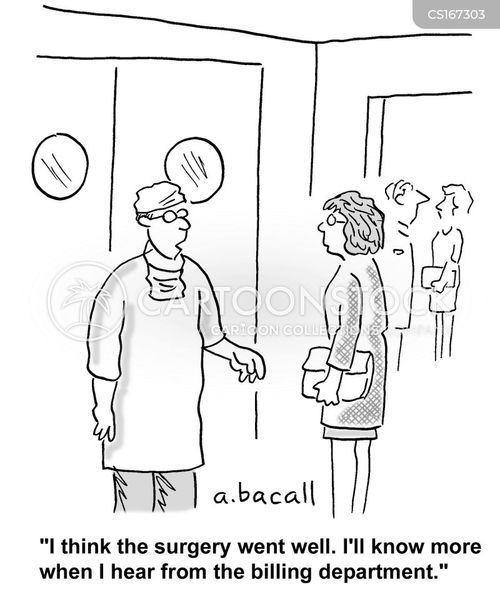
Cartoon – Modern Surgery

Cartoon – Surgical Success Today | HENRY KOTULA


A large racial divide exists in the concern over ability to pay for COVID-19 treatment

https://www.healthcarefinancenews.com/news/large-racial-divide-exists-concern-over-ability-pay-covid-19-treatment

Nonwhite adults say they’re either “extremely concerned” or “concerned” about the potential cost of care.

People of color are far more likely to worry about their ability to pay for healthcare if they are diagnosed with COVID-19 than their white counterparts, according to a new survey from nonprofit West Health and Gallup.

By a margin of almost two to one (58% vs. 32%), nonwhite adults report that they are either “extremely concerned” or “concerned” about the potential cost of care. That concern is three times higher among lower-income than higher-income households (60% vs. 20%).

The data come from an ongoing survey about Americans’ experiences with and attitudes about the healthcare system. The latest findings are based on a nationally representative sample of 1,017 U.S. adults interviewed between June 8 and June 30.

There’s also a disturbing trend when it comes to medication insecurity. Overall, 24% of U.S. adults say they lacked money to pay for at least one prescribed medicine in the past 12 months, an increase from 19% in early 2019. Among nonwhite Americans, the burden is growing even more quickly. Medication insecurity jumped 10 percentage points, from 21% to 31%, compared with a statistically insignificant three-point increase among white Americans (17% to 20%).

WHAT’S THE IMPACT?

All of this results in what Tim Lash, chief strategy officer for West Health, called a “significant and increasing racial and socioeconomic divide” in Americans’ views on the cost of healthcare and the impact it has on their lives. When polling started in 2019, one in five Americans were unable to pay for prescription medications within the past 12 months. That number now stands at one in four. The bottom line is that the situation is getting worse.

Amid broad concern about paying for the cost of COVID-19 or other medical expenses, health insurance benefits are likely more important than ever to U.S. workers. The survey found that 12% of workers are staying in a job they want to leave because they are afraid of losing healthcare benefits, a sentiment that is about twice as likely to be held by nonwhite workers as white workers (17% vs. 9%).

However, Americans step across racial lines in their overwhelming support for disallowing political contributions by pharmaceutical companies, and for government intervention in setting price limits for government-sponsored research and a COVID vaccine.

Nearly 9 in 10 U.S. adults (89%) think the federal government should be able to negotiate the cost of a COVID-19 vaccine, while only 10% say the drug company itself should set the price. Similarly, 86% of U.S. adults say there should be limits on the price of drugs that government-funded research helped develop.

Regarding the influence of pharmaceutical companies on the political process, 78% of adults say political campaigns should not be allowed to accept donations from pharmaceutical companies during the coronavirus pandemic.

THE LARGER TREND

Concerns over payment aren’t the only race-related disparities found in healthcare. Dr. Garth Graham, the vice president of community health at CVS Health, said during AHIP’s Institute and Expo in June that although African Americans make up 13% of the U.S. population, they account for about 24% of COVID-19 deaths.

He attributed some of the driving factors for these particular COVID-19-related disparities to the social determinants of health, the over-predominance of African American and Latino frontline workers, and the higher incidence-rates of chronic illness such as diabetes and hypertension in minority groups.

On June 19 – Juneteenth, as it’s known for many Black Americans – 36 Chicago hospitals penned an open letter declaring that systemic racism is a “public health crisis.”

“Systemic racism is a real threat to the health of our patients, families and communities,” the letter reads. “We stand with all of those who have raised their voices to capture the attention of Chicago and the nation with a clear call for action.”


U.S. Coronavirus Pandemic Status: It’s about to get a lot worse

https://www.axios.com/coronavirus-pain-getting-worse-cd329f4c-9962-4f40-b401-7a7ac1a393cf.html

The pain of the coronavirus is about to get a lot worse - Axios

For months now, American workers, families and small businesses have been saying they can’t keep up their socially distanced lives for much longer. We’ve now arrived at “much longer” — and the pandemic isn’t going away anytime soon.

The big picture: The relief policies and stopgap measures that we cobbled together to get us through the toughest weeks worked for a while, but they’re starting to crumble just as cases are spiking in the majority of states.

Next week, the extra $600 per week in expanded unemployment benefits will expire. And there’s no indication that Congress has reached a consensus on extending this assistance or providing anything in its place.

  • But nearly half of the U.S. population is still jobless, and millions will remain jobless for the foreseeable future. There are 14 million more unemployed people than there are jobs, per the Economic Policy Institute.
  • Nearly a third of Americans missed a housing payment in July — and that was with the additional $600. Plus, most Americans have already spent the stimulus checks they received at the beginning of the pandemic.
  • “We should be very concerned about what’s going to happen in August and beyond” — starting with a spike in evictions, Mathieu Despard, who leads the Social Policy Institute at the Washington University in St. Louis, tells Axios.

Expect more furloughs and layoffs as more small businesses are pushed off the pandemic cliff.

  • By economists’ estimates, more than 100,000 small businesses have permanently closed since the pandemic began.
  • For those that are hanging on, loans from the Paycheck Protection Program (PPP) have not been enough, and the back and forth between re-opening and then closing again as states deal with new case waves has been devastating. In fact, rates of closure have started increasing, the New York Times reports, citing Yelp data.
  • The big firms aren’t immune either. Just last week, behemoths like United Airlines, Wells Fargo, Walgreens and Levi’s either cut jobs or told workers their jobs were at risk, Axios’ Dion Rabouin writes.

And the question of whether schools will reopen looms.

  • Since schools sent kids home in March, and most summer camps didn’t open their doors for the summer, working parents have been dealing with a child care crisis — attempting to do their jobs, care for their kids and homeschool all at once — and hoping that the stress will be temporary.
  • The situation is more dire for low-income families with kids who rely on school lunches or for single parents who are juggling work and parenting without any help.
  • Now the public heath crisis hasn’t abated, and school districts are running out of time to figure out what the fall will look like. Some, starting with Los Angeles, have already decided to go online.

The bottom line: “It’s the uncertainty that is anxiety-inducing,” says Despard. “If you give people a time horizon and say, ‘Look you have to get through these next 8 weeks of extreme shutdown,’ they’ll do it. Now it’s like, ‘How much longer?'”


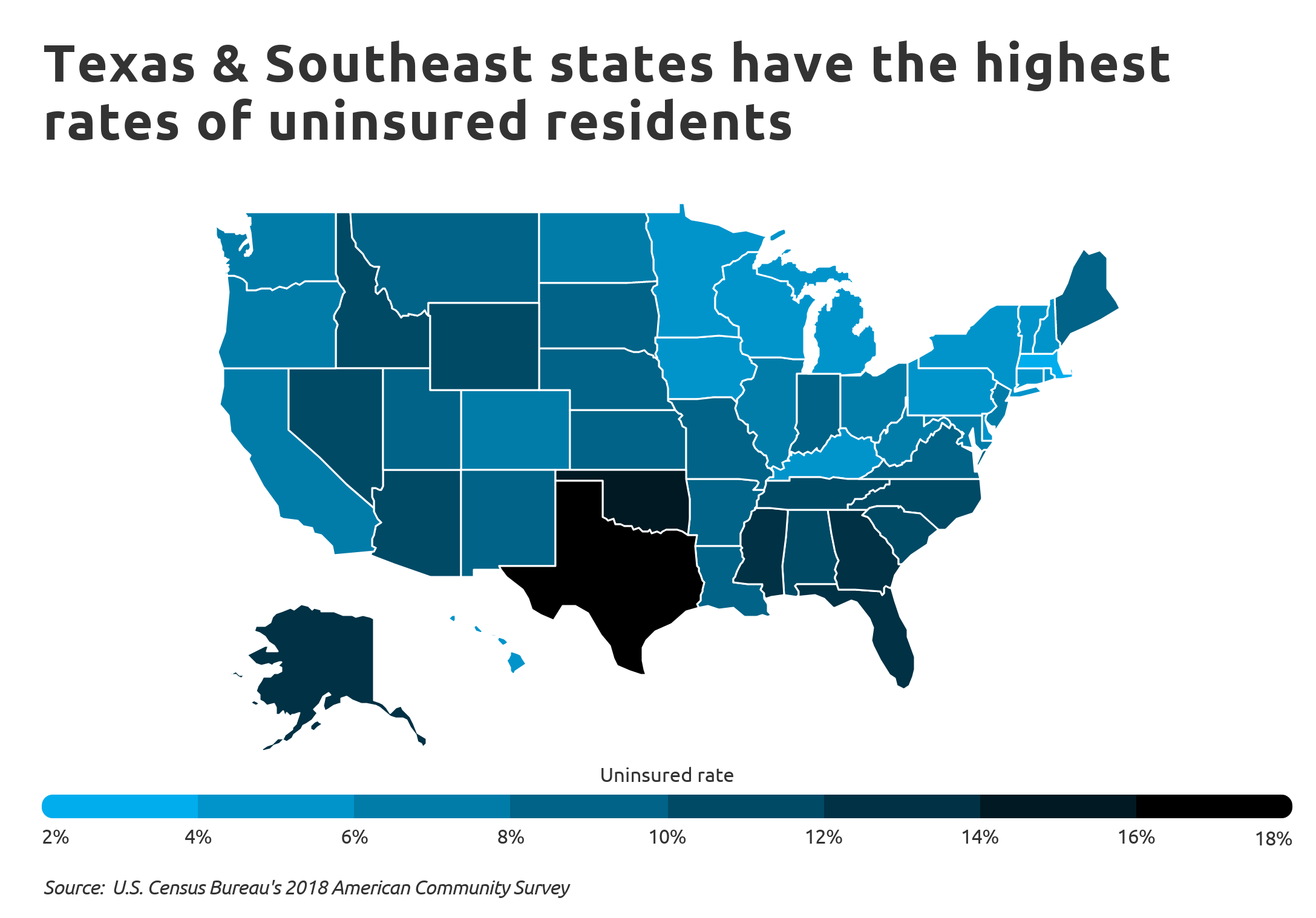
Texas has the highest uninsured rate in the U.S., with 29 percent of adults uninsured as of May

https://www.beckershospitalreview.com/rankings-and-ratings/states-ranked-by-uninsured-rates.html?utm_medium=email

COVID-19 Health: Rate of Uninsured Americans by City - Self

Texas has the highest uninsured rate in the U.S., with 29 percent of adults uninsured as of May, according to a report from Families USA. 

The report compared uninsured rates in 2018 to rates in May 2020 using data from the U.S. Bureau of Labor Statistics and the Urban Institute. Every state saw an increase in the number of uninsured, and the total number of uninsured in the U.S. climbed 21 percent.

The increase was due in part to layoffs tied to the COVID-19 pandemic in recent months. Nearly 5.4 million Americans lost health insurance coverage from February to May of this year due to job losses, according to the report.

Below is the total percentage of all uninsured adults in each state and the District of Columbia as of May. 

Texas: 29 percent

Florida: 25 percent

Oklahoma: 24 percent

Georgia: 23 percent

Mississippi: 22 percent

Nevada: 21 percent

North Carolina: 20 percent

South Carolina: 20 percent

Alabama: 19 percent

Tennessee: 19 percent

Idaho: 18 percent

Alaska: 17 percent

Arizona: 17 percent

Missouri: 17 percent

Wyoming: 17 percent

New Mexico: 16 percent

South Dakota: 16 percent

Arkansas: 15 percent

Kansas: 15 percent

Louisiana: 14 percent

Virginia: 14 percent

California: 13 percent

Colorado: 13 percent

Illinois: 13 percent

Indiana: 13 percent

Maine: 13 percent

Montana: 13 percent

New Jersey: 13 percent

Oregon: 13 percent

Utah: 13 percent

Michigan: 12 percent

Nebraska: 12 percent

Washington: 12 percent

West Virginia: 12 percent

Delaware: 11 percent

Maryland: 11 percent

New Hampshire: 11 percent

North Dakota: 11 percent

Ohio: 11 percent

Connecticut: 10 percent

Hawaii: 10 percent

Kentucky: 10 percent

New York: 10 percent

Pennsylvania: 10 percent

Wisconsin: 10 percent

Iowa: 9 percent

Rhode Island: 9 percent

Massachusetts: 8 percent

Minnesota: 8 percent

Vermont: 7 percent

District of Columbia: 6 percent


GOP senators in close races mislead on preexisting conditions

https://www.washingtonpost.com/politics/2020/07/15/gop-senators-close-races-mislead-preexisting-conditions/?utm_campaign=wp_main&utm_medium=social&utm_source=facebook&fbclid=IwAR3XOi91b1jsLf-grP_iIXALJiIvlZNItPE1ZDO0_ql4Wlw8m3GicyoHIH8

2018 midterms: Republicans mislead voters about preexisting ...

“Steve Daines will protect Montanans with preexisting conditions.”

“Of course I will always protect those with preexisting conditions. Always.”

“What I look forward to working on is a plan that protects people with preexisting conditions.”

— Sen. Cory Gardner (R-Colo.), in an interview with Colorado Public Radio, July 1, 2020


Sound familiar? Just like President Trump, these Republican senators say they support coverage guarantees for patients with preexisting health conditions. And just like Trump, their records show the opposite.

The president’s doublespeak — voicing support for these protections while asking the Supreme Court to strike them down — is spreading into some battleground Senate races this year.


It’s a classic case of buyer beware: Look under the hood of what Daines, Gardner and McSally are selling, and you’ll find a car without an engine.

THE FACTS

Republicans for a decade have tried to repeal the Affordable Care Act, President Barack Obama’s signature health-care legislation. The Supreme Court has upheld the law twice in the face of challenges from conservative groups. As coronavirus cases reached a new high in the United States, the Trump administration filed a legal brief on June 25 asking the Supreme Court to strike down the entire law, joining with a group of GOP state attorneys general who argue that the ACA is unconstitutional.

Before the ACA, insurance companies could factor in a person’s health status while setting premiums, a practice that sometimes made coverage unaffordable or unavailable for those in need of expensive treatment or facing a serious illness such as cancer.


The ACA PROHIBITED THIS PRACTICE through two provisions: “guaranteed issue,” which means insurance companies must sell insurance to anyone who wants it, and “community rating,” which means people in the same age group and geographic area who buy similar insurance pay similar prices. The changes made insurance affordable for people with serious diseases or even those with minor health problems, who also could have been denied coverage before the law’s passage.

Now, about 20 million people covered through the ACA could lose their health insurance if the Supreme Court strikes down the law, among many other consequences bearing directly on the U.S. response to the coronavirus pandemic.

In addition to the coverage guarantee, the ACA established online health insurance marketplaces and subsidies for participating buyers. The law also directs billions of dollars a year in federal funding to states that have chosen to expand their Medicaid programs under the Obamacare law. Millions of Americans have gained coverage through those provisions.

We asked the Daines, Gardner and McSally campaigns whether the senators support or oppose the GOP lawsuit at the Supreme Court and how they would address affordability issues for patients with preexisting conditions if the ACA falls. None of their campaigns responded to our questions.


“Steve Daines will protect Montanans with preexisting conditions.”

Daines voted to repeal the ACA in 2013 and has supported efforts to repeal and replace the law more recently during the Trump administration.

Regarding the GOP lawsuit, a Daines spokesperson was quoted in the Billings Gazette saying the senator “supports whatever mechanism will protect Montanans from this failed law, lower health care costs, protect those with preexisting conditions and expand access to health care for Montanans.”


“What I look forward to working on is a plan that protects people with preexisting conditions.” (Gardner)

Gardner has been voting to repeal, defund or replace the ACA since 2011, the year after its passage. This year, his campaign website says nothing about the law, but his official Senate website says, “Fixing our healthcare system will require repealing the Affordable Care Act and replacing it with patient-centered solutions, which empower Americans and their doctors.”

Asked by the Hill whether he supported the GOP lawsuit, Gardner said: “That’s the court’s decision. If the Democrats want to stand for an unconstitutional law, I guess that’s their choice.” In an interview with Colorado Public Radio, Gardner evaded the question six times in a row.

“Of course I will always protect those with preexisting conditions. Always.” (McSally)

In 2015, McSally voted to repeal the ACA when she served in the House. In 2017, she voted to replace the ACA with the American Health Care Act, which would have allowed insurers to charge higher premiums to patients with complicated medical histories.

McSally, now in the Senate, has declined to comment on the GOP lawsuit pending before the Supreme Court. When asked by PolitiFact, “the campaign didn’t specifically answer, but pointed to her general disapproval of the ACA.”

WHAT HAPPENS IF  THE GOP LAWSUIT SUCCEEDS?

Trump told The Washington Post days before his inauguration in 2017 that he was nearly done with his plan to replace the ACA. Three and a half years later, no replacement plan has emerged from the administration and Republicans in Congress hardly agree on what it would look like — or how to preserve the protections for preexisting health conditions.

Sen. Thom Tillis (R-N.C.), who is also running for reelection this year, has introduced a 24-page bill called the Protect Act that includes language guaranteeing coverage for preexisting conditions. Daines signed on as a co-sponsor on June 24, the day before the Justice Department filed its brief in the Supreme Court. McSally signed on in April 2019. Gardner is not listed as a co-sponsor.

Experts say the Tillis proposal does not offer the same level of protection for preexisting conditions as the ACA, and they warn that millions of Americans could lose their health coverage if the ACA falls and the Protect Act is the only replacement.

“Insurers before the Affordable Care Act had multiple and redundant ways that they could avoid people who had preexisting conditions,” said Karen Pollitz, a senior fellow at the Kaiser Family Foundation. The Protect Act prevents some of those practices, but it “leaves enough other loopholes that it would make it very possible and likely for insurers to be able to avoid paying benefits for the conditions they most worry about,” she said.


Before the ACA, an insurance company could reject an application outright, say, after reviewing a patient’s medical history. The Protect Act has language barring that practice.

“The second thing they could do is, they could sell you coverage, but they could exclude your preexisting condition. ‘Oh, you have diabetes? I’m not going to pay for any of those benefits,’” Pollitz said. “The Tillis bill says you can’t do that, so that’s good.”

In the days before the ACA, insurers were allowed to charge higher premiums based on a patient’s health status. To prevent this, the Protect Act takes language from the Health Insurance Portability and Accountability Act (HIPAA), rather than the newer ACA.

“The Protect Act inserts old HIPAA nondiscrimination language that prevents employers from varying worker premium contributions based on health status,” Pollitz said. “But the Protect Act also includes the old rule of construction that says nothing limits what the insurance company can charge the employer or individual.”

Pollitz said the “community rating” language in the ACA provides clearer protections in this area. The Protect Act says “nothing … shall be construed to restrict the amount that an employer or individual may be charged for coverage under a group health plan.”

“The bill would reinstate three protections at risk in the Texas case — prohibiting insurers from denying applicants based on pre-existing conditions, charging higher premiums due to a person’s health status, and excluding pre-existing conditions from coverage,” Sarah Lueck, a senior policy analyst at the left-leaning Center on Budget and Policy Priorities, wrote in an analysis.

“But it would leave many others on the cutting room floor,” she wrote, because insurers would be able to exclude coverage of benefits such as maternity care, mental health and substance-use treatment; set annual and lifetime limits on insurance payouts; and charge older patients more than younger patients at greater levels than the ACA allows, among other changes.

It’s important to keep in mind that the Protect Act would not replace other parts of Obamacare, such as the online marketplaces and subsidies. Neither would it continue the ACA’s Medicaid expansion, which 37 states and D.C. have now adopted. That includes Arizona, Colorado and Montana.


The Pinocchio Test

Voters deserve straight answers when their health care is on the line, especially in the middle of a deadly pandemic.

Daines, Gardner and McSally have voted to end the Affordable Care Act. People with preexisting conditions would have been left exposed because of those votes; insurers could have denied coverage or jacked up prices for sick patients.

The three senators’ comments about the GOP lawsuit are woefully vague, but they can all be interpreted as tacit support. Asked about the case, a Daines spokesperson said “whatever mechanism” to get rid of the ACA would do. McSally’s campaign “didn’t specifically answer, but pointed to her general disapproval of the ACA.” Gardner avoided the question six times in one interview, but in another, he said: “That’s the court’s decision. If the Democrats want to stand for an unconstitutional law, I guess that’s their choice.”

Four Pinocchios all around.