Mednax sells off its radiology division

https://mailchi.mp/365734463200/the-weekly-gist-september-11-2020?e=d1e747d2d8

M&A Analysis: Mednax to Sell its Radiology and Teleradiology Business -

National physician staffing firm Mednax announced the sale of its radiology practice—which includes teleradiology company Virtual Radiologic, known as vRad—to venture-backed Radiology Partners for $885M.

Publicly-traded Mednax has been hit hard by both contracting disputes with UnitedHealthcare, as well as pandemic-related volume declines. Both its anesthesiology and radiology businesses suffered big losses with the halt of elective procedures in the spring, and saw volumes decline between 50-70 percent compared to the prior year.

The company began divesting in May with the sale of its anesthesiology division to investor-backed North American Partners in Anesthesia. Mednax leaders say these decisions to sell were made independent of the pandemic, and that they have been planning to return to the company’s roots of focusing exclusively on obstetrics and pediatric subspecialty care, including changing its name back to Pediatrix.

Acquiring firm Radiology Partners is the largest radiology practice in the country, working with 1,300 hospitals and healthcare facilities. With this acquisition, it will have 2,400 radiologists practicing in all 50 states and the District of Columbia.

Hospital-based physician staffing firms have been especially hard hit by COVID-induced volume declines. This has created a softening in valuations and opened the door for investment firms to accelerate practice purchases.

We expect the pace of deals to quicken as independent practices experience continued financial strain—with large national groups leading the way, taking advantage of lower practice prices to build large-scale specialty enterprises.


Einstein’s flagship hospital at risk without merger, Jefferson and Einstein say

https://www.beckershospitalreview.com/hospital-transactions-and-valuation/einstein-s-flagship-hospital-at-risk-without-merger-jefferson-and-einstein-say.html?utm_medium=email

FTC says merger of Jefferson and Einstein would raise hospital prices 6.9%

The merger of Einstein Healthcare Network and Jefferson Health is a matter of survival for Einstein’s flagship hospital, the two Philadelphia systems argued in a federal court filing this week, according to The Philadelphia Inquirer.

The health systems are attempting to overcome opposition to their merger from the Pennsylvania attorney general and the Federal Trade Commission.

A Sept. 14 hearing is slated on the FTC’s preliminary injunction request. 

A court filing from the two health systems argued that Einstein, which has only had annual operating profits twice since 2012, is on a path to financial failure and needs $500 million to invest in key capital projects and deferred maintenance.

Without the infusion, Jefferson and Einstein said Einstein will continue to weaken “as it is forced to cut services or close facilities,” the Inquirer reported.

“Einstein was unable to identify any alternative buyer to Jefferson that possessed the financial strength and scale necessary to address Einstein’s financial problems,” the filing read, according to the Inquirer. “No other potential strategic partners were willing and able to commit to keep EMCP [Einstein Medical Center Philadelphia] open with its current set of services.”

The FTC announced in February its intent to sue to block the merger, arguing that combining the two systems would reduce competition in Philadelphia and Montgomery County.

“Jefferson and Einstein have a history of competing against each other to improve quality and service,” the FTC said in the February announcement. “The proposed merger would eliminate the robust competition between Jefferson and Einstein for inclusion in health insurance companies’ hospital networks to the detriment of patients.”

The FTC said that with a combination, the two parties would own at least 60 percent of the inpatient general acute care service market around Philadelphia and at least 45 percent of that same market in Montgomery County.


Cartoon – Modern Health Policy

MSSNYeNews: October 18, 2019 - Foul Turns FairMSSNYeNews Surprise Medical  Bills -

Cartoon – Problem with U.S. Healthcare

Cartoon – Problem with U.S. Healthcare | HENRY KOTULA

Beaumont physician survey reveals lack of confidence in leadership

https://www.beckershospitalreview.com/hospital-management-administration/beaumont-physician-survey-reveals-lack-of-confidence-in-leadership.html%20?utm_medium=email

Doctors' 'no confidence' petition drive targets Beaumont CEO ...

The results of a survey completed by 1,500 of Beaumont Health’s 5,000 physicians revealed a lack of confidence in the Southfield, Mich.-based system’s leadership and concern about its proposed merger with Advocate Aurora Health, according to Crain’s Detroit Business

Crain’s reported the results of the survey after the results were presented to Beaumont’s board. The system confirmed this week that it is postponing a vote on the planned merger with Advocate Aurora until physician grievances are addressed. 

The survey asked physicians to indicate whether they agreed or disagreed with several statements. Seventy-six percent of the physicians who answered the survey said they strongly or somewhat disagree with the statement “I have confidence in corporate leadership,” while 13 percent said they strongly or somewhat agree and 11 percent said they neither agree nor disagree, according to Crain’s. 

Physicians were also asked about the proposed merger with Advocate Aurora, which has dual headquarters in Milwaukee and Downers Grove, Ill. According to Crain’s, 70 percent of physicians said they strongly or somewhat disagree with the following statement: “The proposed merger with Advocate Aurora Health is likely to enhance our capacity to provide compassionate, extraordinary care.” Nine percent of physicians said they somewhat or strongly agree with the statement and 21 percent said they neither agree nor disagree, according to the report. 

In a statement to Becker’s Hospital Review, Beaumont said it is working to address the physicians’ concerns.

“Our physicians provided valuable input and feedback to us through the survey,” the health system said. “We take our physicians’ responses seriously and we have already started addressing many of their concerns. We know our talented and skilled physicians, nurses and staff have helped to make Beaumont the region’s leading health system and they are also key to our future. Our caregivers truly live our mission of providing compassionate, extraordinary care, every day. We recognize the importance of having an open dialogue. That’s why we continue to meet with numerous groups of physicians, nurses and staff to listen to them, address their concerns and work together with them to determine the best path forward for Beaumont.” 

Beaumont and Advocate Aurora signed a nonbinding letter of intent in June to create a health system spanning Michigan, Wisconsin and Illinois. The merger would create a $17 billion system with 36 hospitals. 


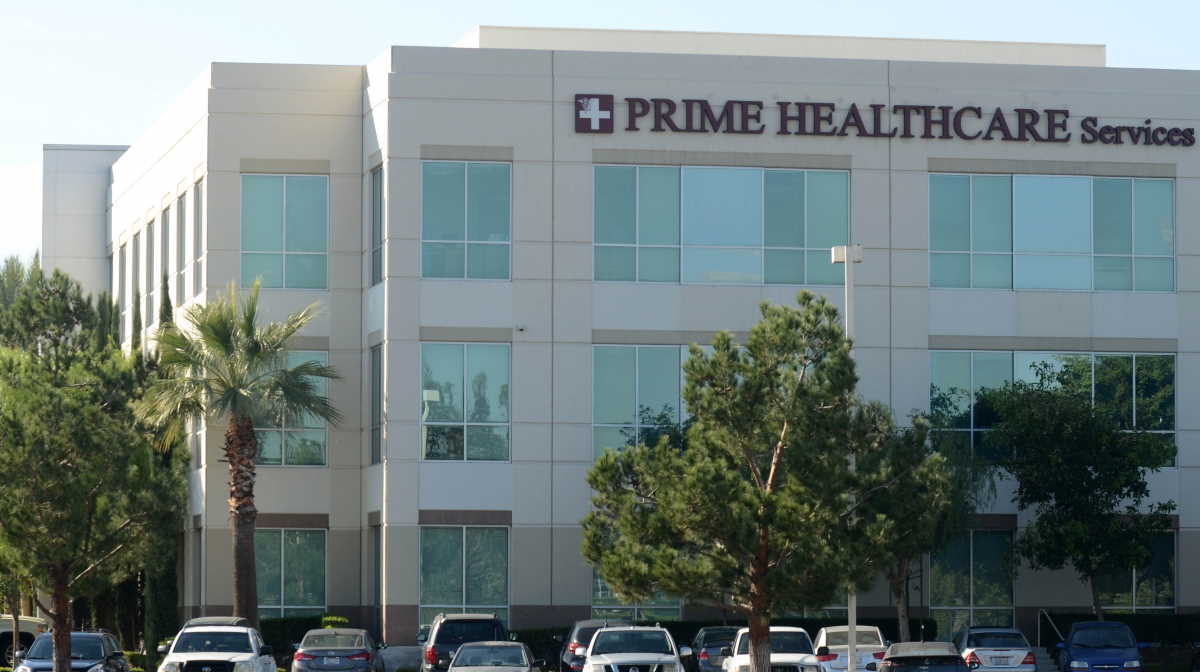
Prime adds 46th hospital

https://www.beckershospitalreview.com/hospital-transactions-and-valuation/prime-adds-46th-hospital-4-things-to-know-about-the-350m-deal.html?utm_medium=email

SEIU: Hospital Chain with Record of Bilking Taxpayers and Cutting ...

Ontario, Calif.-based Prime Healthcare announced Aug. 14 that it has completed the acquisition of St. Francis Medical Center, a 384-bed hospital in Lynwood, Calif. 

Here are four things to know about the deal: 

1. Prime purchased St. Francis Medical Center out of bankruptcy. The hospital entered bankruptcy in 2018 when its previous owner, El Segundo, Calif.-based Verity Health, filed for Chapter 11 protection.

2. Under the $350 million deal, which closed after a four-month review process, Prime committed to invest $47 million in capital improvements at the hospital. Those investments include installing Epic’s EHR and Omnicell systems for automated medication dispensing. Prime said it also plans to expand the hospital’s service lines.

3. A spokesperson told Becker’s Hospital Review that Prime extended offers to approximately 80 percent of the more than 2,000 employees at St. Francis Medical Center. “In the midst of this pandemic and economic challenges, Prime has remained deeply committed to St. Francis, the caregivers, patients and community, and we continue to evaluate staffing and will post additional positions based on future community needs,” the spokesperson said.

4. With the addition of St. Francis Medical Center, Prime owns and operates 46 hospitals in 14 states. The company has nearly 40,000 employees. 


Verity gets OK to sell 384-bed bankrupt hospital to Prime Healthcare, despite objections

https://www.beckershospitalreview.com/hospital-transactions-and-valuation/verity-gets-ok-to-sell-384-bed-bankrupt-hospital-to-prime-healthcare-despite-objections.html?utm_medium=email

St. Francis Medical Center | Verity Health

Despite objections for California attorney general and a last-minute attempt from an opposing bidder to block the sale, El Segundo, Calif.-based Verity Health System won bankruptcy court approval to sell a 384-bed hospital in Lynwood, Calif., to Prime Healthcare Services, according to The Wall Street Journal.  

California Attorney General Xavier Becerra conditionally approved the sale to Prime in July. Mr. Becerra set 21 conditions for the sale of St. Francis Medical Center to Prime Healthcare, a for-profit provider based in Ontario, Calif.

Verity challenged three of the conditions outlined by the attorney general, saying they were overly burdensome. The disputed conditions revolved around the amount of charity care and community-benefit services the hospital would need to provide.

As a result, the attorney general opposed authorizing the sale and approving Verity’s Chapter 11 liquidation plan, according to the Journal. 

U.S. Bankruptcy Judge Ernest Robles overruled the objections, which should allow the $350 million sale to finalize. The judge also said he would approve Verity’s Chapter 11 liquidation plan.

In addition, in late July, Los Angeles-based Prospect Medical Holdings made a last-minute attempt to block Prime from buying St. Francis Medical Center.

Prospect Medical, backed by a private equity firm, reportedly offered to pay $50 million more than Prime and offered to accept all of the attorney general’s conditions. 

However, the bankruptcy judge said Prospect lacked standing to oppose the Prime sale, and it didn’t submit its bid until after the deadline passed, according to the report.

Read the full article here


Regional chains Sentara, Cone to merge into 17-hospital, $11.5B system

https://www.healthcaredive.com/news/regional-chains-sentara-cone-to-merge-into-17-hospital-115b-system/583379/?utm_source=Sailthru&utm_medium=email&utm_campaign=Issue:%202020-08-12%20Healthcare%20Dive%20%5Bissue:29035%5D&utm_term=Healthcare%20Dive

Is Consolidation the Way to Survive in Today's Healthcare ...

Dive Brief:

  • Sentara Healthcare and Cone Health signed a letter of intent to merge the two regional, integrated health systems, according to an announcement Wednesday. Pending state and federal regulatory review, the deal is expected to close in the middle of next year, creating a 17-hospital, $11.5 billion system. 
  • Norfolk, Virginia-based Sentara is a nonprofit system with 12 hospitals in Virginia and North Carolina, employing more than 30,000 people. Its two health plans serve 858,000 members in Virginia, North Carolina and Ohio. Greensboro, North Carolina-based Cone Health has five hospitals in the state and around 15,000 employees. Its two health plans serve 15,000 members.
  • Corporate headquarters will remain in Norfolk, and Sentara’s current CEO, Howard Kern, will oversee the combined organization. Cone Health CEO Terry Akin will serve as president for the Cone Health Division, with regional headquarters in Greensboro.

Dive Insight

The providers contend the new system will focus on expanding value-based care models and increasing the companies’ health insurance options, according to a news release. Executives also hope to increase access points, including virtual ones, and make care more accessible in the surrounding communities.

After the deal closes, it’s expected to take up to two additional years for the two companies to fully integrate.

Sentara ended 2019 with $6.8 billion in revenue. Cone Health has about $2 billion in annual revenue.

Cone Health had planned to become the successor organization of Randolph Health when the 145-bed hospital in Asheboro, North Carolina, emerged from bankruptcy, but nixed the plan in March, citing uncertainty from the novel coronavirus.

It’s unclear how the COVID-19 pandemic has affected hospital M&A activity. Activity in the second quarter was not stalled as much as some analysts had expected, according to consultancy Kaufman Hall. Throughout the entire health services sector, however, M&A in the first half of the year was the lowest it’s been since 2015, PwC said recently.

Life Span and Care New England said in early June the coronavirus crisis reignited their merger talks. Heavyweight nonprofits Advocate Aurora Health and Beaumont Health announced they had signed a letter of intent to merge the same month, well into the pandemic.

Beaumont, however, cited COVID-19 as derailing its merger plans with Summa Health in May.

While the deal with Sentara and Cone Health are between two not-for-profit systems, a recent Health Affairs study found for-profits and church run health systems dominated M&A activity, at least from 2016 to 2018.


Industry Voices—6 ways the pandemic will remake health systems

https://www.fiercehealthcare.com/hospitals/industry-voices-6-ways-pandemic-will-remake-health-systems?mkt_tok=eyJpIjoiTURoaU9HTTRZMkV3TlRReSIsInQiOiJwcCtIb3VSd1ppXC9XT21XZCtoVUd4ekVqSytvK1wvNXgyQk9tMVwvYXcyNkFHXC9BRko2c1NQRHdXK1Z5UXVGbVpsTG5TYml5Z1FlTVJuZERqSEtEcFhrd0hpV1Y2Y0sxZFNBMXJDRkVnU1hmbHpQT0pXckwzRVZ4SUVWMGZsQlpzVkcifQ%3D%3D&mrkid=959610

Industry Voices—6 ways the pandemic will remake health systems ...

Provider executives already know America’s hospitals and health systems are seeing rapidly deteriorating finances as a result of the coronavirus pandemic. They’re just not yet sure of the extent of the damage.

By the end of June, COVID-19 will have delivered an estimated $200 billion blow to these institutions with the bulk of losses stemming from cancelled elective and nonelective surgeries, according to the American Hospital Association

A recent Healthcare Financial Management Association (HFMA)/Guidehouse COVID-19 survey suggests these patient volumes will be slow to return, with half of provider executive respondents anticipating it will take through the end of the year or longer to return to pre-COVID levels. Moreover, one-in-three provider executives expect to close the year with revenues at 15 percent or more below pre-pandemic levels. One-in-five of them believe those decreases will soar to 30 percent or beyond. 

Available cash is also in short supply. A Guidehouse analysis of 350 hospitals nationwide found that cash on hand is projected to drop by 50 days on average by the end of the year — a 26% plunge — assuming that hospitals must repay accelerated and/or advanced Medicare payments.

While the government is providing much needed aid, just 11% of the COVID survey respondents expect emergency funding to cover their COVID-related costs.

The figures illustrate how the virus has hurled American medicine into unparalleled volatility. No one knows how long patients will continue to avoid getting elective care, or how state restrictions and climbing unemployment will affect their decision making once they have the option.

All of which leaves one thing for certain: Healthcare’s delivery, operations, and competitive dynamics are poised to undergo a fundamental and likely sustained transformation. 

Here are six changes coming sooner rather than later.


1. Payer-provider complexity on the rise; patients will struggle.

The pandemic has been a painful reminder that margins are driven by elective services. While insurers show strong earnings — with some offering rebates due to lower reimbursements — the same cannot be said for patients. As businesses struggle, insured patients will labor under higher deductibles, leaving them reluctant to embrace elective procedures. Such reluctance will be further exacerbated by the resurgence of case prevalence, government responses, reopening rollbacks, and inconsistencies in how the newly uninsured receive coverage.

Furthermore, the upholding of the hospital price transparency ruling will add additional scrutiny and significance for how services are priced and where providers are able to make positive margins. The end result: The payer-provider relationship is about to get even more complicated. 


2. Best-in-class technology will be a necessity, not a luxury. 

COVID has been a boon for telehealth and digital health usage and investments. Two-thirds of survey respondents anticipate using telehealth five times more than they did pre-pandemic. Yet, only one-third believe their organizations are fully equipped to handle the hike.

If healthcare is to meet the shift from in-person appointments to video, it will require rapid investment in things like speech recognition software, patient information pop-up screens, increased automation, and infrastructure to smooth workflows.

Historically, digital technology was viewed as a disruption that increased costs but didn’t always make life easier for providers. Now, caregiver technologies are focused on just that.

The new necessities of the digital world will require investments that are patient-centered and improve access and ease of use, all the while giving providers the platform to better engage, manage, and deliver quality care.

After all, the competition at the door already holds a distinct technological advantage.


3. The tech giants are coming.

Some of America’s biggest companies are indicating they believe they can offer more convenient, more affordable care than traditional payers and providers. 

Begin with Amazon, which has launched clinics for its Seattle employees, created the PillPack online pharmacy, and is entering the insurance market with Haven Healthcare, a partnership that includes Berkshire Hathaway and JPMorgan Chase. Walmart, which already operates pharmacies and retail clinics, is now opening Walmart Health Centers, and just recently announced it is getting into the Medicare Advantage business.

Meanwhile, Walgreens has announced it is partnering with VillageMD to provide primary care within its stores.

The intent of these organizations clear: Large employees see real business opportunities, which represents new competition to the traditional provider models.

It isn’t just the magnitude of these companies that poses a threat. They also have much more experience in providing integrated, digitally advanced services. 


4. Work locations changes mean construction cost reductions. 

If there’s one thing COVID has taught American industry – and healthcare in particular – it’s the importance of being nimble.

Many back-office corporate functions have moved to a virtual environment as a result of the pandemic, leaving executives wondering whether they need as much real estate. According to the survey, just one-in-five executives expect to return to the same onsite work arrangements they had before the pandemic. 

Not surprisingly, capital expenditures, including new and existing construction, leads the list of targets for cost reductions.

Such savings will be critical now that investment income can no longer be relied upon to sustain organizations — or even buy a little time. Though previous disruptions spawned only marginal change, the unprecedented nature of COVID will lead to some uncomfortable decisions, including the need for a quicker return on investments. 


5. Consolidation is coming.

Consolidation can be interpreted as a negative concept, particularly as healthcare is mostly delivered at a local level. But the pandemic has only magnified the differences between the “resilients” and the “non-resilients.” 

All will be focused on rebuilding patient volume, reducing expenses, and addressing new payment models within a tumultuous economy. Yet with near-term cash pressures and liquidity concerns varying by system, the winners and losers will quickly emerge. Those with at least a 6% to 8% operating margin to innovate with delivery and reimagine healthcare post-COVID will be the strongest. Those who face an eroding financial position and market share will struggle to stay independent..


6. Policy will get more thoughtful and data-driven.

The initial coronavirus outbreak and ensuing responses by both the private and public sectors created negative economic repercussions in an accelerated timeframe. A major component of that response was the mandated suspension of elective procedures.

While essential, the impact on states’ economies, people’s health, and the employment market have been severe. For example, many states are currently facing inverse financial pressures with the combination of reductions in tax revenue and the expansion of Medicaid due to increases in unemployment. What’s more, providers will be subject to the ongoing reckonings of outbreak volatility, underscoring the importance of agile policy that engages stakeholders at all levels.

As states have implemented reopening plans, public leaders agree that alternative responses must be developed. Policymakers are in search of more thoughtful, data-driven approaches, which will likely require coordination with health system leaders to develop flexible preparation plans that facilitate scalable responses. The coordination will be difficult, yet necessary to implement resource and operational responses that keeps healthcare open and functioning while managing various levels of COVID outbreaks, as well as future pandemics.

Healthcare has largely been insulated from previous economic disruptions, with capital spending more acutely affected than operations. But the COVID-19 pandemic will very likely be different. Through the pandemic, providers are facing a long-term decrease in commercial payment, coupled with a need to boost caregiver- and consumer-facing engagement, all during a significant economic downturn.

While situations may differ by market, it’s clear that the pre-pandemic status quo won’t work for most hospitals or health systems.


Feds sue to block Geisinger’s partial acquisition of 132-bed hospital

https://www.beckershospitalreview.com/hospital-transactions-and-valuation/feds-sue-to-block-geisinger-s-partial-acquisition-of-132-bed-hospital.html?utm_medium=email

Federal Antitrust Compliance Attorneys - Oberheiden, P.C.

The U.S. Justice Department sued to block Danville, Pa-based Geisinger’s partial acquisition of a 132-bed hospital in Lewisburg, Pa. 

In the antitrust suit, filed Aug. 5, prosecutors said Geisinger and Evangelical are close competitors for inpatient acute care for patients in six counties in Pennsylvania.

As a result, Geisinger’s plan to acquire a 30 percent ownership stake in Evangelical Community Hospital would “fundamentally” alter the relationship between the two organizations and reduce incentives to “compete aggressively against each other,” the complaint reads.

The suit also claims the agreement between the two parties would result in higher prices, lower care quality and reduced access to inpatient hospital services.

The Justice Department said Geisinger initially sought to acquire Evangelical  Community Hospital in full. But, instead pursued a partial acquisition agreement “in part to avoid antitrust scrutiny,” according to the suit. 

“Preserving competition in healthcare markets is a priority for the Department of Justice because of its important impact on the health and well-being of Americans,” said Makan Delrahim, an assistant attorney general of the Justice Department’s antitrust division. “This agreement between Geisinger and Evangelical threatens to harm patients in central Pennsylvania by reducing competition that has improved the price, quality, and availability of healthcare in the region.”

“We are disappointed by the decision and continue to believe enhancing our relationship with Geisinger is in the best interest of the region and will provide efficient, cost-effective healthcare to the communities we serve,” Kendra Aucker, president and CEO of Evangelical Community Hospital, told PennLive.