Navigating a Post-Covid Path to the New Normal with Gist Healthcare CEO, Chas Roades

https://www.lrvhealth.com/podcast/?single_podcast=2203

Covid-19, Regulatory Changes and Election Implications: An Inside ...Chas Roades (@ChasRoades) | Twitter

Healthcare is Hard: A Podcast for Insiders; June 11, 2020

Over the course of nearly 20 years as Chief Research Officer at The Advisory Board Company, Chas Roades became a trusted advisor for CEOs, leadership teams and boards of directors at health systems across the country. When The Advisory Board was acquired by Optum in 2017, Chas left the company with Chief Medical Officer, Lisa Bielamowicz. Together they founded Gist Healthcare, where they play a similar role, but take an even deeper and more focused look at the issues health systems are facing.

As Chas explains, Gist Healthcare has members from Allentown, Pennsylvania to Beverly Hills, California and everywhere in between. Most of the organizations Gist works with are regional health systems in the $2 to $5 billion range, where Chas and his colleagues become adjunct members of the executive team and board. In this role, Chas is typically hopscotching the country for in-person meetings and strategy sessions, but Covid-19 has brought many changes.

“Almost overnight, Chas went from in-depth sessions about long-term five-year strategy, to discussions about how health systems will make it through the next six weeks and after that, adapt to the new normal. He spoke to Keith Figlioli about many of the issues impacting these discussions including:

  • Corporate Governance. The decisions health systems will be forced to make over the next two to five years are staggeringly big, according to Chas. As a result, Gist is spending a lot of time thinking about governance right now and how to help health systems supercharge governance processes to lay a foundation for the making these difficult choices.
  • Health Systems Acting Like Systems. As health systems struggle to maintain revenue and margins, they’ll be forced to streamline operations in a way that finally takes advantage of system value. As providers consolidated in recent years, they successfully met the goal of gaining size and negotiating leverage, but paid much less attention to the harder part – controlling cost and creating value. That’s about to change. It will be a lasting impact of Covid-19, and an opportunity for innovators.
  • The Telehealth Land Grab. Providers have quickly ramped-up telehealth services as a necessity to survive during lockdowns. But as telehealth plays a larger role in the new standard of care, payers will not sit idly by and are preparing to double-down on their own virtual care capabilities. They’re looking to take over the virtual space and own the digital front door in an effort to gain coveted customer loyalty. Chas talks about how it would be foolish for providers to expect that payers will continue reimburse at high rates or at parity for physical visits.
  • The Battleground Over Physicians. This is the other area to watch as payers and providers clash over the hearts and minds of consumers. The years-long trend of physician practices being acquired and rolled-up into larger organizations will significantly accelerate due to Covid-19. The financial pain the pandemic has caused will force some practices out of business and many others looking for an exit. And as health systems deal with their own financial hardships, payers with deep pockets are the more likely suitor.”


Recovery of medical staffing firms will lag behind hospitals, analysts say

https://www.healthcaredive.com/news/recovery-of-medical-staffing-firms-will-lag-behind-hospitals-analysts-say/580171/

COVID-19 Triggers Cash Need, Lenders Tighten Reins | PYMNTS.com

Dive Brief:

  • Though U.S. hospital staffing companies are slowly beginning to recover from the COVID-19 shutdown and corresponding drop in revenues, that rebound will lag behind hospitals.
  • Recovery of giants like ER staffing firm Envision and AMN Healthcare, which has the largest network of qualified clinicians in the U.S., will be hindered as hospitals prefer to keep their own staff employed over external contractors amid a recession.
  • The “pace of recovery will not be linear,” and depends on the mix of service lines and geography, S&P Global analysts said in a Thursday note. Analysts also expect hospitals to aggressively renegotiate rates and terms with staffing companies later in the year, which could depress margins even more in the long-term.

Dive Insight:

The collapse in patient volume following stay-at-home guidelines implemented earlier this year has had a well-documented effect on provider finances. Hospitals and doctor’s offices prepared for an influx of COVID-19 patients as lucrative elective procedures declined and revenues imploded.

At the nadir in April, anesthesiology services were down 70%, radiology down 60% and ER visits down 40%, S&P said. Analysts expect tentative recovery in May and June, but no return to pre-pandemic volume until mid-2021.

The dramatic reduction slashed the revenues and cash flows of staffing companies, though the worst is likely over. At the beginning of the pandemic, staffing companies and hospitals alike took preventive measures like furloughing nonessential and back-office workers, extending vendor payment terms, aggressively collecting old receivables and onboarding doctors to telehealth. Many have kept up adequate frontline capacity too, despite uncertain demand.

The economy saw some small gains in May as furloughed employees began to trickle back to work. But the increase in health services employment that month came largely in dental health workers and physician offices. Hospitals shed another 27,000 jobs.

Hospitals will likely fill staffing needs internally, bringing back furloughed or laid off employees first as operations slowly improve, before turning once again to medical contractors.

“Given the extended disruption, a looming recession, and possible lasting changes to health care providers, credit metrics will be much weaker than what we had previously expected for nearly all staffing companies,” analysts wrote. “Some staffing companies, particularly those that are highly leveraged, may face very significant liquidity pressures for several months. It is possible not all will be able to withstand the sharp decline.”

S&P Global has taken a number of negative rating actions on staffing companies since late March.

Envision and anesthesiology firm ASP Napa, both rated ‘CCC’ with a negative outlook, have the greatest potential for a default. Envision, owned by private equity firm KKR and one of the largest U.S. physician staffing firms, is reportedly considering a bankruptcy filing as it struggles with $7 billion in debt.

Knoxville, Tenn.-based Team Health and clinical practice management firm SCP Health have enough liquidity to chug along for several more months of lower-than-normal volumes, while AMN and Utah-based CHG Healthcare Services are both in more solid positions to weather the pandemic, S&P said.

But professional outsourced staffing businesses, like anesthesiology and radiology, should recover more quickly, and many firms have gotten financial support from lenders and private equity backers. Team Health, for example, approved a senior secured term loan from its PE sponsor, Blackstone, which covers interest payments in April through mid-May.

Liquidity was also helped by the passage of the $2.2 trillion CARES relief legislation late March.

Several staffing companies have reportedly received grants from the $100 billion allocated by the legislation for providers, along with no-interest loans from accelerated Medicare payments, sparking questions over whether companies backed by cash-rich private equity firms need the funds.


Moody’s: US healthcare system rebounds from COVID-19 in May, but a bumpy road lies ahead

https://www.healthcaredive.com/news/moodys-us-healthcare-system-rebounds-from-covid-19-in-may-but-a-bumpy-ro/580152/

Banks rating downgrade: Moody's changes outlook on Indian banks to ...

Dive Brief:

  • A Moody’s Investors Service report on Thursday suggests that the U.S. healthcare industry is on the rebound from COVID-19, but recovery will likely to slow and uneven. Moreover, the report expressed concerns that regional flareups of coronavirus could majorly set back the return to normal volumes.
  • Investment firm Jefferies affirmed those worries in hospital traffic data shared Friday, noting “a sharp reversal” in hotspot state Arizona. Analysts tracked “record lows” in Arizona’s hospital traffic last week, down from what was thought to be the trough in April and sagging below May recovery amid a significant uptick in COVID-19 cases and protests.
  • “Whether states can continue their recovery even as cases increase, as we’ve seen in [Texas] and others, or if the recent reversals in [Arizona, Illinois,] etc. become more widespread is a trend to watch in coming weeks,” Jefferies analysts wrote.

Dive Insight:

Large sections of the healthcare sector all but shut down during the spring as the coronavirus led to nationwide shelter-in-place orders. However, as states and municipalities slowly reopen, so are the doors for hospitals, ambulatory surgical centers, clinics and other integral components of healthcare delivery.

As a result, Moody’s reported “considerable sequential improvement” during May. For example, while for-profit hospitals saw surgery volumes drop as much as 70% in April compared to the same period in 2019, May volumes were down about 20% to 40% compared to last year’s. Hospital-operated ambulatory surgical centers saw an 80% to 90% drop in April volumes, but only a 30% to 40% drop in May.

However, Moody’s noted that the “path to normalized volumes are not linear.” It also pointed out that emergency room care volumes, which dropped as much as 60% in April, have yet to really rebound, as they still appeared depressed as much as 50% in May.

“This could reflect the prevalence of working-from-home arrangements and people generally staying home, which is leading to a decrease in automobile and other accidents outside the home. Weak ER volumes also suggest that many people remain apprehensive to enter a hospital, particularly for lower acuity care,” the Moody’s report said.

The firm also noted that “the shape of recovery will vary by state, region and service line, reinforcing the importance of diversification for credit quality among healthcare service providers.”

However, Moody’s believes that the darkest days of March and April are behind much of the healthcare sector. It noted that most providers have stockpiled appropriate personal protective equipment and have reconfigured their offices, waiting rooms and other infrastructure to protect the health of both patients and employees.

Traffic data from 3,300 U.S. hospitals, tracked by Jefferies via mobile device pings, indicates that compared to January 2019 levels, national traffic lows of 43.7% in mid-April improved to 63.3% by early June.

But state-by-state analysis reveals some parts of the country are trending backwards. Arizona fell to a new low of 28.5% last week after hitting 51.5% on May 20. The analysts also reported Illinois hit its own new low on June 7.

While Moody’s did express some concern about regional outbreaks, it concluded that the precautions already taken “make it less likely that the U.S. would once again shut down all non-elective care across the nation if there is a second wave of coronavirus infections.”

Moody’s did express some concerns about hospital finances, but noted that for-profit hospitals “have unusually strong liquidity” due to payouts from the CARES Act and other government-sponsored financial relief programs.

Medical device firms should be prepared for a long and uneven recovery, according to Moody’s. The dental and orthopaedic sectors “will see a greater than average impact from consumers’ inability to pay for procedures or their unwillingness to engage with the healthcare system.” Moody’s forecast “a gradual, uneven pace of recovery,” with pre-tax earnings to decline as much as 30% in 2020 compared to 2019, while revenues will shrink around 10%. It expects that earnings will rebound in 2021 to 2019 levels.

Companies that operate in discretionary sectors will be hit harder as they rely on patients able to meet large deductibles or co-payments or to pay for related procedures entirely on their own. Moody’s noted that a large number of these procedures are performed in acute care hospitals with the assistance of robotics, but hospitals may be more conservative in their robotics investments given new budget constraints.


Dow plunges more than 1,800 points as rising COVID-19 cases roil Wall Street

Dow plunges more than 1,800 points as rising COVID-19 cases roil Wall Street

Dow plunges 1,800 as investors turn jittery over new wave of ...

Stocks plummeted Thursday as the emergence of new coronavirus hotspots and a caution from the Federal Reserve chairman shook Wall Street after months of steady gains.

The Dow Jones Industrial Average closed with a loss of 1,861 points, plunging 6.9 percent for its worst day of losses since March. The S&P 500 index closed with a loss of 5.9 percent, and the Nasdaq composite sunk 5.3 percent on the day.

All three major U.S. stock indexes closed with their steepest single-day losses since crashing in March amid the beginning of lockdowns imposed to slow the spread of COVID-19. Thursday’s losses come after more than two months of steady recovery toward the record highs seen before the pandemic derailed the economy.

Despite the loss of more than 21 million jobs and the deaths of more than 110,000 Americans due to the coronavirus, investors had gradually upped their bets on a quick economic recovery through April and May as states began loosening business closures and travel restrictions.

The surprise addition of 2.5 million jobs in May, according to the Labor Department, also fueled hopes for a quicker than expected rebound from a recession of unprecedented scale and speed.

But Thursday’s abrupt reversal comes as states across the U.S. see spiking COVID-19 cases and diminishing hospital capacity to handle a new wave of infections.

Week-over-week case counts are rising in half of all U.S. states, and only 16 states plus the District of Columbia have seen their total case counts decline for two consecutive weeks.

North Carolina, California, Mississippi and Arkansas are all facing record levels of hospitalizations, and the virus appears to be quickly spreading in Houston, Phoenix, South Carolina and Missouri.

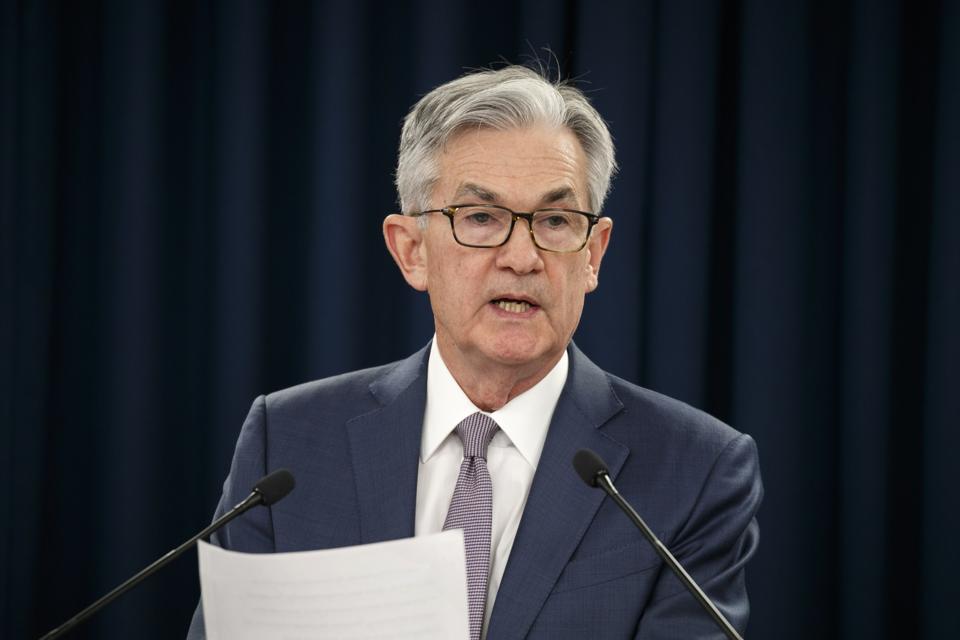
Some market experts also attribute Thursday’s losses to Fed Chairman Jerome Powell’s Wednesday prediction of a “long road” to recovery.

During a Wednesday press conference, Powell said that while the U.S. may see significant job growth in coming months as people return to their jobs,” the country is “still going to face, probably, an extended period where it will be difficult for many people to find work.”

“What we’re trying to do is create an environment in which they have the best chance either to go back to their old job or to get a new job,” he continued.

President Trump, who frequently lashes out at the Fed when markets turn south, blasted the Fed for underestimating how quickly the U.S. economy could recover and how soon a COVID-19 vaccine would be available.

“The Federal Reserve is wrong so often. I see the numbers also, and do MUCH better than they do. We will have a very good Third Quarter, a great Fourth Quarter, and one of our best ever years in 2021. We will also soon have a Vaccine & Therapeutics/Cure. That’s my opinion. WATCH!” Trump tweeted.

Trump’s top economic advisor Larry Kudlow also criticized Powell, urging the Fed chief to ease up on the dour forecasts

“I do think Mr. Powell could lighten up a little when he has these press offerings. You know, a smile now and then, a little bit of optimism,” Kudlow said on Fox Business Network.

“I’ll talk with him and we’ll have some media training at some point.


Dow Falls 250 Points After Federal Reserve’s Grim Economic Outlook

https://www.forbes.com/sites/sergeiklebnikov/2020/06/10/dow-falls-250-points-after-federal-reserves-grim-economic-outlook/?utm_source=newsletter&utm_medium=email&utm_campaign=news&utm_campaign=news&cdlcid=#50eb6c4f56be

Dow Falls 250 Points After Federal Reserve's Grim Economic Outlook

TOPLINE

The market finished slightly lower on Wednesday after the Federal Reserve indicated that it would leave interest rates unchanged until 2022, while also warning of a long economic recovery from the coronavirus recession.

KEY FACTS

The Dow Jones Industrial Average fell 0.9%, over 250 points, on Wednesday, while the S&P 500 was down 0.5% and the tech-heavy Nasdaq Composite gained 0.7%.

The Federal Reserve concluded its two-day meeting on Wednesday by leaving interest rates unchanged near zero and indicating that they will stay there until 2022.

It also gave a grim update on the economy: The Central Bank forecasts a long recovery, with unemployment likely to remain high for many years.

The Fed, which has injected nearly $3 trillion into financial markets since late February, pledged to continue its unprecedented stimulus plan until the economy has weathered the coronavirus recession.

The Nasdaq climbed to a new record high on Wednesday, however, closing above 10,000 for the first time ever thanks to continued strength in tech stocks. Investors continued to rotate back into names like Amazon and Apple, which both hit new record highs again.

“A large shift is occurring as investors cycle out of value/cyclical stocks for a second day and pour money into growth,” according to Vital Knowledge founder Adam Crisafulli.

Stocks that would benefit from a reopening—including airlines, retailers and cruise operators—have all been moving lower recently, after having led the market rally in the past few weeks.

Bank stocks were especially hard-hit on Wednesday, plunging on the news that the Fed will keep interest rates low for a long time.

CRUCIAL QUOTE

“We are not even thinking about thinking about raising rates,” Federal Reserve chairman Jerome Powell confirmed at his press conference. He added that while “there is great uncertainty about the future,” the central bank is strongly committed to doing “whatever we can, for as long as it takes” to help support the economy. 

BIG NUMBER: 10,000.

With tech stocks making a comeback in recent days, the Nasdaq hit a new record high on Wednesday, closing above 10,000 for the first time ever. Shares of Amazon, Apple, Netflix, Microsoft and Google-parent Alphabet have all been soaring recently, boosting the index higher.

KEY BACKGROUND

Stocks have continued to rally on optimism about reopening the economy and a faster than expected recovery from the coronavirus pandemic. The market has so far had a strong start to June, building on back-to-back monthly gains. The S&P 500 on Monday turned positive for 2020, fully recouping its losses from the coronavirus sell-off earlier this year. The index is now up more than 45% from its low point on March 23.


Insurers face uncertainty in setting 2021 premiums

https://www.healthcarefinancenews.com/news/insurers-face-uncertainty-setting-2021-premiums?mkt_tok=eyJpIjoiTldabE9UTTFZbU16TkRneSIsInQiOiI1djBwUWV6SVpzNlJtRUJEdXBEcEM1UkdGZWtvYTZpdkZ5V1NkTHhpNVFnVFwvR2FJSGlDTVVDcE5lTGtmTDhHY0hWQ05XU1NQNWt3UjRRYUtCOVZtS1ZoNG9SN2wxNU1xYmJVT1k5YWptY2hYVVBObCszNVhiREVFSERNT1hxRkMifQ%3D%3D

What To Do When Faced With Career Uncertainty

Insurers need to project the future cost of delayed elective procedures and total expenses of COVID-19 care.

While health insurers have saved money by the cancellation of elective surgeries and many are currently refunding excess revenue under the Medical Loss Ratio, premiums for the 2021 plan year are still in question.

There is a lot of uncertainty, America’s Health Insurance Plans said. Without comprehensive data, insurers are working to estimate 2021 healthcare costs and must base their rates on projected costs, AHIP explained in an infographic.

It is too soon to know what the real healthcare costs of COVID-19 will be. Also, delayed elective and non-urgent care will likely be delivered – and paid for – later.

That care could be more complex and costly because it was delayed, AHIP said.

WHY THIS MATTERS

Insurers are working to meet state deadlines to file 2021 premiums in the individual market.

THE LARGER TREND

Federal law requires insurers to spend 80-85 cents of every premium dollar on medical services and care. The rest, under the Medical Loss Ratio, may go towards administrative expenses, regulatory costs, federal and state taxes, customer service and other expenses.

The COVID-19 pandemic’s postponement of elective surgeries and regular care has created a surplus in revenue for insurers due to lower spending, which many are refunding now.

ON THE RECORD

“COVID-19 has had a very real impact on the economic, physical, and mental health of millions of Americans,” said Jeanette Thornton, senior vice president of Product, Employer, and Commercial Policy at AHIP.  “Our members are working through this uncertainty to strengthen access to affordable care as the fight against the coronavirus continues. COVID-19 dramatically changed the healthcare landscape–in 2020 and for years to come.


Sluggish patient volume could jeopardize hospitals repaying advanced Medicare funds, report suggests

https://www.healthcaredive.com/news/outpatient-visits-rebounding-transunion-report/578894/

CMS Suspends Advance Payment Program to Clinicians for COVID-19

Dive Brief:

  • Though hospital volumes are expected to remain below pre-pandemic levels for quite some time, rebounding outpatient visits seem to be outpacing those for inpatient care or emergency department visits, according to a Transunion Healthcare survey of more than 500 hospitals.
  • During the week of May 10-16, outpatient visits were down 31% and emergency visits were down 40% compared to pre-COVID-19 levels. Inpatient volumes were down 20% and continue to trend upward, though at a slower rate than outpatient or ER visit volumes. Outpatient visits plunged between April 5 and 11, hitting a bottom of 64% down from typical volume.​
  • Baby boomers (born between 1944 and 1964) and the what the report calls the silent generation (born before 1944) are returning to ERs faster than younger generations. Millennials (born between 1980 and 1994) and Generation Z (born between 1995 and 2002) patients, however, are driving positive trends in inpatient and outpatient rebounds.

Dive Insight:

The report echos several others suggesting patients are still cautious about returning to the hospital and other care settings. The Kaiser Family Foundation found that the pandemic has forced nearly half of patients to postpone medical care. About 32% of those who have postponed care said they would get the service in the next three months and 10% said they will do so in four months to a year.

The overall sluggish outlook led Transunion to suggest patient volumes may not be restored to pre-pandemic levels soon enough to both sustain operational and clinical functions and repay advanced Medicare payments that many systems large and small have taken advantage of from CMS.

Because of the demographic trends, systems may have greater success scheduling appointments by checking in first with younger generations, the report suggests.

“We think as providers are beginning to really drive their patient engagement strategies that it’s best if they start reaching out to them, because it’s likely they’ll be willing to re-enter the care setting,” John Yount, vice president for TransUnion Healthcare, told Healthcare Dive.

Providers are taking steps to ease patient fears upon returning to medical settings by implementing temperature checks, spacing out waiting rooms to allow for social distancing and taking other safety measures.

But a sluggish recovery is still likely as patients plan to continue delaying care, especially older adults who are at higher risk for COVID-19 and in some states have been told to continue following stay at home orders.

The slowest return to growth in emergency room visits raises concerns that patients who need emergency care may be avoiding hospital settings due to COVID-19 fears, according to the report.

Older patients are leading the pack in returning to ERs, and they also experienced the largest decline in inpatient volumes from March 1-7 and April 5-11.

Comparatively, younger generations had smaller declines in visit activity overall and are returning to care settings faster, Yount said.

“These deferrals will have implications for both patients and providers — high-acuity and chronically-ill patients risk waiting too long to seek care, and a continued reduction in visit volume will further amplify existing financial challenges for hospitals,” David Wojczynski, president of TransUnion Healthcare, said in a statement.


Fitch Q2 outlook for nonprofit hospitals: ‘worst on record’

https://www.healthcaredive.com/news/fitch-analysts-hospital-worries-FY-2020/577875/

7 Ways to Survive a Cash Flow Crunch | SCORE

UPDATE: May 15, 2020: This article has been updated to include information from a Moody’s Investors Service report.

From the Mayo Clinic to Kaiser Permanente, nonprofit hospitals are posting massive losses as the coronavirus pandemic upends their traditional way of doing business.

Fitch Ratings analysts predict a grimmer second quarter: “the worst on record for most,” Kevin Holloran, senior director for Fitch, said during a Tuesday webinar.​

Over the past month, Fitch has revised its nonprofit hospital sector outlook from stable to negative. It has yet to change its ratings outlook to negative, though the possibility wasn’t ruled out.

Some have already seen the effects. Mayo estimates up to $3 billion in revenue losses from the onset of the pandemic until late April — given the system is operating “well below” normal capacity. It also announced employee furloughs and pay cuts, as several other hospitals have done.

Data released Tuesday from health cost nonprofit FAIR Health show how steep declines have been for larger hospitals in particular. The report looked at process claims for private insurance plans submitted by more than 60 payers for both nonprofit and for-profit hospitals.

Facilities with more than 250 beds saw average per-facility revenues based on estimated in-network amounts decline from $4.5 million in the first quarter of 2019 to $4.2 million in the first quarter of 2020. The gap was less pronounced in hospitals with 101 to 250 beds and not evident at all in those with 100 beds or fewer.

Funding from federal relief packages has helped offset losses at those larger hospitals to some degree.

Analysts from the ratings agency said those grants could help fill in around 30% to 50% of lost revenues, but won’t solve the issue on their own.

They also warned another surge of COVID-19 cases could happen as hospitals attempt to recover from the steep losses they felt during the first half of the year.

Anthony Fauci, the nation’s top infectious disease expert, warned lawmakers this week that the U.S. doesn’t have the necessary testing and surveillance infrastructure in place to prep for a fall resurgence of the coronavirus, a second wave that’s “entirely conceivable and possible.”

“If some areas, cities, states or what have you, jump over these various checkpoints and prematurely open up … we will start to see little spikes that may turn into outbreaks,” he told a Senate panel.

That could again overwhelm the healthcare system and financially devastate some on the way to recovery.

“Another extended time period without elective procedures would be very difficult for the sector to absorb,” Holloran said, suggesting if another wave occurs, such procedures should be evaluated on a case-by-case basis, not a state-by-state basis.

Hospitals in certain states and markets are better positioned to return to somewhat normal volumes later this year, analysts said, such as those with high growth and other wealth or income indicators. College towns and state capitols will fare best, they said.

Early reports of patients rescheduling postponed elective procedures provide some hope for returning to normal volumes.

“Initial expectations in reopened states have been a bit more positive than expected due to pent up demand,” Holloran said. But he cautioned there’s still a “real, honest fear about returning to a hospital.”

Moody’s Investors Service said this week nonprofit hospitals should expect the see the financial effects of the pandemic into next year and assistance from the federal government is unlikely to fully compensate them.

How quickly facilities are able to ramp up elective procedures will depend on geography, access to rapid testing, supply chains and patient fears about returning to a hospital, among other factors, the ratings agency said.

“There is considerable uncertainty regarding the willingness of patients — especially older patients and those considered high risk — to return to the health system for elective services,” according to the report. “Testing could also play an important role in establishing trust that it is safe to seek medical care, especially for nonemergency and elective services, before a vaccine is widely available.”

Hospitals have avoided major cash flow difficulties thanks to financial aid from the federal government, but will begin to face those issues as they repay Medicare advances. And the overall U.S. economy will be a key factor for hospitals as well, as job losses weaken the payer mix and drive down patient volumes and increase bad debt, Moody’s said.

Like other businesses, hospitals will have to adapt new safety protocols that will further strain resources and slow productivity, according to the report.​

Another trend brought by the pandemic is a drop in ER volumes. Patients are still going to emergency rooms, FAIR Health data show, but most often for respiratory illnesses. Admissions for pelvic pain and head injuries, among others declined in March.

“Hospitals may also be losing revenue from a widespread decrease in the number of patients visiting emergency rooms for non-COVID-19 care,” according to the report. “Many patients who would have otherwise gone to the ER have stayed away, presumably out of fear of catching COVID-19.”


Hospitals to face bumpy recovery with depressed margins into 2021, S&P predicts

https://www.healthcaredive.com/news/SP-ratings-hospital-margins-historic-lows-until-2021/578815/

April was the worst month ever for hospital operating margins

Dive Brief:

  • Despite rebounding patient volumes at some health systems, an overall slow and bumpy recovery period is most likely to last into next year, according to analysts with S&P Global Ratings. Operating margins will remain below historic levels for the rest of 2020 and into early 2021.
  • The ratings agency took negative action against companies in health sub-sectors facing more sudden and dramatic declines in business and now face less certain paths to recovery than others, such as dental companies, along with physical therapy and ambulatory surgery centers.
  • Medical staffing and physician groups were also downgraded or had their outlooks revised, due to major declines in emergency room and doctors office visits​ coupled with declining demand for anesthesia and radiology services related to delayed surgeries.

Dive Insight:

Federal relief grants are helping offset major financial losses for some health systems in the short-term, but factors like a second surge causing another total lockdown, rising unemployment and hesitancy from patients as they return to medical settings make long-term prospects unpredictable.

S&P Global Ratings said in a report this week that it took 36 negative actions in health services companies during the pandemic. The most affected sub-sector was dental companies. It also changed outlooks on ambulatory surgery centers given significant volume declines.

Hospitals and home healthcare were rated at moderate to high financial risk, though analysts expect those businesses to recover faster due to the more essential nature of their services, according to the report. And in the short-term, government relief funds will help bolster hospitals’ liquidity as they attempt to return to normal operations and recover from steep losses.

Delayed elective care that’s just restarting in some states led most hospitals to the financial fallout. But even hospitals treating a large number of COVID-19 patients will be hurt, as these patients are expensive to treat due to higher supply and labor costs, the report said.

It also found that nonprofit and for-profit operators could fare differently in their financial recoveries. Non-profit hospitals generally have larger cash reserves than for profit systems, which rely instead almost exclusively on cash flow and borrowings for liquidity.

Providers are relying specifically on the Coronavirus Aid, Relief and Economic Security Act which allocated $100 billion for providers that they don’t have to pay back, though there has been some criticism about how the money was distributed and whether it advantages some providers over others.

Kaiser Family Foundation report found that CARES funding tends to favor for profit, higher margin hospitals with a higher mix of private payer revenue compared to those that rely on government payers such as Medicare and Medicaid.

Other legislation to help financially struggling health systems include advanced Medicare payments in the form of loans that must be paid back roughly four months after they are received.

The Paycheck Protection and Healthcare Enhancement Act passed in late April gave providers an additional $75 billion, though calculation and distribution methods have yet to be determined.

The U.S. House of Representatives also passed a $3 trillion bill dubbed the Health and Economic Recovery Omnibus Emergency Solutions (HEROES) Act that allocates $100 billion for provider reimbursement and creates special enrollment periods for Medicare and Affordable Care Act plans, though the Trump administration said it’s too soon for additional relief funding.

Lab companies were put in the moderate risk category, and seeing a “40% decline in lab tests net of COVID testing,” S&P said.

Still, it said despite the drop in overall testing for LabCorp and Quest Diagnostics, S&P predicted “their services to become even more important, and for their services to recover reasonably well as testing related to the pandemic continues to grow and as medical procedures and physician visits ramp-up through the rest of the year and into 2021.”


How the CFO enables the board’s success—during COVID-19 and beyond

https://www.mckinsey.com/business-functions/strategy-and-corporate-finance/our-insights/how-the-cfo-enables-the-boards-success-during-covid-19-and-beyond?cid=other-eml-alt-mip-mck&hlkid=85d408119efe4175b478a0599b8302da&hctky=9502524&hdpid=ed9aa1f2-3c88-4b89-9cd2-61a12e2d602c

How the CFO can guide the board through crises and transformations ...

Two board experts explain how in times of crisis or transformation, the CFO can serve as a rock in the boardroom, a critical arbiter of difficult decisions, and a scout for the future.

Critical business decisions cannot be made unless management teams and boards of directors are on the same page. Transparency, fair and balanced dialogue, and well-structured processes for gaining agreement on strategic plans—these dynamics must be present in every boardroom, in good times and, especially, in bad.

The CFO plays an important role in ensuring that they are.

In crises, such as the global spread of the novel coronavirus, the CFO is best-positioned to provide the most relevant and up-to-date facts and figures, which can help boards find clarity amid chaos. In corporate transformations, the pragmatic, data-focused finance leader is the only one who can prompt the board to actively consider all the short- and long-term consequences of proposed strategy decisions.

Barbara Kux and Rick Haythornthwaite, longtime board directors for multiple global organizations, shared these and other board-related insights with McKinsey senior partner Vivian Hunt in a conversation that spanned two occasions: a gathering of CFOs in London some months ago and, more recently, follow-up phone conversations about the COVID-19 pandemic.

These interviews, which have been condensed and edited here, explained the importance of finance leaders in serving both as scouts for the future and as trusted translators of critical market information.

Shaping the COVID-19 crisis response and recovery

Rick Haythornthwaite: The board’s most important functions in the wake of COVID-19 are threefold: one is making sure that employees are being treated decently and that the company is taking all the precautions it can. Second is obtaining an objective, insightful understanding of the business and trends. And third is anticipating and preparing for recovery. The key in all three areas is having high-quality data to inform the board’s decisions and to share with employees. Of course, getting data from a market in freefall is never easy. This is where you need CFOs to be absolutely on top of their game.

The board needs to know what is really happening to the top line, what short-term measures can be taken to preserve and boost cash, and all the actions you have to take during the early stage of such events to buy time. But the board must also have a handle on long-term issues.1 And now that we’re months into this crisis, people are starting to draw lessons from previous ones and bringing some historical data into board discussions. The CFO can use these data to construct hard-edge scenarios that prompt good conversations in the boardroom.

Barbara Kux: An important difference in the role of CFOs today, as compared with their role during the financial crisis in 2008, is that they need to simultaneously manage both short-term responsiveness and future recovery. The CFO must keep the ship floating through rough waters—safeguarding employees’ health, securing liquidity, monitoring cash flow and payment terms, ensuring the functioning of the supply chain, assessing effects on P&L and the balance sheet, reviewing customers’ and suppliers’ situations, and initiating cost-reduction programs. That is all very challenging indeed. But then the CFO must also serve as the ship’s scout—watching for key trends that are emerging or that have accelerated as a result of COVID-19, such as digitization and changes in consumer behavior.

The balance between opportunity and risk is being altered substantially for most companies. The CEO could be tempted to profit from immediate demands—“let’s make ventilators, let’s make disinfectants.” The CFO’s job, by contrast, is to point out the differences between quick-to-market options and long-term post-COVID-19 options. These post-COVID-19 options can be an important factor in motivating and engaging employees during these challenging times.

It is also important for the CFO to present the board with reports and pre-reads that paint the entire picture in an objective way, including potential scenarios for the future. That is the only way boards and senior management can take thoughtful and well-founded decisions—first for the recovery and then for a sustainable future for all stakeholders. The word “crisis” has two meanings, one being “danger” and the other being “chance.” Today’s CFO must consider both.

The word ‘crisis’ has two meanings, one being ‘danger’ and the other being ‘chance.’ Today’s CFO must consider both.

Shaping the general transformation agenda

Barbara Kux: Outside of crisis periods, studies by INSEAD and McKinsey show, boards spend more than two-thirds of their time on “housekeeping”—financial reporting, compliance, environment, health and safety issues, regulatory issues, and the like. Only about 20 percent is spent on strategy. It is very important for boards to get out of this “compliance cage,” as I call it, and really focus on sustainable value creation. I’m thinking of the board of a leading oil and gas company that did just that. It recognized the importance of sustainable business development early on. The company gained first-mover advantages by diversifying toward a green business, including investing in solar and battery technologies.

At the end of the day, the board is ultimately responsible for the strategy, and the CFO is best-positioned to support strategy discussions. The finance leader can serve as a neutral party among the members of the C-suite, synthesizing their transformation ideas, supplementing them with comprehensive quantitative and qualitative data, and then working with the CEO to bring it all back to the board. This is even more important today to respond to COVID-19–related challenges early on.

Rick Haythornthwaite: The biggest challenge for any CEO, CFO, or other senior leader is to institutionalize new ideas without sucking the life out of them. Each C-suite leader plays a different but important role in this regard. The CFO needs to give transformation initiatives structure and rigor, while the CEO is probably better suited to take on the motivational aspects—for instance, the context for change and definitions of success. The whole team creates the strategy map—the markets and products affected, changes in pricing, the execution plan. But the CFO needs to ensure that the financial and operational underpinnings are there. Even if they are not visible to every single part of the organization, the board can see them through the CFO.

‘Scouting for the future’

Barbara Kux: To serve as an effective scout, the CFO should establish nonfinancial KPIs, like net promoter and employee-engagement scores, that are critical for the future health and performance of the organization. CFOs should review the strategy process to see that risks and opportunities are being well-assessed. And they can raise the political antennae of the board—accessing global think tanks, for instance, to understand what’s going on in Washington, China, and other important regions or in the medical community. The CEO often is not the most long-term–focused person in the organization; we know this because our financial markets are still very much short-term oriented. The board has to be long-term oriented. The CFO, therefore, must maintain a good balance of both. That might mean introducing a lean-transformation program with a focus on short-term results while, at the same time, contributing to the definition and implementation of a sustainable strategy for the company to emerge strong from the COVID-19 pandemic.

Rick Haythornthwaite: Boards need CEOs who can handle multiple truths, who can be expansive in thinking, and who can live comfortably in the future and bring the company along for the ride. The CFO also needs to be a protagonist in the boardroom, but from a different base: you can’t move to the future until you are anchored in the present. The CFO provides that anchor. Having a balance between future and present, between CEO and CFO, is important. The board wants to feel that there is strategic momentum—but also that the company is not just heading off on a journey of delusion.

Daring to dissent

Barbara Kux: It is important for the CEO and CFO to get on well, but their relationship should not be too close. It is better for the CFO to be objective, even if that sometimes leads to constructive conflicts. At times the CEO defaults to presenting only the positive in the boardroom, which makes it harder for the CFO to play back a more objective story. But that is very much the role of CFOs. They need to raise those early warnings. As a board director, I feel better if the CFO sometimes states, “by the way, we are losing market share here.” It takes a great deal of self-assurance for the CFO to come into the boardroom and say something like that. An independent-minded CFO will always be transparent with the board. A good CEO will always strive to establish an open relationship with the CFO. It is important for the board to motivate this constructive behavior from both executives so it can truly understand what is going well or not so well.

An independent-minded CFO will always be transparent with the board. A good CEO will always strive to establish an open relationship with the CFO.

Leading constructive dialogues

Rick Haythornthwaite: The senior-management team should not be delivering full solutions to the board at the outset; there should be a period of questions and discussion. The boardroom should be the place for CFOs and boards to engage in the cut and thrust of examination and exploration, with thoughtful planning and framing of dialogues to ensure that decision making is of the highest possible quality.

I’ll give you an example. CFOs used to be able to put traditional capital cases in front of the board about things like investments in plant and equipment, and there was typically a well-grooved dialogue. The kinds of actions they are talking about have changed, though. Think about companies’ investments in platform technologies, which can involve large sums being paid for targets with very low EBITDA—the idea being that value will ultimately come from the combination of entities rather than from a singular target.

Boards may be unfamiliar with such investment cases, so rather than jumping into quick, instinctive type-one decisions forced by the imposition of inappropriate and probably unnecessary time constraints, they will need an education. The board must take time to understand what, in practice, the acquisition of a platform would look like—how it might be scaled under new ownership, how that scaling would affect the bottom line, any risks involved, and so on. This is fundamentally a type-two decision, requiring time and deliberation. The CFO has an important role to play in making sure that this process happens, that it plays out over several board sessions rather than being squeezed into one meeting, and that conversations are grounded in hard numbers.

In the wake of COVID-19, of course, these dialogues may need to happen virtually; the quality of the conversation will still be good, as people are becoming accustomed to virtual meetings.2 They are fine for certain pro-forma tasks, where the issues are well-understood and processes are well-established. But when you’re trying to bring in new voices and new ideas, that’s when you need to be together in the same room.

Growing into the role of change agent

Barbara Kux: The role of the CFO is so much more expansive than it was even five years ago, including additional responsibility for cyber and digital transformations and for IT initiatives. To get your arms around the role and grow in it, take a step back and look at the company objectively. “What other roles could I play in the company, and how does that overlap with what I am doing now?” “Which initiatives would make the most impact in the company, and how could I realize quick wins in those areas?” Maybe it’s a focus on digital or compliance or export control or political intelligence. The CFO’s professional response to COVID-19 crisis management could be a springboard for future development. Whatever it is, I would identify it and just start. Take any kind of training you can get; read as many business publications as you can. Train yourself in how to deal with activist investors. Step by step, your hat will become bigger.

Rick Haythornthwaite: Whether you are talking about COVID-19 or digital disruption or any other impact on the business, please remember that the board still wants to sleep at night, and when the details are lost, the board will be much less forgiving of CFOs than of CEOs. Don’t forget that part of it. Particularly in this challenging economic environment, it is very important. Chairs and boards? We like to sleep soundly at night.