340 organizations tell Congress to make telehealth permanent

https://www.healthcarefinancenews.com/news/340-organizations-tell-congress-make-telehealth-permanent?utm_source=SFMC&utm_medium=email&utm_campaign=NL-HFN-NewsDay-2020-07-01+-+20200629_101004+-+20200630_102918+-+20200630_181109+-+20200701_104543%e2%80%8b

Advocacy and Policy | Primary Care Collaborative

New report finds the growth of telemedicine visits has plateaued and accounts for a relatively small percentage of rebounding ambulatory care.

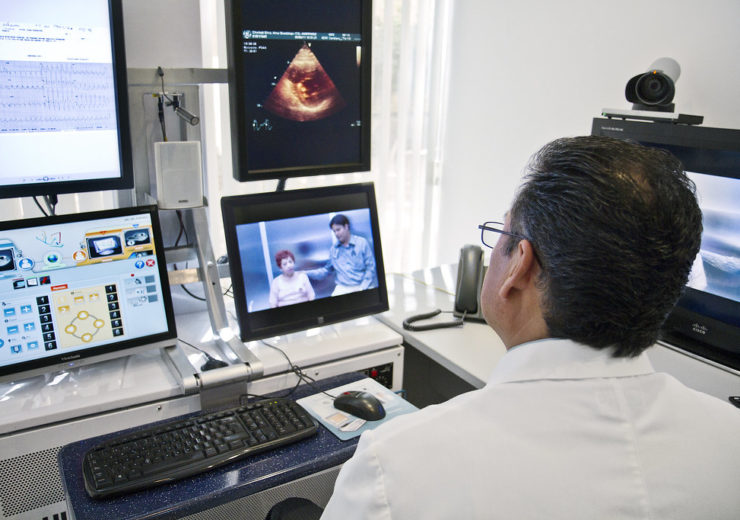
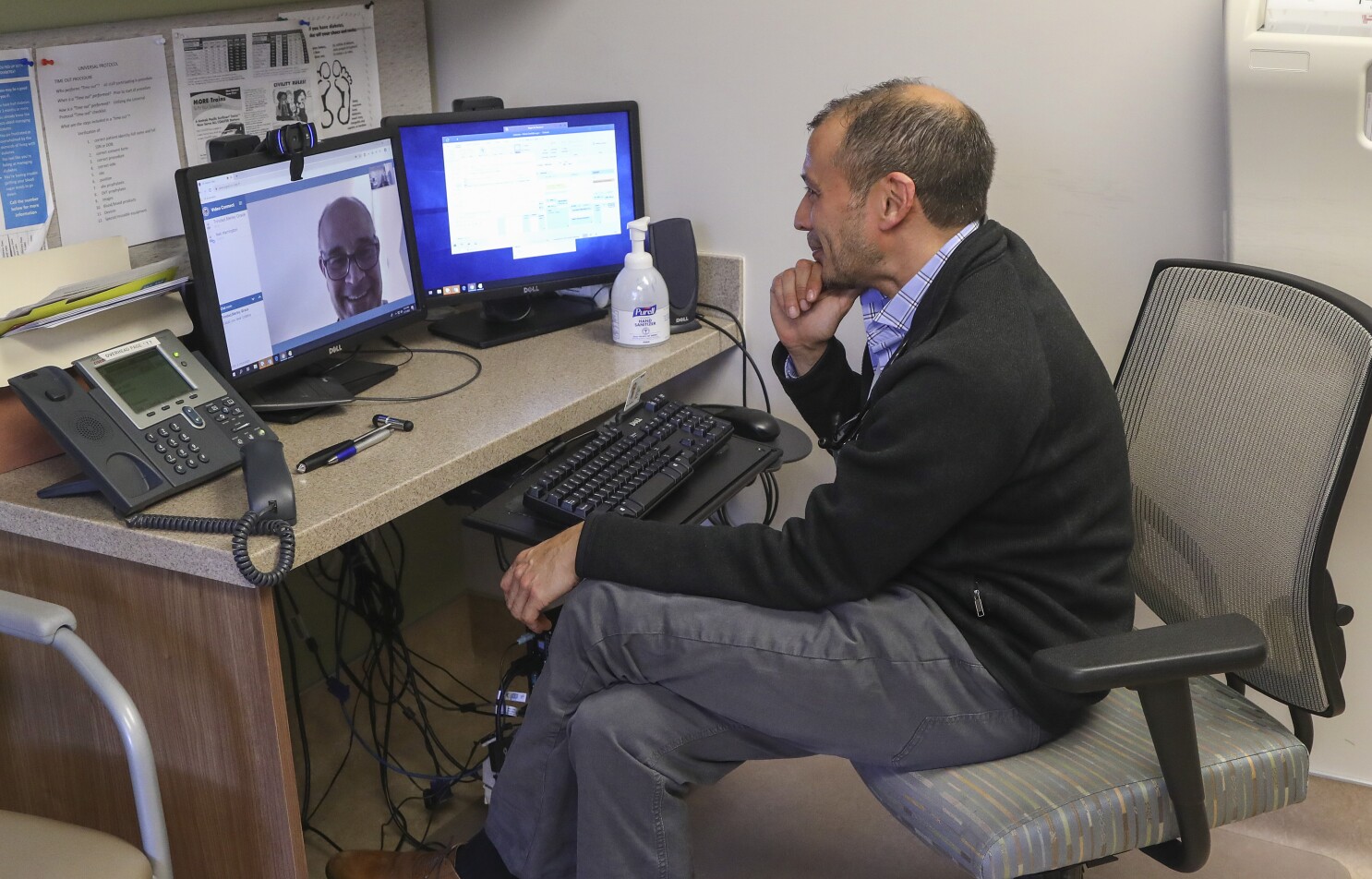
On Monday, 340 organizations signed a letter urging Congress to make telehealth flexibilities created during the COVID-19 pandemic, permanent. 

Those signing the letter include national and regional organizations representing a range of healthcare stakeholders in all 50 states, the District of Columbia and Puerto Rico.

Congress quickly waived statutory barriers to allow for expanded access to telehealth at the beginning of the COVID-19 pandemic, providing federal agencies with the flexibility to allow healthcare providers to deliver care virtually.

Stakeholders also want Congress to remove restrictions on the location of the patient to ensure that all patients can access care at home, and other appropriate locations; to maintain and enhance HHS authority to determine appropriate providers and services for telehealth; ensure federally qualified health centers and rural health clinics can furnish telehealth services after the public health emergency; and make permanent the Health and Human Services temporary waiver authority for future emergencies.

While federal agencies can address some of these policies going forward, the Centers for Medicare and Medicaid does not have the authority to make changes to Medicare reimbursement policy for telehealth under current law, stakeholders said.

In a statement separate from the letter to Congress, Lux Research Associate Danielle Bradnan said key concerns for legislators are broadband internet access, payer reimbursement and licensure barriers, since, currently, medical licenses are only valid for specific states.

WHY THIS MATTERS

If Congress does not act before the COVID-19 public health emergency expires, current flexibilities will disappear, according to stakeholders.

The PHE is scheduled to expire in July.

In a tweet late yesterday, Michael Caputo, the assistant secretary of the Department of Health and Human Services for public affairs, said HHS is expected to renew the PHE before it expires. It has already been renewed once.

THE LARGER TREND

The use of telehealth has skyrocketed under in-person restrictions under COVID-19.

Private health plans have followed suit, the letter said, resulting in a 4,300% year-over-year increase in claims for March 2020.

However, a new report from the Commonwealth Fund has found that the growth of telemedicine visits has plateaued and account for a relatively small percentage of rebounding ambulatory care services.

As states experiment with reopening – and re-closing – their economies in response to concerns around rising coronavirus cases, the report found that telemedicine visits have actually been declining since April.




Navigating a Post-Covid Path to the New Normal with Gist Healthcare CEO, Chas Roades

https://www.lrvhealth.com/podcast/?single_podcast=2203

Covid-19, Regulatory Changes and Election Implications: An Inside ...Chas Roades (@ChasRoades) | Twitter

Healthcare is Hard: A Podcast for Insiders; June 11, 2020

Over the course of nearly 20 years as Chief Research Officer at The Advisory Board Company, Chas Roades became a trusted advisor for CEOs, leadership teams and boards of directors at health systems across the country. When The Advisory Board was acquired by Optum in 2017, Chas left the company with Chief Medical Officer, Lisa Bielamowicz. Together they founded Gist Healthcare, where they play a similar role, but take an even deeper and more focused look at the issues health systems are facing.

As Chas explains, Gist Healthcare has members from Allentown, Pennsylvania to Beverly Hills, California and everywhere in between. Most of the organizations Gist works with are regional health systems in the $2 to $5 billion range, where Chas and his colleagues become adjunct members of the executive team and board. In this role, Chas is typically hopscotching the country for in-person meetings and strategy sessions, but Covid-19 has brought many changes.

“Almost overnight, Chas went from in-depth sessions about long-term five-year strategy, to discussions about how health systems will make it through the next six weeks and after that, adapt to the new normal. He spoke to Keith Figlioli about many of the issues impacting these discussions including:

  • Corporate Governance. The decisions health systems will be forced to make over the next two to five years are staggeringly big, according to Chas. As a result, Gist is spending a lot of time thinking about governance right now and how to help health systems supercharge governance processes to lay a foundation for the making these difficult choices.
  • Health Systems Acting Like Systems. As health systems struggle to maintain revenue and margins, they’ll be forced to streamline operations in a way that finally takes advantage of system value. As providers consolidated in recent years, they successfully met the goal of gaining size and negotiating leverage, but paid much less attention to the harder part – controlling cost and creating value. That’s about to change. It will be a lasting impact of Covid-19, and an opportunity for innovators.
  • The Telehealth Land Grab. Providers have quickly ramped-up telehealth services as a necessity to survive during lockdowns. But as telehealth plays a larger role in the new standard of care, payers will not sit idly by and are preparing to double-down on their own virtual care capabilities. They’re looking to take over the virtual space and own the digital front door in an effort to gain coveted customer loyalty. Chas talks about how it would be foolish for providers to expect that payers will continue reimburse at high rates or at parity for physical visits.
  • The Battleground Over Physicians. This is the other area to watch as payers and providers clash over the hearts and minds of consumers. The years-long trend of physician practices being acquired and rolled-up into larger organizations will significantly accelerate due to Covid-19. The financial pain the pandemic has caused will force some practices out of business and many others looking for an exit. And as health systems deal with their own financial hardships, payers with deep pockets are the more likely suitor.”


Prospect Medical Group to add 10,000 physicians with 3 acquisitions

https://www.beckershospitalreview.com/hospital-transactions-and-valuation/prospect-medical-group-to-add-10-000-physicians-with-3-acquisitions.html?utm_medium=email

Prospect Medical Group to acquire three physician practices

Prospect Medical Group will double in size when it completes the acquisition of three medical practices later this year. 

Prospect Medical Group, owned by Los Angeles-based Prospect Medical Holdings, entered into an agreement April 22 to acquire certain assets of CalCare IPA and Los Angeles Medical Center IPA, both of which serve Los Angeles County, and Vantage Medical Group in San Diego, San Bernardino and Riverside, Calif.

The transaction, which is subject to customary closing conditions and approvals from contracted health plans, is expected to close this summer. 

The three independent medical associations, representing more than 10,000 physicians, will join Prospect’s existing network of about 10,000 providers when the transaction closes.

“This is a great opportunity to expand Prospect’s system of coordinated care to a much larger market,” said Prospect Medical Systems CEO Jim Brown. “Our vision is that everyone has access to quality health care when they need it, and we look forward to partnering with a new network of physicians to make that a reality.”


Facing a reckoning on physician compensation?

https://mailchi.mp/f4f55b3dcfb3/the-weekly-gist-may-15-2020?e=d1e747d2d8

Doctor salaries have shot up 30% in past decade over fears of ...

As health systems take tentative steps to resume non-emergent procedures and office visits, it’s increasingly clear that volume will not quickly return to pre-COVID levels. According to a health system chief physician executive we spoke with this week, this has forced medical group leadership to reevaluate physician compensation, at least for the rest of 2020.

“We’ve kept our doctors pretty much whole for the past three months,” she said, “but given the losses we’re facing for the rest of the year, we can’t keep it up much longer.” We’ve had a flurry of calls in the past two weeks with systems in the same position. Most of their doctors are primarily paid based on their productivity. “We all loved the upside opportunity,” mused one physician leader, “but we never thought something could happen that would completely wipe us out.”

This point got us wondering whether we might be seeing the beginning of the end of RVU-based physician compensation, as physicians seek greater stability and safety. But moving to a salary-driven model is far from easy. How much upside are doctors willing to trade off for security? The survey data used to benchmark compensation, based on last year’s business model, is essentially irrelevant—and likely will be for next year as well. According to one consultant, “Given that there’s no consistency in volume or compensation strategy, the 2020 data will be garbage, too.” Not to mention, dramatically shifting the way doctors are paid has huge cultural and operational ramifications.

There are no easy answers, but we think this conversation about the future of compensation, and the larger issues it raises about doctors’ relationship to, and role in, the health system, is long overdue. One executive shared his system’s plan to pay their doctors 85 percent of their 2019 compensation through the summer. He’s not sure yet what the other side of August looks like. “Maybe we’ll have physicians who want to continue to be paid on productivity like a car salesman. But if you want that kind of upside now, the safety net likely won’t be there the next time.” However, he hopes this experience “provides a reset point that gets us to a more sustainable—and professional—way of working together for the future.”  


Doctors Without Patients: ‘Our Waiting Rooms Are Like Ghost Towns’

18 of the Spookiest Ghost Towns in America - Most Haunted Places

As visits plummet because of the coronavirus, small physician practices are struggling to survive.

Autumn Road in Little Rock, Ark., is the type of doctor’s practice that has been around long enough to be treating the grandchildren of its eldest patients.

For 50 years, the group has been seeing families like Kelli Rutledge’s. A technician for a nearby ophthalmology practice, she has been going to Autumn Road for two decades.

The group’s four doctors and two nurse practitioners quickly adapted to the coronavirus pandemic, sharply cutting back clinic hours and switching to virtual visits to keep patients and staff safe.

When Kelli, 54, and her husband, Travis, 56, developed symptoms of Covid-19, the couple drove to the group’s office and spoke to the nurse practitioner over the phone. “She documented all of our symptoms,” Ms. Rutledge said. They were swabbed from their car.

While the practice was never a big moneymaker, its revenues have plummeted. The number of patients seen daily by providers has dropped to half its average of 120. The practice’s payments from March and April are down about $150,000, or roughly 40 percent.

“That won’t pay the light bill or the rent,” said Tabitha Childers, the administrator of the practice, which recently laid off 12 people.

While there are no hard numbers, there are signs that many small groups are barely hanging on. Across the country, only half of primary care doctor practices say they have enough cash to stay open for the next four weeks, according to one study, and many are already laying off or furloughing workers.

“The situation facing front-line physicians is dire,” three physician associations representing more than 260,000 doctors, wrote to the secretary of health and human services, Alex M. Azar II, at the end of April. “Obstetrician-gynecologists, pediatricians, and family physicians are facing dramatic financial challenges leading to substantial layoffs and even practice closures.”

By another estimate, as many as 60,000 physicians in family medicine may no longer be working in their practices by June because of the pandemic.

The faltering doctors’ groups reflect part of a broader decline in health care alongside the nation’s economic downturn. As people put off medical appointments and everything from hip replacements to routine mammograms, health spending dropped an annualized rate of 18 percent in the first three months of the year, according to recent federal data.

While Congress has rushed to send tens of billions of dollars to the hospitals reporting large losses and passed legislation to send even more, small physician practices in medicine’s least profitable fields like primary care and pediatrics are struggling to stay afloat. “They don’t have any wiggle room,” said Dr. Lisa Bielamowicz, a co-founder of Gist Healthcare, a consulting firm.

None of the money allocated by lawmakers has been specifically targeted to the nation’s doctors, although the latest bill set aside funds for community health centers. Some funds were also set aside for small businesses, which would include many doctors’ practices, but many have faced the same frustration as other owners in finding themselves shut out of much of the funding available.

Federal officials have taken some steps to help small practices, including advancing Medicare payments and reimbursing doctors for virtual visits. But most of the relief has gone to the big hospital and physician groups. “We have to pay special attention to these independent primary care practices, and we’re not paying special attention to them,” said Dr. Farzad Mostashari, a former health official in the Obama administration, whose company, Aledade, works with practices like Autumn Road.

“The hospitals are getting massive bailouts,” said Dr. Christopher Crow, the president of Catalyst Health Network in Texas. “They’ve really left out primary care, really all the independent physicians,” he said.

“Here’s the scary thing — as these practices start to break down and go bankrupt, we could have more consolidation among the health care systems,” Dr. Crow said. That concerns health economists, who say the steady rise in costs is linked to the clout these big hospital networks wield with private insurers to charge high prices.

While the pandemic has wreaked widespread havoc across the economy, shuttering restaurants and department stores and throwing tens of millions of Americans out of work, doctors play an essential role in the health of the public. In addition to treating coronavirus patients who would otherwise show up at the hospital, they are caring for people with chronic diseases like diabetes and asthma.

Keeping these practices open is not about protecting the doctors’ livelihoods, said Michael Chernew, a health policy professor at Harvard Medical School. “I worry about how well these practices will be able to shoulder the financial burden to be able to meet the health care needs people have,” he said.

“If practices close down, you lose access to a point of care,” said Dr. Chernew, who was one of the authors of a new analysis published by the Commonwealth Fund that found doctor’s visits dropped by about 60 percent from mid-March to mid-April. The researchers used visit data from clients of a technology firm, Phreesia.

Nearly 30 percent of the visits were virtual as doctors rushed to offer telemedicine as the safest alternative for their staff and patients. “It’s remarkable how quickly it was embraced,” said Dr. Ateev Mehrotra, a hospitalist and associate professor of health policy at Harvard Medical School, who was also involved in the study. But even with virtual visits, patient interaction was significantly lower.

Almost half of primary care practices have laid off or furloughed employees, said Rebecca Etz, an associate professor of family medicine at Virginia Commonwealth University and co-director of the Larry A. Green Center, which is surveying doctors with the Primary Care Collaborative, a nonprofit group. Many practices said they did not know if they had enough cash to stay open for the next month.

Pediatricians, which are among the lowest paid of the medical specialties, could be among the hardest hit. Federal officials used last year’s payments under the Medicare program to determine which groups should get the initial $30 billion in funds. Because pediatricians don’t generally treat Medicare patients, they were not compensated for the decline in visits as parents chose not to take their children to the doctor and skipped their regular checkups.

“This virus has the potential to essentially put pediatricians out of business across the country,” said Dr. Susan Sirota, a pediatrician in Chicago who leads a network of a dozen pediatric practices in the area. “Our waiting rooms are like ghost towns,” she said.

Pediatricians have also ordered tens of thousands of dollars on vaccines for their patients at a time when vaccine rates have plunged because of the pandemic, and they are now working with the manufacturers to delay payments for at least a time. “We don’t have the cash flow to pay them,” said Dr. Susan Kressly, a pediatrician in Warrington, Pa.

Even those practices that quickly ramped up their use of telemedicine are troubled. In Albany, Ga., a community that was an unexpected hot spot for the virus, Dr. Charles Gebhardt, a doctor who is treating some infected patients, rapidly converted his practice to doing nearly everything virtually. Dr. Gebhardt also works with Aledade to care for Medicare patients.

But the telemedicine visits are about twice as long as a typical office visit, Dr. Gebhardt said. Instead of seeing 25 patients a day, he may see eight. “We will quickly go broke at this rate,” he said.

Although he said the small-business loans and advance Medicare payments are “a Godsend, and they will help us survive the next few months,” he also said practices like his need to go back to seeing patients in person if they are to remain viable. Medicare will no longer be advancing payments to providers, and many of the small-business funding represents a short-term fix.

While Medicare and some private insurers are covering virtual visits, which would include telephone calls, doctors say the payments do not make up for the lost revenue from tests and procedures that help them stay in business. “Telehealth is not the panacea and does not make up for all the financial losses,” said Dr. Patrice Harris, the president of the American Medical Association.

To keep the practices open, Dr. Mostashari and others propose doctors who treat Medicare and Medicaid patients receive a flat fee per person.

Even more worrisome, doctors’ groups may not be delivering care to those who need it, said Dr. Mehrotra, the Harvard researcher, because the practices are relying on patients to get in touch rather than reaching out.

Some doctors are already voicing concerns about patients who do not have access to a cellphone or computer or may not be adept at working with telemedicine apps. “Not every family has access to the technology to connect with us the right way,” said Dr. Kressly, who said the transition to virtual care “is making disparities worse.”

Some patients may also still prefer traditional office visits. While the Rutledges appreciated the need for virtual visits, Kelli said there was less time to “talk about other things.”

“Telehealth is more inclined to be about strictly what you are there for,” she said.

Private equity firms and large hospital systems are already eying many of these practices in hopes of buying them, said Paul D. Vanchiere, a consultant who advises pediatric practices.

“The vultures are circling here,” he said. “They know these practices are going to have financial hardship.”


What we’ve learned from the telemedicine explosion

https://mailchi.mp/aa7806a422dd/the-weekly-gist-may-8-2020?e=d1e747d2d8

Why telemedicine could be the next big thing in employee healthcare

In our decades in healthcare, we’ve never seen a faster care transformation than the rapid growth in telemedicine sparked by COVID-19. Every system we’ve spoken with over the past two months reports its doctors are now performing thousands of “virtual visits” each week, often up from just a handful in February. As one chief digital officer told us, “We took our three-year digital strategic plan and implemented it in two weeks!

This week, we convened leaders from across our Gist Healthcare membership to share learnings and questions about their telemedicine experiences. COVID-19 brought down regulatory and payment hurdles, as well as internal cultural barriers to adoption—but leaders expressed a concern that current payment levels and physician enthusiasm could dissipate. Some insurers have hinted at pulling back on payment, although they will have a hard time doing so as long as Medicare maintains “parity” with in-person visits.

Switching to 100 percent telemedicine was easier than most doctors anticipated. But as practices now begin to ramp up office visits, new questions are emerging about how to integrate digital and physical visit workflow, requiring providers to rethink office layout and technology within the practice: is there a good physical space in the office to conduct televisits? Zoom and FaceTime have worked in a pinch, but what platform is best for long-term operational sustainability and consumer experience?

Telemedicine has also raised consumer expectations: patients expect providers to be on time for a virtual appointment—setting a bar for punctuality that will likely carry over to their next in-person office visit. Across the rest of this year, health systems and physician groups will continue to push the boundaries of virtual care, establishing how far it can be extended to provide quality care in a host of specialties.

But at the same time, systems must also prepare for growing complexity in 2021: what is the right balance of in-person versus virtual care? How should telemedicine integrate with urgent and emergency care offerings? How should physician compensation change? And as payers and disruptors expand their virtual care offerings, how can providers differentiate their own platforms in the eyes of consumers? We’ll continue to share learnings as our members work through the myriad challenges and opportunities of this new virtual care expansion.


Already Taxed Health Care Workers Not ‘Immune’ From Layoffs And Less Pay

https://khn.org/news/already-taxed-health-care-workers-not-immune-from-layoffs-and-less-pay/

Already Taxed Health Care Workers Not 'Immune' From Layoffs And ...

Just three weeks ago, Dr. Kathryn Davis worried about the coronavirus, but not about how it might affect her group of five OB-GYNs who practice at a suburban hospital outside Boston.

“In medicine we think we’re relatively immune from the economy,” Davis said. “People are always going to get sick; people are always going to need doctors.”

Then, two weeks ago, she watched her practice revenue drop 50% almost overnight after Massachusetts officials told doctors and hospitals to stop performing elective tests and procedures. For Davis, that meant no more non-urgent gynecological visits and screenings.

Late last week, as Davis and her partners absorbed the stunning turn of events, they devised a stopgap plan. The 35 nurses, medical assistants and secretaries they employ would have two options: move from full-time to part-time status or start collecting unemployment. Doctors in the practice would take a substantial pay cut. Davis said she’s hearing from colleagues who may have to permanently close their offices if the focus on crisis-level care continues for months.

“It’s shocking,” she said. “Everyone has been blindsided.”

Atrius Health, the largest independent physician group in Massachusetts, said patient volume is down 75% since mid-March. It is temporarily closing offices, placing many nonclinical employees on furlough and withholding pay for those who remain. The average withholding is 20%, and the company pledges that pay withheld will be returned. The lowest-paid workers, those earning up to $55,000, are exempt.

“What we’re trying to do is piece together a solution to get through the crisis and keep employed as many people as we can,” said Dr. Steven Strongwater, Atrius Health’s CEO.

Atrius cares for 745,000 patients in clinics that often include primary care, specialists, radiology and a pharmacy under one roof.

Strongwater said physician groups must be included when the federal government distributes $100 billion to hospitals from the $2 trillion stimulus package.

It’s not clear if that money will stop the tide of layoffs and lost pay at hospitals as well as in doctor’s offices. A Harvard Medical School physician group will suspend retirement contributions starting April 1.

Beth Israel Lahey Health, the second-largest hospital network in Massachusetts, announced executive pay cuts Monday.

“The suspension of elective procedures and decline in visits to our primary care practices and urgent care centers have resulted in financial challenges,” wrote CEO Dr. Kevin Tabb in an email to employees. Tabb said he would take a 50% salary cut. Other executives and hospital presidents in the system will forgo 20% of their salaries for the next three months.

“Although executive leadership compensation is being reduced, we will never compromise on doing the things that are essential to protect your safety and the safety of our patients,” Tabb told staff.

Dallas-based Steward Health Care has told hospital employees in Massachusetts and eight other states where it operates to expect furloughs focused on nonclinical staff. In a statement, Steward Health Care said it prepared for the pandemic but is experiencing a “seismic financial shock.”

“Elective surgeries are the cornerstone of our hospital system’s operating model — and the negative impact due to the cancellations of these procedures cannot be overstated. In addition, patients are understandably cautious and choosing to defer any nonemergency treatments or routine visits until this crisis has passed.”

Dr. Kaarkuzhali Babu Krishnamurthy, an assistant professor of neurology at Harvard Medical School who studies medical ethics, said employers need to think more carefully about the ethics of asking doctors and nurses to live on less when many are working longer hours and putting the health of their families at risk.

“At a time when health care systems are calling on doctors and nurses to do more, this is not the time to be making it more difficult to do that,” said Krishnamurthy.

There’s talk of redeploying laid-off health care workers to new COVID-19 units opening in shuttered hospitals or to patient overflow sites. Tim Foley, executive vice president for the largest health care union in Massachusetts, 1199SEIU, is promoting the development of a staff registry.

“It is more important, now more than ever, to explore all options to maintain the level of urgent care needed across the state and we look forward to working with all stakeholders to do just that,” Foley said in an email.


Op-Ed: As a doctor, I use telemedicine. With the coronavirus threat, it could revolutionize healthcare

https://www.latimes.com/opinion/story/2020-03-17/op-ed-as-a-doctor-i-use-telemedicine-with-the-coronavirus-threat-it-could-revolutionize-healthcare?fbclid=IwAR1D6sHWYhvei0Hda4dRuqRaydyxO7AVRjWQj-2UTFqwf3gdKaWuVfxa2Hs

Image result for Op-Ed: As a doctor, I use telemedicine. With the coronavirus threat, it could revolutionize healthcare

As a physician, waiting for the worst of coronavirus to hit, I see a lot to fear. It seems increasingly likely that this will be one of the most significant pandemics in modern human history, and that it will change our approach to healthcare going forward. But not all of its legacy will be negative. Here’s one thing I hope will come out of the crisis: an increased reliance on telemedicine, something that should have happened long ago.

A few months ago, when I was between jobs, I took a part-time job in a rural hospital serving a county of more than 150,000 people. On the verge of bankruptcy, the hospital was unable to attract many specialists to join its ranks, and in desperation, had turned to telemedicine to cover many services. So, for example, if a patient was rushed to the emergency room after a stroke, there was unlikely to be a neurologist in the room. Instead, a neurologist would assess the patient on a mobile screen from far away, with local nursing staff and doctors aiding him or her.

I had been skeptical of telemedicine going in. Physical exams are the bedrock of how doctors and nurses assess patients. We look patients and their loved ones in the eye, palpate sore spots with our fingers and offer comfort with a hand on a shoulder. Physical contact, I’d always thought, was at the heart of how doctors and patients communicate.

It was with this skepticism that I found myself next to a young man who been brought to the emergency room after attempting to take his own life. Again. This time, instead of seeing a psychiatrist in person, he saw one on a screen with wheels. The psychiatrist was in some distant location, but she had been in touch with the local doctors and had access to his medical records. Despite her physical remoteness, she connected with him, and he opened up. She knew of all the local resources to refer him to, and at the end of her conversation, she had developed a real rapport with him. After the visit ended and the nurse wheeled the monitor out of the room, I asked the young man what he thought, and to my surprise, he told me he was more comfortable with this than an in-person visit. He wasn’t the only one — many patients say they prefer a virtual doc to one sitting across from them.

Over the past few decades, medical care has been transformed by technology. Whenever a new drug becomes available, or a medical procedure is approved by the FDA, the medical community is quick to deploy it. Yet, when it comes to how we see patients, our current practices haven’t changed much since the time of Hippocrates. If a patient is sick they either have to come see us in clinic, urgent care, the emergency room or the hospital. Despite the internet transforming every aspect of our lives, from how we find love to how we order groceries, the way we deliver medical care has stagnated.

In the United States, not only are doctors often inaccessible for those living in rural areas, hospitals everywhere have huge economic challenges. One healthcare executive jokingly told me his hospital made more money from its parking lots than its clinics.

The response to COVID-19 might help change that.

One of the main reasons China has been able to slow coronavirus transmission has been because of a dramatic increase in virtual visits. In fact, China has moved half of all medical care online, allowing patients to consult with their doctors and get prescriptions from the comfort of their homes. Hospitals have been notorious petri dishes for deadly bugs since long before COVID-19, and this pandemic has brought that risk into crystal-clear focus. On Tuesday, Medicare announced that it will greatly expand coverage for telemedicine visits, previously sharply restricted. And at a White House briefing, the government announced it was urging states to similarly expand Medicaid coverage to include telemedicine visits by Skype, Facetime or other platforms. Some insurers have also said they will cover telehealth visits at parity with in-person visits.

These measures are commendable, but policies need to be put in place to ensure that the expansion of telemedicine is not temporary. Of course, in-person visits will still be necessary in many cases. But supporting telemedicine on a par with such visits has the potential to protect patients and healthcare personnel and allow for much more efficiency in the system. That said, physicians and nurses will need high-quality training to provide compassionate and thorough care to a patient from across a computer screen. Technology that allows patients to be “examined” remotely needs to be better studied and made more accessible. And since the backbone of telemedicine is reliable high-speed internet, Congress should consider Elizabeth Warren’s plan to bring broadband internet to the remotest parts of this country, to ensure broad access to these services.

This week my team converted most of our clinic visits from face to face to virtual visits. Some were over the phone, others were over video, often with a family member present as well. While there were some patients that still needed to be seen in person, we were able to minimize the risk of viral transmission not only for patients, but also for valuable members of our clinical team. Even before this crisis, as part of my job at the Veterans Affairs Health System in Boston, I often consulted with patients I had never seen as part of an “E Consult” system. While I was initially nervous when I first started doing this, it allowed me to expand my footprint far beyond what I could manage if I were seeing every patient in person.

At some point, I fervently hope the coronavirus will be a thing of the past. But I hope it leaves behind a legacy. I hope it changes how well we wash our hands, how well we fund public health and how well we protect the healthcare workers caring for our sickest patients. And, most of all, I hope it pushes us to embrace telemedicine.


Health plans ramp up physician practice acquisitions

https://mailchi.mp/9e118141a707/the-weekly-gist-march-6-2020?e=d1e747d2d8


Health systems and private equity firms aren’t the only ones aggregating physician practices—many large insurers are rapidly acquiring or affiliating with physician groups, especially to support their Medicare Advantage (MA) strategies.

As the map below shows, most insurers are focusing this vertical integration in states like Florida, Texas, and California—places where they also have large populations of MA beneficiaries. Astonishingly, UnitedHealth Group—through its Optum division—is likely the largest employer of physicians in the US, employing or affiliating with 50,000 physicians—roughly 5,000 more than HCA Healthcare and nearly double the number of Kaiser Permanente. The number of Optum-controlled physicians has increased rapidly in recent years, the result of many large-scale deals, including the $4.3B acquisition of DaVita Medical Group.

When it comes to leveraging this growing physician network, United is setting its sights well beyond Medicare Advantage, as demonstrated by its recent introduction of Harmony, a commercial narrow network health plan in Southern California based almost exclusively on a network of Optum physicians.

Meanwhile, Humana’s physician strategy has focused more on affiliations with non-traditional groups serving MA patients, including Iora Health and Oak Street Health—though Humana also has two large primary care groups, Conviva and Partners in Primary Care, the latter of which just secured a $600M private equity investment to expand.

Notably absent from this map is Aetna, which has been pursuing a different strategy, focused around steering its MA population to its advanced practice provider-run HealthHUBs in CVS pharmacies.

This trend of insurer acquisition of physicians is obviously worrisome for health systems, as the health plans they negotiate with for payment are now directly competing with them at the front end of the delivery system.  


Supreme Court sets date for Louisiana abortion case

Supreme Court sets date for Louisiana abortion case

Image result for supreme court

The Supreme Court has set a date, March 4, to hear oral arguments in a case over a Louisiana abortion law

The hot-button case is about a Louisiana law that would require doctors who perform abortions to have admitting privileges at a local hospital. Critics say this is aimed at forcing abortion clinics to close. 

In February, the court ruled to prevent the law from taking effect while it faces a legal challenge. Chief Justice John Roberts joined the liberal justices in this decision, but it is unclear whether he would vote to block the law permanently.

A similar law in Texas was struck down 5-3 in 2016, but Roberts voted to uphold that law at the time. Justice Anthony Kennedy has retired since then.

The case will be the first abortion case heard by the high court since Trump nominees Neil Gorsuch and Brett Kavanaugh have joined the bench.

“All eyes must be on the Supreme Court come March. This case will have lasting consequences for abortion access across the country. Many states have been openly defying Supreme Court decisions in an effort to criminalize abortion,” the Center for Reproductive Rights CEO Nancy Northup said in a statement Tuesday.

“At this critical juncture, the Court needs to set those states straight. If they don’t, Louisiana will be left with a single abortion provider at just one clinic, and other states could soon follow,” Northup added.

In recent months, a number of states have passed laws to restrict abortion. Many have been challenged or blocked in court.