The Future of Hospitals in Post-COVID America (Part 1): The Market Response

Click to access CBC_72_08052020_Final.pdf


[Readers’ Note: This is the first of two articles on the Future of Hospitals in Post-COVID America. This article
examines how market forces are consolidating, rationalizing and redistributing acute care assets within the
broader industry movement to value-based care delivery. The second article, which will publish next month,
examines gaps in care delivery and the related public policy challenges of providing appropriate, accessible
and affordable healthcare services in medically-underserved communities.]

In her insightful 2016 book, The Gray Rhino: How to Recognize and Act on the Obvious Dangers We Ignore,
Michelle Wucker coins the term “Gray Rhinos” and contrasts them with “Black Swans.” That distinction is
highly relevant to the future of American hospitals.

Black Swans are high impact events that are highly improbable and difficult to predict. By contrast, Gray
Rhinos are foreseeable, high-impact events that we choose to ignore because they’re complex, inconvenient
and/or fortified by perverse incentives that encourage the status quo. Climate change is a powerful example
of a charging Gray Rhino.

In U.S. healthcare, we are now seeing what happens when a Gray Rhino and a Black Swan collide.
Arguably, the nation’s public health defenses should anticipate global pandemics and apply resources
systematically to limit disease spread. This did not happen with the coronavirus pandemic.

Instead, COVID-19 hit the public healthcare infrastructure suddenly and hard. This forced hospitals and health systems to dramatically reduce elective surgeries, lay off thousands and significantly change care delivery with the adoption of new practices and services like telemedicine.

In comparison, many see the current American hospital business model as a Gray Rhino that has been charging toward
unsustainability for years with ever-building momentum.

Even with massive and increasing revenue flows, hospitals have long struggled with razor-thin margins, stagnant payment rates and costly technology adoptions. Changing utilization patterns, new and disruptive competitors, pro-market regulatory rules and consumerism make their traditional business models increasingly vulnerable and, perhaps, unsustainable.

Despite this intensifying pressure, many hospitals and health systems maintain business-as-usual practices because transformation is so difficult and costly. COVID-19 has made the imperative of change harder to ignore or delay addressing.

For a decade, the transition to value-based care has dominated debate within U.S. healthcare and absorbed massive strategic,
operational and financial resources with little progress toward improved care outcomes, lower costs and better customer service. The hospital-based delivery system remains largely oriented around Fee-for-Service reimbursement.

Hospitals’ collective response to COVID-19, driven by practical necessity and financial survival, may accelerate the shift to value-based care delivery. Time will tell.

This series explores the repositioning of hospitals during the next five years as the industry rationalizes an excess supply of acute care capacity and adapts to greater societal demands for more appropriate, accessible and affordable healthcare services.

It starts by exploring the role of the marketplace in driving hospital consolidation and the compelling need to transition to value-based care delivery and payment models.

COVID’s DUAL SHOCKS TO PATIENT VOLUME

Many American hospitals faced severe financial and operational challenges before COVID-19. The sector has struggled to manage ballooning costs, declining margins and waves of policy changes. A record 18 rural hospitals closed in 2019. Overall, hospitals saw a 21% decline in operating margins in 2018-2019.

COVID intensified those challenges by administering two shocks to the system that decreased the volume of hospital-based activities and decimated operating margins.

The first shock was immediate. To prepare for potential surges in COVID care, hospitals emptied beds and cancelled most clinic visits, outpatient treatments and elective surgeries. Simultaneously, they incurred heavy costs for COVID-related equipment (e.g. ventilators,PPE) and staffing. Overall, the sector experienced over $200 billion in financial losses between March and June 20204.

The second, extended shock has been a decrease in needed but not necessary care. Initially, many patients delayed seeking necessary care because of perceived infection risk. For example, Emergency Department visits declined 42% during the early phase of the pandemic.

Increasingly, patients are also delaying care because of affordability concerns and/or the loss of health insurance. Already, 5.4 million people have lost their employer-sponsored health insurance. This will reduce incremental revenues associated with higher-paying commercial insurance claims across the industry. Additionally, avoided care reduces patient volumes and hospital revenues today even as it increases the risk and cost of future acute illness.

The infusion of emergency funding through the CARES Act helped offset some operating losses but it’s unclear when and even whether utilization patterns and revenues will return to normal pre-COVID levels. Shifts in consumer behavior, reductions in insurance coverage, and the emergence of new competitors ranging from Walmart to enhanced primary care providers will likely challenge the sector for years to come.

The disruption of COVID-19 will serve as a forcing function, driving meaningful changes to traditional hospital business models and the competitive landscape. Frankly, this is long past due. Since 1965, Fee-for-Service (FFS) payment has dominated U.S. healthcare and created pervasive economic incentives that can serve to discourage provider responsiveness in transitioning to value-based care delivery, even when aligned to market demand.

Telemedicine typifies this phenomenon. Before COVID, CMS and most health insurers paid very low rates for virtual care visits or did not cover them at all. This discouraged adoption of an efficient, high-value care modality until COVID.

Unable to conduct in-person clinical visits, providers embraced virtual care visits and accelerated its mass adoption. CMS and
commercial health insurers did their part by paying for virtual care visits at rates equivalent to in-person clinic visits. Accelerated innovation in care delivery resulted.


THE COMPLICATED TRANSITION TO VALUE

Broadly speaking, health systems and physician groups that rely almost exclusively on activity-based payment revenues have struggled the most during this pandemic. Vertically integrated providers that offer health insurance and those receiving capitated payments in risk-based contracts have better withstood volume losses.

Modern Healthcare notes that while provider data is not yet available, organizations such as Virginia Care Partners, an integrated network and commercial ACO; Optum Health (with two-thirds of its revenue risk-based); and MediSys Health Network, a New Yorkbased NFP system with 148,000 capitated and 15,000 shared risk patients, are among those navigating the turbulence successfully. As the article observes,

providers paid for value have had an easier time weathering the storm…. helped by a steady source of
income amid the chaos. Investments they made previously in care management, technology and social
determinants programs equipped them to pivot to new ways of providing care.

They were able to flip the switch on telehealth, use data and analytics to pinpoint patients at risk for
COVID-19 infection, and deploy care managers to meet the medical and nonclinical needs of patients even
when access to an office visit was limited.

Supporting this post-COVID push for value-based care delivery, six former leaders from CMS wrote to Congress in
June 2020 calling for providers, commercial insurers and states to expand their use of value-based payment models to
encourage stability and flexibility in care delivery.

If value-based payment models are the answer, however, adoption to date has been slow, limited and difficult. Ten
years after the Affordable Care Act, Fee-for-Service payment still dominates the payer landscape. The percentage of
overall provider revenue in risk-based capitated contracts has not exceeded 20%

Despite improvements in care quality and reductions in utilization rates, cost savings have been modest or negligible.
Accountable Care Organizations have only managed at best to save a “few percent of Medicare spending, [but] the
amount varies by program design.”

While most health systems accept some forms of risk-based payments, only 5% of providers expect to have a majority
(over 80%) of their patients in risk-based arrangements within 5 years.

The shift to value is challenging for numerous reasons. Commercial payers often have limited appetite or capacity for
risk-based contracting with providers. Concurrently, providers often have difficulty accessing the claims data they need
from payers to manage the care for targeted populations.

The current allocation of cost-savings between buyers (including government, employers and consumers), payers
(health insurance companies) and providers discourages the shift to value-based care delivery. Providers would
advance value-based models if they could capture a larger percentage of the savings generated from more effective
care management and delivery. Those financial benefits today flow disproportionately to buyers and payers.

This disconnection of payment from value creation slows industry transformation. Ultimately, U.S. healthcare will not
change the way it delivers care until it changes the way it pays for care. Fortunately, payment models are evolving to
incentivize value-based care delivery.

As payment reform unfolds, however, operational challenges pose significant challenges to hospitals and health
systems. They must adopt value-oriented new business models even as they continue to receive FFS payments. New
and old models of care delivery clash.

COVID makes this transition even more formidable as many health systems now lack the operating stamina and
balance sheet strength to make the financial, operational and cultural investments necessary to deliver better
outcomes, lower costs and enhanced customer service.


MARKET-DRIVEN CONSOLIDATION AND TRANSFORMATION

Full-risk payment models, such as bundled payments for episodic care and capitation for population health, are the
catalyst to value-based care delivery. Transition to value-based care occurs more easily in competitive markets with
many attributable lives, numerous provider options and the right mix of willing payers.

As increasing numbers of hospitals struggle financially, the larger and more profitable health systems are expanding
their networks, capabilities and service lines through acquisitions. This will increase their leverage with commercial
payers and give them more time to adapt to risk-based contracting and value-based care delivery.

COVID also will accelerate acquisition of physician practices. According to an April 2020 MGMA report, 97% of
physician practices have experienced a 55% decrease in revenue, forcing furloughs and layoffs15. It’s estimated the
sector could collectively lose as much as $15.1 billion in income by the end of September 2020.

Struggling health systems and physician groups that read the writing on the wall will pro-actively seek capital or
strategic partners that offer greater scale and operating stability. Aggregators can be selective in their acquisitions,
seeking providers that fuel growth, expand contiguous market positions and don’t dilute balance sheets.

Adding to the sector’s operating pressure, private equity, venture investors and payers are pouring record levels of
funding into asset-light and virtual delivery companies that are eager to take on risk, lower prices by routing procedures
and capture volume from traditional providers. With the right incentives, market-driven reforms will reallocate resources
to efficient companies that generate compelling value.

As this disruption continues to unfold, rural and marginal urban communities that lack robust market forces will
experience more facility and practice closures. Without government support to mitigate this trend, access and care gaps
that already riddle American healthcare will unfortunately increase.


WINNING AT VALUE

The average hospital generates around $11,000 per patient discharge. With ancillary services that can often add up to
more than $15,000 per average discharge. Success in a value-based system is predicated on reducing those
discharges and associated costs by managing acute care utilization more effectively for distinct populations (i.e.
attributed lives).

This changes the orientation of healthcare delivery toward appropriate and lower cost settings. It also places greater
emphasis on preventive, chronic and outpatient care as well as better patient engagement and care coordination.
Such a realignment of care delivery requires the following:

 A tight primary care network (either owned or affiliated) to feed referrals and reduce overall costs through
better preventive care.

 A gatekeeper or navigator function (increasingly technology-based) to manage / direct patients to the most
appropriate care settings and improve coordination, adherence and engagement.

 A carefully designed post-acute care network (including nursing homes, rehab centers, home care
services and behavioral health services, either owned or sufficiently controlled) to manage the 70% of
total episode-of-care costs that can occur outside the hospital setting.

 An IT infrastructure that can facilitate care coordination across all providers and settings.

Quality data and digital tools that enhance care, performance, payment and engagement.

Experience with managing risk-based contracts.

 A flexible approach to care delivery that includes digital and telemedicine platforms as well as nontraditional sites of care.

Aligned or incentivized physicians.

Payer partners willing to share data and offload risk through upside and downside risk contracts.

Engaged consumers who act on their preferences and best interests.


While none of these strategies is new or controversial, assembling them into cohesive and scalable business models is
something few health systems have accomplished. It requires appropriate market conditions, deep financial resources,
sophisticated business acumen, operational agility, broad stakeholder alignment, compelling vision, and robust
branding.

Providers that fail to embrace value-based care for their “attributed lives” risk losing market relevance. In their relentless pursuit of increasing treatment volumes and associated revenues, they will lose market share to organizations that
deliver consistent and high-value care outcomes.

CONCLUSION: THE CHARGING GRAY RHINO

America needs its hospitals to operate optimally in normal times, flex to manage surge capacity, sustain themselves
when demand falls, create adequate access and enhance overall quality while lowering total costs. That is a tall order
requiring realignment, evolution, and a balance between market and policy reform measures.

The status quo likely wasn’t sustainable before COVID. The nation has invested heavily for many decades in acute and
specialty care services while underinvesting, on a relative basis, in primary and chronic care services. It has excess
capacity in some markets, and insufficient access in others.

COVID has exposed deep flaws in the activity-based payment as well as the nation’s underinvestment in public health.
Disadvantaged communities have suffered disproportionately. Meanwhile, the costs for delivering healthcare services
consume an ever-larger share of national GDP.

Transformational change is hard for incumbent organizations. Every industry, from computer and auto manufacturing to
retailing and airline transportation, confronts gray rhino challenges. Many companies fail to adapt despite clear signals
that long-term viability is under threat. Often, new, nimble competitors emerge and thrive because they avoid the
inherent contradictions and service gaps embedded within legacy business models.

The healthcare industry has been actively engaged in value-driven care transformation for over ten years with little to
show for the reform effort. It is becoming clear that many hospitals and health systems lack the capacity to operate
profitably in competitive, risk-based market environments.

This dismal reality is driving hospital market valuations and closures. In contrast, customers and capital are flowing to
new, alternative care providers, such as OneMedical, Oak Street Health and Village MD. Each of these upstart
companies now have valuations in the $ billions. The market rewards innovation that delivers value.

Unfortunately, pure market-driven reforms often neglect a significant and growing portion of America’s people. This gap has been more apparent as COVID exacts a disproportionate toll on communities challenged by higher population
density, higher unemployment, and fewer medical care options (including inferior primary and preventive care infrastructure).

Absent fundamental change in our hospitals and health systems, and investment in more efficient care delivery and
payment models, the nation’s post-COVID healthcare infrastructure is likely to deteriorate in many American
communities, making them more vulnerable to chronic disease, pandemics and the vicissitudes of life.

Article 2 in our “Future of Hospitals” series will explore the public policy challenges of providing appropriate, affordable and accessible healthcare to all American communities.


Fewer than 10% of primary care practices have stabilized operations amid COVID-19 pandemic

https://www.fiercehealthcare.com/practices/fewer-than-10-primary-care-practices-have-stabilized-operations-amid-covid-19-pandemic?mkt_tok=eyJpIjoiWTJGaE1qTTRaalpsT1dGayIsInQiOiJTNWFxb3VcL3J3ZmE4ZWV0bFwvOGJCYUc0Ukd3TWp4WlM1SzBzT01aeVJIUGlsSWkwNTlVajJxekJqUUsrcWoxZ0IwTUNqVlhTWVJLQmZkSk1XNGtKVEdCOWg3NmRWeFdldFpsSmlONnFvTTFGQ2l1bzQ4S3ZqNWpoaUx2d1pHaSs1In0%3D

Fewer than 10% of primary care practices have stabilized ...

Four months into the COVID-19 pandemic, fewer than 10% of U.S. primary care practices have been able to stabilize operations.

Nearly 9 in 10 primary care practices continue to face significant difficulties with COVID-19, including obtaining medical supplies, meeting the increasing health needs of their patients, and finding sufficient resources to remain operational, according to a recent survey of close to 600 primary care clinicians in 46 states.

Only 13% of primary care clinicians say they are adapting to a “new normal” in the protracted pandemic, the survey found.

More than four months into the pandemic and at a time when 39 states are experiencing an increase of COVID-19 cases, fewer than 4 in 10 clinicians feel confident and safe with their access to personal protective equipment, according to the survey from the Larry A. Green Center in partnership with the Primary Care Collaborative, which was conducted July 10 to July 13.

Among the primary care clinicians surveyed, 11% report that staff in their practice have quit in the last four weeks over safety concerns.

A primary care provider in Ohio said this: “The ‘I can do 4-6 weeks of this’ transition to ‘this feels like a new/permanent normal’ is crushing and demoralizing. Ways to build morale when everyone is at a computer workstation away from other staff (and patients) feels impossible.”

“In the first few months of the pandemic, the country pulled together to stop the spread of the virus, and it seemed like we were making progress. Primary care clinicians and practices were working hard, against tremendous challenges,” said Rebecca Etz, Ph.D., co-director of The Larry A. Green Center in a statement.

“But now the country is backsliding, and it’s clear that primary care doesn’t have enough strength to deal with the rising number of cases. If primary care were a COVID-19 patient, it would be flat on its back,” Etz said.

The survey conducted by the Larry A. Green Center is part of an ongoing series looking at the attitudes of primary care clinicians and patients during the COVID-19 pandemic and the abilities of practices to meet patients’ needs.

Close to 40% of primary care providers report they are maxed out with mental exhaustion and 18% say they spend each week wondering if their practice or job will still be there next week.

In addition to feeling stressed, clinicians and their practices are also experiencing upheaval. The survey found that 22% of clinicians report skipped or deferred salaries, and 78% report preventive and chronic care is being deferred or delayed by patients.

Primary care clinicians report that 42% of in-person volume is down but overall contact with patients is high, while 39% report not being able to bill for the majority of work delivered, the survey found.

“Given the rapidly rising infection rates and persistent lack of PPE, more than a third of primary care clinicians are reporting feeling unsafe at the office, and 20% are cutting back on face-to-face visits while doing more remote outreach,” said Ann Greiner, president and CEO of the Primary Care Collaborative in a statement.

Greiner said this is a clear signal that payers must advance or retain parity for telehealth and telephonic calls.

“It also is a clarion call to move to a new payment system that doesn’t rely on face-to-face visits and that is prospective so practices can better manage patient care,” she said.

Providers say they need more support from private insurers, particularly when it comes to reimbursing for telehealth and telephone visits. 

According to the survey, a primary care doctor in Illinois said, “Recently told we would not be able to conduct telephone visits due to lack of reimbursement. I work in a low-income Medicare population which has low health literacy and no technology literacy. We were 80% telephone and 20% Zoom and in-office. This further exemplifies the extreme health care disparities in the U.S.”


Administration’s talking health care again, with 2020 in mind

https://www.politico.com/news/2020/07/26/trumps-health-care-again-with-2020-election-381473?utm_source=ActiveCampaign&utm_medium=email&utm_content=Republicans+Roll+Out+%241+Trillion+Coronavirus+Relief+Plan&utm_campaign=TFT+Newsletter+07272020

Tell us: How has Trump handled healthcare in his first 100 days ...

Polls show voters say Joe Biden would handle the issue better. And Trump is running short on options to make concrete changes before November.

President Donald Trump is suddenly talking about health care again.

He signed several executive orders on drug pricing on Friday. He vowed to unveil some new health plan by the end of next week, although he hasn’t provided specifics or an explanation of how he’ll do it. His aides are touting a speech in which Trump will lay out his health care vision. White House counselor to the president Kellyanne Conway has been calling Trump “the health care president.”

Yet it’s unlikely to amount to much in terms of policy ahead of the election. There’s almost no chance Congress will enact any legislation on the issue before November and policy specialists say the executive orders in question will make changes only at the margins — if they make any changes at all. Trump has also previously vowed to roll out a grand health care plan without following through.

That leaves Trump with mostly rhetorical options — even if he insists otherwise — cognizant that voters consistently rank health care as a top priority and say Joe Biden, Trump’s presumptive 2020 rival, would handle the issue better than the president. Meanwhile, Trump is running for reelection having not replaced Obamacare or presented an alternative — all while urging the Supreme Court to overturn the decade-old health law. And millions of Americans are currently losing their health insurance as the coronavirus-gripped economy sputters.

“I think politically, the main objective will be to have something he can call a plan, but it will be smaller than a plan. Just something that he can talk about,” said Drew Altman, president and CEO of the Kaiser Family Foundation, a nonpartisan health policy organization. “But it’s almost inconceivable that anything can be delivered legislatively before the election.”

Trump has long stumped on his pledges to kill Obamacare, the law his predecessor implemented that expanded Americans’ access to health insurance, set baseline standards for coverage, introduced penalties for not having insurance and guaranteed coverage for preexisting conditions. But conservatives say the law introduced too many mandates and drove up costs.

But after winning election in 2016, Trump failed to overturn the law in Congress — or even offer an agreed upon alternative to the law — despite holding the majority in both chambers on Capitol Hill. Democrats then retook the House in the 2018 midterms, essentially ending any chances the law, formally known as the Affordable Care Act, would be repealed.

Even some conservatives said the ongoing failure to present a concrete replacement plan is helping the Democrats politically.

Republicans, said Joe Antos, a health expert at the conservative American Enterprise Institute, “spent basically 2010 to today arguing that the ACA is no good. After 10 years, clearly there are some problems with starting all over again. I haven’t detected very strong interest, at least among elected officials, in revisiting that.”

But the coronavirus pandemic has added pressure to address health care costs, and Trump has lagged behind Biden on his handling of the issue in polls. Fifty seven percent of registered voters recently polled by Quinnipiac said Biden would do a better job on health care than Trump, while only 35 percent approved of Trump’s handling of health care as president. And on the issue of affordability, a CNBC poll found 55 percent of battleground voters favored Biden and the Democrats, compared with 45 percent who preferred Trump and the Republicans.

“At this point, there are two huge issues, jobs and the economy, and health care, i.e., the coronavirus. If anything that’s simply been magnified,” said David Winston, a Republican pollster and strategist. “Given the fact that it’s one of the top issues, it’s not like there’s a choice but to talk about it. If candidates aren’t making statements and proposing solutions around that, it’s a requirement. Both candidates have to address it.”

Biden has campaigned on expanding Obamacare while also promising to implement a “public option” similar to Medicare, which is government-run health insurance for seniors. On drug pricing, he and Trump embrace some of the same ideas, like allowing the safe importation of drugs from other countries where they are cheaper. Biden also supports direct Medicare negotiation of drug prices, a Democratic priority that Trump supported during the 2016 campaign before reversing course.

“Donald Trump has spent his entire presidency working to take health care away from tens of millions of Americans and gut coverage for preexisting conditions,” said Andrew Bates, a Biden campaign spokesman. “If the Trump campaign wants to continue their pattern of highlighting the worst possible contrasts for Donald Trump, we certainly won’t stop them.”

The Trump administration insists it can point to several health care victories during Trump’s term.

Trump frequently notes the removal of the penalty for Americans who do not purchase insurance as a major victory, falsely claiming it is equivalent to overturning Obamacare.

Trump also signed an executive order last year to fight kidney disease to encourage home dialysis and increase the amount of kidney transplants, and he expanded telehealth medicine during the pandemic.

More recently, the U.S. Court of Appeals for the District of Columbia upheld a Trump administration rule expanding the availability of short-term health plans, which Trump has touted as an alternative to Obamacare but Democrats deride as “junk.” The plans are typically cheaper than Obamacare coverage because they don’t provide the same level of benefits or consumer protections for preexisting conditions.

A federal judge in June similarly upheld another Trump administration rule requiring hospitals to disclose the prices they have negotiated with insurers. Price transparency in the health care system has long been a significant issue, with Americans rarely having clarity over how much their treatments will cost ahead of time. Trump called the win “bigger than health care itself,” in an apparent reference to Obamacare. It’s unclear whether transparency will force down health care prices, and hospitals opposing the rule have appealed the judge’s decision.

And on Friday at the White House, Trump held an event to sign four executive orders aimed at slashing drug pricing. The move aimed to tackle a largely unfulfilled signature campaign promise — that he would stop pharmaceutical companies from “getting away with murder.”

“We are ending the sellouts, betrayals and broken promises from Washington,” Trump said Friday.“You have a lot of broken promises from Washington.”

But the orders appeared largely symbolic for now, as they were not immediately enforceable, contained notable caveats and may not be completed before the election anyway. For instance, an order requiring drugmakers to pass along any discounts directly to seniors requires the health secretary to confirm the plan won’t result in higher premiums or drive up federal spending. But the White House had shelved that plan last summer over worries the move might hike seniors’ Medicare premiums ahead of the election and cost taxpayers $180 billion over the next decade.

Conway disputed that Trump had not made progress on issues like drug pricing.

“President Trump is directing the development of therapeutics and vaccines, has delivered lower prescription drug costs, increased transparency in pricing for consumers and is committed to covering preexisting conditions and offering higher quality health care with lower costs and more choices,” she said.

Yet a number of Trump’s other health care initiatives have faced hurdles — especially amid the coronavirus pandemic.

The opioid crisis, which the president had touted as a top priority and campaigned on in 2016, is getting worse. Drug overdose deaths hit a record high in 2019 and federal and state data shows they are skyrocketing in 2020.

“The overdose epidemic will not take a back seat simply because Covid-19 has hit us hard, and that needs to be reflected in policy,” said Andrew Kessler, founder and principal of Slingshot Solutions, a behavioral health consulting firm.

The president’s plan to end HIV by 2030 has similarly receded during the pandemic. And Trump’s proposal on improving kidney care — an issue that affects roughly 15 percent of American adults — is still in its early stages and will not be finalized until next year.


6 months in: What will the new normal look like for hospitals?

https://www.healthcaredive.com/news/6-months-in-new-normal-hospitals-covid/581524/

Experts say a sustained state of emergency is likely until there is a cure or vaccine for COVID-19.

The first U.S. hospital to knowingly treat a COVID-19 patient was Providence Regional Medical Center in Everett, Washington, on Jan. 20. Since then, every aspect of healthcare has been upended, and it’s becoming increasingly clear all parts of society will have to adapt to a new baseline for the foreseeable future.

For hospitals and doctors’ offices, that means building on a major shift to telemedicine, new workflows to allow for more infection control and revamping the supply chain for pharmaceuticals, personal protective equipment and other supplies. That’s on top of ongoing challenges of burned out workers and staff shortages further exacerbated by the pandemic.

Looking out even further, the industry will have to figure out how to treat potential chronic conditions in COVID-19 survivors and, until an effective vaccine is developed, how to manage new outbreaks of the disease.

Experts say U.S. hospitals are generally in a much better position for dealing with COVID-19 now than they were in March, and providers are learning more every week about the best treatments and care practices.

June survey of healthcare executives conducted by consultancy firm Advis found that 65% of respondents said the industry is prepared for a fall or winter surge, about the inverse of what an earlier survey with that question showed.

“We’ve evolved. We’re in a much better state now than we were in the beginning of the pandemic,” Michael Calderwood, associate chief quality officer at Dartmouth-Hitchcock Medical Center, told Healthcare Dive. “There’s been a lot of learning.”

But the number of positively identified cases has now topped 4 million, and little political will exists to reinstitute widespread shutdowns even in areas where surges have filled ICUs to capacity. No treatment or vaccine for the disease exists or appears imminent. Testing and contract tracing efforts are too few and remain scattered and uncoordinated.

Whether there is a clear nationwide second wave or smaller surges in various parts of the country at different times, hospitals will need to remain in an effective state of emergency that requires constant vigilance until there is a cure or vaccine.

“Until we’re armed with that, we’re always going to have to be working like this. I don’t see any other way,” Diane Alonso, director of Intermountain Healthcare’s abdominal transplant program, told Healthcare Dive.

The fall will bring additional challenges. Flu season usually begins to ramp up in October, and if the strains in wide circulation this year are severe, that will further stress the health system. While some schools have announced they will be virtual-only for the rest of 2020, others are committed to in-person classes. That could mean increased community spread, especially in college towns. Colder weather that forces people indoors — where the novel coronavirus is far more likely to spread — will also be a complicating factor.

So far, hospitals have been reluctant to once again halt elective procedures, though some have had to, arguing that the care is still necessary and can be done safely when the proper protections are in place. But that doesn’t mean volume will rebound to pre-pandemic levels.

“While we think demand will come back, we’ve seen some flattening on demand in certain aspects that may be the new indicator of the new norm in terms of how people seek care,” Dion Sheidy, a partner and healthcare advisory leader at advisory firm KPMG, told Healthcare Dive.

Accelerating trends to provide care outside hospitals

When the number of COVID-19 cases first surged in the U.S. and stay-at-home orders were implemented nationwide, telehealth became a necessary way for urgent care to continue.

Virtual visits skyrocketed in March and April as CMS and private payers relaxed regulations and expanded coverage. Some of that will be rolled back, but much may persist as patients and providers grow more used to using telehealth and platforms become smoother.

Virtual care can’t replace in-person care, of course, and some patients and doctors will prefer face-to-face visits. The middle- to long-term result is likely to be that telehealth thrives for some specialties like psychiatry, but drops substantially from the highest levels during shutdowns throughout the country.

Other care settings outside of the hospital may see upticks as well, including at-home and retail-based primary and urgent care.

Renee Dua, the CMO of home healthcare and telemedicine startup Heal, said the company has seen virtual visits increase eight fold since the pandemic began in the U.S. and a 33% increase in home visits as people seek to continue care while reducing their risk of exposure to the coronavirus.

“The idea that you do not use an office building to get care — that’s why we started Heal — we bet on the fact that the best doctors come to you,” Dua told Healthcare Dive.

And care does need to continue, particularly vital services like vaccinations and pediatric checkups.

“You cannot ignore preventive screenings and primary care because you can get sick with cancer or with infectious diseases that are treatable and preventable,” Dua said.

Movements toward non-traditional settings existed before anyone had heard of COVID-19, but the realities of the pandemic have shifted resources and spurred investment that will have lasting effects, Ross Nelson, healthcare strategy leader at KPMG, told Healthcare Dive.

“What we’re going to see is there going to be an acceleration of the underlying trends toward home and away from the hospital,” he said.

Some of this was already underway. Multiple large health systems have established programs to provide hospital-level care at home and major employers have inked contracts to have primary care delivered to employees at on-site clinics.

PPE, staff shortages lingering

A key problem for hospitals in the first COVID-19 hotspots, such as Washington state and New York City, was a lack of necessary personal protective equipment, including N95 masks, gowns, face shields and gloves.

Also running low were supplies like ventilators and some drugs necessary for putting people on those machines.

While advances have certainly been made, the country did not have enough time to build up those supply stores before new surges in the South and West. The result has been renewed worries that not enough PPE is available to keep healthcare workers safe.

Chaun Powell, group vice president of strategic supplier engagement at group purchasing organization Premier, said “conservation practices continue to be the key to this” as COVID-19 surges roll through the country. The longer those dire situations continue, the more stress is put on the supply chain before it has a chance to recover.

Premier’s most recent hospital survey found that more than half of respondents said N95s were heavily backordered. Almost half reported the same for isolation gowns and shoe covers.

Calderwood said there has been improvement, however. “We have a much longer days-on-hand PPE supply at this point and the other thing is, we’ve begun to manufacture some of our own PPE,” he said. “That’s something a number of hospitals have done in working with local companies.”

But the ability to manufacture new PPE in the U.S. also depends on the availability of raw materials, which are limited. That means significant advancements in domestic production are likely several months away, Powell said.

Health systems have stepped up the ability to coordinate and attempt to get equipment where it’s needed most, especially for big-ticket items like ventilators. Providers are more hesitant, however, to let go of PPE without the virus being better contained.

The backstop supposed to help hospitals during a crisis is the national stockpile, which the federal government is attempting to resupply. It doesn’t appear to be enough, though, at least not yet, Calderwood said.

“One thing that concerns me is we did have a national stockpile of PPE, and I get the sense that we’ve kind of burned through that supply,” he said. “And now we’re relying on private industry to meet the need.”

Another problem hospitals face as the pandemic drags on is maintaining adequate staffing levels. Doctors, nurses and other front-line employees are in incredibly stressful work environments. The great potential for burnout will exacerbate existing shortages, just as medical schools are still trying to figure out how to continue with training and education.

“Those areas are concerning to our hospitals because our hospitals depend on a whole myriad of medical staff,” Advis CEO Lyndean Brick said. “Whether it’s physicians, nurses, technicians, housekeepers — that whole staff complement is what’s at the core of healthcare. You can have all the technology in the world but if you don’t have somebody to run it that whole system falls apart.”

On top of that is the increase in labor strife as working conditions have deteriorated in some cases. Nurses have reported fearing for their safety among PPE shortages and alleged lapses in protocol. Brick said she expects strike threats and other actions to continue.

Changing workflows

When COVID-19 cases started ramping up for the first time in the U.S., hospitals throughout the country, acting on CMS advice, shut down elective procedures to prepare their facilities for a potential influx of critical patients with the disease. In some areas, hospitals did have to activate surge plans at that time. Others have done so more recently as the result of increases in the South and West.

But few have resorted to once again halting electives. Brick told Healthcare Dive she doesn’t expect that to change, mostly because hospitals have by and large figured out how to properly continue that care.

She trusts any that can’t do so safely, won’t try.

For the majority of our providers, except in the occasional state where they’re having a real problem right now, I think that we’re going to see elective surgeries still continue,” Brick said. “Because most of our hospitals have capacity right now. They’re able to do this successfully and securely, and it’s really detrimental to patients to not get the care that they need.”

Hospitals rely on elective procedures to drive their revenue, an added motivation to find ways to keep them running even when COVID-19 is detected at greater levels in the community.

Intermountain, based in Salt Lake City, recently performed its 100th organ transplant of the year, ahead of last year’s pace despite the disruption of the COVID-19 crisis.

Alonso, the program director for abdominal transplants, said that while transplants are considered essential services, staff did pause some procedures when electives were halted and have re-evaluated workflow to be as safe as possible to patients, who are at higher risk after surgery because they are immunocompromised.

The hospital developed a triage system to help evaluate what services are necessary based on what level of COVID-19 spread is present in the community and how many beds and staffers are available to treat them.

The system’s main hospital has certain floors and employees designated for COVID-19 treatment. Staff have been reallocated for certain needs like testing and there are plans available if doctors and surgeons need to be deployed to the ICU.

As many outpatient visits as possible are being changed to virtual, but in the building, patients are screened for symptoms and required to wear masks and follow distancing protocols.

At the transplant center, doctors were at one point divided into teams in case someone got sick and coworkers had to self-isolate.

“We went through a dry run where, at the beginning, we shut down incredibly hard to see how we could do it operationally,” Alonso said. Intermountain hasn’t had to do that again, but is ready if such measures become necessary, she said.

Brick and others said that despite the genuinely frightening circumstance brought by the pandemic, hospitals’ responses have been admirable and providers have been quick to adapt. Slow or nonexistent leadership at the federal level, especially in sourcing and obtaining PPE, has been the bigger roadblock.

“Across the board, the whole healthcare industry has responded beautifully to this,” Brick said. “Where our country has fallen down is we don’t have a master plan to deal with this. Our federal leadership is reactionary, and we are not coordinating a master plan to deal with this in the long term. That’s where my concerns are at. My concerns are not at our local hospitals. They have their acts together.”


Houston, Miami, other cities face mounting health care worker shortages as infections climb

https://www.washingtonpost.com/national/houston-miami-and-other-cities-face-mounting-health-care-worker-shortages-as-infections-climb/2020/07/25/45fd720c-ccf8-11ea-b0e3-d55bda07d66a_story.html?utm_campaign=wp_main&utm_medium=social&utm_source=facebook&fbclid=IwAR14P9OGxTOPU8pMgjsVof7YlOAPv-vfxq2MBm9RlpYFVVa3qvpmvyIjFyA

Shortages of health care workers are worsening in Houston, Miami, Baton Rouge and other cities battling sustained covid-19 outbreaks, exhausting staffers and straining hospitals’ ability to cope with spiking cases.

That need is especially dire for front-line nurses, respiratory therapists and others who play hands-on, bedside roles where one nurse is often required for each critically ill patient.

While many hospitals have devised ways to stretch material resources — converting surgery wards into specialized covid units and recycling masks and gowns — it is far more difficult to stretch the human workers needed to make the system function.

“At the end of the day, the capacity for critical care is a balance between the space, staff and stuff. And if you have a bottleneck in one, you can’t take additional patients,” said Mahshid Abir, a senior physician policy researcher at the RAND Corporation and director of the Acute Care Research Unit (ACRU) at the University of Michigan. “You have to have all three … You can’t have a ventilator, but not a respiratory therapist.”

“What this is going to do is it’s going to cost lives, not just for covid patients, but for everyone else in the hospital,” she warned.

The increasingly fraught situation reflects packed hospitals across large swaths of the country: More than 8,800 covid patients are hospitalized in Texas; Florida has more than 9,400; and at least 13 other states also have thousands of hospitalizations, according to data compiled by The Washington Post.

Facilities in several states, including Texas, South Carolina and Indiana, have in recent weeks reported shortages of such workers, according to federal planning documents viewed by The Post, pitting states and hospitals against one another to recruit staff.

On Thursday, Louisiana Gov. John Bel Edwards (D) said he asked the federal government to send in 700 health-care workers to assist besieged hospitals.

“Even if for some strange reason … you don’t care about covid-19, you should care about that hospital capacity when you have an automobile accident or when you have your heart attack or your stroke, or your mother or grandmother has that stroke,” Edwards said at a news conference.

In Florida, 39 hospitals have requested help from the state for respiratory therapists, nurses and nursing assistants. In South Carolina, the National Guard is sending 40 medical professionals to five hospitals in response to rising cases.

Many medical facilities anticipate their staffing problems will deteriorate, according to the planning documents: Texas is hardest hit, with South Carolina close behind. Needs range from pharmacists to physicians.

Hot spots stretch across the country, from Miami and Atlanta to Southern California and the Rio Grande Valley, and the demands for help are as diffuse as the suffering.

“What we have right now are essentially three New Yorks with these three major states,” White House coronavirus task force coordinator Deborah Birx said Friday during an appearance on NBC’s “Today” show.

But today’s diffuse transmission requires innovative thinking and a different response from months ago in New York, say experts. While some doctors have been able to share expertise online and nurses have teamed up to relieve pressures, the overall strains are growing.

“We missed the boat,” said Serena Bumpus, a leader of multiple Texas nursing organizations and regional director of nursing for the Austin Round Rock Region of Baylor Scott and White Health.

Bumpus blames a lack of coordination at national and state officials. “It feels like this free-for-all,” she said, “and each organization is just kind of left up to their own devices to try to figure this out.”

In a disaster, a hospital or local health system typically brings in help from neighboring communities. But that standard emergency protocol, which comes into play following a hurricane or tornado, “is predicated on the notion that you’ll have a concentrated area of impact,” said Christopher Nelson, a senior political scientist at the RAND Corporation and a professor at the Pardee RAND Graduate School.

That is how Texas has functioned in the past, said Jennifer Banda, vice president of advocacy and public policy at the Texas Hospital Association, recalling the influx of temporary help after Hurricane Harvey deluged Houston three years ago.

It is how the response took shape early in the outbreak, when health-care workers headed to hard-hit New York.

But the sustained and far-flung nature of the pandemic has made that approach unworkable. “The challenge right now,” Banda said, “is we are taxing the system all across the country.”

Theresa Q. Tran, an emergency medicine physician and assistant professor of emergency medicine at Houston’s Baylor College of Medicine, began to feel the crunch in June. Only a few weeks before, she had texted a friend to say how disheartening it was to see crowds of people reveling outdoors without masks on Memorial Day weekend.

Her fears were borne out when she found herself making call after call after call from her ER, unable to admit a critically ill patient because her hospital had run out of ICU space, but unable to find a hospital able to take them.

Under normal circumstances, the transfer of such patients — “where you’re afraid to look away, or to blink, because they may just crash on you,” as Tran describes them — happens quickly to ensure the close monitoring the ICU affords.

Those critical patients begin to stall in the ER, stretching the abilities of the nurses and doctors attending to them. “A lot of people, they come in, and they need attention immediately,” Tran said, noting that emergency physicians are constantly racing against time. “Time is brain, or time is heart.”

By mid-July, an influx of “surge” staff brought relief, Tran said. But that was short-lived as the crisis jumped from one locality to the next, with the emergency procedures to bring in more staff never quite keeping up with the rising infections.

An ER physician in the Rio Grande Valley said all three of the major trauma hospitals in the area have long since run out of the ability to absorb new ICU patients.

“We’ve been full for weeks,” said the physician, who spoke on the condition of anonymity because he feared retaliation for speaking out about the conditions.

“The truth is, the majority of our work now in the emergency department is ICU work,” he said. “Some of our patients down here, we’re now holding them for days.” And each one of those critically ill patients needs a nurse to stay with them.

When ICU space has opened up — maybe two, three, four beds — it never feels like relief, he said, because in the time it takes to move those patients out, 20 new ones arrive.

Even with help his hospital has received — masks and gowns were procured, and the staff more than doubled in the past few weeks with relief nurses and other health-care workers from outside — it still is not enough.

The local nurses are exhausted. Some quit. Even the relief nurses who helped out in New York in the spring seem horrified by the scale of the disaster in South Texas, he said.

“If no one comes and helps us out and gives us the ammo we need to fight this thing, we are not going to win,” the doctor said.

One of the root causes of the problem in the United States is that emergency departments and ICUs are often operating at or near capacity, Abir and Nelson said, putting them dangerously close to shortages before a crisis even hits.

Texas, along with 32 other states, has joined a licensure compact, allowing nurses to practice across state borders, but it is becoming increasingly difficult to recruit from other parts of the country.

Texas medical facilities can apply to the Department of State Health Services for staffers to fill a critical shortage, typically for a two-week period. But two weeks, which would allow time to respond to most disasters, hardly registers in a pandemic, so facilities have to ask for extensions or make new applications.

South Carolina last week issued an order that allows nursing graduates who have not yet completed their licensing exams to begin working under supervision. Prisma Health, the state’s biggest hospital system, said this week that the number of patients admitted to its hospitals has more than tripled in the past three weeks and is approaching 300 new patients a day.

“As the capacity increases, so does the need for additional staff,” Scott Sasser, the incident commander for Prisma Health’s covid-19 response said in a statement. Prisma has so far shifted nurses from one area to another, brought back furloughed nurses, hired more physicians and brought in temporary nurse hires, among other measures, Sasser said.

Bumpus has fielded calls from nurses all over the country — some as far afield as the United Kingdom — wanting to know how they can help. But Bumpus says she does not have an easy answer.

“I’ve had to kind of just do my own digging and use my connections,” she said. At first, she said, interested nurses were asked to register through the Texas Disaster Volunteer Registry; but then the system never seemed to be put to use.

Later she learned — “by happenstance … literally by social media” — that the state had contracted with private agencies to find nurses. So now she directs callers to those agencies.

Even rural parts of Texas that were spared initially are being ravaged by the virus, according to John Henderson, CEO of the Texas Organization of Rural and Community Hospitals.

“Unless things start getting better in short order, we don’t have enough staff,” he acknowledged. As for filling critical staffing gaps by moving people around, “even the state admits that they can’t continue to do that,” Henderson said.

The situation has become so dire in some rural parts of the state that Judge Eloy Vera implored people to stay home on the Starr County Facebook page, warning, “Unfortunately, Starr County Memorial Hospital has limited resources and our doctors are going to have to decide who receives treatment, and who is sent home to die.”

Steven Gularte, CEO of Chambers Health in Anahuac, Tex., 45 miles from Houston, said he had to bring in 10 nurses to help staff his 14-bed hospital after Houston facilities started appealing for help to care for patients who no longer needed intensive care but were not ready to go home.

“Normally, we are referring to them,” Gularte said. “Now, they are referring to us.”

Donald M. Yealy, chair of emergency medicine at the University of Pittsburgh Medical Center, said rather than sending staff to other states, his hospital has helped others virtually, particularly to support pulmonary and intensive care physicians.

“Covid has been catalytic in how we think about health care,” Yealy said, providing lessons that will outlast the pandemic.

But telehealth can do little to relieve the fatigue and fear that goes with front-line work in a prolonged pandemic. Donning and doffing masks, gowns and gloves is time consuming. Nurses worry about taking the virus home to their families.

“It is high energy work with a constant grind that is hard on people,” said Michael Sweat, director of the Center for Global Health at the Medical University of South Carolina.

Coronavirus has turned the regular staffing challenge at Harris Health in Houston into a daily life-or-death juggle for Pamela Russell, associate administrator of nursing operations, who helps provide supplemental workers for the system’s two public hospitals and 46 outpatient clinics.

Now, 162 staff members — including more than 50 nurses — are quarantined, either because they tested positive or are awaiting results. Many others need flexible schedules to accommodate child care, she said. Some cannot work in coronavirus units because of their own medical conditions. A few contract nurses left abruptly after learning their units would soon be taking covid-positive patients.

Russell has turned to the state and the international nonprofit Project Hope for resources, even as she acts as a morale booster, encouraging restaurants to send meals and supporting the hospital CEO in his cheerleading rounds.

“It’s hard to say how long we can do this. I just don’t know” said Russell, who praised the commitment of the nurses. “Like I said, it’s a calling. But I don’t see it being sustainable.”


Is telehealth as good as in-person care?

https://theconversation.com/is-telehealth-as-good-as-in-person-care-a-telehealth-researcher-explains-how-to-get-the-most-out-of-remote-health-care-142230

Is telehealth as good as in-person care? A telehealth researcher ...

COVID-19 has led to a boom in telehealth, with some health care facilities seeing an increase in its use by as much as 8,000%.

This shift happened quickly and unexpectedly and has left many people asking whether telehealth is really as good as in-person care.

Over the last decade, I’ve studied telehealth as a Ph.D. researcher while using it as a registered nurse and advanced practice nurse. Telehealth is the use of phone, video, internet and technology to perform health care, and when done right, it can be just as effective as in-person health care. But as many patients and health care professionals switch to telehealth for the first time, there will inevitably be a learning curve as people adapt to this new system.

So how does a patient or a provider make sure they are using telehealth in the right way? That is a question of the technology available, the patient’s medical situation and the risks of going – or not going – to a health care office.

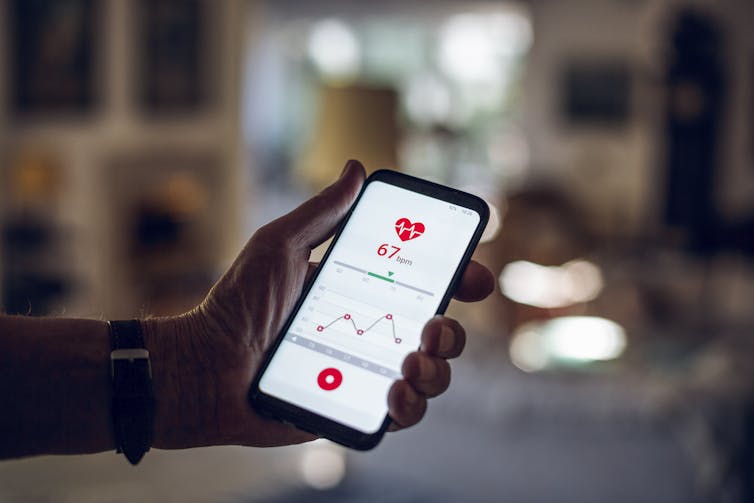
Man holding phone with health data.

Telehealth technologies

There are three main types of telehealth: synchronous, asynchronous and remote monitoring. Knowing when to use each one – and having the right technology on hand – is critical to using telehealth wisely.

Synchronous telehealth is a live, two-way interaction, usually over video or phone. Health care providers generally prefer video conferencing over phone calls because aside from tasks that require physical touch, nearly anything that can be done in person can be done over video. But some things, like the taking of blood samples, for example, simply cannot be done over video.

Many of the limitations of video conferencing can be overcome with the second telehealth approach, remote patient monitoring. Patients can use devices at home to get objective data that is automatically uploaded to health care providers. Devices exist to measure blood pressure, temperature, heart rhythms and many other aspects of health. These devices are great for getting reliable data that can show trends over time. Researchers have shown that remote monitoring approaches are as effective as – and in some cases better than – in-person care for many chronic conditions.

Some remaining gaps can be filled with the third type, asynchronous telehealth. Patients and providers can use the internet to answer questions, describe symptoms, refill prescription refills, make appointments and for other general communication.

Unfortunately, not every provider or patient has the technology or the experience to use live video conferencing or remote monitoring equipment. But even having all the available telehealth technology does not mean that telehealth can solve every problem.

A father and son on a video call with a doctor.

Ongoing care and first evaluations

Generally, telehealth is right for patients who have ongoing conditions or who need an initial evaluation of a sudden illness.

Because telehealth makes it easier to have have frequent check-ins compared to in-person care, managing ongoing care for chronic illnesses like diabetesheart disease and lung disease can be as safe as or better than in-person care.

Research has shown that it can also be used effectively to diagnose and even treat new and short-term health issues as well. The tricky part is knowing which situations can be dealt with remotely.

Imagine you took a fall and want to get medical advice to make sure you didn’t break your arm. If you were to go to a hospital or clinic, almost always, the first health care professional you’d see is a primary care generalist, like me. That person will, if possible, diagnose the problem and give you basic medical advice: “You’ve got a large bruise, but nothing appears to be broken. Just rest, put some ice on it and take a pain reliever.” If I look at your arm and think you need more involved care, I would recommend the next steps you should take: “Your arm looks like it might be fractured. Let’s order you an X-ray.”

This first interaction can easily be done from home using telehealth. If a patient needs further care, they would simply leave home to get it after meeting with me via video. If they don’t need further care, then telehealth just saved a lot of time and hassle for the patient.

Research has shown that using telehealth for things like minor injuries, stomach pains and nausea provides the same level of care as in-person medicine and reduces unnecessary ambulance rides and hospital visits.

Some research has shown that telehealth is not as effective as in-person care at diagnosing the causes of sore throats and respiratory infections. Especially now during the coronavirus pandemic, in-person care might be necessary if you are having respiratory issues.

And finally, for obviously life-threatening situations like severe bleeding, chest pain or shortness of breath, patients should still go to hospitals and emergency rooms.

A woman asks a health care worker a question while staying socially distanced.

Balancing risk

With the right technology and in the right situations, telehealth is an incredibly effective tool. But the question of when to use telehealth must also take into account the risk and burden of getting care.

COVID-19 increases the risks of in-person care, so while you should obviously still go to a hospital if you think you may be having a heart attack, right now, it might be better to have a telehealth consultation about acne – even if you might prefer an in-person appointment.

Burden is another thing to consider. Time off work, travel, wait times and the many other inconveniences that go along with an in-person visit aren’t necessary simply to get refills for ongoing medication. But, if a provider needs to draw a patient’s blood to monitor the safety or effectiveness of a prescription medicine, the burden of an in-person visit to the lab is likely worth the increased risk.

Of course, not all health care can be done by telehealth, but a lot can, and research shows that in many cases, it’s just as good as in-person care. As the pandemic continues and other problems need addressing, think about the right telehealth fit for you, and talk to your health care team about the services offered, your risks and your preferences. You might find that that there are far fewer waiting rooms in your future.


Will Telemedicine Be the Blockbuster or Netflix of Healthcare?

https://www.medpagetoday.com/practicemanagement/telehealth/87662?xid=fb_o&trw=no&fbclid=IwAR1IRS5lgPjbTxkXuMS0fnFmvdkywSyf20YaJ-RElRIGCzU3_GY_W6rTwXw

Netflix Vs Blockbuster – The New DVD Viewing Experience

New approaches need to recognize patients’ wants and needs

One component of Blockbuster’s financial model was the late fees it charged to customers who did not return a video tape to the store in time. These fees accounted for up to 16% of its revenue. In 1997, Reed Hastings was one of the customers affected by these fees. After one late rental, he was charged a hefty $40 late fee. His frustration inspired him to help create a company that would have no late charges. This new company also had the audacious idea to send DVDs straight to the customer’s home for a flat monthly fee. The company that Reed Hastings co-founded was Netflix.

Over time, Netflix changed and adapted with new technology and shifting consumer preferences. It moved on from mailing DVDs to using a streaming platform. It developed an algorithm to help make personalized video recommendations to Netflix users. It started producing its own video content. Over time, the company planted itself firmly within many homes and routines. Conversely, Blockbuster adapted to new platforms too slowly and too late. After its peak in 2004, Blockbuster started losing market share and relevance. Today, there is only one Blockbuster store left, a curious tourist attraction in Bend, Oregon.

Markets and industries change all the time. Distinguishing these important changes from temporary fads is essential. History has many examples of companies and organizations that did not sense important changes, did not change their approach, and as a result, ended up obsolete and irrelevant. A similar shift is happening today in healthcare, but there is more at stake than a late fee. Like Netflix, the healthcare industry needs to shift and adapt to consumer preferences.

The COVID-19 pandemic has had an immediate impact on the health of our country and has also indelibly changed how patients interact with the healthcare system. Hospitals and providers around the country have had to quickly develop new strategies to connect with patients – to comply with social distancing guidelines, in an effort to slow down the spread of the virus. Consistent communication and accessibility is vital, especially given the disturbing trends in decreased preventive care visits and delayed emergency care. One solution is telehealth.

During this pandemic, we have seen that remote patient monitoring is valuable for patients with a wide variety of needs: certainly, those quarantined with coronavirus, but for healthy patients too – children in need of regularly scheduled well-child visits and adults who need routine care. Many patients have experienced telehealth for the first time and many have positive impressions, with nearly three quarters of patients who had a recent telehealth visit describing it as good or very good, according to a recent survey.

Even after the COVID-19 pandemic settles, these “temporary” approaches will permanently change patient attitudes towards technology and force healthcare providers to reexamine their approach to care. Telehealth will remain a convenient option and, in some cases, a necessary way to receive care. Embedding telehealth into standard practice of care enables providers to expand the access to people who otherwise might forgo care, and to people who may face barriers getting to a clinic, for example patients with inflexible job schedules or limited transportation.

Patients and providers are not the only people recognizing the benefits; government officials are too. While reimbursement rules were temporarily expanded to include telehealth, some states, such as Colorado and Idaho, are making COVID-19 telehealth expansions permanent.

There are many parallels to borrow from the Blockbuster example. As healthcare providers, we cannot be complacent and stick with old business models because they are what we are used to. We cannot wait for people to come to us. We cannot ignore these changing times and consumers’ changing preferences. In fact, if we adapt and provide care in ways that patients prefer, we could improve health outcomes.

The healthcare institutions that will grow and be successful during this time are those who are more like Netflix. Instead of waiting for patients to decide to seek healthcare when it may be too late (e.g., just like a Blockbuster “late fee”), we will actively reach out and remind our patients about the importance of timely healthcare services. Instead of ignoring changes in patient preferences and new technology, we will adapt quickly to new platforms for healthcare visits. Instead of waiting for patients to feel comfortable to return to a healthcare facility, we will show patients what our healthcare system is doing to ensure patient safety and protection from COVID-19. Most importantly, instead of being complacent, we will accept and develop new ways of providing care.

There was once a time that we thought that getting in a car, driving to a strip mall, and walking through aisles with thousands of video tapes was the only option to watch a movie at home. Now, many of us can get thousands of titles on our televisions, computers, and phones through several movie streaming platforms. The COVID-19 pandemic has forced healthcare systems to quickly adapt to new constraints; however, it may really be an opportunity to develop new models of care, to engage with our patients, and to make healthcare more accessible. As healthcare providers, we need to make the choice to be more like Netflix, and less like Blockbuster.


Back Into the Lion’s Den: COVID-19 and Post-Acute Care

https://www.medpagetoday.com/infectiousdisease/covid19/87596?xid=nl_popmed_2020-07-17&eun=g885344d0r&utm_source=Sailthru&utm_medium=email&utm_campaign=DailyUpdate_071720&utm_term=NL_Daily_Breaking_News_Active

Back Into the Lion's Den: COVID-19 and Post-Acute Care | MedPage Today

Returning COVID patients to unprepared facilities a “recipe for disaster”

As Florida becomes the new epicenter of the COVID-19 outbreak in the U.S., the state is trying to ensure that nursing homes and rehabilitation facilities aren’t quickly overwhelmed by patients still suffering from the disease.

So far, it has dedicated 11 facilities solely to COVID patients who need post-acute or long-term care: those who can’t be isolated at their current facilities, as well as those who’ve gotten over the worst of their illness and who can be moved to free up hospital beds for the flow of new patients.

One of those facilities is Miami Medical Center, which was shuttered in October 2017 but now transformed to care for 150 such patients. In total, the network of centers will handle some 750 patients.

“We recognize that that would be something that would be very problematic, to have COVID-positive nursing home residents be put back into a facility where you couldn’t have proper isolation,” Florida Gov. Ron DeSantis (R) said during a press briefing last week. “[That] would be a recipe for more spread, obviously more hospitalizations and more fatalities, and so we prohibited discharging COVID-positive patients back into nursing facilities.”

Whether 750 beds will be enough to accommodate the state’s needs remains a question, but it’s a necessary first step, given testing delays that in some cases stretch more than a week. Experts have warned that patients recovering from COVID shouldn’t be transferred to a facility without being tested first.

Without dedicated facilities, hospitals in Florida in dire need of beds for new patients might have had no other choice.

Key Role for Testing

There are no national data on the percentage of hospitalized COVID-19 patients who need rehabilitation or skilled nursing care after their hospital stay.

In general, about 44% of hospitalized patients need post-acute care, according to the American Health Care Association and its affiliate, the National Center for Assisted Living, which represent the post-acute and long-term care industries.

But COVID has “drastically changed hospital discharge patterns depending on local prevalence of COVID-19 and variations in federal and state guidance,” the groups said in an email to MedPage Today. “From a clinical standpoint, patients with COVID-19 symptoms serious enough to require hospitalization may be more likely to require facility or home-based post-acute medical treatment to manage symptoms. They also may need rehabilitation services to restore lost function as they recover post-discharge from the acute-care hospital.”

The level of post-acute care these patients need runs the spectrum from long-term acute care hospitals and inpatient rehabilitation facilities to skilled nursing facilities and home health agencies.

The variation is partly due to the heterogeneity of the disease itself. While some patients recover quickly, others suffer serious consequences such as strokes, cardiac issues, and other neurological sequelae that require extensive rehabilitation. Others simply continue to have respiratory problems long after the virus has cleared. Even those who are eventually discharged home sometimes require home oxygen therapy or breathing treatments that can require the assistance of home health aides.

Yet post-acute care systems say they haven’t been overwhelmed by a flood of COVID patients. Several groups, including AHCA, NCAL, and the American Medical Rehabilitation Providers Association (AMRPA) confirmed to MedPage Today that there’s actually been a downturn in post-acute care services during the pandemic.

That’s due to a decline in elective procedures, the societies said, adding that demand is starting to pick back up and that systems will need to be in place for preventing COVID spread in these facilities.

Testing will play a key role in being able to move patients as the need for post-acute care rises, specialists told MedPage Today.

“You shouldn’t move anyone until you know a status so that the nursing facility can appropriately receive them and care for them,” said Kathleen Unroe, MD, who studies long-term care issues at the Regenstrief Institute and Indiana University in Indianapolis.

AHCA and NCAL said they “do not support state mandates that require nursing homes to admit hospital patients who have not been tested for COVID-19 and to admit patients who have tested positive. This approach will introduce the highly contagious virus into more nursing homes. There will be more hospitalizations for nursing home residents who need ventilator care and ultimately, a higher number of deaths.”

Earlier this week, the groups sent a letter to the National Governors Association about preventing COVID outbreaks in long-term care facilities. They pointed to a survey of their membership showing that, for the majority, it was taking 2 days or longer to get test results back; one-quarter said it took at least 5 days.

The Centers for Medicare & Medicaid Services (CMS) recently announced that it would send point-of-care COVID tests to “every single” nursing home in the U.S. starting next week. Initially, the tests will be given to 2,000 nursing homes, with tests eventually being shipped to all 15,400 facilities in the country.

Hospitals can conduct their own testing before releasing patients, and this has historically provided results faster than testing sites or clinical offices, especially if they have in-house services. However, demand can create delays, experts said.

Preparing for the Future

Jerry Gurwitz, MD, a geriatrician at the University of Massachusetts Medical School in Worcester, says now is the time to develop post-acute care strategies for any future surges.

Gurwitz authored a commentary in the Journal of the American Geriatrics Society on an incident in Massachusetts early in the pandemic where a nursing home was emptied to create a COVID-only facility, only to have residents test positive after the majority had already been moved.

“We should be thinking, okay, what are the steps, what’s the alternative to emptying out nursing homes? Can we make a convention center, or part of it, amenable to post-acute care patients?” Gurwitz said. “Not just a bed to lie in, but possibly providing rehabilitation and additional services? That could all be thought through right now in a way that would be logical and lead to the best possible outcomes.”

Organizations can take the lead from centers that have lived through a surge, like those in New York City. Rusk Rehabilitation at NYU Langone Health created a dedicated rehabilitation unit for COVID-positive patients.

“We were able to bring patients out from the acute care hospital to our rehabilitation unit and continue their COVID treatment but also give them the rehabilitation they needed” — physical and occupational therapy (PT/OT) — “and the medical oversight that enhanced their recovery and got them out of the hospital quicker and in better shape,” Steven Flanagan, MD, chair of rehabilitation medicine at NYU Langone, said during an AMRPA teleconference.

Flanagan noted that even COVID patients who can be discharged home will have long-term issues, so preparing a home-based or outpatient rehabilitation program will be essential.

Jasen Gundersen, MD, chief medical officer of CareCentrix, which specializes in post-acute home care, said there’s been more concern from families and patients about going into a facility, leading to increased interest in home-based services.

“We should be doing everything we can to support patients in the home,” Gundersen said. “Many of these patients are elderly and were on a lot of medications before COVID, so we’re trying to manage those along with additive medications like breathing treatments and inhalers.”

Telemedicine has played an increasing role in home care, to protect both patients and home health aides, he added.

Long-term care societies have said that emergency waivers implemented by CMS have been critical for getting COVID patients appropriate levels of post-acute care, and they hope these remain in place as the pandemic continues.

For instance, CMS relaxed the 3-hour therapy rule and the 60% diagnostic rule, Flanagan said. Under those policies, in order to admit a patient to an acute rehabilitation unit, facilities must provide 3 hours of PT/OT every day, 5 days per week.

“Not every COVID patient could tolerate that level of care, but they still needed the benefit of rehabilitation that allowed them to get better quicker and go home faster,” he said.

Additionally, not every COVID patient fits into one of the 13 diagnostic categories that dictate who can be admitted to a rehab facility under the 60% rule, he said, so centers “could take COVID patients who didn’t fit into one of those diagnoses and treat them and get them better.”

AHCA and NCAL said further waivers or policy changes would be helpful, particularly regarding basic medical necessity requirements for coverage within each type of post-acute setting.

But chief among priorities for COVID discharges to post-acute care remains safety, the groups said.

“The solution is for hospital patients to be discharged to nursing homes that can create segregated COVID-19 units and have the vital personal protective equipment needed to keep the staff safe,” they said. “Sending hospitalized patients who are likely harboring the virus to nursing homes that do not have the appropriate units, equipment and staff to accept COVID-19 patients is a recipe for disaster.”


Providence, Humana back ad campaign urging patients to stop ‘medical distancing’

https://www.healthcaredive.com/news/providence-humana-back-ad-campaign-urging-patients-to-stop-medical-distan/581172/

Dive Brief:

  • A coalition of providers, payers and other healthcare organizations on Tuesday launched an ad campaign to encourage patients not to put off important care during the COVID-19 pandemic.
  • The announcement encourages people to continue social distancing but not “medical distancing” by putting off routine care or avoiding checking on concerning symptoms. That could be either through telemedicine or an in-person visit.
  • The campaign will be on TV, in print and across social media. The 11 organizations behind it include Providence, Humana, Baylor Scott & White, LabCorp and Walgreens.

Dive Insight:

While some hospitals in hotspots in Texas, Florida, California and Arizona have had to once again put off non-emergency procedures, providers in other areas of the country are trying to ramp up regular patient volumes as the number of positive cases eases.

Surveys show, however, that people are wary of returning to the doctor’s office, either because they worry about exposure to the novel coronavirus or have lost coverage to help pay for care.

The new ad campaign seeks to ease these concerns. No dollar figure was attached to the plan, which advertising agency MullenLowe U.S. took on pro bono. It follows an ad the American Hospital Association launched in May to ensure the public facilities are still available for non-COVID-19 care.

Since the pandemic’s onset in the United States, health officials have been concerned about the short- and long-term consequences of routine and preventive care being delayed or put off entirely. Chronic diseases that are caught early can be managed more easily and less expensively.

Also, research shows even some crucial services aren’t being sought even for issues such as strokes and heart attacks. In April, emergency room visits nationwide dropped more than 40%, according to the Centers for Disease Control and Prevention.

Public health experts are also beginning to fear vaccinations may be avoided, which could cause trouble with the upcoming flu season.

For providers the reduction in patient volumes has meant a major revenue loss. Some patient volume has been recaptured, but that rolled back again in recent weeks with hospitals in large states like Texas and Florida again reaching capacity with a COVID-19 surge.

At the end of June, hospital traffic in Arizona, New York and Texas was down week over week, according to an analysis from Jefferies.

Primary care has particularly suffered. Visits to medical offices were down nearly 60% in March and April, meaning losses to those practices could top $15 billion this year, according to a recent Health Affairs study.

The ad campaign stresses that providers have guidelines in place to keep patients safe, such as isolation of those suspected of having COVID-19 and increased virtual options.

“While we understand the fears that many people have around contracting the virus, our country’s medical facilities have adopted CDC guidelines and best practices and even telemedicine options to make your visit as safe as possible to prevent the spread of the virus,” Humana CMO William Shrank said in a statement. “The intent of the campaign is to let people know that protecting yourself against getting this virus does not need to come at the expense of your overall health.”


Walgreens invests $1B in primary care clinics with VillageMD deal

https://www.healthcaredive.com/news/walgreens-invests-1b-in-primary-care-clinics-with-villagemd-deal/581208/

Walgreens plans to open up to 700 primary care clinics as part of ...

Dive Brief:

  • Walgreens on Wednesday announced plans to open up to 700 primary care clinics across the country over the next five years in partnership with medical services provider VillageMD, and “hundreds more” after that.
  • As part of the agreement, Walgreens will invest $1 billion in equity and convertible debt in Chicago-based VillageMD over the next three years, including a $250 million equity investment Wednesday. VillageMD will use 80% of the funds to pay for opening the clinics, called Village Medical at Walgreens, and integrate digitally with Walgreens.
  • Walgreens, which saw its stock rise slightly in early morning trading on the news, anticipates owning 30% of VillageMD once the investment is done. More details on the partnership will be released in the first quarter next year.

Dive Insight:

Retail clinics, which can generate additional script-writing and drive front-of-store sales for their owners, have seen renewed interest in recent years from giants like pharmacy rival CVS Health and retail behemoth Walmart. But Walgreens is the first national pharmacy chain to work toward building out a primary care infrastructure in stores across the U.S.

The move represents a massive investment in the healthcare delivery space for the Illinois-based company, which began trialing the full-service doctor’s offices in its stores late last year with five clinics in Houston, Texas. The pilot was successful, Walgreens said, driving high patient satisfaction scores.

Additionally, the integrated pharmacy model is correlated with increased medication adherence and better patient outcomes, according to internal VillageMD data — important factors in managing chronic conditions, which drive roughly 85% of all U.S. healthcare spend.

As such, Walgreens plans to open 500 to 700 stores over the next five years, staffed by more than 3,600 primary care physicians recruited by VillageMD, along with nurses, social workers and therapists working alongside Walgreens’ pharmacists in 30 U.S. markets.

The two companies are still finalizing what those initial markets are going to be, but the very first will be in Texas and Arizona, Walgreens’ Director of Pharmacy and Healthcare Services Communications Kelli Teno told Healthcare Dive. More than half of the clinics will be located in government-designated medically underserved areas such as Houston, which have a large share of low-income populations, migrant workers and Medicaid beneficiaries.

The stores will accept a broad array of insurance options, according to the release. Many plans VillageMD works with have a zero dollar to $10 co-pay for primary care services, Teno said.

The clinics use a sliding scale payment model for patients who don’t have insurance to try to make care more affordable for the broad range of primary care services provided, like preventative visits, acute infection or minor trauma care or chronic condition management.

Telehealth will be available around the clock for consumers via Walgreens’ healthcare marketplace app, called Find Care, or via VillageMD’s internal capabilities. VillageMD doctors can also provide at-home doctor visits for vulnerable populations, such as senior citizens or the immunocompromised.

Walgreens already has 14 in-store primary care clinics operated by different partners like Partners in Primary Care, Southwest Medical — part of Optum’s physician group — and VillageMD. Late last year, Walgreens announced it was closing 160 of its internally staffed walk-in clinics, though it still has more than 400 clinics nationwide, most staffed or run by local health systems or physician groups.

Its outsourcing model flies against CVS, which built out its health-focused store network, called HealthHUBs, through acquisitions and builds. HealthHUBs designate at least a fifth of floor space to health and wellness focused products. CVS plans to have a chain of 1,500 locations by the end of 2021 as part of its enterprise growth strategy, adding to its almost 10,000 retail locations and more than 1,100 walk-in medical clinics.

For its part, Walgreens’ clinics will be between 3,300 and 9,000 square feet and use existing space within Walgreens’ locations. To make room, clinic-linked stores will offer fewer unhealthy front-end products like snacks and sodas. Tobacco products will not be sold in the first 200 Village Medical at Walgreens locations.

“Many of the stores that we’re initially looking at to build these clinics naturally sell more pharmacy and health and wellness products,” Teno said. “It will really depend on the needs of that local community.”

VillageMD, through its subsidiary Village Medical, includes more than 2,800 doctors across nine markets. The seven-year-old company, which competes with other primary care management companies like UnitedHealth-owned Optum has raised $216 million in total funding across three rounds from investors like Oak HC/FT and Town Hall Ventures, a firm founded by Andy Slavitt, former CMS administrator under President Barack Obama.