What it’s like to be a nurse after 6 months of COVID-19 response

https://www.healthcaredive.com/news/what-its-like-to-be-a-nurse-6-months-coronavirus/581709/

Those on the front lines of the fight against the novel coronavirus worry about keeping themselves, their families and their patients safe.

That’s especially true for nurses seeking the reprieve of their hospitals returning to normal operations sometime this year. Many in the South and West are now treating ICUs full of COVID-19 patients they hoped would never arrive in their states, largely spared from spring’s first wave.

And like many other essential workers, those in healthcare are falling ill and dying from COVID-19. The total number of nurses stricken by the virus is still unclear, though the Centers for Disease Control and Prevention has reported 106,180 cases and 552 deaths among healthcare workers. That’s almost certainly an undercount.

National Nurses United, the country’s largest nurses union, told Healthcare Dive it has counted 165 nurse deaths from COVID-19 and an additional 1,060 healthcare worker deaths.

Safety concerns have ignited union activity among healthcare workers during the pandemic, and also given them an opportunity to punctuate labor issues that aren’t new, like nurse-patient ratios, adequate pay and racial equality.

At the same time, the hospitals they work for are facing some of their worst years yet financially, after months of delayed elective procedures and depleted volumes that analysts predict will continue through the year. Many have instituted furloughs and layoffs or other workforce reduction measures.

Healthcare Dive had in-depth conversations with three nurses to get a clearer picture of how they’re faring amid the once-in-a-century pandemic. Here’s what they said.

Elizabeth Lalasz, registered nurse, John H. Stroger Hospital in Chicago

Elizabeth Lalasz has worked at John H. Stroger Hospital in Chicago for the past 10 years. Her hospital is a safety net facility, catering to those who are “Black, Latinx, the homeless, inmates,” Lalasz told Healthcare Dive. “People who don’t actually receive the kind of healthcare they should in this country.”

Data from the CDC show racial and ethnic minority groups are at increased risk of getting COVID-19 or experiencing severe illness, regardless of age, due to long-standing systemic health and social inequities.

CDC data reveal that Black people are five times more likely to contract the virus than white people.

This spring Lalasz treated inmates from the Cook County Jail, an epicenter in the city and also the country. “That population gradually decreased, and then we just had COVID patients, many of them Latinx families,” she said.

Once Chicago’s curve began to flatten and the hospital could take non-COVID patients, those coming in for treatment were desperately sick. They’d been delaying care for non-COVID conditions, worried a trip to the hospital could risk infection.

A Kaiser Family Foundation poll conducted in May found that 48% of Americans said they or a family member had skipped or delayed medical care because of the pandemic. And 11% said the person’s condition worsened as a result of the delayed care.

When patients do come into Lalasz’s hospital, many have “chest pain, then they also have diabetes, asthma, hypertension and obesity, it just adds up,” she said.

“So now we’re also treating people who’ve been delaying care. But after the recent southern state surges, the hospital census started going down again,” she said.

Amy Arlund, registered nurse, Kaiser Permanente Medical Center in Fresno, California:

Amy Arlund works the night shift at Kaiser Fresno as an ICU nurse, which she’s done for the past two decades.

She’s also on the hospital’s infection control committee, where for years she’s fought to control the spread of clostridium difficile colitis, or C. diff., in her facility. The highly infectious disease can live on surfaces outside the body for months or sometimes years.

The measures Arlund developed to control C. diff served as her litmus test, as “the top, most stringent protocols we could adhere to,” when coronavirus patients arrived at her hospital, she told Healthcare Dive.

But when COVID-19 cases surged in northern states this spring, “it’s like all those really strict isolation protocols that prior to COVID showing up would be disciplinable offenses were gone,” Arlund said.

Widespread personal protective equipment shortages at the start of the pandemic led the CDC and the Occupational Safety and Health Administration to change their longstanding guidance on when to use N95 respirator masks, which have long been the industry standard when dealing with novel infectious diseases.

The CDC also issued guidance for N95 respirator reuse, an entirely new concept to nurses like Arlund who say those changes go against everything they learned in school.

“I think the biggest change is we always relied on science, and we have always relied heavily on infection control protocols to guide our practice,” Arlund said. “Now infection control is out of control, we can no longer rely on the information and resources we always have.”

The CDC says experts are still learning how the coronavirus spreads, though person-to-person transmission is most common, while the World Health Organization recently acknowledged that it wouldn’t rule out airborne transmission of the virus.

In Arlund’s ICU, she’s taken care of dozens of COVID positive patients and patients ruled out for coronavirus, she said. After a first wave in the beginning of April, cases dropped, but are now rising again.

Other changing guidance weighing heavily on nurses is how to effectively treat coronavirus patients.

“Are we doing remdesivir this week or are we going back to the hydroxychloroquine, or giving them convalescent plasma?”Arlund said. “Next week I’m going to be giving them some kind of lavender enema, who knows.”

Erik Andrews, registered nurse, Riverside Community Hospital in Riverside, California:

Erik Andrews, a rapid response nurse at Riverside Community Hospital in California, has treated coronavirus patients since the pandemic started earlier this year. He likens ventilating them to diffusing a bomb.

“These types of procedures generate a lot of aerosols, you have to do everything in perfectly stepwise fashion, otherwise you’re going to endanger yourself and endanger your colleagues,” Andrews, who’s been at Riverside for the past 13 years, told Healthcare Dive.

He and about 600 other nurses at the hospital went on strike for 10 days this summer after a staffing agreement between the hospital and its owner, HCA Healthcare, and SEIU Local 121RN, the union representing RCH nurses, ended without a renewal.

The nurses said it would lead to too few nurses treating too many patients during a pandemic. Insufficient PPE and recycling of single-use PPE were also putting nurses and patients at risk, the union said, and another reason for the strike.

But rapidly changing guidance around PPE use and generally inconsistent information from public officials are now making the nurses at his hospital feel apathetic.

“Unfortunately I feel like in the past few weeks it’s gotten to the point where you have to remind people about putting on their respirator instead of face mask, so people haven’t gotten lax, but definitely kind of become desensitized compared to when we first started,” Andrews said.

With two children at home, Andrews slept in a trailer in his driveway for 12 weeks when he first started treating coronavirus patients. The trailer is still there, just in case, but after testing negative twice he felt he couldn’t spend any more time away from his family.

He still worries though, especially about his coworkers’ families. Some coworkers he’s known for over a decade, including one staff member who died from COVID-19 related complications.

“It’s people you know and you know that their families worry about them every day,” he said. “So to know that they’ve had to deal with that loss is pretty horrifying, and to know that could happen to my family too.”


Dental and Doctors’ Offices Still Struggling with COVID Job Loss

https://khn.org/news/dental-and-doctors-offices-still-struggling-with-covid-job-loss/

Dental and Doctors' Offices Still Struggling with COVID Job Loss ...

California’s outpatient health care practices largely shrugged off two recessions, adding more than 400,000 jobs during a two-decade climb from the start of 2000 to early 2020. It was an enviable growth rate of 85% and a trend largely mirrored on the national level.

Then came COVID-19.

Anecdotal stories abound about the crushing impact the pandemic has had on a range of outpatient medical services, from pediatric and family medical practices to dental offices, medical labs and home health care. In California, as in many other states, thousands of doctors, dentists and other health care providers temporarily closed offices this spring as state health officials directed them to suspend non-urgent visits. Many others sat open but largely idle because patients were too scared to visit the doctor given the risk of running into someone with COVID-19 in the waiting room.

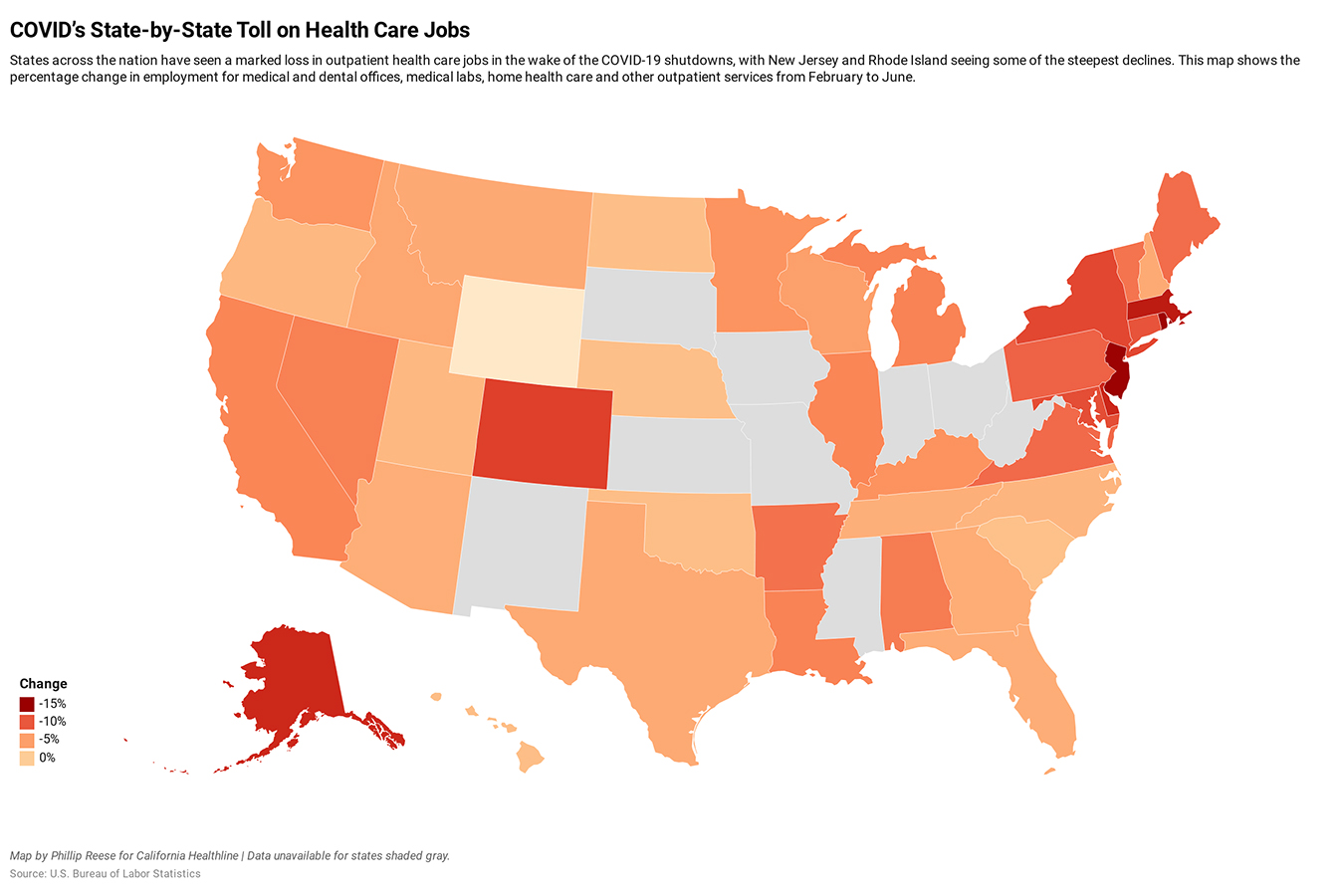
As the economy has reopened, so have many medical offices. But the latest state and federal employment data underscores the lingering toll the pandemic has taken on the health care sector.

Doctors’ Offices Shed Jobs Amid COVID

In California, and across the nation, the number of workers in doctors’ offices grew by more than 50% in the past 20 years, before seeing rapid declines amid COVID-19. This chart shows proportional growth in employment over time, with percentages relative to January 2000.

In California, employment in medical offices providing an array of outpatient care fell by 159,300 jobs, or 18%, from February to April, according to California’s Employment Development Department. The sector has recovered some, but job totals in June remained 7% below pre-crisis levels, the latest figures show. Data is not yet available for July, when COVID-19 cases in California again began to rise sharply and communities across much of the state reverted to partial shutdowns.

Nationwide, employment in outpatient care fell by about 1.3 million jobs, or 17%, from February to April, and in June also remained 7% below pre-crisis levels.

Doctors’ offices typically rely on patient volume for revenue. Without it, they can’t make payroll. Many small medical clinics weren’t flush with cash before the crisis, making COVID-19 an existential threat.

“Never in our history have we had more than a month’s cash on hand,” said Dr. Sumana Reddy, owner of the Acacia Family Medical Group in Monterey County. “Think of it that way.”

Reddy operates two clinics, one in Salinas and the other in the town of Prunedale. Many of her clients come from rural areas where poverty is common. When COVID-19 hit and stay-at-home orders took effect, the number of patients coming to the practice fell by about 50%, Reddy said. To keep her patients safe and her business afloat, Reddy largely shifted to telehealth so she could provide care online.

She also turned to federal aid. “I took the stimulus money,” she said. “I asked for advances from anywhere I could get that. So, now I’m tapped out. I’ve done every single thing that I can think of to do. And there’s nothing more to do.”

By late June, patient volume at Reddy’s practice stood at roughly 70% of the level seen before the crisis.

Dental Offices Hit Hard by COVID

The coronavirus pandemic prompted steep declines in dental office employment, undoing 20 years of steady growth. This chart shows proportional growth in dental employment over time, with percentages relative to January 2000.

Many dental offices have been hit even harder. From February to April, the number of dental office employees in California fell by 85,000, or 60%, a rate of decline that outpaced even job losses in the state’s restaurant industry. Nationwide, dental employment fell by about 546,000 from February to April, a 56% decline.

“March, April, mid-May — we were pretty much closed except for emergency care,” said Dr. Natasha Lee, who owns Better Living Through Dentistry, a practice in San Francisco’s Inner Sunset neighborhood. “While dental offices were considered essential, most were closed due to guidance from health departments and the CDC to postpone routine and preventative medical and dental care and just to limit things to emergency.”

Lee has reopened her clinic but is doing less business. She and her staff need extra time to clean tools and change their personal protective equipment.

“With the social distancing, the limiting [of] patients in the office at a time and the slowdown we’ve had, we’re probably seeing about, I’d say, two-thirds of our normal capacity in our practice,” she said in late June.

As for employment, California hospitals have fared better than outpatient medical offices. Hospitals shed about 2% of jobs from February to June.

“They have more capacity in a large organization to withstand the same shock,” said John Romley, a professor and economist at the University of Southern California’s Leonard D. Schaeffer Center for Health Policy and Economics.

Romley said he is optimistic the health care sector overall will recover faster than some other sectors of the economy, since health care remains a necessity.

Still, red flags abound. The recent spike in COVID-19 cases and deaths in many parts of the nation raises the specter of future shutdowns and, with them, additional health care layoffs. In California, Gov. Gavin Newsom recently ordered a second shutdown for dine-in restaurants, movie theaters and bars statewide, as well as churches, gyms and barbershops in much of the state. For now, dental and doctors’ offices can continue operating.

Older Californians Are Postponing Care

A recent census survey found that 42% of California respondents had put off medical care because of the pandemic.

But it’s uncertain when patients will feel comfortable returning to the doctor for routine and preventive care. A series of Census Bureau surveys conducted between June 11 and July 7 found that 42% of Californians who responded had put off medical care in the previous four weeks because of the pandemic. About 33% said they needed medical care for something unrelated to COVID-19 but did not get it.

“I’ve been telling my staff and patients that we should prepare for things to stay not too different for six months to a year,” Reddy said, “which is pretty depressing for most people to think about.”


6 months in: What will the new normal look like for hospitals?

https://www.healthcaredive.com/news/6-months-in-new-normal-hospitals-covid/581524/

Experts say a sustained state of emergency is likely until there is a cure or vaccine for COVID-19.

The first U.S. hospital to knowingly treat a COVID-19 patient was Providence Regional Medical Center in Everett, Washington, on Jan. 20. Since then, every aspect of healthcare has been upended, and it’s becoming increasingly clear all parts of society will have to adapt to a new baseline for the foreseeable future.

For hospitals and doctors’ offices, that means building on a major shift to telemedicine, new workflows to allow for more infection control and revamping the supply chain for pharmaceuticals, personal protective equipment and other supplies. That’s on top of ongoing challenges of burned out workers and staff shortages further exacerbated by the pandemic.

Looking out even further, the industry will have to figure out how to treat potential chronic conditions in COVID-19 survivors and, until an effective vaccine is developed, how to manage new outbreaks of the disease.

Experts say U.S. hospitals are generally in a much better position for dealing with COVID-19 now than they were in March, and providers are learning more every week about the best treatments and care practices.

June survey of healthcare executives conducted by consultancy firm Advis found that 65% of respondents said the industry is prepared for a fall or winter surge, about the inverse of what an earlier survey with that question showed.

“We’ve evolved. We’re in a much better state now than we were in the beginning of the pandemic,” Michael Calderwood, associate chief quality officer at Dartmouth-Hitchcock Medical Center, told Healthcare Dive. “There’s been a lot of learning.”

But the number of positively identified cases has now topped 4 million, and little political will exists to reinstitute widespread shutdowns even in areas where surges have filled ICUs to capacity. No treatment or vaccine for the disease exists or appears imminent. Testing and contract tracing efforts are too few and remain scattered and uncoordinated.

Whether there is a clear nationwide second wave or smaller surges in various parts of the country at different times, hospitals will need to remain in an effective state of emergency that requires constant vigilance until there is a cure or vaccine.

“Until we’re armed with that, we’re always going to have to be working like this. I don’t see any other way,” Diane Alonso, director of Intermountain Healthcare’s abdominal transplant program, told Healthcare Dive.

The fall will bring additional challenges. Flu season usually begins to ramp up in October, and if the strains in wide circulation this year are severe, that will further stress the health system. While some schools have announced they will be virtual-only for the rest of 2020, others are committed to in-person classes. That could mean increased community spread, especially in college towns. Colder weather that forces people indoors — where the novel coronavirus is far more likely to spread — will also be a complicating factor.

So far, hospitals have been reluctant to once again halt elective procedures, though some have had to, arguing that the care is still necessary and can be done safely when the proper protections are in place. But that doesn’t mean volume will rebound to pre-pandemic levels.

“While we think demand will come back, we’ve seen some flattening on demand in certain aspects that may be the new indicator of the new norm in terms of how people seek care,” Dion Sheidy, a partner and healthcare advisory leader at advisory firm KPMG, told Healthcare Dive.

Accelerating trends to provide care outside hospitals

When the number of COVID-19 cases first surged in the U.S. and stay-at-home orders were implemented nationwide, telehealth became a necessary way for urgent care to continue.

Virtual visits skyrocketed in March and April as CMS and private payers relaxed regulations and expanded coverage. Some of that will be rolled back, but much may persist as patients and providers grow more used to using telehealth and platforms become smoother.

Virtual care can’t replace in-person care, of course, and some patients and doctors will prefer face-to-face visits. The middle- to long-term result is likely to be that telehealth thrives for some specialties like psychiatry, but drops substantially from the highest levels during shutdowns throughout the country.

Other care settings outside of the hospital may see upticks as well, including at-home and retail-based primary and urgent care.

Renee Dua, the CMO of home healthcare and telemedicine startup Heal, said the company has seen virtual visits increase eight fold since the pandemic began in the U.S. and a 33% increase in home visits as people seek to continue care while reducing their risk of exposure to the coronavirus.

“The idea that you do not use an office building to get care — that’s why we started Heal — we bet on the fact that the best doctors come to you,” Dua told Healthcare Dive.

And care does need to continue, particularly vital services like vaccinations and pediatric checkups.

“You cannot ignore preventive screenings and primary care because you can get sick with cancer or with infectious diseases that are treatable and preventable,” Dua said.

Movements toward non-traditional settings existed before anyone had heard of COVID-19, but the realities of the pandemic have shifted resources and spurred investment that will have lasting effects, Ross Nelson, healthcare strategy leader at KPMG, told Healthcare Dive.

“What we’re going to see is there going to be an acceleration of the underlying trends toward home and away from the hospital,” he said.

Some of this was already underway. Multiple large health systems have established programs to provide hospital-level care at home and major employers have inked contracts to have primary care delivered to employees at on-site clinics.

PPE, staff shortages lingering

A key problem for hospitals in the first COVID-19 hotspots, such as Washington state and New York City, was a lack of necessary personal protective equipment, including N95 masks, gowns, face shields and gloves.

Also running low were supplies like ventilators and some drugs necessary for putting people on those machines.

While advances have certainly been made, the country did not have enough time to build up those supply stores before new surges in the South and West. The result has been renewed worries that not enough PPE is available to keep healthcare workers safe.

Chaun Powell, group vice president of strategic supplier engagement at group purchasing organization Premier, said “conservation practices continue to be the key to this” as COVID-19 surges roll through the country. The longer those dire situations continue, the more stress is put on the supply chain before it has a chance to recover.

Premier’s most recent hospital survey found that more than half of respondents said N95s were heavily backordered. Almost half reported the same for isolation gowns and shoe covers.

Calderwood said there has been improvement, however. “We have a much longer days-on-hand PPE supply at this point and the other thing is, we’ve begun to manufacture some of our own PPE,” he said. “That’s something a number of hospitals have done in working with local companies.”

But the ability to manufacture new PPE in the U.S. also depends on the availability of raw materials, which are limited. That means significant advancements in domestic production are likely several months away, Powell said.

Health systems have stepped up the ability to coordinate and attempt to get equipment where it’s needed most, especially for big-ticket items like ventilators. Providers are more hesitant, however, to let go of PPE without the virus being better contained.

The backstop supposed to help hospitals during a crisis is the national stockpile, which the federal government is attempting to resupply. It doesn’t appear to be enough, though, at least not yet, Calderwood said.

“One thing that concerns me is we did have a national stockpile of PPE, and I get the sense that we’ve kind of burned through that supply,” he said. “And now we’re relying on private industry to meet the need.”

Another problem hospitals face as the pandemic drags on is maintaining adequate staffing levels. Doctors, nurses and other front-line employees are in incredibly stressful work environments. The great potential for burnout will exacerbate existing shortages, just as medical schools are still trying to figure out how to continue with training and education.

“Those areas are concerning to our hospitals because our hospitals depend on a whole myriad of medical staff,” Advis CEO Lyndean Brick said. “Whether it’s physicians, nurses, technicians, housekeepers — that whole staff complement is what’s at the core of healthcare. You can have all the technology in the world but if you don’t have somebody to run it that whole system falls apart.”

On top of that is the increase in labor strife as working conditions have deteriorated in some cases. Nurses have reported fearing for their safety among PPE shortages and alleged lapses in protocol. Brick said she expects strike threats and other actions to continue.

Changing workflows

When COVID-19 cases started ramping up for the first time in the U.S., hospitals throughout the country, acting on CMS advice, shut down elective procedures to prepare their facilities for a potential influx of critical patients with the disease. In some areas, hospitals did have to activate surge plans at that time. Others have done so more recently as the result of increases in the South and West.

But few have resorted to once again halting electives. Brick told Healthcare Dive she doesn’t expect that to change, mostly because hospitals have by and large figured out how to properly continue that care.

She trusts any that can’t do so safely, won’t try.

For the majority of our providers, except in the occasional state where they’re having a real problem right now, I think that we’re going to see elective surgeries still continue,” Brick said. “Because most of our hospitals have capacity right now. They’re able to do this successfully and securely, and it’s really detrimental to patients to not get the care that they need.”

Hospitals rely on elective procedures to drive their revenue, an added motivation to find ways to keep them running even when COVID-19 is detected at greater levels in the community.

Intermountain, based in Salt Lake City, recently performed its 100th organ transplant of the year, ahead of last year’s pace despite the disruption of the COVID-19 crisis.

Alonso, the program director for abdominal transplants, said that while transplants are considered essential services, staff did pause some procedures when electives were halted and have re-evaluated workflow to be as safe as possible to patients, who are at higher risk after surgery because they are immunocompromised.

The hospital developed a triage system to help evaluate what services are necessary based on what level of COVID-19 spread is present in the community and how many beds and staffers are available to treat them.

The system’s main hospital has certain floors and employees designated for COVID-19 treatment. Staff have been reallocated for certain needs like testing and there are plans available if doctors and surgeons need to be deployed to the ICU.

As many outpatient visits as possible are being changed to virtual, but in the building, patients are screened for symptoms and required to wear masks and follow distancing protocols.

At the transplant center, doctors were at one point divided into teams in case someone got sick and coworkers had to self-isolate.

“We went through a dry run where, at the beginning, we shut down incredibly hard to see how we could do it operationally,” Alonso said. Intermountain hasn’t had to do that again, but is ready if such measures become necessary, she said.

Brick and others said that despite the genuinely frightening circumstance brought by the pandemic, hospitals’ responses have been admirable and providers have been quick to adapt. Slow or nonexistent leadership at the federal level, especially in sourcing and obtaining PPE, has been the bigger roadblock.

“Across the board, the whole healthcare industry has responded beautifully to this,” Brick said. “Where our country has fallen down is we don’t have a master plan to deal with this. Our federal leadership is reactionary, and we are not coordinating a master plan to deal with this in the long term. That’s where my concerns are at. My concerns are not at our local hospitals. They have their acts together.”


Canceled elective procedures putting pressure on nation’s hospitals

https://www.healthcarefinancenews.com/news/canceled-elective-procedures-putting-pressure-nations-hospitals

U.S. Hospitals Brace for 'Tremendous Strain' from New Virus - JEMS

Even upticks in COVID-19 patients haven’t made up for the revenue losses, since reimbursement for those services is comparatively slim.

Elective procedures are in a strange place at the moment. When the COVID-19 pandemic started to ramp up in the U.S., many of the nation’s hospitals decided to temporarily cancel elective surgeries and procedures, instead dedicating the majority of their resources to treating coronavirus patients. Some hospitals have resumed these surgeries; others resumed them and re-cancelled them; and still others are wondering when they can resume them at all.

In a recent HIMSS20 digital presentation, Reenita Das, a senior vice president and partner at Frost and Sullivan, said that during the pandemic, plastic surgery activity declined by 100%, ENT surgeries declined by 79%, cardiovascular surgeries declined by 53% and neurosurgery surgeries declined by 57%.

It’s hard to overstate the financial impact this is likely to have on hospitals’ bottom lines. Just this week, American Hospital Association President and CEO Rick Pollack, pulling from Kaufman Hall data, said the cancellation of elective surgeries is among the factors contributing to a likely industry-wide loss of $120 billion from July to December alone. When including data from earlier in the pandemic, the losses are expected to be in the vicinity of $323 billion, and half of the nation’s hospitals are expected to be in the red by the end of the year.

Doug Wolfe, cofounder and managing partner of Miami-based law firm Wolfe Pincavage, said this has amounted to a “double-whammy” for hospitals, because on top of elective procedures being cancelled, the money healthcare facilities received from the federal Coronavirus Aid, Relief, and Economic Security Act was an advance on future Medicare payments – which is coming due. While hospitals perform fewer procedures, they will now have to start paying that money back.

All hospitals are hurting, but some are in a more precarious position than others.

“Some hospital systems have had more cash on hand and more liquidity to withstand some of the financial pressure some systems are facing,” said Wolfe. “Traditionally, the smaller hospital systems in the healthcare climate we face today have faced a lot more financial pressure. They’re not able to control costs the same way as a big system. The smaller hospitals and systems were hurting to begin with.”

LOWER REVENUE, HIGHER COSTS

Some hospitals, especially ones in hot spots, are seeing a surge in COVID-19 patients. While this has kept frontline healthcare workers scrambling to care for scores of sick Americans, COVID-19 treatments are not reimbursed at the same level as surgeries. Hospital capacity is being stretched with less lucrative services.

“Some hospitals may be filling up right now, but they’re filling up with lower-reimbursing volume,” said Wolfe. “Inpatient stuff is lower reimbursement. It’s really the perfect storm for hospitals.”

John Haupert, CEO of Grady Health in Atlanta, Georgia, said this week that COVID-19 has had about a $115 million negative impact on Grady’s bottom line. Some $70 million of that is related to the reduction in the number of elective surgeries performed, as well as dips in emergency department and ambulatory visits. 

During one week in March, Grady saw a 50% reduction in surgeries and a 38% reduction in ER visits. The system is almost back to even in terms of elective and essential surgeries, but due to a COVID-19 surge currently taking place in Georgia, it has had to suspend those services once again. ER visits have only come back about halfway from that initial 38% dip, and the system is currently operating at 105% occupancy.

“Part of what we’re seeing there is reluctance from patients to come to hospitals or seek services,” said Haupert. “Many have significantly exacerbated chronic disease conditions.”

Patient hesitation has been an ongoing problem, as has the associated cost of treating coronavirus patients, said Wolfe.

“When they were ramping up to resume the elective stuff, there was a problem getting patients comfortable,” he said. “And the other thing was that the cost of treating patients in this environment has gone up. They’ve put up plexiglass everywhere, they have more wiping-down procedures, and all of these things add cost and time. They need to add more time between procedures so they can clean everything … so they’re able to do less, and it costs more to do less. Even when elective procedures do resume, it’s not going back to the way it was.”

Most hospitals have adjusted their costs to mitigate some of the financial hit. Even some larger systems, such as 92-hospital nonprofit Trinity Health in Michigan, have taken to measures such as laying off and furloughing workers and scaling back working hours for some of its staff. At the top of the month, Trinity announced another round of layoffs and furloughs – in addition to the 2,500 furloughs it announced in April – citing a projected $2 billion in revenue losses in fiscal year 2021, which began on June 1.

Hospitals are at the mercy of the market at the moment, and Wolfe anticipates there could be an uptick in mergers and consolidation as organizations look to partner with less cash-strapped entities. 

“Whether reorganization will work remains to be seen, but there will definitely be a fallout from this,” he said.


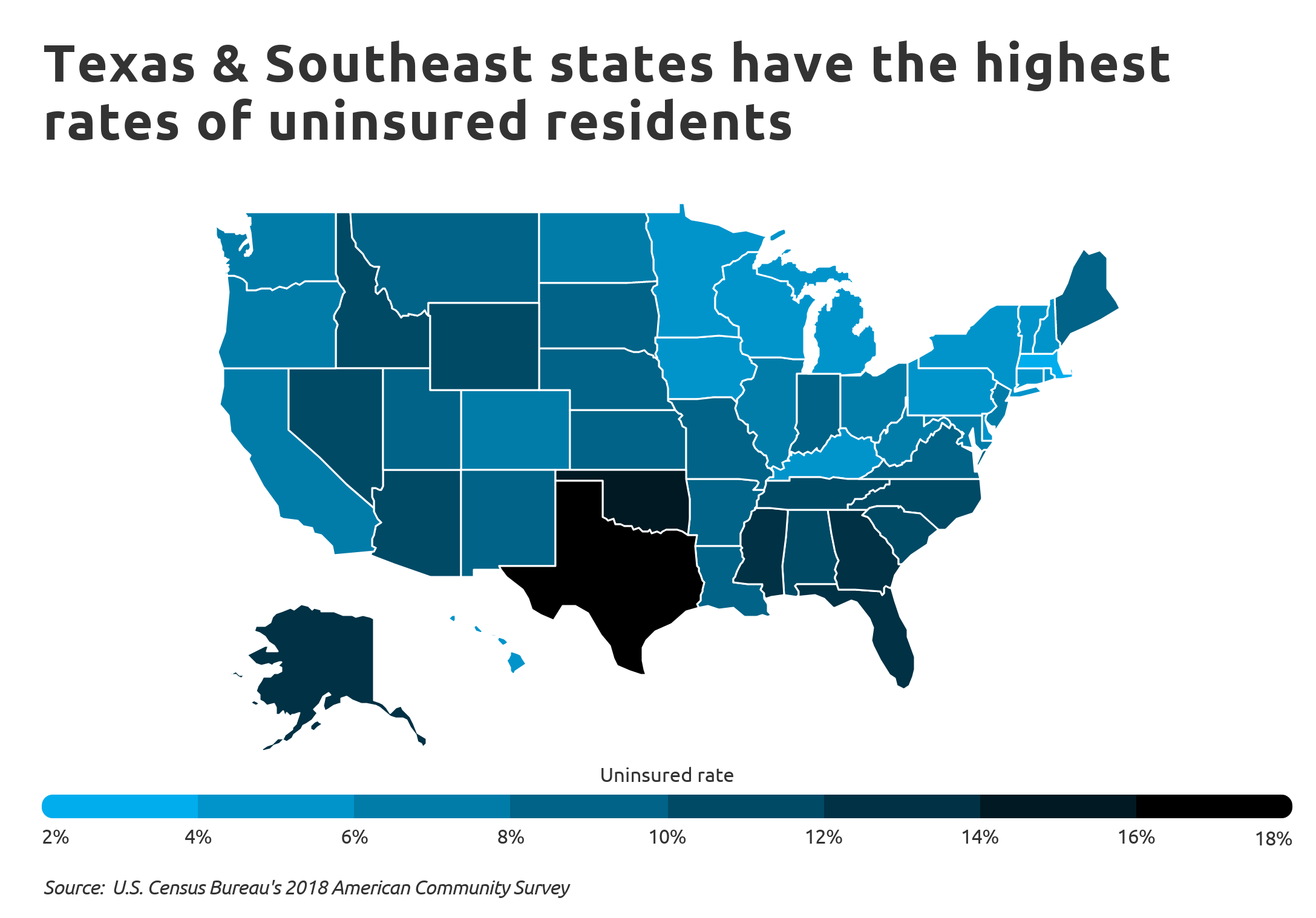
Texas has the highest uninsured rate in the U.S., with 29 percent of adults uninsured as of May

https://www.beckershospitalreview.com/rankings-and-ratings/states-ranked-by-uninsured-rates.html?utm_medium=email

COVID-19 Health: Rate of Uninsured Americans by City - Self

Texas has the highest uninsured rate in the U.S., with 29 percent of adults uninsured as of May, according to a report from Families USA. 

The report compared uninsured rates in 2018 to rates in May 2020 using data from the U.S. Bureau of Labor Statistics and the Urban Institute. Every state saw an increase in the number of uninsured, and the total number of uninsured in the U.S. climbed 21 percent.

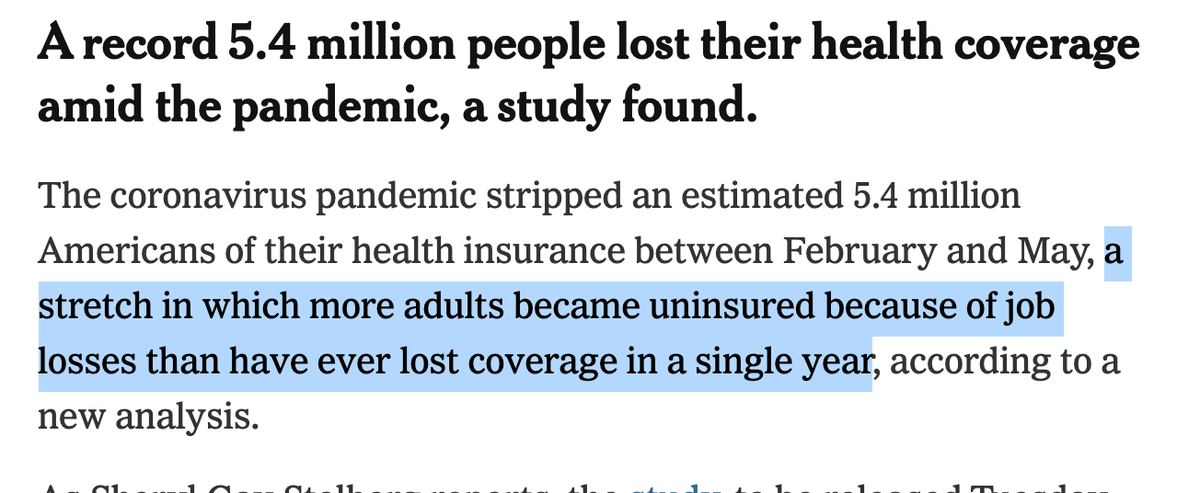
The increase was due in part to layoffs tied to the COVID-19 pandemic in recent months. Nearly 5.4 million Americans lost health insurance coverage from February to May of this year due to job losses, according to the report.

Below is the total percentage of all uninsured adults in each state and the District of Columbia as of May. 

Texas: 29 percent

Florida: 25 percent

Oklahoma: 24 percent

Georgia: 23 percent

Mississippi: 22 percent

Nevada: 21 percent

North Carolina: 20 percent

South Carolina: 20 percent

Alabama: 19 percent

Tennessee: 19 percent

Idaho: 18 percent

Alaska: 17 percent

Arizona: 17 percent

Missouri: 17 percent

Wyoming: 17 percent

New Mexico: 16 percent

South Dakota: 16 percent

Arkansas: 15 percent

Kansas: 15 percent

Louisiana: 14 percent

Virginia: 14 percent

California: 13 percent

Colorado: 13 percent

Illinois: 13 percent

Indiana: 13 percent

Maine: 13 percent

Montana: 13 percent

New Jersey: 13 percent

Oregon: 13 percent

Utah: 13 percent

Michigan: 12 percent

Nebraska: 12 percent

Washington: 12 percent

West Virginia: 12 percent

Delaware: 11 percent

Maryland: 11 percent

New Hampshire: 11 percent

North Dakota: 11 percent

Ohio: 11 percent

Connecticut: 10 percent

Hawaii: 10 percent

Kentucky: 10 percent

New York: 10 percent

Pennsylvania: 10 percent

Wisconsin: 10 percent

Iowa: 9 percent

Rhode Island: 9 percent

Massachusetts: 8 percent

Minnesota: 8 percent

Vermont: 7 percent

District of Columbia: 6 percent


UnitedHealth Group posts $6.6B in Q2 profit amid COVID-19 care deferrals

https://www.fiercehealthcare.com/payer/unitedhealth-group-posts-6-6b-q2-profit-amid-covid-19-care-deferrals?utm_medium=nl&utm_source=internal&mrkid=959610&mkt_tok=eyJpIjoiTldOaVpEUTJOMk0yTWpNNSIsInQiOiJJcFROOCtmWDU4TEhnT0FkTFFCTHZmRHpVWHBJV015M0QzQSswV3llT2liQzFsXC9wM1VYXC8yT2xsREdQVVh1WnhvNHk3TEdHNEtrTlZcL2s5WXlWZXZVMjR1TUdPZEgrNnVPOTVuYUNJSVo5VmFhT05XQlZYYmlJTHE2ekhwZENDdCJ9

The outside of UnitedHealth Group's headquarters

UnitedHealth Group reported $6.6 billion in profit for the second quarter, beating Wall Street projections.

That’s also a significant increase in profit compared to the second quarter of 2019, where the healthcare giant brought in $3.3 billion, according to its earnings report (PDF) issued Wednesday.

UnitedHealth’s mid-year profits sit at $10 billion, compared to $6.8 billion in the first half of 2019.

The insurer also reported $62.1 billion in revenue for the quarter, an increase year-over-year but a number that fell short of analysts’ expectations. UnitedHealth brought in $60.6 billion in revenue in the second quarter of 2019.

Through the first half of 2020, UnitedHealth has earned $126.6 billion in revenue, up from $120.9 billion in the first six months of 2019.

The insurer attributes the unexpectedly high profit to large amounts of care deferral due to the coronavirus pandemic and said it’s likely to see that offset in future quarters as elective procedures and other services resume.

In the earnings release, CEO David Wichmann touted the company’s efforts to combat the pandemic in the second quarter.

“Our 325,000 dedicated team members, including the 120,000 clinicians serving on the front lines of care, have tirelessly responded to COVID-19 with agility, innovation and compassion,” Wichmann said in a statement.

“We moved swiftly to assist the people we serve and their care providers, including the provision of $3.5 billion in proactive voluntary customer assistance and accelerated care provider funding. We remain committed to taking further actions to address any future imbalances as a result of the pandemic,” he said.

Though COVID-19’s full impact on finances remains unclear, UnitedHealth maintained its full-year earnings guidance of between $15.45 and $15.75 per share.


5.4 million Americans lost health insurance

https://www.axios.com/newsletters/axios-vitals-285240f4-9110-4c86-ad7e-e0c37085a957.html?utm_source=newsletter&utm_medium=email&utm_campaign=newsletter_axiosvitals&stream=top

Medicare for All (@AllOnMedicare) | Twitter

Roughly 5.4 million adults in the U.S. lost their health insurance from February to May after losing their jobs, according to a new estimate from Families USA, a group that favors the Affordable Care Act.

Why it matters: There are more adults under 65 without insurance in Southern states, which are the same states setting new records for single-day coronavirus infections along with rising hospitalizations, Axios’ Orion Rummler writes.

What they found: 3.9 million adults lost health insurance over one year during the Great Recession, per Families USA’s analysis. It only took four months in this current crisis for an estimated 5.4 million Americans to lose health insurance.

  • More than 20% of adults in Georgia, Florida, South Carolina, North Carolina, Mississippi, Oklahoma and Texas were without insurance as of May.
  • All of these states have set new records in the past two weeks for their highest number of coronavirus infections in a single day, per data from the COVID Tracking Project.
  • 46% of adults who lost coverage due to the pandemic came from five states: Florida, New York, Texas, California and North Carolina.

The backdrop: 21 million Americans were unemployed in May, according to the Bureau of Labor Statistics’ nonfarm payrolls report.


Consumer confidence declines as COVID surges

https://mailchi.mp/86e2f0f0290d/the-weekly-gist-july-10-2020?e=d1e747d2d8


Just as consumer confidence was approaching pre-COVID levels in early June, cases began surging in many parts of the country. The graphic below shares highlights from a recent Morning Consult poll, which found reduced consumer confidence in participating in a range of activities, like dining out or going to a mall.

The poll also showed a significant consumer divide based on political affiliation, with Republicans’ confidence levels for many activities being twice that of Democrats. It remains to be seen whether the current surge will result in consumers pulling back on healthcare utilization the way they are beginning to for other activities.

A coalition of healthcare organizations is urging consumers to continue social distancing but “stop medical distancing”—in hopes that the new surge will not lead patients to avoid needed medical care. While cell tower data at thousands of hospital facilities suggest volumes may be stalling again, we anxiously await the latest national data on outpatient visit and elective procedure volumes.

We’d predict the surge will exacerbate consumer discomfort with “waiting” in healthcare settings—urgent care clinics, emergency departments and the like—though we’d expect the reduction in utilization to be less severe and more regionally varied this time around. 

Let us know what you’re seeing!


Facing another round of elective surgery shutdowns

https://mailchi.mp/86e2f0f0290d/the-weekly-gist-july-10-2020?e=d1e747d2d8

COVID-19: Hospitals brace for elective surgery shut-downs | New ...

With elective surgery shutdowns hitting health systems in Florida and Texas, providers across the country are thinking through the odds of a second round coming to their markets. While shutting down nonemergent cases in areas truly overwhelmed by the virus may be a necessity, we have been struck by how much better prepared systems are to deal with a second surge.

According to one of our member COOs, the enormous amount that hospitals and doctors have learned about COVID across the past six months, and the operational changes they’ve made to ensure safety (which now feel routine) make systems much better equipped to manage elective cases even if COVID admissions begin to rise.

“We created designated non-COVID facilities, supported by rigorous safety procedures. And we now have a few months of evidence that these changes allow us to manage electives without putting patients or staff at risk,” he said. “Just like none of us are wiping down our groceries with bleach anymore, we’ve learned what is and isn’t essential to create a safe environment in a surgery center.”

But he cautioned that, in their market, supply shortages will likely threaten electives before a local surge of COVID cases. The system recently postponed some procedures when the turnaround time for COVID test results suddenly jumped, and they are once again worried about shortages of PPE.

As we look toward fall, when more surges are likely as kids return to school and the flu season sets in, hospitals must have the resources to manage COVID spikes without shutting down the rest of the system. Many patients with ongoing health needs put their care on hold for much of the spring. If much of healthcare is forced into a second months-long shutdown, the toll from untreated conditions could be enormous.


Providence, Humana back ad campaign urging patients to stop ‘medical distancing’

https://www.healthcaredive.com/news/providence-humana-back-ad-campaign-urging-patients-to-stop-medical-distan/581172/

Dive Brief:

  • A coalition of providers, payers and other healthcare organizations on Tuesday launched an ad campaign to encourage patients not to put off important care during the COVID-19 pandemic.
  • The announcement encourages people to continue social distancing but not “medical distancing” by putting off routine care or avoiding checking on concerning symptoms. That could be either through telemedicine or an in-person visit.
  • The campaign will be on TV, in print and across social media. The 11 organizations behind it include Providence, Humana, Baylor Scott & White, LabCorp and Walgreens.

Dive Insight:

While some hospitals in hotspots in Texas, Florida, California and Arizona have had to once again put off non-emergency procedures, providers in other areas of the country are trying to ramp up regular patient volumes as the number of positive cases eases.

Surveys show, however, that people are wary of returning to the doctor’s office, either because they worry about exposure to the novel coronavirus or have lost coverage to help pay for care.

The new ad campaign seeks to ease these concerns. No dollar figure was attached to the plan, which advertising agency MullenLowe U.S. took on pro bono. It follows an ad the American Hospital Association launched in May to ensure the public facilities are still available for non-COVID-19 care.

Since the pandemic’s onset in the United States, health officials have been concerned about the short- and long-term consequences of routine and preventive care being delayed or put off entirely. Chronic diseases that are caught early can be managed more easily and less expensively.

Also, research shows even some crucial services aren’t being sought even for issues such as strokes and heart attacks. In April, emergency room visits nationwide dropped more than 40%, according to the Centers for Disease Control and Prevention.

Public health experts are also beginning to fear vaccinations may be avoided, which could cause trouble with the upcoming flu season.

For providers the reduction in patient volumes has meant a major revenue loss. Some patient volume has been recaptured, but that rolled back again in recent weeks with hospitals in large states like Texas and Florida again reaching capacity with a COVID-19 surge.

At the end of June, hospital traffic in Arizona, New York and Texas was down week over week, according to an analysis from Jefferies.

Primary care has particularly suffered. Visits to medical offices were down nearly 60% in March and April, meaning losses to those practices could top $15 billion this year, according to a recent Health Affairs study.

The ad campaign stresses that providers have guidelines in place to keep patients safe, such as isolation of those suspected of having COVID-19 and increased virtual options.

“While we understand the fears that many people have around contracting the virus, our country’s medical facilities have adopted CDC guidelines and best practices and even telemedicine options to make your visit as safe as possible to prevent the spread of the virus,” Humana CMO William Shrank said in a statement. “The intent of the campaign is to let people know that protecting yourself against getting this virus does not need to come at the expense of your overall health.”