6 priorities for health system strategists in 2024

Health systems are recovering from the worst financial year in recent history. We surveyed strategic planners to find out their top priorities for 2024 and where they are focusing their energy to achieve growth and sustainability. Read on to explore the top six findings from this year’s survey.

Research questions

With this survey, we sought the answers to five key questions:

  1. How do health system margins, volumes, capital spending, and FTEs compare to 2022 levels?
  2. How will rebounding demand impact financial performance? 
  3. How will strategic priorities change in 2024?
  4. How will capital spending priorities change next year?

Bigger is Better for Financial Recovery

What did we find?

Hospitals are beginning to recover from the lowest financial points of 2022, where they experienced persistently negative operating margins. In 2023, the majority of respondents to our survey expected positive changes in operating margins, total margins, and capital spending. However, less than half of the sample expected increases in full-time employee (FTE) count. Even as many organizations reported progress in 2023, challenges to workforce recovery persisted.

40%

Of respondents are experiencing margins below 2022 levels

Importantly, the sample was relatively split between those who are improving financial performance and those who aren’t. While 53% of respondents projected a positive change to operating margins in 2023, 40% expected negative changes to margin.

One exception to this split is large health systems. Large health systems projected above-average recovery of FTE counts, volume, and operating margins. This will give them a higher-than-average capital spending budget.

Why does this matter?

These findings echo an industry-wide consensus on improved financial performance in 2023. However, zooming in on the data revealed that the rising tide isn’t lifting all boats. Unequal financial recovery, especially between large and small health systems, can impact the balance of independent, community, and smaller providers in a market in a few ways. Big organizations can get bigger by leveraging their financial position to acquire less resourced health systems, hospitals, or provider groups. This can be a lifeline for some providers if the larger organization has the resources to keep services running. But it can be a critical threat to other providers that cannot keep up with the increasing scale of competitors.

Variation in financial performance can also exacerbate existing inequities by widening gaps in access. A key stakeholder here is rural providers. Rural providers are particularly vulnerable to financial pressures and have faced higher rates of closure than urban hospitals. Closures and consolidation among these providers will widen healthcare deserts. Closures also have the potential to alter payer and case mix (and pressure capacity) at nearby hospitals.

Volumes are decoupled from margins

What did we find?

Positive changes to FTE counts, reduced contract labor costs, and returning demand led the majority of respondents in our survey to project organizational-wide volume growth in 2023. However, a significant portion of the sample is not successfully translating volume growth to margin recovery.

44%

Of respondents who project volume increases also predict declining margins

On one hand, 84% of our sample expected to achieve volume growth in 2023. And 38% of respondents expected 2023 volume to exceed 2022 volume by over 5%. But only 53% of respondents expected their 2023 operating margins to grow — and most of those expected that the growth would be under 5%. Over 40% of respondents that reported increases in volume simultaneously projected declining margins.

Why does this matter?

Health systems struggled to generate sufficient revenue during the pandemic because of reduced demand for profitable elective procedures. It is troubling that despite significant projected returns to inpatient and outpatient volumes, these volumes are failing to pull their weight in margin contribution. This is happening in the backdrop of continued outpatient migration that is placing downward pressure on profitable inpatient volumes.

There are a variety of factors contributing to this phenomenon. Significant inflationary pressures on supplies and drugs have driven up the cost of providing care. Delays in patient discharge to post-acute settings further exacerbate this issue, despite shrinking contract labor costs. Reimbursements have not yet caught up to these costs, and several systems report facing increased denials and delays in reimbursement for care. However, there are also internal factors to consider. Strategists from our study believe there are outsized opportunities to make improvements in clinical operational efficiency — especially in care variation reduction, operating room scheduling, and inpatient management for complex patients.

Strategists look to technology to stretch capital budgets

What did we find?

Capital budgets will improve in 2024, albeit modestly. Sixty-three percent of respondents expect to increase expenditures, but only a quarter anticipate an increase of 6% or more. With smaller budget increases, only some priorities will get funded, and strategists will have to pick and choose.

Respondents were consistent on their top priority. Investments in IT and digital health remained the number one priority in both 2022 and 2023. Other priorities shifted. Spending on areas core to operations, like facility maintenance and medical equipment, increased in importance. Interest in funding for new ambulatory facilities saw the biggest change, falling down two places.

Why does this matter?

Capital budgets for health systems may be increasing, but not enough. With the high cost of borrowing and continued uncertainty, health systems still face a constrained environment. Strategists are looking to get the biggest bang for their buck. Technology investments are a way to do that. Digital solutions promise high impact without the expense or risk of other moves, like building new facilities, which is why strategists continue to prioritize spending on technology.

The value proposition of investing in technology has changed with recent advances in artificial intelligence (AI), and our respondents expressed a high level of interest in AI solutions. New applications of AI in healthcare offer greater efficiencies across workforce, clinical and administrative operations, and patient engagement — all areas of key concern for any health system today.

Building is reserved for those with the largest budgets

What did we find?

Another way to stretch capital budgets is investing in facility improvements rather than new buildings. This allows health systems to minimize investment size and risk. Our survey found that, in general, strategists are prioritizing capital spending on repairs and renovation while deprioritizing building new ambulatory facilities.

When the responses to our survey are broken out by organization type, a different story emerges. The largest health systems are spending in ways other systems are not. Systems with six or more hospitals are increasing their overall capital expenditures and are planning to invest in new facilities. In contrast, other systems are not increasing their overall budgets and decreasing investments in new facilities.

AMCs are the only exception. While they are decreasing their overall budget, they are increasing their spending on new inpatient facilities.

Why does this matter?

Health systems seek to attract patients with new facilities — but only the biggest systems can invest in building outpatient and inpatient facilities. The high ranking of repairs in overall capital expenditure priorities suggests that all systems are trying to compete by maintaining or improving their current facilities. Will renovations be enough in the face of expanded building from better financed systems? The urgency to respond to the pandemic-accelerated outpatient shift means that building decisions made today, especially in outpatient facilities, could affect competition for years to come. And our survey responses suggest that only the largest health system will get the important first-mover advantage in this space.

AMCs are taking a different tack in the face of tight budgets and increased competition. Instead of trying to compete across the board, AMCs are marshaling resources for redeployment toward inpatient facilities. This aligns with their core identity as a higher acuity and specialty care providers.

Partnerships and affiliations offer potential solutions for health systems that lack the resources for building new facilities. Health systems use partnerships to trade volumes based on complexity. Partnerships can help some health systems to protect local volumes while still offering appropriate acute care at their partner organization. In addition, partnerships help health systems capture more of the patient journey through shared referrals. In both of these cases, partnerships or affiliations mitigate the need to build new inpatient or outpatient facilities to keep patients.

Revenue diversification tactics decline despite disruption

What did we find?

Eighty percent of respondents to our survey continued to lose patient volumes in 2023. Despite this threat to traditional revenue, health systems are turning from revenue diversification practices. Respondents were less likely to operate an innovation center or invest in early-stage companies in 2023. Strategists also reported notably less participation in downside risk arrangements, with a 27% decline from 2022 to 2023.

Why does this matter?

The retreat from revenue diversification and risk arrangements suggests that health systems have little appetite for financial uncertainty. Health systems are focusing on financial stabilization in the short term and forgoing practices that could benefit them, and their patients, in the long term.

Strategists should be cautious of this approach. Retrenchment on innovation and value-based care will hold health systems back as they confront ongoing disruption. New models of care, patient engagement, and payment will be necessary to stabilize operations and finances. Turning from these programs to save money now risks costing health systems in the future.

Market intelligence and strategic planning are essential for health systems as they navigate these decisions. Holding back on initiatives or pursuing them in resource-constrained environments is easier when you have a clear course for the future and can limit reactionary cuts.

Advisory Board’s long-standing research on developing strategy suggests five principles for focused strategy development:
 

  1. Strategic plans should confront complexity. Sift through potential future market disruptions and opportunities to establish a handful of governing market assumptions to guide strategy.
  2. Ground strategy development in answers to a handful of questions regarding future competitive advantage. Ask yourself: What will it take to become the provider of choice?
  3. Communicate overarching strategy with a clear, coherent statement that communicates your overall health system identity.
  4. A strategic vision should be supported by a limited number of directly relevant priorities. Resist the temptation to fill out “pro forma” strategic plan.
  5. Pair strategic priorities with detailed execution plans, including initiative roadmaps and clear lines of accountability.

Strategists align on a strategic vision to go back to basics

What did we find?

Despite uneven recovery, health systems widely agree on which strategic initiatives they will focus more on, and which they will focus less on. Health system leaders are focusing their attention on core operations — margins, quality, and workforce — the basics of system success. They aim to achieve this mandate in three ways. First, through improving efficiency in care delivery and supply chain. Second, by transforming key elements of the care delivery system. And lastly, through leveraging technology and the virtual environment to expand job flexibility and reduce administrative burden.

Health systems in our survey are least likely to take drastic steps like cutting pay or expensive steps like making acquisitions. But they’re also not looking to downsize; divesting and merging is off the table for most organizations going into 2024.

Why does this matter?

The strategic priorities healthcare leaders are working toward are necessary but certainly not easy. These priorities reflect the key challenges for a health system — margins, quality, and workforce. Luckily, most of strategists’ top priorities hold promise for addressing all three areas.

This triple mandate of improving margins, quality, and workforce seems simple in theory but is hard to get right in practice. Integrating all three core dimensions into the rollout of a strategic initiative will amplify that initiative’s success. But, neglecting one dimension can diminish returns. For example, focusing on operational efficiency to increase margins is important, but it’ll be even more effective if efforts also seek to improve quality. It may be less effective if you fail to consider clinicians’ workflow.

Health systems that can return to the basics, and master them, are setting a strong foundation for future growth. This growth will be much more difficult to attain without getting your house in order first.

Vendors and other health system partners should understand that systems are looking to ace the basics, not reinvent the wheel. Vendors should ensure their products have a clear and provable return on investment and can map to health systems’ strategic priorities. Some key solutions health systems will be looking for to meet these priorities are enhanced, easy-to-follow data tools for clinical operations, supply chain and logistics, and quality. Health systems will also be interested in tools that easily integrate into provider workflow, like SDOH screening and resources or ambient listening scribes.

Going back to basics

Craft your strategy

1. Rebuild your workforce.

One important link to recovery of volume is FTE count. Systems that expect positive changes in FTEs overwhelmingly project positive changes in volume. But, on average, less than half of systems expected FTE growth in 2023. Meanwhile, high turnover, churn, and early retirement has contributed to poor care team communication and a growing experience-complexity gap. Prioritize rebuilding your workforce with these steps:

  • Recover: Ensure staff recover from pandemic-era experiences by investing in workforce well-being. Audit existing wellness initiatives to maximize programs that work well, and rethink those that aren’t heavily utilized.
  • Recruit: Compete by addressing what the next generation of clinicians want from employment: autonomy, flexibility, benefits, and diversity, equity, and inclusion (DEI). Keep up to date with workforce trends for key roles such as advance practice providers, nurses, and physicians in your market to avoid blind spots.
  • Retain: Support young and entry-level staff early and often while ensuring tenured staff feel valued and are given priority access to new workforce arrangements like hybrid and gig work. Utilize virtual inpatient nurses and virtual hubs to maintain experienced staff who may otherwise retire. Prioritize technologies that reduce the burden on staff, rather than creating another box to check, like ambient listening or asynchronous questionnaires.

2. Become the provider of choice with patient-centric care.

Becoming the provider of choice is crucial not only for returning to financial stability, but also for sustained growth. To become the provider of choice in 2024, systems must address faltering consumer perspectives with a patient-centric approach. Keep in mind that our first set of recommendations around workforce recovery are precursors to improving patient-centered care. Here are two key areas to focus on:

  • Front door: Ensure a multimodal front door strategy. This could be accomplished through partnership or ownership but should include assets like urgent care/extended hour appointments, community education and engagement, and a good digital experience.
  • Social determinants of health: A key aspect of patient-centered care is addressing the social needs of patients. Our survey found that addressing SDOH was the second highest strategic priority in 2023. Set up a plan to integrate SDOH screenings early on in patient contact. Then, work with local organizations and/or build out key services within your system to address social needs that appear most frequently in your population. Finally, your workforce DEI strategy should focus on diversity in clinical and leadership staff, as well as teaching clinicians how to practice with cultural humility.

3. Recouple volume and margins.

The increasingly decoupled relationship between volume and margins should be a concern for all strategists. There are three parts to improving volume related margins: increasing volume for high-revenue procedures, managing costs, and improving clinical operational efficiency.

  • Revenue growth: Craft a response to out-of-market travel for surgery. In many markets, the pool of lucrative inpatient surgical volumes is shrinking. Health systems are looking to new markets to attract patients who are willing to travel for greater access and quality. Read our findings to learn more about what you need to attract and/or defend patient volumes from out-of-market travel. 
  • Cost reduction: Although there are many paths health systems can take to manage costs, focusing on tactics which are the most likely to result in fast returns and higher, more sustainable savings, will be key. Some tactics health systems can deploy include preventing unnecessary surgical supply waste, making employees accountable for their health costs, and reinforcing nurse-led sepsis protocols.
  • Clinical operational efficiency: The number one strategic priority in 2023, according to our survey, was clinical operational efficiency, no doubt in response to faltering margins. Within this area, the top place for improvement was care variation reduction (CVR). Ensure you’re making the most out of CVR efforts by effectively prioritizing where to spend your time. Improve operational efficiency outside of CVR by improving OR efficiency and developing protocols for complex inpatient management. 

Cain Bros House Calls Kickstarting Innovation (Part 2)

This is Part 2 of a series by Cain Brothers about the first-ever collaboration conference between health systems and private equity (PE) investment firms. Part 1 of this series addressed the conference’s who, what and where. This commentary will focus on the why. We will explore the underlying forces uniting health systems with private equity during this period of unprecedented industry disruption.

Why Health Systems and PE Need Each Other

On June 13 and 14, 2023, Cain Brothers hosted the first-ever collaboration conference between health systems and private equity (PE) investment firms. Timing, market dynamics and opportunity aligned. The conference was an over-the-moon success. Along with its sponsors, Cain Brothers will seek to expand the conference and align initiatives through the coming years.

Why Now? Healthcare is Stuck and Needs Solutions

As a society, the U.S. is spending ever-higher amounts of money while its population is getting sicker. A maldistribution of facilities and practitioners creates inequitable access to healthcare services in lower-income communities with the highest levels of chronic disease.

New competitors and business models along with unfavorable macro forces, including high inflation, aging demographics and deteriorating payer mixes, are fundamentally challenging health systems’ status quo business practices.

Over the last 50 years, healthcare funding has shifted dramatically away from individuals and toward commercial and governmental payers. In 1970, individual out-of-pocket spending represented 36.5% of total healthcare spending. Today, it is just over 10%.

Governments, particularly the federal government, have become healthcare’s largest payers, funding over 40% of healthcare’s projected $4.7 trillion expenditure in 2023. Individual patients often get lost in the massive payment shuffle between payers and providers.

Meanwhile, governments’ pockets are emptying. As a percentage of GDP, U.S. government debt obligations have grown from 55% in 2001 to 124% currently. With rising interest rates and the commensurate increase in debt service costs, as well as an aging population, there is little to suggest that new funding sources will emerge to fund expansive healthcare expenditures. Scarcity reigns where resources for healthcare providers were once plentiful.

As a consequence, the healthcare industry is entering a period of more fundamental economic limitations. Delaying transformation and expecting society to fund ongoing excess expenditure is not a sustainable long-term strategy. Current economic realities are forcing a dramatic reallocation of resources within the healthcare industry.

The healthcare industry will need to do more with less. Pleading poverty will fall on deaf ears. There will be winners and losers. The nation’s acute care footprint will shrink. For these reasons, health systems are experiencing unprecedented levels of financial distress. Indeed, parts of the system appear on the verge of collapse, particularly in medically underserved rural and urban communities.

More of the same approaches will yield more of the same dismal results. Waking up to this existential challenge, enlightened health systems have become more open to new business models and collaborative partnerships.

Necessity Stimulates Innovation

Two disruptive and value-based business models are on the verge of achieving critical mass. They are risk-bearing “payvider” companies (e.g. Kaiser, Oak Street Health and others) and consumer-friendly, digital-savvy delivery platforms (e.g. OneMedical and innumerable point-solution companies).

Value-based care providers and their investors have the scars and bruises to show for challenging entrenched business practices reliant on fee-for-service (FFS) business models and administrative services only (ASO) contracting. Incumbents have protected their privileged market position well through market leverage and outsized political influence.

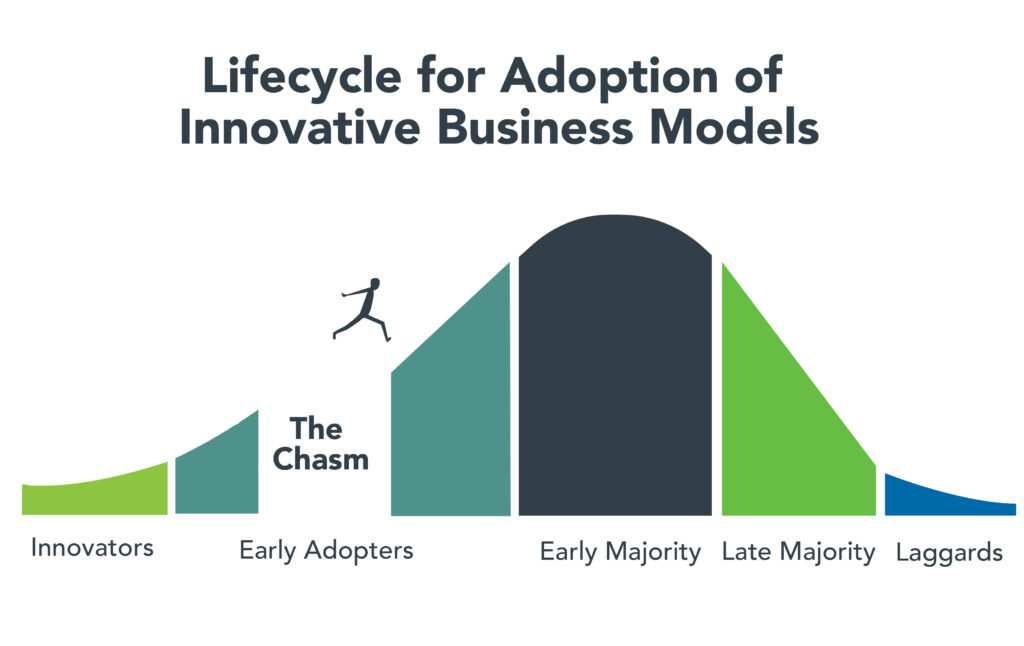
Despite market resistance, “payvider” and digital platform companies are emerging from the proverbial “innovators’ chasm.” More early adopters, including those health systems attending the Nashville conference, are embracing value-creating business models. The chart below illustrates the well-trodden path innovation takes to achieve market penetration.

Ironically, during this period of industry disruption, health systems understand they need to deliver greater value to customers to maintain market relevance. It will require great execution and overcoming legacy practices to develop business platforms that incorporate the following value-creating capabilities:

  • Decentralized care delivery (to make care more accessible and lower cost).
  • Root-cause treatment of chronic conditions.
  • Integrated physical and mental healthcare services.
  • Consistent, high-quality consumer experience.
  • Coordinated service delivery.
  • Standardized protocols that improve care quality and outcomes.
  • A truly patient/customer-centric operating orientation.

It’s not what to do, it’s how to get it done that creates the vexing conundrum. Solutions require collaboration. Platform business models replete with strategic partnerships are emerging. Paraphrasing an African proverb, it’s going to take a village to fix healthcare. That’s why the moment for health systems and PE firms to collaborate is now.

PE to the Rescue?

Private equity has become the dominant investment channel for business growth across industries and nations. According to a recent McKinsey report, PE has more than $11.7 trillion in assets under management globally. This is a massive number that has grown steadily. PE changes markets. It turbocharges productivity. It is a relentless force for value creation.

By investing in a wide spectrum of asset classes, private equity has become a vital source of investment returns for pensions, endowments, sovereign wealth funds and insurance companies. Healthcare, given its size and inefficiencies, is a target-rich environment for PE investment and returns. This explains the PE’s growing interest in working with health systems to develop mutually beneficial, value-creating healthcare enterprises.

Despite reports to the contrary, PE firms must invest for the long term. Unlike the stock market, where investors can buy and sell a stock within a matter of seconds, PE firms do not have that luxury. To generate a return, they must acquire and grow businesses over a period of years to create suitable exit strategies.

Money talks. By definition, all buyers of new companies value their purchase more than the capital required for the acquisition. In making purchase decisions, buyers evaluate businesses’ past performance. They also assess how the new business will perform under their stewardship. PE or PE-backed acquirers also consider which future buyers will be most likely acquire the company after a five-plus year development period.

PE’s investment approach can align well with health systems looking to create sustainable long-term businesses tied to their brands and market positioning. PE firms buy and build companies that attract customers, employees and capital over the long term, far beyond their typical five- to seven-year ownership period. Health systems that partner with PE firms to develop companies are the logical acquirers of those companies if they succeed in the marketplace. In this way, a rising valuation creates value for both health systems and their PE partners.

It is important to note that not all PE are created the same. Like health systems, PE firms differ in size, market orientation, investment theses, experience and partner expectations. Given this inherent diversity, it takes time, effort and a shared commitment to value creation for health systems and PE firms to determine whether to become strategic partners. Not all of these partnerships will succeed, but some will succeed spectacularly.

For health system-PE partnerships to work, the principals must align on strategic objectives, governance, performance targets and reporting guidelines. Trust, honest communication and clear expectations are the key ingredients that enable these partnerships to overcome short-term hurdles on the road to long-term success.

Conclusion: Time to Slay Healthcare’s Dragons

Market corrections are hard. As a nation, the U.S. has invested too heavily in hospital-centric, disease-centric, volume-centric healthcare delivery. The result is a fragmented, high-cost system that fails both consumers and caregivers. The marketplace is working to reallocate resources away from failing business practices and into value-creating enterprises that deliver better care outcomes at lower costs with much less friction.

Progressive health systems and PE firms share the goal of creating better healthcare for more Americans. Cain Brothers is committed to advancing collaboration between health systems and PE-backed companies. In addition to the Nashville conference, the firm has combined its historically separate corporate and non-profit coverage groups to foster idea exchange, expand sector understanding and deliver higher value to clients.

The ability to connect and collaborate effectively with private equity to advance business models will differentiate winning health systems. In a consolidating industry, this differentiation is a prerequisite for sustaining competitiveness. It’s adapt or die time. Health systems that proactively embrace transformation will control their future destiny. Those that fail to do so will lose market relevance.

The future of healthcare is not a zero-sum equation. Markets evolve by creating more complex win-win arrangements that create value for customers. No industry requires restructuring more than healthcare. As a nation and an industry, we have the capacity to fix America’s broken healthcare system. The real question is whether we have the collective will, creativity and resourcefulness to power the transformation. We believe the answer to that question is yes.

Paraphrasing Rev. Theodore Parker, the economic arc of the marketplace is long but it bends toward value. Together, health systems and PE firms can power value-creation and transformation more effectively than either sector can do independently. Each needs the other to succeed. Slaying healthcare’s dragons will not be easy but it is doable. It’s going to take a village to fix healthcare.

In healthcare’s game of Monopoly, one player will control the board

In healthcare, as in life, people devote a lot of time and attention to the way things should be. They’d be better off focusing on what actually could be.

As an example, 57% to 70% of American voters believe our nation “should” adopt a single-payer healthcare system like Medicare For All. Likewise, public health advocates insist that more of the nation’s $4 trillion healthcare budget “should” be spent on combating the social determinants of health: things like housing insecurity, low-wage jobs and other socioeconomic stresses. Neither of these ideas will happen, nor will dozens of positive healthcare solutions that “should” happen.

When the things that should happen don’t, there’s always a reason. In healthcare, the biggest roadblock to change is what I call the conglomerate of monopolies, which includes hospitalsdrug companiesprivate-equity-staked physicians and commercial health insurers. These powerful entities exert monopolistic control over the delivery and financing of the country’s medical care. And they remain fiercely opposed to any change in healthcare that would limit their influence or income.

This article concludes my five-part series on medical monopolies with an explanation of why (a) “should” won’t happen in healthcare but (b) industrywide disruption will.

Why government won’t lead the way

With the U.S. Senate split 51-49 and with virtually no chance of either party securing the 60 votes needed to avoid a filibuster, Congress will, at most, tinker with the medical system. That means no Medicare For All and no radical redistribution of healthcare funds.

Even if elected officials started down the path of major reform, healthcare’s incumbents would lobby, threaten to withhold campaign contributions (which have exceeded $700 million annually for the past three years) and swat down any legislative effort that might harm their interests.

In American politics, money talks. That won’t change soon, even if voters believe it should.

American employers won’t lead, either

Private payers wield significant power and influence of their own. In fact, the Fortune 500 represents two-thirds of the U.S. GDP, generating more than $16 trillion in revenue. And they provide health insurance to more than half the American population.

With all that clout, you’d think business executives would demand more from healthcare’s conglomerate of monopolies. You might assume they’d want to push back against the prevailing “fee for service” payment model, replacing it with a form of reimbursement that rewards doctors and hospitals for the quality (not quantity) of care they provide. You’d think they would insist that employees get their care through technologically advanced, multispecialty medical groups, which deliver superior outcomes when compared to solo physician practices.

Instead, companies take a more passive position. In fact, employers are willing to shoulder 5% to 6% increases in insurance premiums each year (double their average rate of revenue growth) without putting up much or any resistance.

One reason they tolerate hefty rate hikes—rather than battling insurers, hospitals and doctors— involves a surprising truth about insurance premiums. Business leaders have figured out how to transfer much of their added premium costs to employees in the form of high-deductible health plans. A high deductible plan forces the beneficiary to pay “first dollar” for their medical care, which significantly reduces the premium cost paid by the employer.

Businesses also realize that high deductibles will only financially burden employees who experience an unexpected, catastrophic illness or accident. Meaning, most workers won’t feel the sting in a typical year. As for employees with ongoing, expensive medical problems, employers typically don’t mind watching them walk out the door over high out-of-pocket costs. Their departures only reduce the company’s medical spend in future years.

Finally, businesses know that employee medical costs are tax deductible, which cushions the impact of premium increases. So, what starts as a 6% annual increase ends up costing employees 3%, the government 1% and businesses only 2%. In today’s strong labor market, which boasts the lowest unemployment rate in 54 years, businesses are reluctant to demand changes from healthcare’s biggest players—regardless of whether they should.

Leading the healthcare transformation

If there were a job opening for “Leader of the American Healthcare Revolution,” the applicant pool would be shallow.  

Elected officials would shy away, fearing the loss of campaign contributions. Businesses and top executives would pass on the opportunity, preferring to shift insurance costs to employees and the government. Patients would feel overwhelmed by the task and the power of the incumbents. Doctors, nurses and hospitals—despite their frustrations with the current system—would want to take small steps, fearful of the conglomerate of monopolies and the risks of disruptive change.

To revolutionize American medicine, a leader must possess three characteristics:

  1. Sufficient size and financial reserves to disrupt the entire industry (not just a small piece of it).
  2. Presence across the country to leverage economies of scale.
  3. Willingness to accept the risks of radical change in exchange for the potential to generate massive profits.

Whoever leads the way won’t make these investments because it “should happen.” They will take the chance because the upside is dramatically better than sitting on the sidelines.

The likely winner: American retailers

Amazon, CVS, Walmart and other retail giants are the only entities that fit the revolutionary criteria above. In healthcare’s game of monopoly, they’re the ones willing to take high-stakes risks and capable of disrupting the industry.

For years, these retailers have been acquiring the necessary game pieces (including pharmacy services, health-insurance capabilities and innovative care-delivery organizations) to someday take over American healthcare.

CVS Health owns health insurer Aetna. It bought value-based care company Signify Health for $8 billion, along with national primary care provider OakStreet Health for $10.6 billion. Walmart recently entered into a 10-year partnership with the nation’s largest insurance company, UnitedHealth, gaining access to its 60,000 employed physicians. Walmart then acquired LHC, a massive home-health provider. Finally, Amazon recently purchased primary-care provider One Medical for $3.9 billion and maintains close ties with nearly all of the country’s self-funded businesses.

Harvard business professor Clay Christensen noted that disruptive change almost always comes from outsiders. That’s because incumbents cling to overly expensive and inefficient systems. The same holds true in American healthcare.

The retail giants can see that healthcare is exorbitantly priced, uncoordinated, inconvenient and technologically devoid. And they recognize the hundreds of billions of dollars of revenue and they could earn by offering a consumer-focused, highly efficient alternative.

How will the transformation happen?

Initially, I believe the retail giants will take a two-pronged approach. They’ll (a) continue to promote fee-for-service medical services through their pharmacies and retail clinics (in-store and virtual) while (b) embracing every opportunity to grow their market share in Medicare Advantage, the capitated option for people over age 65.

And within Medicare Advantage, they’ll look for ways to leverage sophisticated IT systems and economies of scale, thus providing care that is better coordinated, technologically supported and lower cost than what’s available now.

Rather than including all community doctors in their network, they’ll rely on their own clinicians, augmented by a limited cohort of the highest-performing medical groups in the area. And rather than including every hospital as an inpatient option, they’ll contract with highly respected centers of excellence for procedures like heart surgery, neurosurgery, total-joint replacement and transplants, trading high volume for low prices.

Over time, they’ll reach out to self-funded businesses to offer proven, superior clinical outcomes, plus guaranteed, lower total costs. Then they’ll make a capitated model their preferred insurance plan for all companies and individuals. Along the way, they’ll apply consumer-driven medical technologies, including next generations of ChatGPT, to empower patients, provide continuous care for people with chronic diseases and ensure the medical care provided is safe and most efficacious.

Tommy Lasorda, the long-time manager of the Los Angeles Dodgers, once remarked, “There are three types of people. Those who watch what happens, those that make it happen and those who wonder what just happened.”

Lasorda’s quip describes healthcare today. The incumbents are watching closely but failing to see the big picture as retailer acquire medical groups and home health capabilities. The retail giants are making big moves, assembling the pieces needed to completely transform American medicine as we think of it today. Finally, tens of thousands of clinicians and thousands of hospital administrators are either ignoring or underestimating the retail giants. And, when they get left behind, they’ll wonder: What just happened?

The conglomerate of monopolies rule medicine today. Amazon, CVS and Walmart believe they should rule. And if I had to bet on who will win, I’d put my money on the retail giants.

The Trend of Health System Mergers Continues

While healthcare is delivered locally, the business of healthcare
is regional, and the regions are only getting bigger.
Hospital
and health system mergers alike have continued to shift from
local to regional, and the recently announced merger between Advocate Aurora
Health and Atrium Health clearly highlights that the regions are only getting
bigger.


Advocate Aurora, with a presence in Illinois and Wisconsin, and Atrium Health,
with a presence in North Carolina, South Carolina, Georgia, and Alabama, will
combine to create a $27 billion health system that will span six states and make it
one of the leading healthcare delivery systems in the country. The combined
organization, which will transition to a new brand, Advocate Health, will operate
67 hospitals and over 1,000 sites of care, employ nearly 150,000 teammates, and
serve 5.5 million patients. Together, Advocate Health will become the 6th largest
system in the country behind Kaiser Permanente, HCA Healthcare, CommonSpirit
Health, Ascension, and Providence.


We have seen a number of large health systems come together recently,
including Intermountain Healthcare + SCL Health to create a $15 billion revenue
system, Spectrum Health + Beaumont ($14 billion), NorthShore University Health
System + Edward-Elmhurst Healthcare
($5 billion), LifePoint Health + Kindred
Healthcare
($14 billion), and Jefferson Health + Einstein Healthcare Network ($8
billion).


The exact reasoning for each merger differs slightly, but one of the common
threads across all is scale.
But not scale in the traditional M&A sense. Rather,
scale in covered lives; scale in physician infrastructure and alignment; scale in
clinical and operational capabilities; scale in technology, innovation, and
partnerships with non-traditional players; scale for capital access; and scale for
insurance risk to compete in a value-based world. It is no longer the strong
acquiring the weak. Rather, strong players are coming together to gain scale to
face the headwinds in a unified manner.

For Advocate Aurora and Atrium, coming together is about leveraging their combined clinical excellence,
advancing data analytics capabilities and digital consumer infrastructure, improving affordability, driving health equity, creating a next-generation workforce, research, and environmental sustainability. Together, they have pledged $2 billion to disrupt the root causes of health inequities across underserved communities and create more than 20,000 new jobs.


Both Advocate Aurora and Atrium are no strangers to mergers. Advocate and Aurora came together in 2018, and prior to that Advocate was intending to merge with NorthShore before being blocked due to anti-trust. Atrium has grown over the years, merging with systems such as Navicent Health in Georgia in 2018, Wake Forest Baptist Health in North Carolina 2020, and Floyd Health System in Georgia in 2021. In the newly proposed merger, Advocate Aurora and Atrium are coming together via a joint operating arrangement where each entity will be responsible for their own liabilities and maintain ownership of their respective assets but operate together under the new parent entity and board. This may allow the combined entity more flexibility in local decision-making. The current CEOs, Jim Skogsbergh and Eugene Woods will serve as co-CEOs for the first 18 months, at which point Skogsbergh will retire, and Woods will take over as the sole CEO.


Mergers can come in various shapes and structures, but the driving forces behind consolidation are not unique. With the need to compete in value-based care, adequately manage risk, gain scale across covered lives, physicians, and points of access, successfully deliver affordable high-quality care, and the need to deal with the vertical and horizontal consolidation of the large-scale payers, the markets that health systems operate in must be large enough to be effective and relevant. We fully expect to see more of these larger scale health system mergers in the near term.


The physical delivery of healthcare is local, but, again, the business of healthcare is not; it is regional, and the regions are only getting bigger.

Even the largest health systems dwarfed by industry giants

https://mailchi.mp/f6328d2acfe2/the-weekly-gist-the-grizzly-bear-conflict-manager-edition?e=d1e747d2d8

Insurers, retailers, and other healthcare companies vastly exceed health system scale, dwarfing even the largest hospital systems. The graphic above illustrates how the largest “mega-systems” lag other healthcare industry giants, in terms of gross annual revenue. 

Amazon and Walmart, retail behemoths that continue to elbow into the healthcare space, posted 2021 revenue that more than quintuples that of the largest health system, Kaiser Permanente. The largest health systems reported increased year-over-year revenue in 2021, largely driven by higher volumes, as elective procedures recovered from the previous year’s dip.

However, according to a recent Kaufman Hall report, while health systems, on average, grew topline revenue by 15 percent year-over-year, they face rising expenses, and have yet to return to pre-pandemic operating margins. 

Meanwhile, the larger companies depicted above, including Walmart, Amazon, CVS Health, and UnitedHealth Group, are emerging from the pandemic in a position of financial strength, and continue to double down on vertical integration strategies, configuring an array of healthcare assets into platform businesses focused on delivering value directly to consumers.

Strategic misalignment at the heart of a governance issue

https://mailchi.mp/016621f2184b/the-weekly-gist-december-3-2021?e=d1e747d2d8

When Innovation and Strategy Don't Align - TENZING Strategic

In our work with health systems, physician groups, and other organizations over the years, we’ve often been asked to facilitate board-level discussions about governance—resolving board conflicts, navigating difficult decisions, evaluating board composition.

A recent discussion again highlighted one of our main observations in working with boards: governance problems are often strategy problems in disguise. Working with a system that has grown through acquisition over the years, and whose board includes members from several of the “legacy” hospitals which had merged into the system over time, we were asked to help facilitate a dialogue about investment priorities across the component parts of the system.

At the root of the issue: each of the “representatives” of the subsidiary entities were pushing to have their own investment needs take precedence. On the face of it, that’s a governance problem: boards shouldn’t be constituent assemblies, with each member representing the interests of a sub-unit. Rather, they should act with one purpose: to advance the interests of the whole.

But that misalignment turned out to be a symptom of a larger problem: there was no consensus at the board level about what the strategic direction of the combined system should be, and what role each component part played in that direction.

That’s a strategy problem, masquerading as a governance issue. Identifying the strategic issue allowed the board to reframe the dialogue around vision, which then unblocked the subsequent decisions about investments. Good strategy and good governance go hand in hand.

Pandemic propels health systems to mull insurer acquisitions, partnerships

4 Reasons Strategic Partnerships are Important for Business - Glympse

Nearly a year after the first confirmed case of COVID-19 in the U.S., some of the nation’s largest health systems made a case for the need to accelerate toward value-based arrangements and potentially acquiring or partnering with health plans to become an integrated system.

Amid new records for deaths and cases from the novel coronavirus, executives gathered virtually for J.P. Morgan’s 39th annual healthcare conference, which typically draws prominent healthcare leaders to San Francisco at the start of each year.

The pandemic has been a heavily discussed topic during the digital gathering. One theme has been health systems either acknowledging they are on the hunt for health insurer acquisitions and partnerships or advocating for such arrangements as result of the challenges.

Anu Singh, managing director and the leader of the mergers, acquisitions and partnerships practice at consultancy Kaufman Hall, said it’s a natural migration for health systems, though it does come with some risk.

“If you want to move into the realm of being a population health manager, and take greater responsibility for your patient bases, you’re going to have to be thinking about maintaining their health,” Singh said. “And that’s typically something that, at least traditionally and historically, has been driven a little bit more by the health plan.”

For Utah’s Intermountain Healthcare, the lessons of the pandemic are clear: The industry needs to move away from a system that rewards volume. Intermountain is a fully integrated system that manages both providers and an insurance unit.

“It is becoming increasingly apparent that systems that are well integrated, especially systems that understand how to take risks, have prospered in the face of the terrible burden, caring for people in the midst of the first pandemic in 100 years,” Intermountain CEO Marc Harrison said Monday.

From his vantage point, Harrison said it has been interesting to watch the consternation around telehealth visits.

“Lots of folks who are really still caught in the volume-based system are actively switching patients back from tele- or distance to in-person visits so they can maximize revenue,” he said. “I understand that. But that’s a really great example of poorly aligned incentives.”

Intermountain has managed to stay in the black as many other systems have struggled financially as a result of the pandemic driving down patient volumes. It reported net income of $167 million through the first nine months of 2020, compared with $919 million the year prior.

Another integrated system, Baylor Scott and White Health, the largest nonprofit system in Texas, said such diversification has helped buoy its finances as hospital and clinic operations bottomed out in the spring due to the virus.

Baylor Scott and White illustrated this point by showing how operating income for its clinical segment took a nosedive in the spring while operating income for its health plan remained relatively steady.

The theme of integrated health systems also seemed to be on the minds of investors. CommonSpirit Health executives were asked during their presentation if buying or creating a health plan was on their radar as the system has a sizable footprint of 140 hospitals across the country.

“I think this is a interesting question, one that of course we’ve discussed many times strategically,” CFO Daniel Morissette said, noting the system does have a number of regional plans. “At this time, we have no plan of having a national CommonSpirit branded plan.” However, Morissette said the system would consider a partnership opportunity.

On the other hand, Midwest-based Advocate Aurora Health said it is actively on the hunt for a potential insurer deal as part of its long-term strategy.

“We do believe that having health plan capability, not necessarily having our own, but partnering for health plan capability, is going to be critical to our success, and we are taking steps to do that,” CEO Jim Skogsbergh said during the virtual conference.

Kaufman Hall said in its latest report that it expects more payer-provider partnerships as a result of the pandemic. “Limitations on fee-for-service payment structures exposed by the pandemic may increase the number of payer-provider partnerships around new payment and care delivery models,” according to the report.

Singh of Kaufman Hall said it’s not surprising that some may lean more toward a partnership due to the risks of starting a new venture, especially an insurance unit that can have “catastrophic loss”. Systems with less experience of moving toward implementing value-based initiatives may be more vulnerable to such risk.

It’s why he thinks partnerships may be a good fit, at least at first. Payers and providers can work together to improve the health of certain populations and then share in the cost savings.

Warren Buffett: An appreciation

https://www.mckinsey.com/business-functions/strategy-and-corporate-finance/our-insights/warren-buffett-an-appreciation?cid=other-eml-alt-mip-mck&hlkid=500c2a923cdd4ff19d66acac00e2a9fa&hctky=9502524&hdpid=e758f2ed-7de7-4263-9faa-7daf7b3bdaa7

Celebrating Warren Buffett on his 90th birthday | McKinsey

As Warren Buffett turns 90, the story of one of America’s most influential and wealthy business leaders is a study in the logic and discipline of understanding future value.

Patience, caution, and consistency. In volatile times such as these, it may be difficult for executives to keep those attributes in mind when making decisions. But there are immense advantages to doing so. For proof, just look at the steady genius of now-nonagenarian Warren Buffett. The legendary investor and Berkshire Hathaway founder and CEO has earned millions of dollars for investors over several decades (exhibit). But very few of Buffett’s investment decisions have been reactionary; instead, his choices and communications have been—and remain—grounded in logic and value.

Buffett learned his craft from “the father of value investing,” Columbia University professor and British economist Benjamin Graham. Perhaps as a result, Buffett typically doesn’t invest in opportunities in which he can’t reasonably estimate future value—there are no social-media companies, for instance, or cryptocurrency ventures in his portfolio. Instead, he banks on businesses that have steady cash flows and will generate high returns and low risk. And he lets those businesses stick to their knitting. Ever since Buffett bought See’s Candy Shops in 1972, for instance, the company has generated an ROI of more than 160 percent per year —and not because of significant changes to operations, target customer base, or product mix. The company didn’t stop doing what it did well just so it could grow faster. Instead, it sends excess cash flows back to the parent company for reinvestment—which points to a lesson for many listed companies: it’s OK to grow in line with your product markets if you aren’t confident that you can redeploy the cash flows you’re generating any better than your investor can.

As Peter Kunhardt, director of the HBO documentary Becoming Warren Buffett, said in a 2017 interview, Buffett understands that “you don’t have to trade things all the time; you can sit on things, too. You don’t have to make many decisions in life to make a lot of money.” And Buffett’s theory (roughly paraphrased) that the quality of a company’s senior leadership can signal whether the business would be a good investment or not has been proved time and time again. “See how [managers] treat themselves versus how they treat the shareholders .…The poor managers also turn out to be the ones that really don’t think that much about the shareholders. The two often go hand in hand,” Buffett explains.

Every few years or so, critics will poke holes in Buffett’s approach to investing. It’s outdated, they say, not proactive enough in a world in which digital business and economic uncertainty reign. For instance, during the 2008 credit crisis, pundits suggested that his portfolio moves were mistimed, he held on to some assets for far too long, and he released others too early, not getting enough in return. And it’s true that Buffett has made some mistakes; his decision making is not infallible. His approach to technology investments works for him, but that doesn’t mean other investors shouldn’t seize opportunities to back digital tools, platforms, and start-ups—particularly now that the COVID-19 pandemic has accelerated global companies’ digital transformations.

Still, many of Buffett’s theories continue to win the day. A good number of the so-called inadvisable deals he pursued in the wake of the 2008 downturn ended paying off in the longer term. And press reports suggest that Berkshire Hathaway’s profits are rebounding in the midst of the current economic downturn prompted by the global pandemic.

At age 90, Buffett is still waging campaigns—for instance, speaking out against eliminating the estate tax and against the release of quarterly earnings guidance. Of the latter, he has said that it promotes an unhealthy focus on short-term profits at the expense of long-term performance.

“Clear communication of a company’s strategic goals—along with metrics that can be evaluated over time—will always be critical to shareholders. But this information … should be provided on a timeline deemed appropriate for the needs of each specific company and its investors, whether annual or otherwise,” he and Jamie Dimon wrote in the Wall Street Journal.

Yes, volatile times call for quick responses and fast action. But as Warren Buffett has shown, there are also significant advantages to keeping the long term in mind, as well. Specifically, there is value in consistency, caution, and patience and in simply trusting the math—in good times and bad.


Industry Voices—6 ways the pandemic will remake health systems

https://www.fiercehealthcare.com/hospitals/industry-voices-6-ways-pandemic-will-remake-health-systems?mkt_tok=eyJpIjoiTURoaU9HTTRZMkV3TlRReSIsInQiOiJwcCtIb3VSd1ppXC9XT21XZCtoVUd4ekVqSytvK1wvNXgyQk9tMVwvYXcyNkFHXC9BRko2c1NQRHdXK1Z5UXVGbVpsTG5TYml5Z1FlTVJuZERqSEtEcFhrd0hpV1Y2Y0sxZFNBMXJDRkVnU1hmbHpQT0pXckwzRVZ4SUVWMGZsQlpzVkcifQ%3D%3D&mrkid=959610

Industry Voices—6 ways the pandemic will remake health systems ...

Provider executives already know America’s hospitals and health systems are seeing rapidly deteriorating finances as a result of the coronavirus pandemic. They’re just not yet sure of the extent of the damage.

By the end of June, COVID-19 will have delivered an estimated $200 billion blow to these institutions with the bulk of losses stemming from cancelled elective and nonelective surgeries, according to the American Hospital Association

A recent Healthcare Financial Management Association (HFMA)/Guidehouse COVID-19 survey suggests these patient volumes will be slow to return, with half of provider executive respondents anticipating it will take through the end of the year or longer to return to pre-COVID levels. Moreover, one-in-three provider executives expect to close the year with revenues at 15 percent or more below pre-pandemic levels. One-in-five of them believe those decreases will soar to 30 percent or beyond. 

Available cash is also in short supply. A Guidehouse analysis of 350 hospitals nationwide found that cash on hand is projected to drop by 50 days on average by the end of the year — a 26% plunge — assuming that hospitals must repay accelerated and/or advanced Medicare payments.

While the government is providing much needed aid, just 11% of the COVID survey respondents expect emergency funding to cover their COVID-related costs.

The figures illustrate how the virus has hurled American medicine into unparalleled volatility. No one knows how long patients will continue to avoid getting elective care, or how state restrictions and climbing unemployment will affect their decision making once they have the option.

All of which leaves one thing for certain: Healthcare’s delivery, operations, and competitive dynamics are poised to undergo a fundamental and likely sustained transformation. 

Here are six changes coming sooner rather than later.


1. Payer-provider complexity on the rise; patients will struggle.

The pandemic has been a painful reminder that margins are driven by elective services. While insurers show strong earnings — with some offering rebates due to lower reimbursements — the same cannot be said for patients. As businesses struggle, insured patients will labor under higher deductibles, leaving them reluctant to embrace elective procedures. Such reluctance will be further exacerbated by the resurgence of case prevalence, government responses, reopening rollbacks, and inconsistencies in how the newly uninsured receive coverage.

Furthermore, the upholding of the hospital price transparency ruling will add additional scrutiny and significance for how services are priced and where providers are able to make positive margins. The end result: The payer-provider relationship is about to get even more complicated. 


2. Best-in-class technology will be a necessity, not a luxury. 

COVID has been a boon for telehealth and digital health usage and investments. Two-thirds of survey respondents anticipate using telehealth five times more than they did pre-pandemic. Yet, only one-third believe their organizations are fully equipped to handle the hike.

If healthcare is to meet the shift from in-person appointments to video, it will require rapid investment in things like speech recognition software, patient information pop-up screens, increased automation, and infrastructure to smooth workflows.

Historically, digital technology was viewed as a disruption that increased costs but didn’t always make life easier for providers. Now, caregiver technologies are focused on just that.

The new necessities of the digital world will require investments that are patient-centered and improve access and ease of use, all the while giving providers the platform to better engage, manage, and deliver quality care.

After all, the competition at the door already holds a distinct technological advantage.


3. The tech giants are coming.

Some of America’s biggest companies are indicating they believe they can offer more convenient, more affordable care than traditional payers and providers. 

Begin with Amazon, which has launched clinics for its Seattle employees, created the PillPack online pharmacy, and is entering the insurance market with Haven Healthcare, a partnership that includes Berkshire Hathaway and JPMorgan Chase. Walmart, which already operates pharmacies and retail clinics, is now opening Walmart Health Centers, and just recently announced it is getting into the Medicare Advantage business.

Meanwhile, Walgreens has announced it is partnering with VillageMD to provide primary care within its stores.

The intent of these organizations clear: Large employees see real business opportunities, which represents new competition to the traditional provider models.

It isn’t just the magnitude of these companies that poses a threat. They also have much more experience in providing integrated, digitally advanced services. 


4. Work locations changes mean construction cost reductions. 

If there’s one thing COVID has taught American industry – and healthcare in particular – it’s the importance of being nimble.

Many back-office corporate functions have moved to a virtual environment as a result of the pandemic, leaving executives wondering whether they need as much real estate. According to the survey, just one-in-five executives expect to return to the same onsite work arrangements they had before the pandemic. 

Not surprisingly, capital expenditures, including new and existing construction, leads the list of targets for cost reductions.

Such savings will be critical now that investment income can no longer be relied upon to sustain organizations — or even buy a little time. Though previous disruptions spawned only marginal change, the unprecedented nature of COVID will lead to some uncomfortable decisions, including the need for a quicker return on investments. 


5. Consolidation is coming.

Consolidation can be interpreted as a negative concept, particularly as healthcare is mostly delivered at a local level. But the pandemic has only magnified the differences between the “resilients” and the “non-resilients.” 

All will be focused on rebuilding patient volume, reducing expenses, and addressing new payment models within a tumultuous economy. Yet with near-term cash pressures and liquidity concerns varying by system, the winners and losers will quickly emerge. Those with at least a 6% to 8% operating margin to innovate with delivery and reimagine healthcare post-COVID will be the strongest. Those who face an eroding financial position and market share will struggle to stay independent..


6. Policy will get more thoughtful and data-driven.

The initial coronavirus outbreak and ensuing responses by both the private and public sectors created negative economic repercussions in an accelerated timeframe. A major component of that response was the mandated suspension of elective procedures.

While essential, the impact on states’ economies, people’s health, and the employment market have been severe. For example, many states are currently facing inverse financial pressures with the combination of reductions in tax revenue and the expansion of Medicaid due to increases in unemployment. What’s more, providers will be subject to the ongoing reckonings of outbreak volatility, underscoring the importance of agile policy that engages stakeholders at all levels.

As states have implemented reopening plans, public leaders agree that alternative responses must be developed. Policymakers are in search of more thoughtful, data-driven approaches, which will likely require coordination with health system leaders to develop flexible preparation plans that facilitate scalable responses. The coordination will be difficult, yet necessary to implement resource and operational responses that keeps healthcare open and functioning while managing various levels of COVID outbreaks, as well as future pandemics.

Healthcare has largely been insulated from previous economic disruptions, with capital spending more acutely affected than operations. But the COVID-19 pandemic will very likely be different. Through the pandemic, providers are facing a long-term decrease in commercial payment, coupled with a need to boost caregiver- and consumer-facing engagement, all during a significant economic downturn.

While situations may differ by market, it’s clear that the pre-pandemic status quo won’t work for most hospitals or health systems.


UnitedHealth projects major revenue boost in 2020 on the back of continued Optum growth

https://www.fiercehealthcare.com/payer/unitedhealth-projects-242b-2019-revenue-offers-2020-guidance-262b-revenue?mkt_tok=eyJpIjoiWkdObE5HRTJNMlptT0RkayIsInQiOiJiaFk3K2s2TDl5OGNrMmJ5XC9EWWEyb3VacEVjUGpOUVhrdE5wQmxkaTN6TUNTbkVJaUJlTnl3eldXcmRaVU1nN3k4UUhKRFEzb1B3XC9pYWNJaHVcL0NqS29QSmI4RFR1aWEwWlNNRUE2QmdqaVJINkNIa090XC9lUzMxUUpUbG1yY24ifQ%3D%3D&mrkid=959610

The outside of Optum's headquarters

UnitedHealth Group projected it will generate $242 billion in revenue in 2019 and expects to report another 7% to 8% increase in top-line growth in 2020.

The insurance group presented updated figures during its investor conference that kicked off Tuesday with officials saying they expect to increase the company’s 2020 revenue to between $260 billion and $262 billion.

They project between $21 billion and $22 billion in operating earnings in 2020.

In comparison, UnitedHealth Group generated $17.3 billion in profits on $226 billion in revenue in 2018. The company is projecting to report $19 billion in profits in 2019.

The biggest driver of growth this year has been UnitedHealth’s Optum, the company’s pharmacy benefit management and care services group. Optum revenue is projected to have increased by 11% from 2018 to 2019, earning UnitedHealth $112 billion in revenue compared to $101 billion in 2018.Optum is expected to continue to be a major growth driver for the company in its 2020 earnings projection, with UnitedHealth pegging growth to increase again between 13% and 14%. UnitedHealth executives said that Optum is expected to make up 50.5% of the company’s total after tax operating earnings this year.. 

Optum could also be the key for UnitedHealth to improve its Medicare Advantage business.

“We don’t like being third, that’s fundamentally where we landed for the year,” said UnitedHealth Group CEO David Wichmann, “Over time I think we will continue to grow and outpace the market.”

Executives said that the key to growth is to keep its networks consistent as well as pharmacists and pharmacies consistent for seniors. 

“We believe we maintain in the Medicare market a strategic cost advantage because of the capacities we have as an organization,” Wichmann said.

UnitedHealth pointed to the success of OptumCare, the company’s primary and specialty care provider.  The highest performing Medicare Advantage plans were in markets that had an OptumCare presence. Wichmann said that growing the OptumCare platform is a majority priority for UnitedHealth over the next seven years.