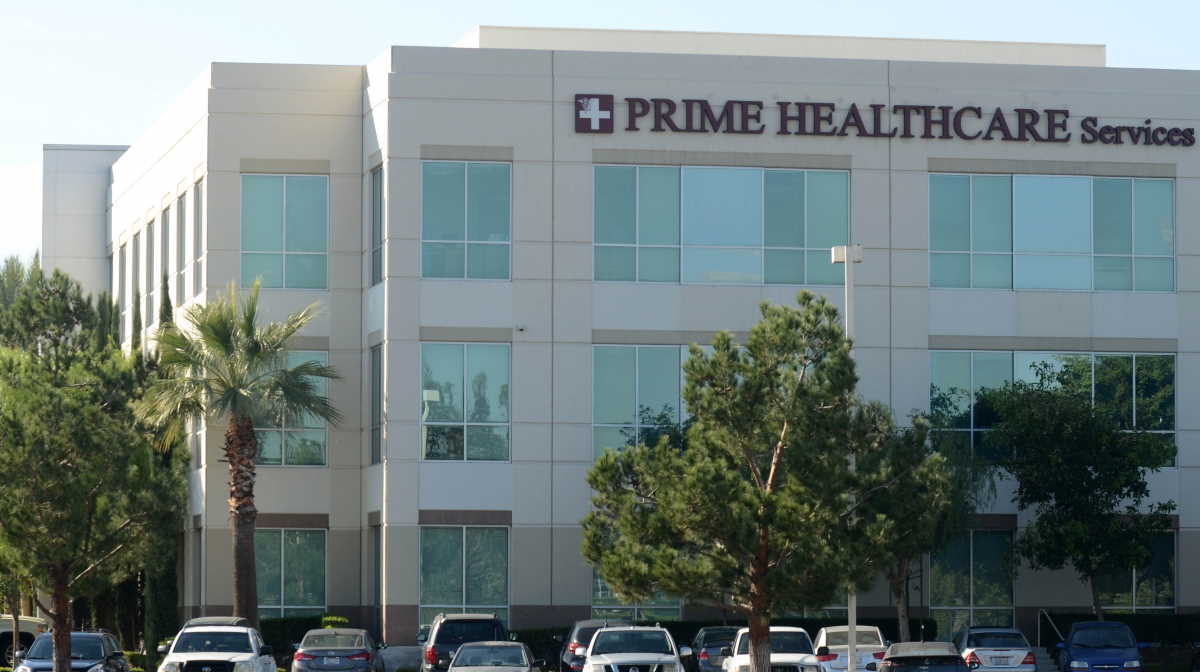
Prime adds 46th hospital

https://www.beckershospitalreview.com/hospital-transactions-and-valuation/prime-adds-46th-hospital-4-things-to-know-about-the-350m-deal.html?utm_medium=email

SEIU: Hospital Chain with Record of Bilking Taxpayers and Cutting ...

Ontario, Calif.-based Prime Healthcare announced Aug. 14 that it has completed the acquisition of St. Francis Medical Center, a 384-bed hospital in Lynwood, Calif. 

Here are four things to know about the deal: 

1. Prime purchased St. Francis Medical Center out of bankruptcy. The hospital entered bankruptcy in 2018 when its previous owner, El Segundo, Calif.-based Verity Health, filed for Chapter 11 protection.

2. Under the $350 million deal, which closed after a four-month review process, Prime committed to invest $47 million in capital improvements at the hospital. Those investments include installing Epic’s EHR and Omnicell systems for automated medication dispensing. Prime said it also plans to expand the hospital’s service lines.

3. A spokesperson told Becker’s Hospital Review that Prime extended offers to approximately 80 percent of the more than 2,000 employees at St. Francis Medical Center. “In the midst of this pandemic and economic challenges, Prime has remained deeply committed to St. Francis, the caregivers, patients and community, and we continue to evaluate staffing and will post additional positions based on future community needs,” the spokesperson said.

4. With the addition of St. Francis Medical Center, Prime owns and operates 46 hospitals in 14 states. The company has nearly 40,000 employees. 


Verity gets OK to sell 384-bed bankrupt hospital to Prime Healthcare, despite objections

https://www.beckershospitalreview.com/hospital-transactions-and-valuation/verity-gets-ok-to-sell-384-bed-bankrupt-hospital-to-prime-healthcare-despite-objections.html?utm_medium=email

St. Francis Medical Center | Verity Health

Despite objections for California attorney general and a last-minute attempt from an opposing bidder to block the sale, El Segundo, Calif.-based Verity Health System won bankruptcy court approval to sell a 384-bed hospital in Lynwood, Calif., to Prime Healthcare Services, according to The Wall Street Journal.  

California Attorney General Xavier Becerra conditionally approved the sale to Prime in July. Mr. Becerra set 21 conditions for the sale of St. Francis Medical Center to Prime Healthcare, a for-profit provider based in Ontario, Calif.

Verity challenged three of the conditions outlined by the attorney general, saying they were overly burdensome. The disputed conditions revolved around the amount of charity care and community-benefit services the hospital would need to provide.

As a result, the attorney general opposed authorizing the sale and approving Verity’s Chapter 11 liquidation plan, according to the Journal. 

U.S. Bankruptcy Judge Ernest Robles overruled the objections, which should allow the $350 million sale to finalize. The judge also said he would approve Verity’s Chapter 11 liquidation plan.

In addition, in late July, Los Angeles-based Prospect Medical Holdings made a last-minute attempt to block Prime from buying St. Francis Medical Center.

Prospect Medical, backed by a private equity firm, reportedly offered to pay $50 million more than Prime and offered to accept all of the attorney general’s conditions. 

However, the bankruptcy judge said Prospect lacked standing to oppose the Prime sale, and it didn’t submit its bid until after the deadline passed, according to the report.

Read the full article here


The Future of Hospitals in Post-COVID America (Part 1): The Market Response

Click to access CBC_72_08052020_Final.pdf


[Readers’ Note: This is the first of two articles on the Future of Hospitals in Post-COVID America. This article
examines how market forces are consolidating, rationalizing and redistributing acute care assets within the
broader industry movement to value-based care delivery. The second article, which will publish next month,
examines gaps in care delivery and the related public policy challenges of providing appropriate, accessible
and affordable healthcare services in medically-underserved communities.]

In her insightful 2016 book, The Gray Rhino: How to Recognize and Act on the Obvious Dangers We Ignore,
Michelle Wucker coins the term “Gray Rhinos” and contrasts them with “Black Swans.” That distinction is
highly relevant to the future of American hospitals.

Black Swans are high impact events that are highly improbable and difficult to predict. By contrast, Gray
Rhinos are foreseeable, high-impact events that we choose to ignore because they’re complex, inconvenient
and/or fortified by perverse incentives that encourage the status quo. Climate change is a powerful example
of a charging Gray Rhino.

In U.S. healthcare, we are now seeing what happens when a Gray Rhino and a Black Swan collide.
Arguably, the nation’s public health defenses should anticipate global pandemics and apply resources
systematically to limit disease spread. This did not happen with the coronavirus pandemic.

Instead, COVID-19 hit the public healthcare infrastructure suddenly and hard. This forced hospitals and health systems to dramatically reduce elective surgeries, lay off thousands and significantly change care delivery with the adoption of new practices and services like telemedicine.

In comparison, many see the current American hospital business model as a Gray Rhino that has been charging toward
unsustainability for years with ever-building momentum.

Even with massive and increasing revenue flows, hospitals have long struggled with razor-thin margins, stagnant payment rates and costly technology adoptions. Changing utilization patterns, new and disruptive competitors, pro-market regulatory rules and consumerism make their traditional business models increasingly vulnerable and, perhaps, unsustainable.

Despite this intensifying pressure, many hospitals and health systems maintain business-as-usual practices because transformation is so difficult and costly. COVID-19 has made the imperative of change harder to ignore or delay addressing.

For a decade, the transition to value-based care has dominated debate within U.S. healthcare and absorbed massive strategic,
operational and financial resources with little progress toward improved care outcomes, lower costs and better customer service. The hospital-based delivery system remains largely oriented around Fee-for-Service reimbursement.

Hospitals’ collective response to COVID-19, driven by practical necessity and financial survival, may accelerate the shift to value-based care delivery. Time will tell.

This series explores the repositioning of hospitals during the next five years as the industry rationalizes an excess supply of acute care capacity and adapts to greater societal demands for more appropriate, accessible and affordable healthcare services.

It starts by exploring the role of the marketplace in driving hospital consolidation and the compelling need to transition to value-based care delivery and payment models.

COVID’s DUAL SHOCKS TO PATIENT VOLUME

Many American hospitals faced severe financial and operational challenges before COVID-19. The sector has struggled to manage ballooning costs, declining margins and waves of policy changes. A record 18 rural hospitals closed in 2019. Overall, hospitals saw a 21% decline in operating margins in 2018-2019.

COVID intensified those challenges by administering two shocks to the system that decreased the volume of hospital-based activities and decimated operating margins.

The first shock was immediate. To prepare for potential surges in COVID care, hospitals emptied beds and cancelled most clinic visits, outpatient treatments and elective surgeries. Simultaneously, they incurred heavy costs for COVID-related equipment (e.g. ventilators,PPE) and staffing. Overall, the sector experienced over $200 billion in financial losses between March and June 20204.

The second, extended shock has been a decrease in needed but not necessary care. Initially, many patients delayed seeking necessary care because of perceived infection risk. For example, Emergency Department visits declined 42% during the early phase of the pandemic.

Increasingly, patients are also delaying care because of affordability concerns and/or the loss of health insurance. Already, 5.4 million people have lost their employer-sponsored health insurance. This will reduce incremental revenues associated with higher-paying commercial insurance claims across the industry. Additionally, avoided care reduces patient volumes and hospital revenues today even as it increases the risk and cost of future acute illness.

The infusion of emergency funding through the CARES Act helped offset some operating losses but it’s unclear when and even whether utilization patterns and revenues will return to normal pre-COVID levels. Shifts in consumer behavior, reductions in insurance coverage, and the emergence of new competitors ranging from Walmart to enhanced primary care providers will likely challenge the sector for years to come.

The disruption of COVID-19 will serve as a forcing function, driving meaningful changes to traditional hospital business models and the competitive landscape. Frankly, this is long past due. Since 1965, Fee-for-Service (FFS) payment has dominated U.S. healthcare and created pervasive economic incentives that can serve to discourage provider responsiveness in transitioning to value-based care delivery, even when aligned to market demand.

Telemedicine typifies this phenomenon. Before COVID, CMS and most health insurers paid very low rates for virtual care visits or did not cover them at all. This discouraged adoption of an efficient, high-value care modality until COVID.

Unable to conduct in-person clinical visits, providers embraced virtual care visits and accelerated its mass adoption. CMS and
commercial health insurers did their part by paying for virtual care visits at rates equivalent to in-person clinic visits. Accelerated innovation in care delivery resulted.


THE COMPLICATED TRANSITION TO VALUE

Broadly speaking, health systems and physician groups that rely almost exclusively on activity-based payment revenues have struggled the most during this pandemic. Vertically integrated providers that offer health insurance and those receiving capitated payments in risk-based contracts have better withstood volume losses.

Modern Healthcare notes that while provider data is not yet available, organizations such as Virginia Care Partners, an integrated network and commercial ACO; Optum Health (with two-thirds of its revenue risk-based); and MediSys Health Network, a New Yorkbased NFP system with 148,000 capitated and 15,000 shared risk patients, are among those navigating the turbulence successfully. As the article observes,

providers paid for value have had an easier time weathering the storm…. helped by a steady source of
income amid the chaos. Investments they made previously in care management, technology and social
determinants programs equipped them to pivot to new ways of providing care.

They were able to flip the switch on telehealth, use data and analytics to pinpoint patients at risk for
COVID-19 infection, and deploy care managers to meet the medical and nonclinical needs of patients even
when access to an office visit was limited.

Supporting this post-COVID push for value-based care delivery, six former leaders from CMS wrote to Congress in
June 2020 calling for providers, commercial insurers and states to expand their use of value-based payment models to
encourage stability and flexibility in care delivery.

If value-based payment models are the answer, however, adoption to date has been slow, limited and difficult. Ten
years after the Affordable Care Act, Fee-for-Service payment still dominates the payer landscape. The percentage of
overall provider revenue in risk-based capitated contracts has not exceeded 20%

Despite improvements in care quality and reductions in utilization rates, cost savings have been modest or negligible.
Accountable Care Organizations have only managed at best to save a “few percent of Medicare spending, [but] the
amount varies by program design.”

While most health systems accept some forms of risk-based payments, only 5% of providers expect to have a majority
(over 80%) of their patients in risk-based arrangements within 5 years.

The shift to value is challenging for numerous reasons. Commercial payers often have limited appetite or capacity for
risk-based contracting with providers. Concurrently, providers often have difficulty accessing the claims data they need
from payers to manage the care for targeted populations.

The current allocation of cost-savings between buyers (including government, employers and consumers), payers
(health insurance companies) and providers discourages the shift to value-based care delivery. Providers would
advance value-based models if they could capture a larger percentage of the savings generated from more effective
care management and delivery. Those financial benefits today flow disproportionately to buyers and payers.

This disconnection of payment from value creation slows industry transformation. Ultimately, U.S. healthcare will not
change the way it delivers care until it changes the way it pays for care. Fortunately, payment models are evolving to
incentivize value-based care delivery.

As payment reform unfolds, however, operational challenges pose significant challenges to hospitals and health
systems. They must adopt value-oriented new business models even as they continue to receive FFS payments. New
and old models of care delivery clash.

COVID makes this transition even more formidable as many health systems now lack the operating stamina and
balance sheet strength to make the financial, operational and cultural investments necessary to deliver better
outcomes, lower costs and enhanced customer service.


MARKET-DRIVEN CONSOLIDATION AND TRANSFORMATION

Full-risk payment models, such as bundled payments for episodic care and capitation for population health, are the
catalyst to value-based care delivery. Transition to value-based care occurs more easily in competitive markets with
many attributable lives, numerous provider options and the right mix of willing payers.

As increasing numbers of hospitals struggle financially, the larger and more profitable health systems are expanding
their networks, capabilities and service lines through acquisitions. This will increase their leverage with commercial
payers and give them more time to adapt to risk-based contracting and value-based care delivery.

COVID also will accelerate acquisition of physician practices. According to an April 2020 MGMA report, 97% of
physician practices have experienced a 55% decrease in revenue, forcing furloughs and layoffs15. It’s estimated the
sector could collectively lose as much as $15.1 billion in income by the end of September 2020.

Struggling health systems and physician groups that read the writing on the wall will pro-actively seek capital or
strategic partners that offer greater scale and operating stability. Aggregators can be selective in their acquisitions,
seeking providers that fuel growth, expand contiguous market positions and don’t dilute balance sheets.

Adding to the sector’s operating pressure, private equity, venture investors and payers are pouring record levels of
funding into asset-light and virtual delivery companies that are eager to take on risk, lower prices by routing procedures
and capture volume from traditional providers. With the right incentives, market-driven reforms will reallocate resources
to efficient companies that generate compelling value.

As this disruption continues to unfold, rural and marginal urban communities that lack robust market forces will
experience more facility and practice closures. Without government support to mitigate this trend, access and care gaps
that already riddle American healthcare will unfortunately increase.


WINNING AT VALUE

The average hospital generates around $11,000 per patient discharge. With ancillary services that can often add up to
more than $15,000 per average discharge. Success in a value-based system is predicated on reducing those
discharges and associated costs by managing acute care utilization more effectively for distinct populations (i.e.
attributed lives).

This changes the orientation of healthcare delivery toward appropriate and lower cost settings. It also places greater
emphasis on preventive, chronic and outpatient care as well as better patient engagement and care coordination.
Such a realignment of care delivery requires the following:

 A tight primary care network (either owned or affiliated) to feed referrals and reduce overall costs through
better preventive care.

 A gatekeeper or navigator function (increasingly technology-based) to manage / direct patients to the most
appropriate care settings and improve coordination, adherence and engagement.

 A carefully designed post-acute care network (including nursing homes, rehab centers, home care
services and behavioral health services, either owned or sufficiently controlled) to manage the 70% of
total episode-of-care costs that can occur outside the hospital setting.

 An IT infrastructure that can facilitate care coordination across all providers and settings.

Quality data and digital tools that enhance care, performance, payment and engagement.

Experience with managing risk-based contracts.

 A flexible approach to care delivery that includes digital and telemedicine platforms as well as nontraditional sites of care.

Aligned or incentivized physicians.

Payer partners willing to share data and offload risk through upside and downside risk contracts.

Engaged consumers who act on their preferences and best interests.


While none of these strategies is new or controversial, assembling them into cohesive and scalable business models is
something few health systems have accomplished. It requires appropriate market conditions, deep financial resources,
sophisticated business acumen, operational agility, broad stakeholder alignment, compelling vision, and robust
branding.

Providers that fail to embrace value-based care for their “attributed lives” risk losing market relevance. In their relentless pursuit of increasing treatment volumes and associated revenues, they will lose market share to organizations that
deliver consistent and high-value care outcomes.

CONCLUSION: THE CHARGING GRAY RHINO

America needs its hospitals to operate optimally in normal times, flex to manage surge capacity, sustain themselves
when demand falls, create adequate access and enhance overall quality while lowering total costs. That is a tall order
requiring realignment, evolution, and a balance between market and policy reform measures.

The status quo likely wasn’t sustainable before COVID. The nation has invested heavily for many decades in acute and
specialty care services while underinvesting, on a relative basis, in primary and chronic care services. It has excess
capacity in some markets, and insufficient access in others.

COVID has exposed deep flaws in the activity-based payment as well as the nation’s underinvestment in public health.
Disadvantaged communities have suffered disproportionately. Meanwhile, the costs for delivering healthcare services
consume an ever-larger share of national GDP.

Transformational change is hard for incumbent organizations. Every industry, from computer and auto manufacturing to
retailing and airline transportation, confronts gray rhino challenges. Many companies fail to adapt despite clear signals
that long-term viability is under threat. Often, new, nimble competitors emerge and thrive because they avoid the
inherent contradictions and service gaps embedded within legacy business models.

The healthcare industry has been actively engaged in value-driven care transformation for over ten years with little to
show for the reform effort. It is becoming clear that many hospitals and health systems lack the capacity to operate
profitably in competitive, risk-based market environments.

This dismal reality is driving hospital market valuations and closures. In contrast, customers and capital are flowing to
new, alternative care providers, such as OneMedical, Oak Street Health and Village MD. Each of these upstart
companies now have valuations in the $ billions. The market rewards innovation that delivers value.

Unfortunately, pure market-driven reforms often neglect a significant and growing portion of America’s people. This gap has been more apparent as COVID exacts a disproportionate toll on communities challenged by higher population
density, higher unemployment, and fewer medical care options (including inferior primary and preventive care infrastructure).

Absent fundamental change in our hospitals and health systems, and investment in more efficient care delivery and
payment models, the nation’s post-COVID healthcare infrastructure is likely to deteriorate in many American
communities, making them more vulnerable to chronic disease, pandemics and the vicissitudes of life.

Article 2 in our “Future of Hospitals” series will explore the public policy challenges of providing appropriate, affordable and accessible healthcare to all American communities.


Quorum Health to emerge from bankruptcy next month

https://www.healthcaredive.com/news/quorum-bankruptcy-approval-emerging-in-july/580805/

Dive Brief:

  • For-profit hospital operator Quorum Health received approval of its plan to recapitalize the business Monday in U.S. Bankruptcy Court for the District of Delaware. Quorum expects to emerge from bankruptcy in early July, according to regulatory filings.
  • The system filed for Chapter 11 bankruptcy April 7 to address current liquidity needs while continuing to care for patients and keep its hospitals operating amid a pandemic, according to a statement. It entered into a restructuring agreement with a majority of its lenders and noteholders.
  • Quorum still needs the court to issue a final order, but said the reorganization will reduce its debt by about $500 million, as originally expected.

Dive Insight:

Tennessee-based Quorum Health, which operates 22 rural and mid-sized hospitals in 13 states, may have been more ill-positioned financially than other systems going into the pandemic.

The company went public in May 2016 with 38 hospitals — 14 of which have since shuttered. In 2017, private equity firm KKR took a 5.6% stake in the system for $11.3 million.

Beyond being Quorum’s largest debt-holder today, KKR also owns about 9% of its public shares. In December, the firm offered to buy Quorum out and take the hospital chain private at $1 a share.

But that didn’t pan out, and Quorum instead ended up filing for bankruptcy in April, soon after the COVID-19 pandemic hit. The restructuring agreement now “allows our company to begin a new chapter with the flexibility and resources to continue supporting our community hospitals as they serve on the frontlines of this pandemic and beyond,” Marty Smith, Quorum’s executive vice president and chief operating officer, said in a statement Monday.

“We are grateful for the confidence of our financial stakeholders and partners, as well as our dedicated employees and physicians, and look forward to building on the significant progress we have made in strengthening our operations in recent years,” he said.


Navigating a Post-Covid Path to the New Normal with Gist Healthcare CEO, Chas Roades

https://www.lrvhealth.com/podcast/?single_podcast=2203

Covid-19, Regulatory Changes and Election Implications: An Inside ...Chas Roades (@ChasRoades) | Twitter

Healthcare is Hard: A Podcast for Insiders; June 11, 2020

Over the course of nearly 20 years as Chief Research Officer at The Advisory Board Company, Chas Roades became a trusted advisor for CEOs, leadership teams and boards of directors at health systems across the country. When The Advisory Board was acquired by Optum in 2017, Chas left the company with Chief Medical Officer, Lisa Bielamowicz. Together they founded Gist Healthcare, where they play a similar role, but take an even deeper and more focused look at the issues health systems are facing.

As Chas explains, Gist Healthcare has members from Allentown, Pennsylvania to Beverly Hills, California and everywhere in between. Most of the organizations Gist works with are regional health systems in the $2 to $5 billion range, where Chas and his colleagues become adjunct members of the executive team and board. In this role, Chas is typically hopscotching the country for in-person meetings and strategy sessions, but Covid-19 has brought many changes.

“Almost overnight, Chas went from in-depth sessions about long-term five-year strategy, to discussions about how health systems will make it through the next six weeks and after that, adapt to the new normal. He spoke to Keith Figlioli about many of the issues impacting these discussions including:

  • Corporate Governance. The decisions health systems will be forced to make over the next two to five years are staggeringly big, according to Chas. As a result, Gist is spending a lot of time thinking about governance right now and how to help health systems supercharge governance processes to lay a foundation for the making these difficult choices.
  • Health Systems Acting Like Systems. As health systems struggle to maintain revenue and margins, they’ll be forced to streamline operations in a way that finally takes advantage of system value. As providers consolidated in recent years, they successfully met the goal of gaining size and negotiating leverage, but paid much less attention to the harder part – controlling cost and creating value. That’s about to change. It will be a lasting impact of Covid-19, and an opportunity for innovators.
  • The Telehealth Land Grab. Providers have quickly ramped-up telehealth services as a necessity to survive during lockdowns. But as telehealth plays a larger role in the new standard of care, payers will not sit idly by and are preparing to double-down on their own virtual care capabilities. They’re looking to take over the virtual space and own the digital front door in an effort to gain coveted customer loyalty. Chas talks about how it would be foolish for providers to expect that payers will continue reimburse at high rates or at parity for physical visits.
  • The Battleground Over Physicians. This is the other area to watch as payers and providers clash over the hearts and minds of consumers. The years-long trend of physician practices being acquired and rolled-up into larger organizations will significantly accelerate due to Covid-19. The financial pain the pandemic has caused will force some practices out of business and many others looking for an exit. And as health systems deal with their own financial hardships, payers with deep pockets are the more likely suitor.”


Recovery of medical staffing firms will lag behind hospitals, analysts say

https://www.healthcaredive.com/news/recovery-of-medical-staffing-firms-will-lag-behind-hospitals-analysts-say/580171/

COVID-19 Triggers Cash Need, Lenders Tighten Reins | PYMNTS.com

Dive Brief:

  • Though U.S. hospital staffing companies are slowly beginning to recover from the COVID-19 shutdown and corresponding drop in revenues, that rebound will lag behind hospitals.
  • Recovery of giants like ER staffing firm Envision and AMN Healthcare, which has the largest network of qualified clinicians in the U.S., will be hindered as hospitals prefer to keep their own staff employed over external contractors amid a recession.
  • The “pace of recovery will not be linear,” and depends on the mix of service lines and geography, S&P Global analysts said in a Thursday note. Analysts also expect hospitals to aggressively renegotiate rates and terms with staffing companies later in the year, which could depress margins even more in the long-term.

Dive Insight:

The collapse in patient volume following stay-at-home guidelines implemented earlier this year has had a well-documented effect on provider finances. Hospitals and doctor’s offices prepared for an influx of COVID-19 patients as lucrative elective procedures declined and revenues imploded.

At the nadir in April, anesthesiology services were down 70%, radiology down 60% and ER visits down 40%, S&P said. Analysts expect tentative recovery in May and June, but no return to pre-pandemic volume until mid-2021.

The dramatic reduction slashed the revenues and cash flows of staffing companies, though the worst is likely over. At the beginning of the pandemic, staffing companies and hospitals alike took preventive measures like furloughing nonessential and back-office workers, extending vendor payment terms, aggressively collecting old receivables and onboarding doctors to telehealth. Many have kept up adequate frontline capacity too, despite uncertain demand.

The economy saw some small gains in May as furloughed employees began to trickle back to work. But the increase in health services employment that month came largely in dental health workers and physician offices. Hospitals shed another 27,000 jobs.

Hospitals will likely fill staffing needs internally, bringing back furloughed or laid off employees first as operations slowly improve, before turning once again to medical contractors.

“Given the extended disruption, a looming recession, and possible lasting changes to health care providers, credit metrics will be much weaker than what we had previously expected for nearly all staffing companies,” analysts wrote. “Some staffing companies, particularly those that are highly leveraged, may face very significant liquidity pressures for several months. It is possible not all will be able to withstand the sharp decline.”

S&P Global has taken a number of negative rating actions on staffing companies since late March.

Envision and anesthesiology firm ASP Napa, both rated ‘CCC’ with a negative outlook, have the greatest potential for a default. Envision, owned by private equity firm KKR and one of the largest U.S. physician staffing firms, is reportedly considering a bankruptcy filing as it struggles with $7 billion in debt.

Knoxville, Tenn.-based Team Health and clinical practice management firm SCP Health have enough liquidity to chug along for several more months of lower-than-normal volumes, while AMN and Utah-based CHG Healthcare Services are both in more solid positions to weather the pandemic, S&P said.

But professional outsourced staffing businesses, like anesthesiology and radiology, should recover more quickly, and many firms have gotten financial support from lenders and private equity backers. Team Health, for example, approved a senior secured term loan from its PE sponsor, Blackstone, which covers interest payments in April through mid-May.

Liquidity was also helped by the passage of the $2.2 trillion CARES relief legislation late March.

Several staffing companies have reportedly received grants from the $100 billion allocated by the legislation for providers, along with no-interest loans from accelerated Medicare payments, sparking questions over whether companies backed by cash-rich private equity firms need the funds.


Physicians acquire 35-hospital health system from private equity firm

https://www.beckershospitalreview.com/hospital-transactions-and-valuation/physicians-acquire-35-hospital-health-system-from-private-equity-firm.html?utm_medium=email

Sources: Boston-based Steward Health Care System to relocate ...

The 35-hospital system announced June 2 that a management group of Steward physicians led by the company’s CEO and founder acquired a controlling interest of Steward from Cerberus Capital Management, a private equity firm. The physicians will control 90 percent of the company and Medical Properties Trust will maintain its 10 percent stake. 

“The COVID-19 global pandemic has exposed serious deficiencies in the world’s health care systems, with a disproportionate impact on underserved communities and populations,” Steward CEO and Founder Ralph de la Torre, MD, said in a news release. “We believe that future health care management must completely integrate long-term clinical needs with investments. As physicians first, we will focus on creating structures and timelines that meet the long-term needs of our communities and the short-term needs of our patients.”

Steward was founded more than a decade ago, and Cerberus invested in the company in 2010. Today, Steward has 35 hospitals in nine states and more than 40,000 employees. 


Private equity lands $1.5B in Medicare loans

https://www.beckershospitalreview.com/finance/private-equity-lands-1-5b-in-medicare-loans.html?utm_medium=email

One-Click To Private Equity Yields Up To 9%

Private equity companies have borrowed at least $1.5 billion from HHS through two programs intended to provide funding to healthcare providers facing financial damage due to the COVID-19 pandemic, according to Bloomberg‘s analysis of more than 40,000 loans disclosed by HHS. 

The Medicare loans were made to hospitals, clinics and treatment centers controlled by private equity firms through two programs administered by CMS: the Advance Payments Program and the Accelerated Payments Program. Those programs were expanded earlier this year to help offset the financial impact of COVID-19.

HHS approved loans totaling more than $60 million to subsidiaries of companies owned by private equity firm KKR, which has roughly $58 billion of cash to invest, according to Bloomberg. Healthcare facilities owned by private equity firm Apollo Global Management received $500 million in loans, and Cerberus Capital Management’s Steward Health Care System received roughly $400 million in loans. Steward physicians announced June 2 that they’re acquiring the health system from Cerberus.

CMS Administrator Seema Verma said the goal of the programs was to get funds to healthcare providers as quickly as possible. The loan applications did not include questions about beneficial ownership of the healthcare companies seeking loans. 

“We don’t look into ownership, what we look into is are they Medicare-enrolled providers,” Ms. Verma told Bloomberg.

Access the full Bloomberg article here.


Now Is the Time to Address Surprise Billing

https://www.medpagetoday.com/blogs/marty-makary/86455?xid=fb_o&trw=no&fbclid=IwAR1boFFgBZuSqJ9-1728UdSFeIK790TTXNeoJJ9mky9jCKbGyQ_G4jqwrfk

Tips to avoid surprise medical bills

The doctor-patient relationship is being undermined.

Private equity companies have spent millions in dark money to stall and effectively kill all versions of surprise billing reform. But this week, the issue will come before Congress again. Legislation was introduced Tuesday in the House that, among other things, would further assist hospitals with more relief funds. With this potential third disbursement of federal dollars comes an opportunity to finally address the embarrassing problem of surprise billing that has eroded the public trust in our great medical profession.

Physicians across the country are now signing a letter urging leaders of Congress to address surprise billing once and for all. I have already signed this letter and encourage you to consider doing so as well.

One reason the medical profession is the greatest profession in the world is that patients put their faith and trust in us. But 64% of Americans now say they have avoided or delayed medical care for fear of the bill. As more and more patients lose faith in the system, the doctor-patient relationship is being undermined by surprise billing and the modern-day business practices of price gouging and predatory billing. In fact, these egregious practices have become part of the business model of some private equity groups, which seek to replace physician autonomy with corporate medicine.

Our system today is unnecessarily complicated and works against patients’ interests by putting them in the middle of a finger-pointing blame game, which leaves them holding the bag. It doesn’t make sense for us to accept people with open arms, treat their ailment, and then ruin their lives financially. Medical science is a bastion of scientific and intellectual genius. We can fix this problem. Already, some efforts are advancing price transparency by creating a transparent marketplace for patients.

I’ve spent many years looking at the systematic cost issues that face our health system and patients. Simply put, the lack of fairness and transparency in pricing and billing practices has created financial toxicity and increased the general mistrust of the medical system for millions of Americans. No one designed it to be this bad. In fact, we have good people working in a bad system. When I explain details of pricing, billing, and collections with doctors and hospital leaders, they are invariably shocked and furious to learn how out of control their billing offices have gotten in overcharging patients and shaking people down for more than a reasonable amount for a service.

The current COVID-19 crisis is a stark reminder of the gaps in our health system that exacerbate the pressures facing providers and patients. Many Americans are getting crushed right now. Despite many years of debate in Washington and bipartisan agreement that something must be done, there is still no federal protection in place to safeguard consumers from an egregious surprise medical bill if they need emergency care or have limited options. The reality is that special interests — including the very private equity firms that stand to benefit financially from these exploitative business practices — continue to spend millions to maintain the status quo.

It’s time for a bipartisan compromise to end the non-transparent game of surprise medical billing. It’s time that Congress takes meaningful action to protect patients during this COVID-19 crisis and finally address this issue. Congress has solutions on the table that would bring much greater fairness and transparency to the healthcare system, protect patients from these predatory charges, and ensure that physicians are paid fairly for our services, as we deserve. It’s time we put an end to the cycle of financial toxicity and rebuild the great public trust in the medical profession.


Doctors Without Patients: ‘Our Waiting Rooms Are Like Ghost Towns’

18 of the Spookiest Ghost Towns in America - Most Haunted Places

As visits plummet because of the coronavirus, small physician practices are struggling to survive.

Autumn Road in Little Rock, Ark., is the type of doctor’s practice that has been around long enough to be treating the grandchildren of its eldest patients.

For 50 years, the group has been seeing families like Kelli Rutledge’s. A technician for a nearby ophthalmology practice, she has been going to Autumn Road for two decades.

The group’s four doctors and two nurse practitioners quickly adapted to the coronavirus pandemic, sharply cutting back clinic hours and switching to virtual visits to keep patients and staff safe.

When Kelli, 54, and her husband, Travis, 56, developed symptoms of Covid-19, the couple drove to the group’s office and spoke to the nurse practitioner over the phone. “She documented all of our symptoms,” Ms. Rutledge said. They were swabbed from their car.

While the practice was never a big moneymaker, its revenues have plummeted. The number of patients seen daily by providers has dropped to half its average of 120. The practice’s payments from March and April are down about $150,000, or roughly 40 percent.

“That won’t pay the light bill or the rent,” said Tabitha Childers, the administrator of the practice, which recently laid off 12 people.

While there are no hard numbers, there are signs that many small groups are barely hanging on. Across the country, only half of primary care doctor practices say they have enough cash to stay open for the next four weeks, according to one study, and many are already laying off or furloughing workers.

“The situation facing front-line physicians is dire,” three physician associations representing more than 260,000 doctors, wrote to the secretary of health and human services, Alex M. Azar II, at the end of April. “Obstetrician-gynecologists, pediatricians, and family physicians are facing dramatic financial challenges leading to substantial layoffs and even practice closures.”

By another estimate, as many as 60,000 physicians in family medicine may no longer be working in their practices by June because of the pandemic.

The faltering doctors’ groups reflect part of a broader decline in health care alongside the nation’s economic downturn. As people put off medical appointments and everything from hip replacements to routine mammograms, health spending dropped an annualized rate of 18 percent in the first three months of the year, according to recent federal data.

While Congress has rushed to send tens of billions of dollars to the hospitals reporting large losses and passed legislation to send even more, small physician practices in medicine’s least profitable fields like primary care and pediatrics are struggling to stay afloat. “They don’t have any wiggle room,” said Dr. Lisa Bielamowicz, a co-founder of Gist Healthcare, a consulting firm.

None of the money allocated by lawmakers has been specifically targeted to the nation’s doctors, although the latest bill set aside funds for community health centers. Some funds were also set aside for small businesses, which would include many doctors’ practices, but many have faced the same frustration as other owners in finding themselves shut out of much of the funding available.

Federal officials have taken some steps to help small practices, including advancing Medicare payments and reimbursing doctors for virtual visits. But most of the relief has gone to the big hospital and physician groups. “We have to pay special attention to these independent primary care practices, and we’re not paying special attention to them,” said Dr. Farzad Mostashari, a former health official in the Obama administration, whose company, Aledade, works with practices like Autumn Road.

“The hospitals are getting massive bailouts,” said Dr. Christopher Crow, the president of Catalyst Health Network in Texas. “They’ve really left out primary care, really all the independent physicians,” he said.

“Here’s the scary thing — as these practices start to break down and go bankrupt, we could have more consolidation among the health care systems,” Dr. Crow said. That concerns health economists, who say the steady rise in costs is linked to the clout these big hospital networks wield with private insurers to charge high prices.

While the pandemic has wreaked widespread havoc across the economy, shuttering restaurants and department stores and throwing tens of millions of Americans out of work, doctors play an essential role in the health of the public. In addition to treating coronavirus patients who would otherwise show up at the hospital, they are caring for people with chronic diseases like diabetes and asthma.

Keeping these practices open is not about protecting the doctors’ livelihoods, said Michael Chernew, a health policy professor at Harvard Medical School. “I worry about how well these practices will be able to shoulder the financial burden to be able to meet the health care needs people have,” he said.

“If practices close down, you lose access to a point of care,” said Dr. Chernew, who was one of the authors of a new analysis published by the Commonwealth Fund that found doctor’s visits dropped by about 60 percent from mid-March to mid-April. The researchers used visit data from clients of a technology firm, Phreesia.

Nearly 30 percent of the visits were virtual as doctors rushed to offer telemedicine as the safest alternative for their staff and patients. “It’s remarkable how quickly it was embraced,” said Dr. Ateev Mehrotra, a hospitalist and associate professor of health policy at Harvard Medical School, who was also involved in the study. But even with virtual visits, patient interaction was significantly lower.

Almost half of primary care practices have laid off or furloughed employees, said Rebecca Etz, an associate professor of family medicine at Virginia Commonwealth University and co-director of the Larry A. Green Center, which is surveying doctors with the Primary Care Collaborative, a nonprofit group. Many practices said they did not know if they had enough cash to stay open for the next month.

Pediatricians, which are among the lowest paid of the medical specialties, could be among the hardest hit. Federal officials used last year’s payments under the Medicare program to determine which groups should get the initial $30 billion in funds. Because pediatricians don’t generally treat Medicare patients, they were not compensated for the decline in visits as parents chose not to take their children to the doctor and skipped their regular checkups.

“This virus has the potential to essentially put pediatricians out of business across the country,” said Dr. Susan Sirota, a pediatrician in Chicago who leads a network of a dozen pediatric practices in the area. “Our waiting rooms are like ghost towns,” she said.

Pediatricians have also ordered tens of thousands of dollars on vaccines for their patients at a time when vaccine rates have plunged because of the pandemic, and they are now working with the manufacturers to delay payments for at least a time. “We don’t have the cash flow to pay them,” said Dr. Susan Kressly, a pediatrician in Warrington, Pa.

Even those practices that quickly ramped up their use of telemedicine are troubled. In Albany, Ga., a community that was an unexpected hot spot for the virus, Dr. Charles Gebhardt, a doctor who is treating some infected patients, rapidly converted his practice to doing nearly everything virtually. Dr. Gebhardt also works with Aledade to care for Medicare patients.

But the telemedicine visits are about twice as long as a typical office visit, Dr. Gebhardt said. Instead of seeing 25 patients a day, he may see eight. “We will quickly go broke at this rate,” he said.

Although he said the small-business loans and advance Medicare payments are “a Godsend, and they will help us survive the next few months,” he also said practices like his need to go back to seeing patients in person if they are to remain viable. Medicare will no longer be advancing payments to providers, and many of the small-business funding represents a short-term fix.

While Medicare and some private insurers are covering virtual visits, which would include telephone calls, doctors say the payments do not make up for the lost revenue from tests and procedures that help them stay in business. “Telehealth is not the panacea and does not make up for all the financial losses,” said Dr. Patrice Harris, the president of the American Medical Association.

To keep the practices open, Dr. Mostashari and others propose doctors who treat Medicare and Medicaid patients receive a flat fee per person.

Even more worrisome, doctors’ groups may not be delivering care to those who need it, said Dr. Mehrotra, the Harvard researcher, because the practices are relying on patients to get in touch rather than reaching out.

Some doctors are already voicing concerns about patients who do not have access to a cellphone or computer or may not be adept at working with telemedicine apps. “Not every family has access to the technology to connect with us the right way,” said Dr. Kressly, who said the transition to virtual care “is making disparities worse.”

Some patients may also still prefer traditional office visits. While the Rutledges appreciated the need for virtual visits, Kelli said there was less time to “talk about other things.”

“Telehealth is more inclined to be about strictly what you are there for,” she said.

Private equity firms and large hospital systems are already eying many of these practices in hopes of buying them, said Paul D. Vanchiere, a consultant who advises pediatric practices.

“The vultures are circling here,” he said. “They know these practices are going to have financial hardship.”