The Future of Hospitals in Post-COVID America (Part 1): The Market Response

Click to access CBC_72_08052020_Final.pdf


[Readers’ Note: This is the first of two articles on the Future of Hospitals in Post-COVID America. This article
examines how market forces are consolidating, rationalizing and redistributing acute care assets within the
broader industry movement to value-based care delivery. The second article, which will publish next month,
examines gaps in care delivery and the related public policy challenges of providing appropriate, accessible
and affordable healthcare services in medically-underserved communities.]

In her insightful 2016 book, The Gray Rhino: How to Recognize and Act on the Obvious Dangers We Ignore,
Michelle Wucker coins the term “Gray Rhinos” and contrasts them with “Black Swans.” That distinction is
highly relevant to the future of American hospitals.

Black Swans are high impact events that are highly improbable and difficult to predict. By contrast, Gray
Rhinos are foreseeable, high-impact events that we choose to ignore because they’re complex, inconvenient
and/or fortified by perverse incentives that encourage the status quo. Climate change is a powerful example
of a charging Gray Rhino.

In U.S. healthcare, we are now seeing what happens when a Gray Rhino and a Black Swan collide.
Arguably, the nation’s public health defenses should anticipate global pandemics and apply resources
systematically to limit disease spread. This did not happen with the coronavirus pandemic.

Instead, COVID-19 hit the public healthcare infrastructure suddenly and hard. This forced hospitals and health systems to dramatically reduce elective surgeries, lay off thousands and significantly change care delivery with the adoption of new practices and services like telemedicine.

In comparison, many see the current American hospital business model as a Gray Rhino that has been charging toward
unsustainability for years with ever-building momentum.

Even with massive and increasing revenue flows, hospitals have long struggled with razor-thin margins, stagnant payment rates and costly technology adoptions. Changing utilization patterns, new and disruptive competitors, pro-market regulatory rules and consumerism make their traditional business models increasingly vulnerable and, perhaps, unsustainable.

Despite this intensifying pressure, many hospitals and health systems maintain business-as-usual practices because transformation is so difficult and costly. COVID-19 has made the imperative of change harder to ignore or delay addressing.

For a decade, the transition to value-based care has dominated debate within U.S. healthcare and absorbed massive strategic,
operational and financial resources with little progress toward improved care outcomes, lower costs and better customer service. The hospital-based delivery system remains largely oriented around Fee-for-Service reimbursement.

Hospitals’ collective response to COVID-19, driven by practical necessity and financial survival, may accelerate the shift to value-based care delivery. Time will tell.

This series explores the repositioning of hospitals during the next five years as the industry rationalizes an excess supply of acute care capacity and adapts to greater societal demands for more appropriate, accessible and affordable healthcare services.

It starts by exploring the role of the marketplace in driving hospital consolidation and the compelling need to transition to value-based care delivery and payment models.

COVID’s DUAL SHOCKS TO PATIENT VOLUME

Many American hospitals faced severe financial and operational challenges before COVID-19. The sector has struggled to manage ballooning costs, declining margins and waves of policy changes. A record 18 rural hospitals closed in 2019. Overall, hospitals saw a 21% decline in operating margins in 2018-2019.

COVID intensified those challenges by administering two shocks to the system that decreased the volume of hospital-based activities and decimated operating margins.

The first shock was immediate. To prepare for potential surges in COVID care, hospitals emptied beds and cancelled most clinic visits, outpatient treatments and elective surgeries. Simultaneously, they incurred heavy costs for COVID-related equipment (e.g. ventilators,PPE) and staffing. Overall, the sector experienced over $200 billion in financial losses between March and June 20204.

The second, extended shock has been a decrease in needed but not necessary care. Initially, many patients delayed seeking necessary care because of perceived infection risk. For example, Emergency Department visits declined 42% during the early phase of the pandemic.

Increasingly, patients are also delaying care because of affordability concerns and/or the loss of health insurance. Already, 5.4 million people have lost their employer-sponsored health insurance. This will reduce incremental revenues associated with higher-paying commercial insurance claims across the industry. Additionally, avoided care reduces patient volumes and hospital revenues today even as it increases the risk and cost of future acute illness.

The infusion of emergency funding through the CARES Act helped offset some operating losses but it’s unclear when and even whether utilization patterns and revenues will return to normal pre-COVID levels. Shifts in consumer behavior, reductions in insurance coverage, and the emergence of new competitors ranging from Walmart to enhanced primary care providers will likely challenge the sector for years to come.

The disruption of COVID-19 will serve as a forcing function, driving meaningful changes to traditional hospital business models and the competitive landscape. Frankly, this is long past due. Since 1965, Fee-for-Service (FFS) payment has dominated U.S. healthcare and created pervasive economic incentives that can serve to discourage provider responsiveness in transitioning to value-based care delivery, even when aligned to market demand.

Telemedicine typifies this phenomenon. Before COVID, CMS and most health insurers paid very low rates for virtual care visits or did not cover them at all. This discouraged adoption of an efficient, high-value care modality until COVID.

Unable to conduct in-person clinical visits, providers embraced virtual care visits and accelerated its mass adoption. CMS and
commercial health insurers did their part by paying for virtual care visits at rates equivalent to in-person clinic visits. Accelerated innovation in care delivery resulted.


THE COMPLICATED TRANSITION TO VALUE

Broadly speaking, health systems and physician groups that rely almost exclusively on activity-based payment revenues have struggled the most during this pandemic. Vertically integrated providers that offer health insurance and those receiving capitated payments in risk-based contracts have better withstood volume losses.

Modern Healthcare notes that while provider data is not yet available, organizations such as Virginia Care Partners, an integrated network and commercial ACO; Optum Health (with two-thirds of its revenue risk-based); and MediSys Health Network, a New Yorkbased NFP system with 148,000 capitated and 15,000 shared risk patients, are among those navigating the turbulence successfully. As the article observes,

providers paid for value have had an easier time weathering the storm…. helped by a steady source of
income amid the chaos. Investments they made previously in care management, technology and social
determinants programs equipped them to pivot to new ways of providing care.

They were able to flip the switch on telehealth, use data and analytics to pinpoint patients at risk for
COVID-19 infection, and deploy care managers to meet the medical and nonclinical needs of patients even
when access to an office visit was limited.

Supporting this post-COVID push for value-based care delivery, six former leaders from CMS wrote to Congress in
June 2020 calling for providers, commercial insurers and states to expand their use of value-based payment models to
encourage stability and flexibility in care delivery.

If value-based payment models are the answer, however, adoption to date has been slow, limited and difficult. Ten
years after the Affordable Care Act, Fee-for-Service payment still dominates the payer landscape. The percentage of
overall provider revenue in risk-based capitated contracts has not exceeded 20%

Despite improvements in care quality and reductions in utilization rates, cost savings have been modest or negligible.
Accountable Care Organizations have only managed at best to save a “few percent of Medicare spending, [but] the
amount varies by program design.”

While most health systems accept some forms of risk-based payments, only 5% of providers expect to have a majority
(over 80%) of their patients in risk-based arrangements within 5 years.

The shift to value is challenging for numerous reasons. Commercial payers often have limited appetite or capacity for
risk-based contracting with providers. Concurrently, providers often have difficulty accessing the claims data they need
from payers to manage the care for targeted populations.

The current allocation of cost-savings between buyers (including government, employers and consumers), payers
(health insurance companies) and providers discourages the shift to value-based care delivery. Providers would
advance value-based models if they could capture a larger percentage of the savings generated from more effective
care management and delivery. Those financial benefits today flow disproportionately to buyers and payers.

This disconnection of payment from value creation slows industry transformation. Ultimately, U.S. healthcare will not
change the way it delivers care until it changes the way it pays for care. Fortunately, payment models are evolving to
incentivize value-based care delivery.

As payment reform unfolds, however, operational challenges pose significant challenges to hospitals and health
systems. They must adopt value-oriented new business models even as they continue to receive FFS payments. New
and old models of care delivery clash.

COVID makes this transition even more formidable as many health systems now lack the operating stamina and
balance sheet strength to make the financial, operational and cultural investments necessary to deliver better
outcomes, lower costs and enhanced customer service.


MARKET-DRIVEN CONSOLIDATION AND TRANSFORMATION

Full-risk payment models, such as bundled payments for episodic care and capitation for population health, are the
catalyst to value-based care delivery. Transition to value-based care occurs more easily in competitive markets with
many attributable lives, numerous provider options and the right mix of willing payers.

As increasing numbers of hospitals struggle financially, the larger and more profitable health systems are expanding
their networks, capabilities and service lines through acquisitions. This will increase their leverage with commercial
payers and give them more time to adapt to risk-based contracting and value-based care delivery.

COVID also will accelerate acquisition of physician practices. According to an April 2020 MGMA report, 97% of
physician practices have experienced a 55% decrease in revenue, forcing furloughs and layoffs15. It’s estimated the
sector could collectively lose as much as $15.1 billion in income by the end of September 2020.

Struggling health systems and physician groups that read the writing on the wall will pro-actively seek capital or
strategic partners that offer greater scale and operating stability. Aggregators can be selective in their acquisitions,
seeking providers that fuel growth, expand contiguous market positions and don’t dilute balance sheets.

Adding to the sector’s operating pressure, private equity, venture investors and payers are pouring record levels of
funding into asset-light and virtual delivery companies that are eager to take on risk, lower prices by routing procedures
and capture volume from traditional providers. With the right incentives, market-driven reforms will reallocate resources
to efficient companies that generate compelling value.

As this disruption continues to unfold, rural and marginal urban communities that lack robust market forces will
experience more facility and practice closures. Without government support to mitigate this trend, access and care gaps
that already riddle American healthcare will unfortunately increase.


WINNING AT VALUE

The average hospital generates around $11,000 per patient discharge. With ancillary services that can often add up to
more than $15,000 per average discharge. Success in a value-based system is predicated on reducing those
discharges and associated costs by managing acute care utilization more effectively for distinct populations (i.e.
attributed lives).

This changes the orientation of healthcare delivery toward appropriate and lower cost settings. It also places greater
emphasis on preventive, chronic and outpatient care as well as better patient engagement and care coordination.
Such a realignment of care delivery requires the following:

 A tight primary care network (either owned or affiliated) to feed referrals and reduce overall costs through
better preventive care.

 A gatekeeper or navigator function (increasingly technology-based) to manage / direct patients to the most
appropriate care settings and improve coordination, adherence and engagement.

 A carefully designed post-acute care network (including nursing homes, rehab centers, home care
services and behavioral health services, either owned or sufficiently controlled) to manage the 70% of
total episode-of-care costs that can occur outside the hospital setting.

 An IT infrastructure that can facilitate care coordination across all providers and settings.

Quality data and digital tools that enhance care, performance, payment and engagement.

Experience with managing risk-based contracts.

 A flexible approach to care delivery that includes digital and telemedicine platforms as well as nontraditional sites of care.

Aligned or incentivized physicians.

Payer partners willing to share data and offload risk through upside and downside risk contracts.

Engaged consumers who act on their preferences and best interests.


While none of these strategies is new or controversial, assembling them into cohesive and scalable business models is
something few health systems have accomplished. It requires appropriate market conditions, deep financial resources,
sophisticated business acumen, operational agility, broad stakeholder alignment, compelling vision, and robust
branding.

Providers that fail to embrace value-based care for their “attributed lives” risk losing market relevance. In their relentless pursuit of increasing treatment volumes and associated revenues, they will lose market share to organizations that
deliver consistent and high-value care outcomes.

CONCLUSION: THE CHARGING GRAY RHINO

America needs its hospitals to operate optimally in normal times, flex to manage surge capacity, sustain themselves
when demand falls, create adequate access and enhance overall quality while lowering total costs. That is a tall order
requiring realignment, evolution, and a balance between market and policy reform measures.

The status quo likely wasn’t sustainable before COVID. The nation has invested heavily for many decades in acute and
specialty care services while underinvesting, on a relative basis, in primary and chronic care services. It has excess
capacity in some markets, and insufficient access in others.

COVID has exposed deep flaws in the activity-based payment as well as the nation’s underinvestment in public health.
Disadvantaged communities have suffered disproportionately. Meanwhile, the costs for delivering healthcare services
consume an ever-larger share of national GDP.

Transformational change is hard for incumbent organizations. Every industry, from computer and auto manufacturing to
retailing and airline transportation, confronts gray rhino challenges. Many companies fail to adapt despite clear signals
that long-term viability is under threat. Often, new, nimble competitors emerge and thrive because they avoid the
inherent contradictions and service gaps embedded within legacy business models.

The healthcare industry has been actively engaged in value-driven care transformation for over ten years with little to
show for the reform effort. It is becoming clear that many hospitals and health systems lack the capacity to operate
profitably in competitive, risk-based market environments.

This dismal reality is driving hospital market valuations and closures. In contrast, customers and capital are flowing to
new, alternative care providers, such as OneMedical, Oak Street Health and Village MD. Each of these upstart
companies now have valuations in the $ billions. The market rewards innovation that delivers value.

Unfortunately, pure market-driven reforms often neglect a significant and growing portion of America’s people. This gap has been more apparent as COVID exacts a disproportionate toll on communities challenged by higher population
density, higher unemployment, and fewer medical care options (including inferior primary and preventive care infrastructure).

Absent fundamental change in our hospitals and health systems, and investment in more efficient care delivery and
payment models, the nation’s post-COVID healthcare infrastructure is likely to deteriorate in many American
communities, making them more vulnerable to chronic disease, pandemics and the vicissitudes of life.

Article 2 in our “Future of Hospitals” series will explore the public policy challenges of providing appropriate, affordable and accessible healthcare to all American communities.


Maps Of The USA That Made Us Say “Whoa”: States Resized According To Population Density

https://www.ranker.com/list/maps-mash-v1/mel-judson?format=slideshow&slide=25

States Resized According To Population Density

Re-examining the delivery of high-value care through COVID-19

https://thehill.com/opinion/healthcare/502851-examining-the-delivery-of-high-value-care-through-covid-19#bottom-story-socials

Re-examining the delivery of high-value care through COVID-19 ...

Over the past months, the country and the economy have radically shifted to unchartered territory. Now more than ever, we must reexamine how we spend health care dollars. 

While the COVID-19 pandemic has exposed challenges with health care in America, we see two overarching opportunities for change:

1) the under-delivery of evidence-based care that materially improves the lives and well-being of Americans and

2) the over-delivery of unnecessary and, sometimes, harmful care.

The implications of reallocating our health care spending to high-value services are far-ranging, from improving health to economic recovery. 

To prepare for coronavirus patients and preserve protective equipment, clinicians and hospitals across the country halted non-urgent visits and procedures. This has led to a substantial reduction in high-value care: emergency care for strokes or heart attacks, childhood vaccinations, and routine chronic disease management. However, one silver lining to this near shutdown is that a similarly dramatic reduction in the use of low-value services has also ensued.

As offices and hospitals re-open, we have a once in a century opportunity to align incentives for providers and consumers, so patients get more high-value services in high-value settings, while minimizing the resurgence of low-value care. For example, the use of pre-operative testing in low-risk patients should not accompany the return of elective procedures such as cataract removal. Conversely, benefit designs should permanently remove barriers to high-value settings and services, like patients receiving dialysis at home or phone calls with mental health providers.   

People with low incomes and multiple chronic conditions are of particular concern as unemployment rises and more Americans lose their health care coverage. Suboptimal access and affordability to high-value chronic disease care prior to the COVID-19 pandemic was well documented  As financially distressed providers re-open to a new normal, hopeful to regain their financial footing, highly profitable services are likely to be prioritized.

Unfortunately, clinical impact and profitability are frequently not linked. The post-COVID reopening should build on existing quality-driven payment models and increase reimbursement for high-value care to ensure that compensation better aligns with patient-centered outcomes.

At the same time, the dramatic fall in “non-essential care” included a significant reduction in services that we know to be harmful or useless. Billions are spent annually in the US on routinely delivered care that does not improve health; a recent study from 4 states reports that patients pay a substantial proportion (>10 percent) of this tab out-of-pocket. This type of low-value care can lead to direct harm to patients — physically or financially or both — as well as cascading iatrogenic harm, which can amplify the total cost of just one low-value service by up to 10 fold. Health care leaders, through the Smarter Health Care Coalition, have hence called on the Department of Health and Human Services Secretary Azar to halt Medicare payments for services deemed low-value or harmful by the USPSTF. 

As offices and hospitals reopen with unprecedented clinical unmet needs, we have a unique opportunity to rebuild a flawed system. Payment policies should drive incentives to improve individual and population health, not the volume of services delivered. We emphasize that no given service is inherently high- or low-value, but that it depends heavily on the individual context. Thus, the implementation of new financial incentives for providers and patients needs to be nuanced and flexible to allow for patient-level variability. The added expenditures required for higher reimbursement rates for highly valuable services can be fully paid for by reducing the use of and reimbursement for low-value services.  

The delivery of evidence-based care should be the foundation of the new normal. We all agree that there is more than enough money in U.S. health care; it’s time that we start spending it on services that will make us a healthier nation.


Industry Voices—Healthcare has a plus-size problem from consolidation. Here are 9 ways to respond

https://www.fiercehealthcare.com/hospitals/industry-voices-healthcare-has-a-plus-size-problem-from-consolidation-here-are-9-ways-to?mkt_tok=eyJpIjoiWlRJMk9UYzVZVFl4Tm1VMSIsInQiOiJ0aElzSllzTkpISWNIcU13ZXErNVdPSzU3K05cLzRVY2FEWFMycDNHZTZcLzlTYUo3UVNNQXd3ZjlwZXlFbVA3c3NQTHI0NFhqcjhFNk1VUXc4aVlnYW9aSnFVOVIydEFqWG5weWdEc2Viall1elwvK0RIRWtEajhPWGw3TEFTNDlkUCJ9&mrkid=959610

Industry Voices—Healthcare has a plus-size problem from ...

For two decades, healthcare consolidation has been a strong industry trend. But in the COVID-19 era, big healthcare is proving to be a big problem.

Once the community spread of COVID-19 became apparent, large systems turned off the spigot of specialty and nonessential services almost immediately. Now, as these organizations try to entice patients back into services, they face consumers who have good reason to fear the large, populated spaces these systems are built on.

As patients return for care and treatments, large hospitals and health providers need targeted approaches to overcome risk and obstacles. Here are nine strategies to consider for restarting patients:

1. Identify patients and instances with care disruption and high risks associated with care deferral. Knowing which patients are at high risk due to missed appointments plus other risk and time-based analytics will be useful in targeting efforts to bring patients back. Use various technologies to identify prior scheduled procedures and diagnostics.

2. Create a clinical flow for patients in each treatment or appointment category so communication to patients is clear as they are recruited back into the system. The clinical flows should determine which patients will receive telehealth services and who will need physical exams, along with how imaging or laboratory services will be handled to safely address patient time and access to services.

3. Use population health technology to target patients by risk level for services and deferral reasons. Patients who were infected with COVID-19 should be indicated and targeted for services, since this calls for additional surveillance of new risk factors associated with the disease.

4. Contact patients for pre-appointment discussions prior to actual telehealth or personal visits and services. Identify data to collect from patients on symptoms, social determinants and concerns about healthcare or COVID-19 infection so patients can vet their concerns and upcoming discussions with physicians can be more informative.

5. Reimagine the role and functions of some specialists. Because specialty practices are often located in close proximity to many diagnostic services, primary care physicians, who tend to be off campus, can provide initial services in a low-density setting and leave the procedures to specialists.

6. Consider aligning with smaller or more localized services for diagnostics, or provide wearable devices that capture needed clinical data.

7. If feasible, consider whether physical access to some care locations should be redetermined in the short or midterm for patient ease of access.

8. For physical visits or treatments, adjust scheduling to accommodate patient and staff density in clinical or waiting areas.

9. Involve specialists in care and space redesign as well as designing risk criteria. Every specialty will have unique issues that should be accommodated in the design of restarting services.

Planning to improve and strengthen connections to patients in larger healthcare operations will go far toward helping them gain confidence to return during this phase of the pandemic. Now more than ever, we can’t afford a systemwide hit or miss.


Do employers want to buy “population health”?

https://mailchi.mp/0ee433170414/the-weekly-gist-february-14-2020?e=d1e747d2d8

Image result for Do employers want to buy “population health”?

I’ve had two conversations this week with health system leaders who have been struggling to navigate conversations about direct contracting with large employers in their market. A system chief innovation officer expressed frustration about the pace of discussions with a regional employer: “They’re clearly interested in our network, and we’ve been designing a program for them. They’ve seen our performance results from our accountable care organization (ACO) and the savings we generated. But even after a year of meetings, I’m not sure it’s going anywhere.”

Direct-to-employer (DTE) contracting has proven much more difficult for health systems than anyone anticipated a decade ago, in the wake of highly publicized DTE contracts with Boeing and Intel. Most employers, even large ones, lack the sophistication and bandwidth to co-create DTE offerings with health systems.

But those two deals may have led health systems to mistake what employers are looking for in a relationship. Both Boeing and Intel keep their employees for decades, and are interested in solutions, like chronic disease management, that have a longer-term return on investment (think heart disease management for the 55-year-old engineer).

The average employer, on the other hand, keeps a worker for just a few years. They don’t have a “population health” problem: from a healthcare cost perspective, they won’t see an ROI from management of chronic conditions.

Their pressing healthcare cost problems result from high-cost events, like a premature baby in the NICU, an unexpected spine surgery or a new cancer diagnosis.

Most health system ACOs have been designed to manage the cost of aging Medicare beneficiaries with multiple chronic diseases via enhanced primary care—and are a mismatch for delivering what the average employer needs the most: high-cost episode management, behavioral health support, and ready, available, guaranteed access.

Striking successful DTE deals will require providers to augment their service offerings beyond traditional population health, and to demonstrate their success in managing the benefit costs of their own employees.


Provider of the Year: Providence St. Joseph Health

https://www.healthcaredive.com/news/provider-providence-st-joseph-health-dive-awards/566477/

The 51-hospital system, which traces its roots back to the 1850s,​ has maintained a stable ratings outlook amid industry headwinds and pursued tech partnerships this year to bolster its portfolio.

Providence St. Joseph Health, the fourth-largest U.S. nonprofit health system by number of hospitals, marked a busy 2019 with multiple efforts to dive into the tech sector and seek out partnerships to tackle the industry’s biggest challenges.

The Catholic system now operates 51 hospitals in eight states as the result of a July 2016 merger of Providence Health and Services and St. Joseph Health. While the organization is the dominant inpatient provider in all its markets, no single area accounts for more than 30% of its net operating revenue, showing good portfolio diversification, ratings agency have noted.

The system, which can trace its roots back to the 1850s when the Sisters of Providence set up hospitals, schools and orphanages throughout the Northwest, posted $24 billion in operating revenue last year. That metric has shown year-over-year increases since the $18 billion posted in 2014.

Providence CEO Rod Hochman told Healthcare Dive the health system hasn’t shied away from seeking partnerships as the industry swings toward value based care and other systemic changes.

“I think the message is: ‘You can’t do it alone,'” he said. “You can’t go out there and just do it yourself — you don’t have the scale to do it.”

In that vein, the system (which is formally rebranding to Providence over the next few years) was one of the founding members of generic drug company Civica Rx, which opened its headquarters and made its first delivery this year. That’s a coalition of hospitals working to make their own drugs, starting with antibiotics.

It’s also grouping up with One Medical to increase access to primary care and teaming with Cedars-Sinai to build a patient tower in southern California. And in February, the organization launched the population health management company Ayin Health Solutions to provide benefits management as well as risk evaluation and care coordination tools.

Providence has maintained a stable outlook from the three main ratings agencies even as other nonprofits struggled to stay above water. Kevin Holloran, senior director at Fitch Ratings, said the system has managed to think about margins the way a public company must while still adhering to the mission-driven thought process nonprofit organizations trumpet.

“Blending those two thoughts together sounds easy, but it’s not,” Holloran told Healthcare Dive. “It’s hard to do.”

Moody’s Investors Service issued a credit opinion recently on Providence, finding the system’s integrated structure that includes a health plan and 7,600 employed physicians creates “further cashflow diversification, and strengthens the organization’s competitive position.”

The analysts wrote they expect operating margins to continue to improve going into next year as it implements dozens of initiatives updating operating practices, cost structures and revenue systems. They note, however, the organization faces a challenge in transitioning disparate EHRs and its numerous joint ventures “may also entail a certain amount of execution and integration risk.”

Holloran pointed to two relatively recent hires as leading the way for Providence — both poaches from Microsoft. CFO Venkat Bhamidipati joined the organization two years ago and CIO B.J. Moore came on in January.

They migrated from the tech world to the traditionally loathe-to-change healthcare landscape, and have made a difference for Providence.

It puts the company in a strategic place for growth, Holloran said. “Now they’re sort of adding that missing piece, which is optimizing what they’ve got,” he said. “And a big piece of that is the technology, and they’re doing it in a unique and interesting way.”

This year, Providence acquired Lumedic, which uses blockchain tools for revenue cycle management, and Bluetree, an Epic consultancy. The health system also allows patients to schedule appointments through Amazon’s smart speaker Alexa.

In July, the health system announced an agreement with Microsoft to use the tech giant’s cloud and artificial intelligence tools in an effort to foster interoperability, improve outcomes and drive down costs.

The organization still has traditional struggles, however. Hochman, who is also the incoming chairman of the American Hospital Association, said the ongoing litigation surrounding the Affordable Care Act, coupled with payment changes and other CMS changes, creates a chaotic environment for providers.

“Every day they come up with something new, and it’s been the lack of predictability that’s been the biggest problem for us,” he said.


Here come the prediabetics

https://mailchi.mp/1d8c22341262/the-weekly-gist-the-spotify-anxiety-edition?e=d1e747d2d8

Image result for Here come the prediabetics

Alarming statistics appeared this week in the journal JAMA Pediatrics, based on an analysis conducted by researchers at the Centers for Disease Control and Prevention (CDC) that showed that 20 percent of adolescents (ages 12-18) and 25 percent of young adults (ages 19-34) in the US are now prediabetic. These young people are at substantially increased risk for developing type 2 diabetes, as well as related cardiovascular diseases, as they grow older.

The numbers are a staggering picture of what confronts the American healthcare system as the millennial generation (whose median age is now 30) and the younger “Gen-Z” generation (born after 1997) move closer to their prime care consumption years. These age cohorts are likely to be much more medically complex, and will drive even higher healthcare costs, than previous generations—especially since both of the younger generations are larger than those that preceded them. But the statistics also raise important health policy questions.

To what extent should we “medicalize” prediabetes? In other words, should we begin to flag and treat prediabetes, which is more of a predisposition than an actual medical condition, with medications and interventions? Surely the reimbursement system will create a powerful temptation to do exactly that—at exorbitant cost. Or will we instead focus efforts on “reversing” prediabetes, with more robust attempts to encourage lifestyle changes (diet, exercise) and drive environmental changes (neighborhood walkability, availability and affordability of healthy foods)?

And there’s an information privacy issue looming as well—how will “prediabetics” be flagged, and could prediabetes be viewed as a “pre-existing condition” that might be used in coverage (and even employment) decisions should the regulatory environment change? As much as we focus today on the healthcare impact of the aging Baby Boom generation, we need to get out ahead of some of the issues we’re certain to face as our younger citizens grow older (and sicker).


Would ‘Medicare for All’ really save money?

https://www.politico.com/news/agenda/2019/11/25/medicare-for-all-save-money-072178?utm_source=The+Fiscal+Times&utm_campaign=ae11965f63-EMAIL_CAMPAIGN_2019_11_26_10_44&utm_medium=email&utm_term=0_714147a9cf-ae11965f63-390702969

Image result for healthcare economics

We invited experts to cut through one of the biggest campaign claims about single-payer health care — and what might really work.

Every year, health care eats up a huge and growing chunk of America’s GDP — soon projected to be $1 in every $5 spent in the U.S. ― and “Medicare for All” supporters love to tout its ability to bring that dizzying price tag down.

Would it? Is that even possible in today’s political reality?

For the answer, we looked past the candidates making lavish promises about their policies and turned instead to the experts who’ve been studying this question for years. To encourage a lively back-and-forth, we opened up a shared file and invited six of America’s smartest health-cost thinkers to weigh in freely on a handful of questions, arguing in real time about how and whether a new system might deliver on this one big promise.

The Lineup


DON BERWICK

  • Institute for Healthcare Improvement. Berwick was the Medicare administrator under President Barack Obama and advised Elizabeth Warren on her Medicare for All plan.

KATE BAICKER

  • Dean of the University of Chicago Harris School of Public Policy.

BRIAN BLASE

  • President of Blase Policy Strategies, a visiting fellow at The Heritage Foundation, and previously special assistant to President Donald Trump for economic policy.

LANHEE CHEN

  • Director of domestic policy studies at Stanford University, and fellow at the Hoover Institution.

SHERRY GLIED

  • Dean of New York University’s Robert F. Wagner Graduate School of Public Service.

HANNAH NEPRASH

  • Assistant professor at University of Minnesota School of Public Health.


1. The Trillion-Dollar Question

Could Medicare for All really rein in health care spending in America?

Key Takeaway

Don Berwick: A single-payer system may be the only plausible way to get a grip on our health care costs without harming patients. Without it, it’s hard to find a route to the administrative simplification, purchasing power, and investments in better quality of care and prevention that can get at the fundamental drivers of cost increases that don’t add value. Whether it’s realistic or not depends on building public confidence in the benefits of that strategy.

Kate Baicker: The potential simplification has to be balanced against the increase in health care use that we should expect when uninsured people gain access to insurance. Insured people use a lot more health care than uninsured people! That’s a very good thing for their health, but it comes with a cost that taxpayers have to finance. Given that, I’m not sure that we can lower overall health spending without restricting access to care in ways that people might not like, such as through denying coverage, or even shortages caused by cutting back on reimbursement rates.

Hannah Neprash: If I’m sure about anything in this world, it’s that expanding health insurance coverage will increase the total quantity of health care consumed, like Kate said! So that means M4A would need to dramatically reduce the price we pay for care, in order to rein in spending. That’s not out of the question; we know there’s tremendous variation within commercial insurance prices that doesn’t necessarily reflect higher quality. But it could raise concerns about access to care.

Brian Blase: No. Economics 101 says that increasing the demand without doing anything about the supply will put upward pressure on prices. The government can force prices below market-clearing levels, but that would lead to access problems for patients and complaints from politically powerful hospitals and providers. Also, Medicare rates are set through a political process with a bureaucracy subject to intense pressure. Unsurprisingly, Medicare overpays for certain services and procedures, and underpays for others. A single-payer program would likely lead to more wasteful health care expenditures, since it would further reduce market signals about what is valuable and what is not. Innovation and disruption represent the best way to lower costs without harming quality of care, and an even bigger Medicare-style bureaucracy would favor the status quo over more innovative ways of delivering care.

Don Berwick: I have some skepticism about claims Medicare for All will unleash major increases in utilization. That’s not the case in some European countries with health care “free at the point of service,” and I believe that the experience in Massachusetts with nearly universal coverage didn’t match the predictions of major utilization increases — at least not persistent increases.

Kate Baicker: I think we actually have a fair amount of evidence that when patients have to pay less for care, they use more. Again, that’s not a bad thing in and of itself, but I think it’s unrealistic to hope that we can insure more people but spend less on health care overall without substantially cutting back on payments or restricting services, both of which would restrict access to care for the insured.

Sherry Glied: This question really comes down to politics, not economics. As Hannah says, prices are the key here, but we already know Congress has had a very hard time reducing hospital prices or physician prices Right now, a Democratic majority in the House can’t even agree on a way to address surprise billing, which benefits only a small minority of physicians. Today, health care is the largest employer in over 55 percent of U.S. congressional districts ― a political reach the defense industry must envy. Under a single-payer system, the entire livelihood of all those health care providers would depend on choices made by federal legislators and regulators. That’s an extraordinarily potent political force, with unparalleled access to members of Congress. Think of those annual checkups! Simply invoking the words “single-payer” isn’t going to change that political reality.

Lanhee Chen: I have to agree with Sherry that the history of entitlement spending in the United States supports the notion that the politics will make it almost impossible for single-payer to be fiscally sustainable. The current proposals from the likes of Elizabeth Warren make dramatically unrealistic assumptions about what will happen to provider reimbursement rates — and the history of how Congress has reacted to the provider lobby makes clear that if it passes some kind of single-payer system, reimbursement rates would steadily rise and costs would rise with them. Of course, single-payer advocates could be honest about their intent to ration care to constrain cost — but here again, it’s unlikely politicians would actually make such a concession.

2. The Hospital Challenge

We know that more money is spent in hospitals than any other setting or service, but hospital costs haven’t gotten much attention from the 2020 candidates — in part because beating up on hospitals isn’t good politics. So what can be done there?

Hannah Neprash: The past decade-plus has seen a tremendous amount of merger and acquisition activity in and across hospital markets. As a result, large hospital systems have the bargaining power to command increasingly high prices from commercial insurers. Antitrust enforcement should certainly play a role. I’m also intrigued by what states like Massachusetts are doing, with agencies like the Health Policy Commission that monitors health care spending growth.

Don Berwick: Moving away from fee-for-service payment to population-based payment would be a powerful way to check needless hospital spending. We’d also benefit from stronger antitrust action to mitigate the price effects of hospital market consolidation. Strengthening community resources for home-based and noninstitutional care is also important.

Brian Blase: The key answer is to increase competition. As a reference, see the Trump administration’s 2018 report, Reforming America’s Health Care System Through Choice and Competition. Beyond putting more resources into antitrust enforcement, Congress should also consider restricting anti-competitive contract terms, like “all-or-nothing” contracts that require that every hospital and provider in a system participate in an insurer’s network if the insurer wants to contract with any hospital or provider in that system. The actual practice of medicine matters, too: If states took steps to allow providers to practice to the “top of their license,” delivering the most advanced care they’re qualified to do, it would let hospitals trim costs by using highly qualified but lower-cost alternatives — such as nurse anesthetists instead of specialist MDs on some procedures.

Sherry Glied: I’m sympathetic to Brian’s emphasis on the role of competition, but unfortunately, only a tiny minority of areas in the U.S. have the population base to support four or more large hospitals, which is the number needed for that kind of competition. Some combination of maximum price regulation in markets where there are few choices and expanded public programs to put downward pressure on prices would help. Interestingly, the share of U.S. health care expenditures that goes to hospitals is the same today as it was in 1960 ― before Medicare and Medicaid. I’m dubious that simply changing methods of payment is going to make much of a dent.

Don BerwickCompetition and transparency may help, but I do not have faith that these will be sufficient to control escalating prices. I suspect we will sooner or later have to turn to some form of direct price controls.

Brian Blase: Of course, we already have price controls throughout the health care sector as a result of Medicare fee-for-service’s prominent role. And just a reminder that the onset of Medicare led to an explosion of health care spending in the United States.

3. Would Transparency Work?

One thing everyone across the ideological spectrum seems to agree on is that we need more transparency in health care pricing, so everyone from patients to regulators can see what things actually cost. But what’s the evidence that this actually helps keep costs down? And what more could policymakers realistically achieve, given pushback from industry groups?

Don Berwick: I’m very much in favor of total transparency in pricing. It’s hard to control costs if we don’t know how the money flows. But the evidence suggests that simple-minded notions of informing patients to create price sensitivity don’t work. The effects of transparency are more subtle and indirect.

Kate Baircke: Information alone goes only so far: It has to be coupled with a system that rewards quality of care and health outcomes, rather than just the quantity of care delivered. And it has to be done in a nuanced way. On the patient side, simply increasing deductibles, for example, is likely to restrict patients’ access to high- as well as low-value care — but cost-sharing that is clearly tied to value, like having lower copayments for highly beneficial services, could create pressure for better use of resources and better outcomes. Similarly, on the provider side, having providers share in the benefits of steering patients toward higher-value care is likely to be much more effective in improving value than just cutting back on payment rates.

Brian Blase: I just wrote a paper on this subject, so I apologize for a somewhat long answer. There’s definitely evidence that consumers who have incentives to care about prices benefit from transparent prices — meaning they shopped and saved money. Consumers who used New Hampshire’s health care price website for medical imaging saved an estimated 36 percent per visit. Safeway linked a reference pricing design with a price transparency tool, and its employees saved 27 percent on laboratory tests and 13 percent on imaging tests. (Reference pricing means that consumers are given a set amount of money for a procedure, and then bear any cost above the reference price.) California used reference pricing for orthopedic procedures for their public employees and retirees, and it led to a 9- to 14-percentage-point increase in the use of low-price facilities, and a 17-percent to 21-percent reduction in prices. Perhaps the neatest finding is that people who didn’t shop also benefited, since providers lowered prices for everyone. In California, about 75 percent of these price reductions benefited people who were not participating in the reference pricing model.

So in my paper, I argue that the primary way price transparency will create benefit is by helping employers drive reforms — by easing their ability to use reference price models, better monitoring insurers, and designing their benefits so employees have an incentive to use lower-cost providers.

Hannah Neprash: I think it really depends on what we mean here. Simply providing price information to patients via price transparency tools hasn’t changed behavior much. Reference pricing is promising — because patients switch providers, and higher-priced providers appear to lower their prices in response. Since patients rely so heavily on the recommendation of their physicians, I’d been hopeful about physician-directed price transparency, but existing evidence doesn’t seem to bear this out. This may very well be another area where aligning financial incentives is crucial, so physicians share in the savings if they steer patients toward more efficient providers.

Sherry GliedSome kinds of price transparency seem to be no-brainers. No one should ever face an unexpected out-of-pocket bill for a scheduled medical service, and everyone should know exactly how much to expect to pay in an emergency. That’s Consumer Protection 101. Things get more complicated from there. If incentives of patients and referring physicians are aligned, there’s some hope of steering patients toward lower-cost providers and encouraging lower prices all-around through structured shopping tools, like reference pricing, but the scope of these programs is very narrow. We actually don’t know — theoretically or empirically — what would happen if all doctors, hospitals and insurers knew what others were paying or charging. And in general, wholesale prices of that type, paid by one business to another, are not transparent in other industries either.

Brian Blase: I think the potential application of reference price models and value-based arrangements is far broader than Sherry does. Only a small amount of health care procedures or services are for emergency care.

Lanhee Chen: The one thing I would add here is that price transparency — however one defines it — should be coupled with better and more thorough information about provider quality. We have long struggled with a way to report quality measures that account for differences in underlying patient health and other factors, but there are a number of private-sector and nonprofit driven efforts that have made good progress on quality reporting in recent years. Whatever efforts there are to drive forward with transparency on the pricing side, we shouldn’t forget that those measures alone may not be enough to help consumers make truly educated decisions.

4. OK, Panel: Now What?

If it were up to you, what’s a politically viable first step you’d take to bring down health care costs right now?

Don Berwick: I’d like to give provider systems the flexibility to invest in care and supports that really help patients, instead of trapping the providers on the fee-for-service hamster wheel of continually increasing activity. So, continue bipartisan efforts to end fee-for-service payment wherever possible. The more we can orient payment toward a population-based system, the faster we can likely make progress. By “population-based” payment, I mean a range of options including capitated payments, global budgets and, generally, paying integrated care systems to take responsibility for the health of groups of enrollees over time.

Kate Baicker: I agree that moving away from fee-for-service and toward value-based payments would be a big step in the right direction. I’d also like to see the Cadillac tax implemented, to limit the regressive subsidy of expensive employer-based plans. This would both make our system both more progressive and more fair, and also promote higher-value health insurance plans.


Brian Blase: I agree with Kate that the Cadillac tax should be implemented, although I recommend a reform that would exempt contributions to health savings accounts from the tax thresholds — so we’re replacing a subsidy for third-party payment with a subsidy for personal accounts that employees own and control. More generally, Regina Herzlinger, the dean of the consumer-directed health reform movement has put it this way: “Choice supports competition, competition fuels innovation, and innovation is the only way to make things better and cheaper.” The Trump administration’s report I mentioned earlier has more than 50 recommendations to maximize choice and competition in health care. For politically possible steps in the near term, we should pursue real price transparency at the federal level, and at the state level we should encourage states to allow providers to practice to the top of their license and eliminate anti-competitive restrictions, like certificate-of-need laws.


Sherry GliedMedicaid for all! Give all Americans access to a low-cost health care option, as is done in Australia. That will put downward pressure on prices across the system, because providers will know that if they charge too much, patients will revert to public insurance.


Kate Baicker: When it comes to Medicare for All, my colleagues Mark Shepard, Jon Skinner and I have some new analysis suggesting that a “one size fits all” Medicare-type program is increasingly unsustainable as medical technology advances, income disparities rise and taxes increase. A workable alternative would be a more basic universal insurance package that people could then choose to “top up” if they wanted — more like “Medicaid for All” (thanks for the setup, Sherry!). That has the potential to make our health care spending more efficient in a way that can benefit both high- and low-income people.


Brian Blase: Without knowing the details, I like Kate’s proposal. I’ve long argued that we should send public subsidies directly to people and let them choose how they want to finance their health care, rather than sending subsidies directly to insurance companies or health care providers.


Lanhee Chen: I think there is bipartisan agreement around the need to move away from fee-for-service arrangements, but the devil is in the details. Similarly, bipartisan thinkers and analysts generally agree on the benefits of limiting the tax subsidy for employer-sponsored health insurance — but politically it’s hard to imagine too many politicians coming out to defend the Cadillac tax or supporting other limits.


Today’s health problems are tomorrow’s health crises

https://www.axios.com/public-health-crisis-trends-future-c24f9720-4657-45f2-ab73-05a8bb9a4d3e.html

Image result for Today's health problems are tomorrow's health crises

The health troubles we’re seeing now — especially among young people — will continue to strain the system for years and even decades to come.

The big picture: Rising obesity rates now will translate into rising rates of type 2 diabetes and heart disease. The costs of the opioid crisis will continue to mount even after the acute crisis ends. And all of this will strain what’s already the most expensive health care system in the world.

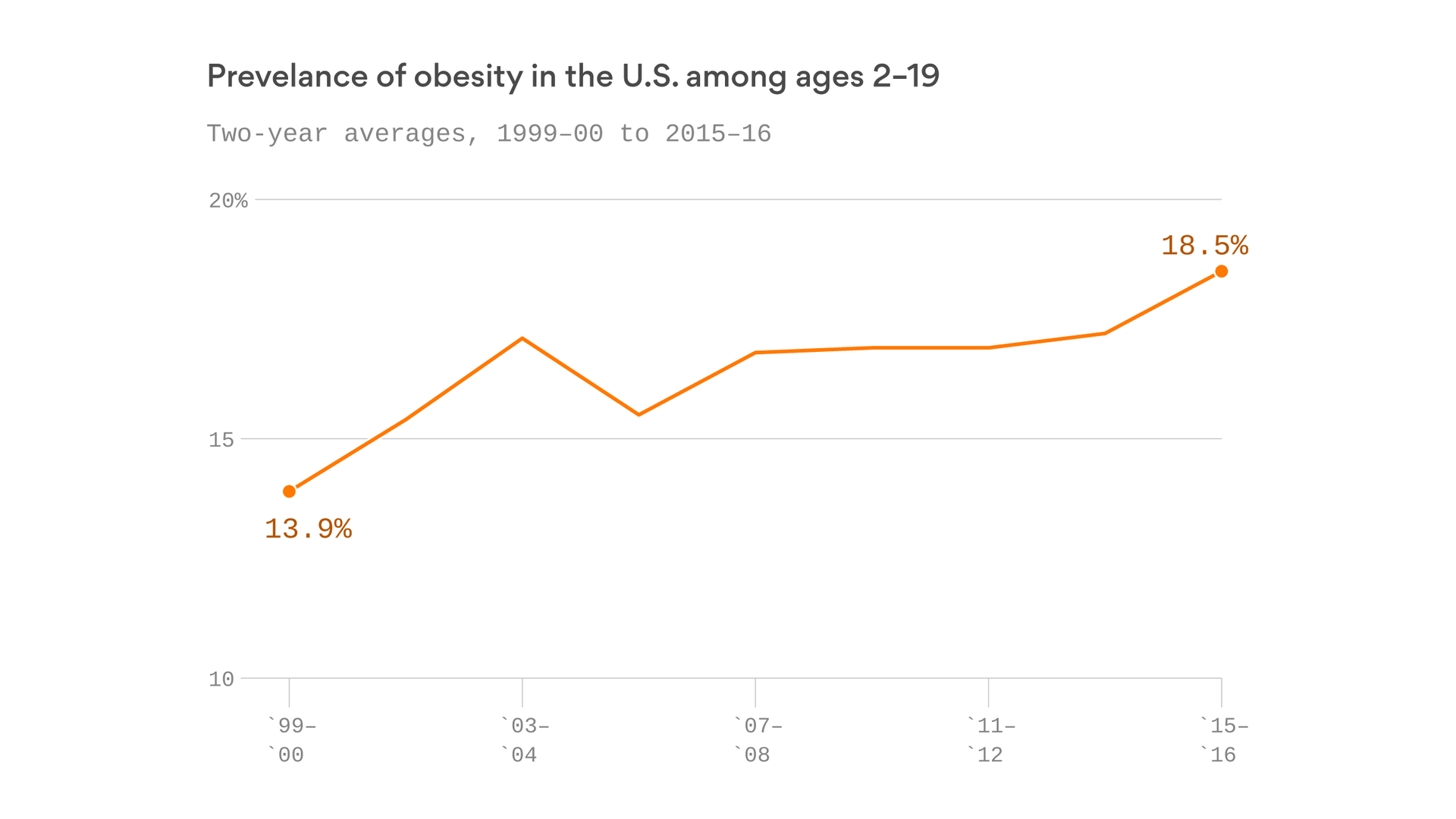
By the numbers: 18% of American kids are now obese, according to new CDC data. So are roughly 40% of adults. And it’s projected to get worse.

  • That helps explain why diabetes rates are also rising, and why roughly 30% of adults have high blood pressure.

Why it matters: More obese children means there will be more adults down the road with chronic conditions like diabetes — which can’t be cured, only managed — and these diseases in turn increase the risk of further complications, such as kidney disease and stroke.

  • Diabetes roughly doubles your lifetime health care bills, according to the CDC, and costs the U.S. a total of $245 billion per year.
  • As the price of insulin continues to skyrocket, the disease only gets harder for patients to manage, if they can afford treatment at all.

We’re only beginning to see the full costs of the opioid crisis, even though it has raged for years.

  • A White House report earlier this week pegged the cost of the epidemic at a staggering $696 billion last year alone, including the cost of productivity lost to addiction.
  • The tide has only barely begun to turn on overall overdose deaths — they still numbered around 68,000 last year.
  • And many survivors of the epidemic will face long-term health costs. Addiction recovery can be a lifelong process requiring sustained investments. It has also led to skyrocketing rates of Hepatitis C — some states have seen their infection rates rise by more than 200% over the past decade.

Groundbreaking new treatments offer the first-ever cure for Hepatitis C, but at price tags so high that states are experimenting with entirely new ways of paying for the drugs, fearing the status quo simply can’t bear these costs all at once.

The bottom line: The flaws in the U.S. health care system compound one another.

  • They reward doctors and hospitals for performing more treatment on sick people, and those treatments are expensive. That leaves big gaps in prevention, which drives the need for more expensive treatment.
  • That’s how we ended up with the world’s most expensive health care system, but without a particularly healthy population to show for it. And that trajectory isn’t changing.


Federal Reserve announces 2nd consecutive rate cut

https://www.axios.com/federal-reserve-rate-cut-77c504c1-1bed-4336-9c37-490a3452a54f.html?stream=top&utm_source=alert&utm_medium=email&utm_campaign=alerts_all

Image result for federal reserve

The Federal Reserve cut interest rates by a quarter point on Wednesday, bringing the target range for the benchmark Fed Funds rate to 1.75%–2%.

Why it matters: The Fed’s 2nd consecutive rate cut reflects worries about the U.S. economy. The trade war and slowing growth around the world have made corporate executives more worried than they’ve been in years.

  • The move prompted a near-immediate response from President Trump, who called chair Powell a “terrible communicator.” The president has demanded in a series of tweets that the Fed cut interest rates more aggressively.

The big picture: Speaking at a press conference, Powell again cited the trade war as a key risk to the economic outlook. “Our business contacts around the country have been telling us that uncertainty about trade policy has discouraged them from investing in their businesses,” Powell said.

  • Still, new projections showed a division among Fed officials about whether more rate cuts are warranted this year.
  • Powell did note that if “the economy does turn down, then a more extensive sequence of rate cuts could be appropriate.”

Powell also acknowledged the liquidity shortfall in money markets that has forced the Fed to intervene — something that before this week hadn’t happened since the financial crisis.

  • In response to the drama in the short-term funding markets, Powell suggested that the Fed may increase the size of its balance sheet through “organic growth” earlier than expected.